










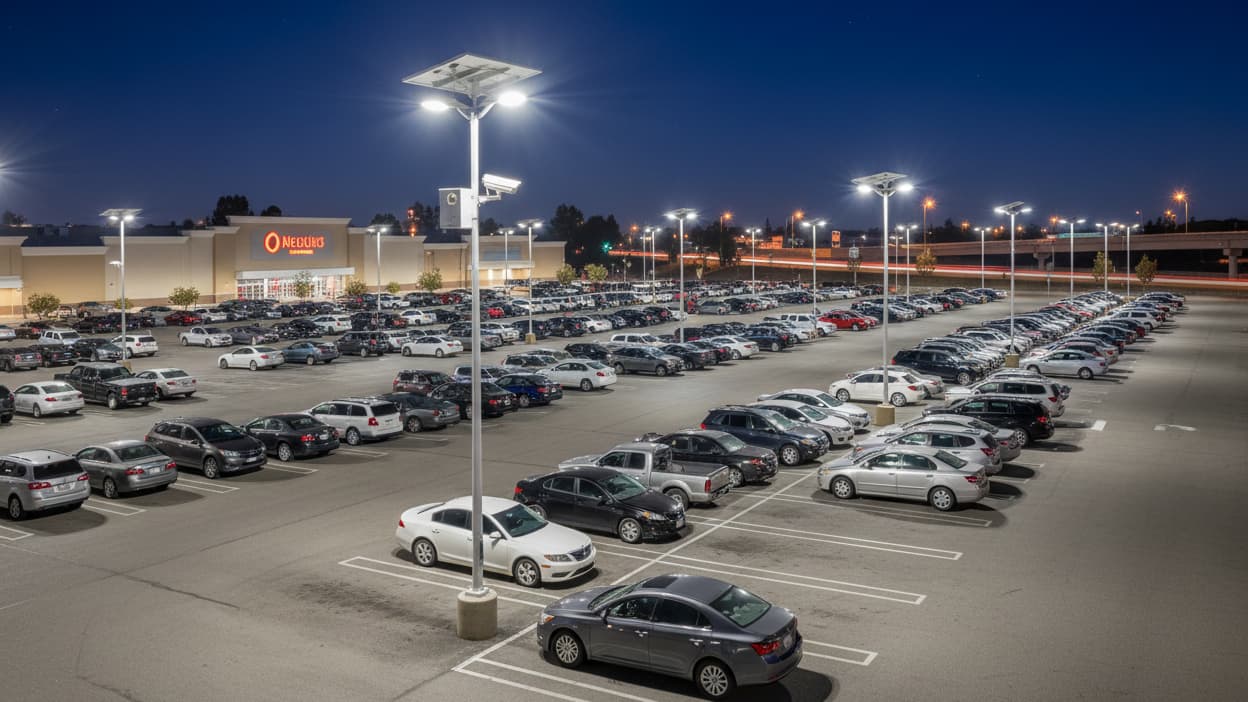
Let's be honest — most procurement guides for wholesale lighting read like they were written by someone who has never actually placed a bulk order. They're full of vague advice like "compare multiple suppliers" and "negotiate payment terms," without ever getting into what that actually looks like when you're sourcing 50 solar street lights for a municipal parking lot or 200 units for a commercial real estate development.
This guide is different. We're going to walk through the real mechanics of wholesale solar street light procurement — the logistics decisions that affect your timeline, the payment structures that protect your capital, and the supplier signals that separate reliable manufacturers from the ones who'll ghost you after the wire transfer clears.
Whether you're a facilities manager, a lighting contractor, a property developer, or a municipal procurement officer, this is the practical breakdown you've been looking for.
Why Solar Street Light Procurement Is Different From Standard Lighting Purchases
Solar street lights aren't like ordering a pallet of LED bulbs. Each unit is a self-contained system — solar panel, battery, controller, fixture, and mounting hardware — and the performance of the whole system depends on how well those components are matched and calibrated.
That complexity has real implications for procurement:
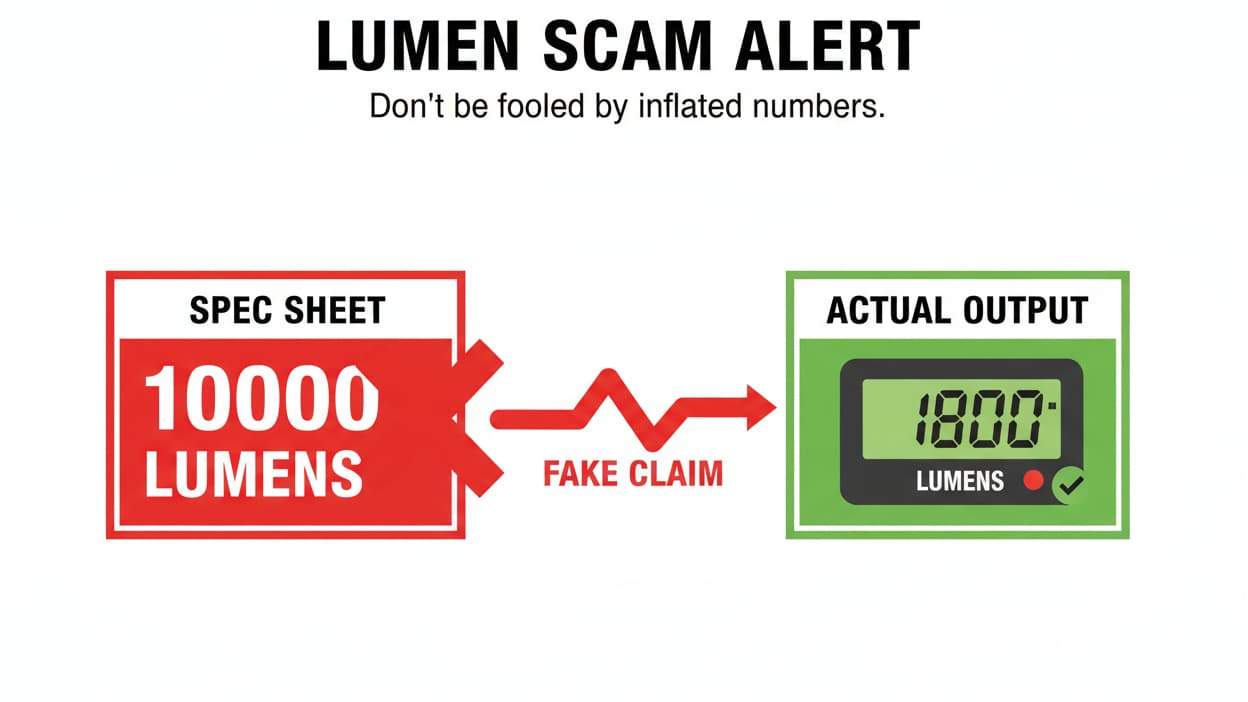
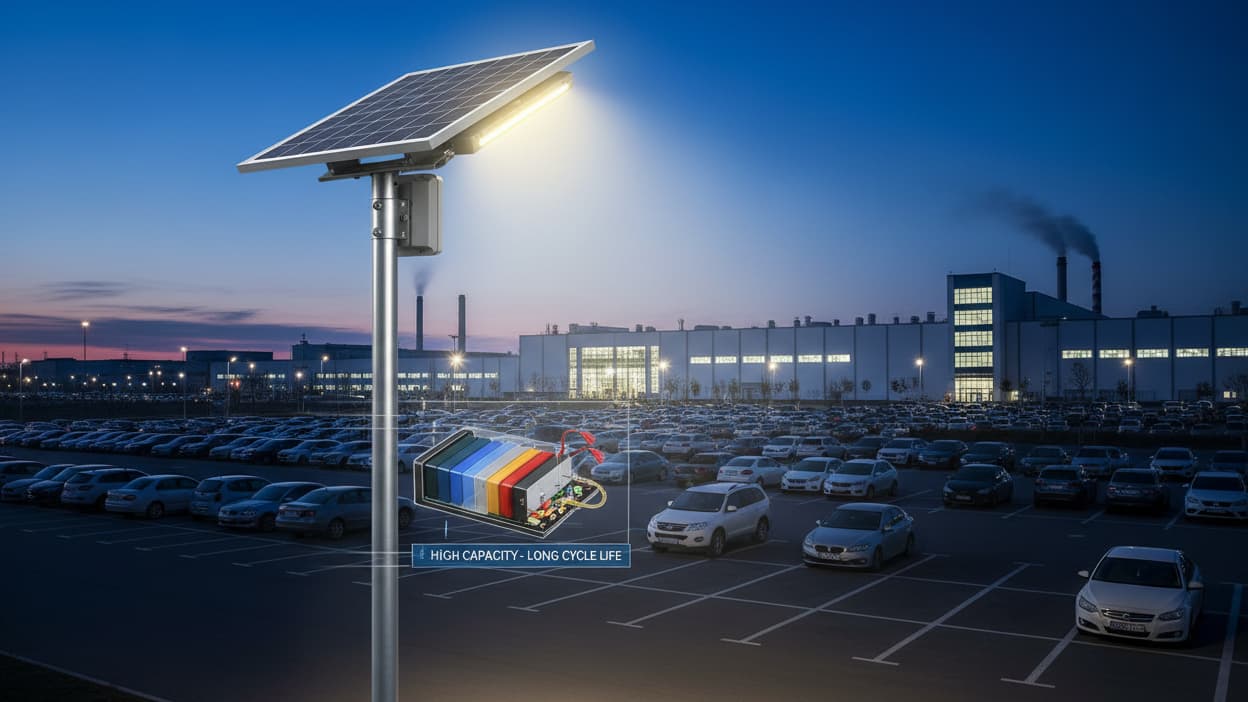
- Spec verification matters more. A 180W solar street light from one supplier might deliver 18,000 lumens with a 5-year battery warranty. The "same" spec from another supplier might use a lower-grade LiFePO4 cell that degrades 40% faster. You can't tell from a spec sheet alone.
- Freight is more complicated. Solar panels are fragile. Batteries are regulated as hazardous materials for air freight. Mounting poles add bulk and weight. Your logistics plan needs to account for all of this.
- Lead times are longer. Quality solar street lights aren't sitting in a warehouse ready to ship. Most reputable manufacturers build to order, especially for commercial-grade units. Expect 3–6 weeks for production plus transit time.
- Returns and warranty claims are harder. If a unit fails in the field 18 months after installation, you need a supplier who will actually honor the warranty — not one who's disappeared or is impossible to reach.
Understanding these dynamics upfront will save you from the most common wholesale procurement mistakes.

The Real Cost Breakdown: What You're Actually Paying For
When you see a wholesale price for a solar street light, that number is just the starting point. Here's what the full cost picture looks like for a typical US wholesale order:
Unit Cost
Commercial-grade solar street lights for wholesale buyers in the US typically range from $79.99 for entry-level residential/light commercial units up to $1,399 for high-output 100W commercial systems with large battery banks and monocrystalline panels. Mid-range units suitable for parking lots, pathways, and commercial properties generally fall between $159 and $339 per unit.
Volume pricing typically kicks in at 10+ units, with meaningful discounts at 50+ and 100+ unit thresholds. Always ask for a tiered pricing schedule rather than a single quote.
Freight and Shipping
For US domestic delivery from a US-based warehouse, expect to pay $15–$40 per unit for standard ground freight on mid-size solar street lights, depending on weight and destination. For larger commercial units (100W+), freight can run $80–$150 per unit due to size and weight.
If you're sourcing directly from overseas manufacturers, ocean freight for a full container load (FCL) is significantly more cost-effective than less-than-container load (LCL) shipping. A 20-foot container can typically hold 200–400 mid-size solar street light units depending on packaging dimensions.
Import Duties and Tariffs
Solar lighting products imported into the US are subject to Section 301 tariffs on Chinese-origin goods, which have ranged from 7.5% to 25% depending on the specific product classification. Work with a licensed customs broker to determine the correct HTS code for your products and calculate landed cost accurately before committing to a purchase order.
Installation and Commissioning
Don't forget to budget for installation. Solar street lights require concrete pole foundations, electrical connections (for hybrid models), and system commissioning. Typical installation costs for commercial solar street lights run $150–$400 per unit depending on site conditions and local labor rates.

Featured Products for Wholesale Buyers
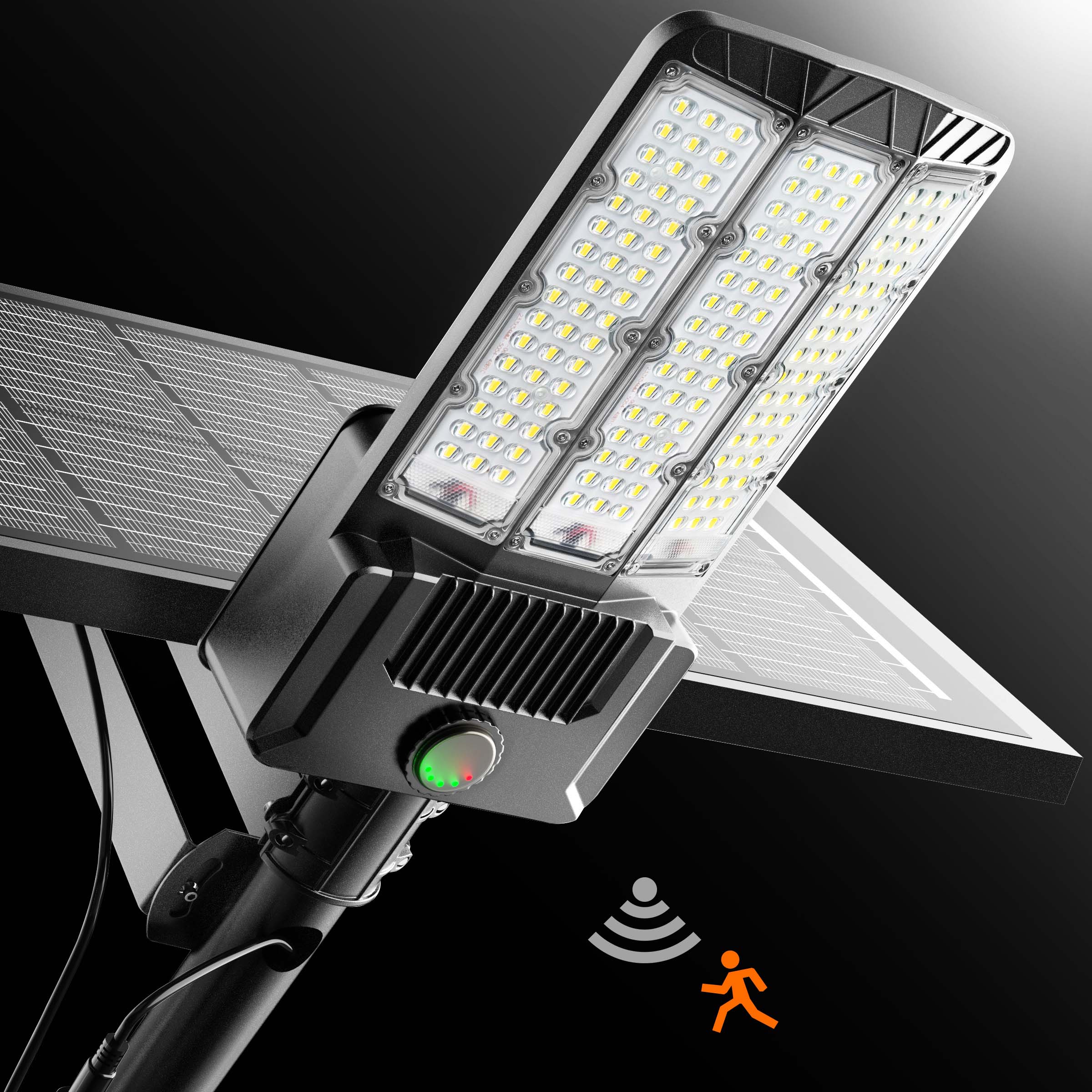
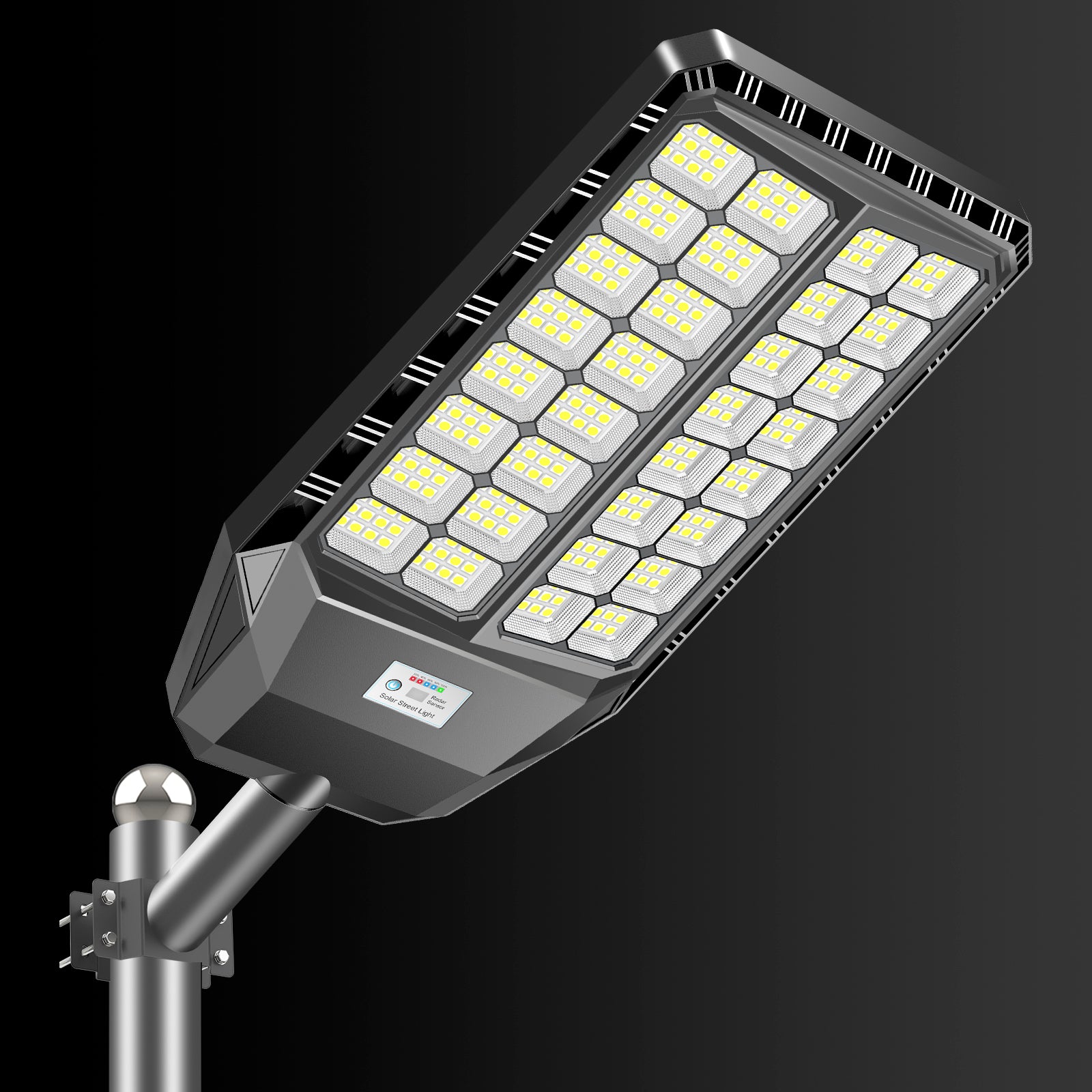
Before we get into logistics and payment mechanics, here are four commercial-grade solar street lights that are well-suited for wholesale procurement — each with different specs and price points to match different project requirements.
1. Hykoont TW016 Solar Street Light — $79.99/unit
The TW016 is the entry point for commercial-grade solar street lighting. With its optical lens design for precise light distribution, it's a solid choice for residential developments, pathway lighting, and smaller commercial properties where budget is a primary consideration.

Best for: Residential subdivisions, HOA common areas, pathway lighting, small parking areas
Wholesale minimum: Contact for volume pricing
→ Get Wholesale Pricing on TW016
2. Hykoont TW024 Solar Street Light — From $99.00/unit
The TW024 steps up the output and battery capacity, making it suitable for mid-size commercial applications. The price range ($99–$509) reflects different configuration options — battery size, panel wattage, and mounting hardware — so you can spec the right system for your project without overpaying for capacity you don't need.

Best for: Commercial parking lots, industrial facilities, municipal streets, campuses
Price range: $99.00 – $509.00 depending on configuration
→ Configure Your TW024 Order
3. Hykoont TW040 Solar Street Light — From $179.00/unit
The TW040 is where you start getting into serious commercial territory. Higher lumen output, larger battery bank, and more robust construction make this the go-to for projects where reliability and light output are non-negotiable — think municipal streets, large parking structures, and commercial real estate developments.

Best for: Municipal streets, large commercial parking, industrial campuses, public infrastructure
Price range: $179.00 – $339.00 depending on configuration
→ Request TW040 Wholesale Quote
4. HY100 100W Commercial Solar Street Light — $1,399.00/unit
The HY100 is the flagship commercial unit — 18,000 lumens, 768Wh battery bank, and a 100W monocrystalline solar panel. This is the unit for projects where you need grid-equivalent light output with zero utility costs. It's priced accordingly, but for the right application, the ROI calculation is straightforward.

Best for: High-traffic commercial streets, large industrial facilities, ports, airports, remote infrastructure
Unit price: $1,399.00
→ Inquire About HY100 Bulk Pricing
Logistics: The Part Nobody Talks About Clearly Enough
Logistics is where wholesale lighting orders most often go wrong. Not because of bad products, but because of misaligned expectations about timelines, delivery conditions, and responsibility for damage in transit.
Understanding Incoterms for Lighting Procurement
If you're sourcing from overseas manufacturers, you'll encounter Incoterms — the standardized trade terms that define who is responsible for freight, insurance, and customs at each stage of the shipment. The most common terms you'll see in solar lighting procurement are:
- EXW (Ex Works): You take responsibility for everything from the factory door. Maximum control, maximum complexity. Only recommended if you have an experienced freight forwarder.
- FOB (Free On Board): The supplier loads the goods onto the vessel at the origin port. You handle ocean freight, insurance, and import. This is the most common term for experienced importers.
- CIF (Cost, Insurance, Freight): The supplier covers ocean freight and insurance to the destination port. You handle import duties and inland freight. Good for buyers who want less logistics complexity.
- DDP (Delivered Duty Paid): The supplier handles everything including import duties and delivery to your door. Highest cost, lowest complexity. Good for first-time importers or smaller orders.
For most US wholesale buyers placing their first significant order with an overseas supplier, CIF or DDP terms reduce risk and complexity, even if the unit cost is slightly higher.
Freight Mode Selection
Ocean freight is the standard for large wholesale orders. Transit time from major Chinese ports to US West Coast ports (Los Angeles, Long Beach) is typically 14–18 days. East Coast ports add another 7–10 days via the Panama Canal. Factor in port processing and inland freight, and you're looking at 4–6 weeks from factory to job site.
Air freight is an option for urgent orders or smaller quantities, but it's expensive — typically 6–10x the cost of ocean freight per kilogram. It's also complicated by battery regulations: lithium batteries (used in most commercial solar street lights) are classified as dangerous goods for air transport and require special handling and documentation.
US domestic shipping from a US-based warehouse is the simplest option for buyers who need faster delivery and don't want to deal with import logistics. Lead times are typically 3–7 business days for standard ground freight.
Packaging and Damage Prevention
Solar panels are glass — they break. Batteries are sensitive to temperature extremes. Aluminum fixtures can be dented or scratched. When evaluating suppliers, ask specifically about their export packaging standards:
- Are solar panels individually wrapped and protected with foam corners?
- Are fixtures packed in individual cartons with internal padding?
- Are batteries packed separately from panels to prevent pressure damage?
- Is the outer carton rated for stacking weight during ocean freight?
Request photos of actual export packaging before placing a large order. A supplier who takes packaging seriously is a supplier who takes quality seriously.
Inspection and Quality Control
For orders above $10,000, consider hiring a third-party inspection service (SGS, Bureau Veritas, or similar) to conduct a pre-shipment inspection at the factory. This typically costs $300–$500 and can save you from receiving a container of defective units.
At minimum, request a pre-shipment sample — one or two units shipped ahead of the main order — so you can verify specs and quality before the full production run ships.
Payment Terms: Protecting Your Capital Without Losing the Deal
Payment terms in wholesale lighting procurement are a negotiation, not a fixed condition. Understanding the standard structures — and knowing which ones protect you — is essential for any procurement manager.
The Standard Payment Structures
30% deposit, 70% before shipment is the most common structure for overseas suppliers. You pay 30% to confirm the order and start production, then pay the remaining 70% when the goods are ready to ship (after inspection, if applicable). This is reasonable for established suppliers with a track record.
50% deposit, 50% against Bill of Lading (B/L) is a slightly more buyer-friendly variation. You pay the balance against the shipping documents rather than before shipment, which gives you slightly more leverage if there are quality issues.
Letter of Credit (L/C) is the gold standard for large orders with new suppliers. An L/C is a bank guarantee that payment will be made when the supplier presents compliant shipping documents. It protects both parties — the supplier knows they'll get paid if they ship correctly, and you know you won't pay until the goods are shipped as agreed. L/Cs add cost and complexity (typically $500–$1,500 in bank fees) but are worth it for orders above $50,000 with an unproven supplier.
Net 30/60/90 terms are standard for domestic US suppliers and distributors with established relationships. If you're buying from a US-based supplier or distributor, push for net 30 terms after your first successful order.
100% upfront payment should be a red flag with any new supplier. Legitimate manufacturers don't need full payment before production starts. If a supplier insists on 100% upfront, either walk away or use a payment method with buyer protection (credit card, PayPal for smaller orders).
Payment Methods and Their Protections
Wire transfer (T/T) is the most common payment method for international wholesale orders. It's fast and cheap, but offers essentially no buyer protection once the money is sent. Only use wire transfer with suppliers you've verified and trust.
Credit card offers chargeback protection and is excellent for smaller orders or first-time purchases. The downside is that many overseas suppliers charge a 2–3% processing fee, and some don't accept cards for large orders.
PayPal offers buyer protection for smaller transactions but has limits on transaction size and is not practical for large wholesale orders.
Escrow services (like Alibaba Trade Assurance or a third-party escrow) hold payment until you confirm receipt and acceptance of the goods. This is an excellent option for new supplier relationships and is increasingly available through major B2B platforms.
Negotiating Better Terms as a Wholesale Buyer
Your leverage in payment term negotiations comes from order size, relationship history, and your willingness to commit to repeat business. Here's how to use it:
- Start with a smaller test order at standard terms to establish a track record. Once you've received and verified the goods, you have leverage to negotiate better terms on the next order.
- Offer a purchase order commitment for multiple orders in exchange for better payment terms. A supplier who knows you'll be ordering quarterly has more incentive to offer net 30 terms than one who thinks you're a one-time buyer.
- Ask about early payment discounts. Some suppliers offer 1–2% discounts for payment within 10 days. On a $50,000 order, that's $500–$1,000 in savings.
- Get everything in writing. Payment terms, delivery timelines, warranty conditions, and dispute resolution procedures should all be in a signed purchase agreement, not just an email exchange.

Vetting Suppliers: The Questions That Actually Matter
The solar lighting market has no shortage of suppliers who will tell you exactly what you want to hear. Here's how to separate the ones who can actually deliver from the ones who can't.
Certifications to Verify
For the US market, look for:
- UL or ETL listing for electrical safety (required for many commercial and municipal applications)
- IP65 or higher ingress protection rating for outdoor use
- IK08 or higher impact resistance for public installations
- FCC certification for any units with wireless controls or sensors
- DLC (DesignLights Consortium) listing if your project qualifies for utility rebates
Ask for actual certification documents, not just logos on a website. Verify certifications directly with the certifying body when possible.
Factory Verification
Ask for a factory audit report or, better yet, arrange a virtual factory tour. Legitimate manufacturers are happy to show you their production facilities. Trading companies (who buy from factories and resell) will often deflect or provide vague answers about manufacturing capacity.
Key questions to ask:
- What is your monthly production capacity for this product?
- Do you manufacture the solar panels and batteries in-house, or source them from third parties?
- What quality control processes do you have at each production stage?
- Can you provide references from US customers who have placed similar orders?
Warranty and After-Sales Support
A warranty is only as good as the supplier's ability and willingness to honor it. Before placing a large order, test the after-sales support:
- Send a technical question via email and measure response time and quality
- Ask specifically how warranty claims are handled — replacement parts, full unit replacement, or credit toward future orders?
- Ask whether they have US-based technical support or a US warehouse for warranty replacements
Building a Procurement Timeline That Actually Works
One of the most common mistakes in wholesale lighting procurement is underestimating lead time. Here's a realistic timeline for a mid-size wholesale order of commercial solar street lights:
- Week 1–2: Supplier evaluation, spec confirmation, sample request
- Week 3–4: Sample receipt and testing, purchase order negotiation and signing
- Week 5: Deposit payment, production start
- Week 6–9: Production (3–4 weeks for most commercial units)
- Week 10: Pre-shipment inspection, final payment
- Week 11–14: Ocean freight transit (US West Coast)
- Week 15: Port clearance and inland freight
- Week 16: Delivery to job site
That's a 16-week timeline from first contact to delivery — four months. If your project has a hard installation deadline, work backward from that date and start procurement accordingly. Rushing any stage of this process increases risk and cost.
For projects with tighter timelines, sourcing from a US-based supplier or distributor with domestic inventory can compress this to 2–4 weeks, though unit costs will typically be higher.
The BC024 180W: A Case Study in Wholesale Value
Let's look at a concrete example of how wholesale procurement decisions play out with a specific product.

The BC024 180W Solar Street Light (priced from $159 to $289 depending on configuration) is a popular choice for wholesale buyers because it hits a sweet spot of output, reliability, and price. Here's how the procurement math works for a typical order:
Scenario: A property management company needs to light 40 parking lot areas across three commercial properties in the Southwest US.
- Unit cost (40 units at volume pricing): ~$220/unit = $8,800
- Domestic freight (40 units): ~$30/unit = $1,200
- Installation (40 units at $250/unit): $10,000
- Total project cost: ~$20,000
- Equivalent grid-powered lighting cost (fixtures + electrical + ongoing utility): $35,000–$45,000 over 5 years
- 5-year savings: $15,000–$25,000
The ROI case for commercial solar street lights is strong when you factor in the full cost of grid-powered alternatives. The procurement process is the variable — get it right, and the savings are real. Get it wrong, and you're dealing with delays, defective units, and warranty disputes that eat into those savings fast.
Red Flags: When to Walk Away From a Supplier
Not every supplier relationship is worth pursuing. Here are the warning signs that should make you pause — or walk away entirely:
- Prices that seem too good to be true. Commercial-grade solar street lights have real material costs. If a supplier is quoting 40% below market price, they're either cutting corners on components or planning to ship something different from what you ordered.
- Vague or inconsistent specs. If a supplier can't give you a clear, consistent answer about battery capacity, solar panel wattage, or lumen output, that's a problem.
- Pressure to pay 100% upfront. Legitimate manufacturers don't need full payment before production. This is a common pattern in scams targeting wholesale buyers.
- No verifiable certifications. If a supplier claims UL listing but can't provide the certificate number for verification, assume the claim is false.
- Poor communication before the sale. If a supplier takes 3 days to respond to a pre-sale inquiry, imagine how responsive they'll be when you have a warranty claim 18 months after delivery.
- No references from US customers. Any supplier who has successfully served the US market should be able to provide references. If they can't, ask why.
Frequently Asked Questions
What is the minimum order quantity (MOQ) for wholesale solar street lights?
MOQ varies by supplier and product. For most commercial-grade solar street lights, MOQ ranges from 5–20 units for domestic US suppliers and 50–100 units for direct overseas manufacturers. Some suppliers offer no MOQ for their standard product lines, with volume discounts starting at 10 units. Always ask about MOQ and tiered pricing before requesting a formal quote.
How long does it take to receive a wholesale solar street light order in the US?
For US-based suppliers with domestic inventory, expect 3–7 business days for standard ground freight. For orders sourced directly from overseas manufacturers, the full timeline from order confirmation to delivery is typically 10–16 weeks, including production (3–4 weeks), ocean freight (3–5 weeks), and port clearance and inland freight (1–2 weeks).
What payment terms should I expect for a first wholesale order?
For a first order with an overseas supplier, the standard is 30% deposit upon order confirmation and 70% before shipment. For US-based suppliers, net 30 terms are common for buyers with established credit. For large orders ($50,000+) with new suppliers, consider using a Letter of Credit for maximum protection.
Are solar street lights subject to import tariffs when shipped to the US?
Yes. Solar lighting products from China are subject to Section 301 tariffs, which have ranged from 7.5% to 25% depending on the specific product classification. Work with a licensed customs broker to determine the correct HTS code and calculate your landed cost accurately. Some products may qualify for exclusions or reduced rates — your customs broker can advise on current status.
What certifications should I require for commercial solar street lights in the US?
At minimum, look for UL or ETL listing for electrical safety, IP65 or higher ingress protection, and IK08 impact resistance for public installations. If your project qualifies for utility rebates, DLC listing may be required. FCC certification is needed for units with wireless controls. Always verify certifications directly with the certifying body rather than relying on supplier claims.
How do I handle warranty claims on wholesale solar street light orders?
Before placing a large order, clarify the warranty claim process in writing: What is the warranty period? Does it cover parts, labor, or full unit replacement? How are claims submitted and processed? Does the supplier have US-based inventory for warranty replacements, or will you need to wait for overseas shipment? Get these answers in your purchase agreement, not just in email.
What is the difference between a trading company and a manufacturer for solar street lights?
A manufacturer produces the lights themselves and typically offers better pricing, more customization options, and more reliable quality control. A trading company buys from manufacturers and resells, often with less transparency about the actual production source. Trading companies can be legitimate intermediaries, but you have less visibility into quality control and may pay a markup. Ask directly whether you're dealing with a manufacturer or a trading company, and verify the answer.
Can I get custom branding or OEM solar street lights for wholesale orders?
Yes, most manufacturers offer OEM/ODM services for orders above a certain quantity (typically 100+ units). Custom branding options include custom labels, packaging, and in some cases custom fixture colors or configurations. Lead times for OEM orders are longer than standard products — factor in an additional 2–4 weeks for tooling and sample approval.
What is the typical warranty period for commercial solar street lights?
Quality commercial solar street lights typically carry a 2–5 year warranty on the complete system, with separate warranty terms for the solar panel (often 10–25 years for power output) and the LED driver (typically 3–5 years). Battery warranties are usually 2–3 years, as batteries are the component most subject to degradation. Be skeptical of warranty claims that seem unusually long without supporting documentation.
How do I calculate how many solar street lights I need for a project?
The number of lights needed depends on the required illuminance level (measured in foot-candles or lux), the mounting height, the beam angle of the fixture, and the spacing between poles. For parking lots, a common standard is 1–2 foot-candles average illuminance. For streets and pathways, 0.5–1 foot-candle is typical. Most reputable suppliers can provide a photometric layout (lighting simulation) for your specific project — ask for this before finalizing your order quantity.
Ready to Place Your Wholesale Order?
Wholesale solar street light procurement doesn't have to be complicated — but it does require attention to the details that most buyers overlook until something goes wrong. Get the specs right, understand your logistics options, use payment terms that protect your capital, and vet your suppliers before you commit.
If you're ready to move forward, here's where to start:
- Entry-level commercial: Hykoont TW016 — from $79.99/unit
- Mid-range commercial: Hykoont TW024 — from $99.00/unit | BC024 180W — from $159.00/unit
- High-output commercial: Hykoont TW040 — from $179.00/unit
- Flagship commercial: HY100 100W — $1,399.00/unit
Have a specific project in mind? Contact our wholesale team for a custom quote, photometric layout, and volume pricing schedule tailored to your project requirements.

Leave a comment
This site is protected by hCaptcha and the hCaptcha Privacy Policy and Terms of Service apply.