
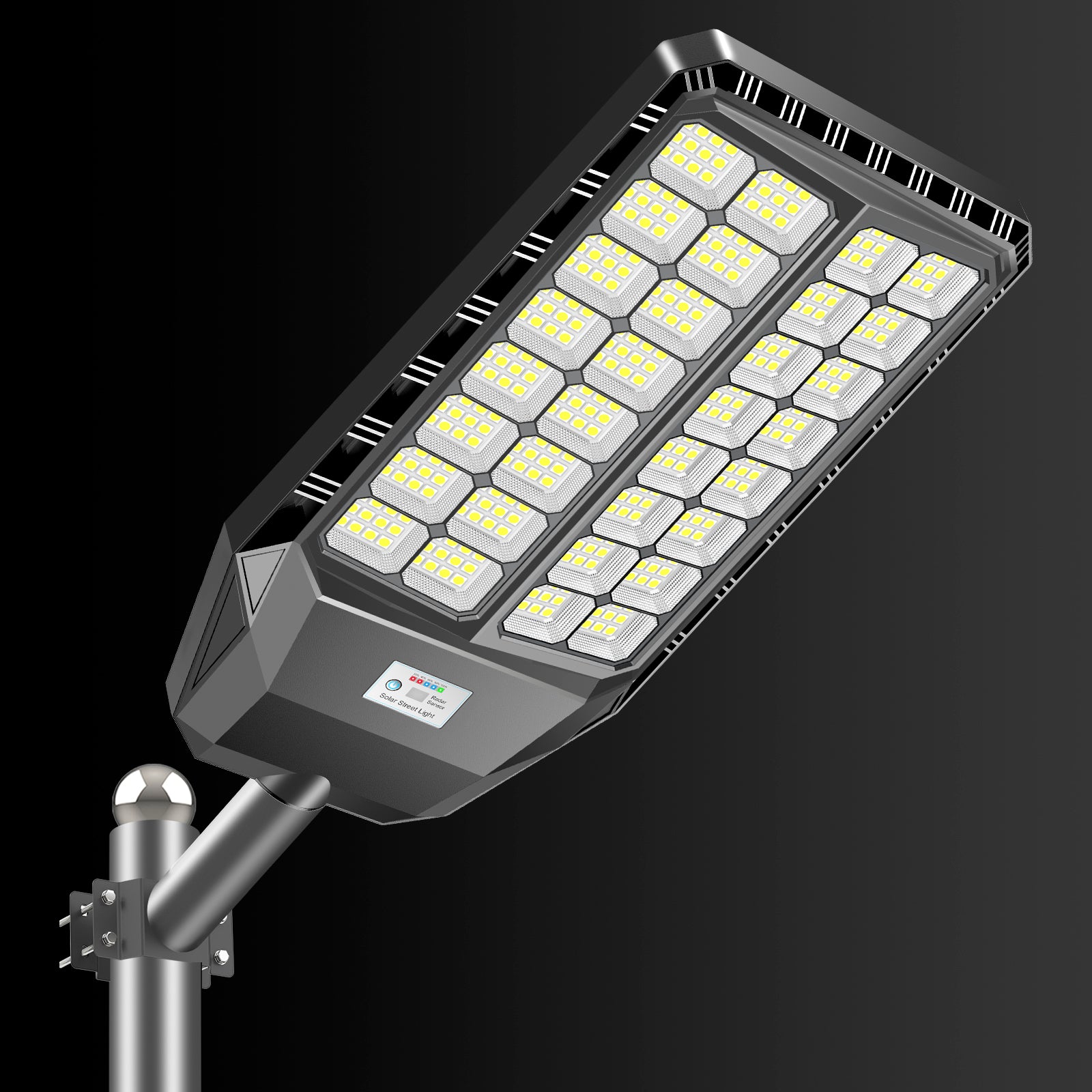







You've seen them everywhere — solar street lights plastered with specs like "10,000 lumens," "20,000 lumens," even "50,000 lumens" — all for $25–$60 on Amazon or AliExpress. And you've probably wondered: Is this too good to be true?
Short answer: yes. Long answer: it's actually worse than you think, and the deception runs deeper than most buyers ever realize.
This guide is going to pull back the curtain on one of the most widespread scams in the outdoor lighting industry. We'll break down exactly how manufacturers fake lumen ratings, what specs actually matter, and how to find solar street lights that deliver real, reliable brightness — night after night, season after season.
Grab a coffee. This one's worth reading before you spend a single dollar.
The Lumen Lie: How It Actually Works
Let's start with the basics. A lumen is a unit of measurement for the total amount of visible light emitted by a source. More lumens = brighter light. Simple enough.
But here's where it gets dirty.
There are two very different ways to measure lumens:
- LED chip lumens (input lumens): The theoretical maximum output of the raw LED chip, measured in a lab under ideal conditions — usually at a cool temperature, with no housing, no lens, and no real-world losses.
- Fixture lumens (output lumens / delivered lumens): The actual light that exits the fixture and hits the ground. This accounts for heat loss, optical efficiency, driver efficiency, and housing design.
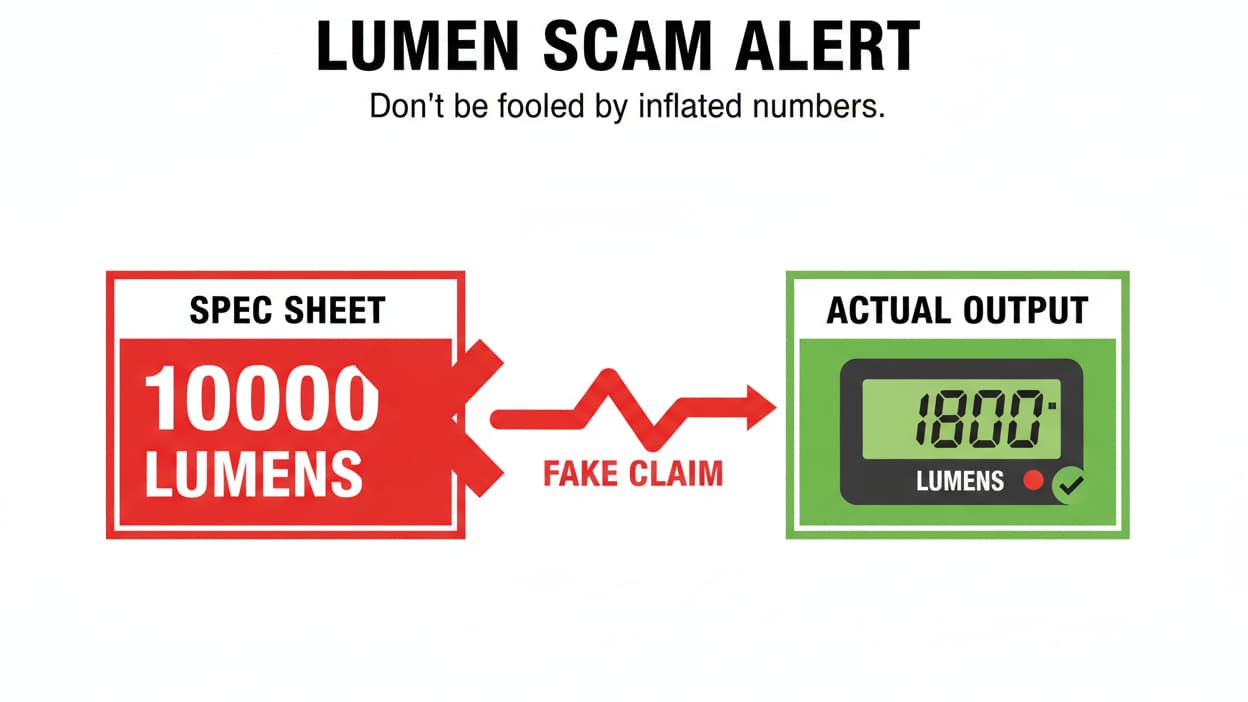
Cheap manufacturers advertise LED chip lumens — the inflated lab number — while calling it the fixture output. The real delivered lumens from a "10,000 lumen" budget light? Often 1,500–3,000 lumens at best.
That's not a rounding error. That's a 70–85% gap between what's advertised and what you actually get.
💡 Industry insider note: Even reputable LED chip manufacturers like Epistar or Bridgelux publish "chip lumens" that assume 100% driver efficiency and 25°C operating temperature. Real-world solar fixtures run hotter, and cheap drivers lose 20–40% efficiency. The math never adds up in the buyer's favor.

The 5 Tricks Cheap Solar Light Brands Use to Fake Specs
1. Chip Lumens vs. Fixture Lumens (The Big One)
As covered above, this is the most common trick. A fixture stuffed with a 100W-equivalent LED chip might claim 10,000 lumens — but after optical losses, heat degradation, and driver inefficiency, you're lucky to get 3,500 lumens out the other end.
Always ask: Is this chip lumens or fixture lumens? If the brand can't answer, walk away.
2. The "Peak" Wattage Scam
You'll see listings that say "180W Solar Street Light" with a tiny solar panel that's clearly 20–30W. What they're advertising is the peak wattage of the solar panel under perfect lab conditions — not the actual power delivered to the LED.
A real 180W solar street light needs a solar panel capable of generating enough energy to power a meaningful LED load. A 20W panel powering a "180W" light is physically impossible. The LED is probably drawing 15–25W actual power.
3. Motion Sensor "Full Brightness" Tricks
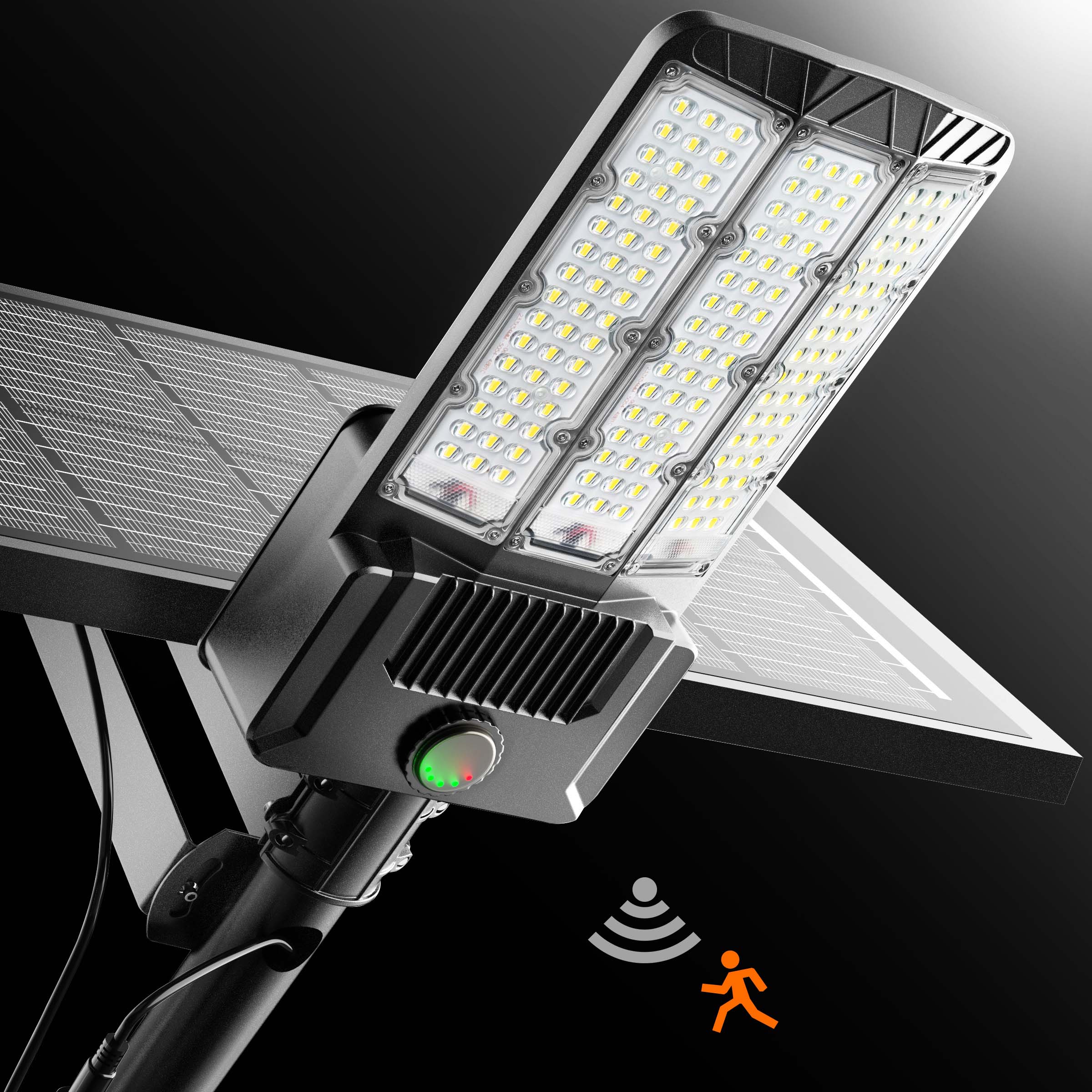
Many cheap lights operate at 10–20% brightness when no motion is detected, then briefly spike to "full brightness" when triggered. The advertised lumens reflect that brief spike — not the sustained output you actually need for security or pathway lighting.
If your parking lot light dims to near-darkness every time there's no movement, it's not doing its job.
4. Battery Capacity Inflation
A light claiming a "20,000mAh battery" for $35 is almost certainly using recycled or substandard lithium cells with actual usable capacity of 30–50% of the stated figure. Real lithium iron phosphate (LiFePO4) batteries with genuine 10,000mAh capacity cost more than the entire cheap fixture.
Low battery capacity = the light dies at 2 AM, leaving your property dark for the rest of the night.
5. IP Rating Theater
"IP65 waterproof" sounds impressive. But IP ratings require standardized testing — and cheap manufacturers self-certify without third-party verification. Many "IP65" budget lights fail after the first heavy rainstorm because the seals are inadequate or the housing warps under temperature changes.

Why This Matters More Than You Think
This isn't just about getting less brightness than you paid for. The real consequences are:
- Security gaps: A parking lot or driveway that goes dark at midnight is a liability. Inadequate lighting is one of the top factors in premises liability lawsuits.
- Replacement costs: Cheap lights fail in 6–18 months. A quality fixture lasts 5–10 years. The math on "saving money" with budget lights almost never works out.
- Installation waste: Every time you replace a failed light, you're paying for labor, hardware, and disposal. For commercial properties, that adds up fast.
- Energy waste: Inefficient drivers and poor solar panels mean you're harvesting less energy and converting it less efficiently — defeating the entire purpose of going solar.
What Real Lumen Output Looks Like — And What You Actually Need
Here's a practical reference guide for common applications in the US:
| Application | Recommended Fixture Lumens | Pole Height |
|---|---|---|
| Residential driveway / pathway | 1,500–3,000 lm | 10–14 ft |
| Residential street / cul-de-sac | 3,000–6,000 lm | 14–18 ft |
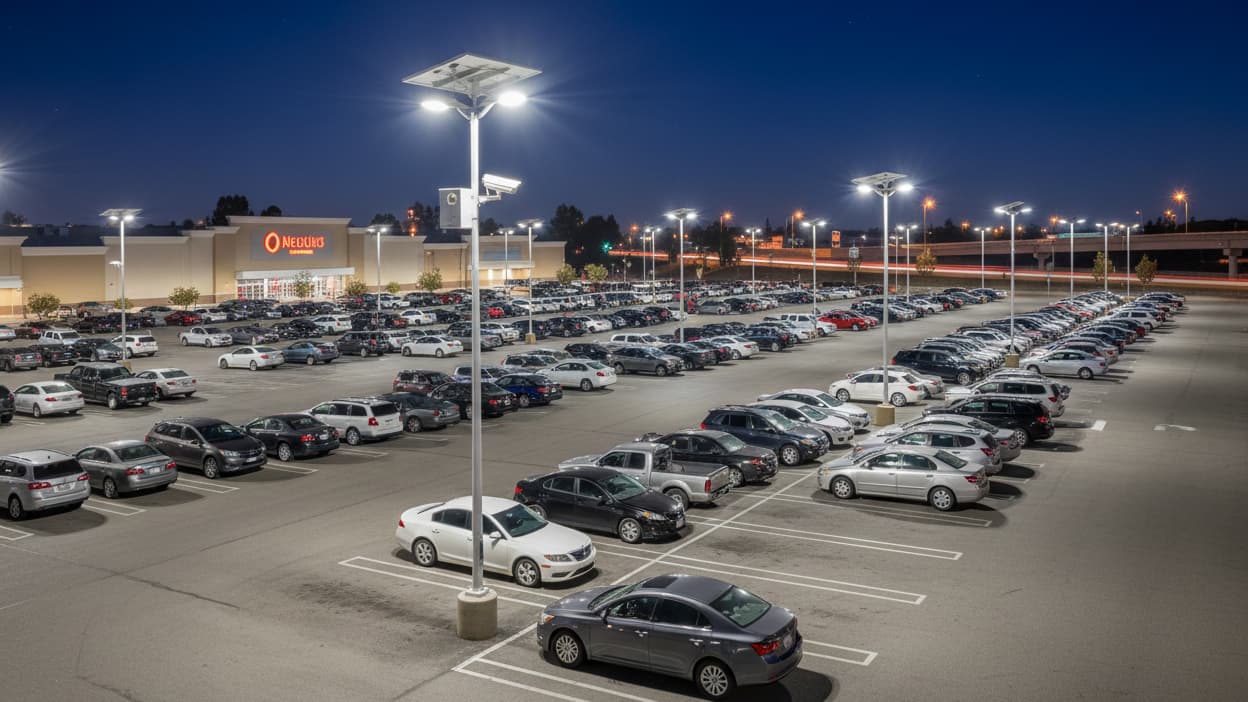
| Small parking lot (10–30 spaces) | 6,000–10,000 lm | 18–20 ft |
| Large parking lot / commercial | 10,000–20,000 lm | 20–30 ft |
| Highway / arterial road | 15,000–30,000 lm | 25–40 ft |
Notice that even a large commercial parking lot only needs 10,000–20,000 real fixture lumens. When a $40 light claims 50,000 lumens, that number is pure fiction.
How to Spot a Legitimate Solar Street Light: The 6-Point Checklist
Before you buy anything, run through this checklist:
✅ 1. Ask for IES or LM-79 Test Reports
Legitimate manufacturers can provide IES photometric files or LM-79 test reports from accredited third-party labs. These documents show actual fixture lumens, beam angles, and light distribution. If a brand can't produce these, their specs are self-reported and unverified.
✅ 2. Check the Solar Panel Wattage vs. LED Wattage Ratio
A rough rule: your solar panel should generate at least 1.2–1.5x the LED's daily energy consumption to maintain reliable overnight operation. A 30W LED running 10 hours needs ~300Wh. A 60–80W solar panel in a sunny US climate can generate that in 4–5 peak sun hours. If the panel is tiny relative to the claimed LED power, the math doesn't work.
✅ 3. Look for Real Battery Specs (Chemistry + Capacity)
Legitimate products specify battery chemistry (LiFePO4 is best for longevity and safety), actual capacity in Wh (not just mAh), and cycle life. "20,000mAh lithium battery" with no further detail is a red flag.
✅ 4. Verify IP Rating with Third-Party Certification
Look for IP65 or IP66 ratings backed by CE, ETL, or UL certification. Self-certified IP ratings from unknown brands are meaningless.
✅ 5. Check the Warranty
Quality solar street lights come with 2–5 year warranties. A brand offering only 30–90 days knows their product won't last longer than that.
✅ 6. Read the Fine Print on Motion Sensitivity
Understand the difference between "dim mode" and "full brightness mode." For security applications, you want a light that maintains at least 30–50% brightness continuously, not one that's essentially off until triggered.

Real Products, Real Specs: What Honest Solar Street Lights Look Like
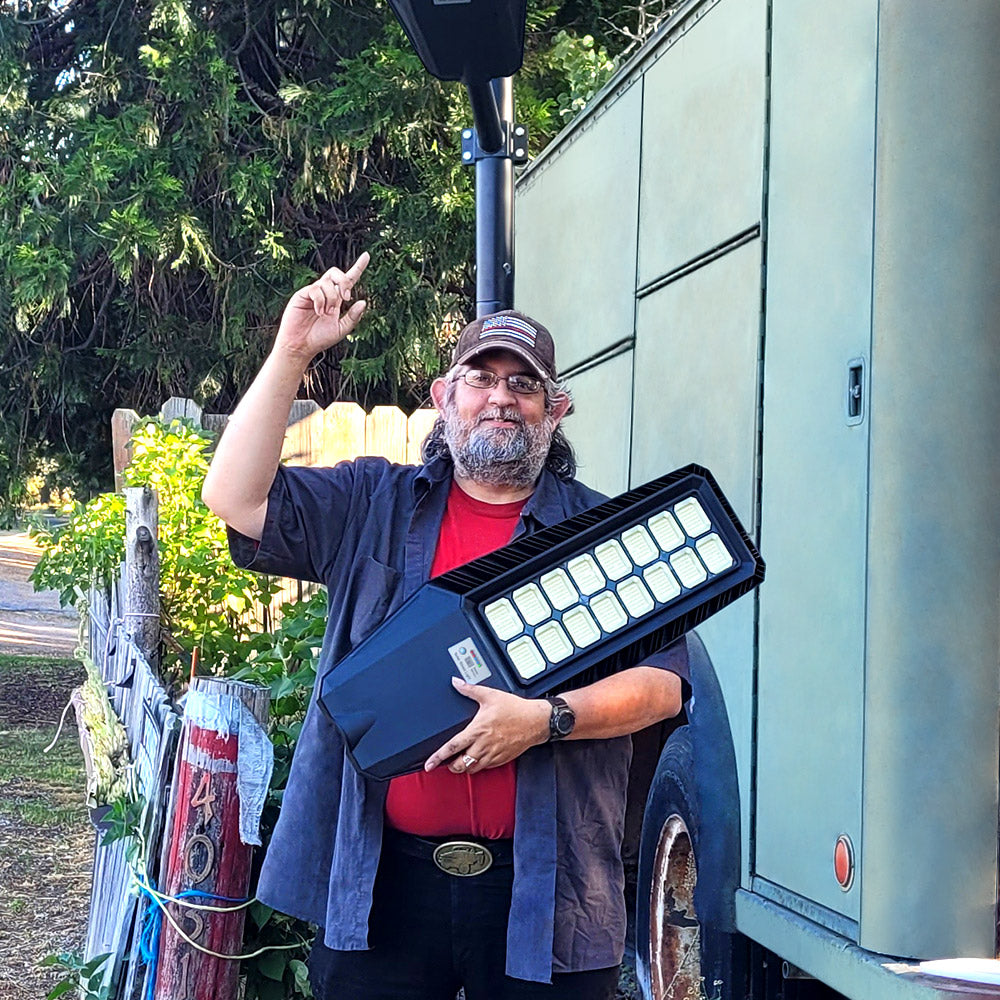
Let's get concrete. Here are four solar street lights from Hykoont that publish honest, verifiable specs — and what those specs actually mean for your property.
🔆 Hykoont TW016 Solar Street Light — Best Entry-Level Pick
Starting at $79.99

The TW016 is the honest answer to the "budget solar light" category. Instead of inflating specs, it delivers a real optical lens design that concentrates light output where it's needed — on the ground, not scattered into the sky.
Why it's different from cheap alternatives:
- Precision lens optics maximize usable lumens on the target area
- Dusk-to-dawn operation with intelligent dimming (not full blackout)
- Weatherproof housing rated for US climate conditions
- Straightforward installation — no electrician required
Best for: Residential driveways, pathways, small parking areas, HOA common areas
🔆 Hykoont TW024 Solar Street Light — Best Mid-Range Performer
From $99.00 — up to $509.00 for multi-pack / commercial configurations

The TW024 hits the sweet spot for homeowners and small commercial operators who need reliable, all-night performance without a grid connection. This is the light that makes sense for a residential street, a small business parking lot, or a rural property where running conduit isn't practical.
What makes it worth the price:
- Higher-capacity solar panel for reliable charging even in partially cloudy conditions
- Sustained brightness mode — doesn't go dark between motion triggers
- Robust aluminum housing with genuine weatherproofing
- Wide-angle light distribution for broader coverage per fixture
Best for: Residential streets, small commercial parking lots, rural driveways, HOA entrances
🔆 Hykoont BC024 Solar Street Light 180W — Best for Serious Coverage
From $159.00 — up to $289.00

This is where things get serious. The BC024 is built for applications where lighting failure isn't an option — commercial parking lots, industrial yards, campuses, and municipal installations. The 180W-class solar system is sized to actually power the LED load it's paired with, unlike the "180W" budget lights that are running a 15W LED off a 20W panel.
What separates it from the pack:
- Properly sized solar panel-to-LED ratio for genuine all-night operation
- High-efficiency monocrystalline solar cells — more power per square inch
- Heavy-duty die-cast aluminum housing built for 5+ year outdoor service
- Multiple mounting configurations for poles, walls, and custom installations
- Suitable for US commercial and municipal applications
Best for: Commercial parking lots, warehouses, industrial facilities, campuses, municipal streets
🔆 Hykoont TW040 Solar Street Light — Best High-Output Option
From $179.00 — up to $339.00

The TW040 is Hykoont's answer to high-demand commercial and semi-commercial applications. When you need consistent, high-lumen output across a large area — and you need it to work reliably through winter, overcast days, and heavy rain — this is the fixture that delivers.
Why it's worth the investment:
- High-output LED array with verified fixture lumens (not chip lumens)
- Large-format solar panel for maximum energy harvest in all US climate zones
- Intelligent energy management — balances brightness and battery reserve automatically
- Built for 20+ ft pole mounting with appropriate beam spread for large-area coverage
- Backed by Hykoont's warranty and US-based customer support
Best for: Large parking lots, sports facilities, industrial yards, highway-adjacent properties, multi-unit residential
The Real Cost Comparison: Cheap vs. Quality Solar Street Lights
Let's run the numbers that cheap light sellers don't want you to see.
| Factor | $35 Budget Light | Hykoont TW024 ($99) |
|---|---|---|
| Advertised lumens | 10,000 lm | Honest spec |
| Actual delivered lumens | ~1,500–2,500 lm | Verified output |
| Expected lifespan | 6–18 months | 3–5+ years |
| Replacements over 5 years | 3–10 units | 0–1 units |
| 5-year total cost (light only) | $105–$350 | $99–$198 |
| Installation labor (each replacement) | $50–$150/replacement | Minimal |
| Actual 5-year total cost | $255–$1,850+ | $99–$348 |
The "cheap" option isn't cheap. It's just cheap upfront.
A Note on US-Specific Considerations
If you're in the US, there are a few additional factors worth knowing:
Solar Irradiance Varies Significantly by Region
Phoenix, AZ gets about 5.5–6.5 peak sun hours per day. Seattle, WA gets 3.5–4.5. A solar street light sized for Arizona will underperform in the Pacific Northwest. Quality manufacturers account for this in their sizing recommendations — cheap brands don't mention it at all.
Winter Performance Is the Real Test
Short winter days mean less charging time. A light that works fine in July may go dark by 3 AM in December if the battery and solar panel aren't properly sized. This is where cheap lights fail most visibly — and most dangerously.
HOA and Municipal Compliance
Many HOAs and municipalities have minimum lighting standards (often referencing IES RP-8 for roadway lighting). A light that can't produce documented, verifiable output may not meet compliance requirements. This matters for commercial properties and new developments especially.
Dark Sky Compliance
Some US communities (particularly in the Southwest) have dark sky ordinances that restrict upward light scatter. Quality fixtures with proper optical design direct light downward — cheap omnidirectional fixtures waste light upward and may violate local codes.
Still Not Sure Which Light Is Right for You?
Here's a quick decision guide:
- Residential driveway or pathway, budget-conscious: Start with the TW016 at $79.99 — honest performance at an honest price.
- Residential street or small commercial lot: The TW024 from $99 gives you the reliability step-up that matters for all-night operation.
- Medium commercial application, parking lots, warehouses: The BC024 from $159 is properly engineered for the job.
- Large commercial, industrial, or high-demand applications: The TW040 from $179 is built to handle it.
Not sure? Contact Hykoont's team — we'll help you size the right fixture for your specific location, pole height, and coverage requirements. No upsell, just honest guidance.
Browse All Solar Street Lights →
Frequently Asked Questions
Q: How do I know if a solar street light's lumen rating is real?
Ask the manufacturer for an LM-79 test report from an accredited third-party lab. This document shows actual fixture lumens — not chip lumens. If they can't provide it, the spec is self-reported and likely inflated. As a rough sanity check: a real 10,000-lumen fixture requires roughly 80–100W of actual LED power. If the solar panel is smaller than 60–80W, the math doesn't work.
Q: Why do cheap solar street lights stop working after a few months?
Usually one of three reasons: (1) the battery cells are low-quality or recycled and lose capacity quickly, (2) the waterproofing fails and moisture damages the electronics, or (3) the LED driver burns out due to poor thermal management. Quality fixtures use better components and proper thermal design to avoid all three failure modes.
Q: What's the difference between "solar watts" and "LED watts" on a solar street light?
Solar watts refers to the power output of the solar panel. LED watts refers to the power consumed by the LED. For a light to work all night, the solar panel needs to generate enough energy during the day to cover the LED's nighttime consumption. A "180W solar street light" with a 20W panel is physically impossible — the panel can't generate enough energy to power a meaningful LED load.
Q: How many solar street lights do I need for my parking lot?
This depends on pole height, fixture lumens, and your target foot-candle level. As a starting point: for a standard US parking lot (IES RP-8 minimum of 0.5–1.0 fc average), a 6,000–8,000 lumen fixture on a 20-ft pole covers roughly 30–40 ft of spacing. For a 100-space parking lot, you'd typically need 8–15 fixtures depending on layout. Contact us for a free lighting layout.
Q: Do solar street lights work in cloudy or rainy climates?
Yes — but sizing matters more in low-sun regions. Quality solar street lights include battery reserves for 2–3 cloudy days. In the Pacific Northwest or New England, you need a larger solar panel and battery than you would in the Sun Belt. Cheap lights sized for Arizona will fail in Seattle winters. Always check the manufacturer's recommended solar irradiance zone for the product.
Q: What IP rating do I need for a solar street light in the US?
IP65 is the minimum for outdoor use — it protects against dust and low-pressure water jets. For coastal areas, heavy rain regions, or applications near sprinkler systems, IP66 or IP67 is better. More importantly, make sure the IP rating is backed by third-party certification (CE, ETL, or UL), not just self-reported by the manufacturer.
Q: Can I install a solar street light myself, or do I need an electrician?
Most solar street lights are designed for DIY installation — no grid connection means no licensed electrician is required in most US jurisdictions. You'll need to mount the pole (typically in a concrete footing), attach the fixture, and angle the solar panel toward true south. For commercial installations or pole heights above 20 ft, professional installation is recommended for safety.
Q: How long do quality solar street lights last?
A well-built solar street light should last 5–10 years for the fixture itself. The LED array typically has a rated life of 50,000+ hours. The battery is usually the first component to need replacement — quality LiFePO4 batteries last 2,000–3,000 charge cycles (roughly 5–8 years of daily use). Cheap lights with low-grade lithium cells may need battery replacement in 12–18 months.
Q: Are solar street lights bright enough to replace grid-powered street lights?
For residential and light commercial applications, yes — absolutely. For high-traffic arterial roads or highway applications, it depends on the specific fixture and local lighting standards. Modern high-output solar street lights like the Hykoont TW040 can match or exceed the output of traditional 150W HPS street lights while consuming zero grid power.
Q: What's the best solar street light for a US residential neighborhood?
For most US residential streets and driveways, the Hykoont TW024 hits the right balance of output, reliability, and value. It's properly sized for all-night operation across most US climate zones, delivers honest lumen output, and is built to last more than a season. If you're on a tighter budget, the TW016 at $79.99 is a solid entry point.
The Bottom Line
The solar street light market is flooded with products that lie about their specs. The lumen inflation game is real, it's widespread, and it costs buyers hundreds to thousands of dollars in premature replacements, failed security lighting, and wasted installation labor.
The fix isn't complicated: buy from brands that publish honest specs, back them with third-party test data, and stand behind their products with real warranties.
Hykoont builds solar street lights for people who need them to actually work — not just look impressive on a product listing. Every fixture is sized with an honest solar panel, a real battery, and a verified LED system.
Don't get scammed by a number on a spec sheet. Get a light that works.

Leave a comment
This site is protected by hCaptcha and the hCaptcha Privacy Policy and Terms of Service apply.