
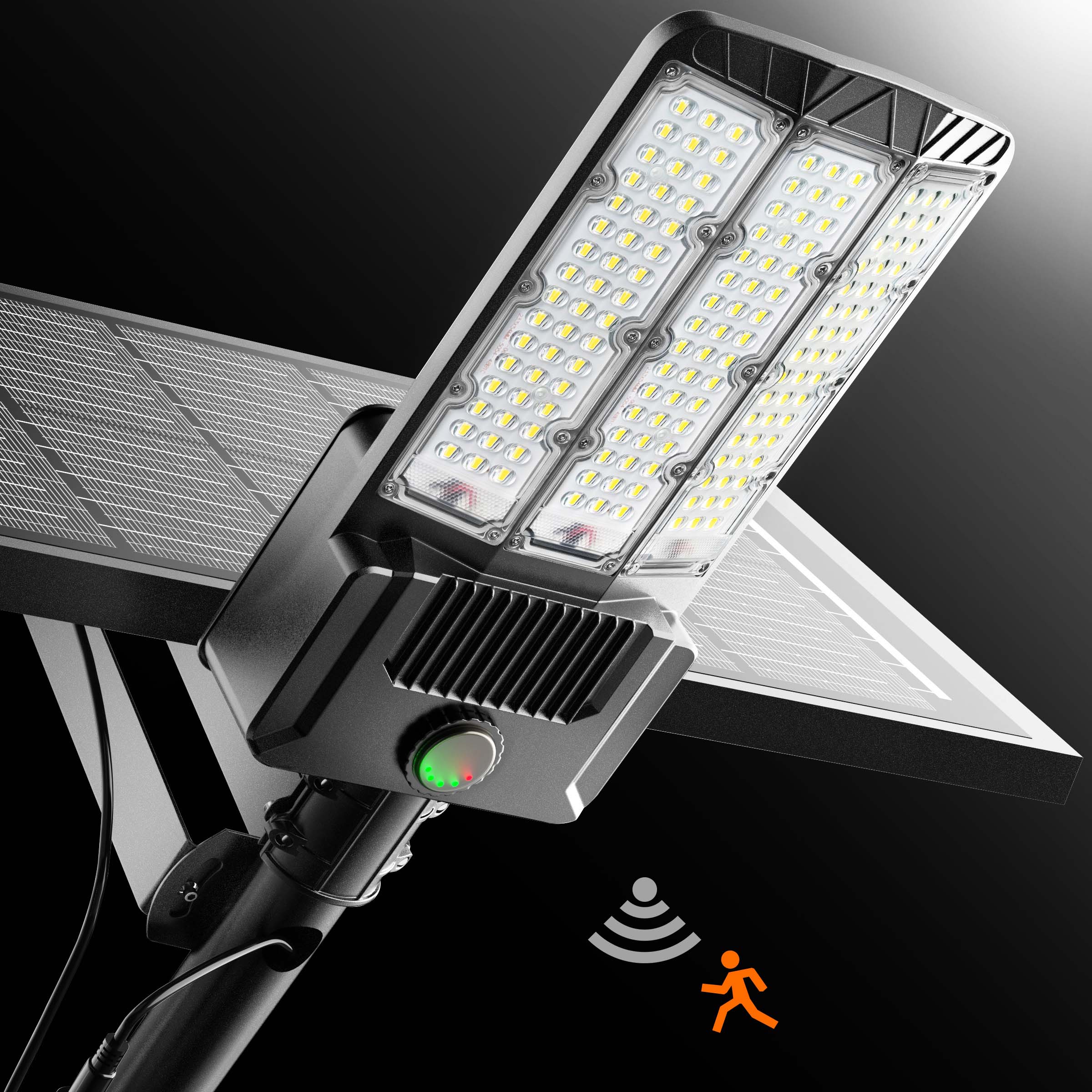






Let's be honest: most bug zappers are a disappointment. You buy one, hang it up, and two weeks later you're still slapping mosquitoes off your arms while trying to enjoy a summer evening. The problem isn't that bug zappers don't work — it's that most of them aren't built for real outdoor spaces.
If you've got a large yard, a sprawling patio, a farm, or a commercial property, you need something with actual range. Something that runs all night without you touching it. Something that doesn't die the moment a cloud rolls in. That's where professional-grade solar mosquito zappers come in — and specifically, where Hykoont's lineup stands apart from the cheap plastic units flooding the market.
This guide breaks down everything you need to know: how solar zappers work, what specs actually matter for large yards, which models are worth your money, and how to set them up for maximum coverage. No fluff, no filler — just the stuff that helps you make a smart decision.
Why Most Bug Zappers Fail in Large Yards
Walk into any big-box store and you'll find bug zappers ranging from $15 to $60. They look fine on the shelf. But here's what the packaging doesn't tell you:
- Single UV tube = weak attraction range. One tube might cover a 500–800 sq ft area on a good night. Your backyard is probably 3–5x that size.
- Plastic housing degrades fast. UV exposure, rain, and temperature swings crack cheap plastic within a season or two.
- Battery capacity is undersized. Many budget solar zappers run 3–4 hours before the battery dies. That's not enough for a full night.
- No dusk-to-dawn automation. You have to remember to turn it on and off manually — and if you forget, you're wasting charge.
Professional solar mosquito zappers solve all of these problems. They're built with commercial-grade materials, larger solar panels, higher-capacity batteries, and multi-tube UV systems that create a much wider attraction field.

What "Professional Grade" Actually Means for Solar Zappers
The term gets thrown around loosely, so let's define it clearly. A professional-grade solar mosquito zapper for large yards should have:
1. Multi-Tube UV Configuration
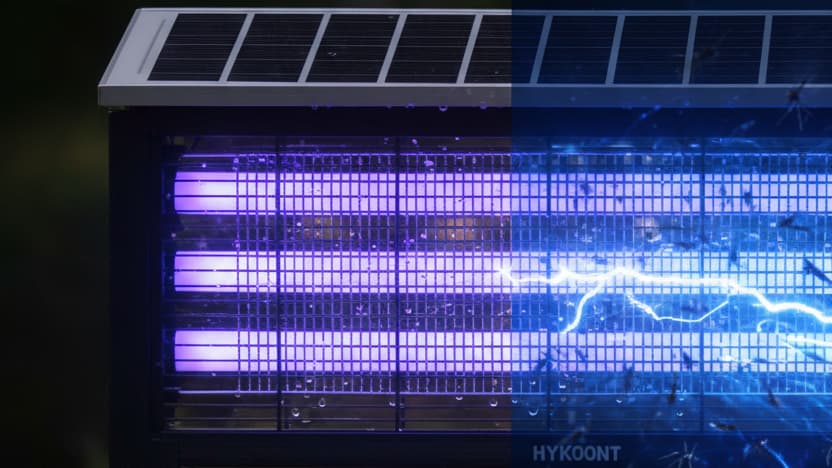
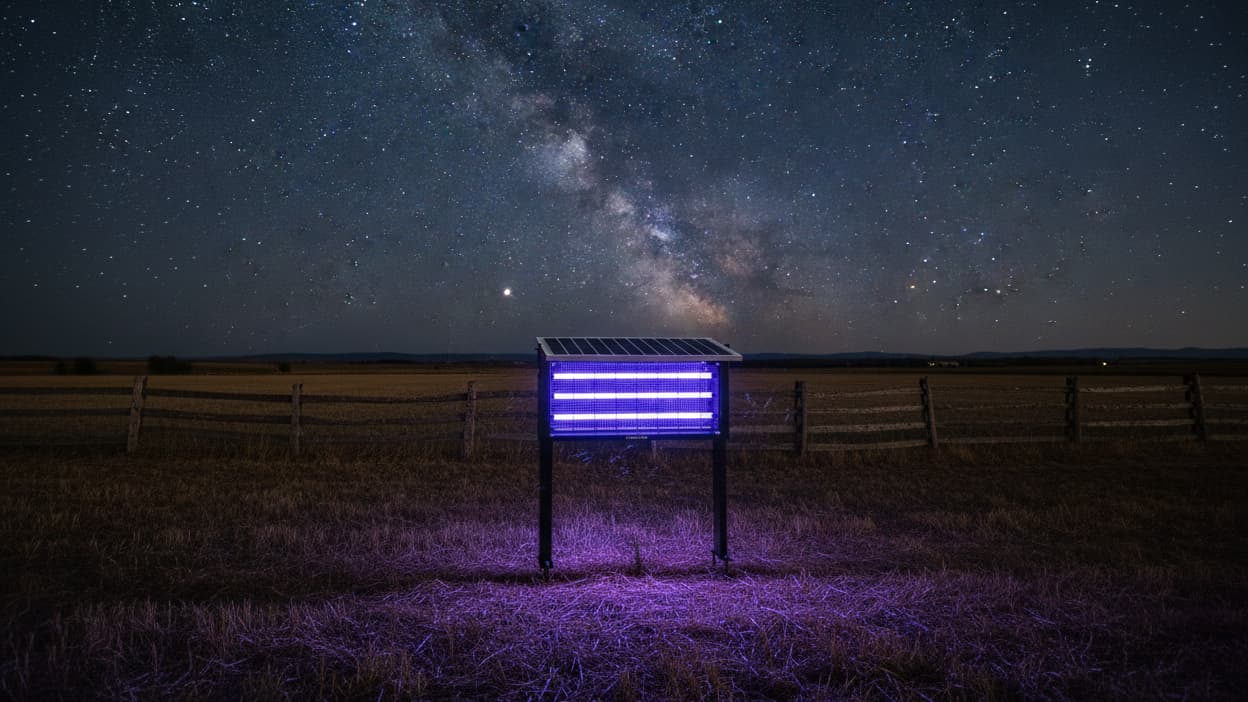
Single-tube zappers concentrate UV light in one direction. Triple-tube designs — like those used in Hykoont's models — emit UV light across a 360° field, dramatically increasing the attraction radius. More insects detect the light from farther away, which means more effective coverage per unit.
2. High-Wattage Monocrystalline Solar Panel
Monocrystalline panels are more efficient than polycrystalline alternatives, especially in partial shade or overcast conditions. For large-yard applications, you want at least a 19W panel — ideally 30W or higher — to ensure the battery charges fully even on less-than-perfect days.
3. 6000mAh+ Battery Capacity
This is the spec most people overlook. A 6000mAh battery can sustain 8–12 hours of operation, meaning the zapper runs from dusk until well past midnight — or all the way to dawn, depending on the model and conditions.
4. IPX4 or Higher Waterproof Rating
Outdoor equipment needs to handle rain. IPX4 means the unit can withstand water splashing from any direction. For areas with heavy rainfall, look for IPX5 or IP65 ratings.
5. Dusk-to-Dawn Automation
A built-in light sensor that automatically activates the zapper at dusk and shuts it off at dawn is essential for hands-free operation. You shouldn't have to think about it — it should just work.
6. Metal Housing
Powder-coated or anodized aluminum housing resists corrosion, handles UV exposure without degrading, and provides a more secure mounting structure than plastic alternatives.

The Hykoont Solar Bug Zapper Lineup: A Detailed Breakdown
Hykoont makes two primary solar mosquito zapper models designed specifically for medium-to-large outdoor spaces. Here's an honest look at both.
Hykoont 19W Solar LED Bug Zapper Light — Best for Medium-Large Yards (Up to 4,000 Sq Ft)

The Hykoont 19W Solar Bug Zapper is the entry point into professional-grade solar insect control. Don't let "entry point" fool you — this unit outperforms most premium-priced competitors.
Price: $125.00
Key specs at a glance:
- Solar panel: 19W monocrystalline silicon
- Battery: 6000mAh rechargeable
- UV configuration: Triple LED tubes (28 LEDs × 3)
- Coverage area: ~4,000 sq ft
- Runtime: Up to 8 hours per charge
- Waterproof rating: IPX4
- Installation height: 85 cm with included 70 cm metal pole
- Backup charging: USB-DC (5V/2A)
- Working modes: Constant-on or automatic dusk-to-dawn
What makes it stand out: The triple UV tube design is the real differentiator here. Where a single-tube zapper creates a narrow cone of attraction, three tubes working together create a wider, more consistent UV field. Mosquitoes and flying insects detect UV light from multiple angles, which means you're not relying on insects flying directly toward one point — you're casting a wider net.
The metal housing with corrosion-resistant surface treatment is another detail worth noting. This isn't a unit that's going to crack or fade after one summer. The IPX4 rating handles rain and splashing water, and the USB backup charging means you're not completely dependent on sunlight — useful during extended cloudy stretches.
The flexible installation is practical: use it with the ground stake for lawn placement, or hang it from a pergola, fence post, or tree branch. The 27.6" solar panel cable gives you positioning flexibility to maximize sun exposure while placing the zapper where insects are most active.
Best for: Residential backyards, patios, gardens, and outdoor dining areas up to 4,000 sq ft.
→ Shop the 19W Solar Bug Zapper — $125.00
Hykoont 30W Solar LED Bug Zapper Light Pro — Best for Large Yards and Commercial Spaces (Up to 8,000 Sq Ft)

If the 19W model is the workhorse, the Hykoont 30W Pro is the heavy equipment. This is the unit for serious outdoor spaces — large residential properties, farms, ranches, commercial courtyards, and event venues.
Price: Starting at $125.00
Key specs at a glance:
- Solar panel: 30W monocrystalline silicon (26.1" × 13.8")
- Battery: 6000mAh rechargeable
- UV configuration: Triple LED tubes (28 LEDs × 3)
- Coverage area: ~8,000 sq ft
- Runtime: 8–12 hours per charge
- Waterproof rating: IPX4
- Working modes: Constant-on or automatic dusk-to-dawn
- Installation: Multiple mounting options
What makes it stand out: The jump from 19W to 30W solar panel is significant. A larger panel means faster charging, more energy stored during the day, and longer runtime at night — especially important during shorter winter days or in regions with variable cloud cover. The 8,000 sq ft coverage area is double that of the standard model, making it genuinely suitable for commercial applications.
The extended runtime of 8–12 hours (versus 8 hours for the standard model) means this unit can realistically run from dusk to dawn in most seasons without running out of charge. For properties where mosquito control is a business necessity — outdoor restaurants, event spaces, campgrounds — that reliability matters.
Multiple installation options give you flexibility for different property layouts. Whether you're mounting it on a pole in the center of a large lawn, attaching it to a building exterior, or positioning it near a water feature (where mosquitoes breed), the 30W Pro adapts to your setup.
Best for: Large residential properties, farms, commercial outdoor spaces, event venues, and any application requiring 4,000–8,000 sq ft of coverage.
→ Shop the 30W Pro Solar Bug Zapper — From $125.00
How to Choose Between the 19W and 30W Models
Here's a simple decision framework:
| Factor | 19W Standard | 30W Pro |
|---|---|---|
| Yard size | Up to 4,000 sq ft | Up to 8,000 sq ft |
| Typical use | Residential backyard, patio | Large property, farm, commercial |
| Runtime | ~8 hours | 8–12 hours |
| Cloudy day performance | Good | Better (larger panel) |
| Installation flexibility | Ground stake + hanging | Multiple options |
Rule of thumb: If you're covering a standard residential backyard (under 4,000 sq ft), the 19W is the right call. If you've got a large property, multiple zones to cover, or you're using it for a commercial application, go with the 30W Pro — or consider deploying two 19W units strategically placed for overlapping coverage.
Strategic Placement: Where to Put Your Solar Zapper for Maximum Effect
Even the best solar mosquito zapper underperforms if it's placed in the wrong spot. Here's how to think about placement:
Place It Near Mosquito Breeding Zones — But Not Too Close
Mosquitoes breed in standing water: ponds, birdbaths, clogged gutters, low-lying areas that collect rainwater. Place your zapper within 30–50 feet of these areas to intercept mosquitoes before they reach your living spaces. Don't place it directly over the water source — you want to draw insects away from where you're sitting, not toward it.
Height Matters
Most flying insects, including mosquitoes, travel at 3–6 feet above ground level. The Hykoont 19W with its 85 cm pole puts the UV tubes right in that sweet spot. For hanging installations, aim for 5–7 feet off the ground.
Maximize Solar Panel Exposure
The solar panel needs direct sunlight for 6–8 hours to fully charge the battery. In the US, panels should generally face south (or southwest in western states) and be angled at roughly your latitude in degrees. The 27.6" cable on the 19W model gives you flexibility to position the panel separately from the zapper body if needed.
Keep It Away from Competing Light Sources
Porch lights, string lights, and other outdoor lighting compete with the UV attraction. Place your zapper at least 20–30 feet from other light sources so insects are drawn to the UV rather than your ambient lighting.
For Large Yards: Use Multiple Units
A single 8,000 sq ft unit covers a lot of ground, but for irregularly shaped properties or yards with multiple distinct zones (pool area, garden, fire pit area), two strategically placed 19W units often outperform one 30W unit. The overlapping coverage creates a more consistent barrier.
Solar Zappers vs. Other Mosquito Control Methods: An Honest Comparison
Solar zappers aren't the only option. Here's how they stack up against the alternatives:
vs. Chemical Sprays and Foggers
Sprays and foggers work fast but require repeated application (often weekly), involve chemical exposure, and can harm beneficial insects like bees and butterflies. Solar zappers are a one-time investment with zero ongoing chemical costs and no environmental residue.
vs. Propane Mosquito Traps
Propane traps (like Mosquito Magnet) are highly effective but expensive to operate — propane costs add up quickly, and the units require regular maintenance. A solar zapper has zero fuel costs and minimal maintenance.
vs. Electric Plug-In Zappers
Plug-in zappers require proximity to an outlet, which limits placement options in large yards. Running extension cords across a lawn is a tripping hazard and an eyesore. Solar zappers go anywhere sunlight reaches — no wiring required.
vs. Citronella Candles and Torches
Citronella provides a small repellent zone (roughly 3 feet) and requires constant replacement. It's a complement to, not a replacement for, active insect control. Solar zappers actively eliminate insects rather than just repelling them from a small area.
Bottom line: For large outdoor spaces where you want set-it-and-forget-it mosquito control without ongoing costs or chemical exposure, solar zappers are the most practical long-term solution.
Pairing Your Solar Zapper with Hykoont Solar Lighting
Here's something most people don't think about: your outdoor lighting setup and your mosquito control setup work better together when they're planned as a system.
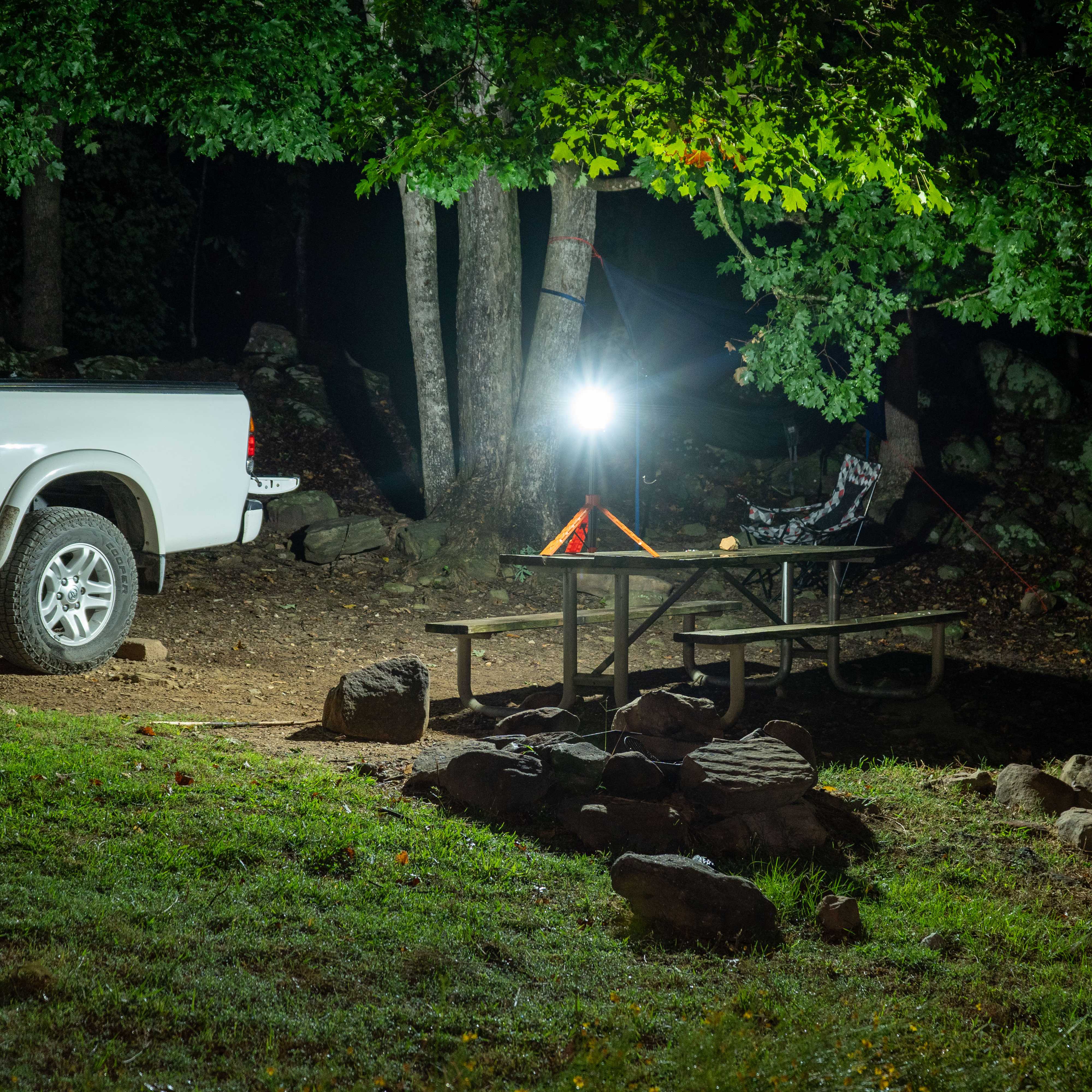
Hykoont's solar flood lights and street lights complement the bug zappers perfectly. The flood lights provide ambient illumination for your outdoor spaces, while the zappers handle insect control. Since both run on solar power, you're building a completely off-grid outdoor environment — no electrician required, no monthly electricity costs for outdoor lighting.
A few Hykoont solar lighting options worth considering alongside your zapper:

Hykoont ZZ077 300W LED Solar Flood Lights (2-Pack) — $238.00
High-output flood lighting for large yard perimeters, driveways, and security applications. Pairs well with the 30W Pro zapper for comprehensive large-yard coverage.

Hykoont XH300 Solar Flood Light 42000LM — $79.00
An affordable entry point for solar flood lighting. Great for illuminating specific zones like patios, garden paths, or pool areas while your zapper handles the bugs.
→ Build Your Solar Outdoor System — Start with the 30W Pro Zapper
Maintenance Tips to Keep Your Solar Zapper Running at Peak Performance
Solar zappers are low-maintenance by design, but a little attention goes a long way:
Clean the UV Tubes Monthly
Dead insects, dust, and debris accumulate on the UV tubes and reduce their effectiveness. A soft brush or compressed air every 3–4 weeks keeps the tubes operating at full brightness.
Wipe the Solar Panel
Dust, pollen, and bird droppings reduce solar panel efficiency. A damp cloth wipe-down every few weeks — especially in dry, dusty climates — maintains charging performance.
Check the Collection Tray
Most zappers have a collection tray for dead insects. Empty it regularly to prevent buildup that can attract other pests or create odor issues.
Inspect the Battery Annually
Lithium batteries degrade over time. If you notice significantly reduced runtime after 2–3 years, the battery may need replacement. The USB backup charging on the 19W model is useful during this transition period.
Reposition Seasonally
Sun angles change with the seasons. A panel position that's optimal in summer may be partially shaded in winter. Check your panel's sun exposure in spring and fall and adjust as needed.
Real-World Performance: What to Expect in Different US Climates
Solar performance varies by region, and it's worth setting realistic expectations:
Southeast (Florida, Georgia, Louisiana): High mosquito pressure, high solar irradiance. Both models perform excellently. The 30W Pro is recommended for properties near water bodies where mosquito populations are highest.
Midwest (Illinois, Ohio, Minnesota): Moderate mosquito season (May–September). The 19W handles most residential applications well. Expect slightly reduced runtime during overcast stretches in spring.
Southwest (Texas, Arizona, California): High solar irradiance means excellent charging performance. Mosquito pressure varies — higher near irrigation and water features. Either model works well; the 19W is sufficient for most applications.
Pacific Northwest (Oregon, Washington): Lower solar irradiance due to cloud cover. The 30W Pro's larger panel is a meaningful advantage here, providing better charging on overcast days. The USB backup charging on the 19W is also useful in this region.
Northeast (New York, Massachusetts, Pennsylvania): Moderate solar irradiance, significant mosquito season. Both models perform well during peak summer months. The USB backup charging provides useful insurance during extended cloudy periods.
Frequently Asked Questions
Q: How many solar mosquito zappers do I need for a 1-acre yard?
A: One acre is approximately 43,560 sq ft. The 30W Pro covers 8,000 sq ft, so you'd theoretically need 5–6 units for complete coverage. In practice, most homeowners focus coverage on the areas where they spend time — patios, pool areas, garden zones — rather than trying to cover the entire property. Two or three strategically placed 30W Pro units typically provide effective control for the active areas of a 1-acre property.
Q: Do solar bug zappers work on cloudy days?
A: Yes, but with reduced charging efficiency. Monocrystalline panels (used in both Hykoont models) perform better in low-light conditions than polycrystalline alternatives. A fully charged battery from a sunny day will carry the unit through one or two overcast nights. The 19W model also supports USB backup charging for extended cloudy periods.
Q: Will the UV light attract mosquitoes from my neighbors' yards?
A: UV light does attract insects from a wider area than just your property. This is actually a feature, not a bug (pun intended) — it means the zapper is intercepting mosquitoes before they reach your outdoor living spaces. The effective attraction radius of the triple-tube design extends well beyond your property line.
Q: Are solar bug zappers safe around children and pets?
A: Yes. The electric grid inside the zapper is enclosed within the housing and requires direct contact to deliver a shock. The UV light itself is not harmful to humans or pets. Keep the unit out of reach of small children as a general precaution, but normal outdoor use around kids and animals is safe.
Q: How long does the battery last before it needs replacement?
A: Lithium batteries in quality solar products typically last 3–5 years with regular use. Factors that extend battery life include avoiding complete discharge (the dusk-to-dawn mode helps with this), keeping the unit in moderate temperatures, and not leaving it in storage for extended periods without occasional charging.
Q: Can I use the solar zapper in winter?
A: The units are designed for year-round outdoor use with IPX4 weather resistance. In regions with freezing temperatures, battery performance decreases in extreme cold. If you're in a climate with harsh winters and minimal mosquito activity, storing the unit indoors during the coldest months extends battery life.
Q: What's the difference between the two working modes?
A: Mode 1 (Constant-on) keeps the UV light running continuously whenever the unit is powered on — useful if you want to run it during specific hours or in areas with ambient light that might confuse the sensor. Mode 2 (Dusk-to-dawn) uses a built-in light sensor to automatically activate at dusk and shut off at dawn — the recommended mode for most users since it maximizes battery efficiency and requires zero manual operation.
Q: Do I need to assemble the unit?
A: Minimal assembly is required. The ground stake and pole attach straightforwardly, and the solar panel connects via the included cable. Most users have the unit operational within 15–20 minutes of unboxing.
Q: Will the zapper kill beneficial insects like bees and butterflies?
A: UV zappers primarily attract insects that are active at night, including mosquitoes, moths, and gnats. Bees and butterflies are diurnal (active during the day) and are not significantly attracted to UV light at night. The dusk-to-dawn mode further reduces any impact on daytime pollinators since the unit is off during daylight hours.
Q: What's the warranty on Hykoont solar zappers?
A: For specific warranty information, please check the product page or contact Hykoont customer support directly. Hykoont products are designed for long-term outdoor durability with commercial-grade materials and construction.
The Bottom Line
If you've been tolerating mosquitoes in your large yard because nothing has worked well enough, the problem probably wasn't your expectations — it was the equipment. Budget zappers with single UV tubes and undersized batteries simply aren't built for serious outdoor spaces.
The Hykoont 19W and 30W Pro solar bug zappers are different. Triple UV tubes, monocrystalline solar panels, 6000mAh batteries, metal housing, and dusk-to-dawn automation — these are the specs that translate to real-world performance across a full season, not just the first few weeks.
For most residential backyards up to 4,000 sq ft, the 19W Standard at $125.00 is the right call. For larger properties, farms, or commercial applications, the 30W Pro starting at $125.00 delivers the coverage and runtime you need.
Either way, you're making a one-time investment in equipment that runs every night, requires minimal maintenance, and costs nothing to operate. That's a pretty good deal for taking back your backyard.
→ Shop 19W Solar Zapper — $125.00 → Shop 30W Pro Solar Zapper

Leave a comment
This site is protected by hCaptcha and the hCaptcha Privacy Policy and Terms of Service apply.