
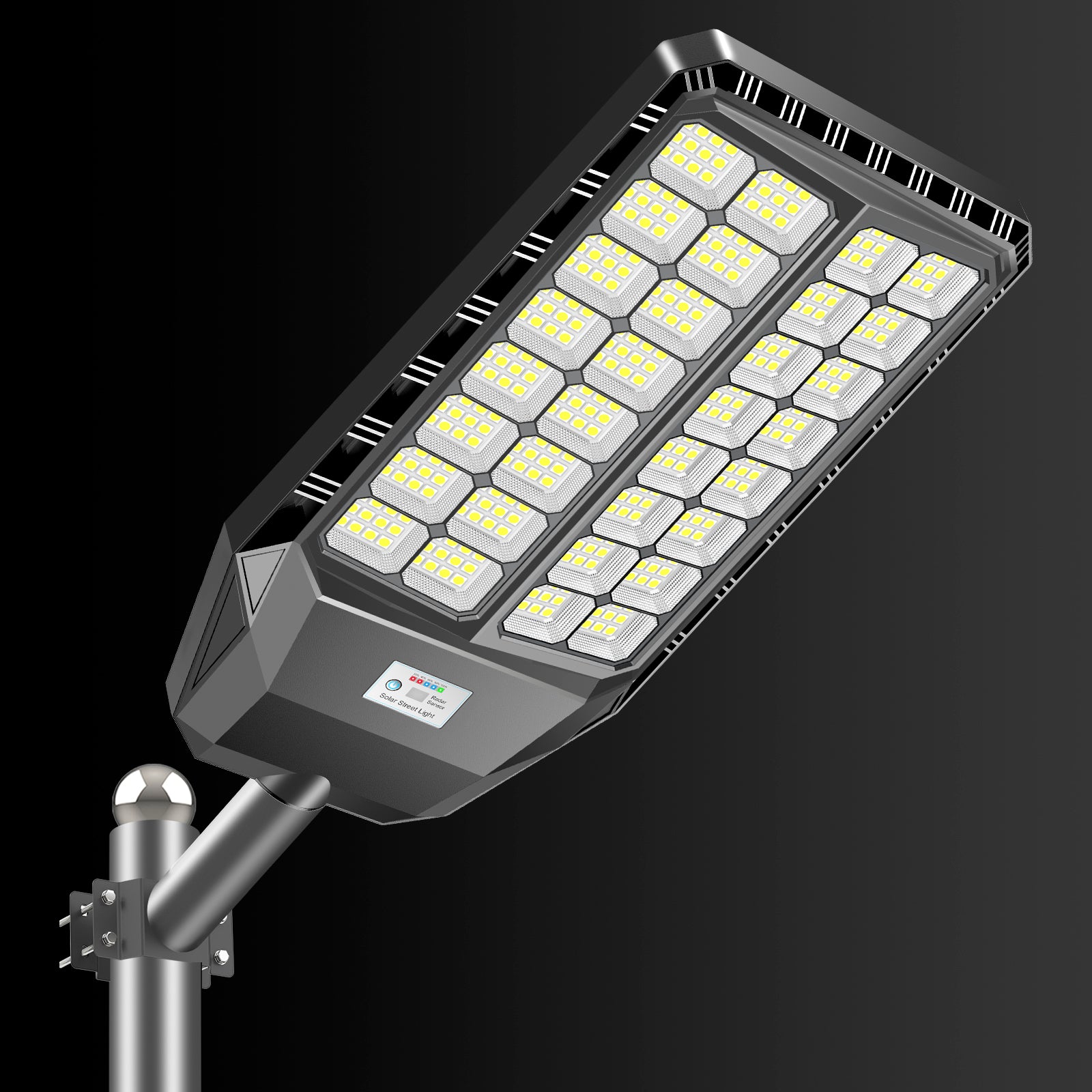
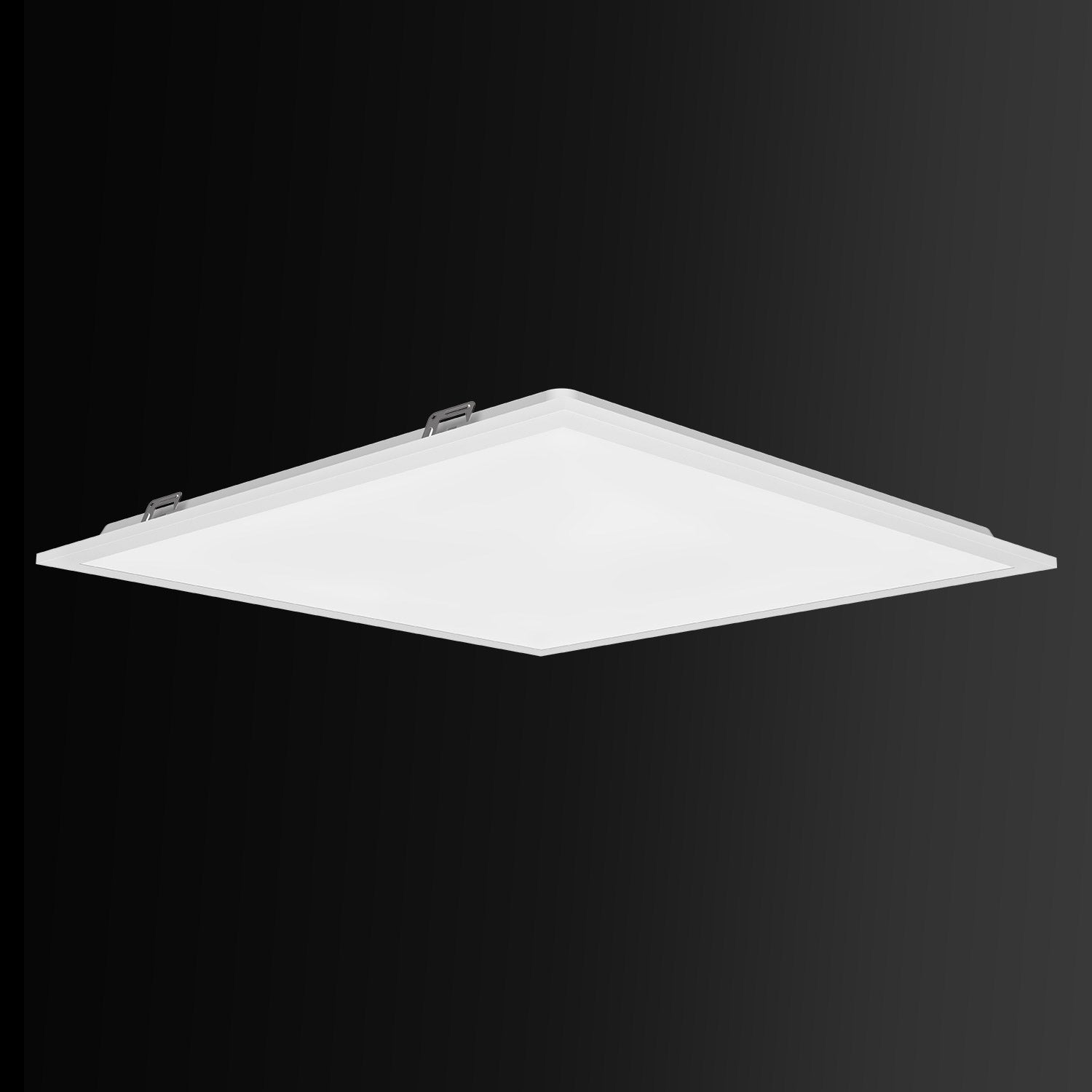


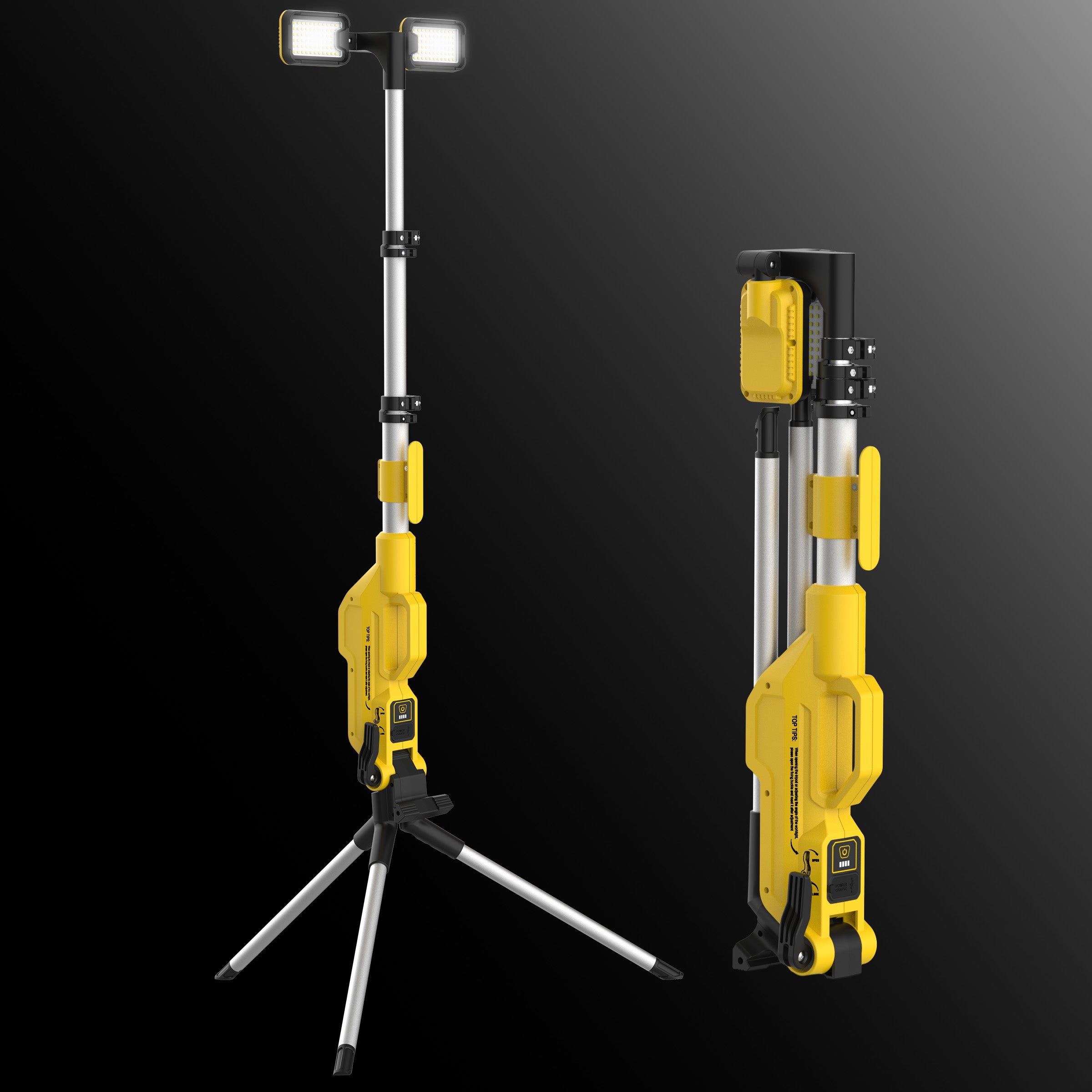





It's 2:14 AM on a Tuesday. Nobody's in the office. But somewhere, a procurement agent — not a person, a software agent — is comparing lumen output, IP ratings, warranty terms, and per-unit pricing across a shortlist of commercial solar street lights. By morning, it's drafted a purchase recommendation, flagged two products that qualify for the federal Investment Tax Credit, and noted that one SKU ships from a warehouse 200 miles closer to your job site.
This isn't a pitch for some enterprise software suite that costs more than your lighting budget. This is what's already happening on modern e-commerce storefronts built for agentic browsing — and it's changing how contractors, facilities managers, and municipal procurement teams source outdoor lighting.
If you're still sourcing commercial lighting the old way — three quotes, a spreadsheet, two weeks of back-and-forth — this article is going to feel uncomfortably relevant.
What "Agentic Procurement" Actually Means (Without the Buzzword Soup)
Let's skip the hype. An "agentic storefront" is just an online store that's been structured so that AI tools — whether that's a company's internal procurement bot, a ChatGPT plugin, or a purchasing assistant built into an ERP — can read, compare, and act on product data without a human clicking through every page.
Think of it like this: a traditional e-commerce site is built for human eyes. An agentic storefront is built so that both humans and software agents can extract meaningful information — specs, pricing, availability, certifications — and make decisions from it.
For commercial lighting buyers, this matters because the sourcing decision is rarely simple. You're not buying one bulb. You're specifying 40 solar street lights for a parking lot, or 120 high bay fixtures for a warehouse, or a mix of flood lights and wall packs for a municipal campus. The variables are real: wattage, color temperature, mounting height, battery backup duration, UL/DLC certification, warranty length, lead time.
An AI agent can process all of that in seconds. The question is whether the storefront it's browsing gives it the data it needs to do that well.
Why Commercial Lighting Is One of the First Categories to Feel This Shift
Commercial lighting procurement has always been spec-heavy and comparison-intensive. That makes it a natural fit for AI-assisted sourcing — and an early proving ground for agentic purchasing behavior.
Here's what's driving it:
The specs are structured. Lumens, watts, IP rating, color temperature, beam angle, certifications — these are discrete, comparable data points. AI agents are very good at structured comparisons. They're less good at "this one just feels right."
The stakes are high enough to justify research. A 40-unit solar street light order at $142–$289 per unit is a $5,680–$11,560 purchase decision. That's worth careful evaluation. AI agents are increasingly being deployed for exactly this kind of mid-market procurement — not trivial, not enterprise-scale, but significant enough to warrant rigor.
Energy incentives add complexity. Federal tax credits, utility rebates, and state-level incentive programs mean the "true cost" of a lighting purchase isn't the sticker price. AI procurement tools are starting to factor in ITC eligibility, DLC certification requirements for rebates, and depreciation schedules. A storefront that surfaces this information clearly gets more traction with agent-assisted buyers.
The supply chain is still recovering. Post-pandemic lead times, shipping variability, and inventory volatility mean buyers want real-time availability data — not a static catalog. Agentic storefronts that expose live inventory and ship-from-location data are winning procurement decisions that static PDFs are losing.

What This Looks Like in Practice: A Real Sourcing Scenario
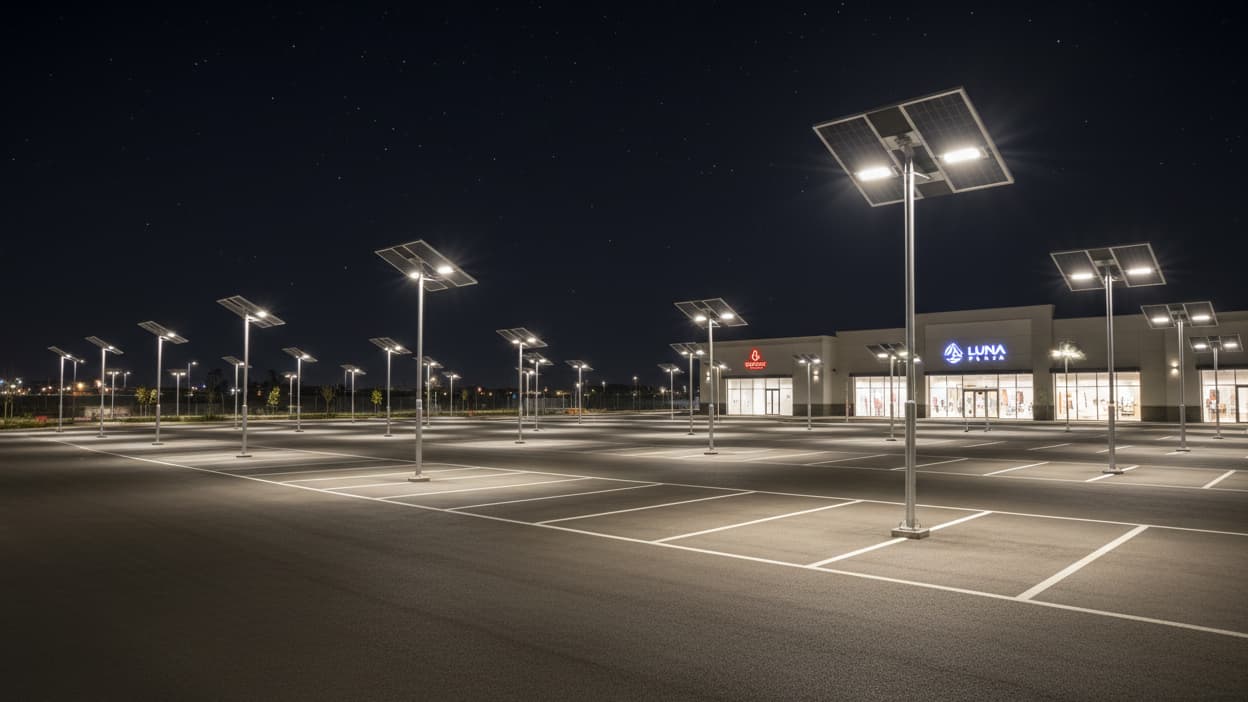
Let's walk through a realistic example. A facilities director at a regional hospital system needs to upgrade the lighting in three surface parking lots — roughly 60 poles total. The project has a sustainability mandate (solar preferred), a budget ceiling, and a timeline tied to a capital expenditure cycle ending in Q3.
Old process: Call two or three distributors. Wait for quotes. Compare PDFs. Schedule a call with a rep. Wait for samples. Make a decision six weeks later.
New process with an AI procurement agent:
- The agent receives the project brief: 60 poles, parking lot application, solar preferred, 5,000K–6,500K color temperature, minimum IP65, UL listed, budget under $200/unit.
- It queries structured product data from agentic-ready storefronts.
- It surfaces candidates: the Hykoont BM024 160W Solar Street Light at $199/unit (2-pack pricing), the TW030 300W at $142/unit for higher-output poles, and the BM024C at $79/unit for lower-traffic areas.
- It flags that the BM024 and TW030 both carry IP66 ratings (exceeding the IP65 minimum), notes 6,500K color temperature on the BM024C, and checks DLC certification status for potential utility rebate eligibility.
- It drafts a tiered recommendation: premium poles at high-traffic entries, mid-range at general parking rows, value units at perimeter areas — with a blended per-unit cost well under the $200 ceiling.
That entire process — which used to take weeks — now takes minutes for the agent, and maybe 20 minutes for the human to review and approve.

The Products That Show Up in Agent Searches (And Why)
Not all products are equally "agent-readable." Here's what tends to surface — and why these specific products are well-positioned for agentic procurement:
For Parking Lots, Roadways, and Municipal Applications

Hykoont TW030 300W Solar Street Light — $142.00
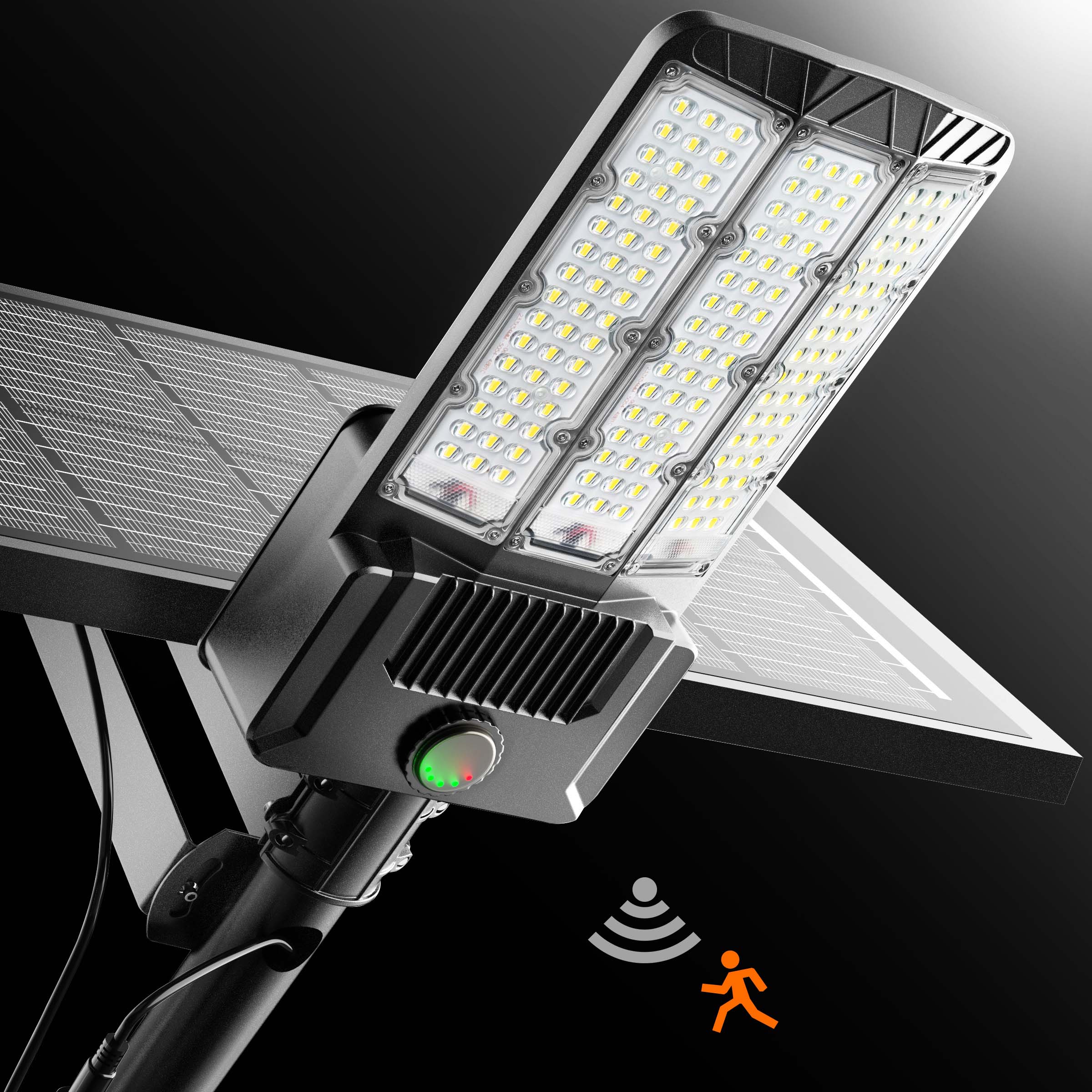
42,000 lumens. Dusk-to-dawn operation. This is the unit that shows up when an agent is searching for high-output solar street lighting for arterial roads or large parking structures. The lumen-per-dollar ratio is hard to beat at this price point, and the dusk-to-dawn automation removes the need for separate timer controls — which matters for facilities teams managing dozens of poles.
Need two? The TW030 2-Pack is $289 — effectively $144.50/unit with the convenience of a single order line.

Hykoont SZ300 400W Commercial Solar Street Light — $145.00
60,000 lumens. Mono solar panel. Die-cast aluminum housing. This is the unit for serious commercial applications — highway shoulders, large industrial yards, campus perimeters. At $145 for 60,000 lumens, it's the kind of spec that makes a procurement agent flag it as a high-value outlier worth human review. The mono panel efficiency matters in northern states with lower winter sun hours.

Hykoont BM024 160W Solar Street Light 2-Pack — $199.00
21,600 lumens per unit. IP66 rated. At $99.50/unit in a 2-pack, this is the workhorse for mid-scale commercial projects — shopping center parking lots, school campuses, apartment complex driveways. The IP66 rating (not just IP65) means it handles driving rain and dust ingress better than the minimum spec most projects require.
For Warehouses, Manufacturing Facilities, and Indoor Commercial Spaces

Hykoont GC377 UFO LED High Bay Light (150/200W) — $109.00
UL and DLC certified. 150 lumens per watt. This is the spec that matters for warehouse and manufacturing procurement — DLC certification is often required to qualify for utility rebates, and 150 lm/W efficiency is the threshold many energy auditors use to approve projects. At $109, it's priced for volume orders without sacrificing the certifications that unlock rebate dollars.
The Certification Question: What AI Agents Check That Humans Often Skip
Here's something interesting about AI-assisted procurement: agents tend to be more rigorous about certifications than human buyers under time pressure.
A facilities manager rushing to close a capital expenditure before quarter-end might overlook whether a fixture is DLC listed. An AI agent, given the instruction "flag anything that qualifies for utility rebates," will check every single product against DLC certification status before making a recommendation.
This matters for your bottom line. DLC-listed fixtures can qualify for utility rebates ranging from $20 to $150+ per fixture depending on your utility and state. On a 100-fixture order, that's potentially $2,000–$15,000 back — money that often goes unclaimed because the sourcing process didn't surface it.
The Hykoont GC377 UFO High Bay carries both UL and DLC certification. The GC376 Linear High Bay at $59 is similarly positioned for rebate-eligible projects. If your procurement process isn't systematically checking for DLC status, you're leaving money on the table — and AI-assisted sourcing is starting to close that gap.
What Municipalities Are Actually Doing With This
Municipal procurement is one of the most interesting early adopters of agentic sourcing — not because municipalities are tech-forward (they're often the opposite), but because the procurement rules they operate under actually benefit from AI assistance.
Public procurement typically requires documented competitive comparison, specification matching against published requirements, and audit trails. AI agents are naturally good at generating exactly this kind of documentation. A procurement agent that can output a structured comparison of three solar street light options — with specs, pricing, certification status, and shipping lead times — is producing exactly the kind of documentation a public purchasing officer needs to justify a sole-source or competitive bid decision.
Several mid-sized municipalities have started piloting AI-assisted procurement for infrastructure purchases in the $10,000–$100,000 range — exactly the range where a 40–200 unit solar street light order lands. The early results suggest that AI-assisted sourcing reduces the time from project specification to purchase order by 40–60%, while improving specification compliance (fewer "we ordered the wrong thing" situations).

The Contractor Angle: Why This Changes How You Bid Jobs
If you're a lighting contractor or electrical contractor who bids commercial projects, agentic procurement is going to change your competitive landscape — and probably sooner than you think.
Here's the dynamic: your clients are starting to use AI tools to sanity-check your quotes. If you spec a $280/unit solar street light and an AI agent can surface a comparable unit at $142 with similar specs, your client is going to ask questions. That's not necessarily bad — it's an opportunity to demonstrate value through your expertise, your installation quality, your warranty support, and your project management. But it means the "markup on materials" model gets harder to sustain.
The contractors who are going to win in an agentic procurement environment are the ones who:
- Spec products with clear, defensible reasons (not just distributor relationships)
- Can articulate why a specific product's certifications, warranty, or performance characteristics justify its price
- Build relationships with suppliers who have structured, transparent product data — because that's what their clients' AI tools will be reading
- Use AI tools themselves to find better-value products and pass savings to clients, building trust and repeat business
The TW030 at $142 and the SZ300 at $145 are the kinds of products that hold up well under AI-assisted scrutiny — the specs are real, the pricing is transparent, and the lumen-per-dollar math is defensible.
Solar vs. Grid-Tied: How AI Agents Are Shifting the Default
For most of the past decade, the default assumption in commercial outdoor lighting was grid-tied. Solar was the "green option" you considered if the client asked for it or if trenching costs were prohibitive.
AI procurement agents are quietly shifting that default — not because they're programmed to prefer solar, but because when they run the full cost comparison (fixture cost + installation + trenching + ongoing electricity cost + maintenance), solar increasingly wins on total cost of ownership for applications where grid connection isn't already present.
The math is straightforward. A grid-tied street light installation in a new parking lot might require $800–$2,000 per pole in trenching and electrical work, plus ongoing electricity costs of $40–$80/year per pole. A solar street light at $142–$199 per unit with zero trenching and zero electricity cost pays back the premium in 2–4 years — and AI agents are starting to surface this calculation automatically when they see a parking lot or pathway lighting spec.
This is why products like the BM024 at $199 for a 2-pack and the BM024C at $79 are showing up in procurement recommendations for projects where solar wasn't even in the original spec. The agent does the math and flags it.

What "Structured Product Data" Means for Buyers (And Why It Matters)
You've probably noticed that some product pages give you everything you need to make a decision, and others make you hunt for basic specs. That gap is going to get more consequential as AI-assisted procurement becomes standard.
When an AI agent queries a product, it's looking for:
- Wattage and lumen output — the efficiency ratio matters
- IP rating — is it actually rated for the application?
- Color temperature — 5000K vs 6500K matters for different applications
- Certifications — UL, DLC, ETL, CE — which ones and for what?
- Warranty terms — length and what's covered
- Battery backup duration — for solar, how many hours of operation without sun?
- Mounting compatibility — pole diameter, arm length, tilt range
- Shipping origin and lead time — when does it actually arrive?
Products that surface this data clearly — in structured, machine-readable formats — are going to win more AI-assisted procurement decisions. Products that bury specs in PDFs or require a phone call to get basic information are going to get filtered out before a human ever sees them.
The ROI Conversation: Numbers That Actually Matter
Let's put some real numbers on a typical commercial solar lighting project so you have something concrete to work with.
Scenario: 30-pole parking lot upgrade, suburban retail center, Midwest US
Option A — Grid-tied LED street lights:
- Fixture cost: $180/unit × 30 = $5,400
- Trenching and electrical: $1,200/pole × 30 = $36,000
- Annual electricity: $60/pole × 30 = $1,800/year
- Year 1 total: $43,200
- 5-year total: $52,200
Option B — Solar street lights (Hykoont TW030 at $142/unit):
- Fixture cost: $142/unit × 30 = $4,260
- Installation (no trenching): $200/pole × 30 = $6,000
- Annual electricity: $0
- Year 1 total: $10,260
- 5-year total: $10,260
The 5-year savings: $41,940. That's not a rounding error. That's a real number that AI procurement agents are surfacing — and that's before any utility rebates or ITC credits.
This is why the conversation around commercial solar lighting has shifted from "is it good enough?" to "why aren't we doing this everywhere?" The answer, increasingly, is: you should be.
→ Start with the TW030 at $142 — calculate your project savings
Frequently Asked Questions
What is AI-driven procurement in commercial lighting?
It's the use of software agents — tools that can browse, compare, and analyze product data automatically — to assist or automate the sourcing process for commercial lighting projects. Instead of a buyer manually comparing spec sheets, an AI agent does the comparison and surfaces the best options based on defined criteria like wattage, certification, price, and availability.
Do AI procurement agents actually work for solar lighting sourcing?
Yes, and they're particularly well-suited to it. Solar lighting specs are structured and comparable — lumens, watts, IP rating, battery backup hours, panel wattage — which is exactly the kind of data AI agents process well. The challenge is that the product data needs to be structured and accessible. Products with clear, complete spec data surface more reliably in agent-assisted searches.
What certifications should I look for when sourcing commercial solar street lights?
For outdoor applications, IP65 or IP66 is the minimum for weather resistance. UL listing is important for insurance and code compliance in most US jurisdictions. DLC (DesignLights Consortium) certification is critical if you want to qualify for utility rebates — many utilities require DLC listing as a condition of rebate eligibility. For high bay indoor applications, both UL and DLC certification (like the Hykoont GC377) are worth prioritizing.
How do I calculate the ROI on commercial solar street lights vs. grid-tied?
The key variables are: fixture cost, installation cost (including trenching for grid-tied), annual electricity cost, and any applicable rebates or tax credits. For most parking lot and pathway applications where grid connection isn't already present, solar pays back within 2–5 years. The TW030 at $142/unit with minimal installation cost vs. $1,200+ per pole in trenching for grid-tied is a common comparison that strongly favors solar.
What wattage solar street light do I need for a commercial parking lot?
It depends on pole height and spacing. For standard 20–25 ft poles with 60–80 ft spacing, 160W–300W units (like the BM024 at 160W or TW030 at 300W) are typical. For tighter spacing or lower poles, the BM024C at 160W covers most mid-density applications. For high-output arterial road or large lot applications, the SZ300 at 400W/60,000 lumens is the commercial-grade choice.
Can municipalities use AI procurement tools for solar lighting purchases?
Yes, and it's increasingly common. AI procurement tools are well-suited to public purchasing because they generate the kind of structured comparison documentation that public procurement rules often require. The key is that the sourcing process still needs to comply with local procurement regulations — AI tools assist the process, they don't replace the compliance requirements.
What's the difference between IP65 and IP66 ratings for outdoor lighting?
Both protect against dust ingress (the "6" in the first digit). The second digit indicates water resistance: IP65 protects against low-pressure water jets from any direction; IP66 protects against high-pressure water jets. For most commercial outdoor applications, IP65 is sufficient. For applications with pressure washing, heavy rain exposure, or coastal environments, IP66 (like the BM024 and TW030) provides meaningful additional protection.
How does DLC certification affect utility rebates for commercial lighting?
DLC (DesignLights Consortium) maintains a qualified products list that most US utilities use to determine rebate eligibility. If a fixture isn't on the DLC list, it typically doesn't qualify for utility rebates — regardless of its actual efficiency. For high bay lighting projects especially, DLC certification can unlock $20–$150+ per fixture in rebates. The Hykoont GC377 UFO High Bay is UL and DLC certified, making it rebate-eligible in most utility programs.
What should I ask a supplier before placing a large commercial solar lighting order?
Key questions: What's the current lead time and ship-from location? Are replacement parts (batteries, panels, drivers) available separately? What does the warranty cover and what's the claims process? Are there volume pricing tiers? Do the products carry UL listing and DLC certification? Can you provide photometric data (IES files) for lighting layout planning? Suppliers with structured, transparent answers to these questions are better positioned for AI-assisted procurement environments.
Is solar street lighting reliable enough for 24/7 commercial applications?
Modern commercial solar street lights with lithium battery storage are designed for 3–5 consecutive cloudy days of operation at reduced output, with full output on clear nights. For most US commercial applications, this is sufficient. In regions with extended low-sun periods (Pacific Northwest winters, for example), specifying higher-wattage panels and larger battery capacity — or supplementing with grid backup — is worth considering. The TW030 and SZ300 are designed for commercial reliability with this kind of extended operation in mind.
The Bottom Line
AI-driven procurement isn't coming for commercial lighting sourcing — it's already here. The buyers using it are moving faster, making better-documented decisions, and surfacing cost savings (solar vs. grid, rebate eligibility, volume pricing) that manual processes routinely miss.
For facilities managers, contractors, and municipal buyers, the practical implication is straightforward: the products that win in this environment are the ones with clear specs, real certifications, transparent pricing, and the kind of lumen-per-dollar performance that holds up under scrutiny.
The TW030 at $142, the SZ300 at $145, the BM024 2-pack at $199, the ZZ077 flood light 2-pack at $238, and the GC377 high bay at $109 are all products that perform well under that kind of scrutiny — whether the buyer is a human with a spreadsheet or a software agent running comparisons at 2 AM.
Either way, the lights go on.
→ Shop Commercial Solar Street Lights | → Shop LED High Bay Lights | → Shop Solar Flood Lights

Leave a comment
This site is protected by hCaptcha and the hCaptcha Privacy Policy and Terms of Service apply.