






Let's be honest — you've probably tried citronella candles, those plug-in mosquito coils, maybe even one of those cheap plastic zappers from the hardware store. And every summer, the mosquitoes win.
So what's different about a solar bug zapper for outdoor use? Quite a bit, actually. Especially when you're looking at a triple-UV-tube design that runs all night on solar power, covers up to 8,000 sq ft, and doesn't require a single extension cord.
This guide breaks down everything you need to know — from how UV attraction actually works, to which model fits your yard size, to what you should expect to pay. No filler, no vague promises.
Why Most Bug Zappers Fail (And What to Look For Instead)
The classic bug zapper — that blue glowing box your grandparents had on the porch — works on a simple principle: UV light attracts insects, and an electric grid kills them. The problem? Most cheap models use a single weak UV tube, cover maybe 500 sq ft, and need to be plugged into an outlet. That means you're either running an extension cord across your patio or placing it somewhere inconvenient.
Solar bug zappers solve the cord problem. But not all solar models are equal. Here's what separates a genuinely useful outdoor bug zapper from one that'll collect dust in your garage by August:
- UV tube count: Single tube = weak attraction. Triple tube = significantly wider coverage and stronger draw for mosquitoes and flying insects.
- Solar panel wattage: A 19W–30W monocrystalline panel charges faster and stores more energy than the 5W panels on budget models.
- Battery capacity: 6000mAh is the sweet spot for 8+ hours of runtime on a full charge.
- Waterproof rating: IPX4 minimum for anything that'll be outside year-round. This means it handles rain and splashing without issue.
- Coverage area: Honest coverage specs matter. A 4,000–8,000 sq ft rating is realistic for a quality triple-tube model.
Now let's look at the two models worth your attention.

The Two Solar Bug Zappers Worth Buying Right Now
Option 1: The Workhorse for Large Yards
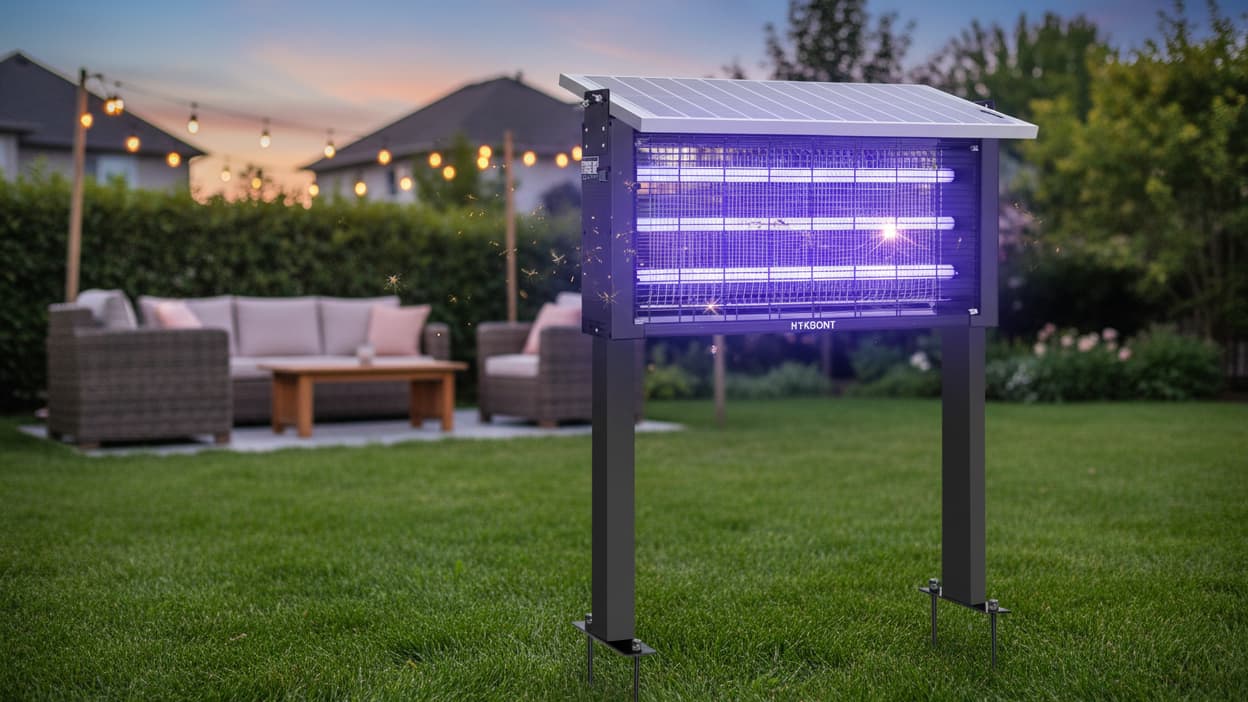
Hykoont 30W Solar LED Bug Zapper Light Pro – Triple Tube, Dusk-to-Dawn

Price: $259.00 (30W Pro) | $125.00 (19W Standard variant)
This is the one for serious outdoor spaces. If you've got a large backyard, a farm, a commercial property, or a patio that bleeds into a lawn, the 30W Pro is built for that scale.
What makes it stand out:
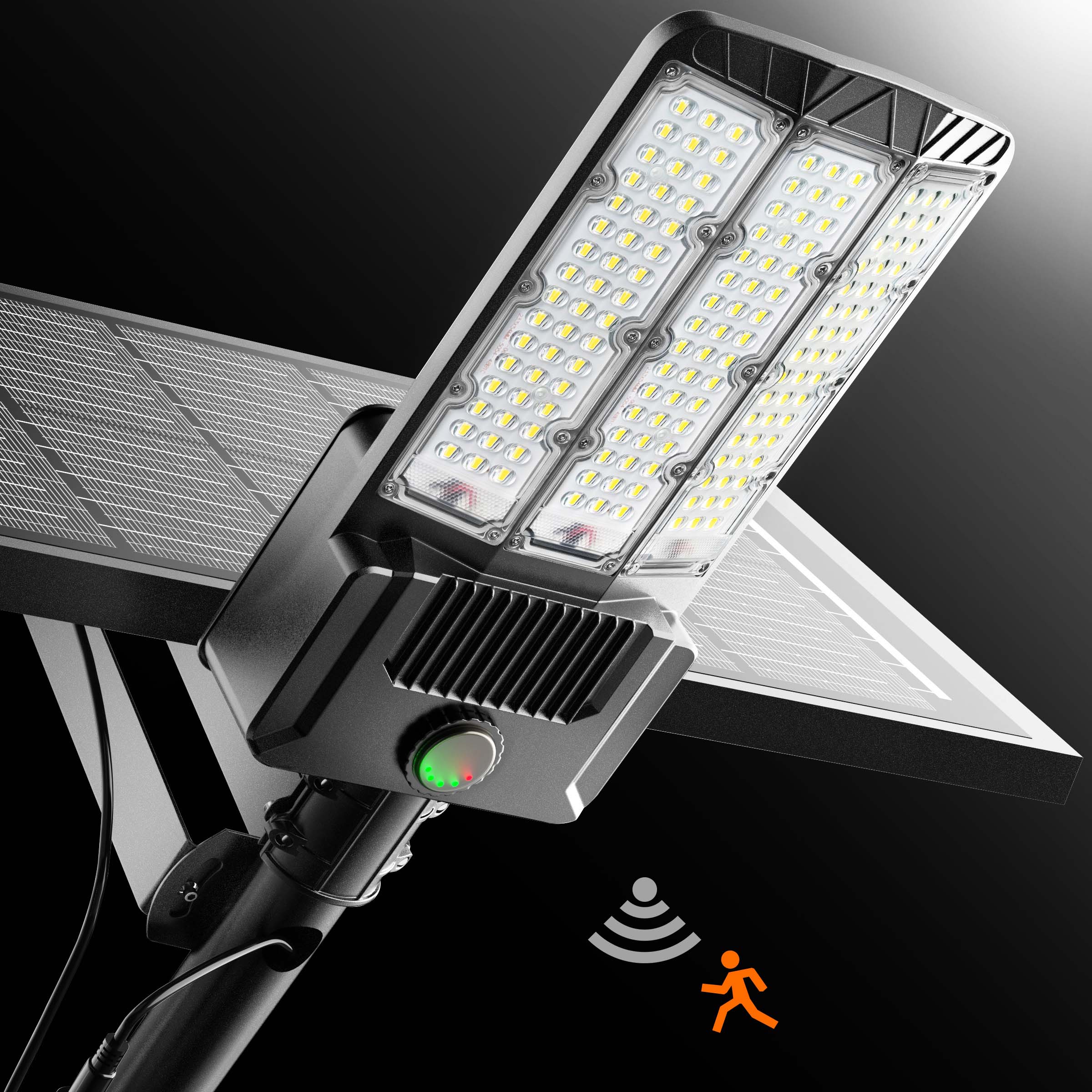
- Triple LED tube configuration with 28 LEDs per tube (84 LEDs total) — that's a lot of UV output
- 30W monocrystalline solar panel (26.1 × 13.8 inches) — charges efficiently even on partly cloudy days
- 6000mAh battery — runs 8–12 hours depending on conditions
- Coverage: up to 8,000 sq ft
- Two modes: constant mosquito-attracting light, or automatic dusk-to-dawn (our recommendation for most users)
- No motion sensor, no radar — just steady, reliable UV output all night
- IPX4 waterproof — handles rain without issue
- Multiple installation options — pole mount, hanging, or ground stake
- Solar panel cable: 31.5 inches — gives you flexibility to angle the panel toward the sun independently
The dusk-to-dawn mode is genuinely useful. You set it once, and it handles itself — charges during the day, activates at sunset, shuts off at sunrise. No timers, no apps, no fuss.
Who it's for: Homeowners with large yards (5,000+ sq ft), farms, ranches, commercial outdoor spaces, or anyone who's tried smaller zappers and been disappointed.
→ Get the 30W Pro – $259 | Free Shipping
Option 2: The Smart Pick for Mid-Size Yards
Hykoont 19W Solar LED Bug Zapper Light Standard – Triple UV Tubes, Ground Stake & Hanging

Price: $125.00 | Free Shipping
If your outdoor space is a typical suburban backyard, patio, or garden — roughly 2,000–4,000 sq ft — the 19W Standard hits the sweet spot. Same triple UV tube design, same 6000mAh battery, same IPX4 rating. The difference is the solar panel (19W vs 30W) and the coverage area (4,000 sq ft vs 8,000 sq ft).
What you get:
- Triple UV LED tubes — same attraction principle as the Pro, scaled for mid-size spaces
- 19W monocrystalline solar panel (25.6 × 7.1 inches)
- 6000mAh battery — up to 8 hours runtime
- Coverage: up to 4,000 sq ft
- USB backup charging (5V/2A) — useful during extended cloudy stretches
- Metal housing with corrosion-resistant finish — not plastic, not flimsy
- Includes 70cm metal ground stake — stable placement in lawns and gardens
- Can also be hung from a hook or bracket
- IPX4 waterproof
The USB backup charging is a detail worth noting. Most solar bug zappers don't offer this. If you hit a week of overcast weather in the Pacific Northwest or during a rainy stretch in the South, you can plug it in and keep it running. That's a practical feature, not a gimmick.
Who it's for: Suburban homeowners, renters with outdoor patios, gardeners, campers with a base camp setup, or anyone who wants solid mosquito control without overspending.
→ Get the 19W Standard – $125 | Free Shipping
How to Choose: A Practical Decision Framework
You don't need a spreadsheet. Here's a simple way to think about it:
| Your Situation | Recommended Model | Price |
|---|---|---|
| Patio, small garden, apartment balcony | 19W Standard | $125 |
| Suburban backyard (up to 4,000 sq ft) | 19W Standard | $125 |
| Large yard, farm, or open property | 30W Pro | $259 |
| Commercial outdoor space or event venue | 30W Pro (multiple units) | $259/unit |
| Frequently cloudy region, want backup charging | 19W Standard (USB backup) | $125 |
Where to Place Your Solar Bug Zapper for Maximum Effect
Placement matters more than most people realize. A few principles that actually make a difference:
1. Don't put it right next to where you sit. The whole point is to attract insects away from you. Place the zapper 15–20 feet from your seating area, ideally between your space and the mosquito source (standing water, dense vegetation, property edges).
2. Height matters. Mosquitoes tend to fly low — 3 to 6 feet off the ground. The included ground stake puts the unit right in that zone. If you're hanging it, aim for 5–6 feet.
3. Solar panel orientation. The panel needs direct sun for 6–8 hours to fully charge. South-facing is ideal in the US. The 30W Pro's 31.5-inch cable gives you flexibility to angle the panel separately from the light head.
4. Near standing water or vegetation edges. Mosquitoes breed in standing water and rest in dense plants. Placing the zapper near these areas intercepts them before they reach your patio.
5. One unit per zone. For large properties, think in zones. One 30W Pro covers 8,000 sq ft — roughly a 90 × 90 foot square. For an acre-plus property, two units placed strategically will outperform one unit placed centrally.

Solar Bug Zappers vs. Other Mosquito Control Methods
Let's put this in context. Here's how solar bug zappers stack up against the alternatives most US homeowners consider:
| Method | Upfront Cost | Ongoing Cost | Coverage | Chemicals? |
|---|---|---|---|---|
| Solar bug zapper (19W) | $125 | $0 (solar) | 4,000 sq ft | No |
| Solar bug zapper (30W Pro) | $259 | $0 (solar) | 8,000 sq ft | No |
| Professional mosquito spray service | $75–$150/visit | $400–$900/season | Whole yard | Yes |
| Citronella candles | $15–$40 | $60–$120/season | ~10 sq ft | No |
| DEET repellent spray | $8–$20 | $50–$100/season | Personal only | Yes |
| Plug-in electric zapper | $30–$80 | $15–$30/year (electricity) | 500–1,500 sq ft | No |
The math is pretty clear. A $125 solar bug zapper with zero ongoing electricity cost pays for itself in one season compared to professional spray services. And unlike candles or personal repellents, it works while you're not even outside.

Real Talk: What Solar Bug Zappers Won't Do
Honest products deserve honest descriptions. Here's what to keep in mind:
They won't eliminate every mosquito. No single device does. What they do is significantly reduce mosquito activity in the coverage zone over time, especially when used consistently night after night.
Cloudy weeks affect performance. If you're in a region with extended overcast periods, the 19W Standard's USB backup charging is a real advantage. The 30W Pro's larger panel recovers faster after cloudy days.
They work best as part of a strategy. Eliminate standing water (even small amounts in plant saucers, gutters, or tarps), keep grass trimmed, and let the zapper handle the flying population. That combination is genuinely effective.
They're not silent. The electric grid makes a zapping sound when it catches insects. Most people find this satisfying rather than annoying, but it's worth knowing if you're a light sleeper with the unit near a bedroom window.
Installation in Under 10 Minutes
Both models are designed for tool-free setup. Here's the general process:
- Choose your location — 15–20 feet from your seating area, in the path of mosquito traffic, with good sun exposure for the panel.
- Insert the ground stake (included) into the soil. The 70cm metal pole on the 19W Standard is sturdy enough for most lawn conditions.
- Attach the light head to the stake or hang it from a hook/bracket.
- Position the solar panel — angle it south-facing for maximum sun exposure. The 30W Pro's 31.5-inch cable gives you extra flexibility here.
- Select your mode — we recommend Mode 2 (dusk-to-dawn) for hands-free operation.
- Let it charge for one full day before the first night of use.
That's it. No electrician, no wiring, no permits.
Frequently Asked Questions
1. How many hours does a solar bug zapper run at night?
Both the 19W Standard and 30W Pro are rated for approximately 8 hours of runtime on a full charge, with the Pro capable of 8–12 hours under optimal conditions. Runtime depends on how much sun the panel received during the day and ambient temperature. In most US summer conditions (6–8 hours of direct sun), you'll get a full night of operation.
2. Do solar bug zappers work in cloudy or rainy weather?
They'll still charge on overcast days, just more slowly. The 19W Standard includes USB backup charging (5V/2A) for extended cloudy stretches — a practical feature that the 30W Pro doesn't have. Both units are IPX4 waterproof, so rain won't damage them.
3. What's the difference between the 19W Standard and the 30W Pro?
The main differences are solar panel wattage (19W vs 30W), coverage area (4,000 vs 8,000 sq ft), and price ($125 vs $259). Both use triple UV tubes and a 6000mAh battery. The 19W Standard also has USB backup charging. Choose based on your yard size and budget.
4. Are these safe around kids and pets?
Yes. The UV light attracts insects, not mammals. The electric grid is enclosed within the unit housing, so accidental contact is unlikely during normal use. These units contain no chemicals, pesticides, or toxins — just UV light and an electric grid.
5. How far should I place the bug zapper from where I'm sitting?
15–20 feet is the general recommendation. You want the zapper to draw insects away from your space, not toward it. Place it between your seating area and the mosquito source (standing water, dense vegetation, property edges).
6. Will it attract beneficial insects like bees or butterflies?
UV light does attract a range of flying insects, not just mosquitoes. To minimize impact on pollinators, use the dusk-to-dawn mode — bees and butterflies are not active at night, so nighttime operation significantly reduces any effect on them.
7. How do I clean the bug zapper?
Turn it off and let it sit for a few minutes after the last use. Use a small brush (a clean paintbrush works well) to sweep out the collection tray. Do this weekly during peak mosquito season for best performance. Never use water to clean the interior grid.
8. Can I use these year-round?
In warmer US climates (Southeast, Southwest, Gulf Coast), yes — mosquito season can run 9–10 months. In northern states, you'll likely use them April through October. The IPX4 rating handles rain and humidity, but storing the unit indoors during hard freezes will extend its lifespan.
9. Do I need to replace any bulbs or parts?
LED tubes have a significantly longer lifespan than traditional fluorescent UV bulbs — typically 25,000–50,000 hours. Under normal seasonal use, you shouldn't need to replace anything for several years.
10. What if I'm not satisfied with the product?
Both products ship free. Check the product page for current return and warranty terms — these are updated regularly and the product pages will have the most accurate information.

Ready to Take Back Your Backyard?
Mosquitoes are a genuine quality-of-life issue in most of the US from May through September. The right solar bug zapper doesn't just reduce bites — it changes how you use your outdoor space. Longer evenings on the patio. Kids playing outside after dinner. Guests who actually want to stay.
Both models ship free and are ready to deploy in under 10 minutes. Pick the one that fits your yard size and budget:
Free shipping on both models. No promo codes needed.


Leave a comment
This site is protected by hCaptcha and the hCaptcha Privacy Policy and Terms of Service apply.