





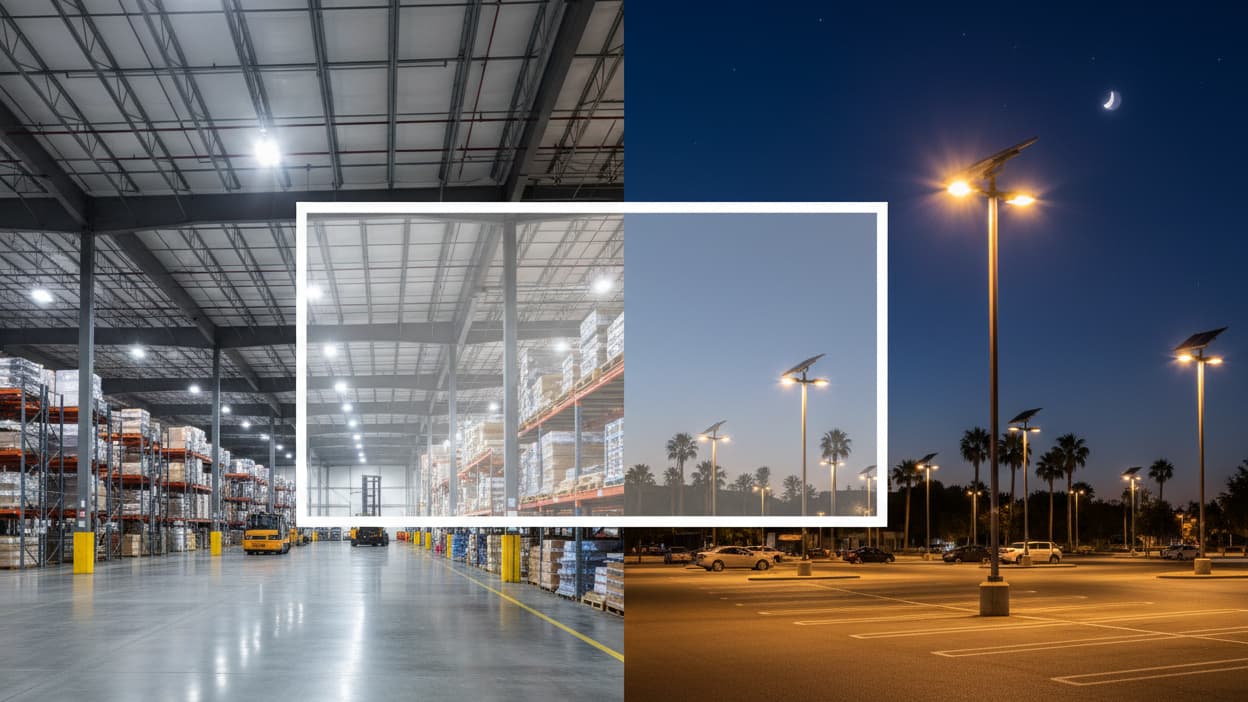
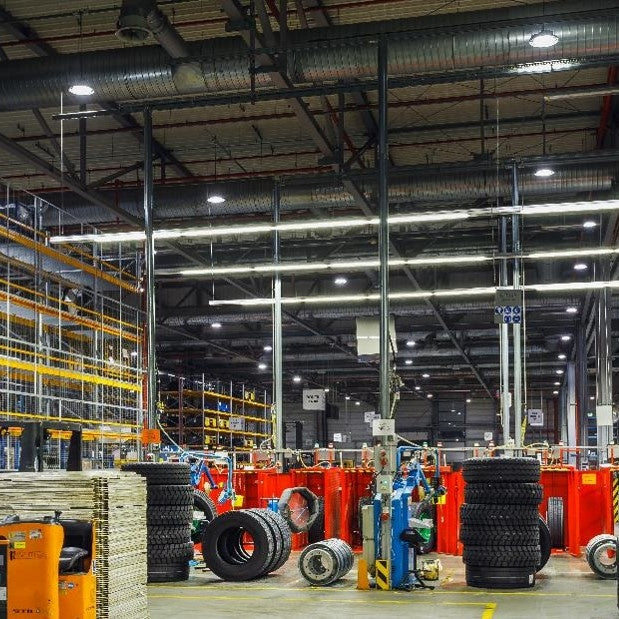
Walk into most warehouses built before 2015 and you'll still find rows of metal halide or fluorescent fixtures hanging from the rafters. They flicker. They take forever to warm up. And every month, they quietly drain thousands of dollars from your energy budget.
The good news? Facility managers across the US have figured out a better way. UFO LED high bay lights have become the go-to upgrade for industrial spaces — and when you pair them with solid-state battery solar lights for your parking lots, loading docks, and perimeter, you've got a complete lighting solution that practically pays for itself.
Let's break down what actually matters when you're shopping for high bay lights, which models are worth your money, and why solid-state battery solar is the smarter outdoor companion.
What Makes a High Bay Light "High Bay"?
The term gets thrown around a lot, but it's pretty straightforward: high bay lights are designed for ceilings between 15 and 45 feet. Below that, you're in low bay territory. Above that, you're looking at specialized stadium or arena lighting.
The challenge with high ceilings is that light has to travel farther to reach the floor — and it spreads out as it goes. That's why high bay fixtures need to be significantly brighter than standard commercial lights, and why the beam angle matters so much. A fixture that works great at 15 feet might leave dark spots at 30 feet if the optics aren't designed for it.
UFO-style high bay lights (the round, disc-shaped ones) have become the industry standard for a few reasons:
- 360° heat dissipation keeps the LEDs cooler and extends lifespan
- Compact form factor is easier to install and replace
- Better light distribution compared to older linear designs in many applications
- They just look cleaner — which matters more than you'd think for customer-facing spaces

The Real Cost of Keeping Old Fixtures
Here's a number that tends to get people's attention: a 400W metal halide fixture running 12 hours a day costs roughly $210 per year in electricity (at the US average of $0.12/kWh). Replace it with a 150W UFO LED that produces the same or better light output, and you're looking at about $79 per year. That's $131 saved per fixture, per year.
Got 50 fixtures? You're looking at $6,550 in annual savings. The fixtures typically pay for themselves in 12-18 months, and then you're just banking the difference for years afterward.
And that's before you factor in maintenance. Metal halide bulbs need replacing every 10,000-15,000 hours. Quality LED high bay lights are rated for 50,000+ hours. In a facility running 12 hours a day, that's over 11 years before you need to think about replacement.
Hykoont's UFO High Bay Lineup: What's Actually Different
Not all UFO high bay lights are created equal. Here's an honest look at the Hykoont lineup and what each model is actually good for.
GC377 UFO LED High Bay — The Workhorse

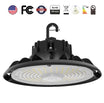
The Hykoont GC377 UFO LED High Bay Light is the one we'd recommend for most straightforward warehouse and storage applications. At $109, it's priced for facilities that need to upgrade multiple fixtures without blowing the budget.
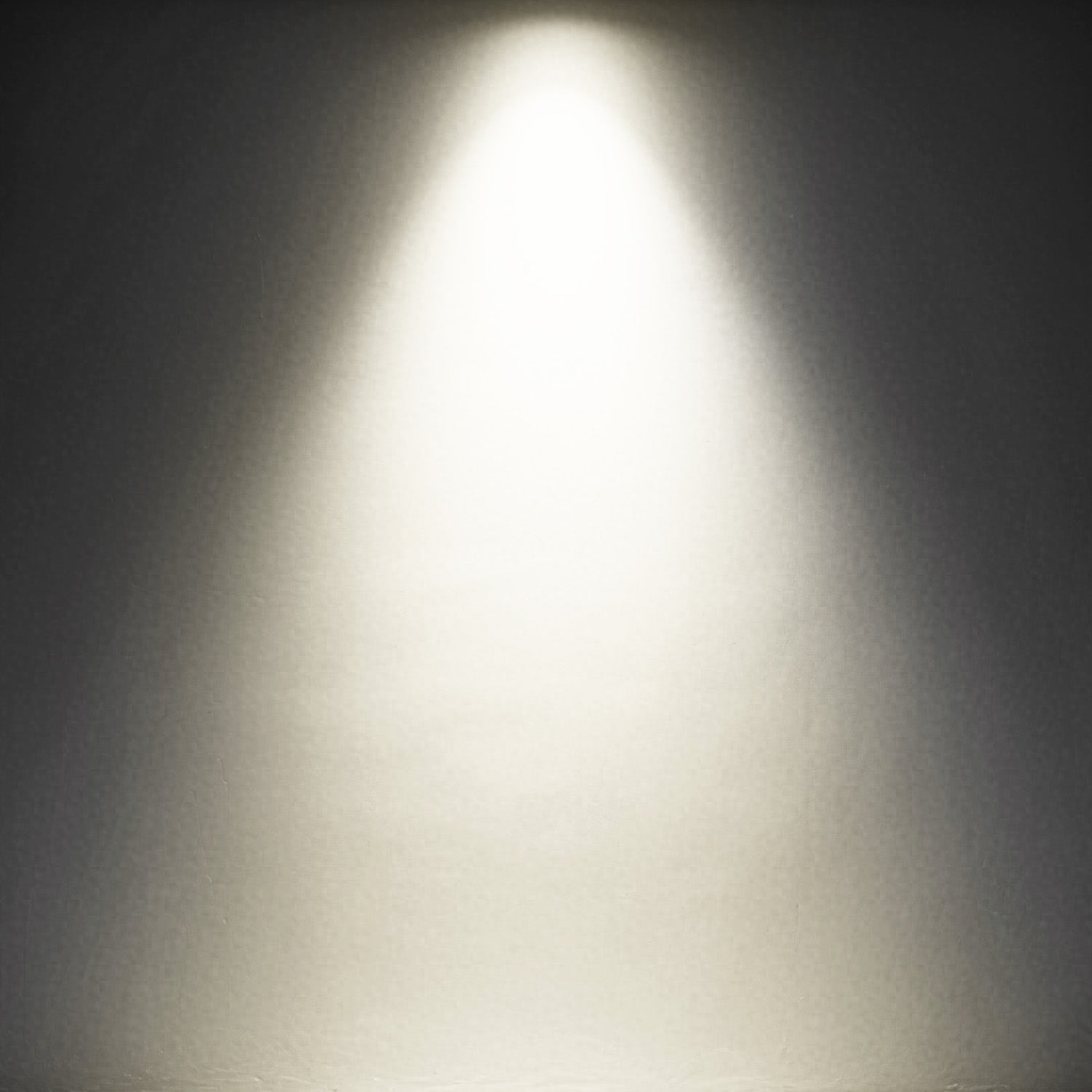
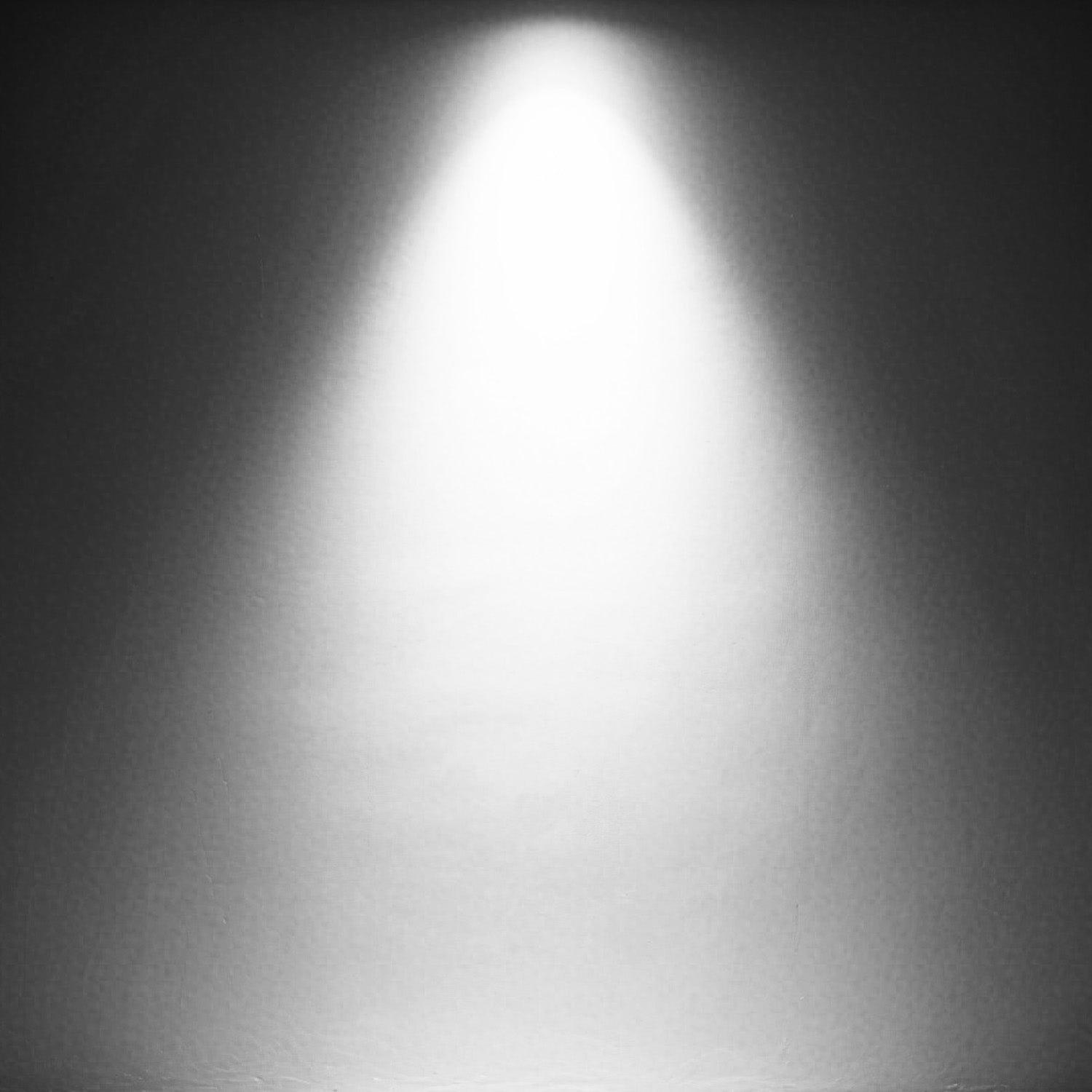
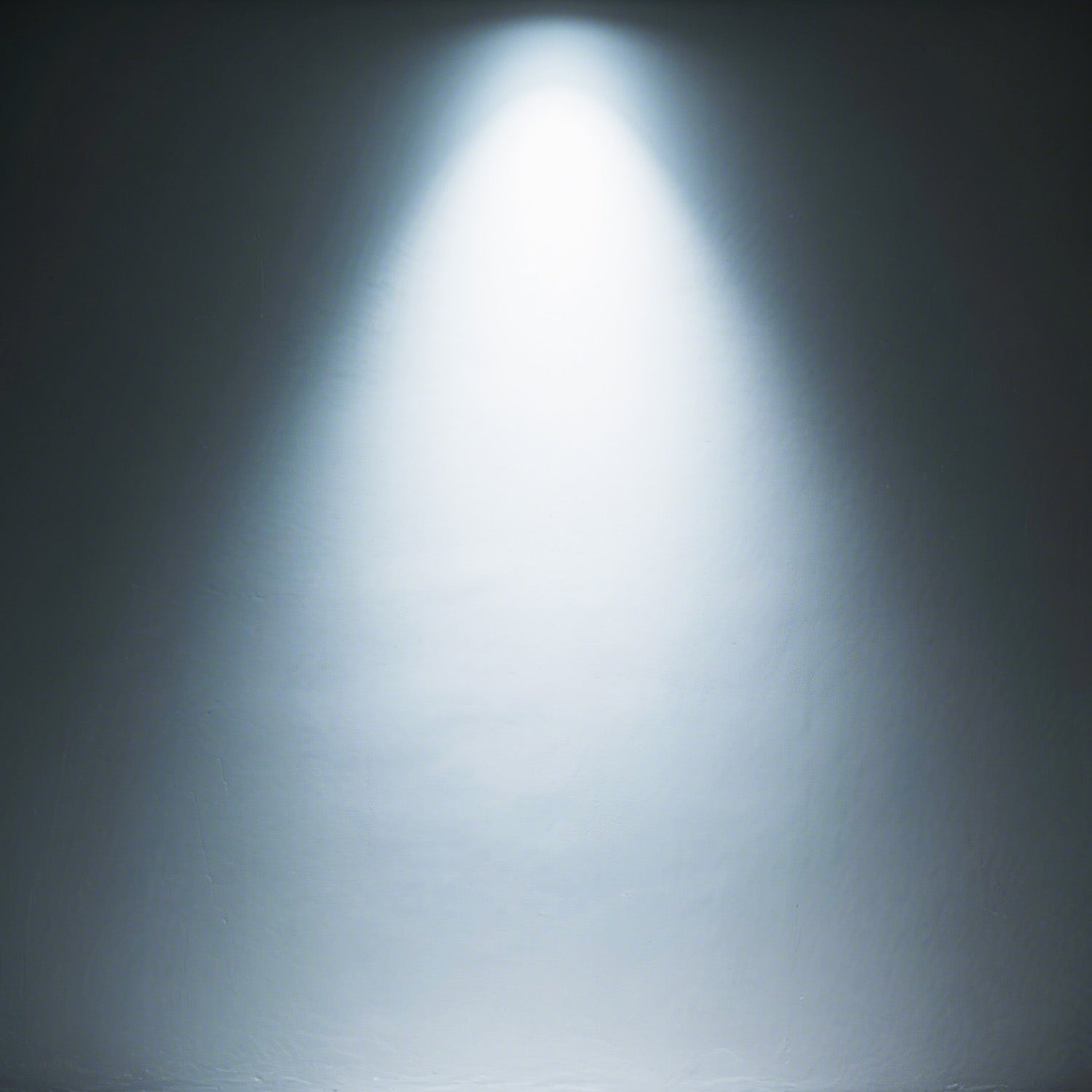
What stands out: 150LM/W efficiency, which is genuinely impressive at this price point. UL and DLC certified, which matters if you're in a state with rebate programs — many utility companies will cut you a check for switching to DLC-listed fixtures. Available in 4000K and 5000K color temperatures, so you can choose between a slightly warmer white or the crisp daylight look that most industrial spaces prefer.
IP65 rated, so dust and water jets aren't a problem. Works well in food processing, cold storage (check the operating temperature specs for your specific environment), manufacturing floors, and distribution centers.
Best for: Budget-conscious upgrades, multi-fixture installations, standard warehouse and storage applications.
GC376 Linear LED High Bay — When You Need Coverage, Not Just Brightness

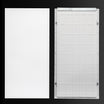
The Hykoont GC376 150W Linear LED High Bay takes a different approach. Instead of the round UFO form factor, it uses a linear design that throws light in a wider, more rectangular pattern — which is actually better for long, narrow spaces like assembly lines, conveyor systems, or retail aisles.
At 22,500 lumens from 150W, the efficiency numbers are solid. Pricing runs from $59 to $329 depending on configuration, making it one of the more flexible options in the lineup. UL and DLC certified here too.
The linear form factor also makes daisy-chaining easier — you can link multiple fixtures together on a single circuit, which simplifies installation in long runs.
Best for: Assembly lines, retail spaces, long narrow aisles, anywhere you need even horizontal coverage rather than a concentrated downward beam.
Shop GC376 Linear High Bay — From $59 →
UFO11 Tunable High Bay — For Spaces That Need Flexibility

The Hykoont UFO11 Tunable LED High Bay at $429 is for facilities where one color temperature doesn't fit all use cases. Tunable CCT means you can dial in the exact color temperature you need — warmer for break rooms and offices, cooler for inspection areas where color accuracy matters.
This is particularly useful in mixed-use facilities: a manufacturing plant that also has quality control stations, or a distribution center with an attached office space. Instead of buying two different fixture types, you get one that adapts.
Best for: Mixed-use facilities, quality control environments, spaces where lighting conditions need to change based on task or time of day.
UFO12 and UFO07 — When You Need More Power

For higher ceilings or spaces that demand maximum brightness, the UFO12 (from $147, available in 80W/100W/150W/240W) and UFO07 (from $240, available in 100W/200W/300W) step up to handle the job.
The UFO07 at 300W is genuinely powerful — appropriate for ceilings in the 35-45 foot range, large open manufacturing floors, or any space where you need to push serious lumens. Both models feature tunable CCT, so you get the flexibility of the UFO11 with more raw output.
Best for: High-ceiling warehouses (30+ feet), large manufacturing floors, spaces requiring maximum light output.
The Outdoor Problem: Why Your Parking Lot Needs a Different Solution
Here's where a lot of facility managers get tripped up. They upgrade the interior lighting — great decision — and then leave the parking lot, loading dock, and perimeter running on old sodium vapor fixtures or, worse, they try to extend the interior electrical system outdoors.
Running electrical conduit across a parking lot is expensive. We're talking $15-30 per linear foot for trenching and conduit installation, plus the fixture costs, plus the ongoing electricity bill. For a mid-sized facility with a 200-foot parking lot, you could easily spend $8,000-15,000 just on the electrical work before you buy a single light.
This is exactly where solid-state battery solar lights make sense.
Solid-State Battery Solar: What's Actually Different
Traditional solar lights use lithium-ion batteries — the same basic chemistry as your phone battery. They work, but they have real limitations: performance degrades in cold weather, they lose capacity over time, and in very hot climates they can overheat.
Solid-state battery technology (and LiFePO4, which is the most common implementation in commercial solar lights) addresses most of these issues. The chemistry is more stable across temperature extremes, the cycle life is dramatically longer (2,000-4,000 cycles vs. 500-1,000 for standard lithium-ion), and there's no liquid electrolyte to leak or catch fire.
For outdoor commercial applications — parking lots, loading docks, pathways, perimeter security — this matters a lot. You're not replacing batteries every 2-3 years. You're installing a system that's designed to run for 8-10 years with minimal maintenance.

Putting It Together: A Complete Facility Lighting Strategy
The most cost-effective approach for most US industrial facilities looks something like this:
- Interior (warehouse, manufacturing floor): UFO LED high bay lights on the existing electrical system. Immediate energy savings, utility rebates available, 50,000+ hour lifespan.
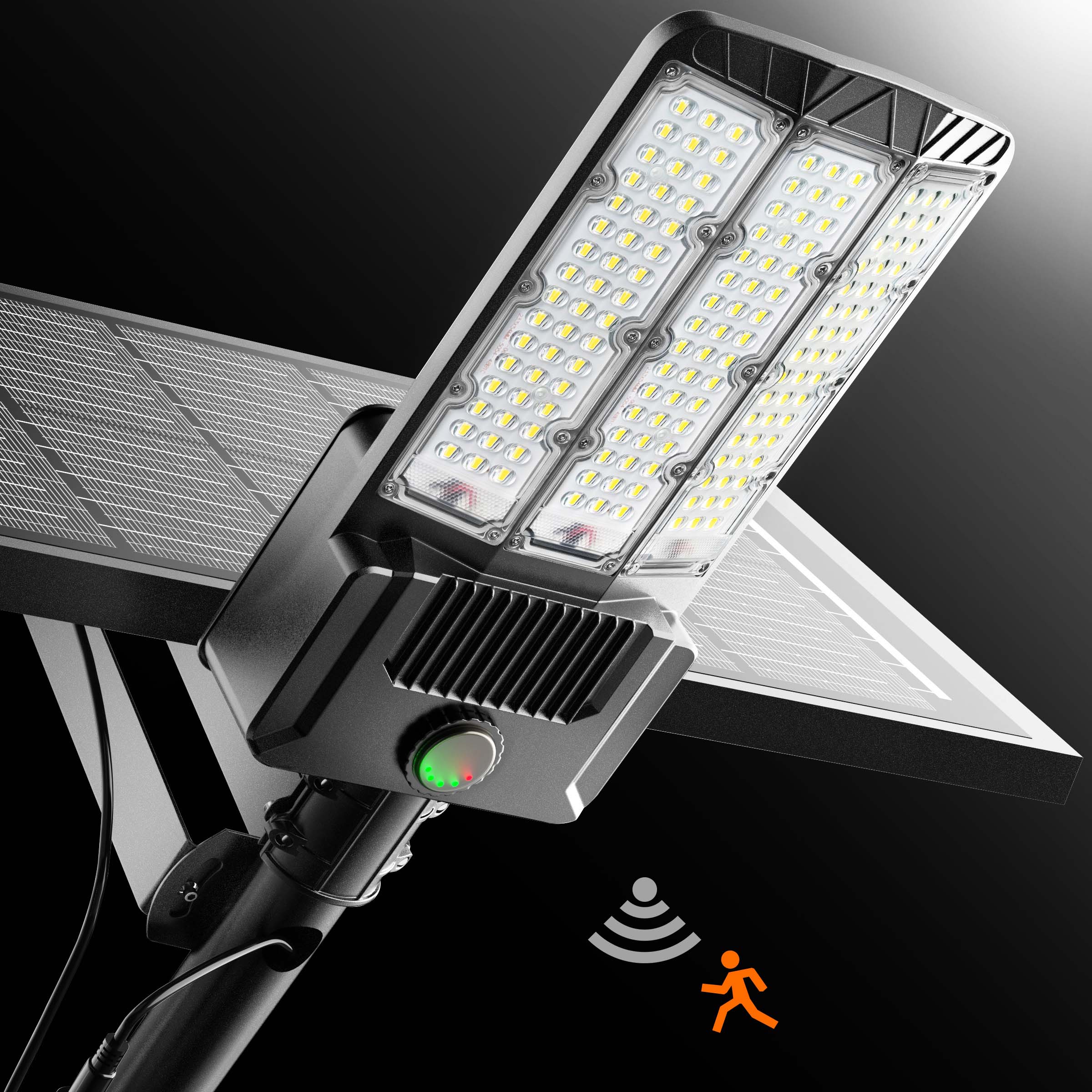
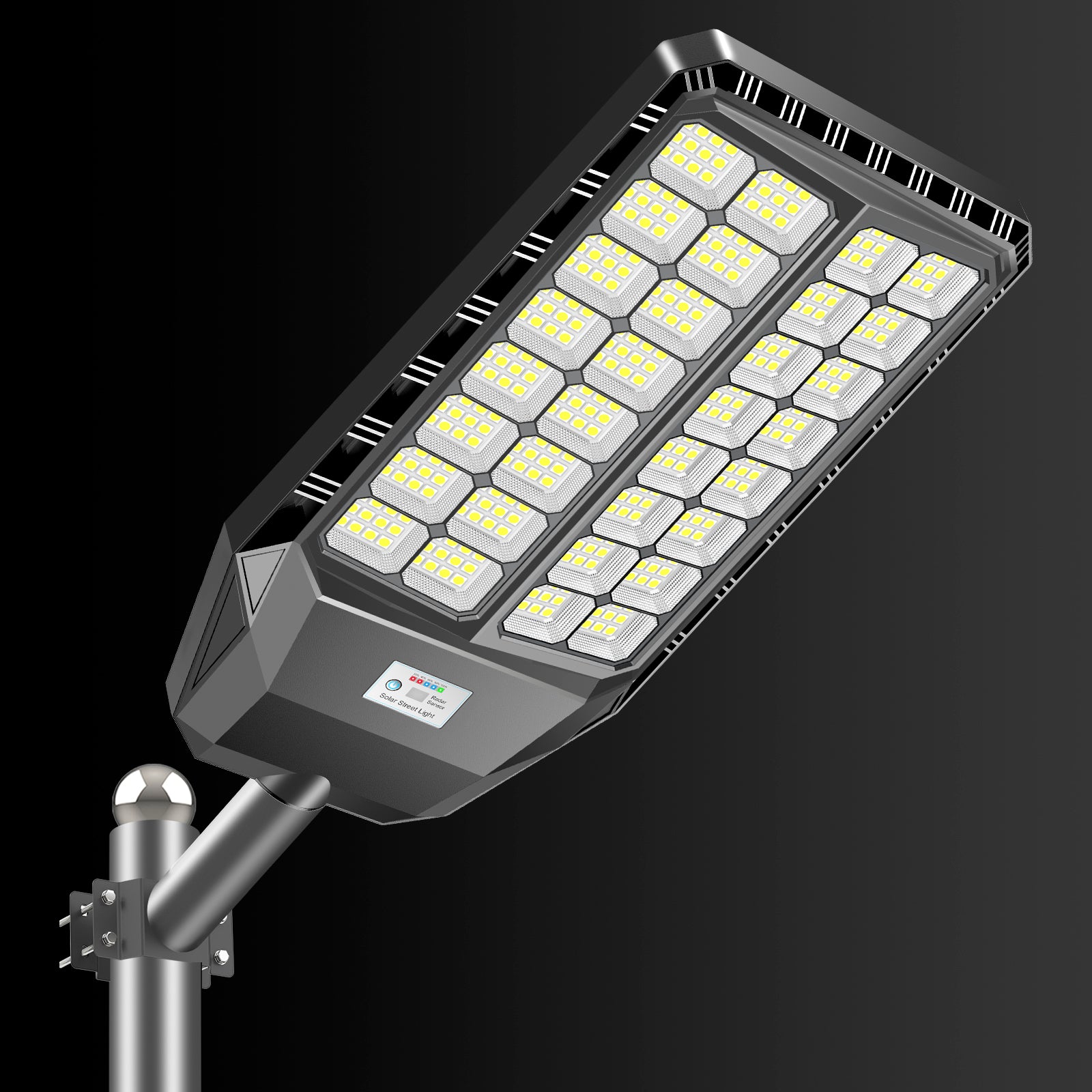
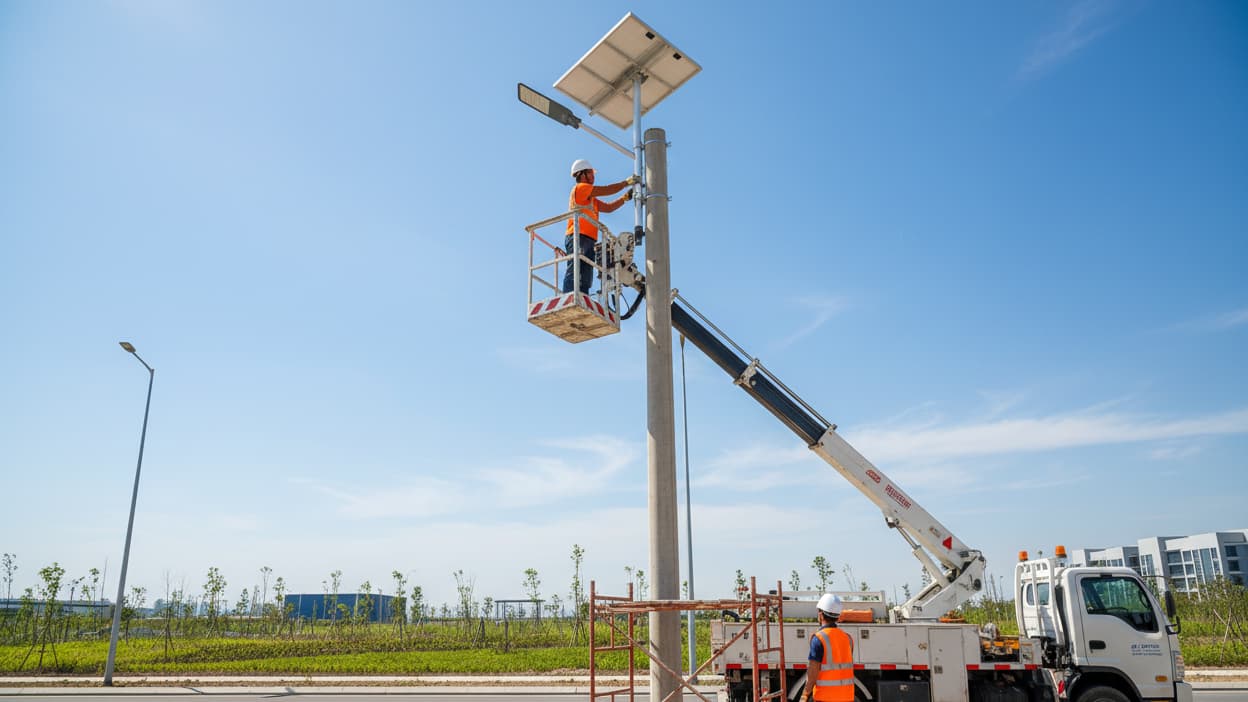
- Exterior (parking lot, loading dock, pathways): Solid-state battery solar street lights. No trenching, no electrical work, no ongoing electricity cost.
- Perimeter/security: Solar flood lights for targeted illumination of entry points, dumpster areas, and blind spots.
This hybrid approach typically delivers the fastest overall ROI because you're eliminating the expensive electrical installation cost for outdoor areas while still getting the efficiency benefits of LED indoors.
Installation Tips That Actually Matter
For high bay lights:
- Measure your ceiling height before ordering — the right mounting height affects which wattage you need
- Check if your facility qualifies for utility rebates before purchasing (DLC certification is usually required)
- Consider motion sensors for areas that aren't continuously occupied — you can cut energy use by another 30-50%
- Plan your fixture spacing based on the beam angle, not just the lumen output
For solar outdoor lights:
- South-facing panel orientation is critical in the US — even a 30° deviation east or west reduces output noticeably
- Check for shading from trees, buildings, or other structures during winter months when the sun is lower
- Most commercial solar lights need 6+ hours of direct sunlight for full-night operation
- IP66 or higher rating is recommended for parking lot and perimeter applications

Common Questions About High Bay LED Lights
FAQ
Q: How do I know what wattage high bay light I need?
A: The general rule is to calculate the lumens you need based on your ceiling height and the foot-candles required for your application (typically 20-50 fc for warehouses, 50-100 fc for manufacturing). A lighting designer can do a photometric analysis, but for most standard warehouses, 150W UFO fixtures at 20-25 foot spacing work well for 20-25 foot ceilings.
Q: Are DLC-certified fixtures worth the extra cost?
A: Almost always yes, if you're in the US. Many utility companies offer rebates of $20-100 per fixture for DLC-listed products. On a 50-fixture installation, that's potentially $1,000-5,000 back in your pocket. Check the DesignLights Consortium database and your utility's rebate program before purchasing.
Q: Can I replace my metal halide fixtures one-for-one with LED high bays?
A: Usually yes, but you'll likely be over-lighting if you do a direct wattage swap. A 150W LED typically replaces a 400W metal halide in terms of light output. Work backward from the lumens you need, not the wattage.
Q: What's the difference between 4000K and 5000K for warehouse lighting?
A: 4000K is a neutral white — comfortable for long shifts, good color rendering. 5000K is closer to daylight — slightly bluer, which some people find more alerting and which can improve visibility for detail work. Most warehouses go with 5000K; spaces with more human occupancy often prefer 4000K.
Q: How long does LED high bay installation take?
A: For a straightforward swap-out (same mounting points, same circuit), an electrician can typically replace 10-15 fixtures per day. New installations take longer depending on the electrical work required.
Q: Do solid-state battery solar lights work in cold climates?
A: LiFePO4 batteries perform significantly better in cold than standard lithium-ion. Most commercial solar lights with LiFePO4 batteries operate reliably down to -4°F (-20°C), which covers most of the continental US. Extreme cold (Minnesota winters, mountain regions) may require checking the specific operating temperature range of the model you're considering.
Q: Can solar lights handle a full parking lot?
A: Yes, for most commercial parking lots. The key is choosing the right lumen output and spacing. A 300W equivalent solar street light can illuminate a 30-40 foot radius effectively. For large lots, you'll want to do a spacing calculation based on the specific fixture's photometric data.
Q: What maintenance do LED high bay lights actually need?
A: Minimal. Occasional cleaning of the lens (dust accumulation can reduce output by 10-20% over time) and checking that mounting hardware is secure. The LEDs themselves rarely fail before the rated lifespan.
Q: Is there a warranty on these fixtures?
A: Check the specific product listing for warranty terms. Commercial-grade LED fixtures typically carry 3-5 year warranties; solar lights vary by model.
Q: Can I mix UFO and linear high bay lights in the same facility?
A: Absolutely. Many facilities use UFO fixtures for open floor areas and linear fixtures for aisles or conveyor lines. The key is consistent color temperature across the space so the lighting looks uniform.
Ready to Upgrade?
The math on LED high bay lights is pretty hard to argue with. Lower energy costs, longer lifespan, better light quality, and utility rebates that can significantly offset the upfront investment. And when you pair them with solid-state battery solar lights for your outdoor areas, you're covering the whole facility without the cost and hassle of outdoor electrical work.
Start with the fixtures that match your ceiling height and application, check your utility's rebate program, and plan your outdoor solar layout based on your parking lot dimensions.
Shop GC377 UFO High Bay — $109 Shop GC376 Linear High Bay — From $59 Shop UFO12 Tunable — From $147


Leave a comment
This site is protected by hCaptcha and the hCaptcha Privacy Policy and Terms of Service apply.