





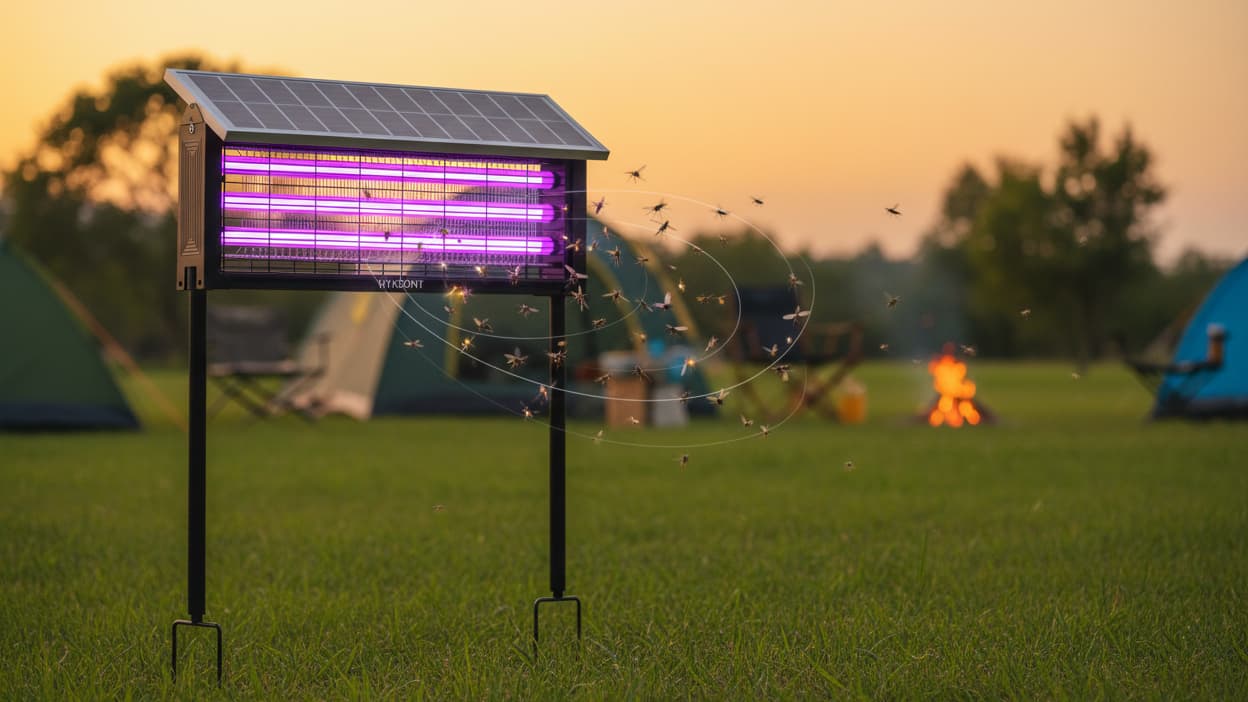
No Power? No Problem. The Off-Grid Solar Mosquito Killer Lamp That Actually Works at Camp
You've done everything right. You picked a great campsite, set up your tent before dark, got the fire going. And then — that sound. The high-pitched whine of a mosquito circling your ear at 11 PM. Then another. Then a cloud of them.
If you've camped anywhere in the US — the Great Smoky Mountains, the Boundary Waters, the Florida Everglades, the Pacific Northwest — you already know that mosquitoes are part of the deal. But they don't have to ruin the experience. A solar-powered mosquito killer lamp is one of the most practical pieces of gear you can bring to a campsite, especially when you're off-grid and there's no outlet in sight.
This guide covers everything: how these lamps actually work, what specs matter and which ones are marketing fluff, how to use them effectively at camp, and which models are worth your money in 2025. No filler, no hype — just what you need to know before you buy.
Why Mosquitoes Are Worse at Camp (And Why Sprays Aren't Enough)
Mosquitoes thrive in the same conditions that make camping spots beautiful: standing water, dense vegetation, warm humid air, and low wind. A lakeside campsite in Minnesota in July is basically a mosquito paradise. And while DEET-based repellents work, they wear off, they smell, they're not great to apply repeatedly, and they do nothing for the bugs hovering around your food, your lantern, or your sleeping bag zipper.
A physical trap or zapper works differently. Instead of masking your scent, it actively draws insects in and eliminates them. Used together with repellent, you get a layered defense that actually holds up through a full evening outdoors.
The challenge has always been power. Traditional electric bug zappers need an outlet. At a developed campground with hookups, that's fine. But if you're at a primitive site, a backcountry camp, or anywhere without shore power, you're out of luck — unless you go solar.

How a Solar Mosquito Killer Lamp Actually Works
The concept is straightforward, but the execution matters a lot. Here's what's happening inside a quality solar bug zapper:
1. The Solar Panel Charges a Battery During the Day
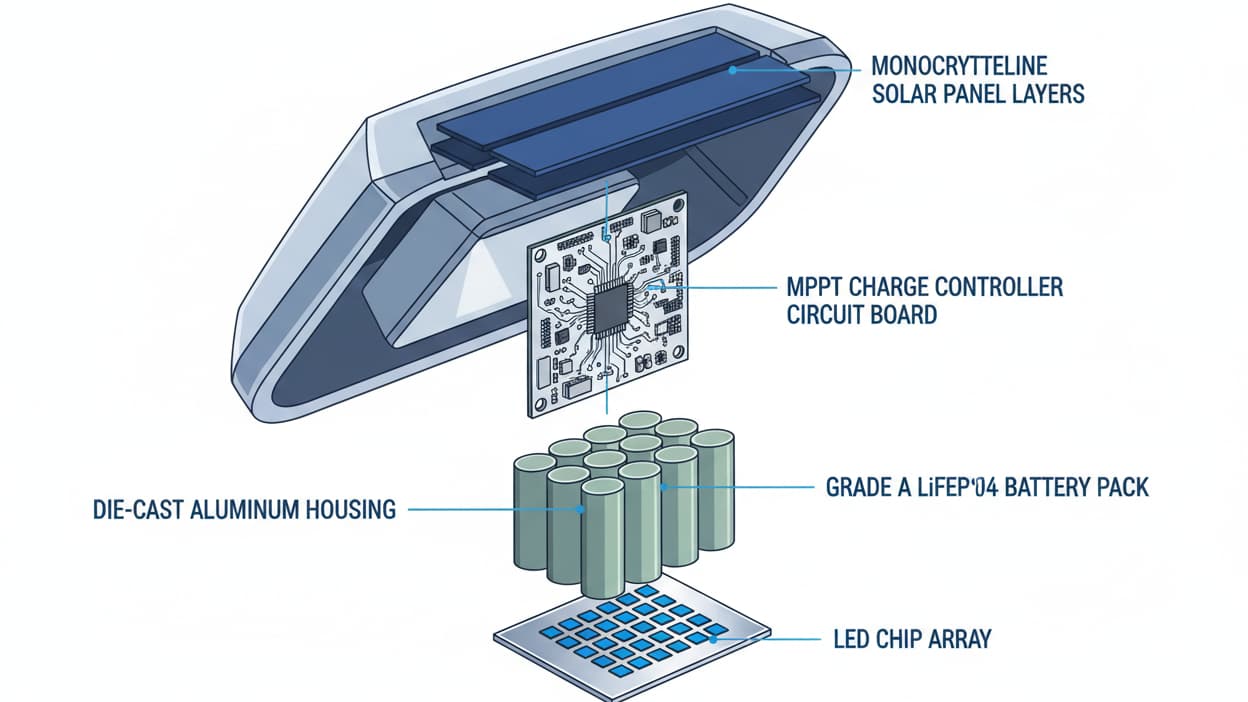
A monocrystalline solar panel — the efficient kind, not the cheap polycrystalline panels you find on dollar-store gadgets — converts sunlight into electricity and stores it in an onboard battery. Most quality units use lithium or LiFePO4 (lithium iron phosphate) batteries, which handle temperature swings better than standard lithium-ion and last significantly more charge cycles.
2. UV Light Attracts Insects at Night
Mosquitoes, moths, gnats, and other flying insects are drawn to ultraviolet light. The lamp emits UV wavelengths — typically around 365nm — that insects find irresistible. This is why placement matters: you want the lamp positioned away from where you're sitting, so it draws bugs toward itself rather than toward you.
3. A High-Voltage Grid or Suction Fan Eliminates Them
Once insects get close, one of two things happens depending on the design:
- Electric grid zappers use a high-voltage mesh that kills on contact. You hear the familiar "zap" sound. These are effective and low-maintenance.
- Suction/fan models draw insects into a chamber where they dehydrate. These are quieter and better for catching mosquitoes specifically (which are lighter and sometimes avoid the grid).
The best camping units combine both: UV attraction + electric grid + a collection tray you can empty.
4. Dusk-to-Dawn Automation
Quality solar bug zappers include a light sensor that turns the unit on automatically at dusk and off at dawn. You don't have to remember to switch it on — it just works. This is especially useful when you're in your tent and don't want to go back outside to manage it.

What Specs Actually Matter (And What's Just Marketing)
Walk through any outdoor retailer's website and you'll see bug zappers claiming to cover "1 acre" or "5,000 square feet." Take those numbers with a grain of salt. Here's what to actually pay attention to:
UV Tube Count and Wattage
More UV tubes generally means more attractive light output. A single-tube unit might work fine for a small tent footprint. A triple-tube design covers a larger area and is more effective in open spaces like a campsite clearing. Look for units with 3 UV tubes if you're camping in a high-mosquito area.
Battery Capacity
This determines how many hours the unit runs after dark. A good solar bug zapper should run 8–12 hours on a full charge — enough to cover a full night. If the battery is undersized, it'll die at 2 AM and you'll wake up to a tent full of mosquitoes.
IPX Rating
Camping means weather. Look for at least IPX4 (splash-resistant) — ideally IPX5 or higher if you camp in rainy conditions. An unrated unit will fail the first time it gets caught in a summer thunderstorm.
Mounting Options
The best camping bug zappers offer multiple mounting options: a ground stake for open areas, a hanging hook for trees or tent poles, and sometimes a flat base for picnic tables. Flexibility matters when you're working with whatever terrain you've got.
What Doesn't Matter Much
Coverage area claims are largely theoretical. Real-world performance depends on wind, vegetation density, competing light sources, and mosquito pressure. Focus on UV output, battery runtime, and build quality instead.

The Hykoont Solar Bug Zapper Lineup: What's Available and What It Costs
Hykoont makes two solar bug zapper models that are worth looking at for camping use. Here's an honest breakdown of both:
Hykoont 30W Solar LED Bug Zapper Light Pro — Triple Tube

Price: $125.00 – $259.00
This is the heavy-duty option. Three UV tubes mean serious insect attraction across a wide area — this isn't a unit you'd strap to a backpack, but for a car camping setup, a cabin porch, or a semi-permanent campsite, it's genuinely impressive. The solar panel charges the battery during the day, and the dusk-to-dawn sensor handles the rest automatically.
The price range reflects different configurations (single vs. multi-pack). If you're outfitting a group campsite or a seasonal cabin, buying two and placing them strategically will cover a large perimeter effectively.
Best for: Car camping, cabin porches, group campsites, semi-permanent outdoor setups
→ Shop the 30W Pro Bug Zapper ($125–$259)
Hykoont 19W Solar LED Bug Zapper Light Standard — Triple UV Tubes

Price: $125.00
The Standard model hits a sweet spot for most campers. Three UV tubes, IPX4 weather resistance, ground stake and hanging hook included — it covers the bases without overbuilding. At $125, it's priced competitively against lesser-quality units that use single tubes and smaller batteries.
The dual mounting design (stake into the ground OR hang from a branch) is genuinely useful at camp. You're not locked into one placement strategy, which matters when you're working with whatever the terrain gives you.
Best for: Weekend campers, backyard use, moderate mosquito pressure, first-time solar bug zapper buyers
→ Shop the 19W Standard Bug Zapper ($125)
Don't Forget: You Still Need Light at Camp
A bug zapper handles the insects. But you also need to see what you're doing — cooking, reading, finding the bathroom at 3 AM. Two Hykoont camping lights worth knowing about:
Hykoont IP66 Multifunctional Camping Light with Type-C Charger

Price: $75.49
IP66-rated, which means it handles rain and dust without complaint. The Type-C charging port means you can top it off from a power bank, a car charger, or a solar panel — useful when you're off-grid for multiple days. Multifunctional design covers ambient camp lighting, task lighting, and emergency use.
→ Shop the IP66 Camping Light ($75.49)
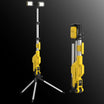
Hykoont HYK-001 5000LM Super Bright Magnetic Camping & Work Light

Price: $59.99
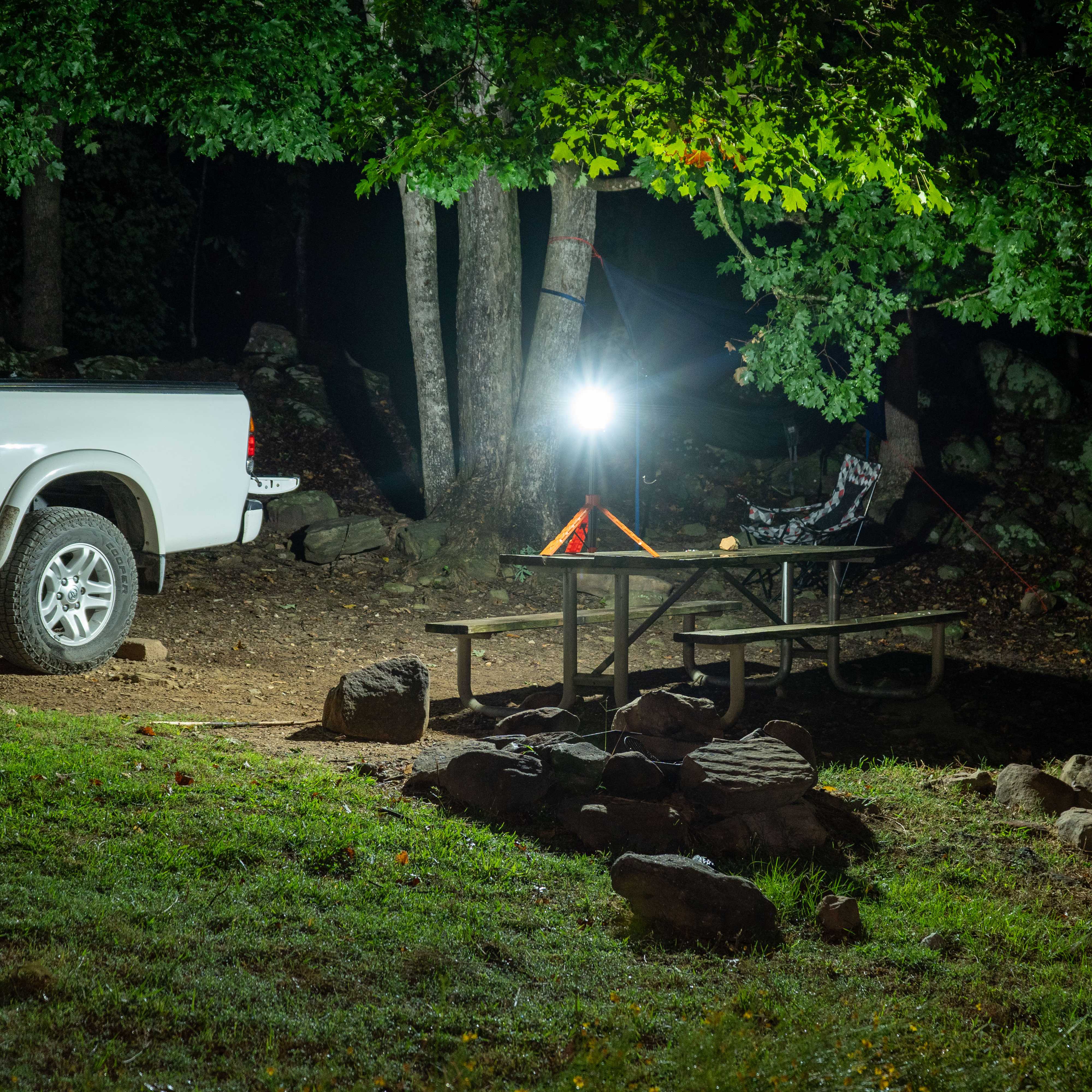
5,000 lumens is genuinely bright — this is the kind of light that turns a dark campsite into a well-lit workspace. The magnetic base sticks to vehicle hoods, tool boxes, and metal tent poles. Color temperature range (2700K–6900K) lets you dial in warm ambient light for relaxing or cool white for tasks. Waterproof and rechargeable.
→ Shop the HYK-001 5000LM Camping Light ($59.99)
How to Set Up a Solar Bug Zapper at Camp: A Practical Walkthrough
Buying the right unit is step one. Using it correctly is step two — and a lot of people skip this part.
Placement Is Everything
The single biggest mistake campers make is placing the bug zapper right next to where they're sitting. The UV light attracts insects — so if it's next to you, you're attracting insects to yourself. Place the zapper 15–20 feet away from your seating area, ideally upwind. Insects will fly toward the light and away from you.
Height Matters Too
Mosquitoes tend to fly low — typically 3–6 feet off the ground. Hanging your zapper at that height puts it right in their flight path. If you're using a ground stake, make sure the UV tubes are at least 2–3 feet up. If you're hanging it from a tree branch, aim for 4–5 feet.
Let It Charge Fully Before the First Night
If you're arriving at camp in the afternoon, set up the solar panel in direct sunlight as soon as you get there. Most units need 6–8 hours of good sun for a full charge. Don't wait until dusk to set it up — you'll get a partial charge and the unit may not last the full night.
Turn Off Competing Light Sources
If you have a bright lantern running right next to the bug zapper, you're splitting the insects' attention. The zapper works best when it's the brightest UV source in the area. Use warm-toned lighting (like the 2700K setting on the HYK-001) for your camp area — warm light is less attractive to insects than cool white or UV.
Clean the Collection Tray
After a few nights, the collection tray fills up. A clogged tray reduces effectiveness and can start to smell. Empty it every 2–3 days on longer trips. Most units have a removable tray that slides out — takes 30 seconds.
Solar Bug Zappers vs. Other Mosquito Control Methods: An Honest Comparison
| Method | Pros | Cons | Best For |
|---|---|---|---|
| Solar Bug Zapper | No power needed, runs all night, passive | Needs sun to charge, placement-sensitive | Off-grid camping, cabins, patios |
| DEET Repellent | Immediate, personal protection | Wears off, chemical smell, reapplication needed | Hiking, active use |
| Citronella Candles | Cheap, pleasant smell | Wind-dependent, limited range, fire risk | Calm evenings, small areas |
| Propane Mosquito Trap | Very effective, large coverage | Expensive, needs propane, heavy | Permanent outdoor setups |
| Mosquito Net | 100% physical barrier, no chemicals | Only protects sleeping area, not social spaces | Sleeping, hammock camping |
The honest answer: no single method is perfect. A solar bug zapper works best as part of a layered approach — zapper positioned away from camp, repellent on your skin when you're active, and a mosquito net over your sleeping area. That combination covers all the bases.
Camping Scenarios Where a Solar Bug Zapper Makes the Most Sense
Car Camping at a Primitive Site
No hookups, no outlet, but you drove there so weight isn't a concern. A solar bug zapper is ideal here — set it up when you arrive, let it charge all afternoon, and it runs all night without any intervention. The 30W Pro model is a good fit for this scenario.
Extended Basecamp Trips
If you're spending 3–7 nights at the same site — fishing, hunting, or just deep relaxation — a solar bug zapper pays for itself in comfort. You're not packing up every day, so the unit can stay positioned optimally and charge consistently.
Cabin or Glamping Setup
Off-grid cabins, yurts, and glamping setups often have limited or no electrical infrastructure. A solar bug zapper handles the porch or outdoor dining area without running extension cords or draining a generator.
Group Camping
More people = more CO2 = more mosquito attraction. A single zapper might not be enough for a group of 8–10 people spread across a large campsite. Two units placed strategically — one near the cooking area, one near the seating area — covers the perimeter much more effectively.
What It's NOT Great For
Backpacking. If you're counting ounces, a solar bug zapper isn't the right tool. Stick to permethrin-treated clothing and a lightweight head net for ultralight trips. The solar units are designed for car camping and semi-permanent setups, not thru-hiking.
Mosquito Pressure by US Region: Where You Need This Most
Not all camping destinations are equally brutal. Here's a quick regional breakdown:
Southeast (Florida, Louisiana, Georgia, Carolinas)
Year-round mosquito season. High humidity, standing water everywhere, and species that are aggressive even during the day. This is where you want the most powerful setup you can bring.
Midwest (Minnesota, Wisconsin, Michigan)
Peak season is June–August, but it's intense. The Boundary Waters and Upper Peninsula are legendary for mosquito pressure. A solar bug zapper is almost mandatory for comfortable camping here in summer.
Pacific Northwest (Oregon, Washington)
Wetter than people expect, with significant mosquito pressure near rivers and lakes from May through September. Less intense than the Southeast but still worth addressing.
Mountain West (Colorado, Utah, Wyoming)
Lower humidity means fewer mosquitoes at elevation, but valley campsites near water can still be problematic in July and August.
Northeast (New England, Appalachians)
June and July are the worst months. Black flies are often a bigger problem than mosquitoes in early summer, but UV zappers attract both.

Frequently Asked Questions
Q: Do solar bug zappers actually work, or is it mostly marketing?
A: They work — with caveats. UV light genuinely attracts mosquitoes and other flying insects, and the electric grid kills them on contact. The key is placement: the zapper needs to be positioned away from where you're sitting, not next to you. When used correctly, you'll notice a real reduction in insect pressure around your campsite. When used incorrectly (placed right next to your chair), you're just attracting more bugs to your general area.
Q: How many hours will a solar bug zapper run on a full charge?
A: Most quality units run 8–12 hours on a full charge. A full charge typically requires 6–8 hours of direct sunlight. In practice, a unit set up in the morning at a sunny campsite will have a full charge by late afternoon and run through the night without issue.
Q: What happens on cloudy days? Will it still charge?
A: Yes, but more slowly. Solar panels generate power from diffuse light, not just direct sunlight — but output drops significantly on overcast days. If you're camping during a multi-day cloudy stretch, the battery may not fully charge. Most units will still run for several hours on a partial charge, but you may not get a full night's runtime.
Q: Can I use a solar bug zapper in the rain?
A: It depends on the IPX rating. The Hykoont 19W Standard is rated IPX4, which means it handles splashing water from any direction — light rain is fine. It's not designed for submersion or heavy downpours. If a serious storm rolls in, bring it under cover. The 30W Pro model should be checked for its specific rating before use in wet conditions.
Q: Do these zappers attract and kill mosquitoes specifically, or just moths and other bugs?
A: UV light attracts a wide range of flying insects — mosquitoes, moths, gnats, midges, and others. Mosquitoes are attracted to UV but are also strongly attracted to CO2 (from your breath) and body heat. A zapper reduces overall insect pressure but works best as part of a layered approach that includes repellent for personal protection.
Q: Is the "zap" sound going to keep me up at night?
A: It depends on how close you place it and how heavy the insect pressure is. On a high-mosquito night, you might hear it zapping every few minutes. Most campers find it reassuring rather than annoying — it's proof the thing is working. If you're a light sleeper, position it farther from your tent.
Q: How do I clean the collection tray?
A: Most units have a slide-out tray at the bottom. Remove it, dump the contents, and wipe it down with a dry cloth. Don't use water near the electrical components. On a week-long trip, plan to clean it every 2–3 days.
Q: Can I use this at home after camping season?
A: Absolutely. Solar bug zappers work just as well on a backyard patio, a deck, or near a garden. The same principles apply — position it away from where you're sitting, let it charge during the day, and let it run at night. Many buyers use them primarily at home and bring them camping as needed.
Q: What's the difference between the 19W Standard and the 30W Pro?
A: The 30W Pro has higher wattage, which generally means more UV output and a larger effective coverage area. It's better suited for larger spaces — a big campsite clearing, a cabin porch, or a group setup. The 19W Standard is more than adequate for a typical 2–4 person campsite and is a better value if you don't need maximum coverage. Both use triple UV tubes.
Q: Do I need to do anything to maintain the solar panel?
A: Keep it clean. Dust, pollen, and bird droppings reduce efficiency. Wipe the panel surface with a damp cloth periodically. At camp, position it to face south (in the US) and avoid shading from trees or your tent. That's really it — there are no moving parts to maintain.
The Bottom Line
A solar mosquito killer lamp is one of those pieces of camping gear that sounds like a luxury until you've spent a night without one in a high-mosquito area. Then it becomes a non-negotiable.
The off-grid angle is what makes solar models genuinely useful for camping — no extension cords, no generator drain, no batteries to replace. Set it up, let the sun do the charging, and it handles the rest automatically. For most car campers and basecamp setups in the US, the Hykoont 19W Standard at $125 is the right starting point. If you're covering a larger area or outfitting a group site, step up to the 30W Pro.
Pair it with a good camping light — the IP66 model at $75.49 or the 5000LM HYK-001 at $59.99 — and you've got a complete off-grid lighting and insect control setup that runs entirely on sunlight.
That's a pretty good deal for a bug-free evening around the fire.
Shop the Full Lineup
- Hykoont 30W Solar Bug Zapper Pro (Triple Tube) — $125–$259
- Hykoont 19W Solar Bug Zapper Standard (Triple UV Tubes) — $125
- Hykoont IP66 Multifunctional Camping Light — $75.49
- Hykoont HYK-001 5000LM Magnetic Camping Light — $59.99
Free shipping available. Questions? Contact us before you buy — we're happy to help you pick the right setup for your campsite.

Leave a comment
This site is protected by hCaptcha and the hCaptcha Privacy Policy and Terms of Service apply.