






When the sun goes down, your property shouldn't disappear into darkness. Whether you're lighting a parking lot, driveway, street, or commercial facility, the right solar street light can transform safety, security, and visibility—all without adding a penny to your electricity bill.
But here's the challenge: not all solar street lights deliver on their promises. Cheap units fail after one season. Underpowered models barely illuminate anything. And some are so complicated to install that you end up paying more for labor than the light itself.
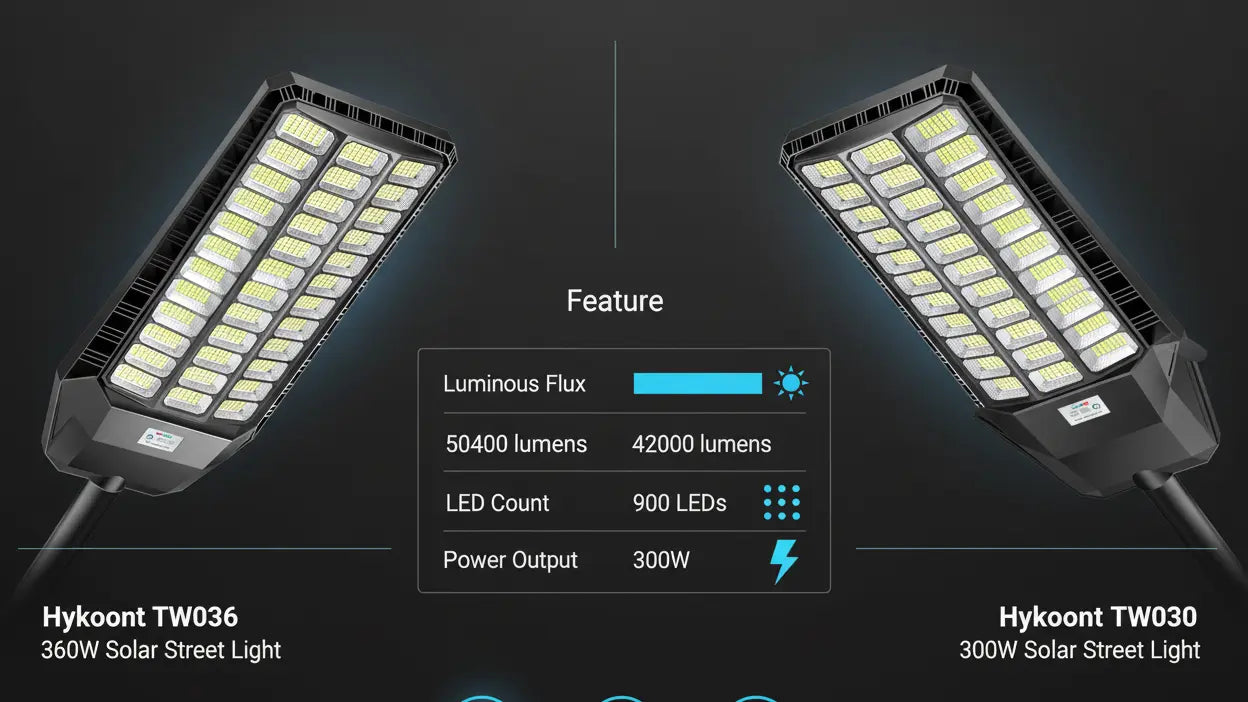
That's why we're comparing two of Hykoont's most powerful solar street lights: the TW036 Ultra Bright 360W (50,400 lumens) and the TW030 300W (42,000 lumens). Both are commercial-grade powerhouses designed for serious lighting applications, but they serve different needs and budgets.
If you're trying to decide which one makes sense for your property, you're in the right place. Let's break down everything you need to know.
Why Solar Street Lights Are Changing Outdoor Lighting Forever
Before we dive into the comparison, let's talk about why solar street lights have become the go-to choice for property owners, municipalities, and businesses.
Traditional street lighting is expensive. You need to trench for electrical lines, hire licensed electricians, pull permits, and then pay monthly electricity bills that add up to hundreds or thousands of dollars annually. For remote locations or large properties, the installation costs alone can be prohibitive.
Solar street lights eliminate all of that. No trenching, no electrical work, no permits, no monthly bills. You install the light where you need it, and it works. The solar panel charges during the day, the battery stores that energy, and the light operates automatically at night.
Modern solar street lights like the TW036 and TW030 have become so powerful and reliable that they rival traditional grid-powered lighting. We're talking about 40,000+ lumens of brightness, intelligent motion sensing, and batteries that last through multiple cloudy days. This isn't your grandfather's dim solar garden light—these are serious commercial lighting solutions.
Meet the Contenders: TW036 vs TW030
Both the TW036 and TW030 come from Hykoont's professional-grade TW series, designed for applications where failure isn't an option. Let's look at what each brings to the table.
Hykoont TW036: The Ultra-Bright Champion

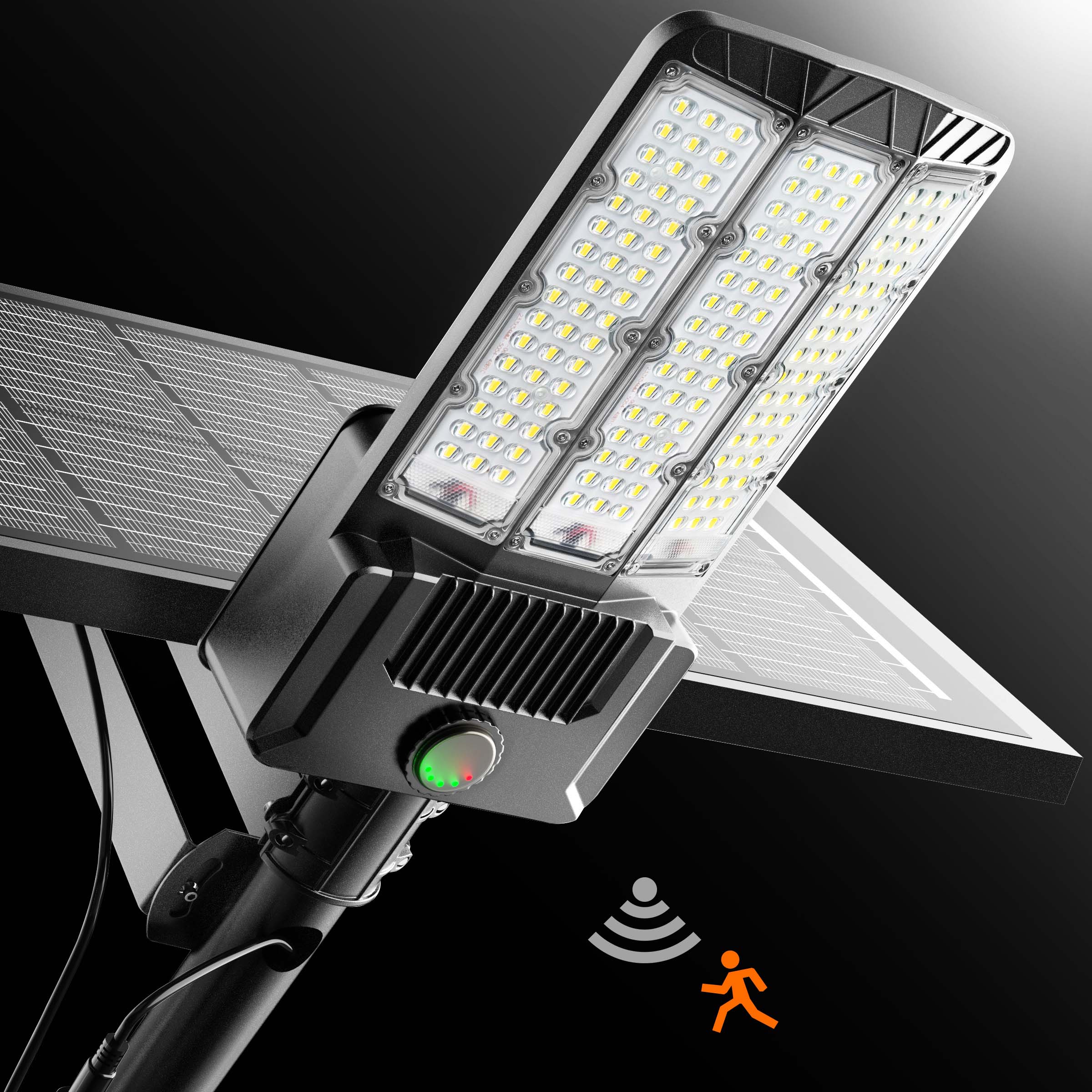
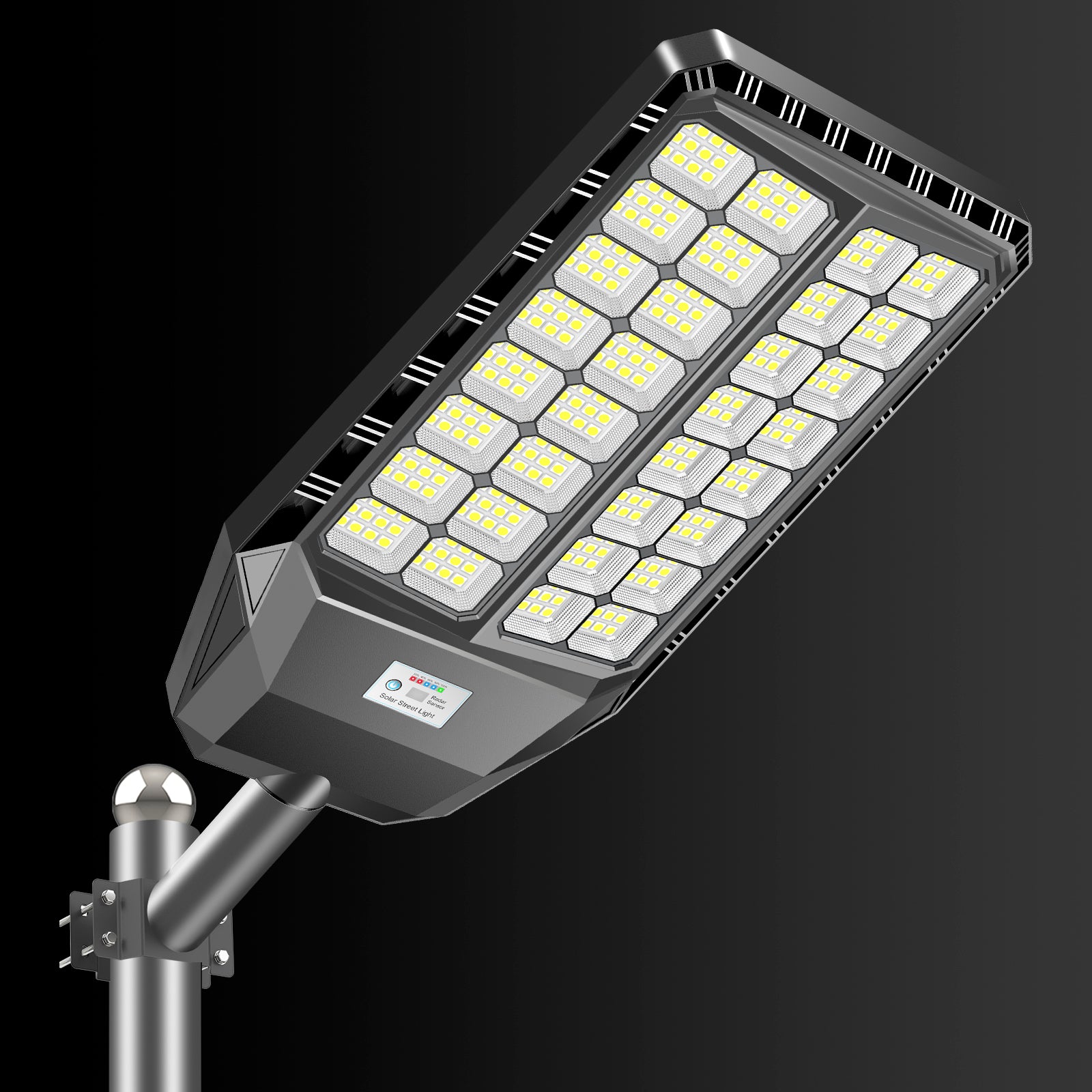
The Hykoont TW036 Ultra Bright Solar Street Light is the flagship model, delivering an impressive 50,400 lumens from 1,080 SMD LED chips. Priced between $185.00 and $349.00 depending on configuration, it's designed for applications where maximum brightness is non-negotiable.
What sets the TW036 apart is its sheer power output. At 360W with 50,400 lumens, this light can illuminate large areas with daylight-like clarity. The 1,080 LED chips are arranged to provide even light distribution without dark spots or harsh shadows.
The solar panel boasts a 25% energy conversion rate, which is excellent for solar technology. This means more of the sun's energy gets converted into usable electricity, resulting in faster charging and longer runtime. Even on partly cloudy days, you're getting solid charging performance.
Control options are where the TW036 really shines. You get motion sensor capability, time-based scheduling, remote control operation, and even radar control options. This flexibility means you can optimize the light's behavior for your specific situation—full brightness when motion is detected, dimmed mode during quiet hours, or custom schedules that match your needs.
Hykoont backs the TW036 with a 3-year warranty and 30-day return policy, showing their confidence in the product's durability and performance.
See TW036 Pricing and Options →
Hykoont TW030: The Value Powerhouse

The Hykoont TW030 Solar Street Light delivers 42,000 lumens from 900 SMD 5730 LED chips at a more accessible $142.00 price point. Don't let the lower price fool you—this is still a commercial-grade light capable of serious performance.
At 300W with 42,000 lumens, the TW030 provides exceptional brightness for most applications. The 900 LED chips use the proven 5730 SMD technology known for efficiency and longevity. You're getting professional-level illumination at a price that makes sense for budget-conscious projects.
One standout feature is the 240° super wide lighting angle. This broad beam pattern means you can cover more area with fewer lights, potentially saving money on your overall lighting project. Instead of needing multiple narrow-beam lights, one TW030 can illuminate a wide swath of your property.
The TW030 offers three lighting modes: motion sensor for energy conservation, dusk-to-dawn for all-night illumination, and timed operation for custom schedules. While not as extensive as the TW036's control options, these three modes cover the vast majority of real-world applications.
Durability is a key selling point. The TW030 features a thickened shell construction that Hykoont claims provides 2.46 times longer service life than ordinary solar street lights. In harsh weather conditions or high-traffic areas where the light might take some abuse, this extra durability matters.
Like the TW036, the TW030 comes with a 3-year warranty, giving you peace of mind about your investment.
Head-to-Head Comparison: The Details That Matter
Now let's compare these lights across the factors that actually impact your decision and daily use.
Brightness and Light Output
The TW036 produces 50,400 lumens while the TW030 delivers 42,000 lumens. That's an 8,400 lumen difference, or about 20% more light from the TW036.
In practical terms, what does that mean? Both lights are incredibly bright—we're talking about illumination levels that rival traditional 400W metal halide street lights. The difference becomes noticeable in very large areas or when you need maximum visibility for security purposes.
For a parking lot, large driveway, or street lighting application, the TW036's extra brightness provides better visibility at greater distances. You'll see more detail, colors appear more accurate, and the overall sense of security is enhanced.
For residential driveways, smaller parking areas, or pathway lighting, the TW030's 42,000 lumens is more than sufficient. In fact, it might even be overkill for some applications. The key is matching the brightness to your actual needs rather than just buying the brightest option.
LED Technology and Chip Count
The TW036 uses 1,080 SMD LED chips while the TW030 uses 900 SMD 5730 LED chips. More chips generally means better light distribution and redundancy—if a few chips fail, you barely notice the difference.
The TW030's 5730 SMD chips are a specific LED type known for high efficiency and good color rendering. They're proven technology that's been used in commercial lighting for years. The TW036's chips aren't specifically identified, but the sheer number (1,080) suggests excellent coverage and reliability.
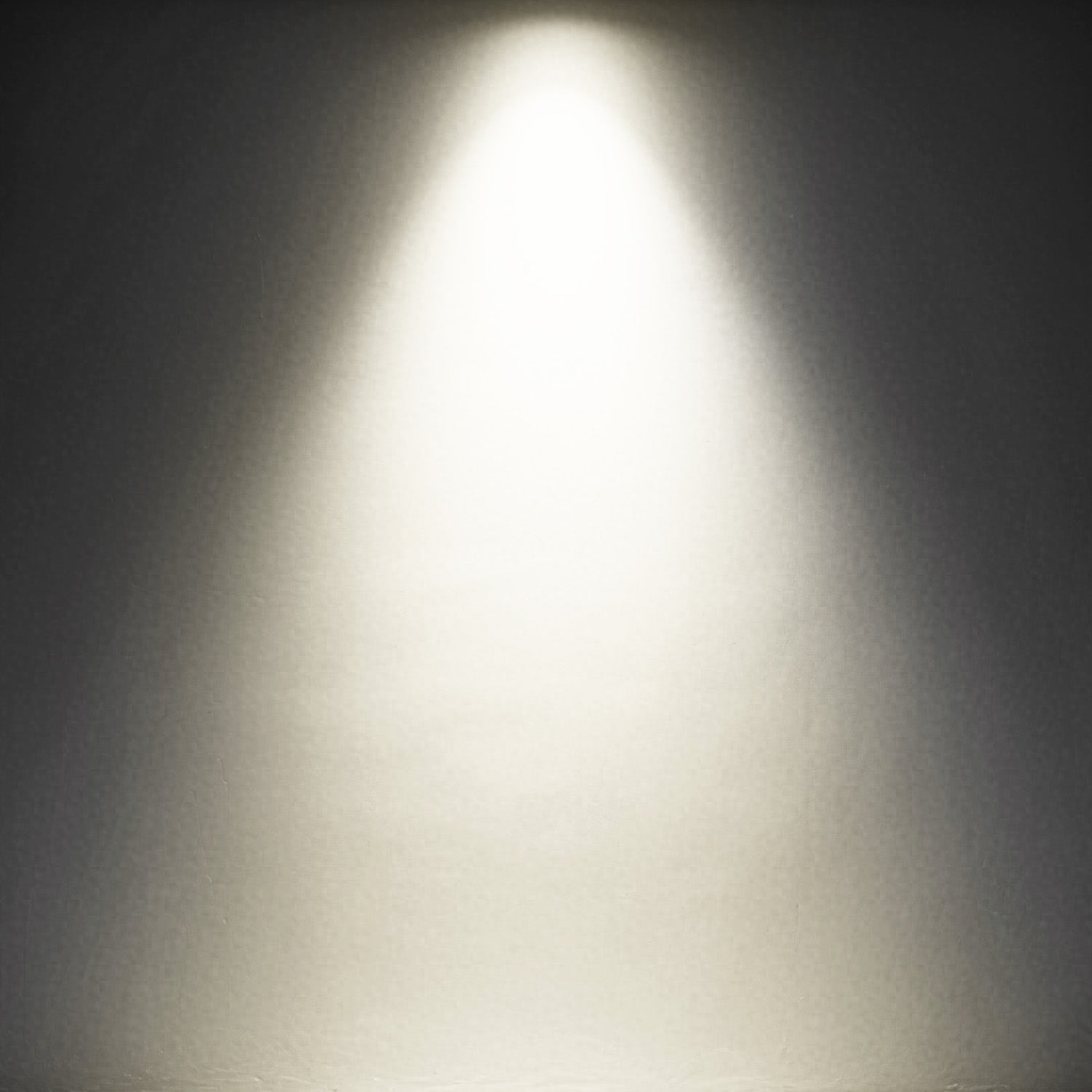
Both lights operate at 6500K color temperature, which produces a bright white light similar to daylight. This color temperature is ideal for security and visibility applications where you need to see clearly and accurately.
Coverage Area and Beam Pattern
The TW030 explicitly mentions a 240° super wide lighting angle, which is exceptional. This wide beam pattern means the light spreads out broadly rather than focusing in a narrow cone. For illuminating wide areas like parking lots or streets, this is exactly what you want.
The TW036 doesn't specify its beam angle, but with 1,080 LED chips, you can expect excellent coverage. The higher chip count typically allows for more precise beam shaping and better light distribution.
In general, the TW030's explicitly wide beam pattern makes it ideal for area lighting where you want broad, even coverage. The TW036's higher output makes it better for applications where you need both wide coverage and maximum brightness.

Solar Panel and Charging Efficiency
The TW036 boasts a 25% solar energy conversion rate, which is excellent. Most budget solar lights operate at 15-18% efficiency, so this 25% rating means significantly better charging performance, especially on cloudy days or in winter when sunlight is less intense.
The TW030 doesn't specify its conversion rate, but given its professional-grade positioning, you can expect it to be in the 20-23% range—still very good, just not quite as efficient as the TW036.
Better solar efficiency means the light charges faster and can operate longer on stored energy. If you're in an area with frequent cloudy weather or shorter winter days, the TW036's superior solar panel might be worth the extra investment.
Control Options and Smart Features
This is where the TW036 pulls ahead significantly. It offers motion sensor, time-based control, remote control, and radar control options. This gives you incredible flexibility in how the light operates.
For example, you could set it to run at 30% brightness all night, then jump to 100% when motion is detected. Or use the timer to have it turn on at dusk, run at full brightness until midnight, dim to 50% until 5 AM, then turn off at dawn. The radar control option provides even more sophisticated motion detection than standard PIR sensors.
The TW030 offers three modes: motion sensor, dusk-to-dawn, and timed operation. These cover the most common use cases, but you don't get the same level of customization as the TW036. For most users, these three modes are perfectly adequate.
If you need sophisticated control and custom programming, the TW036 is the clear choice. If you want simple, reliable operation without complexity, the TW030's three modes are easier to set up and use.
Build Quality and Durability
The TW030 specifically highlights its thickened shell construction with 2.46 times longer service life than ordinary lights. This suggests Hykoont has reinforced the housing to withstand impacts, extreme temperatures, and harsh weather.
The TW036 doesn't make specific durability claims beyond the 3-year warranty, but as the flagship model, you can expect premium construction. The higher price point typically correlates with better materials and build quality.
Both lights are designed for outdoor installation in all weather conditions. They'll handle rain, snow, heat, and cold without issues. The TW030's explicit durability claims make it particularly appealing for high-abuse environments like construction sites or industrial facilities.
Price and Value Proposition
The TW030 at $142.00 offers exceptional value. You're getting 42,000 lumens of commercial-grade lighting for a price that's accessible to most budgets. For projects requiring multiple lights, this price point makes large-scale installations feasible.
The TW036 ranges from $185.00 to $349.00 depending on configuration. The base model at $185.00 is only $43 more than the TW030, which seems like a reasonable premium for 20% more brightness and advanced control options. The higher-end configurations presumably include additional features or accessories that justify the $349.00 price.
From a pure lumens-per-dollar perspective, the TW030 delivers about 296 lumens per dollar while the TW036 base model provides about 272 lumens per dollar. The TW030 wins on raw value, but the TW036's extra features and brightness might be worth the premium for specific applications.

Which Solar Street Light Should You Choose?
Let's make this decision easier with some real-world scenarios.
Choose the TW030 Solar Street Light If:
You're lighting residential driveways, pathways, or smaller parking areas. The 42,000 lumens and 240° wide beam provide excellent coverage for these applications without overspending on unnecessary brightness.
Budget is a primary concern. At $142.00, the TW030 delivers professional-grade performance at a price that makes multi-light installations affordable. You could buy three TW030 units for less than two high-end TW036 units.
You want simple, reliable operation. The three lighting modes cover all the basics without complexity. Set it to dusk-to-dawn and forget about it, or use motion sensor mode to conserve energy.
Durability in harsh conditions is critical. The thickened shell construction and 2.46x longer service life claim make the TW030 ideal for construction sites, industrial facilities, or areas where the light might take some abuse.
You need wide area coverage. That 240° beam angle is perfect for illuminating broad spaces with even light distribution.
Get the TW030 Solar Street Light →
Choose the TW036 Solar Street Light If:
Maximum brightness is essential. For large parking lots, streets, or security applications where visibility is critical, the TW036's 50,400 lumens provide superior illumination.
You need advanced control options. The motion sensor, timer, remote control, and radar control capabilities let you optimize the light's operation for complex requirements or changing needs.
Solar charging efficiency matters. If you're in an area with frequent cloudy weather or limited sunlight, the 25% conversion rate ensures better charging performance and more reliable operation.
You want the flagship model with premium features. Sometimes you just want the best available option, and the TW036 is Hykoont's top-tier solar street light.
You're willing to invest more for long-term performance. The higher upfront cost is offset by superior features, better efficiency, and maximum brightness that won't need upgrading later.
Upgrade to the TW036 Solar Street Light →
Installation Considerations for Both Models
One of the biggest advantages of solar street lights is installation simplicity, but there are still some best practices to follow.
Both the TW036 and TW030 need to be mounted where the solar panel receives unobstructed sunlight for at least 6-8 hours daily. Shade from trees, buildings, or other structures will reduce charging efficiency and runtime.
Mounting height matters for coverage. For street lighting, 15-20 feet is typical. For parking lots, 12-18 feet works well. For driveways and pathways, 10-15 feet provides good coverage without wasting light.
Consider spacing between lights. The TW030's wide 240° beam means you can space lights farther apart, potentially reducing the total number needed. The TW036's higher output also allows for greater spacing while maintaining adequate illumination.
Both lights can be pole-mounted or wall-mounted depending on your application. Make sure your mounting structure is sturdy enough to handle the weight and wind load. These are substantial lights, not lightweight garden fixtures.
Aim the solar panel toward the equator (south in the Northern Hemisphere, north in the Southern Hemisphere) at an angle matching your latitude for optimal year-round charging. Most installers use a 30-45 degree angle as a good compromise.

Real-World Performance: What to Expect
Let's talk about what actually happens when you install one of these lights.
On the first sunny day, the solar panel will charge the battery. Depending on sunlight intensity and battery state, you might get partial operation the first night or need to wait for a full charge cycle. After the initial charge, both lights should operate reliably every night.
In motion sensor mode, the lights typically run at 30-50% brightness until motion is detected, then jump to 100% for a preset time (usually 30-60 seconds). This conserves battery while still providing security lighting.
In dusk-to-dawn mode, the lights turn on automatically when ambient light drops below a threshold and run all night until dawn. Battery capacity determines how long they can run—both models should easily handle 8-12 hours of operation on a full charge.
During cloudy periods, the lights will still charge, just more slowly. Both models should handle 2-3 consecutive cloudy days without issues. Extended cloudy periods (4+ days) might result in reduced brightness or shorter runtime until the battery recharges.
Maintenance is minimal. Every few months, wipe down the solar panel to remove dust, pollen, or debris that reduces charging efficiency. Check mounting hardware annually to ensure everything remains tight and secure.
Both lights use LED technology, which means the bulbs should last 50,000+ hours—roughly 15-20 years of nightly use. The battery will likely need replacement before the LEDs fail, typically after 5-7 years depending on usage patterns and climate.
Cost Analysis: Total Ownership Over Time
Let's look beyond the purchase price to understand the true cost of ownership.
A traditional 400W metal halide street light running 12 hours per night uses about 4.8 kWh daily, or 1,752 kWh annually. At the US average electricity rate of $0.14 per kWh, that's $245 per year in electricity costs alone. Over 10 years, you're paying $2,450 just for electricity.
The TW030 at $142.00 has zero electricity costs. Even if you replace the battery once at $50-80, your 10-year cost is under $225. You save over $2,200 compared to grid power.
The TW036 at $185-349 still saves you thousands over grid power. Even at the high end with a battery replacement, you're looking at under $430 for 10 years of operation versus $2,450 for grid power.
These savings don't even account for installation costs. Running electrical lines to a remote location can cost $1,000-5,000 depending on distance and terrain. Solar lights eliminate this entirely.
From a total cost of ownership perspective, both solar lights pay for themselves in the first year compared to grid power, then continue saving money for years afterward.

Environmental Impact and Sustainability
Beyond cost savings, solar street lights offer significant environmental benefits.
Both the TW036 and TW030 eliminate the need for grid electricity, which in most of the US still comes primarily from fossil fuels. Over 10 years, one solar street light prevents roughly 17,520 kWh of electricity consumption, equivalent to avoiding about 12,000 pounds of CO2 emissions.
LED technology is inherently more efficient than traditional lighting. The same brightness that required 400W from a metal halide bulb needs only 300-360W from LEDs, and that power comes from clean solar energy rather than the grid.
The long lifespan of LED chips (50,000+ hours) means less waste compared to traditional bulbs that need replacement every 1-2 years. You're not constantly throwing away burned-out bulbs and dealing with disposal of hazardous materials like mercury.
For businesses and municipalities focused on sustainability goals, solar street lights are an easy win. They reduce carbon footprint, eliminate ongoing energy consumption, and demonstrate commitment to environmental responsibility.
Frequently Asked Questions
How long do these solar street lights last on a full charge?
Both the TW036 and TW030 can operate for 8-12 hours on a full charge, which covers the entire night in most locations. In motion sensor mode, battery life extends even further since the light isn't running at full brightness constantly. During winter months with longer nights, you might see slightly reduced runtime, but both lights are designed to handle typical overnight operation year-round.
What happens during extended cloudy or rainy periods?
Both lights will continue to charge even on cloudy days, just at a reduced rate. They're designed to handle 2-3 consecutive cloudy days without significant performance degradation. During extended cloudy periods (4+ days), you might notice reduced brightness or shorter runtime until the battery recharges. In areas with frequent cloudy weather, the TW036's superior 25% solar conversion rate provides better performance.
Can I use these lights in winter or cold climates?
Yes, both lights are designed for year-round outdoor use in all climates. The LED chips actually perform better in cold temperatures. The main consideration in winter is reduced daylight hours and lower sun angle, which can decrease charging efficiency. Position the solar panel to maximize winter sun exposure, and both lights will operate reliably even in cold climates. The batteries are designed to function in temperatures well below freezing.
How difficult is installation? Can I do it myself?
Installation is straightforward and doesn't require electrical expertise since there's no wiring involved. You need a sturdy pole or mounting surface, basic tools, and the ability to work at height safely. Most homeowners can install these lights themselves in 1-2 hours. The hardest part is usually setting the pole or preparing the mounting surface. If you're mounting on an existing pole or structure, installation is even simpler. Both lights come with mounting hardware and instructions.
What's the actual brightness difference between 42,000 and 50,400 lumens?
The TW036 produces about 20% more light than the TW030. In practical terms, this means better visibility at greater distances and slightly brighter overall illumination. Both lights are extremely bright—the difference is noticeable but not dramatic. For most residential and small commercial applications, the TW030's 42,000 lumens is more than sufficient. The TW036's extra brightness becomes valuable in large areas, high-security applications, or when you need maximum visibility.
Do these lights attract bugs like traditional street lights?
LED lights at 6500K (daylight white) attract fewer insects than traditional yellow sodium vapor lights or warm white LEDs. However, any bright light will attract some bugs, especially during warm months. The good news is that unlike bug zappers, these are just lights—bugs might gather around them, but they're not designed to trap or kill insects. Position the lights away from main gathering areas if bug attraction is a concern.
Can I adjust the brightness or create custom schedules?
The TW036 offers extensive control options including remote control, timer functions, and programmable schedules. You can set custom brightness levels, motion sensor sensitivity, and time-based operation. The TW030 has three preset modes (motion sensor, dusk-to-dawn, and timed) which cover most needs but don't offer the same customization level. If you need sophisticated control, the TW036 is the better choice.
How long will the battery last before needing replacement?
The lithium batteries in both lights typically last 5-7 years with normal use. Battery lifespan depends on charge/discharge cycles, climate, and usage patterns. In hot climates or with heavy daily use, you might see 4-5 years. In moderate climates with efficient usage, 7-8 years is possible. Replacement batteries are available and relatively inexpensive ($50-80), making this a minor maintenance item over the light's 15-20 year lifespan.
What's the warranty coverage and what does it include?
Both the TW036 and TW030 come with a 3-year warranty covering manufacturing defects and component failures. This includes the LED chips, solar panel, battery, and housing. The TW036 also includes a 30-day return policy if you're not satisfied. Normal wear and tear, damage from improper installation, or abuse aren't covered. The 3-year warranty is excellent for solar lights and demonstrates Hykoont's confidence in their products.
Can I use multiple lights together, and how should I space them?
Yes, multiple lights work great together for larger areas. Spacing depends on mounting height and desired illumination level. For street lighting at 15-20 feet height, space lights 40-60 feet apart. For parking lots at 12-18 feet, 30-50 feet spacing works well. The TW030's 240° wide beam allows for greater spacing than narrow-beam lights. Start with wider spacing and add lights if needed—it's easier than dealing with over-illumination from lights placed too close together.
Making Your Final Decision
Both the Hykoont TW036 and TW030 are exceptional solar street lights that will serve you well for years. The right choice depends on your specific needs, budget, and application.
The TW030 at $142.00 offers outstanding value for most applications. With 42,000 lumens, a 240° wide beam, and proven durability, it handles residential driveways, parking areas, and pathway lighting with ease. The three lighting modes cover all the basics, and the thickened shell construction ensures long-term reliability. For budget-conscious projects or applications where 42,000 lumens is sufficient, the TW030 is the smart choice.
The TW036 at $185-349 is the premium option for those who need maximum brightness, advanced control, or superior solar charging efficiency. The 50,400 lumens, 1,080 LED chips, and 25% solar conversion rate make it ideal for large areas, high-security applications, or locations with challenging sunlight conditions. The extensive control options provide flexibility that the TW030 can't match.
Can't decide? Consider your primary use case. For most residential and small commercial applications, the TW030 provides everything you need at an excellent price. For large commercial properties, municipal street lighting, or applications where maximum performance is essential, the TW036 justifies its premium price.
Either way, you're getting a commercial-grade solar street light that will eliminate electricity costs, provide years of reliable service, and deliver professional-level illumination. Both lights come with 3-year warranties and are backed by Hykoont's reputation for quality outdoor lighting products.
Ready to light up your property with clean, free solar energy? Choose the model that fits your needs and start enjoying better visibility, enhanced security, and zero electricity bills.
Shop Now:
- Hykoont TW030 300W Solar Street Light - $142.00
- Hykoont TW036 360W Solar Street Light - From $185.00
Have questions about which model is right for your specific application? Drop a comment below or reach out to our team. We're here to help you find the perfect solar lighting solution for your property.


Leave a comment
This site is protected by hCaptcha and the hCaptcha Privacy Policy and Terms of Service apply.