







Primary keyword: solar flood lights for home security during winter power outages. Long-tail keyword: how to keep solar security lights working through winter outages after several cloudy days.
The lights go out at 6:12 p.m. The driveway is slick, the side gate is hard to see, and the motion light above the garage is suddenly just another dark fixture. In a winter outage, that moment is less about having the brightest lamp on the block and more about knowing which parts of the property will still be lit when the grid is not there to help.
A solar security light with its own panel and battery can give you a useful layer of independent outdoor lighting. It can make a door, walk, gate, shed, or parking area easier to see without drawing power from the house. But solar is not magic stored in a panel. The system must collect enough energy before the outage, preserve that energy through short days and clouds, and spend it on the right parts of the property. That is where a little planning makes the difference between a light that helps all night and one that fades before the storm has passed.
This guide takes a practical approach to solar flood lights for home security during winter power outages. We will map the places that matter, talk through winter charging and battery limits, explain how to plan motion lighting without creating a dark trap, and compare three current Hykoont solar flood light listings. One important distinction up front: an outdoor security floodlight is not automatically a code-compliant emergency egress light. Use solar floodlights as a helpful independent layer, and keep the required life-safety equipment and backup plan in place.
First, separate security lighting from life-safety lighting
People use “emergency light” to mean a few different things. Sometimes they mean a light that stays useful when the neighborhood loses power. Sometimes they mean the listed, inspected equipment required to illuminate a marked exit route during an emergency. Those are not interchangeable. A solar security floodlight may be an excellent way to illuminate a driveway or side entrance during a grid outage, but unless the product is specifically certified and installed for the required use, do not count it as a substitute for emergency egress lighting.
For a home, think of solar floodlights as independent exterior visibility: the back door, gate latch, driveway turn, detached garage, steps, or path to a generator. For a business, rental property, or multi-unit building, ask the responsible electrician or local authority which areas require listed emergency fixtures, how long they must operate, and what inspection rules apply. Keep those systems separate in your plan. A product's weather rating or a CE, RoHS, or ISO reference does not by itself establish that it meets every U.S. life-safety requirement.
This is not red tape for its own sake. A security light is often mounted to illuminate a broad area and may rely on motion sensing. A required exit light needs predictable performance where occupants can find it. One can support the other, but you should not discover during a blackout that the light you assumed would guide everyone out was never designed or approved for that job.
Build a small “darkness map” before buying anything
Walk the property after sunset with the lights off. You do not need a fancy survey. Mark the points where a person could trip, where a door or gate needs to be operated, where someone approaches the building, and where you would need to see a vehicle, generator, or utility shutoff. On a house, that may be a narrow route from the garage to the back door. At a small shop, it may be the loading entrance, employee parking, and the path to the electrical room.
Give each location a job. The front door needs enough light to see a key and identify a visitor. A gate may need a short motion-activated burst. A driveway should reveal its edge and any obstacles, rather than blast light into a neighbor's window. A path to emergency supplies needs consistent, easy-to-follow illumination. When every fixture has a job, it is easier to avoid buying a high-output product for a small area and then finding that the battery cannot support an all-night full-brightness schedule.
Make a second pass in daylight. Note which walls and poles have open winter sky, where tree shadows fall, which surfaces get snow drifted against them, and how far a panel cable can reach. A sunny-looking wall in July can be shaded by a building or bare tree during December's short charging window. The panel location matters just as much as the lamp location.

Think in layers, not one giant floodlight
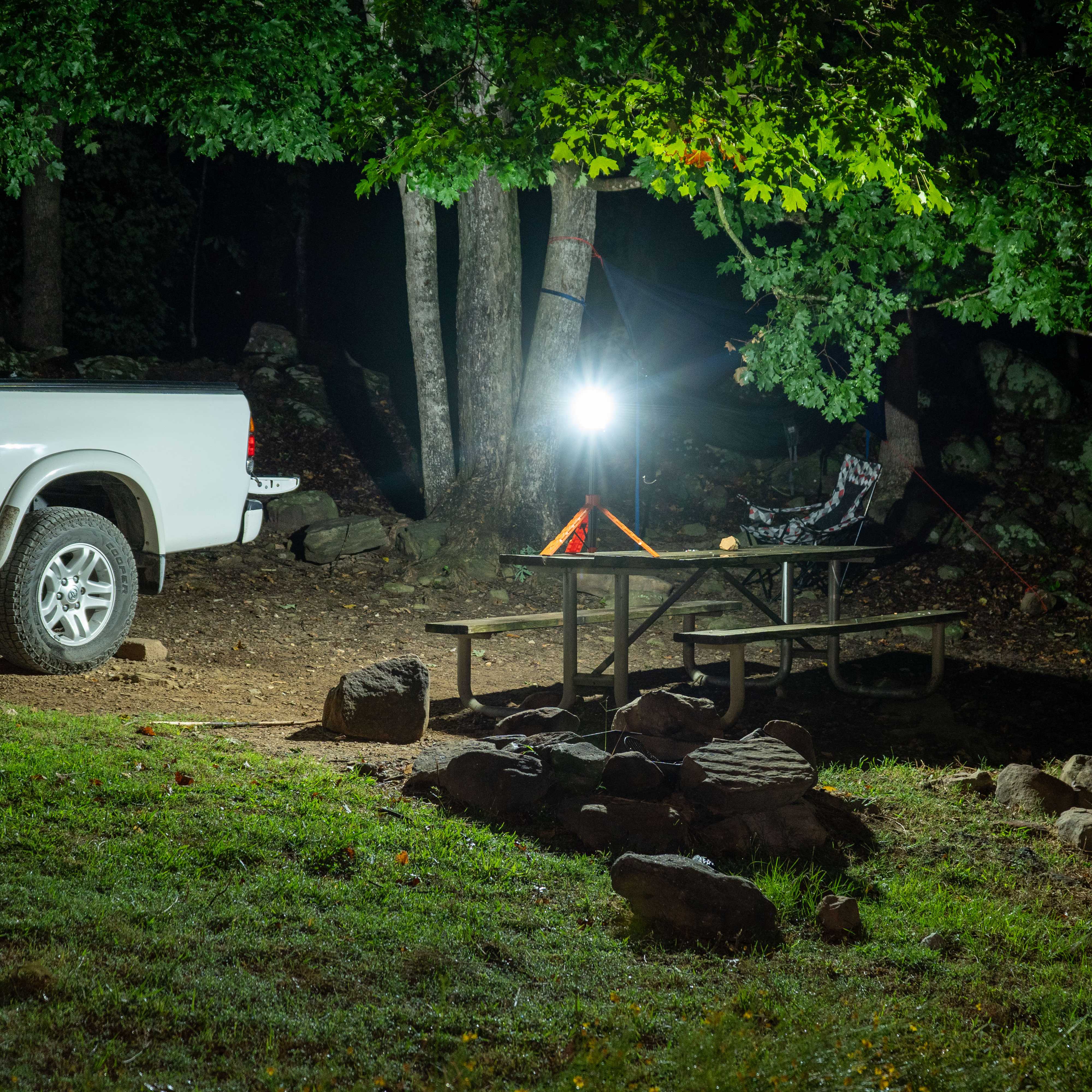
One very bright light can leave harsh glare at the fixture and deep shadows behind a car, fence, or tree. For security during an outage, a few modest lighting layers are often more useful: a broad wash at the driveway, a motion response at a gate, and a steady low level near the door or path you actually use. The aim is not to make the property look like a stadium. It is to make important edges, entrances, and movement visible without wasting the stored energy.
Start with the route you would walk if the power failed during freezing weather. Make sure the path has a reliable baseline, then use motion-triggered brightness for less frequently used areas if the product supports it. If you have a generator, place light near the approach and working area, but keep exhaust and safe operating clearances in mind. Lighting should help you see the generator, not tempt you to run it in a garage or enclosed space.
For a larger property, sketch the beam direction and likely shadows before mounting anything. Aim light down and across the working area rather than into windows or directly toward a road. A well-aimed floodlight makes fewer lumens do more useful work. It also reduces nuisance glare and helps a camera, if you have one, see a scene instead of a bright white flare.
What grid-independent really means
A standalone solar light uses its panel to charge an onboard battery, then uses that stored energy after dark. It does not need the building's electrical service to operate once it is installed and charged. That is the grid-independent part. It does not mean unlimited runtime, charging through darkness, or a guarantee of full output after a week of storms. The amount of energy available depends on what the panel collected, the battery's usable capacity, the controller's settings, temperature, and the light's output schedule.
A simple way to understand the tradeoff is to think of the battery as a small reserve tank. A bigger tank can carry you through a longer gap, but it still has to be refilled. A larger panel can collect more energy when sunlight is available, but it cannot collect much if it is shaded, snow-covered, or facing an obstructed patch of sky. A lower-brightness schedule uses less energy each hour. Those three levers—collection, storage, and consumption—work together.
That is why “solar powered” alone is not enough information for an outage plan. Ask what battery capacity is included, whether the panel is separate, what operating modes are available, and what conditions the listed cloudy-weather runtime assumes. If the product page's title and details disagree about a component rating, ask the seller to confirm the exact configuration before placing the order. Do not build a safety plan around an ambiguous number.

Winter changes the charging calendar
In winter, the sun rides lower and the daylight window shrinks. A panel that gets several good hours in June may receive much less useful exposure in December, especially if it sits under a roofline or on the north side of a building. Snow, frost, road salt, dust, and fallen leaves can reduce the light reaching the cells. A long string of cloudy days can slow charging just when longer nights increase the number of hours the light is expected to operate.
Before winter begins, check the panel at different times of day. Look for shadows in the morning and late afternoon, not just at noon. For a new installation, follow the manufacturer's guidance for direction and tilt, and have the installer account for local latitude and obstructions. If the lamp must face one direction but the sun-facing panel needs another, a model with a separate panel and cable may give you more placement flexibility.
Do not climb an icy ladder or pole to brush snow off a high panel. For ground-accessible panels, use only the cleaning method in the manual, with a soft tool that will not scratch the surface. For pole-mounted fixtures, schedule safe access with proper equipment. A clean panel helps, but a dangerous maintenance shortcut is not worth it.
Battery reserve: useful, but not a promise of forever
Battery capacity is often listed in watt-hours or in amp-hours with a voltage. Watt-hours make it easier to compare stored energy. If you see only amp-hours, multiply by the battery voltage for a rough energy figure, but remember that the usable amount is lower than a perfect theoretical total because the controller, temperature, and protection limits matter. A 192Wh battery and a 384Wh battery are not interchangeable just because both fixtures say “solar floodlight.”
Runtime also depends on the lighting setting. A fixture running at full output uses energy faster than one at a reduced level. Motion sensing may conserve energy if activity is occasional, but a wind-blown shrub or busy driveway could keep triggering it. A timer that turns a light down later at night may extend service, but only if the resulting visibility is still adequate for that location.
Cold-weather performance is specific to the battery and controller. Some product listings state an operating temperature range; that does not automatically tell you every safe charging limit. Review the installation manual, especially for lithium iron phosphate systems, and ask the supplier how the battery behaves when very cold. Never substitute a battery or panel based only on a similar-looking connector.
Plan for the outage before the weather alert
A solar fixture is most useful if it has already had a fair chance to charge before the power goes out. Keep panels clear through the season, make sure branches have not grown into their charging window, and check that a new installation is not shadowed by a temporary storage container or a vehicle parked in the wrong spot. If the product uses a remote or controller, keep it somewhere accessible and note the normal settings.
Before a forecast winter storm, do a quick walkaround. Confirm that the panels are not covered, lights are in the intended operating mode, and there is a safe route to doors and supplies. If the forecast includes heavy snow, plan for safe panel checks after the storm rather than assuming the system will collect energy while buried. A full battery going into a storm helps, but do not spend it testing every mode for fun the night before an outage.
For a business, include the solar fixtures in a written outage checklist. Identify who checks them, how staff report a light that is out, where spare flashlights are kept, and which routes still rely on code-required emergency systems. That short plan is easier to follow at 2 a.m. than an online product page nobody can open because the internet is down.

Motion sensing without the “dark until it is too late” problem
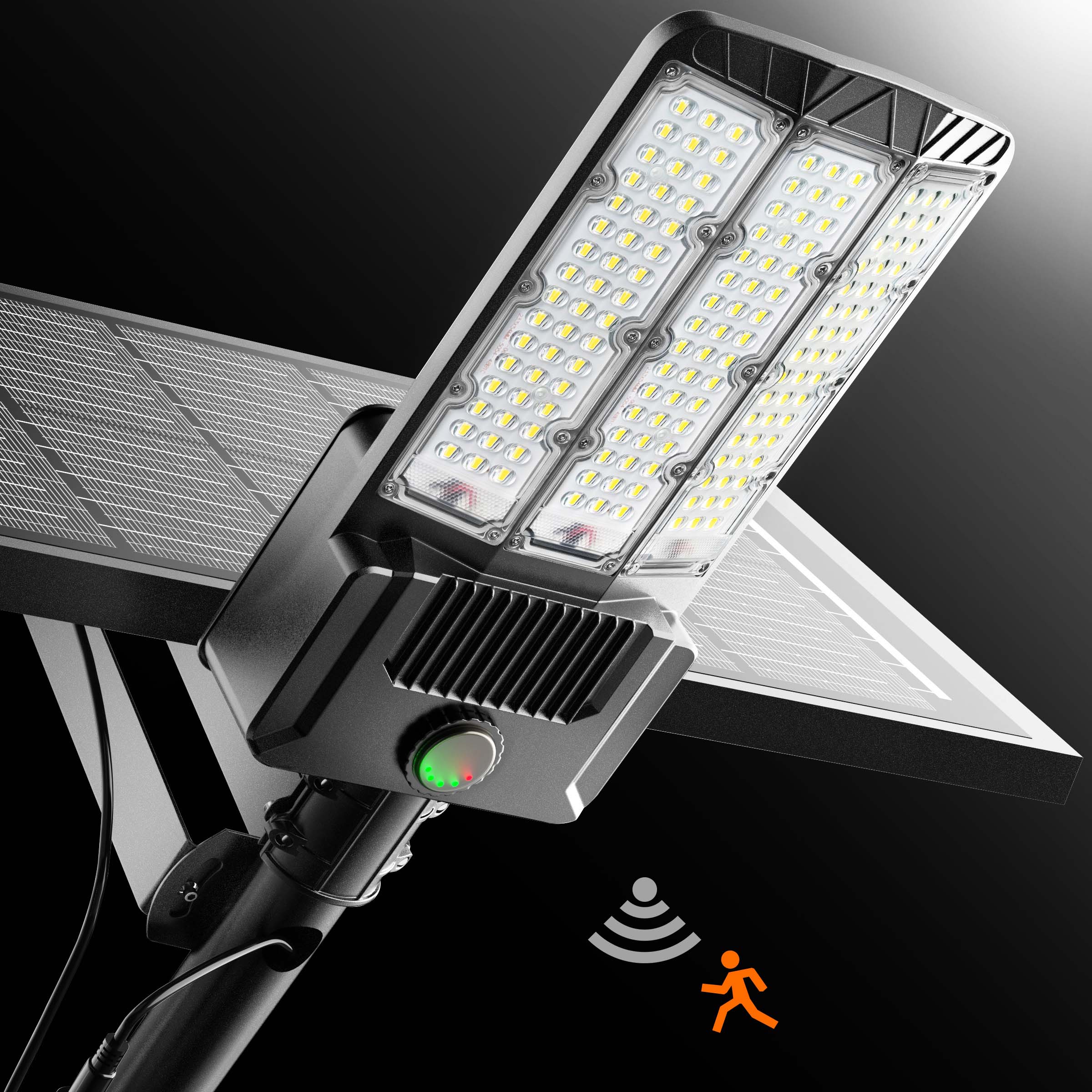
Motion sensing is handy at a side gate, shed, or driveway approach. It can preserve energy by keeping output lower when no one is nearby and brightening when movement is detected. But a sensor only helps if it sees the person before they reach the dark spot. Check its detection direction, mounting height, range, and response time. A sensor pointed at the street may trigger for passing cars while missing someone walking toward a door from the side.
For any route you may need during a power outage, consider a steady baseline level rather than switching completely dark between activations. A low background glow can preserve orientation while a brighter mode handles the moment someone approaches. Test the setting in real conditions: walk from the sidewalk, approach from the driveway, and open the gate. Look for blind angles, false triggers from branches, and glare into a camera or neighbor's property.
Do not assume that every product in this article has motion sensing. The OK30A, OK40C, and OK60C descriptions we checked emphasize adjustable output levels and timer or energy-saving behavior, not the same motion feature. If motion activation is essential, verify it on the exact listing before you buy or choose a model that explicitly includes it.
Make the light useful for people, not just cameras
Security lighting is often discussed as if the only viewer were a camera. In an outage, the first person who needs the light may be a family member carrying groceries, an employee checking a door, or a neighbor helping someone get to a car. Avoid aiming a floodlight directly at eye level. Use it to reveal the ground, door hardware, steps, and the next point on the route. A camera can benefit from that, but visibility for people comes first.
Color temperature can affect how a space feels. The Hykoont models below offer adjustable color-temperature ranges according to their product descriptions. A warmer setting may feel less harsh around a home, while a cooler setting may make details feel crisp. The right choice depends on the task and the surrounding area. It does not change the basic energy question: a brighter or longer schedule still draws more stored power.
Watch for snow glare. A very bright beam striking fresh snow can bounce back and reduce contrast. Aim the beam so it illuminates the path and objects, not a broad white patch at close range. Take a short night walk after installation and adjust before you need the light in a real outage.
Where solar floodlights help most during a winter blackout
Start with exterior locations where a small amount of light reduces a practical risk: a back or side door, a driveway edge, a path to a detached garage, a gate, a tool shed, or a place where someone may need to reach a shutoff. If you have stairs or a steep walk, be cautious about relying on a single broad flood from above; lower-level path markers or portable lights may be a better addition.
Solar floodlights can also help illuminate an outdoor work zone during a short check of a vehicle or generator. Plan the work area in advance and follow the equipment's safety instructions. Do not run combustion equipment indoors or near openings where exhaust can enter the building. Light is not a substitute for carbon-monoxide alarms or safe generator placement.
For commercial properties, think about employee arrival, delivery access, vehicle movement, and the route to the building's designated exits. Coordinate solar security lighting with the building's emergency plan. A solar fixture on a fence may stay lit while a required interior exit sign still needs its own approved backup system.

Three Hykoont solar flood lights to compare
The following active product listings offer three different capacity and price points for outdoor security lighting. Prices below are the current USD catalog prices checked while preparing this article, and can change. Confirm the live listing, included panel, cable, hardware, and exact selected configuration before ordering. These are products to compare for exterior visibility, not substitutes for listed emergency egress equipment.
OK30A Enhanced 30W 144WH Solar Flood Light — listed at $240
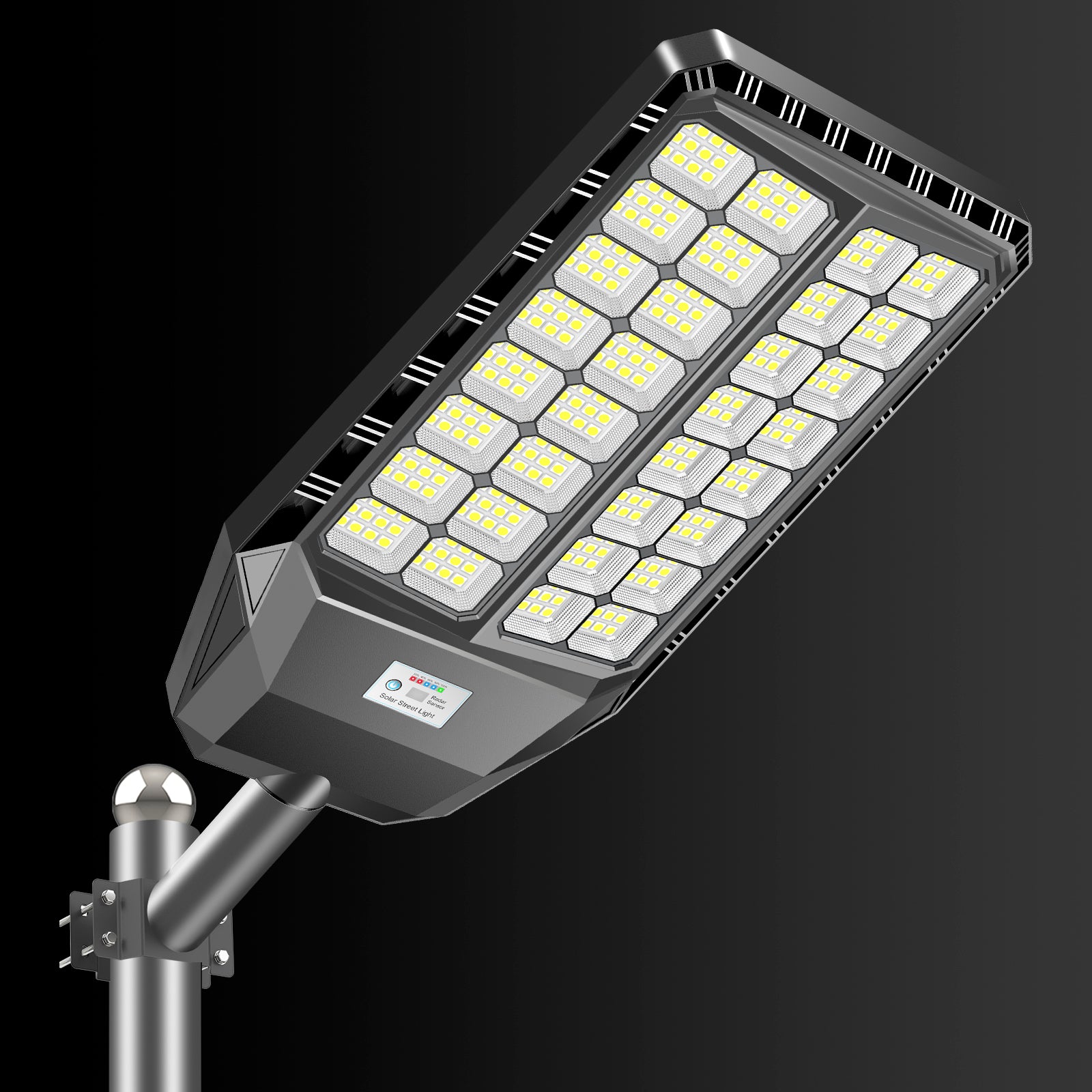
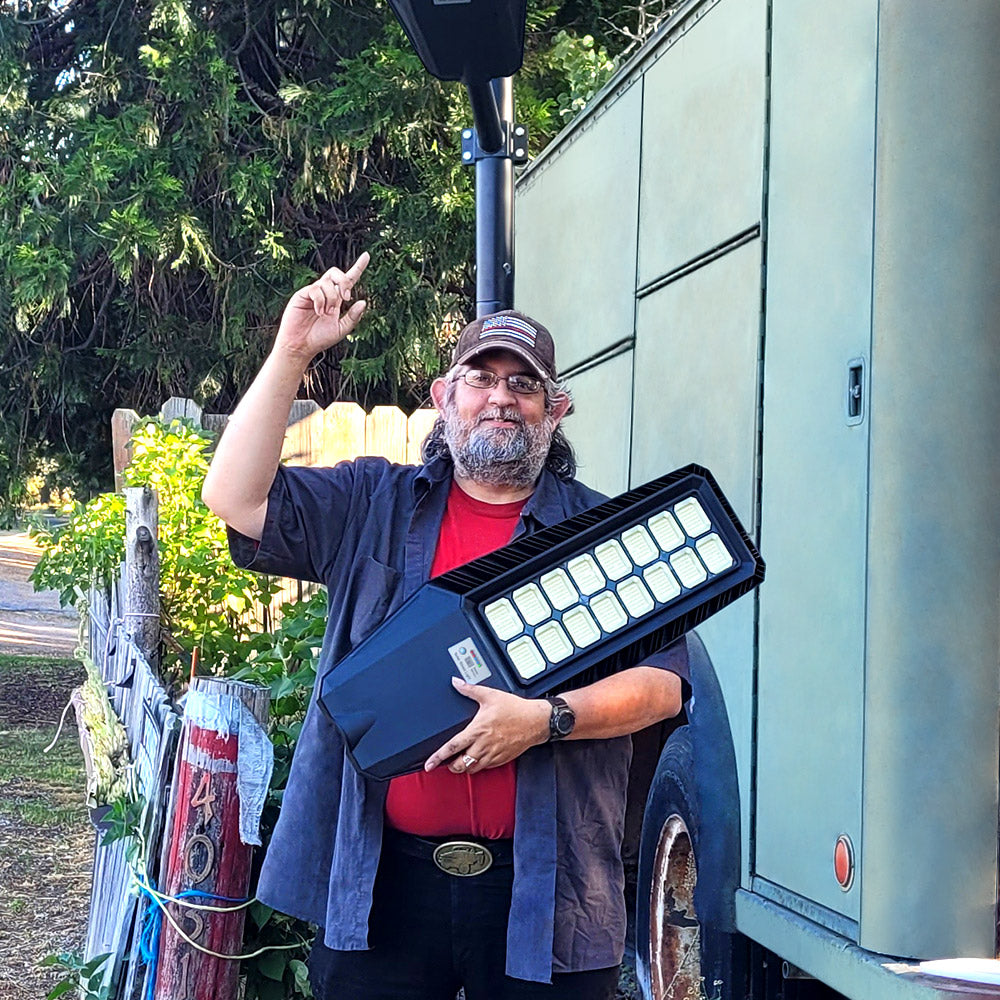
The OK30A is a compact starting point for a defined area such as a side entry, small yard, shed approach, or driveway section. Its current product title lists a 30W light and a 144Wh battery; the description specifies a 30W monocrystalline panel, a LiFePO4 battery, output of at least 4,500 lumens, adjustable color temperature, aluminum housing, and an operating-temperature range of -20°C to 60°C. The description also outlines several reduced-output time blocks, which is relevant when you are trying to stretch stored energy over a long winter night.
There is a mismatch between the product title and the URL handle, which includes “40W.” Confirm the exact wattage and included configuration with the seller before purchase. For a home outage plan, compare the 144Wh capacity with the number of hours you need and whether the selected light level will illuminate the route you mapped.
Check the OK30A listing and current $240 price

OK40C 40W 192WH Solar Flood Light — listed at $270
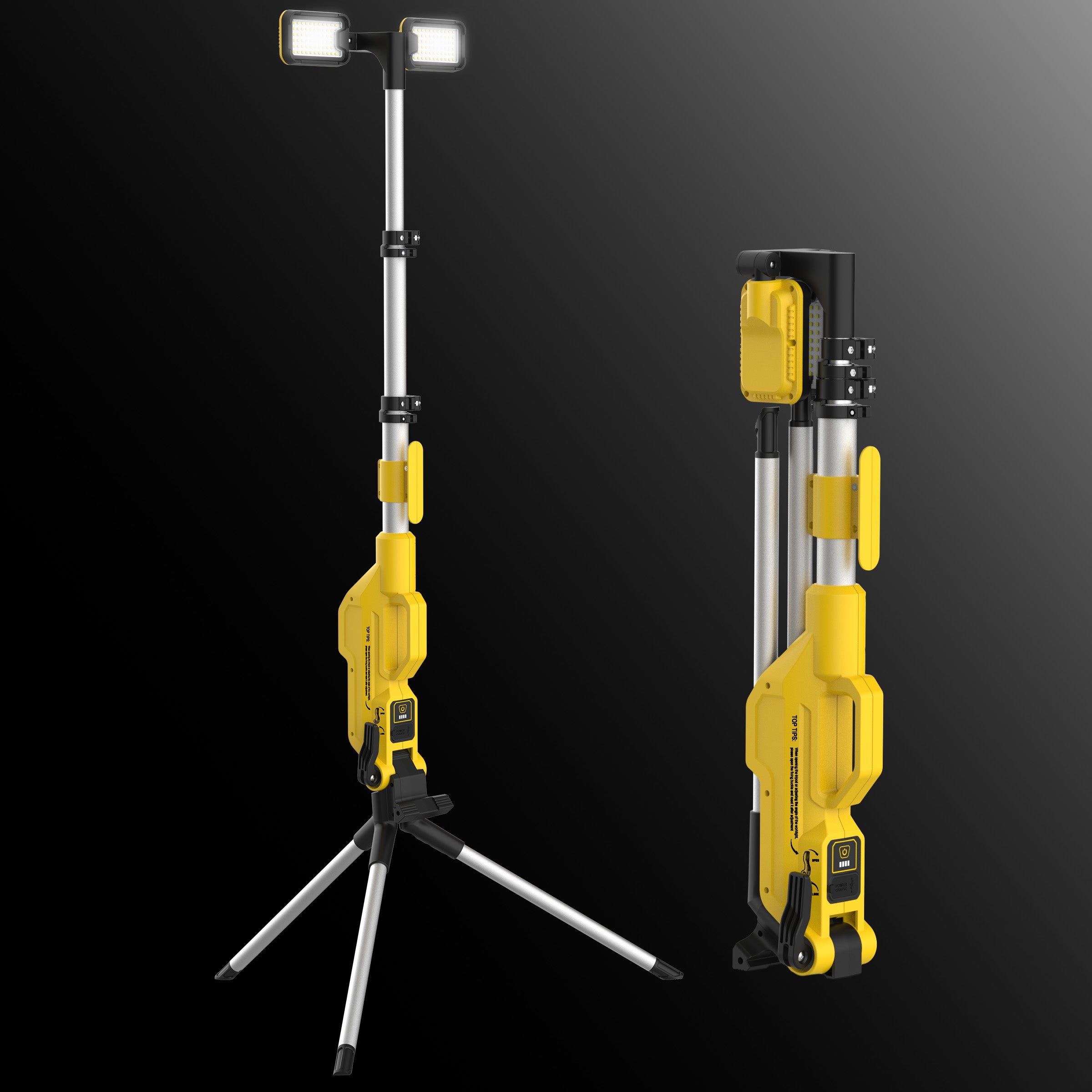
The OK40C sits between the smaller and larger options. The listing describes a 60W monocrystalline panel, a 192Wh LiFePO4 battery, at least 4,800 lumens, adjustable color temperature, four brightness levels, and up to three rainy days of operation in energy-saving mode. That last figure is a product-page claim, not a universal guarantee. Actual performance depends on how charged the battery is before the cloudy stretch, panel exposure, temperature, and selected output.
The product description includes a 3.5-meter rubber cable, which can provide some flexibility when the panel's best sun position differs from the floodlight's best aiming position. Check the supplied cable length and mounting instructions for your site. A separate panel helps only if it can be installed where it sees open sky and its wiring is protected from damage.
Compare the OK40C details and current $270 price

OK60C 60W 384WH Ultra-Bright Solar Flood Light — listed at $462
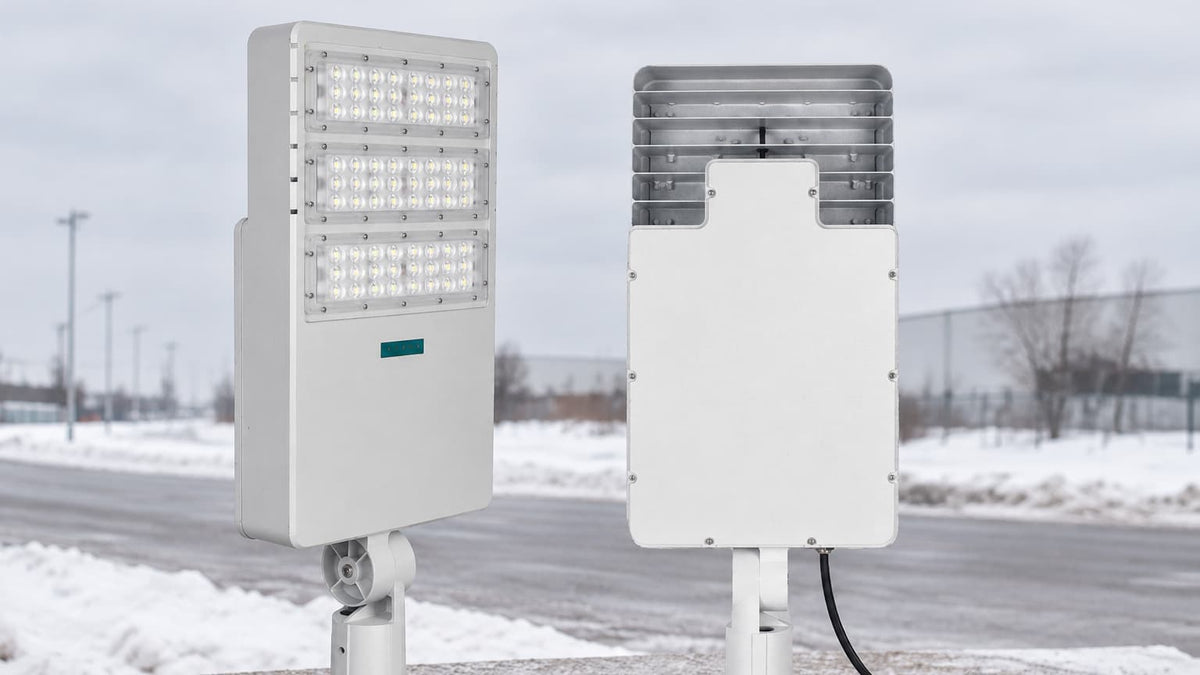
The OK60C is the largest battery and output option in this comparison. Its listing describes a 100W monocrystalline panel, a 384Wh LiFePO4 battery, at least 7,200 lumens, adjustable color temperature, and four output levels. It is positioned for larger outdoor areas such as parking lots and broad yards, where a smaller fixture may not spread useful light across the required zone.
A larger fixture still needs a thoughtful schedule. Running at full output for the entire night uses energy faster than using a reduced setting during quiet hours. The listing says the light can operate for up to three rainy days in energy-saving mode; verify the assumptions and expected output with the seller, especially if this is part of a business continuity plan. One high-output light is not always better than two well-aimed lights covering separate entrances.
Review the OK60C specifications and current $462 price

When you compare the three, ask the same practical questions each time: What exact panel and battery are included? Where should the panel be placed for winter sun? Which dimming or timer modes are available? How many hours at the selected setting can be expected after a normal charging day, and what changes after several cloudy days? What is covered by the warranty? Is a replacement battery available? A clear answer to those questions is more valuable than a headline lumen number alone.
A quick sizing sanity check
You do not need to become an electrical engineer to catch an unrealistic runtime expectation. Start with the rated battery energy in watt-hours, then ask the supplier what the fixture draws at each brightness level and what portion of the battery the controller makes available. A rough upper-bound calculation is usable watt-hours divided by watts consumed. Real runtime will be shorter because of conversion losses, reserve settings, temperature, and changing brightness.
For example, do not assume that a 384Wh battery can power a 60W light at full output for the entire night simply because 384 divided by 60 gives a number of hours. That quick division ignores usable capacity and system losses, and the product may draw a different amount at its dimmed settings. Ask for the manufacturer's runtime profile at each mode and note which mode it refers to. If there is no clear answer, treat the product's all-night claim cautiously.
Then decide what “working” means during an outage. Is a low glow enough to find the door? Does the gate require a bright burst only when someone approaches? Does a work area need full output for 30 minutes while someone checks a generator? Separating essential tasks from nice-to-have illumination can dramatically improve how long a small battery reserve lasts.
Installation details that are easy to miss
Place the panel where it receives the best winter sunlight, and aim the lamp where the light is needed. On products with a separate panel, check the cable route for pinching, abrasion, water exposure, and accidental cuts from landscaping tools. Follow the manufacturer's maximum cable length and mounting instructions. Do not splice or extend a cable unless the product guidance permits it.
Mount the fixture to a surface that can safely support it through wind and ice. Consider snow load, prevailing winds, and the possibility of branches falling. Avoid aiming onto a public road in a way that could distract drivers. If you are mounting on a rental property or shared building, get the required permission before drilling or running cables.
After installation, test the system at night from the actual walking approach, not only while standing beneath the fixture. Confirm that the light turns on as expected, the beam covers the needed area, the sensor does not trigger constantly, and controls are understandable. Save the manual and product configuration with your outage plan.
Maintenance that protects your reserve
Make a simple monthly visual check during the darker season and another one after a major storm. Look for snow or dirt on the panel, new shade, a shifted bracket, damaged cable insulation, or moisture where it should not be. Clean only as directed, and arrange safe access for high-mounted equipment. A little attention to the panel can prevent a small charging problem from becoming a surprise when the grid fails.
Check the battery and controller according to the product guidance. A light that used to last through the night but now shuts down early after several clear days may have a battery, connection, or control issue. Note the weather and settings before calling support. Do not open a sealed enclosure or substitute components unless the manufacturer authorizes the repair.
If the fixture will be unused for a long period, follow the storage and charging guidance. Leaving a battery depleted for months can be hard on it. The exact maintenance interval varies by product and climate, so use the supplied instructions rather than a generic rule from another brand.
Build a layered outage kit, not a single point of failure
Solar floodlights are one useful layer of an outage plan, not the entire plan. Keep flashlights or headlamps where household members can find them in the dark. Maintain fresh batteries or charged rechargeable units, and keep a lantern for indoor use. For a business, provide portable lights for staff who may need to inspect an area that the installed solar fixtures do not cover.
Use indoor battery lights that are designed for indoor spaces. Do not bring an outdoor fixture, generator, or fuel-burning heater inside because the power is out. Keep carbon-monoxide alarms operating on their own backup batteries where applicable. If someone in the household relies on powered medical equipment, make a separate continuity plan with the healthcare provider and utility; an outdoor solar floodlight cannot supply that equipment.
Write down the essentials: where the main shutoff is, how to contact the utility, where emergency supplies are stored, and which route is safe if the driveway is icy. A few labels and a paper copy can matter when phones are low on battery and the internet is unavailable.
Common winter mistakes worth avoiding
The first mistake is placing the solar panel where it is convenient rather than where it can charge. The second is choosing a light by “watts” or lumens alone without checking battery capacity and operating modes. The third is assuming a motion sensor will keep the property illuminated continuously. A sensor may save energy, but the dark interval can be uncomfortable or unsafe on a route people need to use.
Another common miss is waiting until the first outage to learn the controls. Test the modes on a calm evening, then return the fixture to the setting you want before winter weather arrives. If a remote is required, store it somewhere obvious and keep its battery in good condition. A feature nobody knows how to use is not much of a backup.
Finally, do not use a product-page runtime statement as an engineering guarantee. “Up to” figures typically depend on favorable conditions and specific settings. Ask what brightness is maintained, how many hours are assumed, and what charging conditions are required. For a property that must remain operational, plan more than one source of light.
Make your first winter test boring
The best time to discover a problem is on an ordinary evening, not during a storm. Pick a night before winter weather arrives. Turn off the grid-fed exterior light you normally rely on, use the solar setup as you expect to during an outage, and walk the route. Check the door, gate, steps, vehicle area, and any work zone. Ask another person to approach from a different direction and note where the light misses them.
Repeat the test after a cloudy day, but do not drain the battery on purpose. The goal is to see how the scheduled light behaves under realistic conditions, not to push it to failure. If it fades too early, try a safer lower-output schedule, adjust panel exposure, or ask the supplier to review the expected runtime. Make one change at a time so you know what helped.
For a small business, include the test in a staff drill. Have someone follow the normal emergency route while another person observes the outdoor fixtures. Keep the code-required life-safety system separate and test it according to its own schedule. This is a practical way to catch confusing controls or a poorly lit corner before anyone depends on them.
Frequently asked questions
Will a solar floodlight work during a power outage?
A standalone solar floodlight with its own charged battery can operate without the building's grid power. Its runtime and brightness depend on the energy collected before the outage, panel exposure, battery condition, selected output, temperature, and weather. It is an independent exterior-lighting layer, not a guarantee of unlimited operation.
Can a solar security light replace emergency exit lighting?
Do not assume so. Security floodlights and code-required emergency egress fixtures have different jobs. Use a solar light for outdoor visibility unless the exact product is approved for the required life-safety use and installed in accordance with local rules. Ask a qualified electrician or local authority what your building requires.
How do I keep solar security lights working after several cloudy winter days?
Keep the panel clear and unshaded, start the storm with a healthy charge, and use an energy-saving schedule that still provides safe visibility. Confirm the product's cloudy-weather runtime assumptions and consider more battery or panel capacity if the site has long cloudy periods. No battery can operate indefinitely without a chance to recharge.
Should I leave a solar floodlight on all night or use motion mode?
It depends on the route and the product. A steady low level can help people stay oriented, while motion-activated brightness may conserve energy in a low-traffic area. Test detection coverage and avoid completely dark intervals on a route that must be used. Verify that the product actually includes motion sensing before buying.
Does cold weather stop a solar light from charging?
Charging behavior depends on the battery chemistry, controller, and the manufacturer's temperature limits. An operating-temperature range does not necessarily describe every charging condition. Check the exact manual and ask the seller about cold-weather charging before installation.
Where should I mount the panel in winter?
Choose a position with the clearest year-round view of the sky, especially during the shorter morning and late-afternoon charging window. Follow the manufacturer's orientation and tilt guidance for your location. Avoid roof edges, trees, fences, or other obstacles that shade the panel when the sun is low.
How often should I clean a solar panel?
Inspect it periodically and after storms, then clean it only when needed and only as the manual allows. Use a safe access method. Never climb an icy ladder or pole to reach a panel; arrange professional access for high-mounted equipment.
Which Hykoont floodlight is best for a winter outage plan?
Match the fixture to the area, runtime, panel exposure, and lighting schedule. The OK30A is listed at $240 with a 144Wh battery, the OK40C at $270 with 192Wh, and the OK60C at $462 with 384Wh. Confirm current prices and exact specifications on each product page, and ask for runtime by brightness mode before relying on a model for a business continuity plan.
Can a solar floodlight power a phone or indoor appliance?
These products are outdoor lighting fixtures, not general-purpose power stations. Do not assume they can charge a phone or run an appliance unless the product explicitly provides that function. Keep a separate, properly rated backup battery for electronics and use indoor-rated lights inside the home.
What should I do if a solar floodlight dims earlier than expected?
Check for panel shade, snow, dirt, a changed timer setting, or visible storm damage. Note the weather and the time the light dims, then compare its behavior after a clear day. If the issue persists, contact the seller or installer with the model and observations rather than opening the battery enclosure or swapping in an unapproved component.
The useful promise of independent light
A well-placed solar floodlight will not make a winter outage pleasant, but it can make the first few minutes less chaotic. You can see the side gate, find the step, check the driveway, and reach the places that matter without waiting for the grid to return. The strongest setup is the one built around a real map of the property, a clear winter charging window, a battery reserve sized for the job, and a lighting schedule that spends energy carefully.
Use the product pages to verify current prices and exact configurations, especially where product titles and URL names differ. The OK30A, OK40C, and OK60C are three active solar floodlight options to compare, from $240 to $462 at the time this article was prepared. Keep required emergency egress equipment separate, test the exterior lighting before storm season, and keep a few portable lights as backup. A little planning now can make a dark winter evening feel a lot more manageable.


Leave a comment
This site is protected by hCaptcha and the hCaptcha Privacy Policy and Terms of Service apply.