







Let's Address the Elephant in the Room First
You've probably already thought about this. A solar bug zapper charges during the day using sunlight. But mosquitoes don't come out during the day — they come out at night. So what exactly is powering the thing when you actually need it?
It's a fair question, and honestly, it's the question that separates people who buy solar bug zappers and love them from people who buy them, feel underwhelmed, and leave a one-star review. The answer isn't complicated, but it does require understanding how these devices actually work — which most product listings don't bother to explain properly.
So let's fix that.
This article covers everything: how solar bug zappers store and use energy at night, what affects their runtime, how the Hykoont models perform in real conditions, and what you can do to get the most out of yours. By the end, you'll know exactly what to expect — no surprises, no disappointment.
How Solar Bug Zappers Actually Work at Night
Here's the basic mechanism, explained without the marketing fluff:
During daylight hours, the solar panel converts sunlight into electricity and stores it in a built-in rechargeable battery. When the sun goes down, the device switches to battery power and runs the UV tubes through the night. The solar panel isn't doing anything at night — it's the battery doing all the work.
This means the question "does it work at night?" is really two separate questions:
- Did the battery charge fully during the day?
- Is the battery large enough to run through the night?
Both matter. A big battery that didn't charge fully won't last. A fully charged small battery might run out by midnight. The best solar bug zappers get both right — a powerful enough solar panel to charge fully in a reasonable amount of daylight, and a battery large enough to run 8+ hours.
The Hykoont models are built around this logic. Let's look at the specifics.
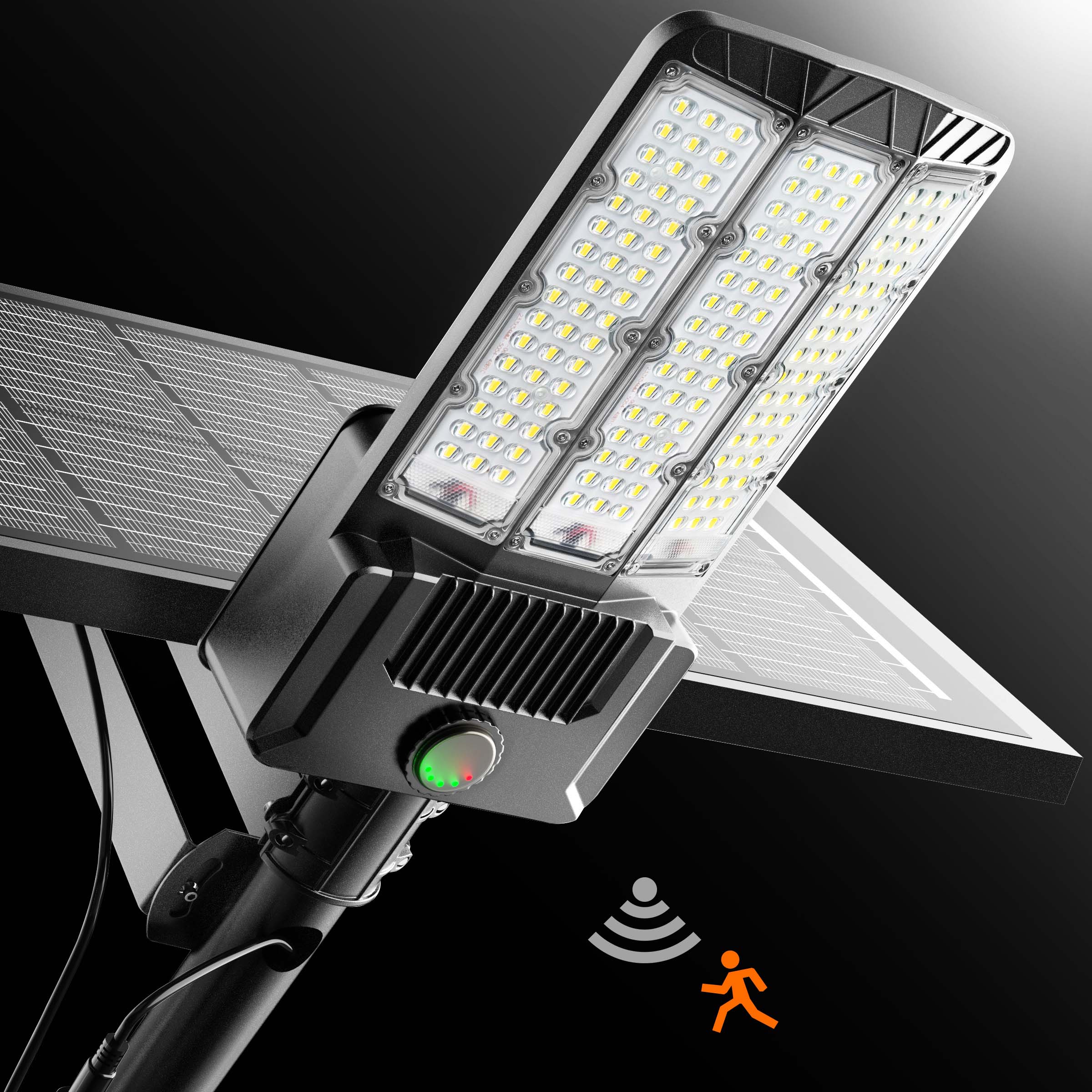
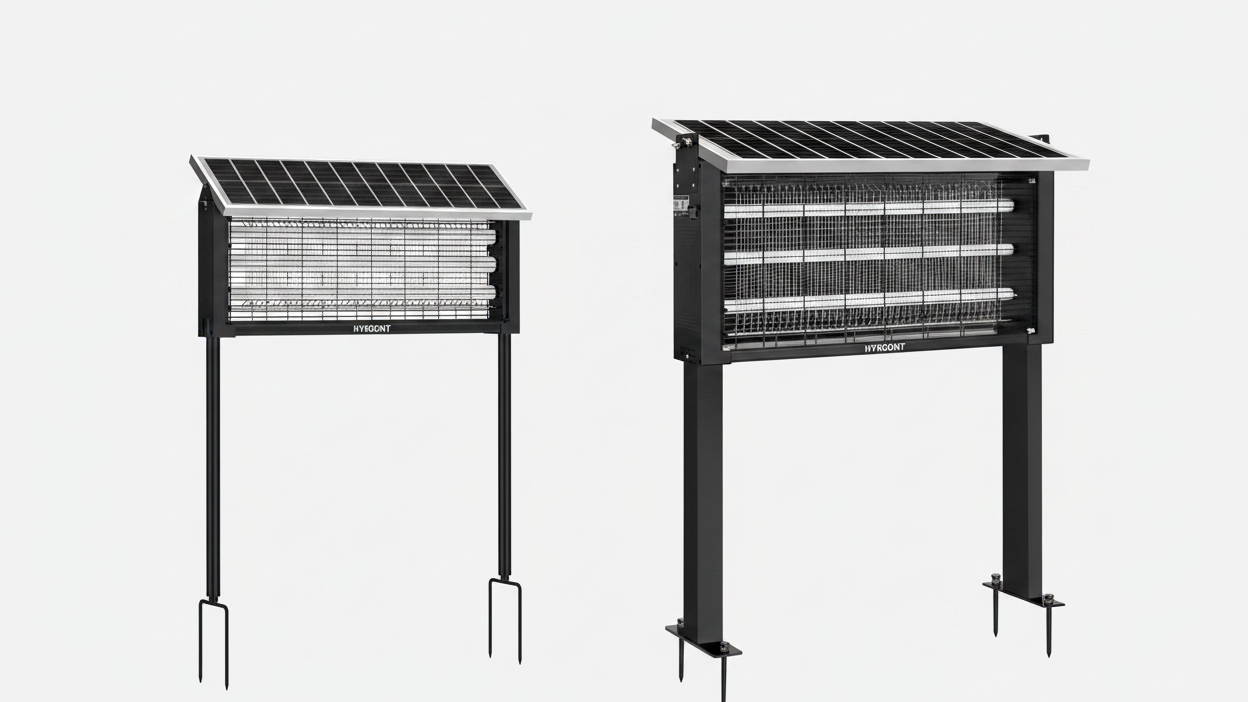
The Two Hykoont Solar Bug Zappers: What's Inside
Hykoont 19W Solar LED Bug Zapper Light Standard — $119

Solar Panel: 19W monocrystalline silicon
Battery: 6000mAh lithium
Rated Runtime: Up to 8 hours
Coverage: ~4,000 sq ft
UV Configuration: Triple tubes, 28 LEDs × 3
Backup Charging: USB-DC 5V/2A
Price: $119
View Product →
The Standard's 19W panel is sized to fully charge the 6000mAh battery in approximately 6–8 hours of direct sunlight. In most US climates from April through October, that's achievable on a clear day. The 6000mAh battery then powers the triple UV tubes through the night — up to 8 hours under normal conditions.
Hykoont 30W Solar LED Bug Zapper Light Pro — $219

Solar Panel: 30W monocrystalline silicon
Battery: 6000mAh lithium
Rated Runtime: Up to 8–12 hours
Coverage: ~8,000 sq ft
UV Configuration: Triple tubes, 28 LEDs × 3
Backup Charging: USB-DC 5V/2A
Price: $219
View Product →
The Pro's 30W panel charges the same 6000mAh battery faster — typically 4–6 hours in good sun. That faster charge rate matters on partly cloudy days when the Standard might only reach 70–80% charge. The Pro's extended runtime of 8–12 hours reflects both the faster/fuller charge and the higher-output UV configuration.
The 5 Things That Actually Determine Nighttime Performance
Runtime isn't just a number on a spec sheet. Here's what actually controls how long your solar bug zapper runs at night — and what you can do about each one.
1. How Much Sun Your Panel Got That Day
This is the biggest variable. A 6000mAh battery that's 100% charged will run significantly longer than one that only reached 60% because of cloud cover or shade. The relationship is roughly linear: 80% charge = roughly 80% of rated runtime.
What you can do: Position the solar panel where it gets unobstructed sun from mid-morning through late afternoon. South-facing orientation (in the US) is ideal. Even a tree branch casting partial shade for a few hours can meaningfully reduce your charge level.

2. Your Local Climate and Season
This is where geography matters more than most people realize. Here's a rough breakdown by US region:
- Southwest (Arizona, Nevada, Southern California): 300+ sunny days/year. Both models charge fully almost every day. Runtime is consistently at or near rated specs.
- Southeast (Florida, Texas, Georgia): Strong sun with afternoon thunderstorms. Morning charging is reliable; afternoon storms may cut it short. Still generally good performance.
- Midwest (Ohio, Illinois, Indiana): Variable. Good summers, but spring and fall can be cloudy. The Pro's 30W panel handles overcast days better.
- Pacific Northwest (Oregon, Washington): Challenging. Frequent overcast skies mean the Standard may not fully charge on many days. The Pro is the better choice here.
- Northeast (New York, New England): Seasonal. Summer performance is solid; shoulder seasons are hit or miss.
3. The Working Mode You Choose
Both Hykoont models offer two operating modes:
Mode 1 — Constant On: The UV tubes run continuously from when you activate them until the battery runs out. Maximum insect attraction, but uses battery faster.
Mode 2 — Automatic Dusk-to-Dawn: The built-in light sensor activates the unit at sunset and shuts it off at sunrise. This is the most efficient mode for overnight operation and the one most people use day-to-day.
In Mode 2, the device only runs during actual darkness, which means it's not wasting battery during twilight or early morning light. For most users, Mode 2 is the right default.
4. Ambient Temperature
Lithium batteries perform best between 32°F and 95°F. In very cold temperatures (below freezing), battery capacity temporarily drops — you might get 20–30% less runtime on a cold night even with a full charge. This is a chemistry issue, not a product defect. In summer heat, performance is generally fine within the rated range.
Practical implication: if you're running these in early spring or late fall when nights dip below 40°F, expect somewhat shorter runtime than the rated specs.
5. Panel Cleanliness and Angle
A solar panel covered in dust, pollen, or bird droppings can lose 10–25% of its charging efficiency. This is easy to overlook because the panel looks fine from a distance. Wipe it down with a damp cloth every few weeks during peak season. It takes 30 seconds and makes a real difference.
Panel angle also matters. The panels on both Hykoont models are adjustable — tilt them to face the sun as directly as possible for your latitude. In the continental US, a tilt angle roughly equal to your latitude (30–50 degrees) is optimal.

What "Up to 8 Hours" Actually Means in Practice
Let's be honest about rated specs. "Up to 8 hours" means 8 hours under ideal conditions: full charge, moderate temperature, Mode 2 operation. Real-world performance varies.
Here's a realistic breakdown for the Standard model across different scenarios:
| Condition | Estimated Runtime |
|---|---|
| Full sun day, warm night, Mode 2 | 7–8 hours |
| Partly cloudy day, warm night, Mode 2 | 5–6 hours |
| Overcast day, warm night, Mode 2 | 3–4 hours |
| Full sun day, cold night (below 40°F), Mode 2 | 5–6 hours |
| Full sun day, warm night, Mode 1 (constant) | 6–7 hours |
The Pro model adds roughly 2–4 hours to each of these estimates, primarily because its 30W panel achieves a fuller charge under the same conditions.
The USB Backup Charging Option: Your Safety Net
Both models include USB-DC backup charging (5V/2A). This is more useful than it sounds.
If you have a stretch of cloudy days — say, three overcast days in a row — the battery will gradually deplete each night without fully recharging during the day. After a few days of this, you might find the unit shutting off earlier than expected.
The USB backup lets you plug it into any standard USB power source (a wall adapter, a power bank, even a car charger) to top up the battery. You don't need to do this often — maybe once or twice during a prolonged cloudy stretch — but it's a genuinely useful feature that prevents the device from becoming useless during bad weather weeks.

Does the UV Light Actually Attract Mosquitoes at Night?
Yes — and this is where solar bug zappers have a real advantage over some other pest control methods.
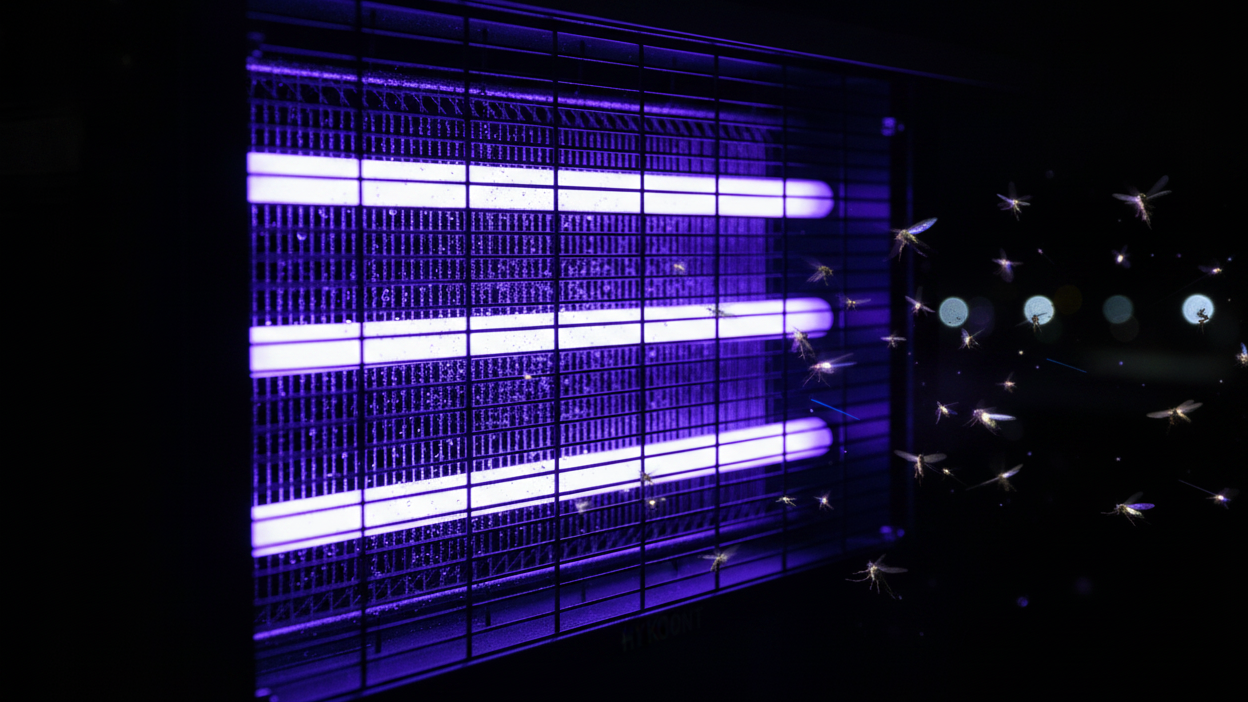
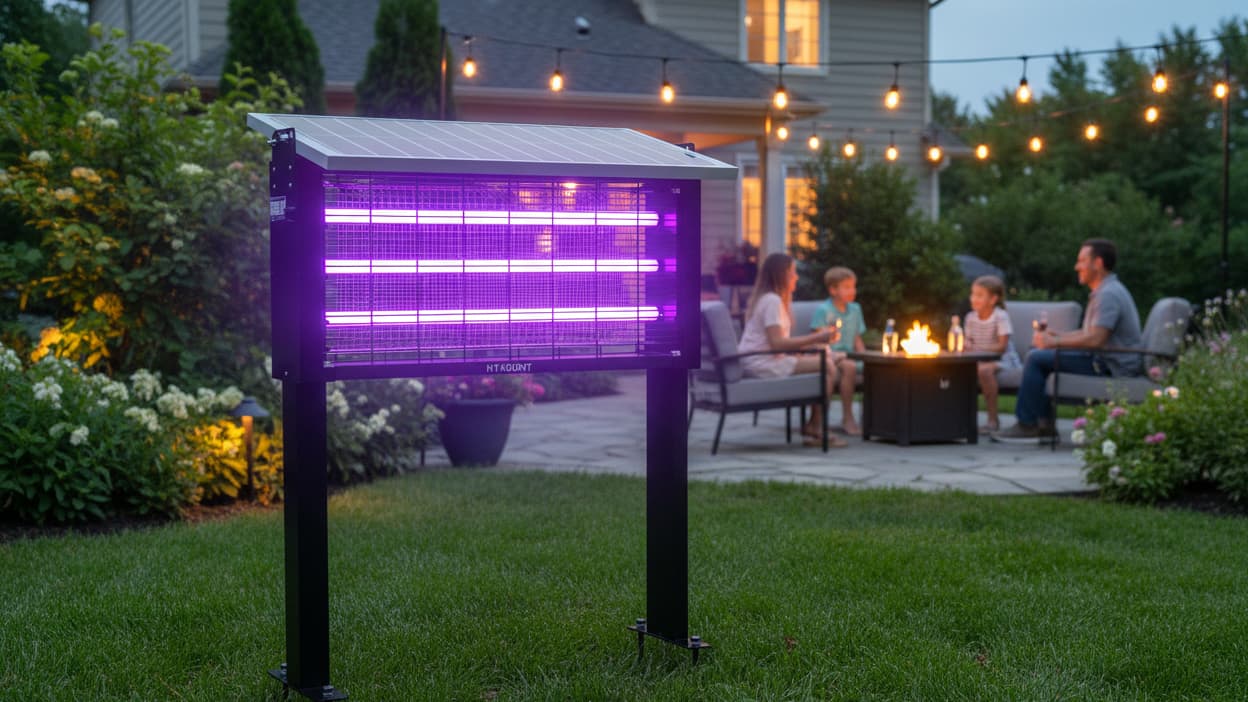
Mosquitoes and many flying insects are strongly attracted to UV light in the 365–395nm wavelength range. The purple-blue glow you see from the Hykoont units is specifically tuned to this range. At night, when there's no competing ambient light, the UV attraction effect is actually stronger — the light stands out more against the dark background, drawing insects from a wider radius.
This is why placement matters so much. If you put the zapper right next to your patio lights or porch light, you're competing with other light sources. Place it 15–20 feet away from where you're sitting, at the perimeter of your space, so it draws insects away from you rather than toward you.
The triple-tube design in both Hykoont models creates a wider, more omnidirectional attraction field than single-tube units. Three tubes facing different angles means insects approaching from any direction encounter the UV light, not just those coming from directly in front.
How Long Before You Notice Results?
This is the question nobody asks but everyone wonders about after the first night.
Night one: You'll see the zapper working — insects flying toward it, the occasional zap. But you probably won't notice a dramatic reduction in mosquitoes around you yet.
Days 3–5: The local mosquito population starts to thin. You'll notice fewer insects around your seating area, especially during peak hours (dusk to about 10 PM).
Days 7–10: This is when most people notice a meaningful difference. The combination of nightly operation and the cumulative reduction in local insect population creates noticeably more comfortable outdoor conditions.
The key word is cumulative. Solar bug zappers aren't a one-night fix — they work by consistently reducing the local insect population over time. Running them every night is more effective than running them occasionally.

Solar Bug Zappers vs. Other Nighttime Mosquito Control Options
Let's put solar bug zappers in context against the alternatives most people consider:
vs. Citronella Candles
Citronella creates a small scent barrier that some mosquitoes avoid. It works in a very limited radius (maybe 3–5 feet), requires constant replacement, and stops working the moment the candle goes out. Solar bug zappers actively eliminate insects rather than just repelling them, work all night without attention, and cover a vastly larger area. Not really a fair comparison.
vs. DEET Sprays
DEET is effective personal protection but it's on your skin, not in your environment. You still have mosquitoes flying around you — they just don't land. Solar bug zappers reduce the actual mosquito population in your space. The two approaches complement each other rather than compete.
vs. Plug-In Electric Bug Zappers
Traditional plug-in zappers work well but require an outdoor outlet and add to your electricity bill. A solar unit running 8 hours a night for 6 months costs $0 in electricity. At typical US electricity rates, a comparable plug-in unit might cost $15–25/year to run — not huge, but the solar unit pays for the difference over time while also being installable anywhere without wiring.
vs. Propane Mosquito Traps
Propane traps are highly effective but expensive to operate ($100+/year in propane) and require regular maintenance. Solar bug zappers are essentially maintenance-free beyond occasional cleaning.

Which Model Is Right for Your Nighttime Needs?
Choose the Standard ($119) if:
- You're in a sunny climate (Southwest, Southeast, most of the South)
- Your outdoor space is under 4,000 sq ft
- You need coverage through a typical summer night (dusk to midnight or 1 AM)
- You want a reliable, no-fuss solution for a residential backyard or patio
Choose the Pro ($219) if:
- You're in a cloudy or variable climate (Pacific Northwest, Midwest, Northeast)
- Your property is over 4,000 sq ft
- You need coverage through long summer nights or into early morning
- You're managing a farm, campsite, HOA area, or commercial outdoor space
- You want maximum reliability regardless of daily weather conditions
Tips to Maximize Nighttime Performance

- Face the panel south. In the continental US, south-facing panels get the most total sun exposure throughout the day.
- Eliminate shade. Even a branch that casts shade for 2 hours in the afternoon can reduce your daily charge by 15–20%. Move the unit if needed.
- Use Mode 2 by default. Automatic dusk-to-dawn operation is more efficient than constant-on for overnight use.
- Place it away from competing lights. 15–20 feet from porch lights, string lights, or other UV sources. You want the zapper to be the most attractive light in the area.
- Clean the panel monthly. A quick wipe with a damp cloth removes dust and pollen that reduce charging efficiency.
- Use USB backup during cloudy stretches. If you've had 3+ overcast days in a row, plug it in for a few hours to top up the battery.
- Don't place it directly over standing water. Mosquitoes breed in standing water — placing the zapper near a birdbath or puddle attracts more insects to your yard, not fewer.
The Honest Bottom Line
Do solar powered bug zappers actually work at night? Yes — that's literally what they're designed for. The solar panel is just the charging mechanism. The battery is what runs the show after dark.
The Hykoont Standard runs 6–8 hours on a good charge. The Pro runs 8–12. Both use automatic dusk-to-dawn sensors so they're on when you need them and off when you don't. Both have USB backup for cloudy stretches. Both use triple UV tubes that are more effective at night than during the day because there's less competing light.
The only scenario where a solar bug zapper underperforms at night is when the battery didn't charge fully during the day — which comes down to panel placement, local climate, and whether you chose the right model for your conditions.
Get the placement right, pick the model that matches your climate, and you'll have effective mosquito control from dusk until well past midnight, every night, without touching a switch or paying an electricity bill.
→ Standard — $119 | Shop Now → Pro — $219 | Shop Now
Frequently Asked Questions
Q: Does the solar panel need to be in direct sunlight, or does it work on cloudy days?
It works on cloudy days, but at reduced efficiency. A fully overcast day might deliver 20–30% of the charging power of a clear day. The Pro's 30W panel handles overcast conditions better than the Standard's 19W panel because it has more surface area capturing whatever light is available.
Q: What happens if the battery runs out before sunrise?
The unit simply turns off. It won't damage the battery or the device. The next day's sun will recharge it and it'll be back to normal operation the following night. If this happens regularly, it means either the panel isn't getting enough sun or you need the Pro model for your conditions.
Q: Can I leave it running 24/7 in Mode 1?
Technically yes, but it's not efficient. Running in Mode 1 during daylight hours wastes battery on a time when mosquitoes aren't active. Mode 2 (automatic dusk-to-dawn) is the smarter choice for ongoing use.
Q: How do I know if the battery is fully charged?
Both models have indicator lights that show charging status. Check your specific unit's manual for the indicator light pattern — typically a solid light means fully charged, a blinking light means charging in progress.
Q: Will it still work if I install it in a partially shaded spot?
It will work, but with reduced charging efficiency and shorter nighttime runtime. Even 2–3 hours of shade during peak sun hours (10 AM–2 PM) can reduce your daily charge by 25–40%. Full sun placement is strongly recommended.
Q: Does cold weather affect nighttime performance?
Yes. Lithium batteries lose capacity in cold temperatures. Below 40°F, you might see 20–30% shorter runtime than rated specs. This is normal battery chemistry behavior, not a defect. Performance returns to normal when temperatures warm up.
Q: How long does the battery last before it needs replacement?
Lithium batteries in solar devices typically last 2–3 years of regular use before capacity noticeably degrades. Storing the unit indoors during winter (rather than leaving it outside in freezing temperatures) significantly extends battery life.
Q: Is the UV light harmful to humans or pets?
The UV output from bug zappers is low-intensity and not harmful with normal use. You shouldn't stare directly into the UV tubes, but incidental exposure during normal outdoor activity is not a concern. The electric grid that kills insects is enclosed behind a protective housing.
Q: Can I use the USB charging and solar charging at the same time?
Yes. If you plug in the USB cable while the solar panel is also receiving sunlight, both charging sources work simultaneously, which can be useful for quickly topping up the battery before a night when you need maximum runtime.
Q: How far away should the bug zapper be from where I'm sitting?
15–20 feet is the recommended distance. The zapper attracts insects toward it — if it's right next to you, you're drawing bugs to your location. Place it at the perimeter of your outdoor space so insects are pulled away from where you're sitting, not toward you.

Leave a comment
This site is protected by hCaptcha and the hCaptcha Privacy Policy and Terms of Service apply.