




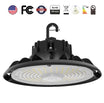



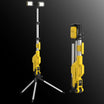
Here's something nobody tells you when you buy a beach house or a coastal property: your outdoor lighting budget is about to double. Not because coastal fixtures cost more upfront — though some do — but because standard outdoor lights that work perfectly fine in Kansas City or Denver will start showing rust, corrosion, and electrical failures within 12 to 18 months of salt air exposure.
The culprit is chloride ion penetration. Salt air carries microscopic chloride particles that settle on metal surfaces, accelerate oxidation, and work their way into electrical connections, mounting hardware, and housing seams. A fixture rated IP44 (splash-proof) that would last 10 years inland might fail in its second winter on the Carolina coast.
This guide is written specifically for coastal homeowners, property managers, and contractors who need outdoor lighting that genuinely survives the marine environment — not just survives the first season.
Why "Weatherproof" Doesn't Mean "Coastal-Proof"
Walk into any big-box hardware store and you'll find outdoor lights labeled "weatherproof," "weather-resistant," or "all-season." In most climates, those labels mean something. In coastal environments, they're almost meaningless.
The difference comes down to what the fixture is actually rated against. Standard weatherproofing protects against rain and humidity. Coastal environments add three additional stressors that most consumer-grade fixtures aren't designed for:
- Salt spray and chloride deposition — even miles from the water, salt particles carried by onshore winds settle on every exposed surface
- Elevated humidity cycling — coastal air humidity swings dramatically between day and night, causing condensation inside fixtures that aren't properly sealed
- UV intensity — coastal locations often have higher UV exposure due to reflective water surfaces, which degrades plastic housings, gaskets, and lens materials faster
The fixtures that hold up in these conditions share a few common characteristics: high IP ratings (IP65 minimum, IP66 or IP67 preferred), die-cast aluminum or alloy housings rather than stamped steel, silicone gaskets rather than foam, and corrosion-resistant hardware throughout.

Understanding IP Ratings for Coastal Use
The IP (Ingress Protection) rating system tells you exactly what a fixture is protected against. For coastal applications, here's what the numbers mean in practice:
- IP44: Protected against splashing water from any direction. Adequate for covered porches inland. Not suitable for coastal exposure.
- IP65: Fully dust-tight, protected against water jets. Minimum acceptable for coastal outdoor use.
- IP66: Fully dust-tight, protected against powerful water jets. Good for exposed coastal locations.
- IP67: Fully dust-tight, protected against temporary immersion. Excellent for coastal environments, including areas subject to wave splash or flooding.
For most coastal residential applications, IP65 or IP66 is the practical target. IP67 is worth the premium for fixtures in particularly exposed locations — docks, seawalls, ground-level pathway lights in flood-prone areas.
The Real Cost of Getting This Wrong
Let's talk numbers, because this is where coastal homeowners consistently underestimate their lighting costs.
A standard outdoor wall light at $40–$80 that lasts 18 months in a coastal environment costs you $27–$53/year just in fixture replacement — before you factor in the labor to swap it out, the disposal of the failed unit, and the frustration of dealing with it. Do that across 6–8 fixtures on a typical coastal home and you're spending $160–$420/year just replacing lights that weren't built for the environment.
A properly rated coastal fixture at $79–$169 that lasts 5–7 years costs $11–$34/year. The math is straightforward: buy right once, or buy wrong repeatedly.
Solar-powered fixtures add another layer of value in coastal settings specifically because they eliminate the wiring runs that are particularly vulnerable to salt air corrosion. Every wire connection, conduit fitting, and junction box is a potential corrosion point. Solar fixtures with integrated batteries remove most of that infrastructure entirely.

Best Rust-Proof Outdoor LED Lights for Coastal Environments
Here are the Hykoont fixtures that hold up best in salt air environments, selected for their housing materials, IP ratings, and real-world durability:
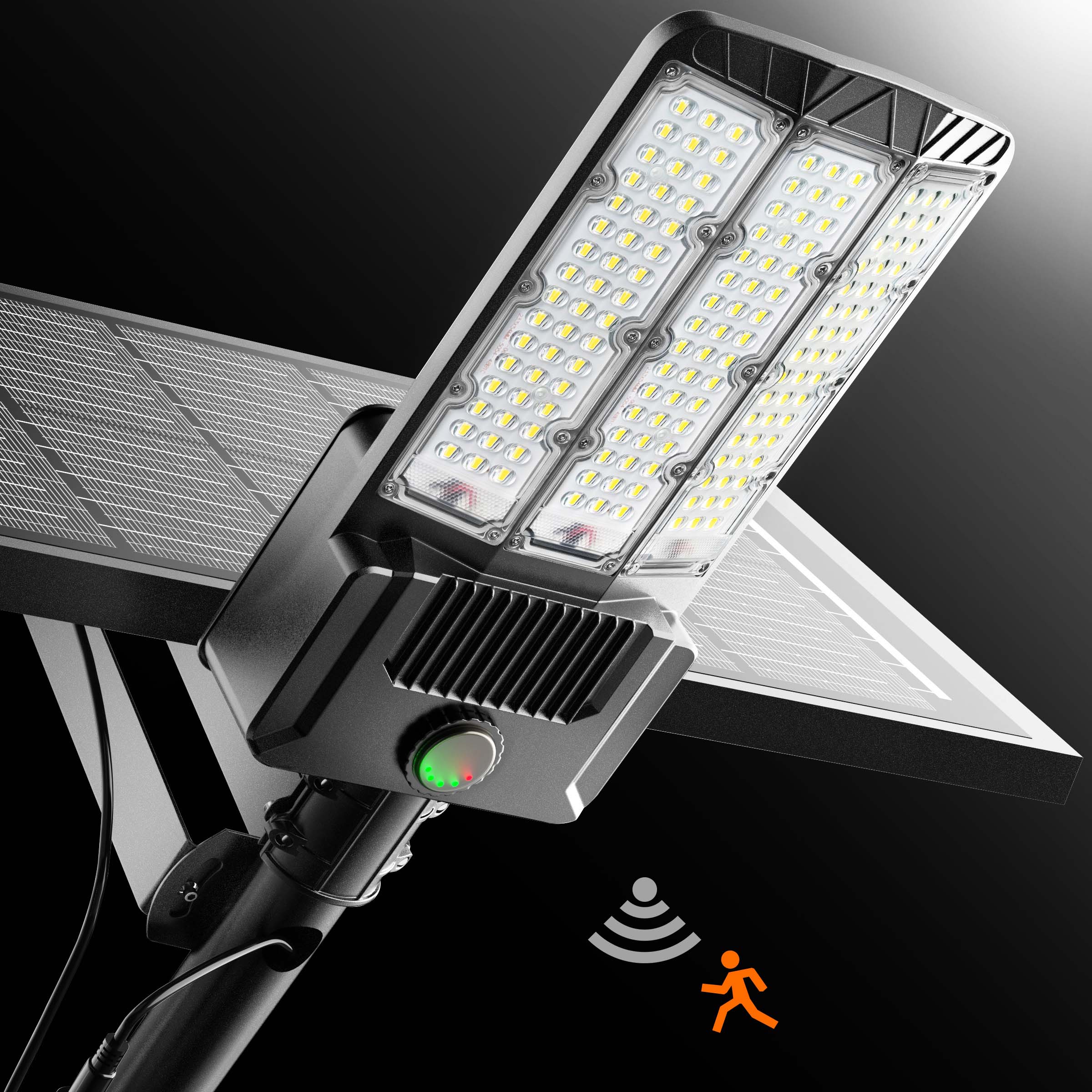
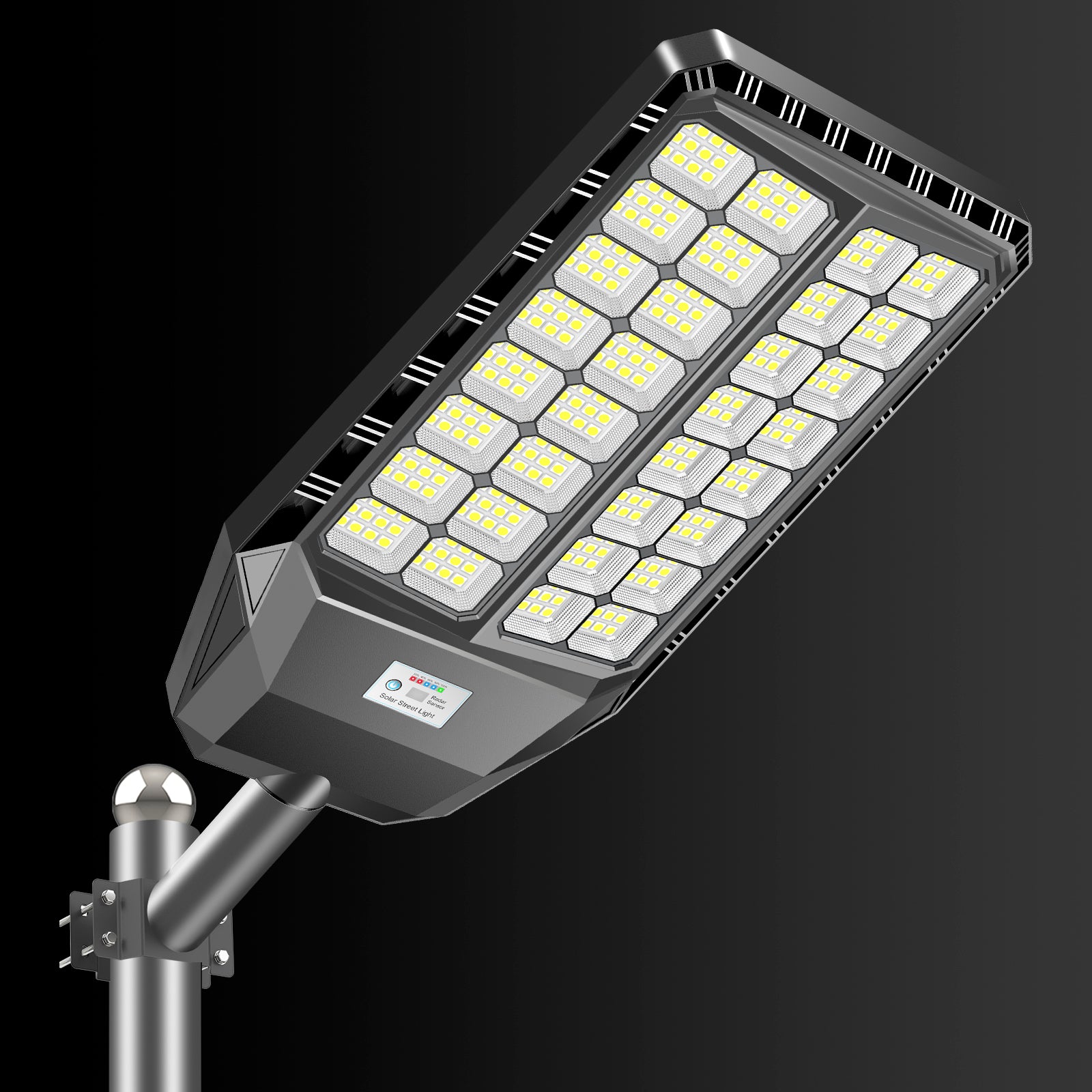
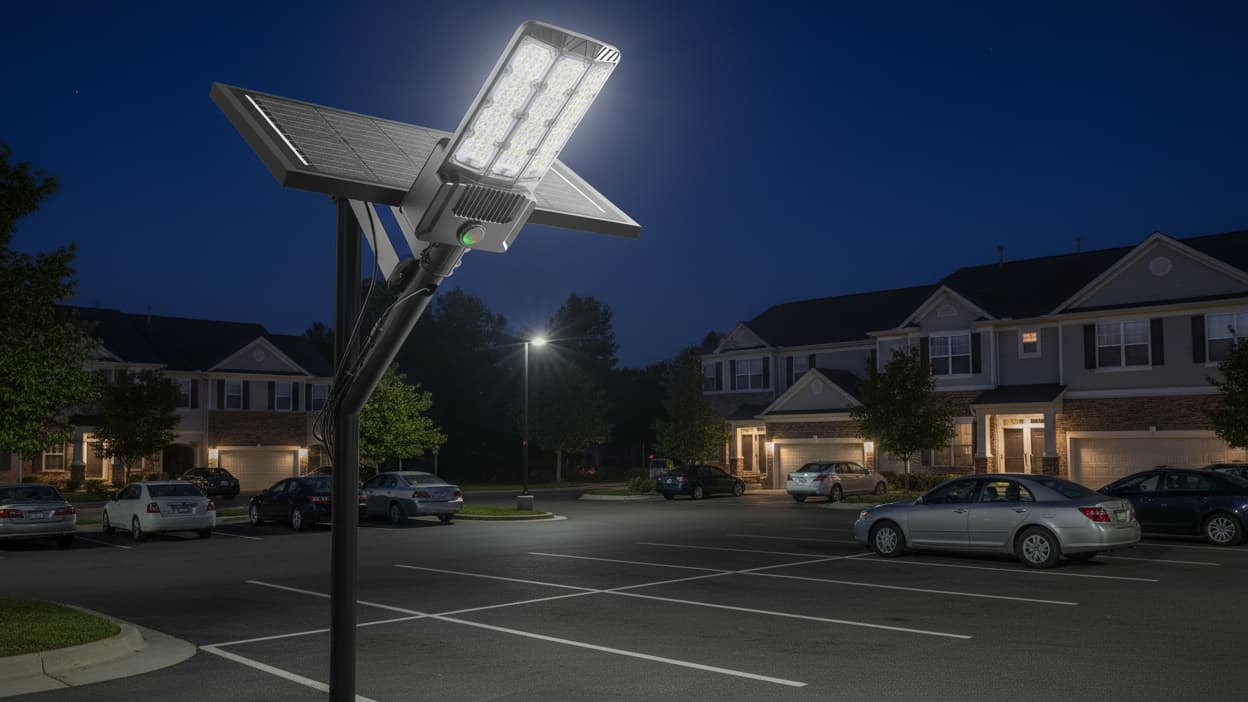
Best Overall for Coastal Driveways: Hykoont BD006 Solar Street Light — $179.00
The BD006 is the fixture we'd recommend first for coastal homeowners who need reliable street-level lighting. The alloy material construction is the key differentiator here — it's a step above standard die-cast aluminum in corrosion resistance, which matters significantly in salt air environments. Pair that with a monocrystalline solar panel (which maintains charging efficiency even on overcast coastal days) and you have a fixture built for the long haul.
Best for: Coastal driveways, beachfront property entrances, waterfront community roads
Why it works in salt air: Alloy housing, monocrystalline panel, no wiring runs to corrode
Price: $179.00

Best IP66-Rated for Yards and Pathways: Hykoont BM027 — $169.00
The BM027 carries an explicit IP66 rating — one of the highest in the residential solar lighting category — making it one of the most capable fixtures for direct coastal exposure. IP66 means it's protected against powerful water jets from any direction, which translates to real-world resistance against driving rain, wave splash, and pressure washing.
The 25,650-lumen output at 6500–7000K provides excellent visibility for yards, garages, and pathways. The cool daylight color temperature also helps with coastal security applications where you want clear, high-contrast illumination.
Best for: Coastal yards, garages, pathways, areas subject to wave splash or heavy rain
Why it works in salt air: IP66 rated, designed for all-weather outdoor exposure
Price: $169.00

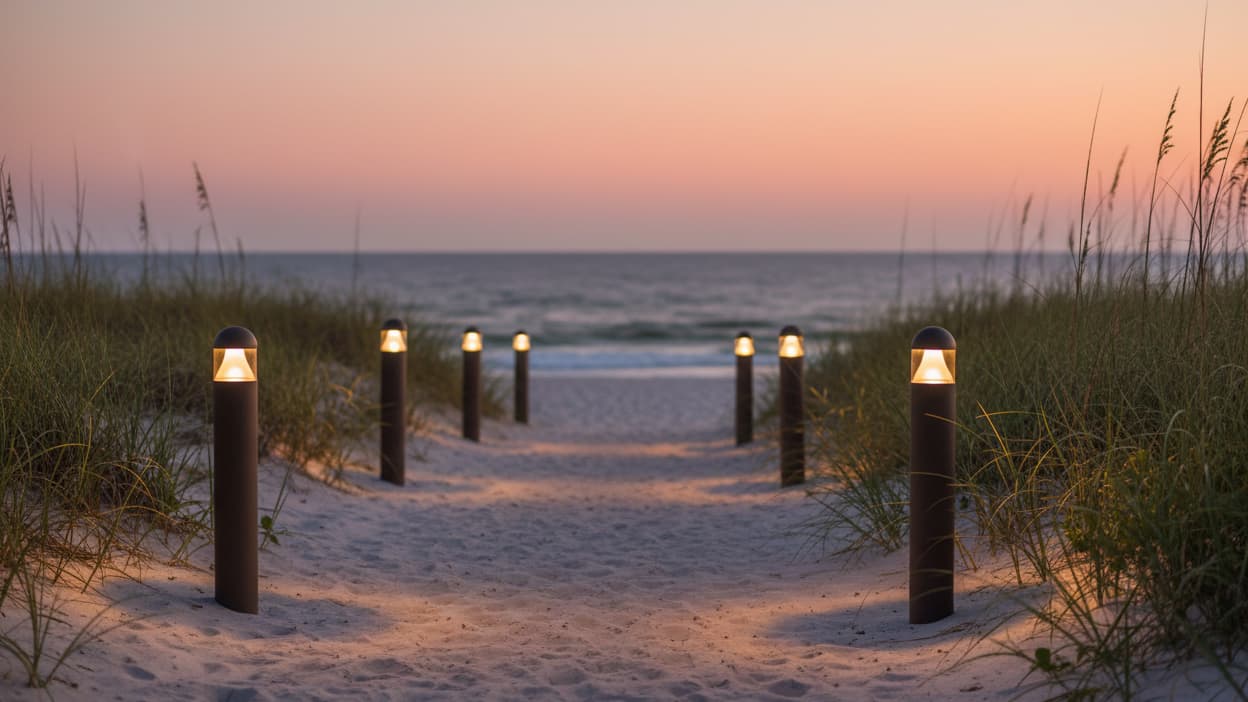
Best for Coastal Landscape Lighting: Hykoont BD02 LED Bollard Light — $315.00
Bollard lights take a beating in coastal environments — they're at ground level, which means direct exposure to salt spray, standing water, and sand abrasion. The BD02 is built for exactly this application. For beach access paths, coastal garden walkways, and waterfront property perimeters, bollard lights define pathways and provide low-level ambient lighting without the glare of overhead fixtures.
Best for: Coastal walkways, beach access paths, waterfront landscape lighting
Price: $315.00

Coastal Lighting by Zone: What to Use Where
Zone 1: Direct Coastal Exposure (0–500 feet from water)
This is the harshest zone. Salt spray is direct and frequent, humidity is consistently high, and UV exposure is maximum. You need IP66 or IP67 fixtures, alloy or marine-grade aluminum housings, and solar power to eliminate wiring corrosion points. The BD006 and BM027 are the right choices here. Inspect fixtures every 6 months, rinse with fresh water to remove salt buildup, and check mounting hardware annually.
Zone 2: Near-Coastal (500 feet – 1 mile from water)
Salt air is present but less concentrated. IP65 fixtures are adequate, though IP66 is still preferred for longevity. The ZZ117, XH300, and BM027 all work well in this zone. Annual inspection with occasional rinsing is sufficient.
Zone 3: Coastal Influence (1–5 miles from water)
Salt air influence is present but manageable. IP65 fixtures are appropriate and standard die-cast aluminum performs well. This zone is where the XH300 becomes particularly cost-effective.
Special Zones: Docks, Piers, and Seawalls
These are the most demanding coastal lighting environments. Direct water contact, constant salt exposure, and submersion risk require IP67 minimum. For dock and pier lighting, consult with a marine electrician — the electrical code requirements for marine environments are significantly more stringent than standard outdoor wiring.
Installation Tips for Coastal Environments
Use Stainless Steel Hardware Throughout
Even if your fixture housing is corrosion-resistant, standard zinc-plated mounting screws will rust within one to two seasons in coastal environments. Use 316 stainless steel (not 304 — 316 has higher molybdenum content for better chloride resistance) for all pole mounting brackets, wall anchors, and hardware that contacts the fixture.
Apply Dielectric Grease to All Connections
For any wired fixtures, apply dielectric grease to all electrical connections before assembly. This displaces moisture and prevents corrosion at connection points — the most common failure location in coastal electrical installations.
Orient Solar Panels Away from Prevailing Salt Wind
Solar panels accumulate salt film that reduces charging efficiency. Where possible, orient panels so the prevailing onshore wind doesn't deposit salt directly on the panel face. A quarterly rinse with fresh water maintains panel efficiency.
Mount Higher Than You Think You Need To
Salt spray concentration decreases with height. A fixture at 12 feet experiences significantly less salt deposition than one at 6 feet. Where pole height is flexible, go higher — it extends fixture life and improves light coverage simultaneously.
Seal Any Wall Penetrations
If running wiring through exterior walls, seal every penetration with marine-grade silicone sealant. Salt air and moisture entering through unsealed penetrations cause corrosion inside walls and at junction boxes — expensive to diagnose and repair.
Maintenance Schedule for Coastal Outdoor Lighting
Monthly (Zone 1 only): Visual inspection for corrosion or salt buildup on solar panels. Rinse panels with fresh water if salt film is visible.
Quarterly: Rinse all fixture surfaces with fresh water. Check mounting hardware is tight. Inspect gaskets and seals for cracking.
Annually: Remove fixtures from mounts and inspect mounting surfaces for corrosion. Replace any rusted hardware. Clean solar panels thoroughly. Test motion sensors and light output.
Every 3–5 years: Consider replacing gaskets and seals even if they appear intact — silicone gaskets degrade over time in UV exposure and may no longer provide adequate sealing.
Solar vs. Wired: The Coastal Case for Going Solar
In coastal environments, solar has a specific structural advantage: it eliminates the wiring infrastructure that's most vulnerable to salt air corrosion. Every wired outdoor fixture requires conduit runs, junction boxes, wire connections, and mounting hardware — all corrosion points in salt air. A solar fixture with an integrated battery eliminates most of this infrastructure.
For coastal homeowners replacing corroded wiring infrastructure along with failed fixtures, the switch to solar often pays for itself in the first replacement cycle by eliminating electrician labor for rewiring corroded conduit runs.
Browse All Coastal-Ready Solar Lights →
Quick Reference: Coastal Lighting by Budget
- $150–$200: BD006 Alloy Street Light ($179) — best for Zone 1 direct coastal exposure
- $300+: BD02 Bollard Light ($315) — best for coastal landscape and pathway applications
Shop BD006 — Best for Direct Coastal Exposure →
Frequently Asked Questions
How far from the ocean do I need to be before standard outdoor lights are okay?
Within 1 mile of the ocean, prioritize IP65+ fixtures with aluminum or alloy housings. Within 500 feet of the water, IP66 minimum and alloy housing is strongly recommended. Beyond 5 miles, standard weatherproof fixtures perform adequately in most conditions.
What's the difference between die-cast aluminum and alloy housing for coastal lights?
Die-cast aluminum is the standard for quality outdoor fixtures — corrosion-resistant and durable. Alloy housing refers to a specific aluminum alloy formulation with higher corrosion resistance, often including magnesium or silicon for better salt air performance. For Zone 1 coastal applications, alloy housing is worth the premium.
Do solar lights work well in coastal climates?
Yes, with one caveat: coastal areas often have more cloud cover than inland locations. Choose fixtures with monocrystalline panels (more efficient in low light) and at least 5 backup days of battery capacity. The structural advantage of solar — eliminating wiring corrosion — typically outweighs the charging efficiency consideration.
How often should I clean my coastal outdoor lights?
In Zone 1 (within 500 feet of water), rinse fixtures monthly with fresh water. In Zone 2, quarterly rinsing is adequate. Pay particular attention to solar panels — salt film reduces charging efficiency and should be cleaned whenever you notice dimming performance.
Can I use regular outdoor lights on a covered coastal porch?
A covered porch reduces direct rain and spray exposure, but salt air still circulates freely. IP65 fixtures are still recommended. The housing material matters as much as the IP rating — avoid fixtures with exposed steel components even under cover.
What causes outdoor lights to rust in coastal areas?
The primary cause is chloride ion penetration from salt air. Chloride ions accelerate oxidation on ferrous metals and cause pitting corrosion on aluminum alloys. They also penetrate electrical connections and cause galvanic corrosion where dissimilar metals contact each other. The solution: sealed housings (high IP ratings), corrosion-resistant materials, and stainless steel mounting hardware.
Are there any outdoor lights that are truly maintenance-free in coastal environments?
No outdoor fixture is truly maintenance-free in coastal environments — salt air is simply too aggressive. However, quality IP66+ fixtures with alloy housings and stainless steel hardware can reduce maintenance to an annual inspection and occasional rinse. The goal is minimizing maintenance frequency, not eliminating it entirely.
What's the best color temperature for coastal outdoor lighting?
5000K (cool white) is the most practical choice for coastal security and safety lighting. For coastal landscape and ambiance lighting, 3000K–4000K (warm to neutral white) is more aesthetically pleasing and less disruptive to sea turtle nesting areas in protected coastal zones. Check local ordinances — some coastal municipalities have specific requirements for outdoor lighting color temperature to protect wildlife.
Do I need a permit to install solar outdoor lights on my coastal property?
Solar fixtures without electrical wiring typically don't need permits in most jurisdictions. However, coastal properties are often subject to additional regulations — HOA rules, local coastal zone management ordinances, and in some areas, state coastal commission requirements. Check with your local building department before installing any new exterior fixtures.
How do I know if my current outdoor lights are failing due to salt air corrosion?
Early signs include rust staining on or around the fixture, white or gray powdery deposits on aluminum surfaces (oxidation), flickering or intermittent operation (corrosion at electrical connections), and visible pitting or discoloration on the housing. If you're seeing these signs within 2–3 years of installation, your fixtures aren't rated for your coastal environment.


Leave a comment
This site is protected by hCaptcha and the hCaptcha Privacy Policy and Terms of Service apply.