







Why Two Bug Zappers Beat One Every Time
You've been there. You set up one bug zapper on the back porch, fire up the grill, and within 20 minutes you're still swatting mosquitoes on the other side of the yard. Sound familiar?
Here's the thing most people don't realize: a single bug zapper — even a powerful one — has a coverage radius. Step outside that radius and you're basically unprotected. That's why buying a 2-pack isn't just a deal, it's a smarter strategy. You get to cover two zones simultaneously: the dining area and the lawn, the front porch and the back deck, the garden path and the pool area.
This guide is for anyone who's done with half-measures. We're talking real coverage, real results, and yes — real prices so you know exactly what you're getting into before you click "Add to Cart."
What Actually Makes a Bug Zapper Worth Buying?
Before we get into specific products, let's talk about what separates a bug zapper that works from one that just looks good on a product page.
1. UV Wavelength — The Mosquito Magnet Factor
Mosquitoes and flying insects are drawn to specific UV wavelengths, typically around 365nm. Cheap zappers use generic bulbs that emit broad-spectrum light. Quality zappers use targeted UV tubes that are genuinely irresistible to the insects you're trying to eliminate. More tubes = more attraction surface = more bugs caught.
2. Coverage Area — Don't Get Fooled by Big Numbers
Manufacturers love to advertise "covers up to 1 acre!" but that's under ideal conditions — flat terrain, no wind, no competing light sources. For a realistic backyard or patio setup, focus on zappers rated for 1,500–5,000 sq ft per unit. With a 2-pack, you're stacking that coverage.
3. Solar vs. Plug-In — Which Is Right for You?
Solar bug zappers are the clear winner for most backyard setups. No extension cords snaking across the lawn, no tripping hazards, no added electricity costs. They charge during the day and run automatically at dusk. The trade-off? They need decent sun exposure to charge fully. If your yard is heavily shaded, a plug-in model might serve you better.
4. Weather Resistance
Your bug zapper is going to sit outside through rain, humidity, and summer heat. Look for at minimum IPX4 rating (splash-resistant) — ideally higher. Anything less and you're replacing it after the first thunderstorm.
5. Mounting Flexibility
The best outdoor bug zappers give you options: hang them from a tree branch, mount them on a fence post, or stake them into the ground near a garden bed. Flexibility means you can position them exactly where bugs are most active.

Our Top Picks: Hykoont Bug Zapper 2-Pack Setups
We've narrowed it down to two Hykoont models that pair exceptionally well together — or work great as a matched 2-pack setup for different zones of your outdoor space.
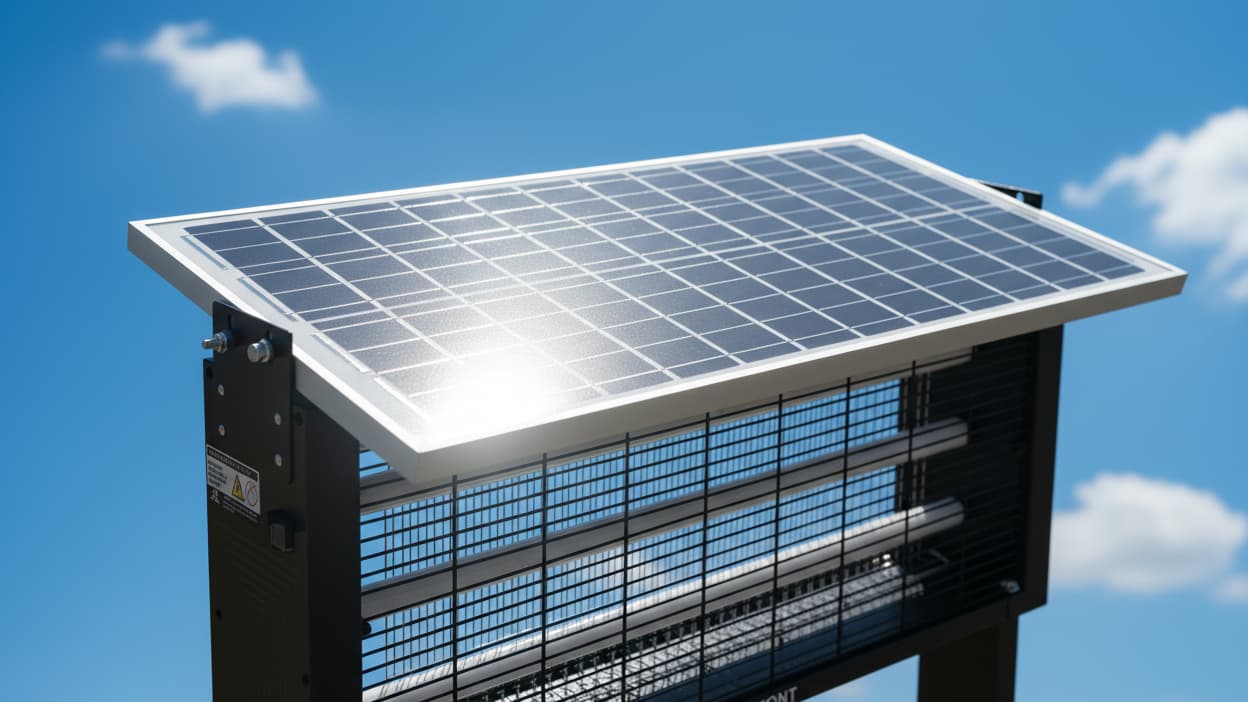
🏆 Best for Large Yards: Hykoont 30W Solar LED Bug Zapper Light Pro — Triple Tube, Dusk-to-Dawn

Price: $219.00
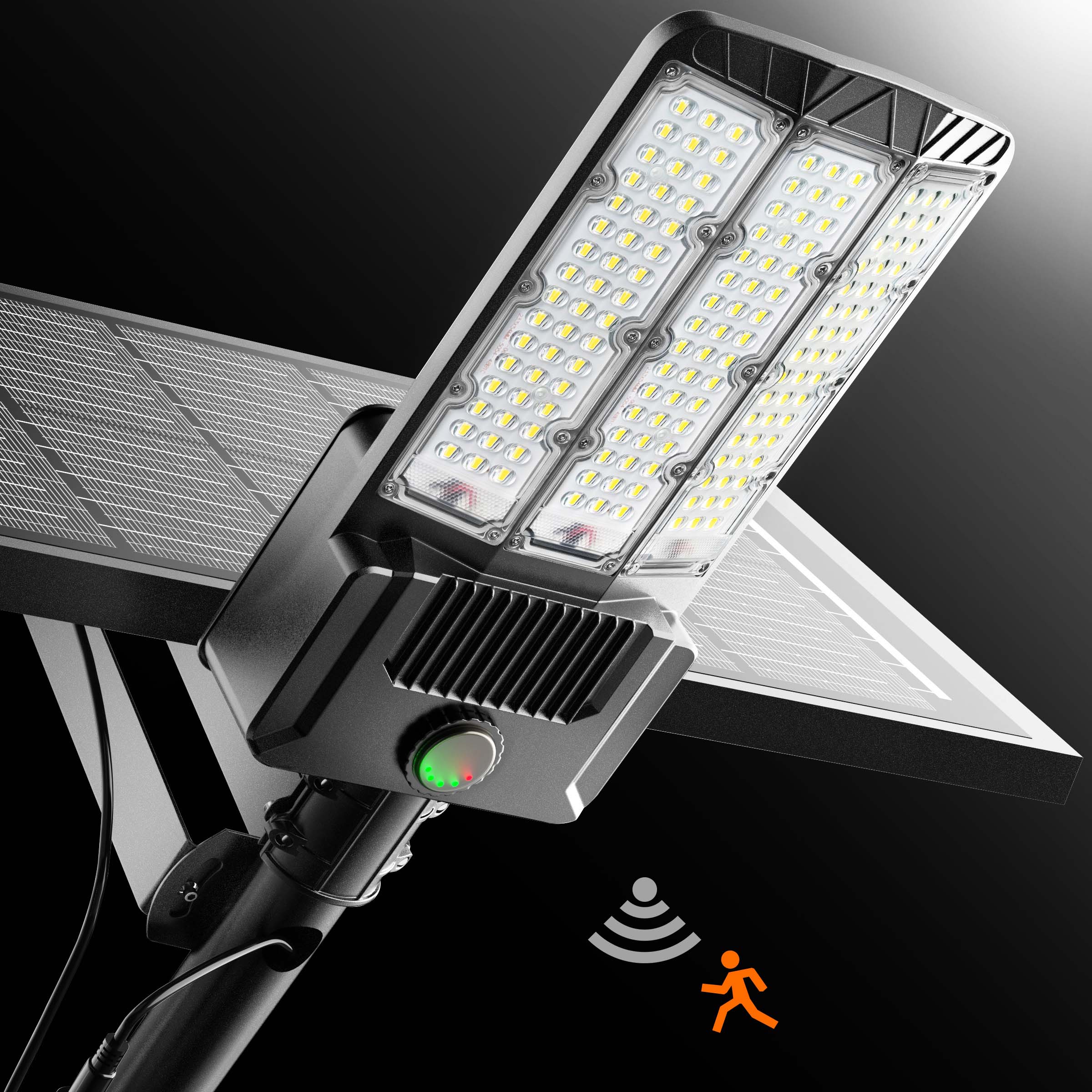
This is the heavy hitter. The 30W Pro model runs three UV tubes simultaneously, which means it's pulling in insects from a significantly wider radius than single-tube competitors. The dusk-to-dawn sensor means you literally never have to think about it — it turns on when the sun goes down and shuts off at sunrise.
What makes this one stand out for large backyards is the combination of high wattage solar charging and the triple-tube design. You're not sacrificing UV output just because it's solar-powered. This thing runs all night on a full day's charge.
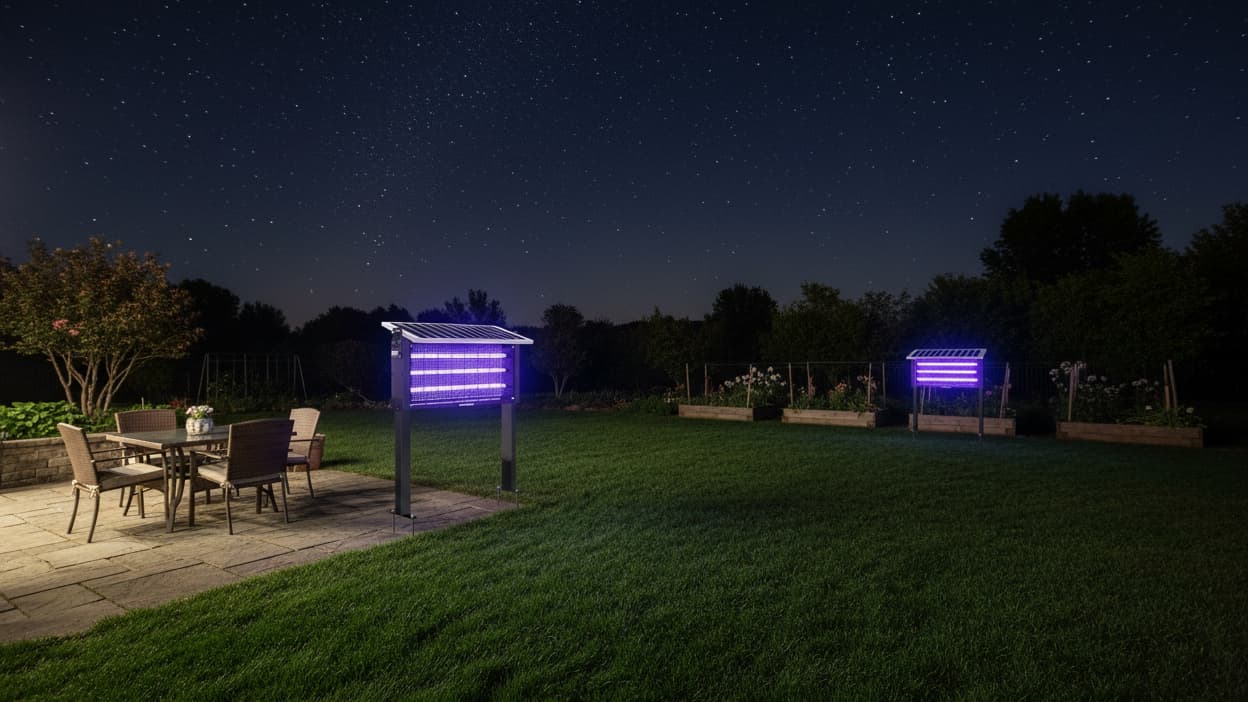
Best placement for a 2-pack setup: One unit near the outdoor dining area or deck, the second staked or hung at the far end of the yard near the lawn or garden perimeter. You create a "bug-free corridor" between the two units.
- ✅ 30W solar panel for reliable all-night operation
- ✅ Triple UV tube design for maximum insect attraction
- ✅ Dusk-to-dawn automation — zero manual effort
- ✅ Suitable for large yards, farms, and open patios
- ✅ Durable weatherproof construction
👉 Shop the 30W Pro Bug Zapper — $219.00


🌿 Best for Patios & Smaller Spaces: Hykoont 19W Solar LED Bug Zapper Light Standard — Triple UV Tubes, Ground Stake & Hanging Design, IPX4

Price: $119.00
Don't let "Standard" fool you — this model punches well above its weight class. The 19W solar panel keeps the triple UV tubes running through the night, and the dual mounting design (ground stake or hanging hook) gives you serious flexibility in how and where you deploy it.
The IPX4 weather resistance rating means it handles rain and humidity without issue, which is exactly what you need for a unit that's going to be outside 24/7 from May through October.
For a 2-pack setup, this model shines when you're working with a defined patio, deck, or courtyard space. Two units flanking a seating area create a perimeter that keeps mosquitoes at bay without being obtrusive.
- ✅ Triple UV tubes — same insect-attracting power as the Pro
- ✅ Ground stake + hanging hook — deploy anywhere
- ✅ IPX4 weatherproof rating
- ✅ 19W solar panel for reliable overnight performance
- ✅ Compact enough for patios, decks, and courtyards
👉 Shop the 19W Standard Bug Zapper — $119.00


The Smart 2-Pack Strategy: How to Position Two Bug Zappers for Maximum Effect
Buying two bug zappers is only half the battle. Where you put them matters just as much as which ones you buy. Here's how to think about placement:
The Perimeter Method
Place one zapper at each end of your outdoor space — think of it as creating a "force field" around the perimeter. Bugs approaching from either direction get intercepted before they reach your seating area. This works especially well for rectangular yards and long decks.
The Zone Method
If you have distinct outdoor zones (a dining area, a fire pit area, a pool deck), assign one zapper to each zone. This is the most targeted approach and works well when your outdoor space isn't one continuous open area.
The High-Low Method
Hang one zapper at about 6–8 feet high (from a tree branch or pergola beam) and stake the second one at ground level near garden beds or lawn edges. Different insects fly at different heights — this approach covers both.
Avoid These Common Placement Mistakes
- ❌ Too close to seating: You want bugs attracted away from where you're sitting, not right next to your head. Keep zappers at least 15–20 feet from primary seating.
- ❌ Near competing light sources: Porch lights, string lights, and lanterns compete with your zapper's UV attraction. Position zappers away from other light sources when possible.
- ❌ In full shade (for solar models): Solar zappers need sun to charge. If your yard is heavily shaded, prioritize spots that get at least 6 hours of direct sun.
- ❌ Too high off the ground: Most mosquitoes fly below 6 feet. Mounting a zapper at 10+ feet reduces its effectiveness against the bugs you care most about.
Bug Zapper 2-Pack vs. Single Unit: Is It Actually Worth the Extra Cost?
Let's be honest about the math here.
A single Hykoont 19W Standard runs $119. Two of them is $238. Is that worth it compared to just buying one?
For a small apartment balcony or a 200 sq ft patio? Probably not — one unit is plenty. But for anything larger than a standard suburban backyard (typically 1,000–3,000 sq ft of usable outdoor space), a single zapper leaves significant dead zones. You'll still be getting bitten in those uncovered areas, which defeats the purpose.
The 2-pack math works out when:
- Your outdoor space is larger than ~1,500 sq ft
- You have multiple distinct outdoor zones (deck + lawn, front yard + back yard)
- You're hosting gatherings where people spread out across the yard
- You want protection that actually works rather than just looks like it should
For most American homeowners with a standard suburban backyard, two units is the right call. One is a compromise.

Solar Bug Zappers in 2026: What's Changed
Solar technology has come a long way in the past few years, and it shows in the current generation of solar bug zappers. Here's what's different compared to what was on the market even three years ago:
Better Battery Efficiency
Modern solar bug zappers use lithium battery technology that holds a charge longer and degrades more slowly over time. Early solar zappers would lose significant capacity after one or two seasons. Current models are designed to maintain performance for 3–5 years of regular use.
Higher-Output UV Tubes
The UV tubes in today's solar zappers produce more lumens per watt than older designs. That means more insect-attracting light output without requiring a larger solar panel to power it.
Smarter Sensors
Dusk-to-dawn sensors have become standard on quality models. This isn't just a convenience feature — it also extends battery life by ensuring the zapper only runs when it's actually dark outside.
Improved Weather Sealing
IPX4 is now the baseline for outdoor-rated solar zappers. Better models are pushing toward IPX5 and IPX6, which means they can handle direct water spray and even brief submersion without damage.

Who Should Buy a Bug Zapper 2-Pack?
This isn't a product for everyone, and we'd rather be straight with you than oversell it. Here's who gets the most value from a 2-pack setup:
Homeowners with medium-to-large backyards — If your yard is bigger than a postage stamp, two units give you the coverage you actually need.
People who entertain outdoors regularly — Backyard BBQs, pool parties, fire pit nights. If you're hosting, you need protection across the whole space, not just one corner.
Families with kids who play outside — Kids don't stay in one spot. A 2-pack setup means they're protected wherever they roam in the yard.
Anyone near standing water — Ponds, drainage areas, low spots in the yard. These are mosquito breeding grounds. Two zappers flanking these areas makes a real difference.
Rural properties and farms — Open land with no natural barriers means bugs come from every direction. Two units are a starting point, not a luxury.
Comparing the Two Hykoont Models Side by Side
| Feature | 30W Pro (Triple Tube) | 19W Standard (Triple Tube) |
|---|---|---|
| Price | $219.00 | $119.00 |
| Solar Panel | 30W | 19W |
| UV Tubes | Triple | Triple |
| Dusk-to-Dawn Sensor | ✅ Yes | ✅ Yes |
| Mounting Options | Hanging / Stake | Hanging / Ground Stake |
| Weather Rating | Weatherproof | IPX4 |
| Best For | Large yards, farms, open spaces | Patios, decks, courtyards |
| 2-Pack Total Cost | $438.00 | $238.00 |
Mixed 2-pack recommendation: If you have a large yard with a defined patio area, consider one 30W Pro for the open lawn and one 19W Standard for the patio. You get the right tool for each zone at a combined cost of $338.00 — and you're not over-speccing either location.
Real Talk: What Bug Zappers Won't Do
We believe in being straight with you, so here's the honest version:
Bug zappers are highly effective against moths, gnats, and many flying insects. They're also effective against mosquitoes — but mosquitoes are primarily attracted to CO₂ (the carbon dioxide you exhale) and body heat, not just UV light. A bug zapper will catch mosquitoes, but it's not a 100% mosquito elimination system on its own.
For maximum mosquito control, combine your bug zappers with:
- Eliminating standing water (birdbaths, clogged gutters, low spots in the lawn)
- Citronella candles or torches near seating areas
- Personal repellent for extended outdoor sessions
With that combination, you'll notice a dramatic reduction in mosquito activity. The bug zapper handles the broader flying insect population; the other measures close the gap on mosquitoes specifically.
Ready to Double Your Protection?
If you've made it this far, you already know what you need. The question is just which setup fits your space and budget.
For large yards and open properties, the 30W Pro is the right call. For patios, decks, and defined outdoor spaces, the 19W Standard delivers everything you need at a lower price point. And if you've got both types of spaces? Mix and match.
Shop 30W Pro — $219.00 Shop 19W Standard — $119.00
Frequently Asked Questions
Q: How far apart should I place two bug zappers?
A: For most backyard setups, 30–50 feet apart is the sweet spot. This gives each unit enough space to attract insects from its own zone without the two units competing with each other. For very large properties, you can space them further apart.
Q: Do solar bug zappers work on cloudy days?
A: Yes, but with reduced charging efficiency. Most quality solar bug zappers (including the Hykoont models) will still charge on overcast days — just more slowly. After a full cloudy day, you may get 4–6 hours of operation instead of a full night. For extended cloudy periods, position the solar panel to maximize whatever light is available.
Q: Can I leave my bug zapper out year-round?
A: In mild climates (USDA zones 8–11), yes. In areas with harsh winters, it's worth bringing solar bug zappers indoors during freezing temperatures to protect the battery. Lithium batteries lose capacity when repeatedly exposed to sub-freezing temps.
Q: How often do I need to clean the bug zapper?
A: Every 1–2 weeks during peak season. Most models have a removable tray at the bottom that catches dead insects. Empty it regularly — a clogged tray reduces the zapper's effectiveness and can become a hygiene issue.
Q: Are bug zappers safe around kids and pets?
A: Yes, when mounted at appropriate heights. Keep zappers out of reach of small children (6+ feet high when hanging, or use ground stake placement away from play areas). The electric grid is enclosed in most quality models, but it's still good practice to keep curious hands and paws away.
Q: Will a bug zapper attract more bugs to my yard?
A: This is a common concern, and the answer is nuanced. A bug zapper does attract insects — that's the point. But it attracts them to the zapper, not to your seating area. Position zappers away from where you sit, and you're drawing bugs toward the zapper and away from you.
Q: What's the difference between 19W and 30W solar bug zappers?
A: The wattage refers to the solar panel output, which determines how quickly the battery charges and how long the unit can run at full power. A 30W panel charges faster and can sustain higher UV output for longer periods — important for large spaces or areas with less-than-ideal sun exposure. For a standard patio or deck, 19W is plenty.
Q: Do I need to replace the UV tubes?
A: UV tubes typically last 8,000–10,000 hours of use. At 8 hours per night during a 6-month season, that's roughly 10+ years of use before replacement is needed. Most quality bug zappers offer replacement tubes as accessories.
Q: Can I use two different models together as a 2-pack?
A: Absolutely — and it's often the smarter approach. Using a higher-powered model for open lawn areas and a more compact model for defined patio spaces means you're matching the tool to the task. The Hykoont 30W Pro + 19W Standard combination is a great example of this strategy.
Q: What's the return policy if the bug zapper doesn't work for my space?
A: Check the product page for current return and warranty details. Hykoont products are backed by manufacturer support — if you have questions about a specific unit's performance, reach out before assuming it's defective. Placement issues account for the majority of "it doesn't work" complaints.
Ready to take back your backyard? Browse the full Hykoont bug zapper lineup and find the right setup for your outdoor space.
Shop 30W Pro Bug Zapper — $219.00 Shop 19W Standard Bug Zapper — $119.00

Leave a comment
This site is protected by hCaptcha and the hCaptcha Privacy Policy and Terms of Service apply.