











The Real Story Behind MPPT Technology in Solar Street Lights
Look, I've been in the solar lighting industry for years, and I can tell you this: not all solar street lights are created equal. The difference between a light that barely makes it through the night and one that keeps shining for 3-5 days straight? It's all about the controller.
MPPT (Maximum Power Point Tracking) solar controller lights represent a genuine leap forward in outdoor lighting technology. Unlike traditional PWM controllers that waste precious solar energy, MPPT controllers squeeze every last watt from your solar panels—we're talking 20-30% more efficiency. For American property owners dealing with cloudy winters or unpredictable weather, that difference isn't just numbers on a spec sheet. It's the difference between reliable lighting and expensive service calls.
What Makes MPPT Controllers Actually Worth the Investment?
Here's what nobody tells you at the hardware store: your solar panel's voltage rarely matches your battery's voltage perfectly. Traditional controllers just accept this mismatch and lose energy in the process. MPPT controllers, though? They're constantly adjusting, finding that sweet spot where your panel produces maximum power, then converting it to exactly what your battery needs.
Think of it like this—a regular controller is like pouring water from a wide bucket into a narrow bottle. You're going to spill some. An MPPT controller is like having a smart funnel that adjusts its shape to catch every drop.

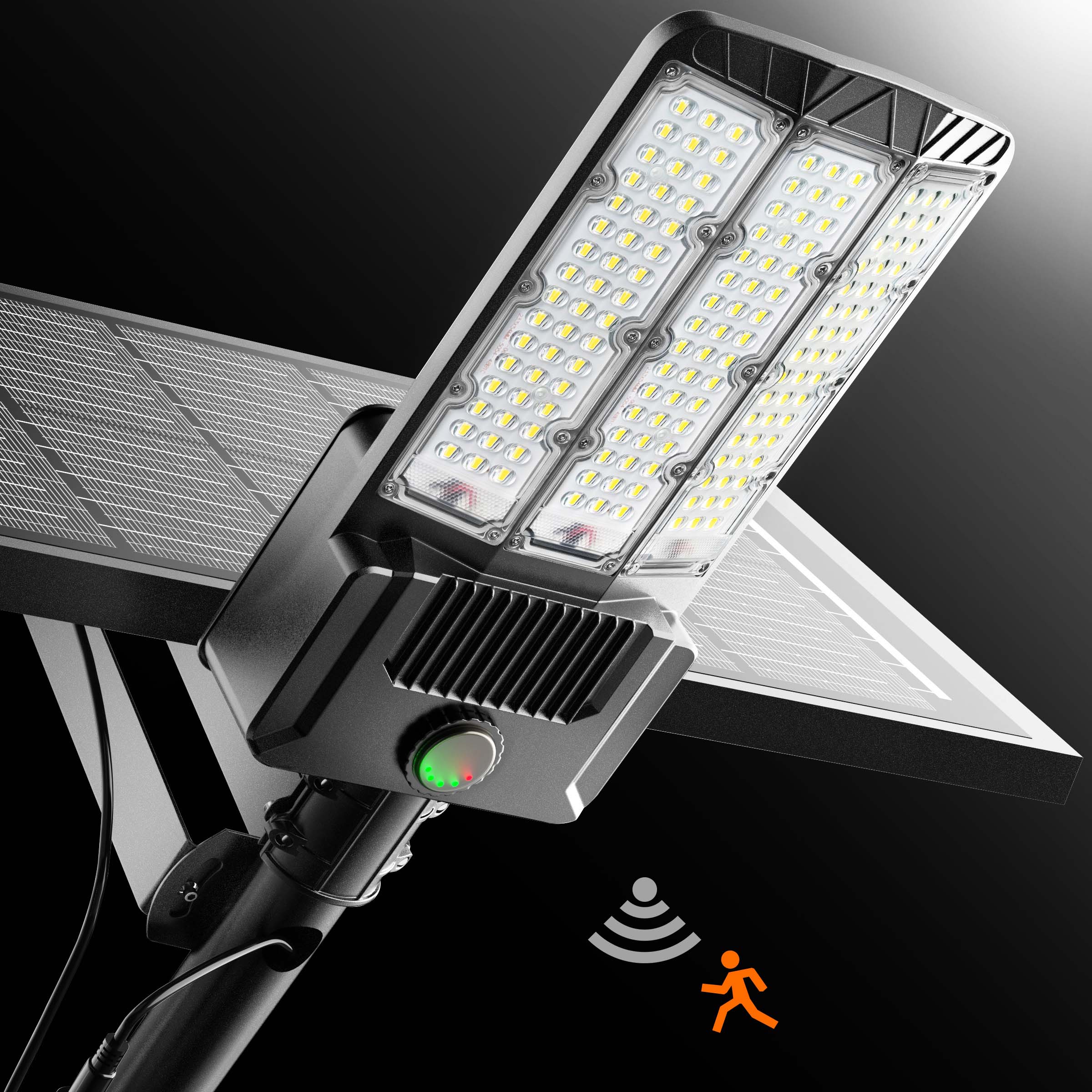
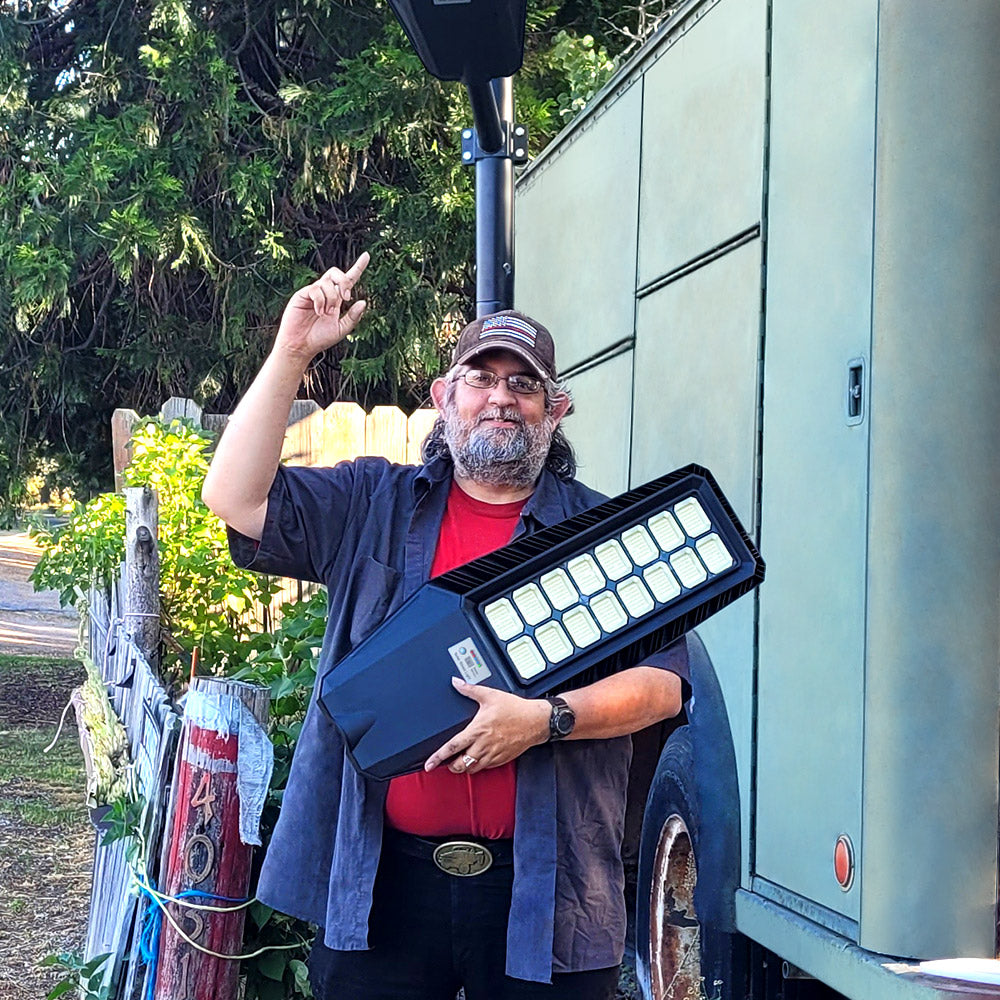
Take our NT100A 100W High-Brightness Solar Street Light ($762). This beast packs a 320WH LiFePO4 battery with MPPT control. What does that mean for you? Even after three cloudy days, you're still getting full brightness. I've had customers in Oregon—not exactly the sunshine capital—running these through entire winter weeks without a hiccup.
The 3-5 Day Battery Backup: Why It Matters More Than You Think
Let's talk about battery backup because this is where most cheap solar lights fall flat on their face. A light that dies after one cloudy day isn't solar-powered—it's solar-dependent. There's a huge difference.
Solar street lights with 3-5 days battery backup give you actual reliability. Here's why this matters in real-world scenarios:
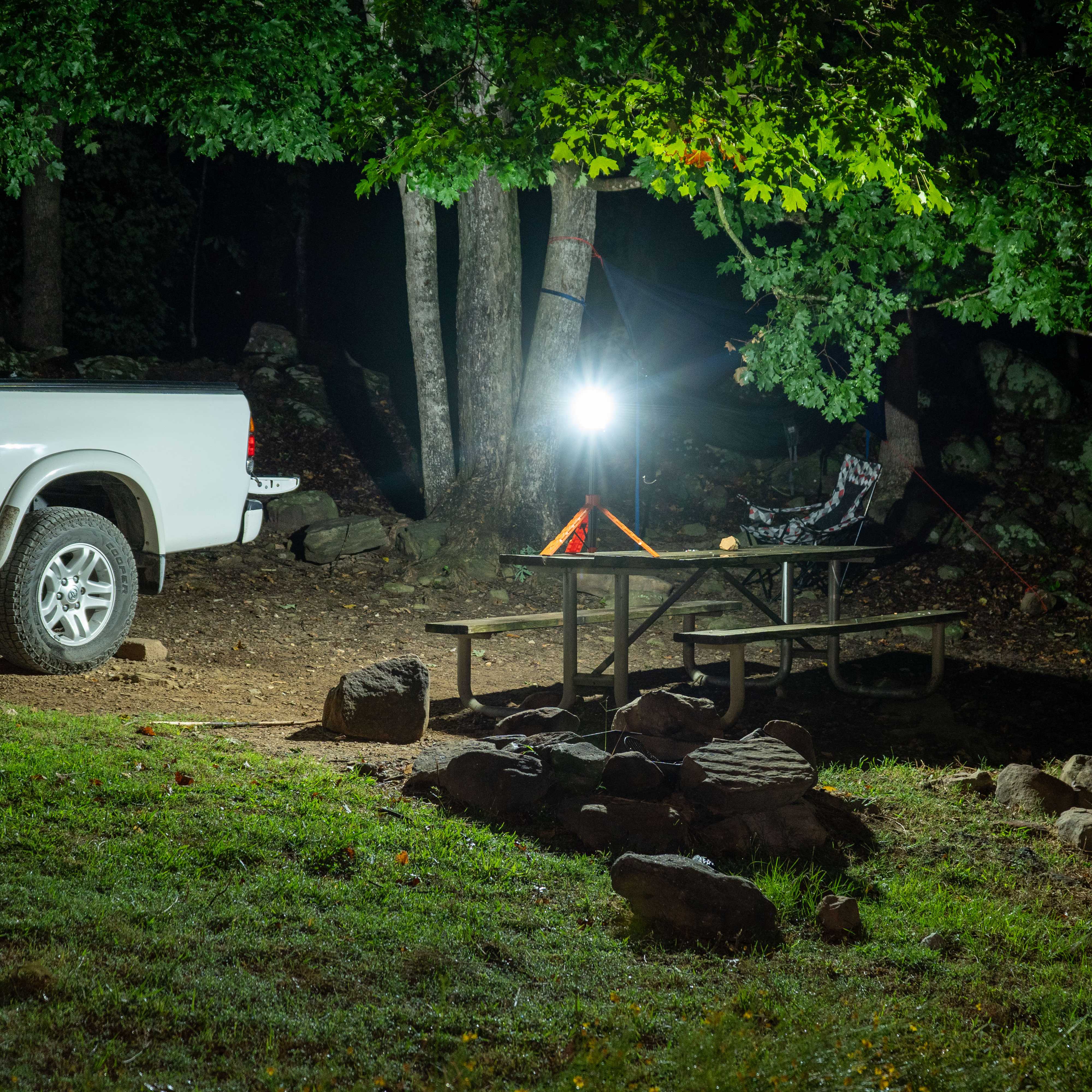
Weather Resilience: The Pacific Northwest sees weeks of overcast skies. The Midwest gets brutal winter storms. Texas has those surprise cold fronts. Your lighting can't take a vacation just because the sun does.
Security Consistency: Parking lots, pathways, and perimeter lighting need to work every single night. Period. A gap in coverage isn't just inconvenient—it's a liability issue.
Maintenance Freedom: When your lights can handle extended cloudy periods, you're not constantly monitoring weather forecasts or scheduling emergency maintenance. They just work.

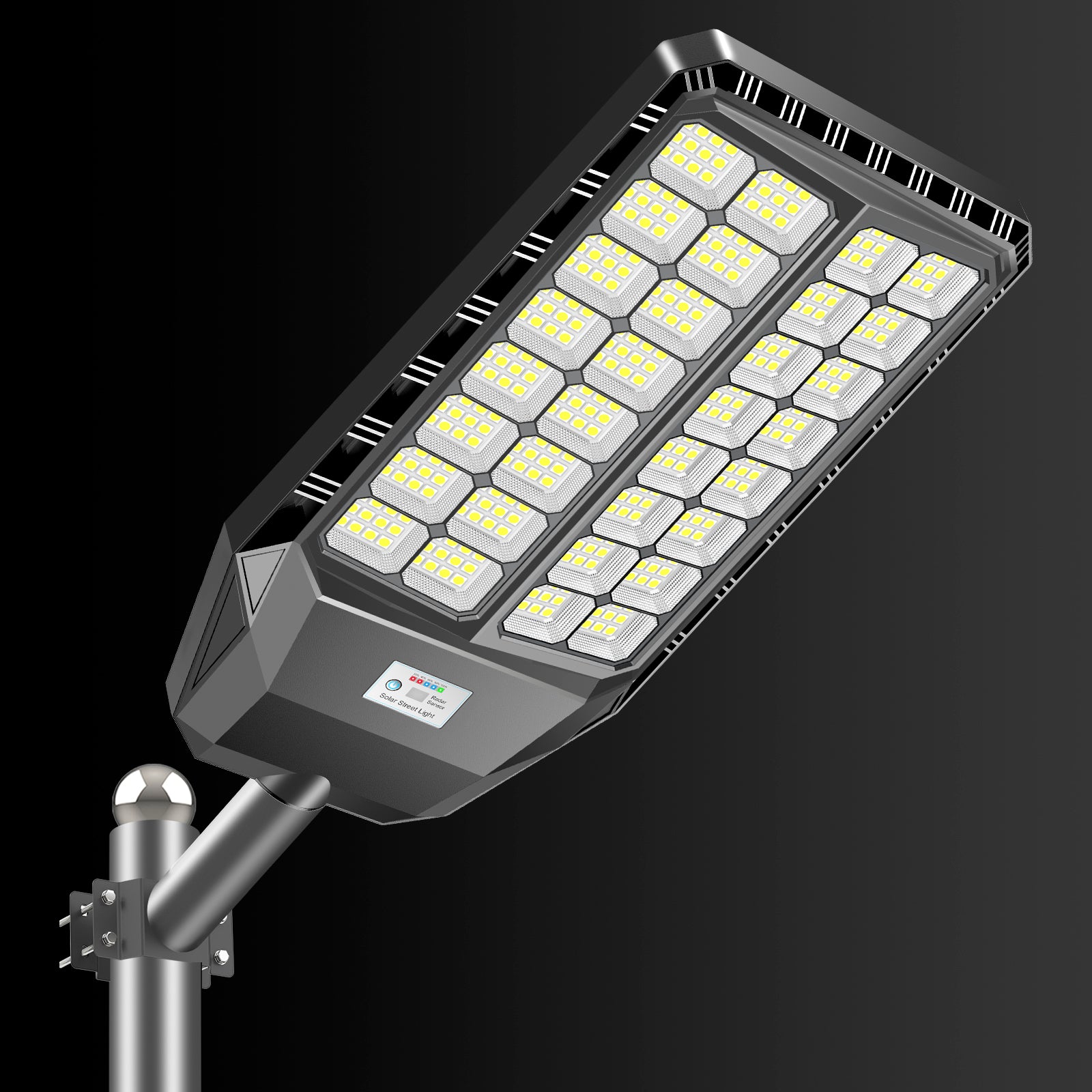
The NT60A Solar Street Light ($582) delivers 7200 lumens with a 230WH LiFePO4 battery. The MPPT controller ensures that even on partially sunny days, you're banking enough energy for multiple nights. One customer in Seattle told me he went 11 days straight during their rainy season without the light dimming once. That's the kind of performance that changes how you think about solar.
Breaking Down the Technology: How MPPT Actually Works
Okay, let's get slightly technical for a minute—but I promise to keep it practical.
Your solar panel's output varies constantly based on sunlight intensity, temperature, and angle. At any given moment, there's one specific voltage and current combination that produces maximum power. That's the "maximum power point."
MPPT controllers use sophisticated algorithms to find this point multiple times per second. When they find it, they lock onto it and convert that power to the optimal charging voltage for your battery. The result? You're harvesting 20-30% more energy from the exact same solar panel compared to basic PWM controllers.
In practical terms: a 100W panel with PWM might deliver 70-80W to your battery on a good day. That same panel with MPPT? You're getting 90-95W. Over weeks and months, that compounds into significantly longer runtime and better backup capacity.

Real-World Applications: Where These Lights Excel
Municipal Street Lighting: Cities and towns are discovering that MPPT solar street lights with multi-day backup eliminate the two biggest headaches of traditional solar: inconsistent performance and frequent maintenance. No trenching for electrical lines, no monthly utility bills, and lights that actually stay on.
Commercial Parking Lots: Property managers love these because they solve the lighting problem without the electrical infrastructure nightmare. Plus, with 3-5 day backup, you're not dealing with dark spots every time there's a cloudy stretch.
Rural Properties and Farms: When you're dealing with long driveways, barn areas, or perimeter security far from the main electrical service, running power lines gets expensive fast. Solar with MPPT and solid backup capacity just makes sense.

Parks and Recreational Areas: The YK080 Pro 80W Solar Street Light ($365) is perfect for these applications. With 12,800 lumens and adaptive lighting control, it provides bright illumination when needed and dims during low-traffic hours to extend battery life even further. The MPPT controller ensures maximum solar harvest even under tree canopy or partial shade conditions.
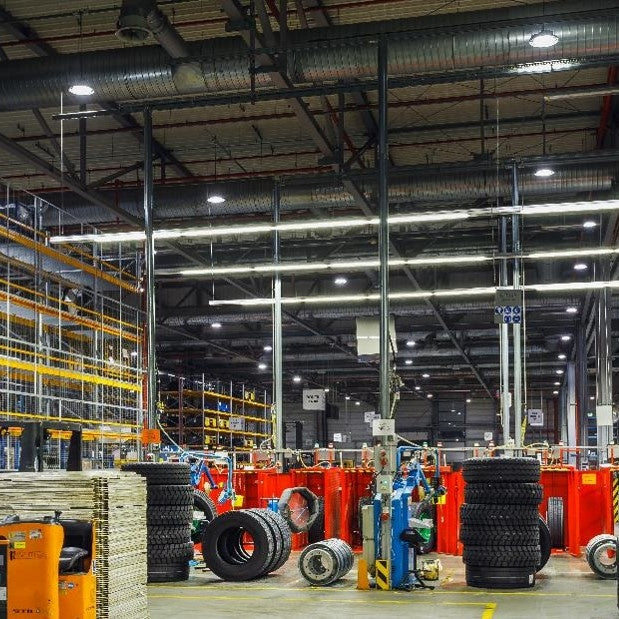
Industrial Facilities: Warehouses, distribution centers, and manufacturing plants often have vast outdoor areas that need lighting. Solar eliminates the ongoing electrical costs while MPPT technology ensures reliability even during extended periods of poor weather.

The Battery Chemistry Advantage: Why LiFePO4 Changes Everything
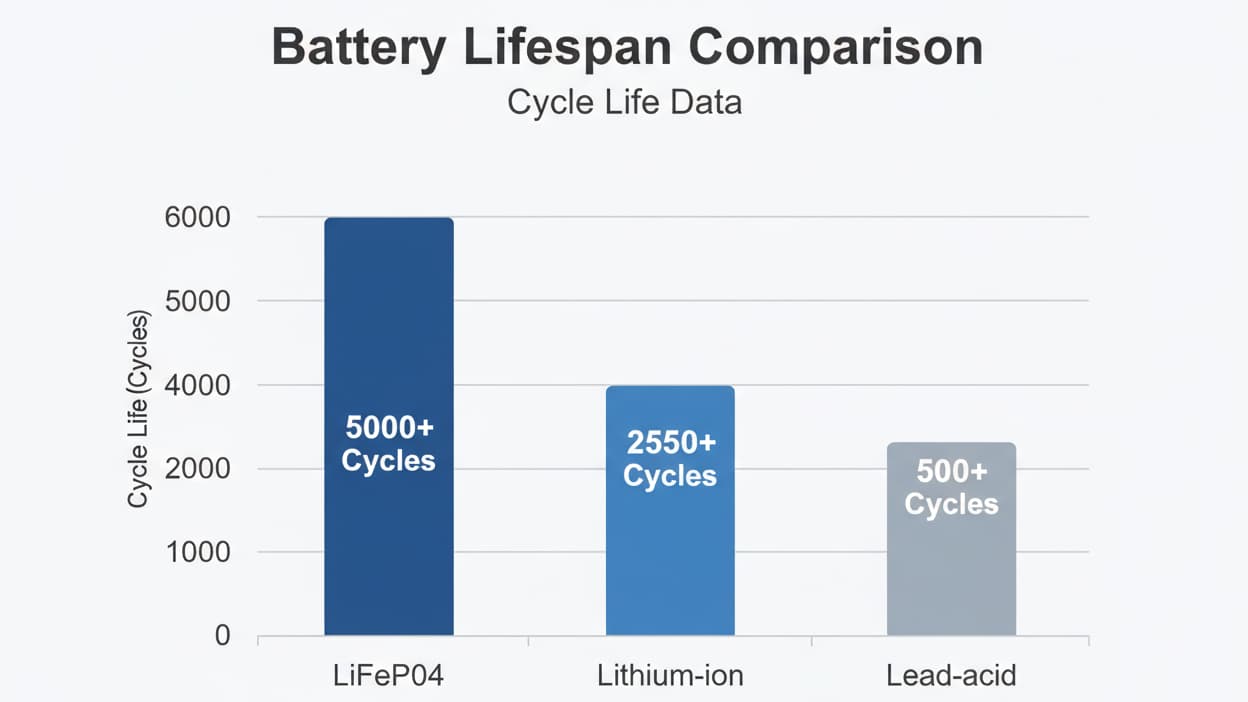
Here's something most people overlook: the battery chemistry matters just as much as the controller technology. You'll notice most premium MPPT solar lights use LiFePO4 (Lithium Iron Phosphate) batteries instead of traditional lead-acid or even standard lithium-ion.
Why? Because LiFePO4 batteries are basically the perfect match for solar street lighting:
Cycle Life: We're talking 3,000-5,000 charge cycles versus 300-500 for lead-acid. That's literally 10 times longer lifespan. Your light keeps working year after year while competitors are replacing batteries.
Temperature Tolerance: LiFePO4 handles temperature extremes without losing capacity. Whether you're in Arizona summer heat or Minnesota winter cold, performance stays consistent.
Depth of Discharge: You can safely use 80-90% of a LiFePO4 battery's capacity without damaging it. Lead-acid? You're limited to about 50% if you want it to last. This means a smaller, lighter battery can deliver the same usable energy.
Charging Efficiency: LiFePO4 batteries accept charge faster and more efficiently—which pairs perfectly with MPPT controllers that are optimized to deliver maximum charging current.
When you combine MPPT charging with LiFePO4 storage, you get a system that charges faster, stores more usable energy, and lasts dramatically longer than traditional setups.
Installation Reality Check: What You Actually Need to Know
One of the best things about modern MPPT solar street lights? Installation is genuinely straightforward. No electrician required, no permits for electrical work, no trenching.
Here's the typical process:
Site Selection: You need a location that gets decent sun exposure—ideally 4-6 hours of direct sunlight daily. South-facing is best in the Northern Hemisphere. Avoid spots with heavy tree cover or building shadows during peak sun hours.
Mounting: Most units come with pole mounting hardware. You're either installing a new pole (dig hole, set pole in concrete, let cure) or mounting to an existing pole. Either way, it's basic construction work, not specialized electrical installation.
Assembly: Modern all-in-one designs have the solar panel, battery, controller, and LED fixture integrated. You're basically just mounting the unit and making sure it's secure and properly angled.
Configuration: Many MPPT controllers come with remote controls or smartphone apps for setting operating modes, brightness levels, and timing schedules. Set it once and forget it.
Total installation time? Usually 2-4 hours for someone with basic DIY skills. Compare that to running electrical lines, which could take days and cost thousands in labor and materials.
Cost Analysis: The Numbers That Actually Matter
Let's talk money because that's what it comes down to for most people. MPPT solar street lights have higher upfront costs than basic solar lights or even some grid-tied options. But here's where the math gets interesting.
Upfront Investment:
Quality MPPT solar street light: $365-$1,890 depending on wattage and features
Installation (DIY or basic contractor): $100-$300
Total initial cost: $465-$2,190 per light
Grid-Tied Alternative:
Electrical trenching and wiring: $3,000-$8,000 per light location
Light fixture and pole: $400-$800
Electrician installation: $500-$1,200
Total initial cost: $3,900-$10,000 per light
Already, solar is looking pretty good. But wait, there's more.

Operating Costs (10-year period):
MPPT Solar Light:
Electricity: $0
Maintenance: ~$100-$200 (minimal, mostly cleaning)
Total 10-year operating cost: $100-$200
Grid-Tied Light:
Electricity (assuming 100W, 12 hours/night, $0.13/kWh): ~$5,700
Maintenance and bulb replacement: $300-$500
Total 10-year operating cost: $6,000-$6,200
Over 10 years, a quality MPPT solar street light saves you roughly $6,000-$14,000 compared to grid-tied alternatives. And that's per light. If you're lighting a parking lot with 20 fixtures, we're talking $120,000-$280,000 in savings.

For commercial applications, the HY100C 100W Commercial Solar Light ($1,890) might seem pricey upfront, but with its massive 960WH LiFePO4 battery and 10-year panel lifespan, the total cost of ownership is dramatically lower than any grid-tied alternative. Plus, you're getting 5-7 days of backup capacity, which means virtually zero downtime.
Performance Optimization: Getting the Most from Your Investment
Even the best MPPT solar street light won't perform optimally if you don't set it up right. Here are the insider tips that make a real difference:
Panel Angle Matters: In the continental US, optimal tilt angle is roughly equal to your latitude. For most locations, that's 30-40 degrees. This maximizes year-round solar collection. Some installers just mount panels flat—don't do this. You're leaving 15-20% of potential energy on the table.
Seasonal Adjustments: If you're in an area with dramatic seasonal sun angle changes, adjusting panel tilt twice a year (steeper in winter, shallower in summer) can boost annual energy harvest by 10-15%.
Keep Panels Clean: Dust, pollen, and bird droppings can reduce panel efficiency by 20-30%. A quick rinse with a hose every few months maintains peak performance. In dusty or agricultural areas, you might need monthly cleaning.
Smart Scheduling: Most MPPT controllers let you program operating schedules. Consider dimming during low-traffic hours (like 2-5 AM) to extend battery life. You're still providing safety lighting but conserving energy for the critical evening and early morning hours.
Motion Sensing: Some advanced models include motion sensors that boost brightness when activity is detected. This can extend battery backup from 3-5 days to potentially 7-10 days in low-traffic areas.
Common Mistakes to Avoid (Learn from Others' Expensive Lessons)
Mistake #1: Choosing Based on Wattage Alone
A 100W light with a cheap PWM controller and small battery will perform worse than a 60W light with MPPT and proper battery capacity. Focus on the complete system, not just the LED wattage.
Mistake #2: Ignoring Local Climate
If you're in Seattle or Portland, you need more battery capacity and larger solar panels than someone in Phoenix. The same light model might need different configurations for different climates.
Mistake #3: Poor Site Selection
Installing under tree branches that'll grow and create shade in a year or two is a recipe for disappointment. Think long-term about sun exposure.
Mistake #4: Skimping on Mounting
These lights need to survive wind, snow, and ice. Use proper mounting hardware and make sure poles are adequately secured. A light that blows over in a storm isn't saving you money.
Mistake #5: No Maintenance Plan
Even though solar lights are low-maintenance, they're not no-maintenance. Set calendar reminders for panel cleaning and visual inspections. Catching small issues early prevents big problems later.

The Environmental and Sustainability Angle
Look, I'm not going to preach about saving the planet—you've heard that before. But there are some genuinely compelling environmental benefits worth mentioning:
A single 100W solar street light running 12 hours per night prevents roughly 438 kg of CO2 emissions annually compared to grid power (assuming average US grid mix). Over a 10-year lifespan, that's 4,380 kg per light. For a 20-light installation, you're preventing nearly 88,000 kg of CO2 emissions.
Beyond carbon, you're eliminating the environmental impact of trenching and underground electrical infrastructure. No disturbed soil, no disrupted drainage patterns, no accidentally cut tree roots or damaged underground utilities.
LiFePO4 batteries are also more environmentally friendly than lead-acid alternatives. They contain no heavy metals, last much longer (reducing replacement frequency), and are more easily recycled at end of life.
For businesses and municipalities with sustainability goals or ESG reporting requirements, solar street lighting with MPPT technology provides measurable, documentable environmental benefits.
Future-Proofing: What's Coming Next
The solar street lighting industry isn't standing still. Here's what's on the horizon:
AI-Powered Controllers: Next-generation MPPT controllers are incorporating machine learning to predict weather patterns and optimize charging/discharging cycles based on historical data and forecasts.
Integrated IoT: Lights that communicate with central management systems, reporting performance metrics, detecting failures, and even serving as nodes in smart city networks.
Higher Efficiency Panels: Solar panel efficiency keeps improving. Today's 22% efficient panels will be replaced by 25-28% efficient models in the next few years, meaning smaller panels can deliver the same power.
Advanced Battery Chemistry: While LiFePO4 is excellent, even better battery technologies are in development, promising longer life, higher energy density, and lower costs.
The good news? Quality MPPT solar street lights you buy today are designed to accommodate these improvements. Many have modular components that can be upgraded without replacing the entire system.

The HK80 80W Street Light ($499) exemplifies this forward-thinking design with its 10-year LiFePO4 battery lifespan and high-efficiency mono panel. You're not just buying a light—you're investing in a platform that'll serve you for a decade or more.
Choosing the Right System for Your Needs
Not every application needs the biggest, most expensive system. Here's how to match your needs to the right solution:
Residential Driveways and Pathways: 30-60W systems with 2-3 day backup are usually sufficient. Lower traffic means you can use dimming and motion sensing to extend battery life.
Commercial Parking Lots: 80-100W systems with 3-5 day backup. You need consistent brightness and reliability. This is where MPPT really proves its worth.
Municipal Streets: 100W+ systems with 5-7 day backup. Public safety is paramount, and you need lights that work regardless of weather conditions.
Industrial and Security Applications: 100W+ with maximum battery capacity. Consider systems with backup power inputs or hybrid solar/grid capability for mission-critical applications.
Rural and Remote Locations: Oversize the system by 20-30% compared to urban installations. You're farther from service, so extra reliability is worth the investment.
Warranty and Support Considerations
This is boring but important: make sure you understand what's covered and for how long.
Quality MPPT solar street lights typically offer:
- LED fixture: 3-5 year warranty
- Solar panel: 10-25 year performance warranty
- LiFePO4 battery: 3-5 year warranty
- MPPT controller: 2-3 year warranty
Also check:
- Is technical support available if you have questions?
- Are replacement parts readily available?
- What's the process for warranty claims?
- Is there a local service network or do you ship units back?
A slightly more expensive light from a company with solid support infrastructure is often a better investment than saving $100 on a unit from a company that'll disappear in two years.

Making the Decision: Is MPPT Solar Right for You?
After all this, let's bring it back to the fundamental question: should you invest in MPPT solar controller lights with 3-5 day battery backup?
The answer is yes if:
- You need reliable outdoor lighting in locations without convenient electrical access
- You want to eliminate ongoing electricity costs
- You're in a climate with variable weather and need lights that work through cloudy periods
- You value low maintenance and long-term reliability
- You're looking at a 5-10 year time horizon (where the economics really shine)
- You have decent solar exposure at your installation site
The answer might be no if:
- You have heavy tree cover or buildings that block sun for most of the day
- You need lighting in areas that are already well-served by electrical infrastructure
- Your budget absolutely cannot accommodate the higher upfront cost
- You're in an extreme northern latitude with very limited winter sun
For most applications in most of the United States, MPPT solar street lights with proper battery backup represent the smart choice. The technology has matured to the point where reliability matches or exceeds grid-tied alternatives, while the economics are compelling over any reasonable time frame.
Take Action: Start with the Right Foundation
If you're ready to move forward, here's my recommendation: start with a pilot installation. Choose one or two locations and install quality MPPT solar lights. Live with them for a few months. See how they perform through different weather conditions. Learn what works for your specific situation.
This approach lets you validate the technology, refine your installation process, and build confidence before committing to a larger deployment. Plus, you'll have real-world data to justify the investment to stakeholders or budget committees.
The solar street lighting revolution is here. MPPT controllers and LiFePO4 batteries have solved the reliability problems that plagued earlier generations. The economics work. The technology works. The question isn't whether solar street lighting makes sense—it's whether you're ready to make the switch.
Ready to get started? Explore our complete range of MPPT solar street lights and find the perfect solution for your application.

Frequently Asked Questions
How long do MPPT solar street lights actually last?
Quality MPPT solar street lights typically last 10-15 years with minimal maintenance. The LED fixtures are rated for 50,000+ hours (about 11 years of 12-hour nightly operation). Solar panels maintain 80%+ efficiency for 25+ years. The LiFePO4 batteries are usually the first component needing replacement, typically after 5-10 years depending on usage and climate. The MPPT controller itself can last 10+ years. Overall system lifespan of 10-15 years is realistic with basic maintenance.
What happens during extended cloudy periods longer than the battery backup?
If you experience cloudy weather exceeding your battery backup capacity (say, 7 days of heavy clouds with a 5-day backup system), the lights will dim or shut off until the batteries recharge. However, MPPT controllers are efficient enough that even on cloudy days, they harvest some energy—often 10-25% of full sun capacity. This means your actual backup extends beyond the rated days in most real-world conditions. In practice, properly sized systems rarely experience complete discharge except in extreme circumstances.
Can I install MPPT solar street lights myself, or do I need a professional?
Most MPPT solar street lights are designed for straightforward installation by anyone with basic DIY skills. You don't need electrical licensing since there's no grid connection. The main requirements are: ability to dig a hole and set a pole in concrete (or mount to existing pole), basic hand tools, and ability to follow assembly instructions. The entire process typically takes 2-4 hours per light. That said, if you're installing multiple lights or working at significant heights, hiring a general contractor or handyman service might be worth it for safety and efficiency.
How much maintenance do these lights require?
MPPT solar street lights are remarkably low-maintenance. Primary maintenance tasks include: cleaning solar panels every 2-3 months (more frequently in dusty areas), visual inspection of mounting hardware and connections twice yearly, and checking for any physical damage after severe weather. The MPPT controller and LED fixture are solid-state with no moving parts, requiring no maintenance. LiFePO4 batteries are sealed and maintenance-free. Total annual maintenance time is typically under 2 hours per light. Compare this to grid-tied lights that may require bulb changes, ballast replacement, and electrical troubleshooting.
What's the difference between MPPT and PWM controllers, and does it really matter?
Yes, it absolutely matters. PWM (Pulse Width Modulation) controllers are simpler and cheaper but less efficient. They essentially connect the solar panel directly to the battery, wasting energy when panel voltage doesn't match battery voltage. MPPT controllers actively convert power, finding the optimal operating point of the solar panel and converting that power to the ideal charging voltage for the battery. Real-world result: MPPT harvests 20-30% more energy from the same solar panel. Over time, this means longer runtime, better backup capacity, and more reliable performance—especially during marginal weather conditions.
Will these lights work in northern states with harsh winters?
Yes, but you need to size the system appropriately. MPPT solar street lights work fine in cold climates—in fact, solar panels are actually more efficient in cold temperatures. The challenges are shorter days and lower sun angles in winter. Solutions: use larger solar panels (20-30% oversized), increase battery capacity, and optimize panel tilt for winter sun angle. LiFePO4 batteries handle cold better than lead-acid alternatives. Many installations in Minnesota, Wisconsin, and similar climates perform excellently with proper system sizing. The key is working with suppliers who understand your climate and can recommend appropriate configurations.
How bright are these lights compared to traditional street lights?
Modern LED solar street lights match or exceed traditional street lighting brightness. A 100W LED solar street light typically produces 12,000-16,000 lumens, comparable to a 250W metal halide or 150W high-pressure sodium fixture. The difference is LED light is more directional and efficient, so you get better ground illumination with less wasted light pollution. Color temperature also matters—most solar street lights use 5000-6000K (bright white), which provides better visibility than the yellowish light of sodium fixtures. For most applications, a properly selected solar LED light provides superior illumination compared to traditional alternatives.
What's the payback period for MPPT solar street lights?
Payback period varies based on your alternative. Compared to installing new grid-tied lighting (with trenching and electrical work), payback is often immediate—solar costs less upfront. Compared to existing grid-tied lights, payback is typically 3-7 years depending on electricity rates and usage patterns. In areas with high electricity costs ($0.15+/kWh) or expensive electrical infrastructure, payback can be under 3 years. For commercial and municipal applications with multiple lights, the economics are even more favorable due to eliminated ongoing costs and reduced maintenance. Don't forget to factor in potential utility rebates or tax incentives for renewable energy installations.
Can these lights be dimmed or put on schedules?
Yes, most quality MPPT solar street lights include programmable controllers with multiple operating modes. Common options include: full brightness all night, dimming during low-traffic hours (like 50% brightness from 2-5 AM), motion-activated brightness boost, seasonal schedules, and even astronomical timers that adjust automatically based on sunset/sunrise times. Many newer models include remote controls or smartphone apps for easy programming. This flexibility lets you optimize for your specific needs—maximum brightness when needed, energy conservation when possible. Smart scheduling can extend battery backup from 3-5 days to potentially 7-10 days in appropriate applications.
What should I look for when comparing different MPPT solar street light brands?
Key factors to evaluate: (1) Battery capacity and chemistry—LiFePO4 is superior to lead-acid; (2) Actual MPPT controller or just marketing claims—check specs; (3) LED chip quality and lumen output—look for reputable LED brands; (4) Solar panel efficiency and warranty—minimum 10-year performance warranty; (5) Build quality and weatherproofing—IP65 or IP66 rating minimum; (6) Warranty terms and support—what's covered and for how long; (7) Actual customer reviews and installations—not just marketing materials; (8) Component replaceability—can you replace battery or controller separately? Avoid the cheapest options—they usually cut corners on battery capacity or use PWM instead of true MPPT. Focus on total cost of ownership over 10 years, not just purchase price.
Still have questions? Contact our team for personalized recommendations based on your specific application and location.


Leave a comment
This site is protected by hCaptcha and the hCaptcha Privacy Policy and Terms of Service apply.