











Choosing the right ceiling fan can significantly impact your home's comfort, energy efficiency, and aesthetic appeal. One of the most common questions homeowners ask is: "Should I choose a 3-blade or 4-blade ceiling fan?" In this comprehensive guide, we'll break down the key differences, performance metrics, and help you make an informed decision for your space.
🎯 Key Takeaways
- ✅ 3-blade fans offer faster airflow and quieter operation - ideal for modern spaces
- ✅ 4-blade fans provide more balanced, consistent airflow - perfect for traditional rooms
- ✅ Blade number matters less than motor quality and blade pitch
- ✅ Both types can be equally energy-efficient with proper design
- ✅ Your choice should match room size, ceiling height, and aesthetic preferences
📊 Quick Comparison Table
| Feature | 3-Blade Fan | 4-Blade Fan |
|---|---|---|
| Airflow Speed | ⚡ Faster | 🌊 More Balanced |
| Noise Level | 🔇 Quieter | 🔊 Slightly Louder |
| Energy Efficiency | ⭐ Excellent | ⭐ Excellent |
| Aesthetic Style | Modern & Sleek | Classic & Balanced |
| Best For | Contemporary spaces | Traditional rooms |
| Price Range | $$ | $$ |
📋 Table of Contents
- Airflow Performance Comparison
- Noise Levels and Operation
- Energy Efficiency Analysis
- Design and Aesthetic Considerations
- Room Size and Ceiling Height Matching
- Ceiling Fans with Lights
- Frequently Asked Questions
1. 🌪️ Airflow Performance Comparison
The number of blades directly affects how a ceiling fan moves air through your room. Understanding these differences is crucial for optimal comfort.
3-Blade Ceiling Fans: Speed and Efficiency
Three-blade ceiling fans are engineered for maximum airflow velocity. With fewer blades cutting through the air, there's less resistance, allowing the fan to:
- Move Air Faster: Typically achieve 10-15% higher CFM (Cubic Feet per Minute) at the same RPM
- Create Stronger Breeze: Ideal for hot climates or rooms needing aggressive cooling
- Operate More Efficiently: Less drag means the motor works less hard
- Spin Quieter: Fewer blades = less air turbulence = reduced noise
4-Blade Ceiling Fans: Balance and Consistency
Four-blade ceiling fans offer a different approach to air circulation:
- Balanced Airflow: More blades distribute air more evenly across the room
- Consistent Coverage: Reduces "dead zones" where air doesn't circulate well
- Smoother Operation: Better weight distribution minimizes wobbling
- Gentle Breeze: Ideal for spaces where you want air movement without strong gusts
The Science: CFM and Airflow Dynamics
CFM (Cubic Feet per Minute) is the standard measurement for fan airflow. Here's what you can typically expect:
- 3-Blade Fan (52-inch): 5,000-6,500 CFM at high speed
- 4-Blade Fan (52-inch): 4,500-6,000 CFM at high speed
However, blade pitch (angle) and motor quality matter more than blade count. A well-designed 4-blade fan can outperform a poorly designed 3-blade fan.
2. 🔊 Noise Levels and Operation
Noise is a critical factor, especially for bedrooms, nurseries, and quiet spaces.
Why 3-Blade Fans Are Quieter
Three-blade fans typically operate at 35-45 decibels on high speed (comparable to a whisper or quiet library). The reduced noise comes from:
- Less air turbulence from fewer blades
- Reduced motor strain due to lighter load
- Smoother aerodynamic profile
4-Blade Fan Noise Characteristics
Four-blade fans usually measure 40-50 decibels on high speed. While slightly louder, the difference is often imperceptible unless you're in a completely silent room. The additional noise comes from:
- More blades cutting through air creates more turbulence
- Slightly higher motor load
- Potential for more vibration if not perfectly balanced
3. ⚡ Energy Efficiency Analysis
Energy efficiency is crucial for both environmental impact and your electricity bill.
Power Consumption Comparison
Contrary to popular belief, blade count has minimal impact on energy consumption. What matters most is:
- Motor Quality: DC motors use 70% less energy than AC motors
- Blade Design: Aerodynamic blades reduce drag
- Fan Size: Properly sized fans don't need to work as hard
Typical Power Usage
| Fan Type | Low Speed | Medium Speed | High Speed |
|---|---|---|---|
| 3-Blade (AC Motor) | 15-20W | 35-45W | 55-75W |
| 4-Blade (AC Motor) | 15-22W | 35-50W | 60-80W |
| 3-Blade (DC Motor) | 3-6W | 10-15W | 20-30W |
| 4-Blade (DC Motor) | 4-7W | 12-18W | 22-35W |
Annual Cost Comparison
Running a ceiling fan 8 hours per day for a year:
- 3-Blade AC Motor: $15-25/year
- 4-Blade AC Motor: $18-28/year
- 3-Blade DC Motor: $5-10/year
- 4-Blade DC Motor: $6-12/year
Based on average US electricity rate of $0.13/kWh
4. 🎨 Design and Aesthetic Considerations
Your ceiling fan is a visible design element that should complement your interior style.
3-Blade Fans: Modern Minimalism
Three-blade ceiling fans embody contemporary design principles:
- Sleek Profile: Clean lines and minimal visual clutter
- Modern Aesthetic: Perfect for contemporary, industrial, or minimalist interiors
- Visual Lightness: Fewer blades make the fan appear less imposing
- Versatile Finishes: Often available in brushed nickel, matte black, or white
Best suited for: Modern living rooms, loft apartments, contemporary bedrooms, home offices
4-Blade Fans: Classic Elegance
Four-blade fans offer traditional appeal:
- Balanced Symmetry: Visually pleasing proportions
- Traditional Look: Complements classic, transitional, or farmhouse styles
- Substantial Presence: Makes a statement without being overwhelming
- Rich Finishes: Often available in wood tones, bronze, or antique brass
Best suited for: Traditional dining rooms, master bedrooms, family rooms, covered patios
5. 📏 Room Size and Ceiling Height Matching
Choosing the right fan isn't just about blade count - it's about matching the fan to your space.
Room Size Guidelines
| Room Size | Fan Diameter | Recommended Blade Count |
|---|---|---|
| Up to 75 sq ft | 29-36 inches | 3 blades |
| 76-144 sq ft | 36-42 inches | 3 or 4 blades |
| 145-225 sq ft | 44-50 inches | 3 or 4 blades |
| 226-400 sq ft | 50-60 inches | 4 blades |
| Over 400 sq ft | 60+ inches or multiple fans | 4 blades |
Ceiling Height Considerations
- 8-foot ceilings: Use flush-mount or hugger fans (3 blades recommended for less visual bulk)
- 9-10 foot ceilings: Standard downrod (3-6 inches) - either 3 or 4 blades work well
- 11+ foot ceilings: Extended downrod (12+ inches) - 4 blades provide better visual balance
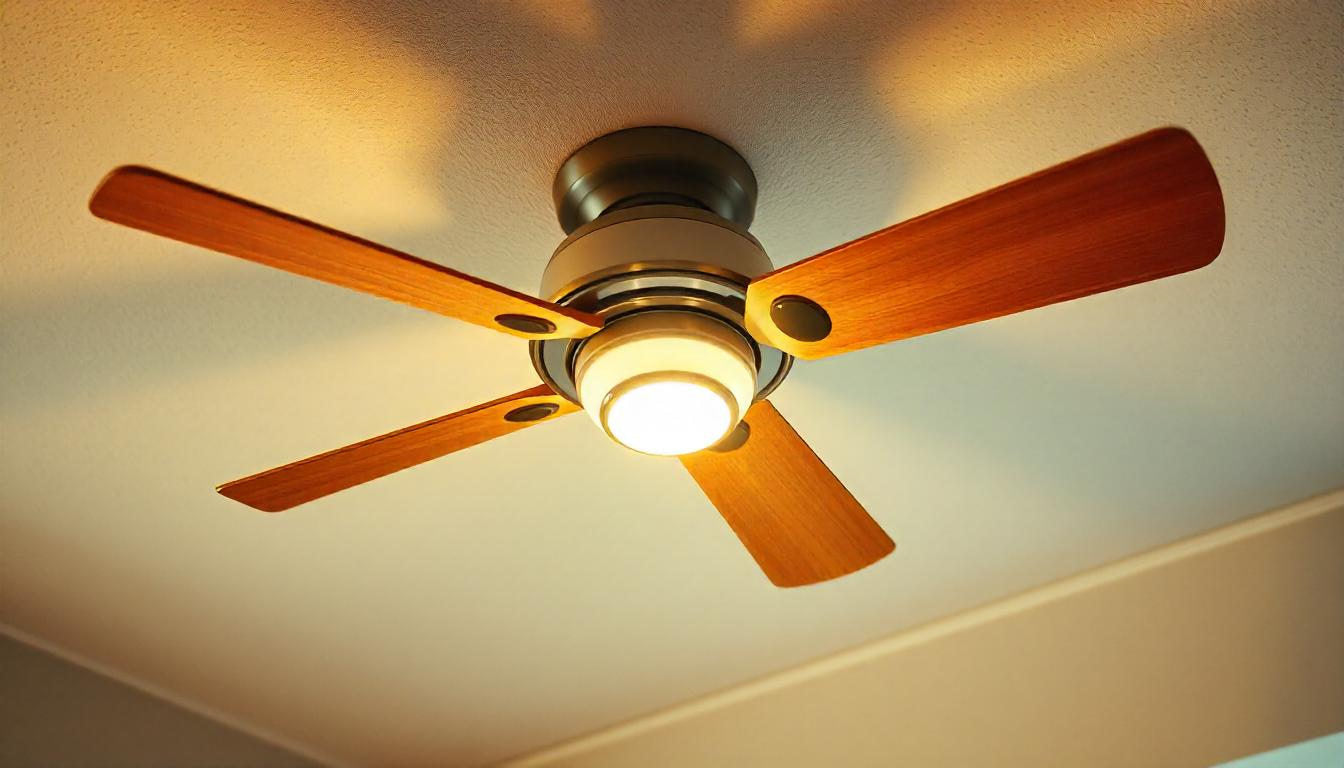
6. 💡 Ceiling Fans with Lights
Adding integrated lighting to your ceiling fan creates a dual-purpose fixture that saves space and enhances functionality.
Benefits of Ceiling Fans with Lights
- Space Efficiency: Combines two fixtures into one - perfect for smaller rooms
- Cost Savings: Less expensive than installing separate fan and light fixtures
- Coordinated Design: Ensures your lighting and fan match aesthetically
- Convenience: Single installation, often with remote control for both functions
- Energy Efficiency: Modern LED light kits use minimal electricity
Light Kit Considerations for 3 vs 4 Blade Fans
3-Blade Fans with Lights:
- Sleeker appearance with integrated lighting
- Often feature modern LED designs
- Less visual competition between blades and light fixture
- Ideal for contemporary spaces
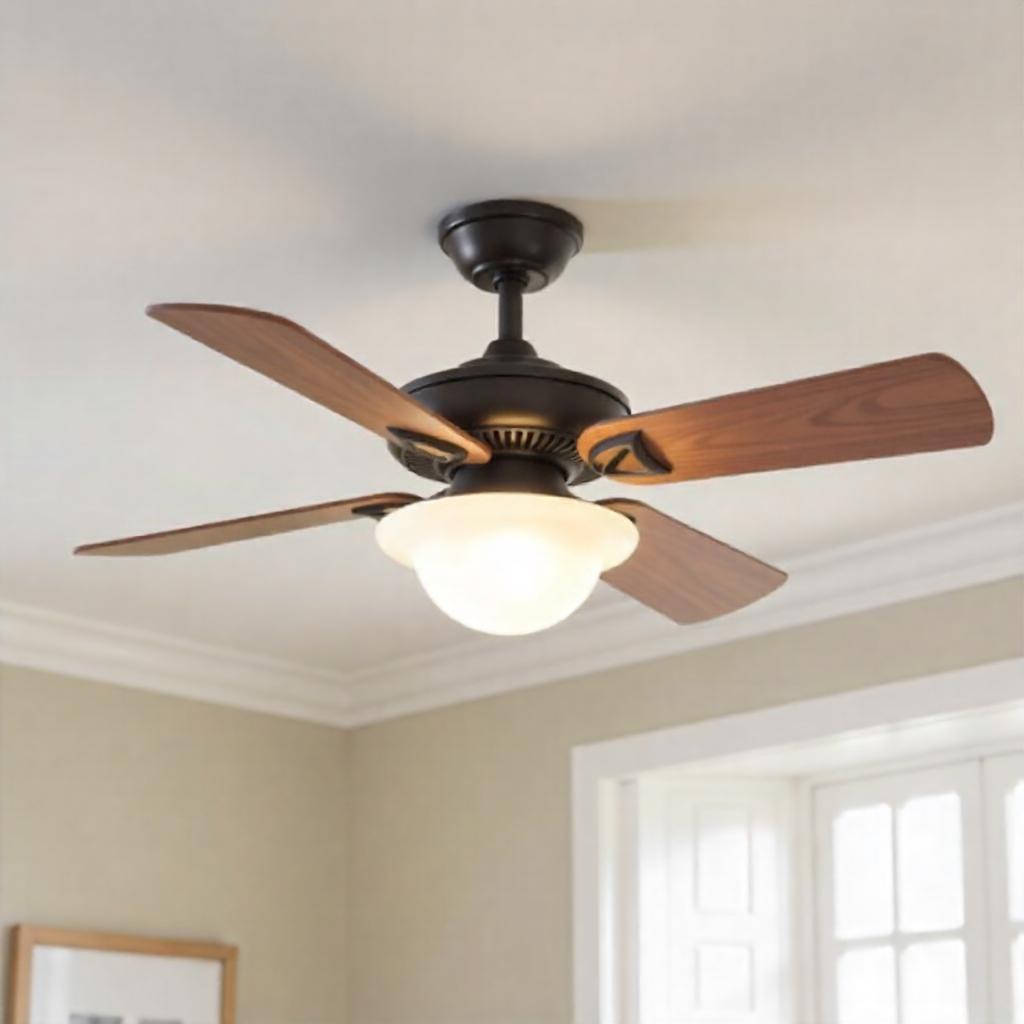
4-Blade Fans with Lights:
- More traditional light kit designs available
- Better visual balance with ornate light fixtures
- Can accommodate larger, more decorative shades
- Perfect for classic or transitional interiors
Recommended Ceiling Fans with Lights
When shopping for ceiling fans with integrated lighting, look for:
- Energy Star certified models
- LED light kits (longer lifespan, lower energy use)
- Remote control or smart home compatibility
- Reversible motor for year-round use
- Quality construction with solid warranties
❓ Frequently Asked Questions
Is a 3-blade or 4-blade ceiling fan better?
Neither is objectively "better" - it depends on your needs. 3-blade fans are better for modern aesthetics, quieter operation, and faster airflow. 4-blade fans are better for traditional decor, balanced air distribution, and larger rooms. Both can be equally efficient with quality motors.
Do more blades mean better airflow?
No. Blade pitch (angle) and motor quality matter more than blade count. A 3-blade fan with a 14-degree pitch and powerful motor will move more air than a 5-blade fan with a 10-degree pitch and weak motor. Optimal airflow comes from the right combination of blade design, motor power, and fan size.
Are 3-blade fans quieter than 4-blade fans?
Generally, yes. 3-blade fans typically operate 5-10 decibels quieter because fewer blades create less air turbulence. However, a well-balanced, quality 4-blade fan can be just as quiet as a cheap 3-blade fan. Motor quality and proper installation are more important than blade count for noise reduction.
Which blade count is more energy-efficient?
The difference is negligible - typically only 2-5 watts. Motor type makes a much bigger difference: DC motors use 70% less energy than AC motors regardless of blade count. Focus on choosing an Energy Star certified fan with a DC motor rather than worrying about blade count.
What size ceiling fan do I need for my room?
Room size determines fan diameter, not blade count:
- Up to 75 sq ft: 29-36 inch fan
- 76-144 sq ft: 36-42 inch fan
- 145-225 sq ft: 44-50 inch fan
- 226-400 sq ft: 50-60 inch fan
- Over 400 sq ft: 60+ inch fan or multiple fans
Can I add a light kit to any ceiling fan?
Most ceiling fans are designed to accommodate light kits, but not all. Check if your fan has a "light kit adaptable" designation. If so, you can purchase a compatible light kit from the manufacturer. Some fans come with integrated lights that cannot be removed or modified.
Should I choose a 3 or 4 blade fan for a bedroom?
For bedrooms, 3-blade fans are often preferred because they operate more quietly - crucial for sleep quality. However, if your bedroom has traditional decor, a quality 4-blade fan with a good motor will also work well. Prioritize quiet operation (look for fans rated under 40 decibels) over blade count.
Do 4-blade fans wobble more than 3-blade fans?
Not necessarily. Wobbling is caused by improper installation, unbalanced blades, or poor quality construction - not blade count. A properly installed, well-balanced 4-blade fan will run smoothly. Always ensure your ceiling fan is securely mounted to a rated electrical box and use the balancing kit if needed.
🎯 Final Verdict: Which Should You Choose?
Choose a 3-Blade Ceiling Fan If:
- ✅ You prefer modern, minimalist aesthetics
- ✅ Quiet operation is your top priority (bedrooms, offices)
- ✅ You want maximum airflow velocity
- ✅ Your room has low ceilings (8 feet)
- ✅ You're installing in a contemporary or industrial space
Choose a 4-Blade Ceiling Fan If:
- ✅ You prefer traditional or classic design
- ✅ You want balanced, even air distribution
- ✅ Your room is large (over 225 sq ft)
- ✅ You have high ceilings (10+ feet)
- ✅ Your decor style is transitional, farmhouse, or traditional
The Bottom Line
The "best" ceiling fan isn't determined solely by blade count. Focus on these factors instead:
- Motor Quality: DC motors are quieter and more efficient
- Proper Sizing: Match fan diameter to room size
- Blade Pitch: 12-15 degrees is optimal for airflow
- Build Quality: Invest in reputable brands with good warranties
- Aesthetic Match: Choose a style that complements your decor
Both 3-blade and 4-blade ceiling fans can provide excellent performance, energy efficiency, and aesthetic appeal when properly selected and installed.




Leave a comment
This site is protected by hCaptcha and the hCaptcha Privacy Policy and Terms of Service apply.