







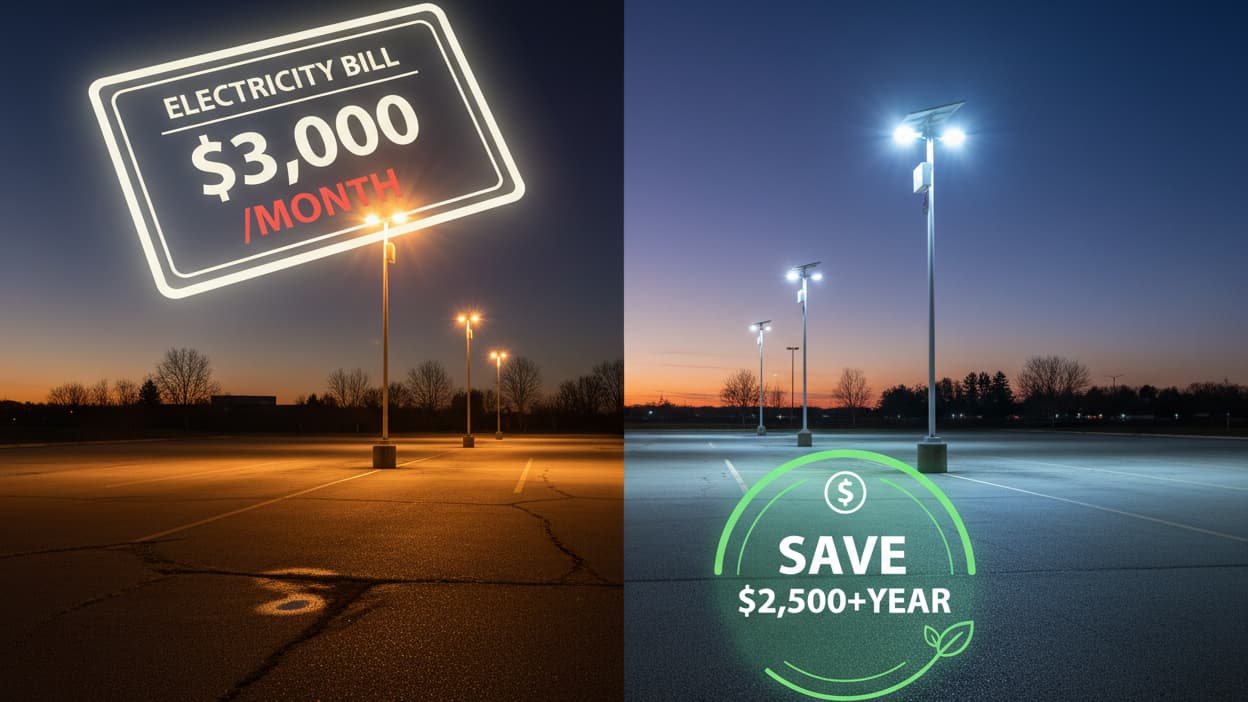
You already know solar LED lights are supposed to save money. But "supposed to" and "actually does" are two different things — and most guides stop at vague percentages without ever showing you the math. This one doesn't.
We're going to walk through real numbers: what grid-powered commercial lighting actually costs, what solar LED alternatives cost upfront, how long payback takes across different property types, and what 2026 federal and state incentives do to that math. By the end, you'll have a clear picture of whether — and how fast — solar LED lighting makes financial sense for your specific situation.
Spoiler: for most U.S. commercial properties, the answer is faster than you'd expect.
First, Let's Talk About What You're Actually Spending Right Now
Commercial outdoor lighting is one of those costs that hides in plain sight. It shows up on your utility bill every month, but because it's bundled with everything else, most property managers never isolate it. When they do, the number is usually a surprise.
Here's a quick benchmark to orient yourself:
- A standard 400W metal halide parking lot fixture running 12 hours a night consumes about 1,752 kWh per year.
- At the U.S. commercial average of roughly $0.12/kWh, that's $210/year per fixture — just in electricity.
- Add bulb replacements every 12–18 months ($40–$80 each), ballast repairs, and labor, and you're looking at $280–$350/year per fixture in total operating cost.
- A parking lot with 20 fixtures? That's $5,600–$7,000/year — before any rate increases.
And commercial electricity rates have been climbing. The EIA reported average commercial rates increased roughly 4–6% annually over the past three years. That $7,000 bill doesn't stay at $7,000.
This is the baseline. Everything else in this article is measured against it.

What Solar LED Lighting Actually Costs — And What It Doesn't
The sticker price on solar LED lighting is the number people fixate on. It's higher than a replacement bulb, obviously. But it's the wrong number to focus on.
The right number is total cost of ownership over 5–10 years — and that's where solar LED wins decisively.
Let's look at some real products at real prices.
For Portable Job Site and Emergency Lighting
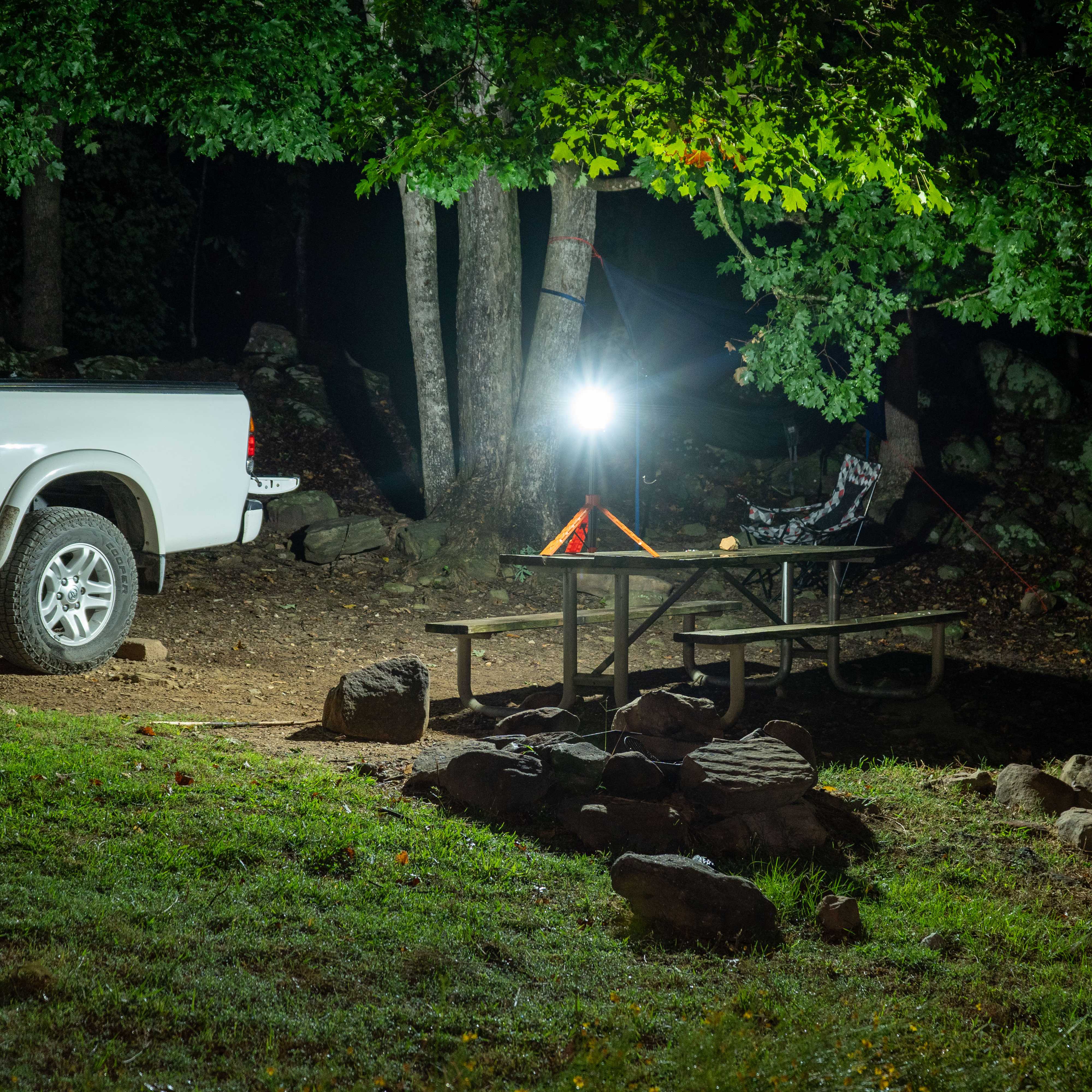
The Hykoont IP66 Multifunctional LED Solar Work Light at $49.00 is the entry point for businesses that need flexible, deployable lighting without running power cables. It's IP66-rated, solar-charged, and designed for job sites, loading areas, and anywhere you need light without a grid connection.

→ Hykoont IP66 Solar Work Light — $49.00 | Shop Now
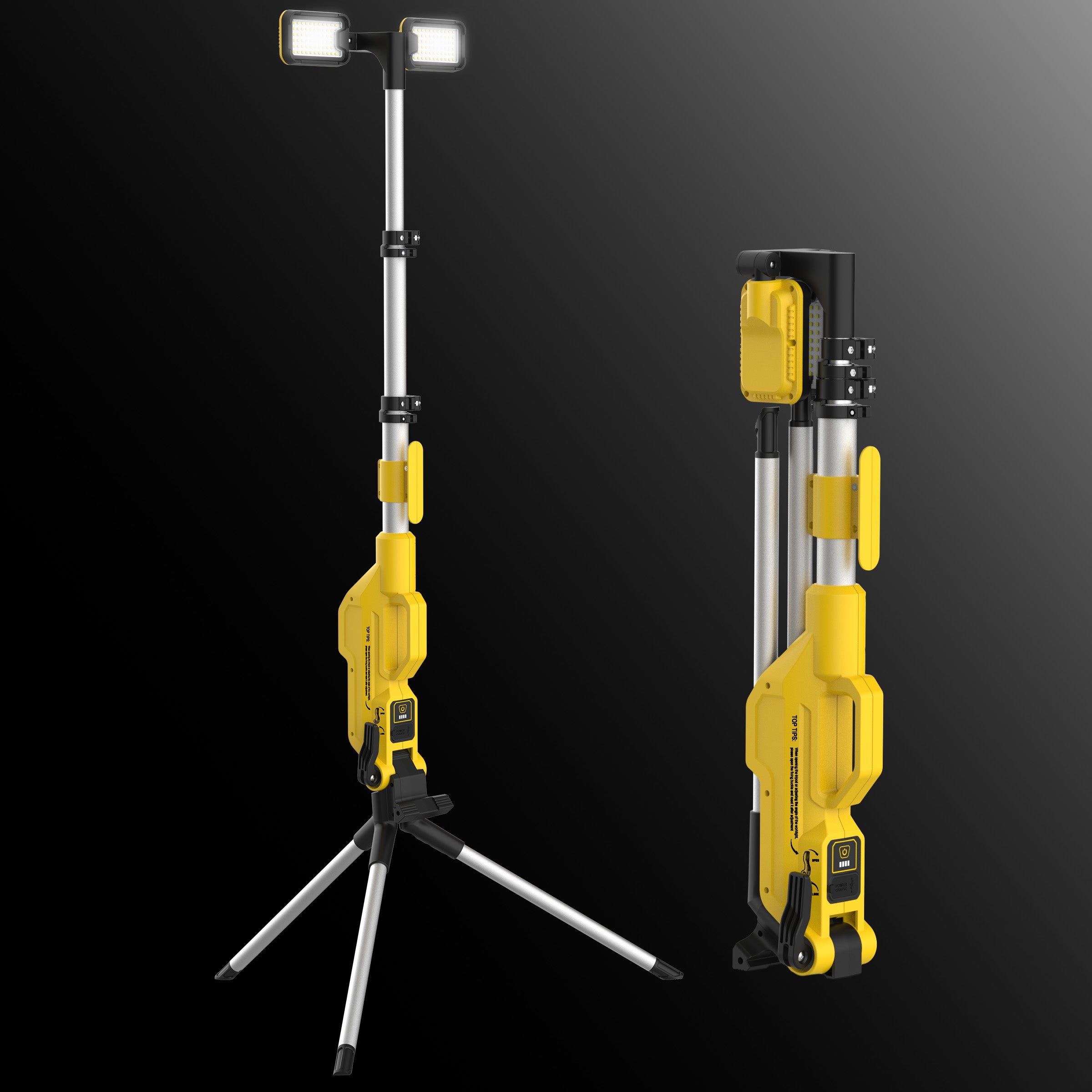
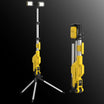
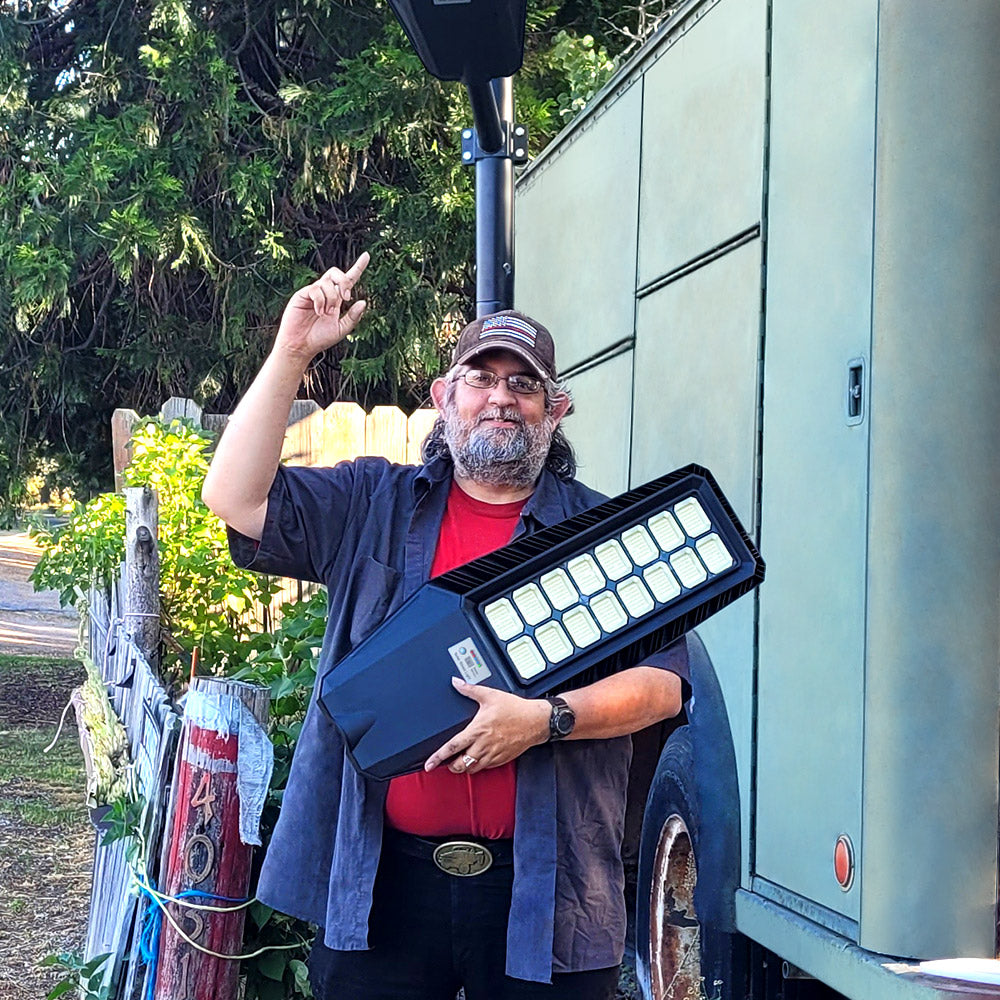
Step up to the Hykoont MX5085 WorkMax Light at $118.00 and you get 8,000 lumens, a built-in power bank (charges via solar or AC), and tripod compatibility. This is the unit that makes sense for larger job sites, loading docks, and commercial properties that need serious output with zero grid dependency.

→ Hykoont MX5085 WorkMax Light — $118.00 | Shop Now
For Permanent Area and Perimeter Lighting
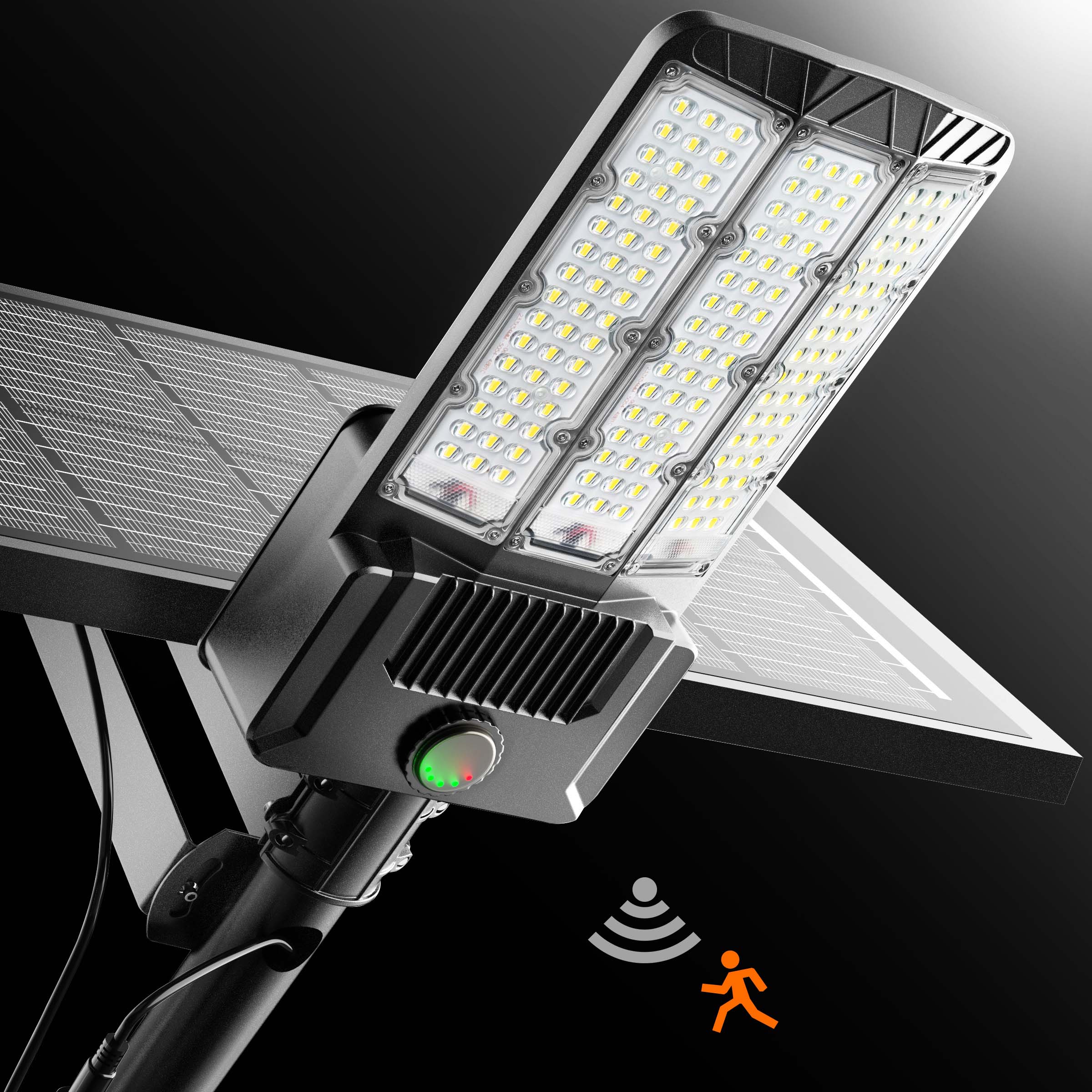
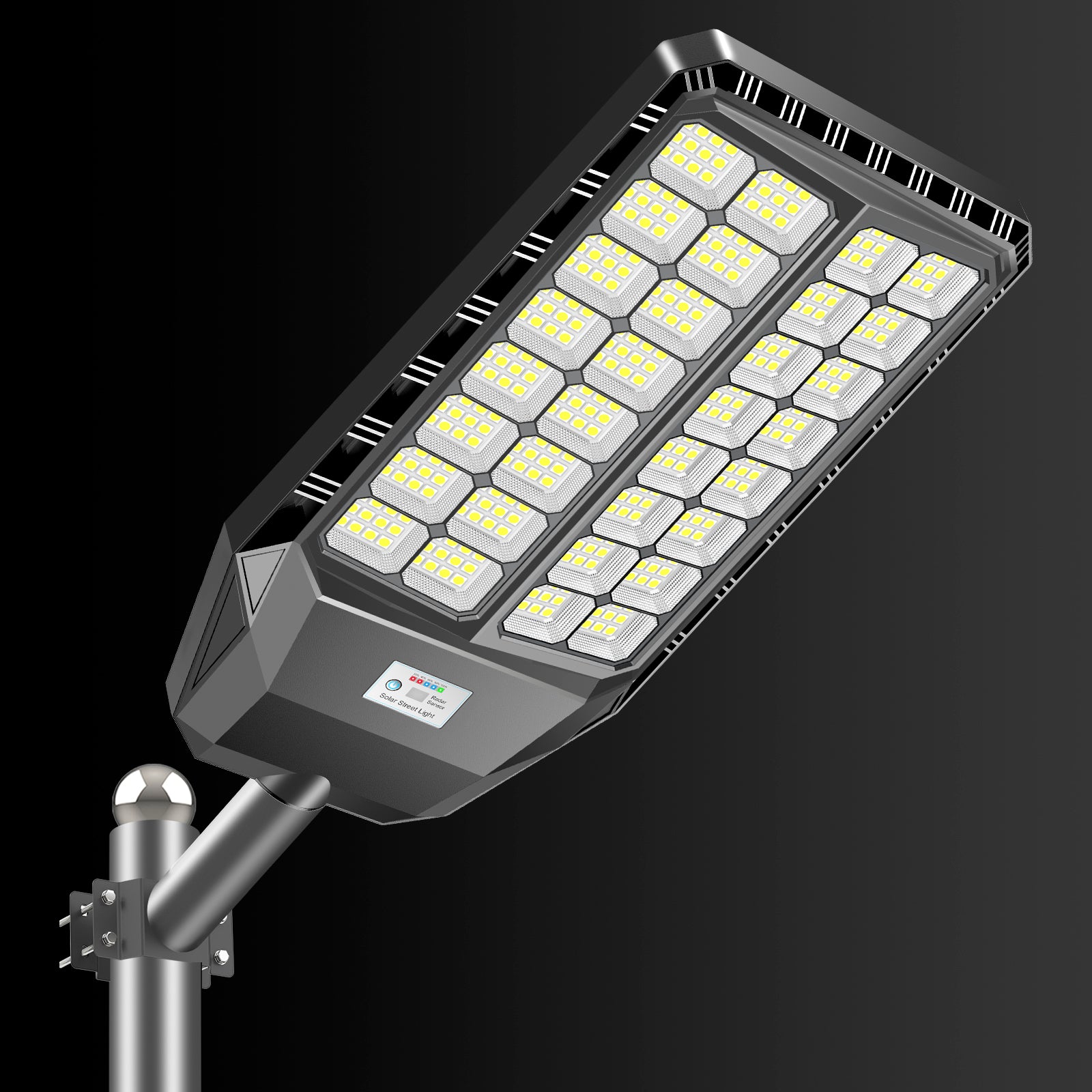
When you're lighting a parking lot, roadway, or large outdoor area permanently, pole-mounted solar street lights are the right tool. The NT040 40W Solar LED Street Light at $465.00 is built for exactly this — 240Wh battery capacity, 10-year rated lifespan, durable aluminum construction. One unit replaces a 400W metal halide fixture and draws zero grid power doing it.

→ NT040 Solar Street Light — $465.00 | Shop Now
For larger spaces — big box retail parking lots, industrial yards, municipal roadways — the NT100 100W Solar LED Street Light at $762.00 delivers 480Wh of storage and maximum brightness for vast open areas. It's the heavy-duty option when coverage and reliability are non-negotiable.

→ NT100 Solar Street Light — $762.00 | Shop Now
For Flood Lighting and Large Coverage Areas
The Hykoont ZZ077 300W LED Solar Flood Lights (2-Pack) at $238.00 covers the use case where you need wide-angle flood coverage — building perimeters, outdoor storage yards, sports courts, event spaces. Two units, one price, zero monthly electricity cost.

→ ZZ077 Solar Flood Lights 2-Pack — $238.00 | Shop Now
The Savings Math: Three Real Business Scenarios
Abstract percentages don't help you make a decision. Specific scenarios do. Here are three common commercial situations with actual numbers.
Scenario 1: Small Business Parking Lot (10 Fixtures)
Current setup: 10 × 400W metal halide fixtures, running 11 hours/night, 365 days/year.
- Annual electricity: 10 × 400W × 11h × 365 = 16,060 kWh → $1,927/year at $0.12/kWh
- Annual maintenance (bulbs + labor): ~$600/year
- Total annual cost: ~$2,527
After switching to NT040 solar street lights:
- Equipment: 10 × $465 = $4,650
- Annual electricity cost: $0
- Annual maintenance: minimal (LED lifespan 50,000+ hours) — estimate $50/year
- Federal ITC (30%): -$1,395
- Net out-of-pocket after ITC: ~$3,305
- Annual savings: ~$2,477
- Payback period: ~16 months
After payback, you're banking roughly $2,477/year — every year — for the remaining 8+ years of the system's rated lifespan. That's nearly $20,000 in cumulative savings over a decade from a single parking lot upgrade.
Scenario 2: Mid-Size Construction Company (Portable Lighting Fleet)
A construction company running two active job sites typically spends $300–$600/month on temporary power for lighting — generator fuel, rental fees, and the labor to manage it. That's $3,600–$7,200/year, and it moves with every project.
Alternative: 15 × MX5085 WorkMax Lights
- Equipment: 15 × $118 = $1,770
- Federal ITC (30%): -$531
- Net cost: ~$1,239
- Ongoing fuel/rental cost: $0
- First-year savings vs. generator lighting: $2,361–$5,961
- Payback period: 2–5 months
And unlike a generator, the MX5085 fleet redeploys to the next job site. The savings compound across every project.
Scenario 3: Warehouse and Loading Dock (Mixed Fixed + Portable)
A 100,000 sq ft warehouse with a large parking lot and active loading dock is a common scenario where a hybrid approach — fixed solar street lights for the lot, portable solar work lights for the dock — makes the most sense operationally and financially.
Current costs (estimated):
- 30 parking lot fixtures (400W MH): ~$3,780/year in electricity
- Loading dock lighting (grid-powered): ~$1,200/year
- Maintenance across all fixtures: ~$1,500/year
- Total: ~$6,480/year
Solar upgrade:
- 20 × NT040 ($465): $9,300 for parking lot
- 10 × NT100 ($762): $7,620 for high-coverage zones
- 8 × MX5085 ($118): $944 for loading dock flexibility
- Total equipment: $17,864
- Federal ITC (30%): -$5,359
- State utility rebate (est. 15%): -$2,680
- Net out-of-pocket: ~$9,825
- Annual savings: ~$6,200
- Payback period: ~19 months
After payback: roughly $6,200/year in pure savings, year after year. Over 10 years, that's over $62,000 back in your pocket from a single property upgrade.

The 2026 Incentive Landscape: What's Actually Available Right Now
The savings math above already includes the federal Investment Tax Credit (ITC) at 30%. But that's just the floor. Here's what the full incentive stack looks like in 2026.
Federal Investment Tax Credit (ITC) — 30%
The IRA locked the commercial solar ITC at 30% through 2032. This applies to solar energy property placed in service for business use — including solar-powered lighting systems. It's a dollar-for-dollar reduction in your federal tax liability, not a deduction. On a $10,000 solar lighting installation, that's $3,000 off your tax bill.
Bonus credits can push this to 40% or 50% if your property is in a designated energy community or low-income area. Check the IRS's energy community map — more properties qualify than most people realize.
USDA REAP Grants — Up to 50%
If your business is in a rural area or you're in agriculture, the Rural Energy for America Program (REAP) is one of the most generous incentives available anywhere. Grants cover up to 50% of eligible project costs, with a maximum of $1 million. Solar lighting qualifies as a renewable energy system.
At $49/unit for the IP66 Solar Work Light, a 20-unit agricultural installation costs $980. With REAP, that's potentially $490 out of pocket. The math gets almost absurd at that point.
State and Utility Programs — Varies, But Often Significant
This is where it gets state-specific, but here's a quick snapshot of what's active in 2026:
- California: CPUC SGIP, utility rebates through PG&E, SCE, SDG&E — strong incentives especially in disadvantaged communities
- New York: NY-Sun and NYSERDA commercial programs — among the most generous in the country
- Texas: Oncor, CPS Energy, Austin Energy commercial rebates — no state income tax means federal ITC has full impact
- Illinois: Illinois Shines, ComEd and Ameren rebates
- Massachusetts: SMART program — one of the highest incentive rates per watt nationally
- Colorado: Xcel Energy commercial rebates, strong rural REAP access
For a comprehensive, up-to-date database of every state and local program: dsireusa.org. It's free, regularly updated, and searchable by state and technology type.
Bonus Depreciation (MACRS)
Solar energy property qualifies for 5-year MACRS depreciation, and bonus depreciation provisions (currently phasing down from 60% in 2024) still apply. This accelerates your tax deductions in the early years of ownership, improving cash flow even before the electricity savings kick in. Talk to your accountant — this one is often overlooked.

What Affects Your Actual Savings? The Variables That Matter
The scenarios above use averages. Your actual savings depend on a handful of variables worth understanding.
Your Local Electricity Rate
The U.S. commercial average is around $0.12/kWh, but rates vary significantly by state. Hawaii commercial customers pay over $0.30/kWh. California averages $0.20–$0.25/kWh. Texas can be as low as $0.08/kWh in some areas. Higher rates = faster payback on solar. If you're in California or the Northeast, your numbers look even better than the scenarios above.
How Many Hours Your Lights Run
A parking lot that runs lights 8 hours/night saves less than one running 14 hours/night. Motion-sensor solar lights (like the ZZ077 flood lights) can dramatically reduce effective runtime while maintaining security coverage — which matters for battery sizing but also means the system lasts longer between charge cycles.
Your Current Fixture Type
Replacing 400W metal halide fixtures with solar LED saves more than replacing 150W HPS fixtures. The bigger the wattage gap, the bigger the savings. If you're still running metal halide or high-pressure sodium, you're at the high end of the savings range.
Installation Costs
Solar street lights require pole installation — typically $200–$500 per pole depending on your location and contractor. This adds to upfront cost but doesn't change the ongoing savings math. Portable solar work lights like the MX5085 and IP66 Solar Work Light have zero installation cost — you unbox them and they work.
Your Tax Situation
The federal ITC is a tax credit — it reduces what you owe. If your business has a low tax liability in a given year, you may not be able to use the full credit immediately (though it can be carried forward). C-corps and pass-through entities with significant taxable income get the most immediate benefit. Again, your accountant is the right person to model this for your specific situation.

Solar LED vs. Traditional LED: Is There a Difference in Savings?
This question comes up a lot. Traditional LED fixtures (grid-powered) are already significantly more efficient than metal halide or HPS — typically 50–70% less energy consumption. So why go solar?
A few reasons:
- Grid-powered LED still has an electricity bill. Solar LED eliminates it entirely. Over 10 years, that difference compounds significantly.
- Solar LED qualifies for the ITC; grid-powered LED typically doesn't. That 30% federal credit is only available for solar energy property.
- Solar LED has no grid dependency. Power outages, rate increases, demand charges — none of these affect a solar system. Grid-powered LED is still exposed to all of them.
- Solar LED can be deployed where grid power isn't available or is expensive to run. Remote parking areas, construction sites, agricultural properties — running conduit and electrical service to these locations can cost more than the solar system itself.
The honest answer: if you're choosing between grid-powered LED and solar LED for a new installation, solar LED wins on total cost of ownership in most U.S. commercial scenarios — especially with current incentives.
How to Build a Business Case for Solar LED Lighting
If you're trying to get approval for a solar lighting upgrade — from a board, a property owner, a CFO, or a municipal council — here's how to structure the argument.
Step 1: Quantify Current Costs
Pull 12 months of utility bills. Identify your lighting-specific consumption (or estimate it based on fixture inventory × wattage × hours). Add maintenance costs. This is your baseline.
Step 2: Get Product Quotes
Use real product prices. For a parking lot upgrade, the NT040 at $465/unit and NT100 at $762/unit give you concrete numbers to work with. For portable lighting, the MX5085 at $118/unit and IP66 Solar Work Light at $49/unit are your line items.
Step 3: Apply Incentives
Federal ITC: 30% of equipment cost. State/utility rebates: check dsireusa.org for your specific programs. USDA REAP if applicable. Run the net cost after incentives.
Step 4: Calculate Payback and ROI
Net cost ÷ annual savings = payback period in years. For most commercial properties, this lands between 12 and 30 months. After payback, calculate cumulative savings over the system's rated lifespan (10 years for the NT040, longer for LED components).
Step 5: Present the Risk-Adjusted Case
Solar LED eliminates exposure to electricity rate increases. With commercial rates rising 4–6% annually, a system that pays back in 18 months today looks even better in year 3 when rates are higher. This is a hedge against utility inflation, not just a cost-reduction play.

Common Objections — And Honest Answers
"What if it's cloudy for several days?"
Modern solar LED systems are designed with battery reserves for 3–5 cloudy days. The NT040 carries 240Wh of storage; the NT100 carries 480Wh. The MX5085 can also be charged via AC when solar isn't sufficient. Cloudy weather is a design parameter, not a failure mode.
"Will it actually last 10 years?"
LED components are rated for 50,000+ hours. The NT040 is specifically rated for a 10-year lifespan. The weak point in any solar system is the battery — lithium iron phosphate (LiFePO4) batteries, which are used in quality commercial systems, typically last 2,000–3,000 charge cycles, which translates to 8–10 years of daily use.
"Is the upfront cost a problem for cash flow?"
A few options: (1) Phase the installation — upgrade the highest-consumption fixtures first, use savings to fund subsequent phases. (2) Use equipment financing — many lenders offer green energy financing with rates that make the monthly payment less than the monthly electricity savings. (3) Apply for REAP grants before purchasing — grant funding covers up to 50% upfront.
"What about security — will the lights be bright enough?"
The NT100 delivers maximum brightness for vast spaces. The ZZ077 flood lights provide wide-angle coverage for perimeter security. The MX5085 pushes 8,000 lumens from a portable unit. These aren't dim solar garden lights — they're commercial-grade systems designed to meet IES lighting standards for parking lots and work areas.
The Bottom Line: What's the Real Number?
Let's be direct about what the data shows:
- Small commercial properties (10–20 fixtures) typically see payback in 12–24 months after incentives.
- Mid-size properties with mixed fixed and portable needs see payback in 18–30 months.
- Construction and job site operations using portable solar lighting often see payback in 2–6 months due to eliminated generator costs.
- Agricultural and rural properties using USDA REAP can see payback in under 12 months.
After payback, the savings are pure. No electricity bill. Minimal maintenance. A system that keeps running for years.
The question isn't really "can businesses save money with solar LED lights?" — the answer to that is clearly yes. The real question is how fast, and for your specific situation, the math is probably more favorable than you think.
Shop NT040 Solar Street Light — $465 Shop MX5085 WorkMax Light — $118 Shop ZZ077 Flood Lights 2-Pack — $238
Frequently Asked Questions
1. How much does a typical business save per year by switching to solar LED lighting?
It depends on your current fixture type, hours of operation, and local electricity rates — but a reasonable range for a small commercial property (10–20 fixtures) is $2,000–$7,000/year in combined electricity and maintenance savings. Larger properties save proportionally more.
2. What's the payback period for commercial solar LED lighting?
After applying the federal ITC (30%) and any applicable state rebates, most commercial solar lighting installations pay back in 12–30 months. Job site portable lighting often pays back in 2–6 months due to eliminated generator costs.
3. Does the federal Investment Tax Credit apply to solar LED lights?
Yes — the 30% ITC applies to solar energy property used in a trade or business, which includes solar-powered lighting systems. The credit is dollar-for-dollar against your federal tax liability. Consult your tax advisor to confirm eligibility based on your business structure.
4. Can I combine federal and state solar incentives?
In most cases, yes. Federal ITC, state tax credits, and utility rebates are generally stackable. Some state programs reduce their incentive if you're receiving other incentives, but outright prohibition of stacking is rare. Always read each program's rules carefully.
5. Are solar LED street lights bright enough for commercial parking lots?
Yes. The NT040 and NT100 solar street lights are designed to meet IES (Illuminating Engineering Society) standards for commercial parking lot lighting. The NT100 is specifically rated for "maximum brightness for vast spaces." These are not residential solar lights — they're commercial-grade systems.
6. What's the difference between the NT040 and NT100 solar street lights?
The NT040 (40W, 240Wh battery, $465) is designed for standard commercial parking lots and roadways. The NT100 (100W, 480Wh battery, $762) is for larger spaces requiring higher lumen output and longer battery reserve — big box retail lots, industrial yards, wide roadways. Both have 10-year rated lifespans.
7. Do solar LED work lights like the MX5085 qualify for the federal ITC?
Portable solar equipment used in a trade or business can qualify for the ITC as business property. The key is documenting business use. The MX5085 is designed for commercial job sites, construction, and emergency management — all qualifying business contexts. Confirm with your tax advisor.
8. What happens to solar LED lights during extended cloudy periods?
Quality commercial solar systems are designed with 3–5 days of battery reserve for cloudy conditions. The MX5085 also supports AC charging as a backup. Extended cloudy periods are a design parameter, not a failure mode — the systems are sized to handle typical regional weather patterns.
9. How do I find solar lighting rebate programs in my state?
Start with dsireusa.org — it's the most comprehensive database of state and local incentive programs, searchable by state and technology type. Also check your utility company's website under "commercial rebates" or "business energy programs," and your state energy office website.
10. Is solar LED lighting worth it for a small business with only a few fixtures?
Even at small scale, the math often works — especially for portable lighting (MX5085 at $118, IP66 Solar Work Light at $49) where there's no installation cost and immediate savings on electricity or generator fuel. For fixed installations with fewer than 5 fixtures, the payback period is longer but still typically under 3 years after incentives.


Leave a comment
This site is protected by hCaptcha and the hCaptcha Privacy Policy and Terms of Service apply.