










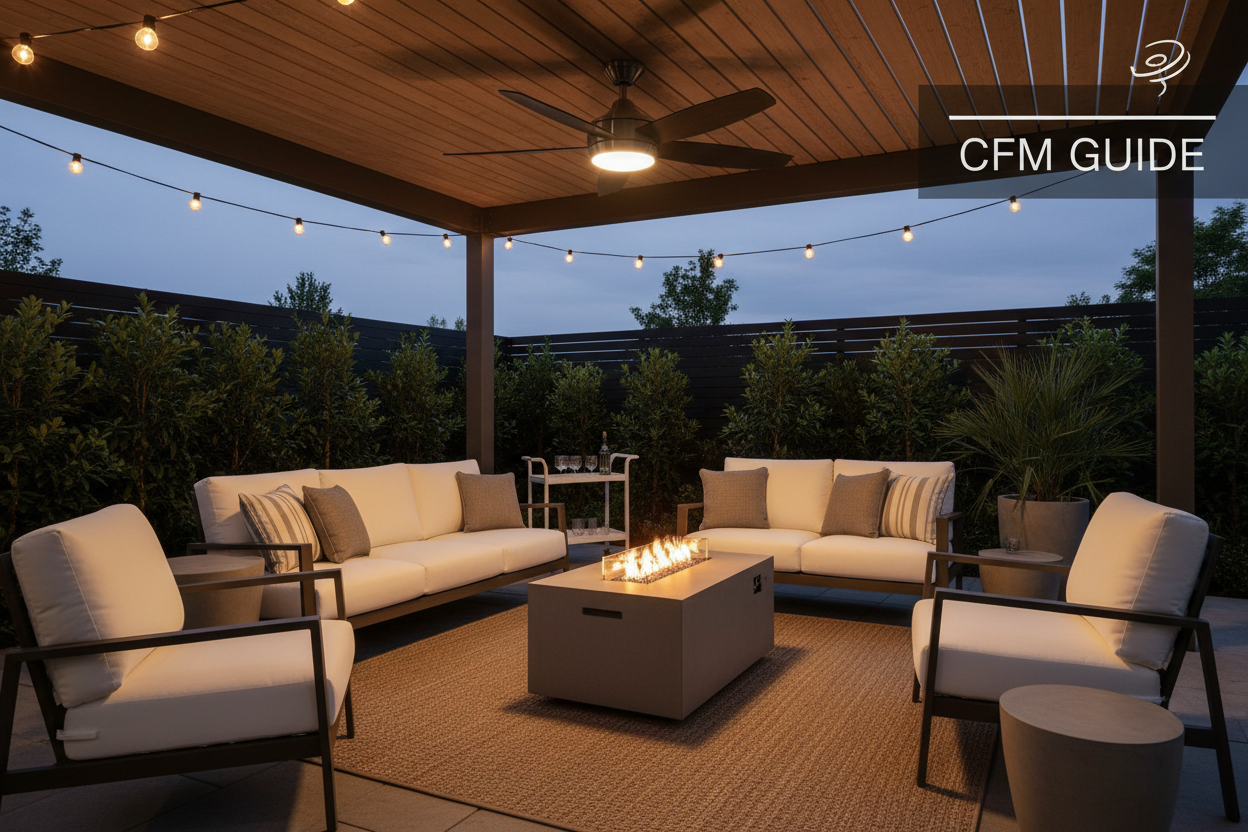
Choosing the right outdoor ceiling fan isn't just about style - it's about airflow performance measured in CFM (Cubic Feet per Minute). Whether you're cooling a small balcony or a large covered patio, understanding CFM requirements ensures you get optimal comfort and energy efficiency. This comprehensive guide will help you determine exactly how much CFM you need for your outdoor space.
🎯 Key Takeaways
- ✅ Small patios (up to 144 sq ft) need 3,000-4,500 CFM
- ✅ Medium patios (144-225 sq ft) require 4,500-6,500 CFM
- ✅ Large patios (225-400 sq ft) need 6,500-9,000 CFM
- ✅ Extra-large spaces (400+ sq ft) require 9,000+ CFM or multiple fans
- ✅ Blade pitch, motor quality, and ceiling height significantly impact CFM performance
📋 Table of Contents
- What Is CFM and Why Does It Matter?
- CFM Requirements by Outdoor Space Size
- Factors That Affect CFM Performance
- How to Calculate Your CFM Needs
- Outdoor Ceiling Fans with Lights
- Selection Guide and Recommendations
- Frequently Asked Questions
1. 🌬️ What Is CFM and Why Does It Matter?

CFM (Cubic Feet per Minute) is the standard measurement for airflow volume - it tells you how much air a ceiling fan moves in one minute. For outdoor ceiling fans, CFM is even more critical than for indoor fans because:
- Open Spaces: Outdoor areas lack walls to contain airflow, requiring more powerful fans
- Heat Factors: Direct sunlight and heat absorption from surfaces demand stronger air circulation
- Comfort Zones: You need sufficient airflow to create a comfortable "wind chill" effect in hot weather
- Energy Efficiency: Proper CFM means you can cool effectively without running the fan at maximum speed constantly
Understanding the CFM Scale
| CFM Range | Airflow Strength | Best Use |
|---|---|---|
| Under 3,000 CFM | Light breeze | Small indoor spaces only |
| 3,000-4,500 CFM | Moderate breeze | Small patios, balconies |
| 4,500-6,500 CFM | Strong breeze | Medium patios, porches |
| 6,500-9,000 CFM | Very strong breeze | Large covered patios |
| 9,000+ CFM | Powerful airflow | Extra-large outdoor spaces |
2. 📏 CFM Requirements by Outdoor Space Size
The size of your outdoor area is the primary factor in determining your CFM needs. Here's a detailed breakdown:
Small Outdoor Spaces (Up to 144 sq ft)
Recommended CFM: 3,000-4,500
Fan Size: 42-48 inches
Examples:
- Small apartment balconies (8' x 10')
- Compact breakfast nooks (10' x 12')
- Small covered entryways
- Cozy reading corners
What to Look For:
- Fans rated at 3,500-4,000 CFM provide comfortable airflow
- 42-48 inch diameter is ideal for these spaces
- Look for fans with 3-4 blades for balanced performance
- Wet-rated or damp-rated depending on exposure level
Medium Outdoor Spaces (144-225 sq ft)
Recommended CFM: 4,500-6,500
Fan Size: 52-56 inches
Examples:
- Standard covered patios (12' x 15')
- Medium-sized porches (14' x 16')
- Outdoor dining areas
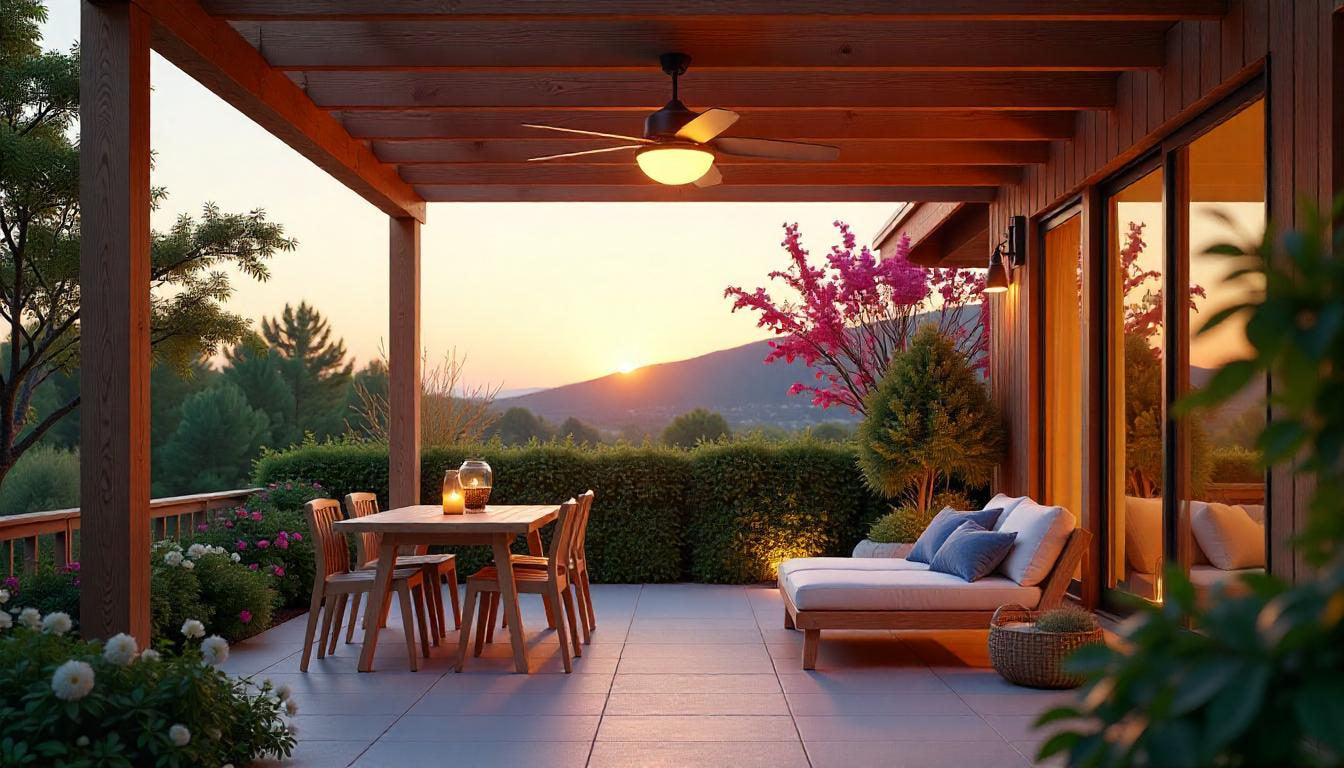
- Gazebos and pergolas
What to Look For:
- Fans delivering 5,000-6,000 CFM for optimal cooling
- 52-56 inch diameter provides good coverage
- Consider fans with reversible motors for year-round use
- Integrated lighting is practical for evening use

Large Outdoor Spaces (225-400 sq ft)
Recommended CFM: 6,500-9,000
Fan Size: 60-72 inches
Examples:
- Large covered patios (15' x 20')
- Expansive porches (18' x 22')
- Outdoor living rooms
- Commercial outdoor seating areas
What to Look For:
- High-performance fans with 7,000-8,500 CFM
- 60-72 inch diameter for maximum coverage
- Commercial-grade motors for durability
- Multiple speed settings for flexibility
- Wet-rated construction for all-weather protection
Extra-Large Outdoor Spaces (400+ sq ft)
Recommended CFM: 9,000+ or Multiple Fans
Fan Size: 72+ inches or multiple 60-inch fans
Examples:
- Resort-style patios (20' x 25'+)
- Commercial outdoor venues
- Large pool decks
- Outdoor event spaces
What to Look For:
- Industrial-strength fans with 9,000+ CFM
- Consider installing 2-3 medium fans instead of one giant fan for better coverage
- Commercial-grade construction
- Smart controls for managing multiple fans
📊 Quick Reference Chart
| Space Size | Square Footage | CFM Needed | Fan Diameter |
|---|---|---|---|
| Small | Up to 144 sq ft | 3,000-4,500 | 42-48" |
| Medium | 144-225 sq ft | 4,500-6,500 | 52-56" |
| Large | 225-400 sq ft | 6,500-9,000 | 60-72" |
| Extra-Large | 400+ sq ft | 9,000+ or multiple fans | 72"+ or multiple 60" |
3. ⚙️ Factors That Affect CFM Performance
CFM ratings are just the starting point. Several factors influence actual airflow performance in your outdoor space:
1. Blade Pitch (Angle)
Blade pitch is the angle of the blade relative to horizontal. It's one of the most important factors affecting CFM:
- 10-12 degrees: Lower airflow, quieter operation (3,000-4,500 CFM typical)
- 12-14 degrees: Balanced performance (4,500-6,500 CFM typical)
- 14-16 degrees: High airflow, more noise (6,500-9,000+ CFM typical)
For outdoor fans, 14-15 degree pitch is ideal - it provides strong airflow needed for open spaces without excessive noise.
2. Motor Type and Quality
The motor is the heart of your ceiling fan's performance:
- AC Motors: Traditional, reliable, affordable - good for most outdoor applications
- DC Motors: 70% more energy-efficient, quieter, more speed options - premium choice
- Commercial-Grade Motors: Built for continuous operation and harsh conditions
3. Ceiling Height
Ceiling height significantly impacts airflow effectiveness:
- 8-9 feet: Standard mounting - full CFM performance
- 10-12 feet: Use 12-24 inch downrod - may lose 10-15% CFM at ground level
- 12+ feet: Use extended downrod - may lose 20-30% CFM at ground level
Optimal mounting height: Fan blades should be 8-9 feet from the floor and at least 18 inches from the ceiling for maximum efficiency.
4. Weather Resistance Rating
Outdoor fans must withstand the elements, which affects design and performance:
- Damp-Rated: For covered areas with no direct water exposure - lighter construction may affect CFM
- Wet-Rated: For fully exposed areas - heavier, more durable construction maintains CFM in all conditions
5. Blade Material and Design
Blade construction impacts both CFM and durability:
- ABS Plastic: Lightweight, weather-resistant, good CFM for the weight
- Composite Materials: Durable, maintains shape in humidity, consistent CFM
- Metal Blades: Heavy-duty, high CFM potential, requires strong motor
- Sealed Wood: Aesthetic appeal, moderate CFM, requires maintenance

4. 🧮 How to Calculate Your CFM Needs
Follow these steps to determine the exact CFM you need:
Step 1: Measure Your Space
Calculate square footage: Length × Width = Square Feet
Example: 15 feet × 18 feet = 270 square feet
Step 2: Apply the CFM Formula
For outdoor spaces, use this formula:
Square Footage × 25-30 = Minimum CFM
Example: 270 sq ft × 25 = 6,750 CFM minimum
Step 3: Adjust for Conditions
Add 10-20% more CFM if:
- Your area gets very hot (90°F+ regularly)
- The space has dark surfaces that absorb heat
- You have high ceilings (10+ feet)
- The area is partially open to wind
Step 4: Consider Usage Patterns
- Dining areas: Need consistent, moderate airflow - aim for middle of CFM range
- Lounging areas: Can use higher CFM for maximum cooling
- Conversation areas: Lower CFM to avoid wind noise interfering with talking
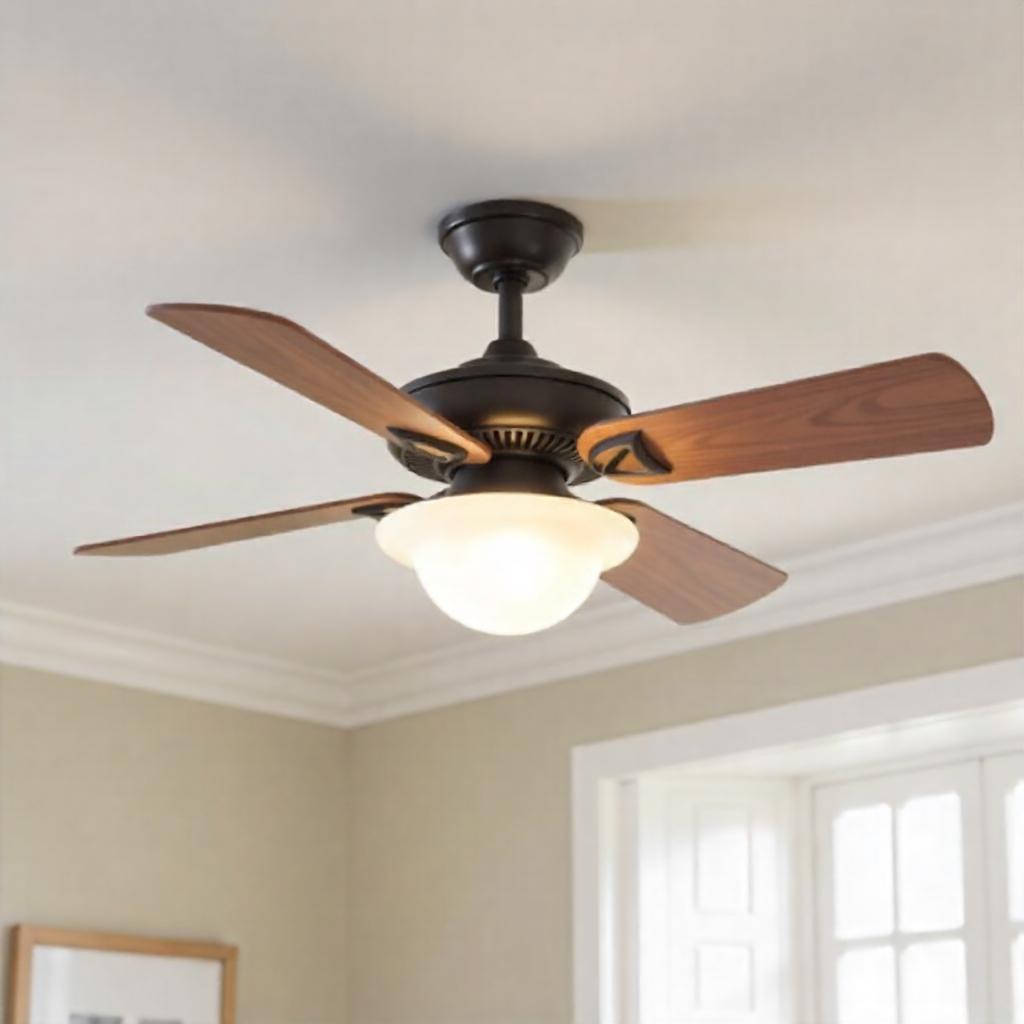
5. 💡 Outdoor Ceiling Fans with Lights
Combining lighting with your outdoor ceiling fan adds functionality and ambiance to your space.

Benefits of Integrated Lighting
- Space Efficiency: One fixture serves two purposes
- Cost Savings: Less expensive than separate fan and light installations
- Coordinated Design: Ensures aesthetic harmony
- Convenience: Single control for both functions (often with remote)
- Safety: Illuminates outdoor spaces for evening use
Light Kit Considerations for High-CFM Fans
When choosing an outdoor ceiling fan with lights, consider:
- LED Technology: Energy-efficient, long-lasting, minimal heat output
- Brightness: 800-1500 lumens for adequate outdoor lighting
- Weather Resistance: Light kit must match fan's wet/damp rating
- Dimmability: Adjustable lighting for different occasions
- CFM Impact: Light kits typically reduce CFM by 5-10% due to added weight and air resistance
Popular Light Kit Styles
- Integrated LED Arrays: Sleek, modern, maximum efficiency
- Globe Fixtures: Classic look, diffused lighting
- Lantern Style: Traditional outdoor aesthetic
- Spotlight Clusters: Directional lighting for task areas
6. 🛒 Selection Guide and Recommendations
What to Look for When Shopping
Essential Features:
- ✅ CFM rating clearly stated (not just "high airflow")
- ✅ Appropriate wet or damp rating for your location
- ✅ Quality motor with warranty (minimum 5 years)
- ✅ Corrosion-resistant finish and hardware
- ✅ UL listing for safety certification
Premium Features Worth Considering:
- 🌟 DC motor for energy efficiency
- 🌟 Remote control or smart home integration
- 🌟 Reversible motor for winter use
- 🌟 Multiple speed settings (6+ speeds)
- 🌟 Integrated LED lighting
- 🌟 Lifetime warranty on motor
CFM Performance Checklist
Before purchasing, verify:
- ✅ CFM rating matches your calculated needs
- ✅ Fan diameter is appropriate for space size
- ✅ Blade pitch is 12-15 degrees for outdoor use
- ✅ Motor is rated for continuous outdoor operation
- ✅ Weather rating matches your exposure level
- ✅ Mounting hardware is included and rated for outdoor use
Installation Tips for Maximum CFM
- Secure Mounting: Use rated electrical boxes - wobbling reduces CFM by up to 30%
- Proper Height: Mount 8-9 feet from floor for optimal airflow
- Blade Balance: Ensure blades are balanced - use included balancing kit if needed
- Clear Space: Maintain 18 inches clearance from ceiling and walls
- Direction: Set to counterclockwise (downward airflow) for summer cooling
❓ Frequently Asked Questions
What CFM do I need for a 12x12 covered patio?
A 12x12 patio is 144 square feet, placing it at the border between small and medium spaces. You'll need 4,500-5,000 CFM for comfortable cooling. A 52-inch fan with 4,800-5,200 CFM would be ideal.
Is higher CFM always better for outdoor fans?
No. While outdoor spaces need more CFM than indoor spaces, oversizing can create problems: excessive wind that blows items around, uncomfortable drafts, wasted energy, and unnecessary noise. Match CFM to your actual space size.
How much CFM do I lose with a light kit?
Adding a light kit typically reduces CFM by 5-10% due to added weight and air resistance. A fan rated at 6,000 CFM might deliver 5,400-5,700 CFM with a light kit attached. Factor this into your calculations.
Can I use an indoor fan outdoors if it has enough CFM?
No. Indoor fans lack the weather-resistant construction, sealed motors, and corrosion-resistant finishes needed for outdoor use. They'll fail quickly when exposed to moisture, temperature fluctuations, and UV rays - regardless of CFM rating.
What's the difference between wet-rated and damp-rated fans?
Damp-rated fans are for covered areas with no direct water exposure (covered porches, gazebos). Wet-rated fans can handle direct rain and moisture (open patios, pool areas). Wet-rated fans typically maintain CFM better in humid conditions.
How do I know if a fan's CFM rating is accurate?
Look for fans tested according to ANSI/AMCA Standard 230 - this ensures CFM ratings are measured consistently. Reputable manufacturers will clearly state this certification. Be wary of fans that only claim "high airflow" without specific CFM numbers.
Does blade count affect CFM?
Blade count has minimal impact on CFM. Blade pitch, motor power, and fan diameter matter much more. A 3-blade fan with a 15-degree pitch can deliver higher CFM than a 5-blade fan with a 10-degree pitch. Focus on the CFM rating, not blade count.
How much does ceiling height affect CFM performance?
For every foot above 9 feet, you lose approximately 5-8% of effective CFM at ground level. At 12-foot ceilings, you might lose 15-25% effectiveness. Use a downrod to bring the fan closer to the living space, or increase CFM by 20-30% to compensate.
Can I increase CFM by running the fan faster?
Yes, but with diminishing returns. Running at maximum speed typically increases CFM by 20-30% over medium speed, but also increases noise significantly and reduces motor lifespan. It's better to choose a fan with adequate CFM at medium speed.
🎯 Conclusion: Choosing the Right CFM for Your Outdoor Space
Selecting the right CFM for your outdoor ceiling fan is crucial for comfort, efficiency, and satisfaction. Here's your action plan:
Quick Decision Guide:
- Measure your space accurately (length × width)
- Use the formula: Square footage × 25-30 = minimum CFM
- Choose fan diameter: Match to space size (see chart above)
- Verify specifications: Look for 12-15 degree blade pitch and quality motor
- Check weather rating: Wet-rated for exposed areas, damp-rated for covered
- Consider lighting: Add 10% to CFM if using a light kit
- Install properly: 8-9 feet from floor, securely mounted
Final Recommendations by Space Type:
- Small balcony/patio (up to 144 sq ft): 42-48" fan, 3,500-4,500 CFM
- Medium patio/porch (144-225 sq ft): 52-56" fan, 5,000-6,000 CFM
- Large covered patio (225-400 sq ft): 60-72" fan, 7,000-8,500 CFM
- Extra-large space (400+ sq ft): 72"+ fan or multiple fans, 9,000+ total CFM
Remember: Quality matters more than just CFM numbers. A well-built fan with 5,500 CFM will outperform a cheap fan rated at 6,500 CFM. Invest in reputable brands with solid warranties and proven outdoor performance.


Leave a comment
This site is protected by hCaptcha and the hCaptcha Privacy Policy and Terms of Service apply.