






The Question That Stops People from Buying
You're researching bug zappers, ready to solve your mosquito problem once and for all. Then you see it—that one comment, that one article, that one friend who swears bug zappers actually make things worse by attracting more bugs to your yard.
Suddenly you're second-guessing everything. What if you spend $259.00 on the Hykoont 18W Solar LED Bug Zapper Light and end up with more mosquitoes than you started with? What if you're literally creating a bug beacon that draws every mosquito in the neighborhood straight to your backyard?
It's a legitimate concern. And like most legitimate concerns, the answer isn't a simple yes or no. It's more nuanced than that, and understanding the nuance is what separates effective bug zapper use from disappointing results.
Let's break down the science, debunk the myths, and figure out exactly how to use a solar bug zapper without accidentally turning your yard into mosquito central.
The Science: What Actually Attracts Mosquitoes
Before we can understand whether bug zappers attract more mosquitoes, we need to understand what attracts mosquitoes in the first place. Spoiler: it's not primarily light.
Carbon Dioxide (CO2)
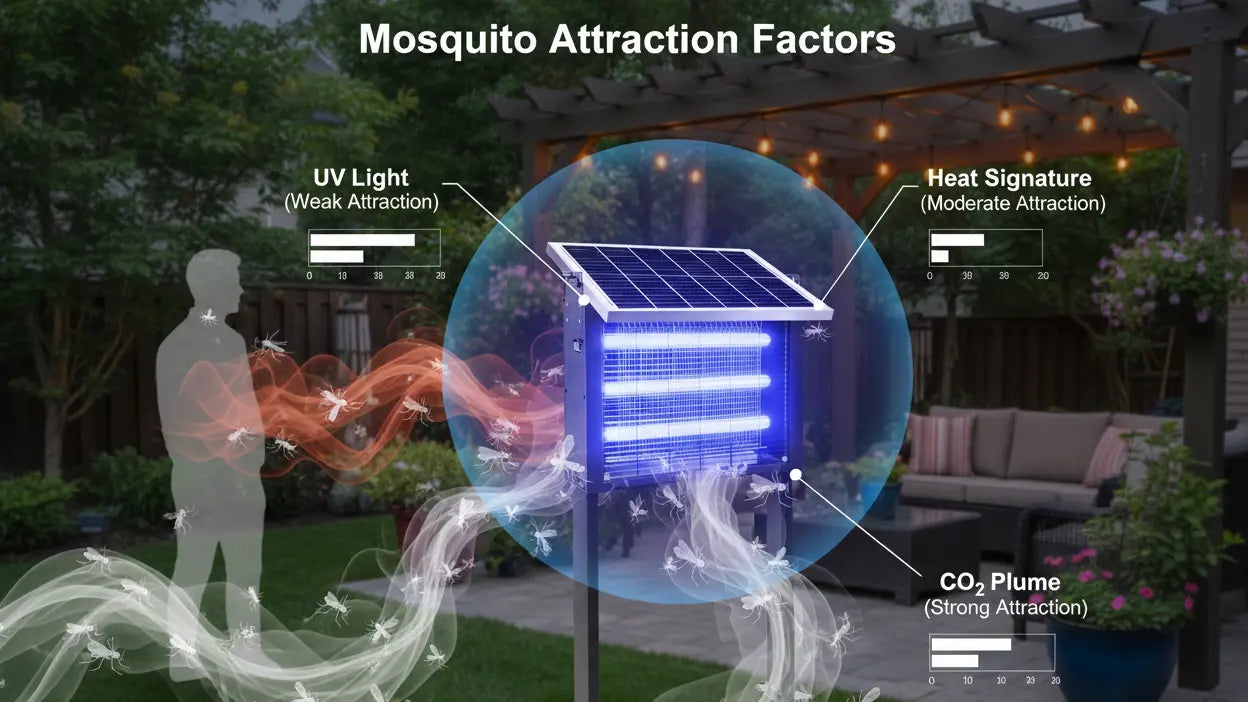
This is the big one. Mosquitoes are incredibly sensitive to CO2, which humans and animals exhale with every breath. They can detect CO2 from up to 100 feet away. When you're breathing, you're essentially broadcasting your location to every mosquito in the area.
Body Heat
Mosquitoes are attracted to warmth. Your body temperature, especially when you're active and generating more heat, draws them in from close range.
Body Odor and Sweat
Lactic acid, ammonia, and other compounds in human sweat are mosquito magnets. Some people produce more of these compounds than others, which is why mosquitoes seem to prefer certain individuals.
Movement
Visual cues matter too. Mosquitoes are attracted to movement, which is why they often swarm when you're active outdoors.
Light (But Not How You Think)
Here's where it gets interesting. Mosquitoes aren't strongly attracted to regular visible light. They're actually more active in low-light conditions—dawn and dusk. However, they are attracted to specific UV wavelengths, which is exactly what bug zappers use.
But—and this is crucial—UV light is far less attractive to mosquitoes than CO2, heat, and body odor. It's on the list, but it's not at the top.

So Do Bug Zappers Attract Bugs? Yes. That's the Point.
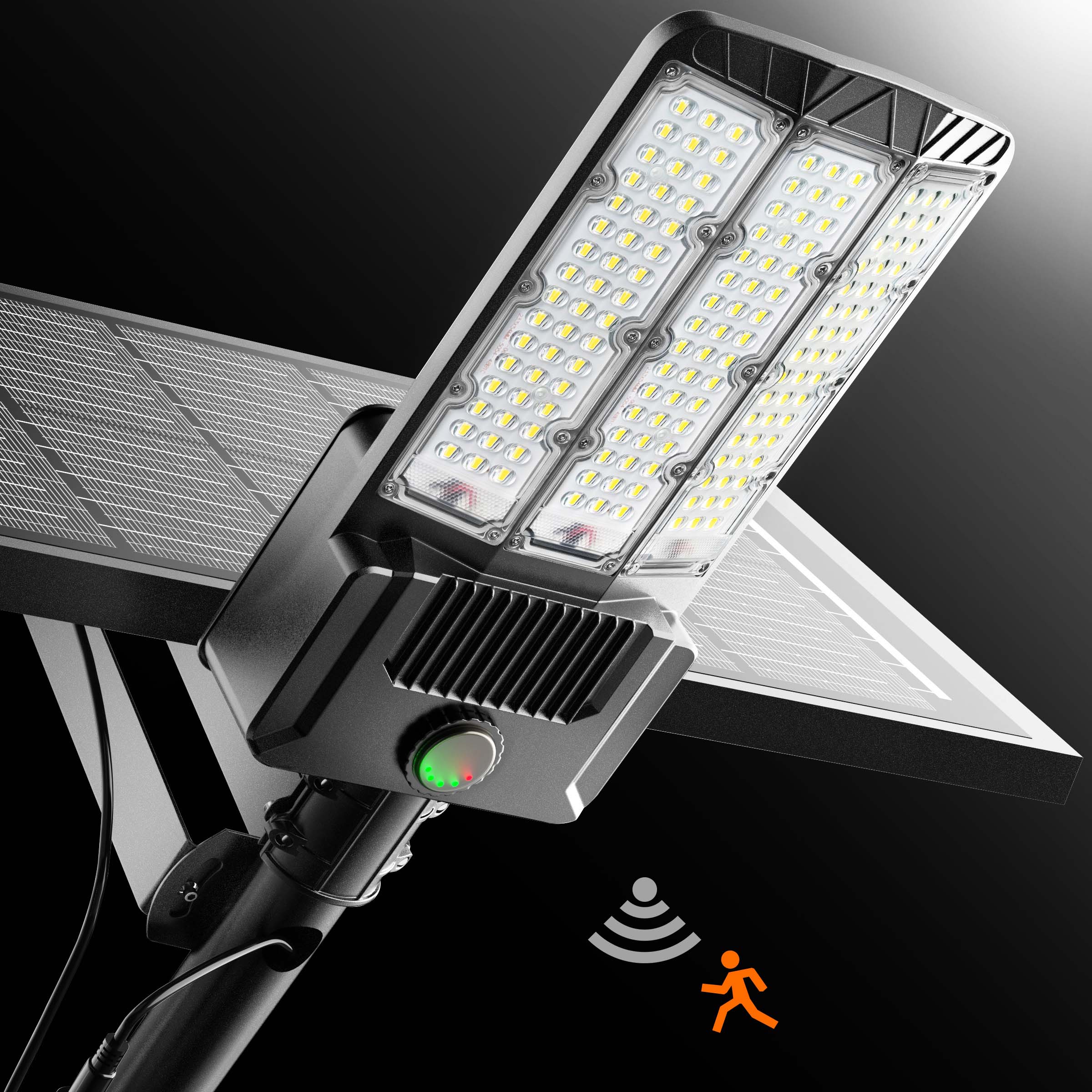
Let's be clear: bug zappers absolutely attract bugs. That's literally their job. The UV LEDs in the Hykoont model emit wavelengths specifically designed to attract flying insects.
The real question isn't whether they attract bugs. It's whether they attract bugs from outside your property, bringing new mosquitoes into your yard that wouldn't have been there otherwise.
And that's where placement becomes everything.
The Placement Principle: Interception vs. Attraction
Think of your yard as having natural mosquito traffic patterns. Mosquitoes breed in standing water—ponds, puddles, birdbaths, clogged gutters. They rest in vegetation during the day. At dusk, they become active and start hunting for hosts (that's you).
They're already in or near your yard. They're already coming for you. The question is: can you intercept them before they reach you?
The Wrong Way: Creating a Bug Magnet
If you place a bug zapper right next to your patio where you're sitting, you're creating a competing attraction. You're breathing out CO2, generating heat, and producing body odor. The bug zapper is emitting UV light. Mosquitoes are getting mixed signals.
Some will go for the zapper. Some will go for you. And yes, the UV light might attract a few mosquitoes from farther away who then notice you're nearby. This is where the "bug zappers attract more bugs" complaint comes from.
The Right Way: Strategic Interception
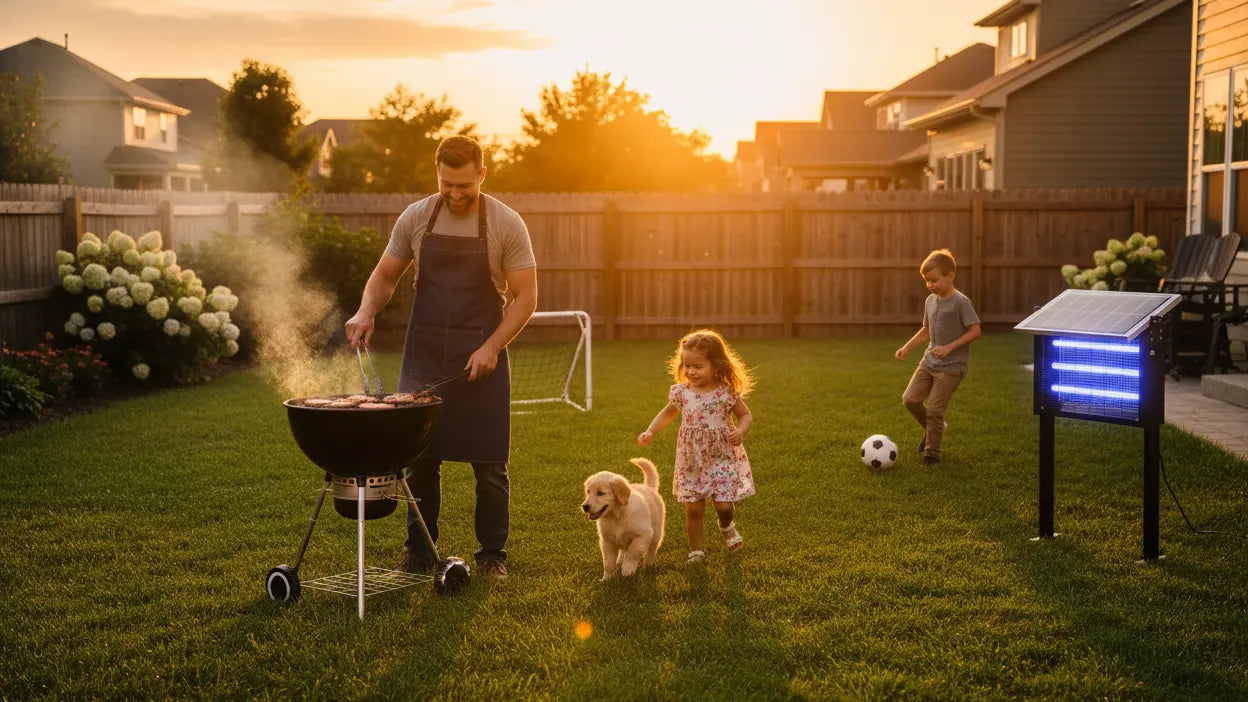
Position the bug zapper 15-20 feet away from where you're sitting, between you and the most likely mosquito source. Now you're creating an interception zone.
Mosquitoes traveling from their breeding/resting areas toward your patio encounter the UV light first. They're attracted to it, they investigate, they get eliminated. They never reach you.
You're not attracting new mosquitoes from outside your property. You're intercepting the ones that were already coming for you anyway.

The Range Reality: How Far Do Bug Zappers Attract From?
UV light from a bug zapper is visible to insects from a significant distance—potentially 100+ feet under ideal conditions. But "visible" doesn't mean "irresistibly attractive."
Remember, mosquitoes can detect your CO2 from 100 feet away too. And CO2 is a much stronger attractant than UV light. If a mosquito is 100 feet from your yard, it's more likely to be drawn by the CO2 plume from your neighborhood than by a single bug zapper's UV light.
The effective attraction range for most bug zappers is more like 30-50 feet. Within your property, not pulling from the entire neighborhood.
The Coverage Area
The Hykoont 18W model covers 100-150 square meters (roughly 1,600 square feet). This is the area where it effectively eliminates mosquitoes, not the area from which it attracts them.
Think of it as creating a protected zone within your existing mosquito population, not as broadcasting a signal that brings in reinforcements from blocks away.

Debunking Common Myths
Myth 1: "Bug Zappers Attract Mosquitoes from Miles Away"
Reality: The effective attraction range is measured in feet, not miles. You're not creating a neighborhood-wide mosquito convention.
Myth 2: "You'll Have More Mosquitoes Than Before"
Reality: If you have more mosquitoes after installing a bug zapper, it's a placement problem, not a bug zapper problem. Proper positioning reduces mosquito encounters, not increases them.
Myth 3: "Bug Zappers Only Kill Beneficial Insects"
Reality: Bug zappers kill whatever flies into them. Yes, that includes some beneficial insects. But the dusk-to-dawn operation of solar models means they're off during peak beneficial insect activity (daytime). Most of what they catch at night is mosquitoes, moths, and other pests.
Myth 4: "The Light Attracts Bugs to Your Yard That Would Never Have Come Otherwise"
Reality: Mosquitoes are already in your yard or nearby. They breed locally, rest locally, and hunt locally. The bug zapper isn't importing mosquitoes from distant locations.
Myth 5: "Bug Zappers Don't Work on Mosquitoes"
Reality: This myth comes from studies showing bug zappers catch more moths than mosquitoes. True, but irrelevant. The question isn't what percentage of total catches are mosquitoes. It's whether the device reduces mosquito encounters in your outdoor space. Properly placed, it does.
Placement Strategies That Actually Work
Strategy 1: The Barrier Method
Identify where mosquitoes are coming from—standing water, wooded areas, overgrown vegetation. Place the bug zapper between these sources and your main outdoor living area.
You're creating a barrier that intercepts mosquitoes during their evening hunt. They encounter the UV light before they encounter you.
Strategy 2: The Perimeter Defense
For larger properties, use multiple bug zappers to create a perimeter around your outdoor space. Position them at the edges of your yard, not in the center where you spend time.
This creates overlapping zones of protection without concentrating attraction in your main activity areas.
Strategy 3: The Decoy Approach
Place the bug zapper in a location that draws mosquitoes away from where you're sitting. Think of it as creating a more attractive alternative to you.
Position it 15-20 feet away, slightly upwind if possible. Mosquitoes traveling on air currents encounter it first.
Strategy 4: Height Optimization
Most mosquitoes fly in the 3-6 foot range. Position your bug zapper within this zone for maximum effectiveness.
Too high, and you're missing the mosquitoes operating at ground level. Too low, and you're not intercepting the ones flying at face height.

What the Research Actually Says
Studies on bug zappers often get misinterpreted. Yes, research shows that bug zappers catch more non-mosquito insects than mosquitoes. But that doesn't mean they don't work on mosquitoes.
Here's what the research actually tells us:
Finding 1: Bug zappers are more effective when used as part of an integrated pest management approach, not as a standalone solution.
Finding 2: Placement significantly affects effectiveness. Zappers placed near human activity catch fewer mosquitoes because mosquitoes are more attracted to humans than to UV light.
Finding 3: Bug zappers reduce mosquito populations in the immediate area when properly positioned.
Finding 4: The concern about attracting mosquitoes from outside the property is largely theoretical. In practice, properly placed zappers reduce mosquito encounters.
The key phrase in all of this: "properly placed." That's where most people go wrong.
Combining Bug Zappers with Other Methods
Bug zappers work best as part of a comprehensive approach:
Eliminate Breeding Sites
No amount of bug zapping will solve your problem if you have standing water where mosquitoes breed. Empty containers, clean gutters, maintain pools, and treat water features.
Reduce Resting Areas
Keep vegetation trimmed. Mosquitoes rest in tall grass and dense shrubs during the day. Less habitat means fewer mosquitoes.
Use Fans
Mosquitoes are weak flyers. A strong fan on your patio disperses your CO2 plume and makes it harder for mosquitoes to land on you. Combine this with a properly placed bug zapper for maximum effect.
Time Your Outdoor Activities
Mosquitoes are most active at dawn and dusk. If possible, schedule outdoor time for mid-morning or afternoon when mosquito activity is lower.
Maintain Your Yard
A well-maintained yard with good drainage, trimmed vegetation, and no standing water will have fewer mosquitoes regardless of whether you use a bug zapper.
The bug zapper handles what gets through your other defenses. It's the final line of protection, not the only line.

Real-World Results: What Actually Happens
Theory is one thing. Real-world experience is another. Here's what typically happens when people install solar bug zappers correctly:
Week 1
You notice the zapper catching insects. You hear the occasional zap. You're not sure if it's making a difference yet because you're hyper-aware of every mosquito.
Week 2
You realize you're not constantly swatting. Evening outdoor time is more pleasant. You're not rushing inside when dusk hits.
Week 3
The bug zapper has become background. It's just working. You're spending more time outside because it's actually enjoyable now.
Month 2
You've forgotten what it was like to be constantly fighting mosquitoes. The zapper is part of your outdoor setup, working automatically every evening.
This is the typical progression when placement is correct. If you're not seeing these results, revisit your placement strategy.
Troubleshooting: When It's Not Working
Problem: "I'm Still Getting Bitten"
Check: Is the zapper positioned between mosquito sources and your seating area, or is it right next to where you're sitting?
Solution: Move it 15-20 feet away, between you and likely mosquito sources.
Problem: "I Think I Have More Mosquitoes Now"
Check: Is the zapper in the middle of your activity area, potentially attracting mosquitoes to where you're sitting?
Solution: Relocate to the perimeter of your outdoor space, away from main gathering areas.
Problem: "It's Not Catching Many Mosquitoes"
Check: Are you competing with other light sources? Bright porch lights or landscape lighting can be more attractive than the zapper.
Solution: Dim or turn off nearby lights, or move the zapper farther from competing light sources.
Problem: "It Catches Lots of Moths But Few Mosquitoes"
Check: This is actually normal. Moths are more attracted to UV light than mosquitoes are. The question is whether you're getting bitten less, not what percentage of catches are mosquitoes.
Solution: Focus on results (fewer bites) rather than collection tray contents.

The Solar Advantage: Placement Flexibility
One major advantage of solar bug zappers is placement flexibility. You're not limited by outlet locations or extension cord reach.
This means you can position the Hykoont 18W Solar Bug Zapper exactly where it's most effective, not where your nearest outlet happens to be.
Want to create a barrier between your patio and the wooded area 30 feet away? No problem. Need to protect a garden area far from the house? Easy. Want to experiment with different positions to find what works best? Go ahead.
The solar panel charges during the day, the battery stores power, and the unit operates automatically at night. No cords, no outlets, no limitations on strategic placement.
Seasonal Considerations
Early Season (Spring)
Install your bug zapper early, before mosquito populations explode. You're getting ahead of the problem rather than reacting to it.
Early season mosquito populations are lower, making it easier to establish effective control. By the time peak season hits, you've already reduced the breeding population.
Peak Season (Summer)
This is when proper placement matters most. Mosquito populations are at their highest, and you're spending the most time outdoors.
Monitor effectiveness and adjust placement if needed. If you're still getting bitten frequently, the zapper might need to be repositioned.
Late Season (Fall)
Mosquitoes remain active until first frost. Don't pack away your bug zapper too early. Those crisp fall evenings are perfect for outdoor time, and mosquitoes are still hunting.
Property Size and Multiple Units
For larger properties, one bug zapper might not be enough. The 150 square meter coverage of the Hykoont model is substantial, but if you have a large yard with multiple outdoor living areas, consider multiple units.
Small Yards (Under 2,000 sq ft)
One strategically placed unit is usually sufficient. Position it between the most likely mosquito source and your main outdoor area.
Medium Yards (2,000-5,000 sq ft)
One or two units, depending on layout. If you have distinct outdoor areas (front porch and back patio, for example), consider one for each.
Large Properties (5,000+ sq ft)
Multiple units creating a perimeter defense. Position them at the edges of your outdoor living spaces, creating overlapping zones of protection.
The key is avoiding the temptation to cluster them all in one area. Spread them out for maximum coverage.

Cost-Effectiveness: The Long View
At $259.00, the Hykoont Solar Bug Zapper is a one-time investment. Compare this to ongoing costs of alternatives:
Bug spray: $10-15/month during mosquito season = $60-90/year
Citronella candles: $30-50/year
Professional mosquito treatments: $300-900/year
Mosquito misting systems: $2,000-4,000 installation + ongoing costs
A properly placed solar bug zapper pays for itself in one season and continues working for years with minimal maintenance and zero operating costs.
Even if you need two units for a larger property, you're still looking at a $278 one-time investment versus hundreds or thousands in annual costs for alternatives.
Environmental Impact of Attraction
One concern people sometimes raise: if bug zappers attract insects, are they harming beneficial insect populations?
The reality is more nuanced:
Beneficial insects like bees and butterflies are primarily active during the day and attracted to flowers, not UV light. The dusk-to-dawn operation of solar bug zappers means they're off during peak beneficial insect activity.
Night-flying insects caught in bug zappers are primarily mosquitoes, moths, and other pests. While some beneficial night insects might be caught, the impact is minimal compared to habitat loss, pesticide use, and light pollution from other sources.
Chemical alternatives are far more harmful to beneficial insects. Yard sprays kill indiscriminately. Bug zappers are targeted and limited in scope.
From an environmental perspective, a properly placed solar bug zapper is one of the least harmful mosquito control methods available.
Frequently Asked Questions
Will a bug zapper attract mosquitoes from my neighbor's yard?
The effective attraction range is 30-50 feet, and UV light is a weak attractant compared to CO2 and body heat. You're not pulling mosquitoes from neighboring properties in any significant numbers. You're intercepting the ones already in or near your yard.
Should I turn off my porch lights when using a bug zapper?
Bright white lights can compete with the bug zapper's UV light and actually attract more mosquitoes to your porch. Dimming or switching to yellow "bug lights" can help. The bug zapper works best when it's the primary light source in the area.
How close is too close for placement?
Avoid placing the bug zapper within 10 feet of where you're sitting. The ideal range is 15-20 feet away. Closer than 10 feet and you're creating competing attractions that can draw mosquitoes to your immediate area.
Can I use a bug zapper on my porch or deck?
Yes, but hang it at the far end or edge, not directly over your seating area. Position it to intercept mosquitoes approaching from outside, not to attract them to where you're sitting.
Do I need to move it around to find the best spot?
Experimentation is fine, especially in the first few weeks. Try different positions and see where you get the best results (fewer mosquito encounters). The solar design makes repositioning easy since you're not dealing with cords.
Will it attract bugs to my windows?
Only if you place it near windows. Position it away from the house, between outdoor living areas and mosquito sources. This draws insects away from the house, not toward it.
How do I know if it's working?
The best measure is your experience. Are you getting bitten less? Can you spend more time outside comfortably? Those are the metrics that matter, not how many insects are in the collection tray.
What if I have a small yard with limited placement options?
Even in small yards, try to create some distance between the zapper and your seating area. Position it at the back of the yard or in a corner, not in the center of your activity space. Every few feet of separation helps.
Should I use multiple zappers or one larger one?
Multiple smaller units positioned strategically often work better than one large unit in a central location. They create broader coverage and better interception zones.
Can I use it with other mosquito control methods?
Absolutely. Bug zappers work best as part of an integrated approach. Eliminate standing water, maintain your yard, use fans, and let the bug zapper handle what gets through. Layered defenses are most effective.
The Bottom Line: Attraction vs. Elimination
Yes, bug zappers attract bugs. That's how they work. But the question isn't whether they attract bugs—it's whether they reduce your mosquito problem or make it worse.
The answer depends entirely on placement. Used correctly, a solar bug zapper intercepts mosquitoes that were already in your yard, already hunting for you. It eliminates them before they reach you.
Used incorrectly—placed right next to where you're sitting—it can create competing attractions that draw some mosquitoes closer to you.
The difference between success and failure is understanding this principle and positioning accordingly.
Making It Work: Your Action Plan
Ready to use a solar bug zapper effectively? Here's your step-by-step plan:
Step 1: Identify mosquito sources in your yard (standing water, wooded areas, dense vegetation).
Step 2: Identify where you spend time outdoors (patio, deck, pool area, garden).
Step 3: Position the bug zapper 15-20 feet from your activity areas, between those areas and mosquito sources.
Step 4: Mount at 3-6 feet height for optimal mosquito interception.
Step 5: Ensure the solar panel gets 6+ hours of direct sunlight for full charging.
Step 6: Let it run for 2-3 weeks and evaluate results based on your experience, not collection tray contents.
Step 7: Adjust position if needed based on results.
Follow this plan, and you'll get the mosquito reduction you're looking for without creating a bug magnet.
Final Thoughts: Science Over Myths
The myth that bug zappers attract more mosquitoes than they eliminate comes from misunderstanding how they work and, more importantly, from improper placement.
The science is clear: UV light attracts mosquitoes, but it's a weaker attractant than CO2, heat, and body odor. When you position a bug zapper strategically, you're intercepting mosquitoes during their hunt, not importing new ones from distant locations.
The Hykoont 18W Solar LED Bug Zapper at $259.00 gives you the flexibility to position it correctly, the power to run all night, and the effectiveness to actually reduce mosquito encounters in your outdoor space.
Don't let myths and misconceptions keep you from a solution that works. Understand the science, follow placement principles, and enjoy mosquito-free outdoor living.
Ready to stop worrying and start enjoying your outdoor space? Get your Hykoont Solar Bug Zapper and position it right. Your mosquito-free evenings are waiting.



Leave a comment
This site is protected by hCaptcha and the hCaptcha Privacy Policy and Terms of Service apply.