








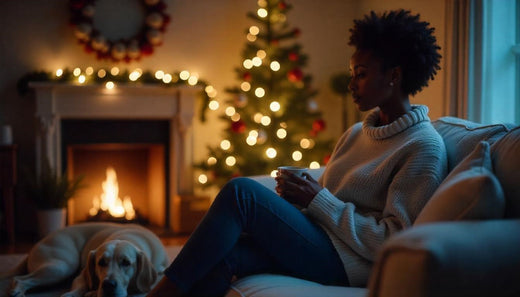
When the holiday season arrives, one of the most common questions homeowners ask is: do LED Christmas lights go out if one goes out? It's a frustration many of us have experienced — you spend an hour carefully stringing lights around your tree or along your roofline, plug them in, and suddenly a section goes dark. Understanding how LED Christmas lights work, why they fail, and how to prevent and fix problems can save you time, money, and holiday stress.
In this comprehensive guide, we'll cover everything you need to know about LED Christmas light behavior, circuit design, troubleshooting techniques, maintenance best practices, and how modern solar LED technology is changing the way we think about holiday and outdoor lighting. Whether you're a first-time buyer or a seasoned decorator, this guide will give you the knowledge to keep your display shining all season long.
Understanding LED Christmas Lights: The Basics
LED stands for Light Emitting Diode. Unlike traditional incandescent bulbs, which produce light by heating a filament until it glows, LEDs generate light through a semiconductor process called electroluminescence. This fundamental difference is why LEDs are so much more energy-efficient, durable, and long-lasting than their incandescent predecessors.
A standard incandescent Christmas light bulb converts only about 10% of its energy into visible light — the rest is wasted as heat. An LED bulb, by contrast, converts up to 90% of its energy into light. This means LED Christmas lights use roughly 75–80% less electricity than incandescent strings of the same brightness, translating directly into lower electricity bills during the holiday season.
Beyond energy efficiency, LED bulbs have a dramatically longer lifespan. A quality LED bulb can last 25,000 to 50,000 hours, compared to just 1,000–2,000 hours for a typical incandescent bulb. For seasonal decorations used 6–8 hours per night over a 30-day holiday season, that means a set of LED Christmas lights could theoretically last over 100 years of holiday use before the bulbs burn out.
But despite these advantages, LED Christmas lights are not immune to failure. Understanding why they fail — and how the circuit design affects what happens when they do — is the key to answering our central question.

How Do LED Christmas Lights Work? Series vs. Parallel Circuits Explained
The answer to whether one failed LED bulb will take out the entire string depends almost entirely on how the lights are wired. There are two primary circuit configurations used in Christmas light strings: series circuits and parallel circuits.
Series Circuit: The Old-School Design
In a series circuit, all the bulbs are connected in a single continuous loop. Electricity flows from the power source, through each bulb in sequence, and back to the source. Think of it like a chain — every link must be intact for the chain to function.
When one bulb in a series circuit fails (burns out, breaks, or loses contact), it creates an open break in the circuit. Since electricity can no longer complete its path, the entire string goes dark. This is the classic "one bulb out, all go out" scenario that plagued holiday decorators for decades with older incandescent lights.
Some older or budget LED Christmas lights still use series wiring, particularly for very long strings where the voltage is divided across many bulbs. If you've purchased inexpensive LED lights and found that one failed bulb kills the whole string, series wiring is likely the culprit.
Parallel Circuit: The Modern Standard
In a parallel circuit, each bulb is connected independently to the main power line. Rather than electricity flowing through each bulb in sequence, it branches off to each bulb individually. This means each bulb has its own complete circuit path.
When one bulb fails in a parallel circuit, only that bulb goes dark. The remaining bulbs continue to receive power through their own independent paths and keep shining normally. This is the design used in virtually all quality modern LED Christmas lights.
The shift from series to parallel wiring in LED Christmas lights represents one of the most significant improvements in holiday lighting technology over the past two decades. It eliminates the maddening "find the bad bulb" game that made older light sets so frustrating to maintain.
Hybrid Circuit Designs
Some LED Christmas light strings use a hybrid approach: multiple small series segments wired in parallel with each other. For example, a 100-bulb string might be divided into 10 segments of 10 bulbs each, with those segments wired in parallel. If one bulb fails, only the 10-bulb segment it belongs to goes dark, not the entire 100-bulb string.
This hybrid design is a compromise between manufacturing cost (parallel wiring for every individual bulb is more expensive) and reliability. It's common in mid-range LED Christmas light products.

What Happens When an LED Bulb Goes Out?
The behavior of your LED Christmas lights when a bulb fails depends on which circuit design they use:
Parallel-wired lights: Only the failed bulb goes dark. The rest of the string continues to function normally. You may not even notice the single dark bulb unless you're looking closely.
Series-wired lights: The entire string (or the entire segment, in hybrid designs) goes dark. You'll need to identify and replace the failed bulb to restore the string.
Hybrid-wired lights: A section of the string (typically 10–20 bulbs) goes dark. The rest of the string continues to function.
In all cases, a single failed LED bulb is generally easy to address once you understand the circuit design of your specific lights. The challenge is identifying which bulb has failed, particularly in series or hybrid designs where the failed bulb may not be visually obvious (since the entire section is dark).
Common Reasons LED Christmas Lights Stop Working
Understanding why LED Christmas lights fail helps you prevent problems before they start and troubleshoot effectively when they occur. Here are the most common causes:
1. Burned-Out LED Bulb
Although LED bulbs have an exceptionally long lifespan, they can and do burn out eventually. This is more likely with budget-quality LEDs that use lower-grade semiconductor materials. When an LED burns out, it typically fails as an open circuit (no current flows), which in a series design will darken the entire string.
Some higher-quality LED Christmas lights use bulbs with built-in shunts — small bypass components that allow current to continue flowing even when the LED itself fails. This means the string stays lit even when a bulb burns out, though the failed bulb itself remains dark.
2. Loose or Corroded Bulb Connections
Over time, the connection between an LED bulb and its socket can loosen due to thermal expansion and contraction (lights heat up when on, cool down when off), physical handling during installation and removal, or corrosion from moisture exposure. A loose connection interrupts the circuit just as effectively as a burned-out bulb.
This is one of the most common causes of LED Christmas light failures and is often easily fixed by simply pressing the bulb firmly back into its socket or cleaning the contacts with a dry cloth.
3. Blown Fuse
Most LED Christmas light strings include one or two small fuses inside the plug housing. These fuses protect the lights from power surges and overloads. If the fuse blows, the entire string will go dark — not because of a bulb failure, but because the protective fuse has done its job.
Replacement fuses are typically included with the lights and are inexpensive to purchase separately. Replacing a blown fuse is a simple fix that takes less than a minute once you know how to access the fuse compartment in the plug.
4. Damaged Wiring
The wiring in Christmas light strings is relatively thin and can be damaged by improper storage (tight coiling, heavy objects placed on top), physical stress during installation (stapling too tightly, sharp bends around corners), animal damage (squirrels and rodents sometimes chew on outdoor light strings), or UV degradation over many years of outdoor use.
Damaged wiring can cause intermittent failures, sections of lights going dark, or complete string failure. Visually inspect the entire length of the wire for any signs of fraying, cuts, or exposed copper before each holiday season.
5. Overloaded Circuit
Connecting too many light strings end-to-end can overload the circuit, causing the fuse to blow or, in more serious cases, creating a fire hazard. Most LED Christmas light strings specify a maximum number of strings that can be connected in series (typically 3–5 strings). Exceeding this limit is a common mistake that leads to blown fuses and failed lights.
6. Water Infiltration
Even lights rated for outdoor use can suffer water damage if the waterproofing degrades over time or if the lights are submerged (for example, in a puddle after heavy rain). Water infiltration can cause short circuits, corrosion, and bulb failures. Always check the IP (Ingress Protection) rating of your lights before using them outdoors.

How to Troubleshoot and Fix LED Christmas Lights
When your LED Christmas lights stop working, follow this systematic troubleshooting process to identify and fix the problem efficiently:
Step 1: Check the Power Source
Before assuming the lights themselves are faulty, verify that the outlet is working by plugging in another device. Check that the extension cord (if used) is functioning and rated for the load. Ensure the GFCI outlet hasn't tripped — outdoor outlets are often GFCI-protected and can trip due to moisture or overload.
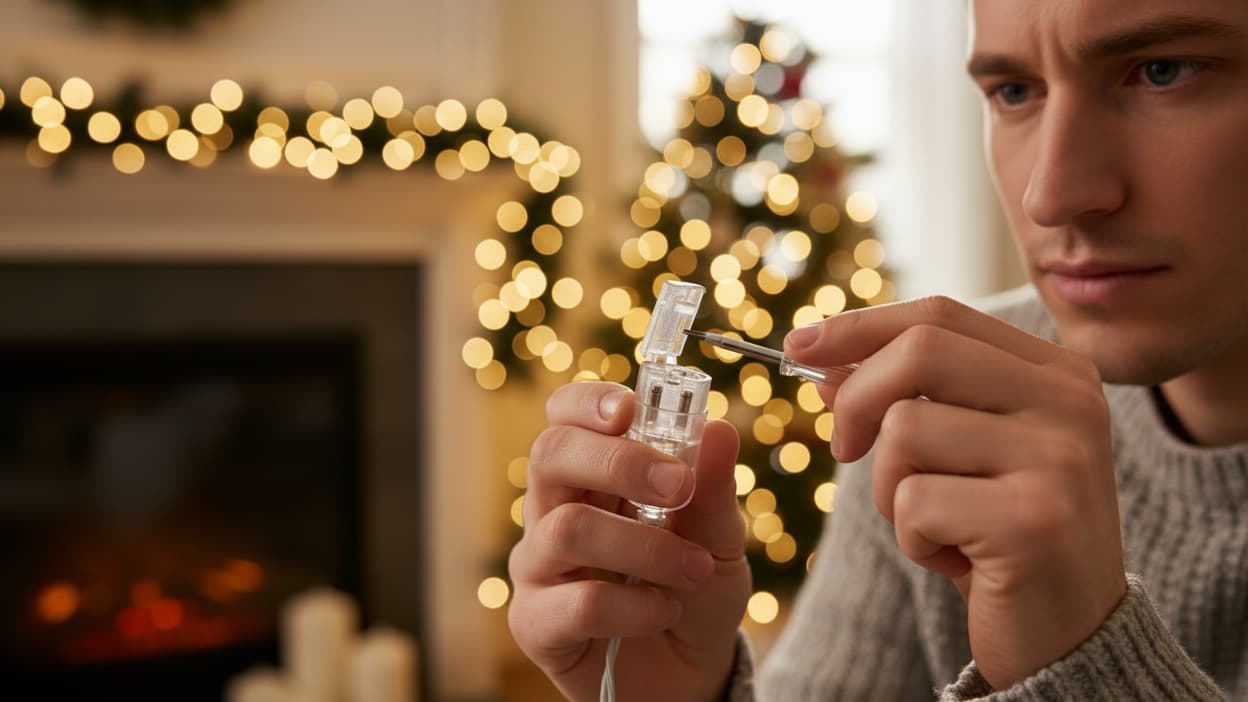
Step 2: Inspect and Replace the Fuse
Open the fuse compartment in the plug (usually a small sliding door on the side of the plug). Remove the fuse(s) and inspect them — a blown fuse will have a visibly broken filament or a darkened appearance. Replace with the correct replacement fuse (the amperage rating is printed on the fuse and in the product manual).
Step 3: Check for Loose Bulbs
Walk along the entire string and press each bulb firmly into its socket. Pay particular attention to bulbs at the beginning and end of any dark sections. A single loose bulb in a series segment can darken the entire section.
Step 4: Use a Light Tester
A Christmas light tester (available at hardware stores for under $20) can quickly identify failed bulbs in a series string without requiring you to test each bulb individually. Simply run the tester along the string — it will indicate when it reaches the failed bulb.
Step 5: Replace Failed Bulbs
Once you've identified a failed bulb, replace it with a matching replacement. It's important to use the correct voltage and type of replacement bulb — using the wrong bulb can damage the string or create a safety hazard. Most LED Christmas light sets include a small packet of replacement bulbs; keep these in a safe place for future use.
Step 6: Inspect the Wiring
If the above steps don't resolve the issue, carefully inspect the entire length of the wire for damage. Look for fraying, cuts, pinch points, or areas where the insulation has worn through. Damaged wiring sections can sometimes be repaired with electrical tape as a temporary fix, but replacement of the entire string is generally safer and more reliable.
 Tips for Maintaining Your LED Christmas Lights Year After Year
Proper maintenance dramatically extends the life of your LED Christmas lights and reduces the likelihood of failures during the holiday season. Follow these best practices:
Test before you hang: Always test your lights before installing them. It's much easier to troubleshoot and fix problems on the ground than after they're strung across your roofline or wrapped around a tree.
Store properly: After the holiday season, wind your lights loosely around a reel, cardboard tube, or purpose-made storage spool. Avoid tight coiling, which stresses the wire and connections. Store in a cool, dry location away from direct sunlight.
Label your strings: Use small tags to note the length, bulb count, and any known issues with each string. This saves time when setting up next year.
Don't overload circuits: Follow the manufacturer's guidelines for maximum string connections. Use a power strip with surge protection for indoor displays.
Use outdoor-rated lights outdoors: Always verify that lights used outdoors are rated for outdoor use (look for UL or ETL outdoor listing). Indoor lights are not weatherproofed and can be a safety hazard when exposed to moisture.
Replace aging strings: Even with proper care, LED Christmas lights eventually reach the end of their useful life. If a string requires frequent repairs or has multiple failed bulbs, it's more cost-effective and safer to replace it entirely.
LED Christmas Lights vs. Incandescent: Why the Switch Makes Sense
If you're still using incandescent Christmas lights, the data makes a compelling case for switching to LED. Consider a typical home holiday display with 10 strings of 100 lights each:
A 100-bulb incandescent string typically consumes about 40 watts. Ten strings = 400 watts. Running 6 hours per night for 30 days = 72 kilowatt-hours (kWh) of electricity. At the U.S. average electricity rate of approximately $0.16/kWh, that's about $11.52 per season just for Christmas lights.
A comparable 100-bulb LED string typically consumes about 4–7 watts. Ten strings = 40–70 watts. Running 6 hours per night for 30 days = 7.2–12.6 kWh. At the same rate, that's just $1.15–$2.02 per season — a savings of over 80%.
Over 10 years of holiday use, that's a savings of roughly $95–$100 in electricity costs alone, not counting the reduced cost of replacement bulbs (LED bulbs last far longer than incandescent) and the reduced fire risk (LED lights run much cooler than incandescent).
The Future of Holiday Lighting: Solar-Powered LED Solutions
The next evolution in energy-efficient lighting isn't just about switching from incandescent to LED — it's about eliminating the need for grid electricity entirely through solar power. Solar-powered LED lights have advanced dramatically in recent years, offering brightness, reliability, and versatility that make them suitable for both holiday decorating and year-round outdoor lighting.
Solar LED lights work by collecting sunlight through photovoltaic panels during the day and storing that energy in rechargeable batteries. At night (or when triggered by a light sensor), the stored energy powers the LED lights. Modern solar LED systems can provide 8–12+ hours of illumination from a single day's charge, making them practical even in regions with limited winter sunlight.
For holiday decorating, solar-powered string lights and pathway lights offer the ultimate convenience: no extension cords, no outlet hunting, no electricity costs. Simply place the solar panel in a sunny location and enjoy wire-free, cost-free holiday lighting.
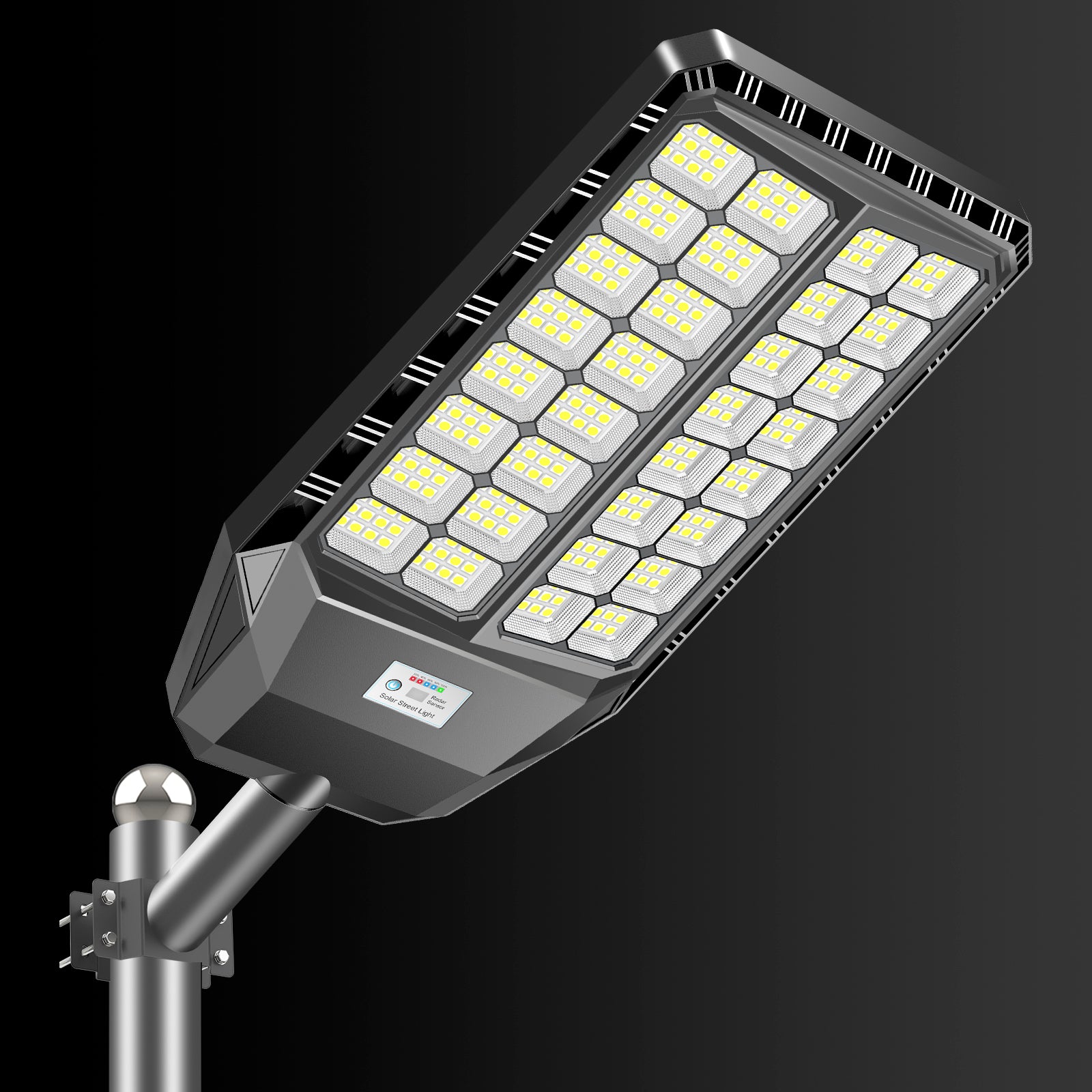
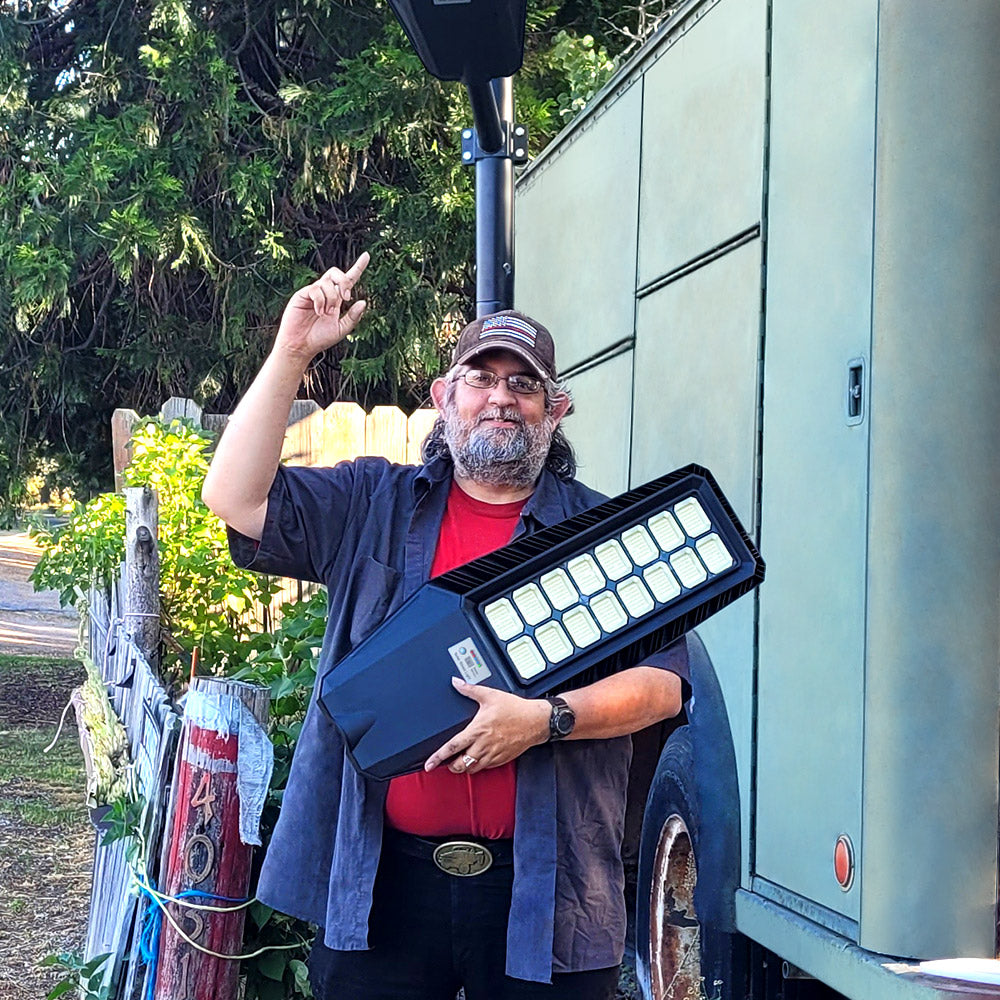
But solar LED technology extends far beyond holiday decorating. At Hykoont, we've developed a comprehensive range of solar LED lighting solutions for homes, businesses, and outdoor spaces that deliver professional-grade illumination without the installation complexity or ongoing electricity costs of traditional wired lighting.

Featured Products: Hykoont Solar LED Lighting Solutions
Whether you're looking to upgrade your holiday lighting or invest in year-round solar LED solutions for your property, Hykoont offers products engineered for performance, durability, and energy efficiency.
HYKOONT Solar Deck Lights – IP68 Waterproof, 12-Pack

Transform your outdoor deck, pathway, or garden with the HYKOONT Solar Deck Lights. These premium solar-powered LED deck lights are built to handle the harshest outdoor conditions, featuring an IP68 waterproof rating — the highest level of waterproofing available for consumer lighting products.
Key features include:
- Available in dual color options: cool white and blue LED
- 600mAh rechargeable battery with up to 72 hours of illumination per charge
- Rugged aluminum alloy casing with pressure resistance up to 20 tons
- IP68 waterproof rating — fully submersible, ideal for areas prone to flooding or heavy rain
- No wiring required — 100% solar powered for zero electricity costs
- 12-pack provides comprehensive coverage for decks, pathways, driveways, and garden borders
These deck lights are an excellent complement to holiday lighting displays, providing elegant ambient illumination along pathways and deck edges that enhances your seasonal decorations while operating completely independently of your home's electrical system.
Hykoont ZZ077 300W LED Solar Flood Lights – 2 Pack

For powerful, wide-area illumination without the need for electrical wiring, the Hykoont ZZ077 300W Solar Flood Lights deliver professional-grade brightness powered entirely by the sun. These high-output solar flood lights are ideal for illuminating large outdoor areas including driveways, parking areas, building facades, sports courts, and commercial properties.
Key features include:
- 300W equivalent output — powerful enough to illuminate large outdoor areas
- Wireless solar installation — no trenching, no electrician required
- Remote control with programmable timer and multiple modes: auto, gradient, full brightness, and half brightness
- 5-meter extension cable for flexible solar panel placement
- 3-year unlimited warranty for complete peace of mind
- 2-pack provides comprehensive coverage for front and back of property
During the holiday season, solar flood lights like the ZZ077 are perfect for dramatically illuminating your home's exterior, highlighting architectural features, or creating a bright backdrop for your holiday light display. The remote control timer function allows you to set the lights to turn on at dusk and off at a specified time, perfectly synchronized with your holiday lighting schedule.
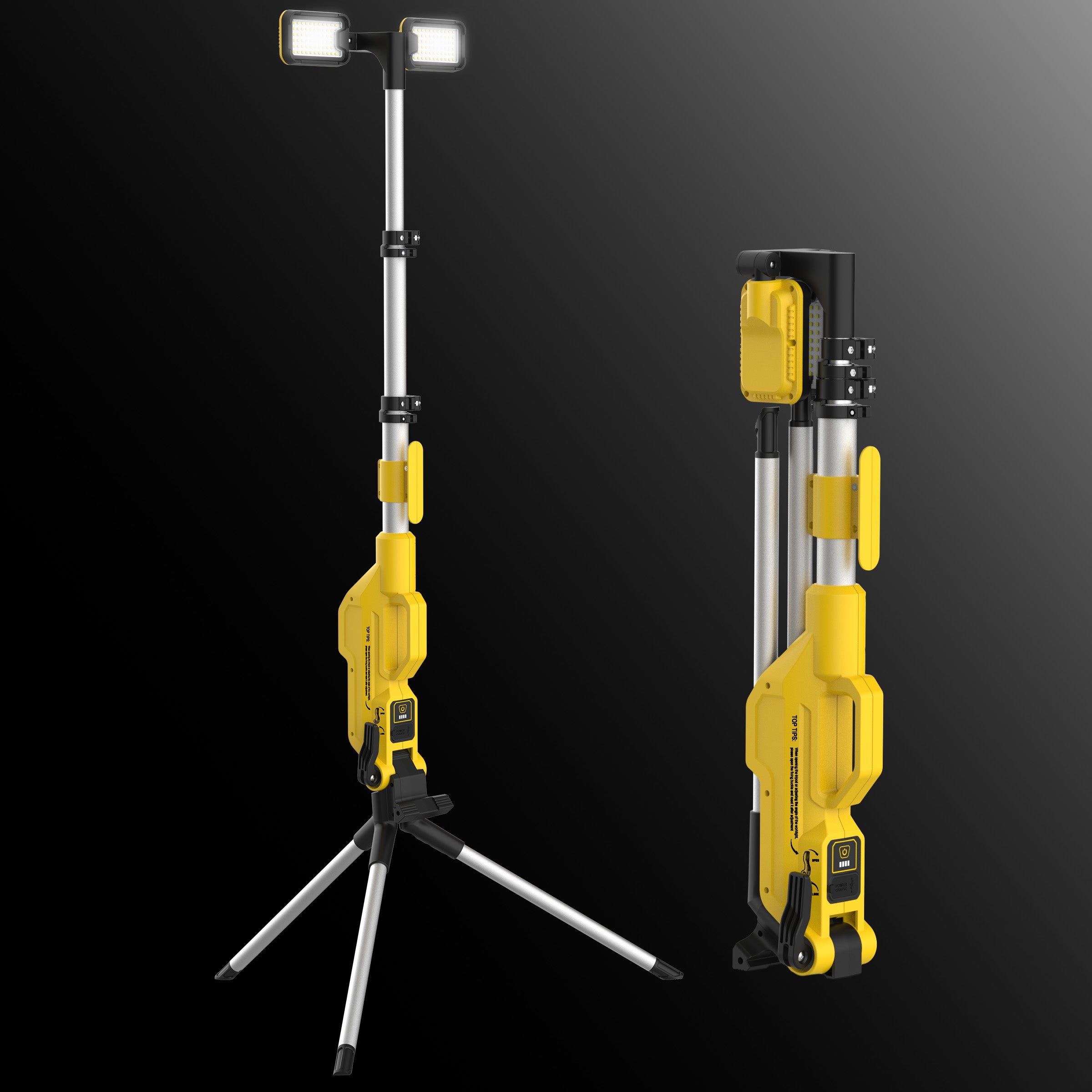
Hykoont IP66 Multifunctional LED Solar Work Light

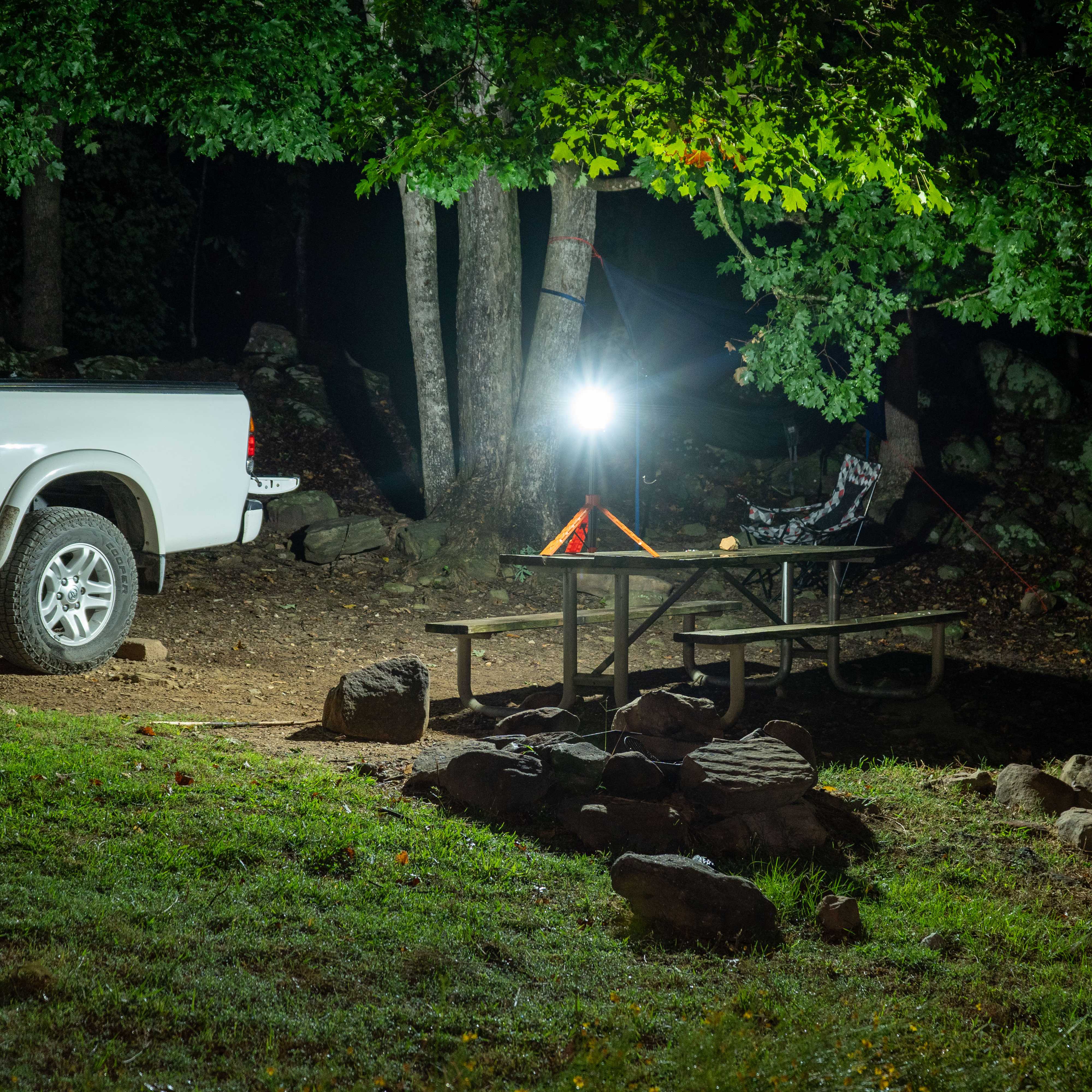
For versatile, portable solar LED lighting that goes wherever you need it, the Hykoont IP66 Multifunctional LED Solar Work Light is an outstanding choice. With 30W output and 3,000 lumens of brightness, this portable solar work light provides powerful illumination for outdoor work, emergency situations, camping, and anywhere reliable lighting is needed without access to grid power.
Key features include:
- 30W / 3,000 lumens output — bright enough for serious work applications
- Adjustable color temperatures: 3000K (warm white), 4500K (neutral white), 6500K (cool daylight)
- IP66 waterproof rating — protected against powerful water jets from any direction
- 10.8Ah battery with up to 10 hours of working time per charge
- Fully portable — no fixed installation required
- 1-year warranty
During the holiday season, this work light is invaluable for illuminating your work area while hanging lights, setting up outdoor displays, or decorating in low-light conditions. Its portability means you can position it exactly where you need light without running extension cords across your yard.
Choosing the Right LED Lights for Your Needs
With so many LED lighting options available, choosing the right products for your specific needs requires considering several factors:
Indoor vs. outdoor use: Always match the light's IP rating to its intended environment. Indoor lights (typically IP20 or unrated) should never be used outdoors. For outdoor use, look for a minimum of IP44 (splash-proof); for areas exposed to rain or standing water, IP65 or higher is recommended.
Power source: Traditional plug-in LED lights are convenient for indoor use and areas near outlets. Solar-powered LED lights are ideal for outdoor areas away from outlets, remote locations, or anywhere you want to eliminate electricity costs.
Circuit design: For holiday lights specifically, look for parallel-wired designs that keep the rest of the string lit when one bulb fails. This information is sometimes listed in product specifications or can be inferred from customer reviews.
Color temperature: LED lights are available in a range of color temperatures from warm white (2700–3000K, similar to incandescent) to cool daylight (5000–6500K). For holiday decorating, warm white is the most traditional and popular choice; for security and work lighting, cool daylight provides better visibility.
Lumens vs. watts: When comparing LED lights, focus on lumens (actual light output) rather than watts (power consumption). A 10W LED can produce as many lumens as a 60W incandescent bulb. Higher lumens = brighter light.
Environmental Impact: Why LED and Solar Lighting Matter
The shift from incandescent to LED lighting — and from grid-powered to solar-powered LED lighting — has significant environmental implications that extend far beyond individual electricity bills.
According to the U.S. Department of Energy, if every American home replaced just one incandescent bulb with an LED, the country would save enough energy to light 3 million homes for a year, reduce greenhouse gas emissions equivalent to 800,000 cars, and save more than $600 million in annual energy costs.
Holiday lighting alone accounts for a significant portion of residential electricity consumption during December. The Natural Resources Defense Council estimates that holiday lighting in the U.S. consumes about 6.6 billion kilowatt-hours of electricity annually — more than the total electricity consumption of many developing nations.
By switching to LED Christmas lights and supplementing with solar-powered outdoor lighting, individual households can meaningfully reduce their environmental footprint during the holiday season while also saving money. It's one of the rare cases where the environmentally responsible choice is also the economically rational one.

Frequently Asked Questions About LED Christmas Lights
Will LED Christmas lights go out if one bulb fails?
In most modern LED Christmas lights, which use parallel circuit wiring, a single failed bulb will not cause the rest of the string to go dark. Only the failed bulb itself will stop working. However, in older or budget LED lights that use series wiring, a single failed bulb can darken the entire string or a section of it.
How do I know if my LED Christmas lights are wired in series or parallel?
The easiest way to tell is to remove one bulb and see if the rest of the string stays lit. If the string stays lit, it's wired in parallel. If the string goes dark, it's wired in series. You can also check the product specifications or contact the manufacturer.
Can I replace individual LED bulbs in my Christmas lights?
This depends on the design of your specific lights. Many LED Christmas light strings have replaceable bulbs; replacement bulbs are often included with the lights. Some LED strings, particularly very inexpensive ones, use non-replaceable integrated LED modules. Check your product documentation to determine if replacement bulbs are available.
How long do LED Christmas lights last?
Quality LED Christmas lights can last 25,000–50,000 hours of use. At 6 hours per night for 30 days per year, that's approximately 180 hours per year — meaning a quality LED string could theoretically last 140–280 years of holiday use. In practice, the wiring and connectors typically limit the useful life to 10–20 years with proper care.
Are LED Christmas lights safe to leave on overnight?
LED Christmas lights run much cooler than incandescent lights and pose a significantly lower fire risk. However, it's still generally recommended to turn off holiday lights when sleeping or leaving the home, as any electrical device left unattended carries some risk. Using a timer to automatically turn lights off at bedtime is a convenient safety measure.
Can I use LED Christmas lights outdoors?
Yes, but only if they are specifically rated for outdoor use. Look for lights with an outdoor UL or ETL listing and an appropriate IP rating. Indoor lights are not weatherproofed and can be a safety hazard when exposed to rain, snow, or moisture.
What is the best way to store LED Christmas lights?
Wind lights loosely around a reel, cardboard tube, or purpose-made storage spool. Avoid tight coiling, which stresses the wire and connections. Store in a cool, dry location in a sealed container to protect from moisture and pests. Label each string with its length and any known issues.
Conclusion: Keep Your Holiday Display Shining Bright
The answer to the question "do LED Christmas lights go out if one goes out?" is: it depends on the circuit design. Modern, quality LED Christmas lights use parallel wiring that keeps the rest of the string lit when a single bulb fails. Older or budget lights may use series wiring that darkens the entire string when one bulb fails.
By understanding how your lights are wired, following proper maintenance and storage practices, and troubleshooting systematically when problems arise, you can keep your holiday display looking its best throughout the season — and for many seasons to come.
And as you think about upgrading your holiday lighting and outdoor illumination, consider the growing range of solar-powered LED solutions that eliminate electricity costs entirely while delivering reliable, high-quality light. At Hykoont, we're committed to making energy-efficient, solar-powered LED lighting accessible, affordable, and beautiful — for the holidays and every day of the year.
Explore our full range of solar LED lighting solutions and discover how the right lighting can transform your home, garden, and outdoor spaces while reducing your energy footprint and your electricity bill.

Leave a comment
This site is protected by hCaptcha and the hCaptcha Privacy Policy and Terms of Service apply.