









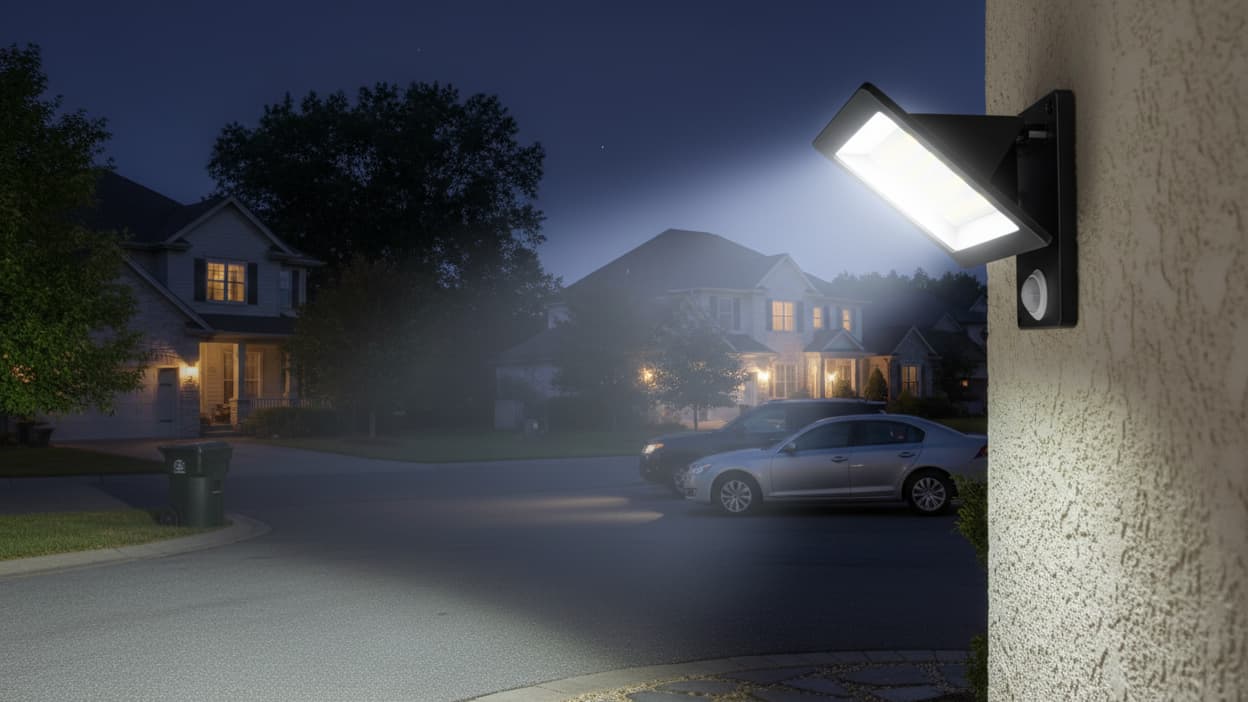
As more homeowners, property managers, and businesses turn to solar energy for their outdoor lighting needs, solar post lights have become one of the most popular and practical choices on the market. These energy-efficient, environmentally friendly lights offer a seamless way to illuminate pathways, gardens, driveways, and commercial perimeters — all without adding a single cent to your electricity bill.
Yet despite their growing popularity, one question keeps coming up again and again: Are you supposed to leave solar post lights on all the time? It sounds simple, but the answer touches on battery chemistry, solar panel efficiency, light sensor technology, seasonal variation, and long-term maintenance. This comprehensive guide will walk you through everything you need to know — from the science behind how solar post lights work, to best practices for maximizing their lifespan, to the top Hykoont products that deliver reliable, high-performance solar lighting for any outdoor environment.
How Do Solar Post Lights Work? A Deep Dive
To answer whether you should leave solar post lights on all the time, you first need to understand the complete energy cycle that powers them. Solar post lights are not simply "plug and play" devices — they are self-contained renewable energy systems in miniature form.
1. Solar Panel: The Energy Harvester
Every solar post light is equipped with a photovoltaic (PV) solar panel, typically made from monocrystalline or polycrystalline silicon. During daylight hours, this panel absorbs photons from sunlight and converts them into direct current (DC) electricity through the photovoltaic effect. The efficiency of this conversion depends on the quality of the panel, the angle of sunlight, the duration of sun exposure, and whether the panel is clean and unobstructed.
High-quality solar panels — like those used in Hykoont products — use monocrystalline silicon, which offers conversion efficiencies of 18–22%, significantly outperforming cheaper polycrystalline alternatives. This means more energy stored per hour of sunlight, which directly translates to longer and brighter illumination at night.
2. Rechargeable Battery: The Energy Reservoir
The electricity generated by the solar panel is stored in a rechargeable battery housed within the light fixture. Most modern solar post lights use one of three battery types:
- Lithium-ion (Li-ion): High energy density, lightweight, long cycle life (500–1,000+ charge cycles), and performs well in cold temperatures. The premium choice.
- Lithium iron phosphate (LiFePO4): Even more stable and longer-lasting than standard Li-ion, with excellent thermal safety. Used in commercial-grade solar lights.
- Nickel-metal hydride (NiMH): Older technology, heavier, lower energy density, but still found in budget solar lights.
The battery's capacity (measured in watt-hours, Wh) determines how long the light can run at full brightness. A larger battery means longer runtime — critical for locations with shorter winter days or frequent cloudy weather.
3. Light Sensor (Photoresistor): The Automatic Switch
Solar post lights include a built-in photoresistor or ambient light sensor that continuously monitors the surrounding light level. When the sensor detects that ambient light has dropped below a certain threshold (i.e., dusk), it automatically triggers the LED to turn on. When dawn arrives and light levels rise again, the sensor turns the LED off and the solar panel resumes charging the battery.
This automatic on/off cycle is the core operating principle of solar post lights — and it's the primary reason you do not need to manually manage them or leave them on continuously.
4. LED Light Source: Efficiency and Longevity
Modern solar post lights use LED (light-emitting diode) technology, which is far more energy-efficient than incandescent or fluorescent bulbs. LEDs convert up to 90% of electrical energy into light, produce minimal heat, and have lifespans of 25,000–50,000 hours. This efficiency is what makes solar-powered operation viable — the low power draw of LEDs means even a modest battery can power the light for 8–12 hours per night.

Should You Leave Solar Post Lights On All the Time? The Definitive Answer
The short answer is no — you should not, and generally cannot, leave solar post lights on all the time. Here is a detailed breakdown of why:
1. They Are Designed to Operate Automatically
Solar post lights are engineered to follow the natural day-night cycle. The built-in light sensor handles all switching automatically. Attempting to override this system — for example, by covering the sensor to trick the light into staying on during the day — will prevent the solar panel from charging the battery, leading to rapid battery depletion and eventual failure of the light.
The automatic operation is not just a convenience feature; it is fundamental to the energy balance of the system. The light can only run at night because it charges during the day. Disrupting this cycle breaks the energy equation.
2. Continuous Operation Degrades Battery Life
Rechargeable batteries have a finite number of charge-discharge cycles. Running a solar post light continuously — especially during daylight hours when the battery is simultaneously trying to charge — creates a condition called "partial state of charge" (PSOC) cycling, which is particularly damaging to lithium-ion batteries. Over time, this leads to:
- Reduced battery capacity (the battery holds less charge)
- Shorter nightly runtime
- Premature battery failure
- Reduced overall light output
By allowing the battery to fully charge during the day and fully (or nearly fully) discharge at night, you maximize the number of useful charge cycles and extend the battery's service life — often to 2–5 years or more.
3. Solar Panels Need Unobstructed Daylight to Recharge
If you attempt to keep solar post lights on during the day (by blocking the sensor), the solar panel is still generating electricity — but it has nowhere to send it, since the battery is already being drained by the running light. This creates an inefficient and potentially damaging situation for both the battery management circuit and the solar panel itself.
4. Energy Efficiency Is Built Into the Design
One of the key selling points of solar post lights is their zero operating cost. They generate and consume their own energy in a closed loop. Leaving them on unnecessarily — or trying to run them 24/7 — defeats the purpose of the solar design and will result in the light failing to operate properly at night, when you actually need it.
5. Most Models Have Automatic Low-Battery Shutoff
Quality solar post lights include battery protection circuits that automatically dim or shut off the light when the battery reaches a critically low charge level. This protects the battery from deep discharge damage. If you notice your solar light turning off before dawn, it is likely a sign that the battery did not receive a full charge during the previous day — not a malfunction.

How Long Should Solar Post Lights Stay On Each Night?
Under ideal conditions — a full day of direct sunlight (6–8 hours) and a fully charged battery — most quality solar post lights will run for 8 to 12 hours per night. Some high-capacity models can run for up to 16 hours on a full charge, making them suitable for long winter nights.
However, runtime varies significantly based on:
- Season and latitude: In winter, shorter days mean less charging time. In northern latitudes (above 45°N), solar lights may only receive 4–5 hours of effective sunlight in December and January.
- Weather: Overcast or cloudy days reduce solar panel output by 50–80%. Multiple consecutive cloudy days can deplete the battery to the point where the light runs at reduced brightness or not at all.
- Light mode setting: Many solar post lights offer multiple brightness modes (e.g., 100% brightness, 50% brightness, motion-activated). Lower brightness modes extend runtime significantly.
- Temperature: Extreme cold reduces lithium battery capacity temporarily. Extreme heat accelerates battery degradation over time.
- Panel cleanliness: Dirty or dusty solar panels can reduce charging efficiency by 20–30%.
Seasonal Considerations: Solar Post Lights in Winter vs. Summer
Summer Performance
Summer is the ideal season for solar post lights. Long days (10–16 hours of sunlight depending on latitude) provide ample charging time, and the high sun angle maximizes solar panel output. Batteries charge fully by early afternoon, and lights run at full brightness all night. This is when solar post lights perform at their absolute best.
Winter Performance
Winter presents the greatest challenge for solar post lights. Shorter days, lower sun angles, and more frequent cloud cover all reduce charging efficiency. In regions with heavy snowfall, snow accumulation on the solar panel can completely block charging. To maintain adequate performance in winter:
- Clear snow from solar panels promptly after snowfall
- Switch to a lower brightness mode to extend runtime on a partial charge
- Consider repositioning lights to maximize sun exposure during winter months
- Choose lights with larger battery capacity (e.g., 10,000–20,000 mAh) for better winter resilience
Rainy Season and Cloudy Climates
In regions with extended rainy seasons or consistently overcast skies (e.g., the Pacific Northwest, UK, Northern Europe), solar post lights may struggle to maintain full nightly runtime. In these environments, it is especially important to choose lights with high-capacity batteries and high-efficiency monocrystalline solar panels that can generate meaningful charge even in diffuse light conditions.

Best Practices for Using Solar Post Lights: Maximize Performance and Lifespan
To get the best performance and longest lifespan from your solar post lights, follow these evidence-based best practices:
1. Optimize Solar Panel Placement and Orientation
The single most important factor in solar light performance is solar panel exposure. Install your lights in locations that receive direct, unobstructed sunlight for at least 6 hours per day. In the Northern Hemisphere, south-facing orientations maximize annual solar exposure. Avoid placing lights under tree canopies, roof overhangs, or near tall structures that cast shadows during peak sunlight hours (typically 10 AM – 3 PM).
2. Perform the Initial Full Charge
Before first use, many manufacturers recommend placing the solar light in direct sunlight for 24–72 hours to fully charge the battery. This initial conditioning charge helps establish the battery's full capacity and ensures optimal first-night performance. Do not activate the light during this initial charging period.
3. Clean Solar Panels Regularly
Dust, pollen, bird droppings, and other debris accumulate on solar panels over time, reducing their light absorption efficiency. Clean the panels every 2–4 weeks using a soft, damp cloth. Avoid abrasive materials or harsh chemical cleaners that could scratch or damage the panel surface. In dusty or high-pollen environments, more frequent cleaning may be necessary.
4. Monitor and Replace Batteries as Needed
Even the best rechargeable batteries degrade over time. Most solar post light batteries last 2–5 years depending on usage patterns, climate, and battery quality. Signs that your battery needs replacement include:
- Significantly shorter nightly runtime than when new
- Light turning off well before dawn even after a full sunny day
- Noticeably reduced brightness
- Battery swelling or leakage (replace immediately)
Many Hykoont solar lights use standard rechargeable battery formats (18650 Li-ion cells) that are widely available and easy to replace, extending the useful life of the fixture significantly.
5. Use the Correct Light Mode for Your Needs
Most quality solar post lights offer multiple operating modes. Common options include:
- Constant-on mode: Light stays on at a set brightness all night. Best for security and aesthetics, but uses the most battery.
- Dim-then-bright mode: Light runs at low brightness (e.g., 30%) and brightens to 100% when motion is detected. Excellent balance of runtime and security.
- Motion-activated mode: Light only activates when motion is detected. Maximum battery conservation; ideal for infrequently used areas.
- Dusk-to-dawn mode: Light runs at full brightness from dusk to dawn. Requires the largest battery capacity.
Selecting the right mode for your specific use case — pathway lighting, security, decorative, or commercial — will significantly impact both performance and battery longevity.
6. Protect Lights from Extreme Temperatures
While most solar post lights are rated for outdoor use and carry IP65 or higher weatherproofing ratings, extreme temperatures can still affect performance. In regions with very cold winters (below -20°C / -4°F), consider bringing battery-powered components indoors during the coldest months, or choose lights specifically rated for extreme cold operation.
7. Inspect and Tighten Connections Annually
Outdoor lights are exposed to wind, rain, temperature cycling, and UV radiation year-round. Annually inspect all mounting hardware, cable connections, and housing seals to ensure everything remains secure and weathertight. Loose connections can cause intermittent operation or allow moisture ingress that damages internal electronics.

Common Myths About Solar Post Lights — Debunked
Myth 1: "Solar lights charge on cloudy days"
Partially true. Solar panels do generate electricity from diffuse light on overcast days, but at significantly reduced efficiency — typically 10–25% of their clear-sky output. A single cloudy day will not fully charge the battery, but several hours of diffuse light is better than no charging at all.
Myth 2: "Leaving solar lights on during the day charges them faster"
False. The solar panel charges the battery regardless of whether the LED is on or off. Running the LED during the day simply wastes the energy being generated, resulting in a lower net charge by nightfall.
Myth 3: "Solar post lights don't work in cold climates"
Mostly false. High-quality solar lights with lithium-ion batteries and monocrystalline panels perform well in cold climates, provided they receive adequate sunlight. Cold temperatures actually improve solar panel efficiency slightly (panels are more efficient at lower temperatures). The main challenge in cold climates is reduced daylight hours, not temperature itself.
Myth 4: "All solar post lights are the same"
False. There is enormous variation in solar light quality, from cheap disposable units with NiMH batteries and low-efficiency panels to professional-grade fixtures with LiFePO4 batteries, monocrystalline panels, and smart control systems. The difference in performance and longevity between budget and premium solar lights is substantial.
Myth 5: "Solar lights require no maintenance"
False. While solar lights require far less maintenance than wired electrical fixtures, they do require periodic panel cleaning, battery monitoring, and occasional battery replacement to maintain optimal performance.

Recommended Hykoont Solar Lighting Products
If you are looking to upgrade your outdoor solar lighting — whether for residential pathways, commercial perimeters, or large-scale area illumination — Hykoont offers a range of high-performance solar lighting solutions engineered for reliability, efficiency, and longevity. Here are three standout products worth considering:
1. Hykoont XC940 Solar Flood Lights
The Hykoont XC940 Solar Flood Lights are designed for homeowners and businesses that need powerful, wide-area illumination without the complexity of wired installation. Featuring a high-efficiency monocrystalline solar panel and a large-capacity lithium battery, the XC940 delivers bright, consistent light throughout the night — even after partially cloudy days. Its IP65 weatherproof rating ensures reliable operation in rain, snow, and extreme temperatures. With multiple lighting modes including motion-activated and dusk-to-dawn options, the XC940 is a versatile solution for driveways, gardens, patios, and security applications. If you want a solar flood light that truly performs, the XC940 is an excellent starting point.
2. Hykoont TW024 Solar Street Light
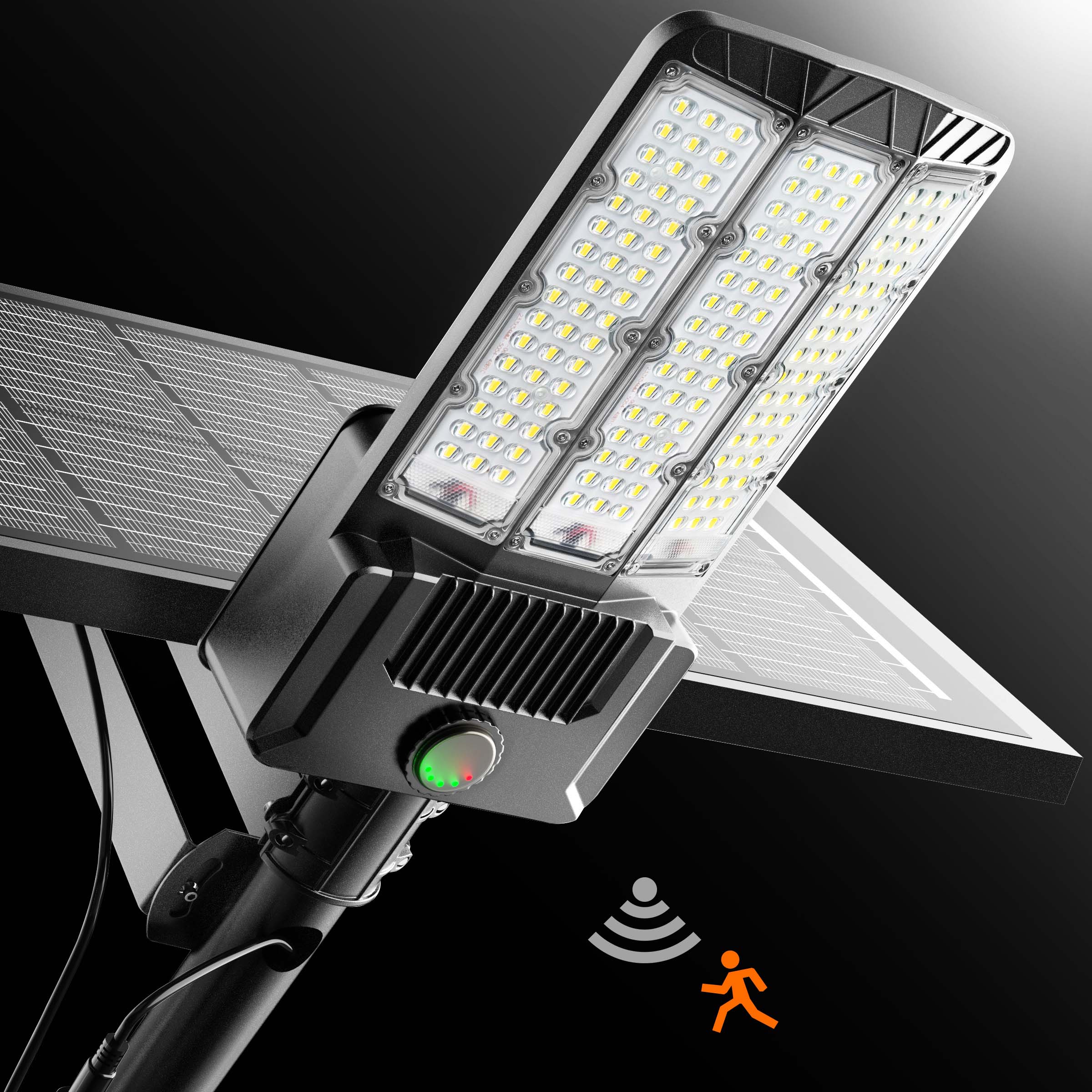
For larger outdoor areas — parking lots, community pathways, rural roads, or commercial properties — the Hykoont TW024 Solar Street Light delivers professional-grade illumination powered entirely by the sun. The TW024 combines a powerful LED array with an integrated solar panel and intelligent charge controller, providing reliable all-night lighting with minimal maintenance. Its robust construction and high IP rating make it suitable for year-round outdoor use in virtually any climate. The TW024 is an ideal choice for municipalities, HOAs, commercial developers, and property managers looking to reduce energy costs while improving outdoor safety and visibility.
3. HY100 100W Commercial Solar Street Light
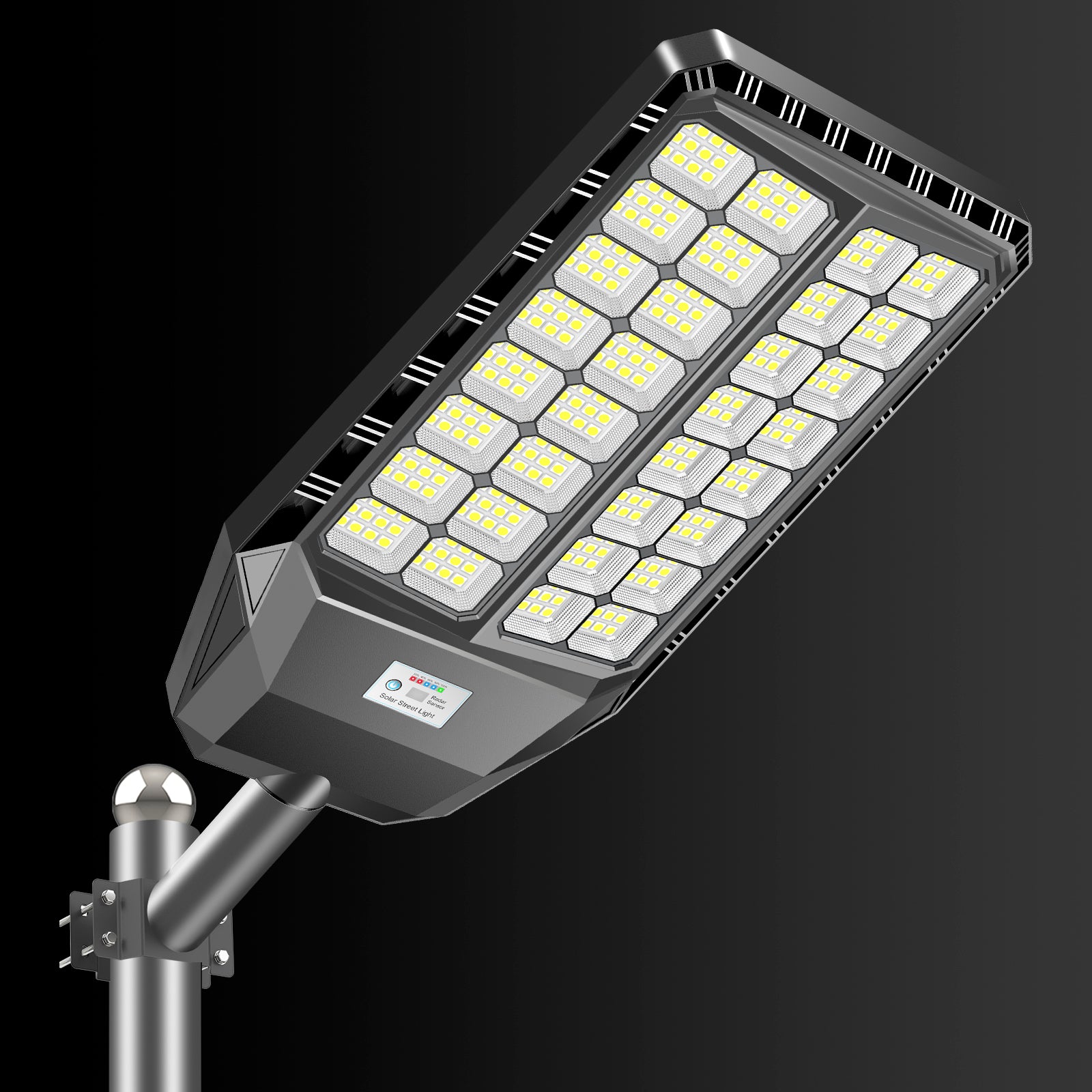
For the most demanding commercial and industrial applications, the HY100 100W Commercial Solar Street Light represents the pinnacle of Hykoont's solar lighting lineup. With an extraordinary 18,000 lumens of output, a 768Wh high-capacity battery, and a premium monocrystalline solar panel, the HY100 is engineered to deliver reliable, high-intensity illumination even in challenging conditions — including extended cloudy periods and long winter nights. This is the light for large parking areas, industrial facilities, sports courts, and any application where maximum brightness and runtime are non-negotiable. The HY100 exemplifies how far solar lighting technology has advanced, delivering performance that rivals grid-powered street lights at a fraction of the long-term operating cost.
Solar Post Lights vs. Traditional Wired Outdoor Lights: A Comprehensive Comparison
Understanding when solar post lights are the right choice — and when traditional wired lights might be preferable — helps you make the best investment for your specific situation.
| Factor | Solar Post Lights | Wired Outdoor Lights |
|---|---|---|
| Installation cost | Low (no wiring required) | High (electrical work needed) |
| Operating cost | Zero (solar powered) | Ongoing electricity costs |
| Reliability | Weather/sunlight dependent | Consistent (grid-powered) |
| Maintenance | Panel cleaning, battery replacement | Bulb replacement, wiring checks |
| Environmental impact | Zero carbon emissions | Depends on grid energy mix |
| Flexibility/portability | High (easily relocated) | Low (fixed wiring) |
| Best for | Gardens, pathways, remote areas | High-security, 24/7 applications |
Troubleshooting Common Solar Post Light Problems
Problem: Light doesn't turn on at night
Possible causes and solutions:
- Battery fully depleted — place in direct sunlight for 24–48 hours to recharge
- Light sensor blocked or dirty — clean the sensor area
- Light installed in a location with insufficient sunlight — relocate to a sunnier spot
- Battery needs replacement — check battery voltage and replace if below specification
- On/off switch in "off" position — check and switch to "on" or "auto"
Problem: Light turns off too early (before dawn)
Possible causes and solutions:
- Battery capacity degraded — replace battery
- Insufficient charging due to shade or cloudy weather — optimize panel placement
- Light mode set to high brightness — switch to a lower brightness or motion-activated mode
Problem: Light is dim or flickering
Possible causes and solutions:
- Dirty solar panel reducing charge — clean the panel
- Loose battery connection — check and secure battery contacts
- Battery near end of life — replace battery
- Water ingress into housing — inspect seals and replace if compromised
Problem: Light stays on during the day
Possible causes and solutions:
- Light sensor covered or malfunctioning — inspect and clean the sensor; replace if faulty
- Light installed in a very shaded location where sensor cannot detect daylight — relocate

The Environmental and Economic Case for Solar Post Lights
Beyond the practical question of whether to leave solar post lights on all the time, it is worth stepping back to appreciate the broader value proposition of solar outdoor lighting.
Environmental Benefits
Traditional outdoor lighting is a significant contributor to residential and commercial electricity consumption. In the United States alone, outdoor lighting accounts for approximately 35% of commercial electricity use and a substantial portion of residential consumption. By switching to solar post lights, you eliminate this electricity demand entirely — generating zero carbon emissions during operation and reducing your household or facility's environmental footprint.
Over a 10-year lifespan, a single solar post light can prevent the emission of hundreds of kilograms of CO₂ compared to an equivalent wired light powered by grid electricity (depending on the local energy mix). Multiply this across dozens or hundreds of lights in a commercial installation, and the environmental impact becomes substantial.
Economic Benefits
The economics of solar post lights are compelling, particularly for large installations. While the upfront cost of quality solar lights is higher than basic wired fixtures, the elimination of electricity costs and the reduction in installation labor (no trenching, conduit, or electrical panel work required) typically results in a payback period of 2–4 years for commercial installations. After payback, the lights generate pure savings for the remainder of their operational life.
For residential users, the savings are more modest but still meaningful — particularly in regions with high electricity rates or in remote locations where running electrical wiring would be prohibitively expensive.
Frequently Asked Questions About Solar Post Lights
Q: Can I leave solar post lights on during the day?
A: Technically, you can block the light sensor to force the light to stay on during the day, but this is strongly inadvisable. It prevents the battery from charging, rapidly depletes the battery, and will result in the light failing to operate at night. Solar post lights are designed to be off during the day.
Q: How do I know if my solar post light is charging?
A: Many solar lights include a small indicator LED that glows red or orange while charging and turns green when fully charged. If your light lacks an indicator, simply ensure it is placed in direct sunlight and check that the solar panel is clean and unobstructed.
Q: Do solar post lights work in winter?
A: Yes, quality solar post lights work in winter, though with reduced runtime due to shorter days. Choose lights with large-capacity batteries and high-efficiency monocrystalline panels for best winter performance. Keep panels clear of snow and ice.
Q: How long do solar post light batteries last?
A: Most rechargeable batteries in solar post lights last 2–5 years, depending on battery quality, climate, and usage patterns. Lithium-ion batteries generally last longer than NiMH batteries. Replacement batteries are widely available and inexpensive.
Q: Can solar post lights be used as security lights?
A: Absolutely. Many solar post lights include motion sensors and can be set to motion-activated mode, providing bright illumination when movement is detected while conserving battery during quiet periods. For dedicated security lighting, consider models with high lumen output and wide detection angles.
Q: Are solar post lights waterproof?
A: Quality solar post lights carry IP65 or higher weatherproof ratings, meaning they are fully protected against dust ingress and water jets from any direction. They are suitable for year-round outdoor use in rain, snow, and humid conditions. Always check the IP rating before purchasing.
Conclusion: Let Your Solar Post Lights Work the Way They Were Designed
The answer to "Are you supposed to leave solar post lights on all the time?" is clear: no, and you don't need to. Solar post lights are sophisticated, self-managing energy systems that automatically balance charging and discharging to deliver reliable, efficient illumination night after night. Attempting to run them continuously would undermine the very engineering that makes them so effective.
The best thing you can do for your solar post lights is to install them in a location with ample direct sunlight, keep the solar panels clean, choose the right operating mode for your needs, and replace the batteries when they reach the end of their service life. Do these things, and your solar lights will reward you with years — even decades — of dependable, zero-cost outdoor illumination.
Whether you are lighting a residential garden path, a commercial parking lot, or a rural road far from the electrical grid, Hykoont's range of solar lighting solutions — from the versatile XC940 Solar Flood Lights to the powerful HY100 Commercial Solar Street Light — offers the performance, reliability, and value you need to make the switch to solar with confidence.
Explore the full Hykoont solar lighting collection and find the perfect solution for your outdoor lighting needs today.


Leave a comment
This site is protected by hCaptcha and the hCaptcha Privacy Policy and Terms of Service apply.