


The Backyard Dilemma Nobody Talks About
You bought a solar bug zapper to reclaim your patio from mosquitoes. But then a friend mentions that zappers kill fireflies. Your neighbor swears they wipe out bees. And now you're second-guessing the whole thing.
Here's the truth: the concern is real, but it's also widely overstated — and almost entirely fixable with smart placement. Let's dig into the actual science, separate myth from fact, and give you a practical game plan for targeting mosquitoes without becoming a threat to the insects that actually help your garden.
First, How Does a UV Bug Zapper Actually Work?
Solar bug zappers use ultraviolet (UV) light — specifically in the 365–395 nm wavelength range — to attract flying insects. When an insect contacts the electrified grid surrounding the light source, it's eliminated instantly.
The logic seems airtight: mosquitoes are attracted to light, zapper emits light, mosquitoes die. But the reality of insect phototaxis (the scientific term for light-seeking behavior) is more nuanced than that.
Different insects respond to different wavelengths, intensities, and light colors. And critically, mosquitoes are not primarily light-driven insects. They're driven by CO₂, body heat, and skin odors. UV light is a secondary attractant for them — which is both good news and bad news, as we'll explain.

What the Research Actually Says
A widely cited 1996 study published in the Journal of the American Mosquito Control Association analyzed the catch composition of electric bug zappers across six residential sites. The results were striking: mosquitoes and biting flies made up less than 0.22% of the total insects killed. The vast majority were non-biting aquatic insects, beetles, and moths.
More recent field studies have confirmed a similar pattern: UV zappers are genuinely indiscriminate when placed in the wrong location, at the wrong height, and without any secondary attractant to bias them toward mosquitoes.
But here's what those studies don't tell you: modern solar bug zappers with triple UV tube designs and optimized wavelengths perform differently than the single-bulb incandescent zappers from the 1990s. The technology has evolved. And placement strategy has evolved with it.
Which Beneficial Insects Are Actually at Risk?
Let's be specific, because "beneficial insects" is a broad category that gets thrown around without much precision.
Fireflies (Lightning Bugs)
This is the one that genuinely worries people — and for good reason. Fireflies are bioluminescent beetles that are sensitive to artificial light. UV zappers can attract them, particularly during peak firefly season (late May through July in most of the US). If you live in an area with firefly populations and you care about them, this is worth taking seriously.
Risk level: Moderate. Mitigated significantly by placement (more on this below).
Honeybees and Native Bees
Good news here: bees are almost entirely diurnal (daytime active). Solar bug zappers that operate on dusk-to-dawn mode are running when bees are already back in their hives or nests. The overlap window is minimal.
Risk level: Low. Essentially zero if your zapper runs on automatic dusk-to-dawn mode.
Moths
Moths are nocturnal and genuinely UV-attracted. Many moth species are important pollinators for night-blooming plants, and some are food sources for bats and birds. This is a real consideration.
Risk level: Moderate to High if the zapper is placed near flowering plants or woodland edges.
Lacewings and Ground Beetles
These are predatory insects that eat aphids, mites, and other garden pests — making them genuinely valuable. They can be attracted to UV light, though less consistently than moths.
Risk level: Low to Moderate.
Dragonflies and Damselflies
Dragonflies are actually one of the most effective natural mosquito predators — a single dragonfly can eat hundreds of mosquitoes per day. They're not strongly UV-attracted and are primarily active during daylight hours.
Risk level: Very Low.

The Honest Answer: Yes, But It's Manageable
Will a solar bug zapper kill some beneficial insects? Honestly, yes — if you set it up without thinking about placement. But "some" is doing a lot of work in that sentence. The scale of impact is almost entirely within your control.
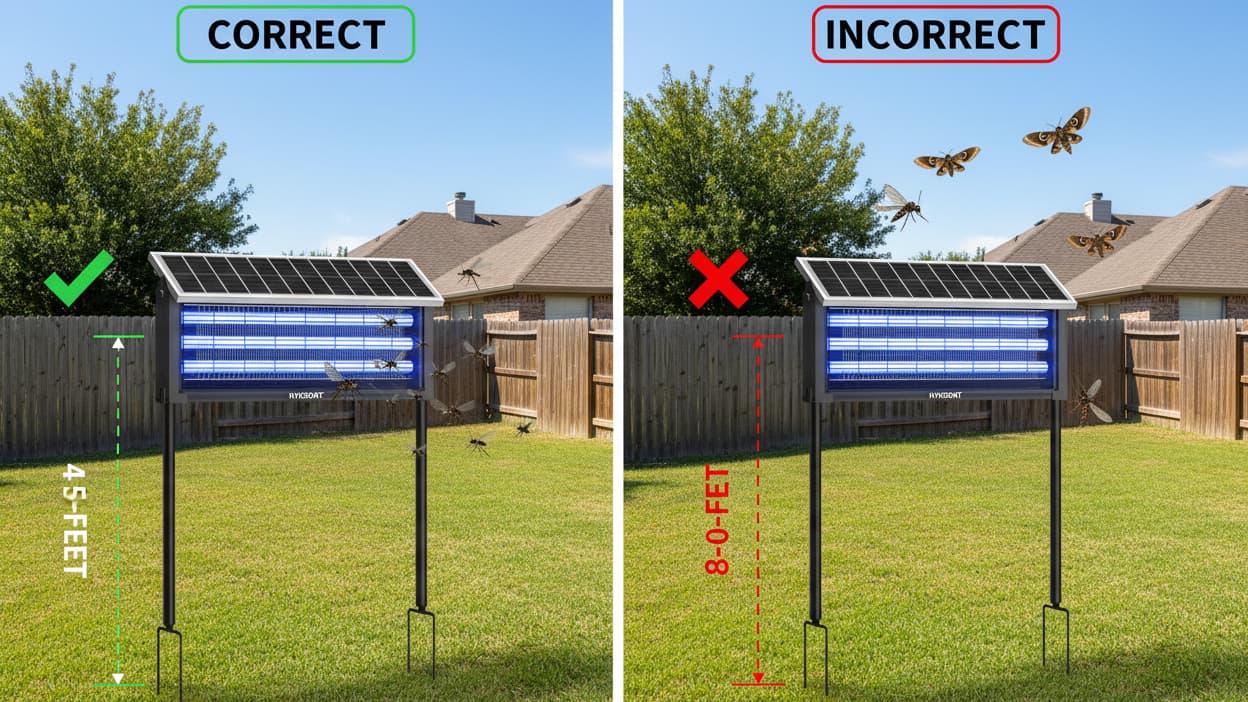
A zapper mounted 8 feet high in the center of your garden, running all night, pointed toward a flower bed? That's a recipe for collateral damage.
A zapper mounted 4–5 feet high on the edge of your patio, away from flowering plants, running on dusk-to-dawn mode? The beneficial insect impact drops dramatically — while mosquito control stays effective.
The difference isn't the product. It's the setup.
How to Set Up Your Solar Bug Zapper to Target Mosquitoes (Not the Good Guys)
1. Height Matters More Than You Think
Mosquitoes tend to fly low — typically between 1 and 5 feet off the ground, close to where humans are sitting or standing. Beneficial insects like moths often fly higher, especially when navigating by moonlight.
Mount your zapper at 4 to 5 feet — right in the mosquito flight zone. Avoid mounting it at 8–10 feet, which is more likely to intercept moths and other high-flying insects.
2. Keep It Away from Flowering Plants
Flowers attract pollinators. UV light attracts insects. Put a zapper next to your flower bed and you've created a trap that's actively competing with the flowers for pollinator attention — at night, when moths are doing their pollination work.
Place your zapper at least 15–20 feet away from flowering plants, vegetable gardens, and any area where you want pollinators to thrive.
3. Use Dusk-to-Dawn Mode, Not Constant-On
Both Hykoont solar bug zappers offer two operating modes: a constant-on mode and an automatic dusk-to-dawn mode. For beneficial insect protection, dusk-to-dawn mode is the right choice.
This eliminates any daytime operation that could catch bees, and it conserves battery so the unit runs effectively through the full night mosquito window.
4. Position It Between You and the Mosquito Source
Mosquitoes breed in standing water — ponds, birdbaths, clogged gutters, low spots in the yard. Place your zapper between the breeding source and your seating area, not behind you. This intercepts mosquitoes as they travel toward you, rather than drawing them past you toward the light.
5. Don't Place It Near Woodland Edges or Water Features
Woodland edges and water features are hotspots for fireflies and beneficial aquatic insects. Keep your zapper in the open yard, away from these zones, to reduce the chance of attracting insects that aren't your target.
6. Consider a Secondary Attractant
Some mosquito traps use CO₂ or octenol (a chemical that mimics human skin odor) to specifically attract mosquitoes. While Hykoont's solar zappers use UV light as the primary attractant, you can supplement with a separate CO₂ lure placed near the unit to bias the catch toward mosquitoes. This is an advanced setup, but it's worth knowing about if you're in a high-mosquito area.

Choosing the Right Solar Bug Zapper for Your Yard
Not all solar bug zappers are built the same. Coverage area, UV tube configuration, and battery capacity all affect how well the unit performs — and how you should position it.
For Large Yards, Open Spaces, and HOA Common Areas

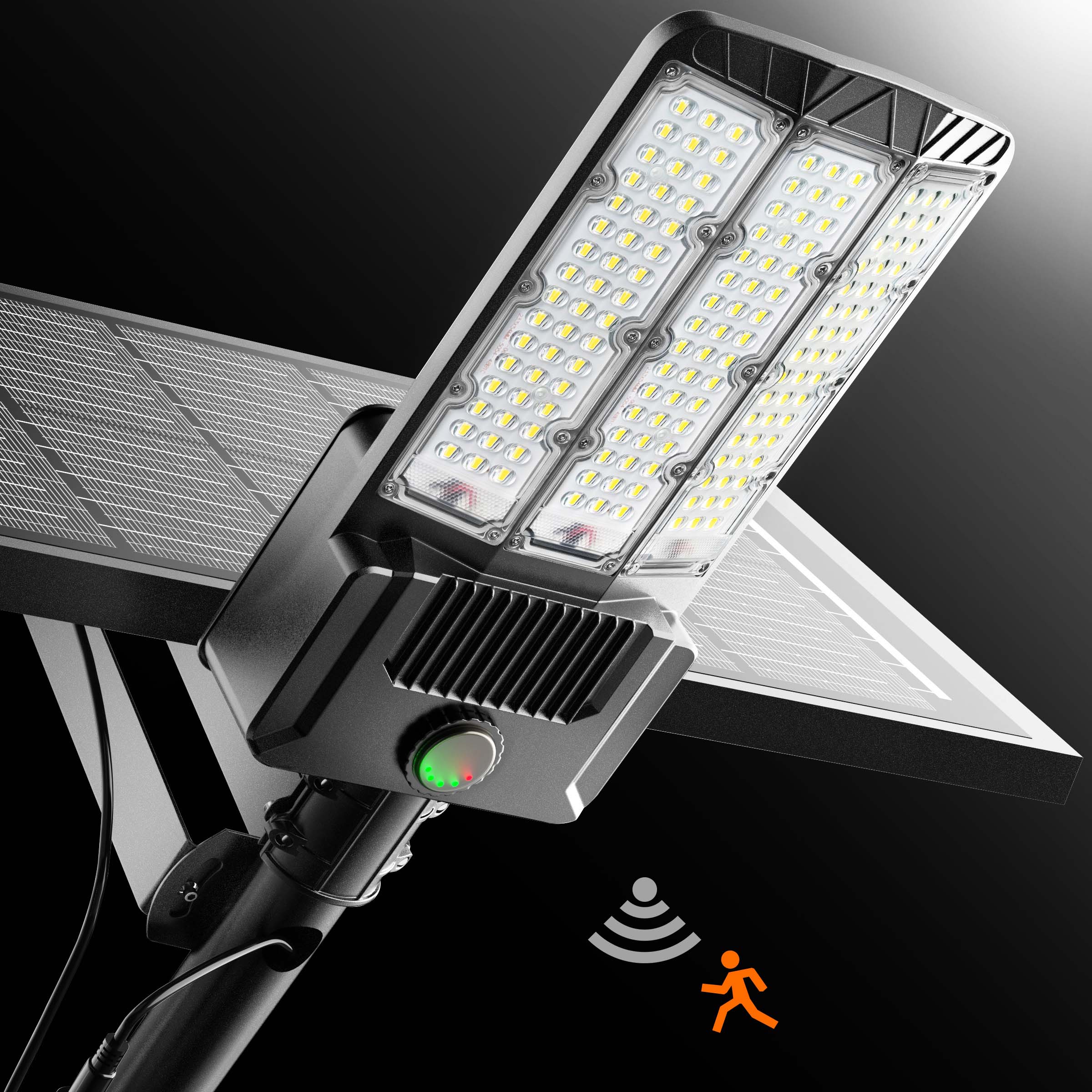
The Hykoont 30W Solar LED Bug Zapper Light Pro ($159.00) is built for serious outdoor coverage. With three UV LED tubes, a 30W monocrystalline solar panel, and an 8,000 sq ft effective range, this is the unit for large backyards, farms, and commercial outdoor spaces.
- Triple UV tube design for wider attraction radius
- 6,000mAh battery — up to 8–12 hours runtime
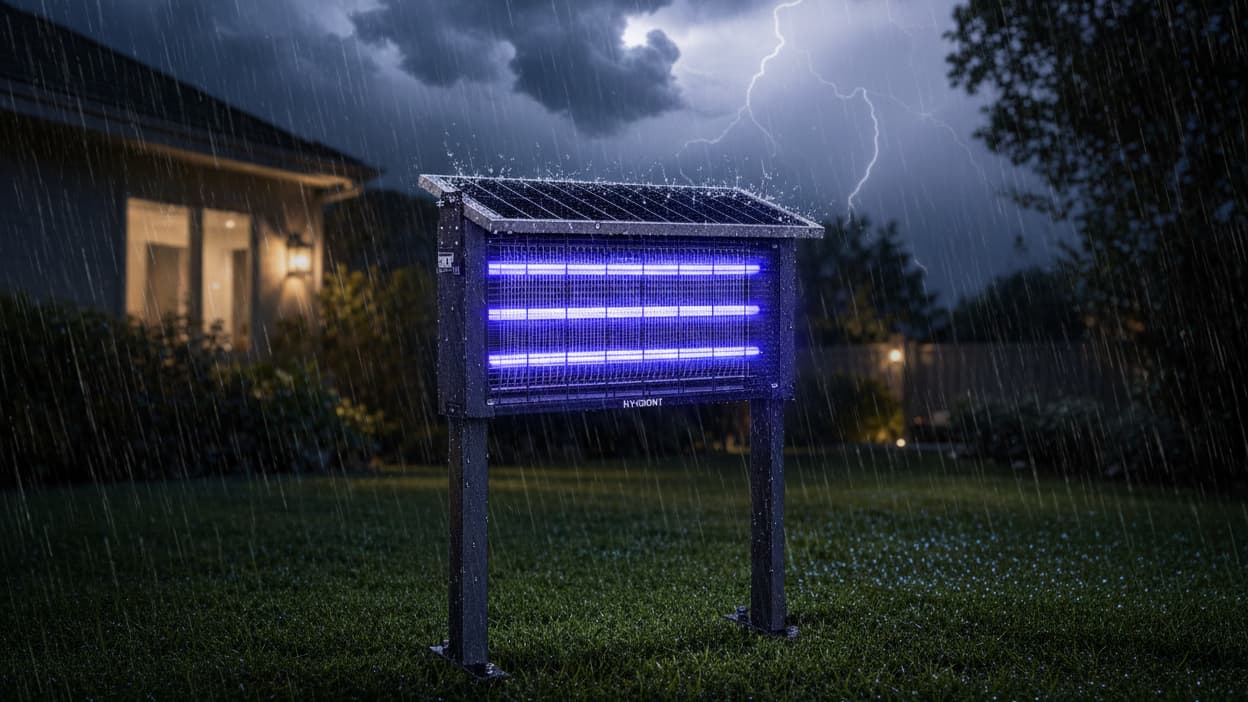
- IPX4 waterproof rating for year-round outdoor use
- Dusk-to-dawn automatic mode (no manual switching)
- No motion or radar sensor — stable, continuous operation
- Multiple mounting options for flexible placement
→ Get the Pro Model for $159 — Free Shipping

For Patios, Smaller Yards, and Garden Spaces

The Hykoont 19W Solar LED Bug Zapper Light Standard ($95.00) hits the sweet spot for most residential yards. Triple UV tubes, a 19W solar panel, and 4,000 sq ft coverage make it a serious performer — without the footprint of the Pro model.
- Triple UV LED tubes — stronger attraction than single-tube models
- 6,000mAh battery — up to 8 hours runtime
- USB-DC backup charging (5V/2A) — never dead after a cloudy week
- Metal housing with corrosion-resistant finish
- Ground stake + hanging installation options included
- IPX4 waterproof — handles rain without issue
→ Shop the Standard Model for $95 — Free Shipping

A Side-by-Side Comparison
| Feature | Pro 30W ($159) | Standard 19W ($95) |
|---|---|---|
| Coverage Area | 8,000 sq ft | 4,000 sq ft |
| Solar Panel | 30W monocrystalline | 19W monocrystalline |
| Battery | 6,000mAh | 6,000mAh |
| Runtime | 8–12 hours | Up to 8 hours |
| USB Backup Charging | No | Yes (5V/2A) |
| Installation | Multiple mount options | Ground stake + hanging |
| Best For | Large yards, farms, HOAs | Patios, residential yards |
What About Fireflies Specifically? (The Honest Answer)
Let's not dodge this one. If you live in the eastern US and fireflies are part of your summer experience, a UV zapper does carry some risk for them — particularly during peak firefly season (late May through early July).
Here's what actually helps:
- Turn off or relocate the zapper during peak firefly season if firefly populations matter to you. Firefly season is short; mosquito season is long.
- Place the zapper away from tall grass and woodland edges, which are firefly habitat. Open lawn areas have lower firefly density.
- Use dusk-to-dawn mode rather than running the unit all night — fireflies are most active in the first 1–2 hours after dark, so a unit that shuts off earlier reduces exposure.
The reality is that habitat loss, light pollution from homes and streetlights, and pesticide use are far larger threats to firefly populations than a single backyard zapper. But if you want to be thoughtful about it, the steps above make a real difference.
The Placement Cheat Sheet (Save This)
- ✅ Mount at 4–5 feet — mosquito flight zone, below most moth activity
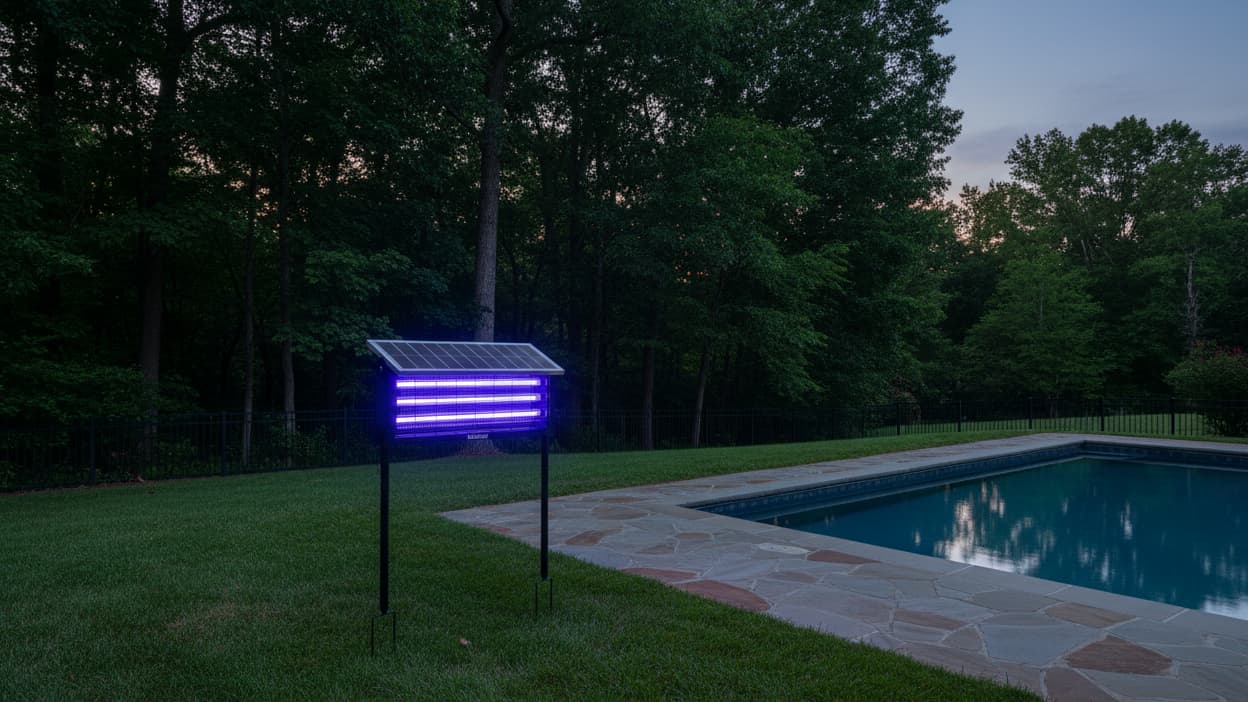
- ✅ Place on the edge of your seating area, between you and the mosquito source
- ✅ Keep 15–20 feet from flower beds and vegetable gardens
- ✅ Avoid woodland edges and water features where fireflies concentrate
- ✅ Use dusk-to-dawn mode — eliminates daytime bee risk entirely
- ✅ Clean the catch tray weekly — a full tray reduces effectiveness
- ❌ Don't mount at 8–10 feet — you're in moth territory
- ❌ Don't place next to flowering plants at night
- ❌ Don't run constant-on mode if you have fireflies or care about moths
Real Talk: Is a Solar Bug Zapper Worth It?
For most American backyards, yes — with the placement strategy above. The combination of zero electricity cost, automatic operation, and genuine mosquito reduction makes solar bug zappers one of the more practical outdoor pest control tools available.
They're not a silver bullet. In high-mosquito environments (near wetlands, in the South during summer), you'll want to combine a zapper with other strategies: eliminating standing water, using fans to disrupt mosquito flight, and wearing repellent during peak hours (dusk and dawn).
But as a passive, always-on layer of protection that costs nothing to run after purchase? A well-placed solar bug zapper earns its spot in the yard.
Shop Pro Model — $159 Shop Standard Model — $95
Frequently Asked Questions
Q: Do solar bug zappers actually kill mosquitoes, or mostly other insects?
A: Honestly, UV light alone is not the most efficient mosquito attractant — mosquitoes are primarily drawn to CO₂ and body heat. That said, solar bug zappers do catch mosquitoes, especially when placed correctly (low, between you and the breeding source). They're most effective as part of a layered approach: eliminate standing water, use fans, and let the zapper handle the ambient population.
Q: Will my solar bug zapper kill bees?
A: Almost certainly not, if you're using dusk-to-dawn mode. Bees are daytime insects and are back in their hives well before dark. A zapper running only at night has essentially zero overlap with bee activity.
Q: What's the best height to mount a solar bug zapper?
A: 4 to 5 feet off the ground. This puts the UV light in the primary mosquito flight zone and below the altitude where most moths and beneficial night-flying insects travel.
Q: How far should a bug zapper be from where I'm sitting?
A: Place it 15–20 feet away from your seating area, positioned between you and the mosquito source (standing water, lawn edges, etc.). Too close and you're drawing mosquitoes toward yourself; too far and the unit isn't intercepting them effectively.
Q: Can I use a solar bug zapper near my vegetable garden?
A: Keep it at least 15–20 feet away from the garden, especially if you have night-blooming plants or rely on moth pollination. The garden itself is fine — it's the proximity to flowering plants at night that creates the pollinator conflict.
Q: Do solar bug zappers work on cloudy days or in winter?
A: Solar panels charge even on overcast days, just more slowly. The Hykoont Standard model also supports USB backup charging (5V/2A), which is useful during extended cloudy periods. In winter, most insects are dormant, so the unit can be stored or left in place depending on your climate.
Q: How often do I need to clean the bug zapper?
A: Weekly during peak season. A full catch tray reduces the effectiveness of the electric grid and can attract secondary pests. Most units have a removable tray — empty it, rinse with water, and let it dry before reinstalling.
Q: Is the IPX4 rating enough for heavy rain?
A: IPX4 means the unit is protected against water splashing from any direction — which covers normal rain. It's not submersion-rated, so don't install it where it could sit in standing water. For most US climates and outdoor installations, IPX4 is sufficient for year-round use.
Q: What's the difference between the Pro and Standard Hykoont models?
A: The main differences are coverage area (8,000 vs 4,000 sq ft), solar panel wattage (30W vs 19W), and runtime (8–12 hours vs up to 8 hours). The Standard model adds USB backup charging, which the Pro doesn't have. For most residential yards, the Standard is plenty. The Pro is worth it for large properties, farms, or HOA common areas.
Q: Can I run the bug zapper in constant-on mode instead of dusk-to-dawn?
A: You can, but dusk-to-dawn mode is better for beneficial insect protection and battery longevity. Constant-on mode drains the battery faster and runs during daylight hours when bees and other beneficial insects are active. Save constant-on for situations where you need maximum coverage and aren't concerned about daytime operation.


Leave a comment
This site is protected by hCaptcha and the hCaptcha Privacy Policy and Terms of Service apply.