


Here's a scenario most people know well: you spend a Saturday afternoon setting up for an evening party. String lights go up, the grill is ready, the cooler is stocked. Guests arrive, the sun goes down — and within twenty minutes, half your guests are swatting at mosquitoes and the far end of the yard is too dark to navigate safely. Someone trips on the garden edge. The citronella candles you lit are doing nothing against the breeze.
It's not that you didn't plan. It's that outdoor entertaining has two problems that most people solve separately, badly, or not at all: lighting and bug control. This guide is about solving both at the same time, with a setup that runs on solar power, requires no extension cords, and works automatically every evening — not just when you remember to turn things on.
We'll walk through a complete backyard party setup zone by zone, with specific product recommendations, placement logic, and real prices. Whether you're hosting a neighborhood cookout or just want your backyard to be genuinely usable after dark, this is the playbook.
Why Most Backyard Setups Fall Short After Dark
The average American backyard has decent daytime usability and pretty poor nighttime usability. There are a few reasons for this:
- Lighting is either too dim or too harsh. String lights look great but don't illuminate the ground. Floodlights on the house blast one zone and leave everything else dark. Neither is ideal for a party where people are moving around.
- Bug control is reactive, not preventive. Most people grab a can of spray when they're already getting bitten. By then, the insects are already in your space.
- Everything requires manual operation. You have to remember to turn lights on, light candles, plug things in. When you're hosting, that's cognitive load you don't need.
- Extension cords create trip hazards. Running power to the far end of the yard means cords across the grass — a liability when guests are moving around in the dark.
Solar-powered lighting and bug zappers solve all four of these problems. They charge during the day, activate automatically at dusk, cover wide areas, and require no cords. The setup cost is higher than a pack of citronella candles, but the operational cost is zero — and it works every night, not just when you're hosting.

The Zone-by-Zone Setup Framework
Think of your backyard in zones. Each zone has different lighting needs and different bug pressure. A good setup addresses each one deliberately rather than throwing lights at the problem and hoping for the best.
Zone 1: Entry & Driveway
This is where guests arrive. It needs to be well-lit for safety and navigation, and it sets the tone for the whole evening. A dark driveway or front path signals that the party hasn't started yet — or that nobody thought about it.
Zone 2: Main Patio / Gathering Area
This is the heart of the party. It needs ambient light that's bright enough for conversation and food, but not so harsh that it kills the atmosphere. It also has the highest concentration of people, which means the highest mosquito pressure.
Zone 3: Perimeter & Garden
The edges of your yard matter more than people realize. Dark perimeters feel unsafe and uninviting. They're also where insects breed and enter from — wooded areas, standing water, dense vegetation. Lighting and bug control at the perimeter reduces the insect population before it reaches your guests.
Zone 4: Pool or Feature Area (if applicable)
Pools, fire pits, and outdoor kitchens are destination zones within the party. They need dedicated lighting and are often the highest-traffic areas after the main patio.
Zone 1 Setup: Entry & Driveway Lighting
For driveways and entry paths, you want something with real output — not a decorative solar stake that glows faintly. You need guests to actually see where they're walking.
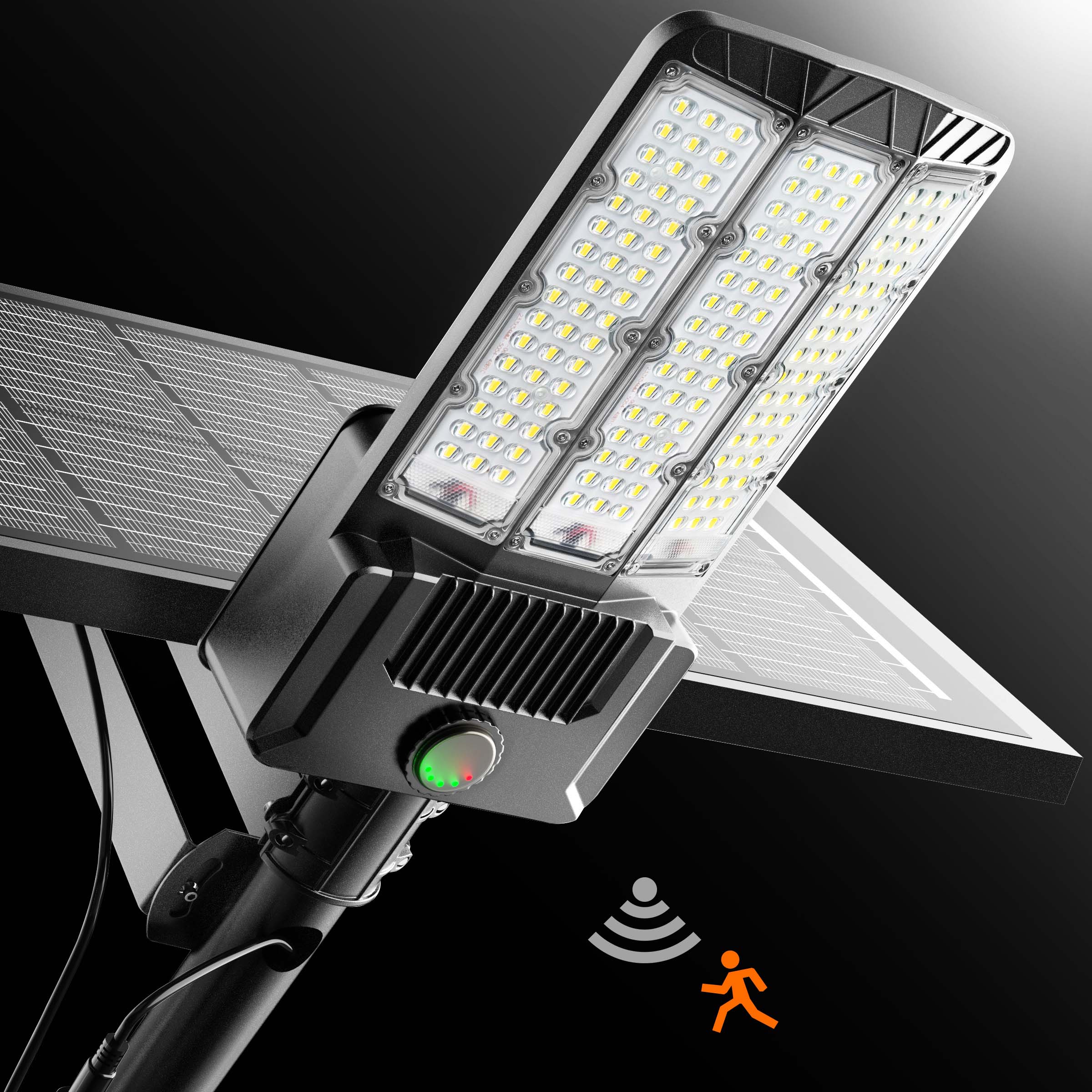
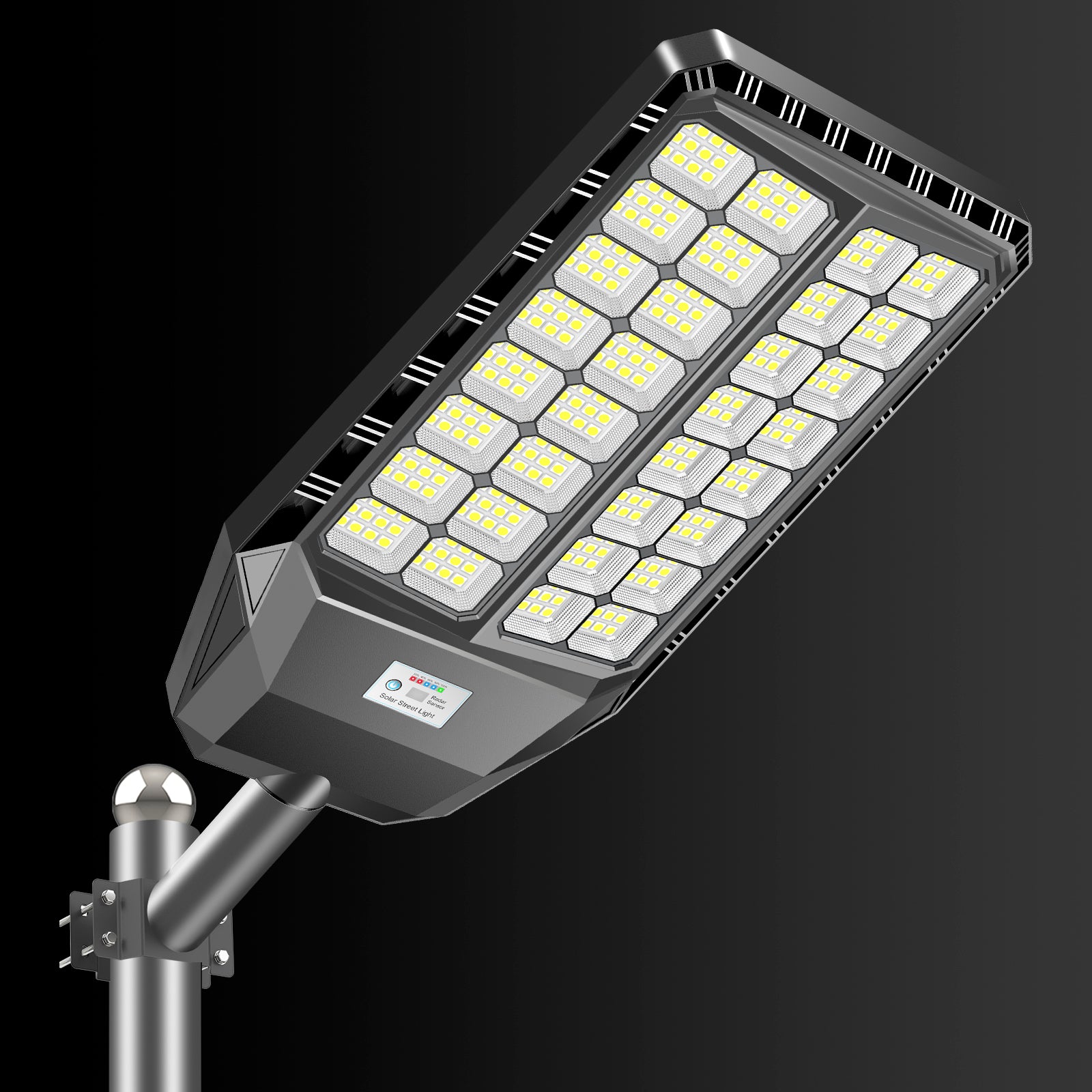
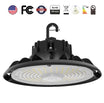
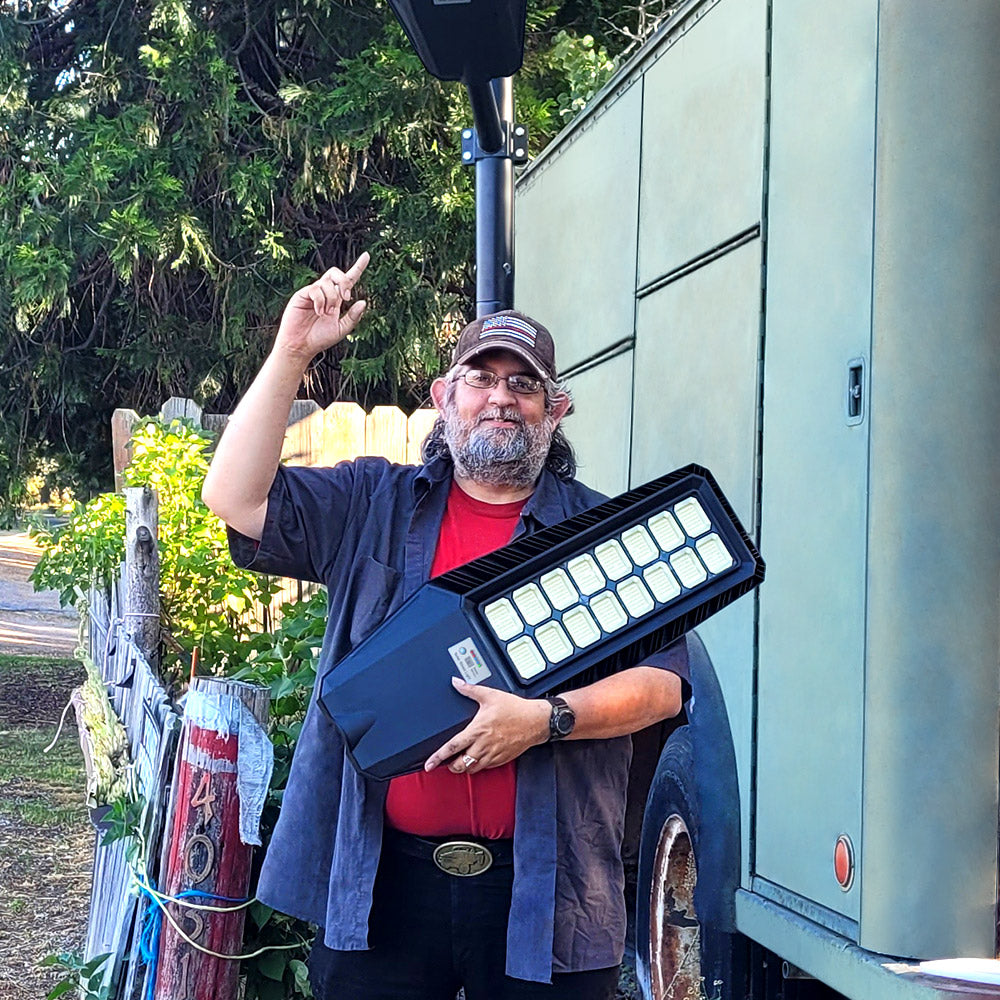
The Hykoont TW030 300W Solar Street Light is built for exactly this kind of application. At 42,000 lumens, it illuminates a wide area from a single pole-mounted unit. It's the kind of light you'd see in a commercial parking lot — which is actually the point. For a driveway or entry area where you need reliable, wide-coverage illumination, residential-grade solar stakes won't cut it.

- Output: 42,000 lumens
- Operation: Dusk-to-dawn automatic
- Best for: Driveways, entry paths, large open areas
- Price: $129.00 (1-pack)
One unit handles a standard two-car driveway. For longer driveways or a curved entry, the TW030 2-Pack at $242.00 gives you two units at a meaningful discount per unit — and covers the full length without dark gaps.
→ Shop the TW030 Solar Street Light — $129.00
💡 Placement tip: Mount at 10–14 feet height for maximum spread. The TW030's wide-angle output covers roughly a 30-foot diameter at that height — enough to light the full width of most residential driveways.
Zone 2 Setup: Main Patio — Lighting + Bug Control Together
This is where you need to think about both problems simultaneously. The patio is where guests congregate, which means it's where mosquito pressure is highest (body heat and CO2 attract them) and where lighting quality matters most for atmosphere.
Patio Lighting
For the main gathering area, you want light that's bright enough to see food and faces, but warm enough to feel like a party rather than a parking lot. The Hykoont BD006 Solar Street Light hits this balance well. It's a commercial-grade unit with a mono solar panel and high-lumen output, but its form factor is sleek enough for a residential patio setting.

- Material: Alloy construction — built for long-term outdoor exposure
- Panel: Mono solar panel for efficient charging even on partly cloudy days
- Best for: Patio perimeter, garden paths, side yards
- Price: $179.00
→ Shop the BD006 Solar Street Light — $179.00
Patio Bug Control
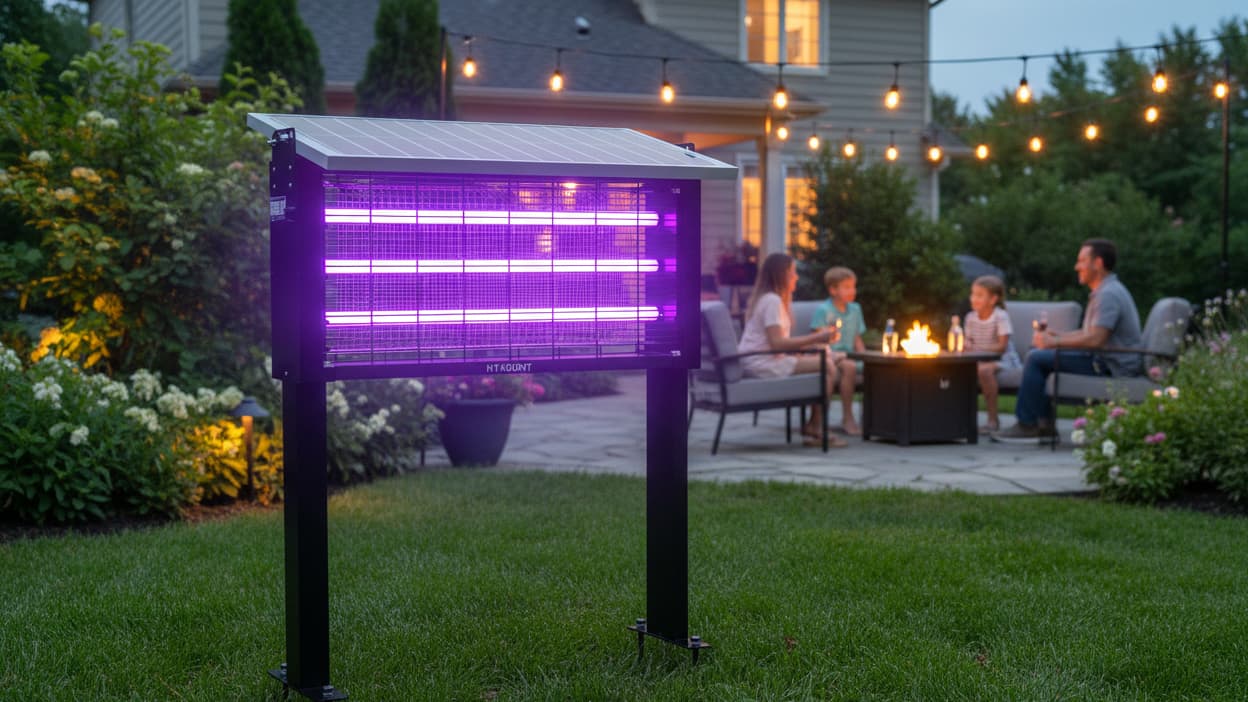
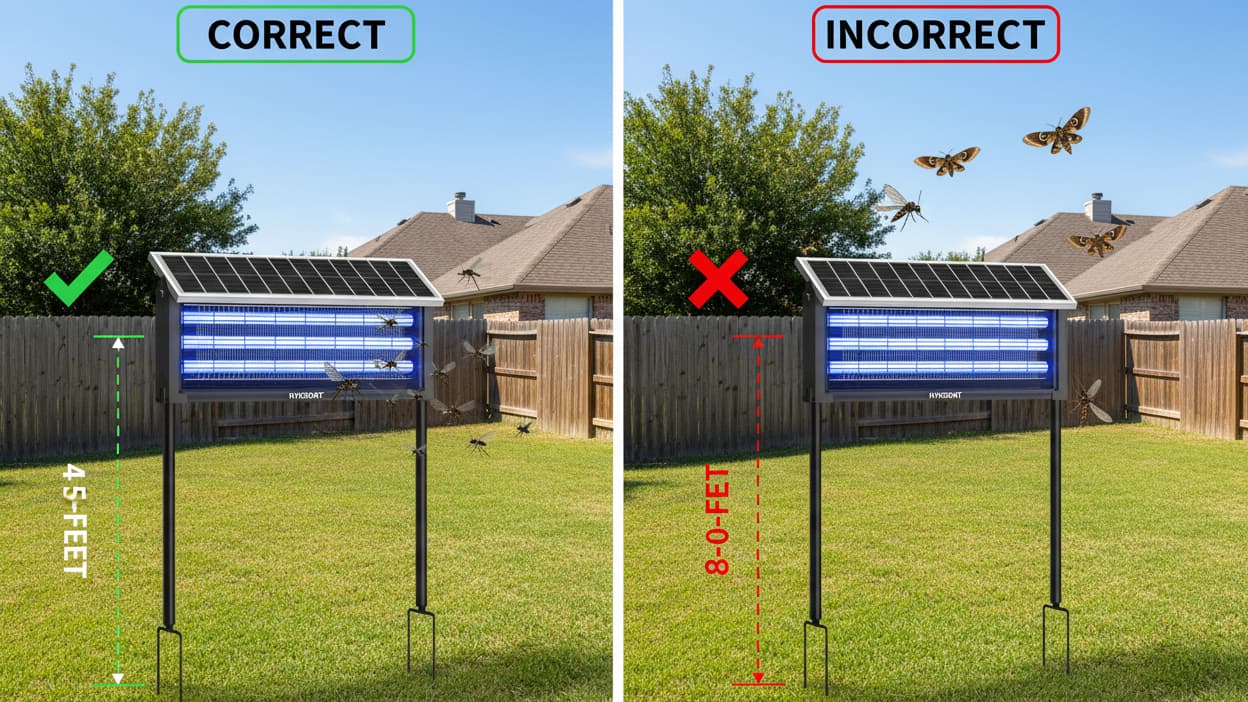
Here's the key insight most people miss: don't put the bug zapper directly over your seating area. You want it positioned 15–20 feet away, upwind of where guests are sitting. The UV light draws insects toward the zapper — away from your guests — rather than creating a congregation point above the food table.
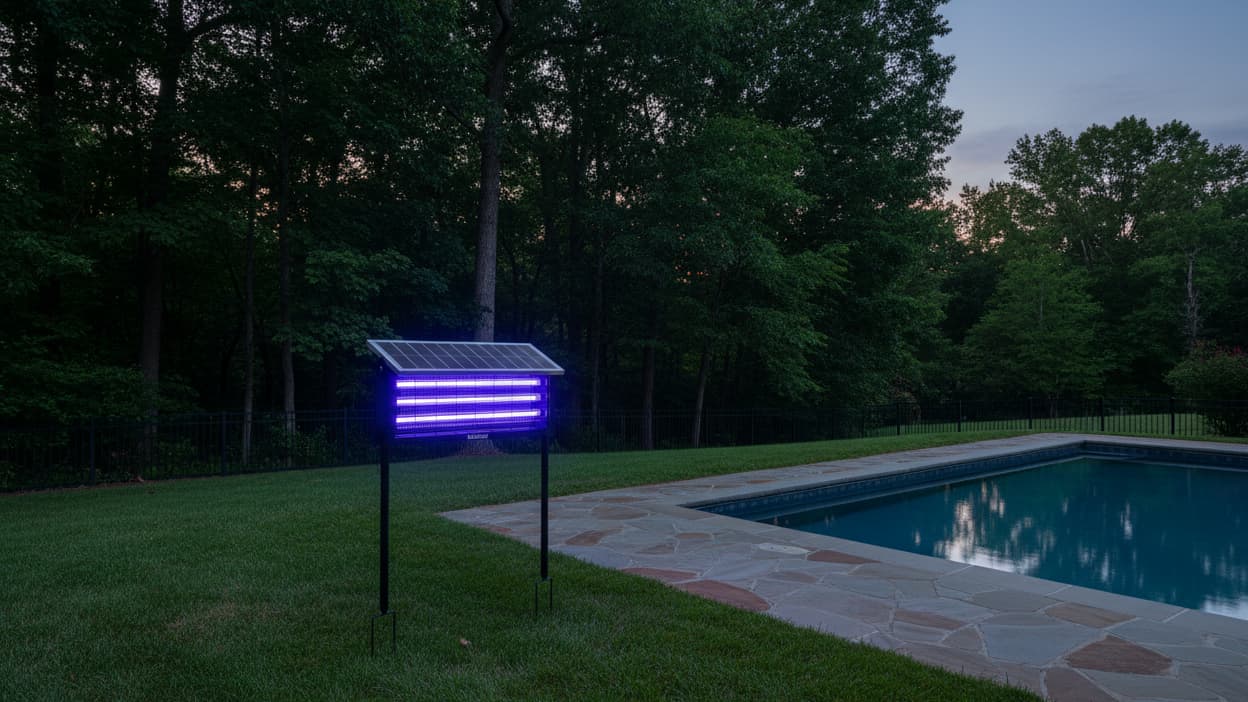
The Hykoont 30W Solar LED Bug Zapper Pro is the right tool for a main patio with 10+ guests. Its triple UV tubes have a wide attraction radius, and the 30W solar panel means it runs all night even after a partly cloudy day.

- Power: 30W solar panel, triple UV tubes
- Operation: Automatic dusk-to-dawn
- Best for: Large patios, pool areas, wide-open entertaining spaces
- Price: $219.00
→ Shop the 30W Bug Zapper Pro — $219.00
Zone 3 Setup: Perimeter & Garden — The Defensive Layer
Most people ignore the perimeter. That's a mistake. Insects don't materialize in the middle of your patio — they come from the edges. Wooded areas, garden beds, and fence lines are where mosquitoes rest during the day and launch from at dusk. Lighting and bug control at the perimeter intercepts them before they reach your guests.
Perimeter Lighting
For garden paths and perimeter coverage, you want multiple lower-output units spaced along the boundary rather than one high-output unit trying to reach everything. The Hykoont BM024 160W Solar Street Light 2-Pack gives you two units at $199 — solid value for covering both sides of a yard or a long garden path.

- Output: 21,600 lumens per unit
- Pack: 2 units
- Best for: Garden perimeter, fence lines, side yards, long paths
- Price: $199.00 (2-pack)
→ Shop the BM024 2-Pack — $199.00
Perimeter Bug Control
For the perimeter, the Hykoont 19W Solar LED Bug Zapper Standard works well as a secondary unit positioned at the yard's edge — between the wooded or grassy area and your main entertaining space. It intercepts insects at the source rather than waiting for them to reach the patio.

- Power: 19W solar panel, triple UV tubes
- Installation: Ground stake or hanging
- Weather resistance: IPX4
- Best for: Garden perimeter, secondary coverage zones
- Price: $119.00
Running the 30W Pro near the patio and the 19W Standard at the perimeter gives you layered bug control — the perimeter unit reduces the incoming population, and the patio unit handles anything that gets through.
→ Shop the 19W Bug Zapper Standard — $119.00
The Complete Party Setup: What It Looks Like in Practice
Let's put this together for a real scenario: a standard suburban backyard, roughly 50x80 feet, with a patio, a lawn area, a garden border, and a driveway out front. You're hosting 15–20 guests for a summer evening party starting at 6 PM.
What You'd Deploy
- Driveway/Entry: 1x TW030 Solar Street Light ($129) — mounted on an existing post or a new pole, covers the full driveway and front path
- Patio lighting: 1x BD006 Solar Street Light ($179) — positioned at the patio edge, provides ambient overhead light for the main gathering area
- Patio bug control: 1x 30W Bug Zapper Pro ($219) — positioned 15–20 feet from the seating area, upwind, at 5-foot height
- Perimeter lighting: 1x BM024 2-Pack ($199) — one unit on each side of the yard, covering garden borders and fence lines
- Perimeter bug control: 1x 19W Bug Zapper Standard ($119) — positioned at the yard's back edge, between the garden and any wooded area
Total Setup Cost: $845
That sounds like a lot until you compare it to what you'd spend over three summers on string lights (that burn out), extension cords (that create trip hazards), citronella candles (that don't work in wind), and bug spray (that you reapply all night). The solar setup pays for itself in two to three seasons and then runs for free indefinitely.
And critically: you don't do anything the night of the party. Everything turns on automatically at dusk. You're not running around lighting candles or plugging in extension cords while guests are arriving.

Timing and Sequencing: When to Set Up
Solar units need a full day of sun to charge before their first use. If you're setting up for a Saturday party, install everything by Thursday morning at the latest. Friday gives you a test run — you'll see exactly where the light falls, whether the bug zappers are positioned correctly, and whether you need to adjust anything before guests arrive.
A few things to check on your test night:
- Are there dark gaps? Walk the yard at dusk and identify any areas that feel underlit. Adjust unit positions or add a unit if needed.
- Is the bug zapper positioned away from seating? If you can see the UV glow from your main seating area, it's probably too close. Move it further out.
- Are any lights pointing into neighbors' windows? Adjust the angle if needed — most units have adjustable heads.
- Do all units turn on automatically? If a unit doesn't activate at dusk, it may not have gotten a full charge. Check for shade coverage on the solar panel and reposition if needed.
What About Rainy or Cloudy Party Days?
All the Hykoont units mentioned here are rated for outdoor use and handle rain without issue. The bug zappers are IPX4-rated (splash-proof), and the street lights are built for permanent outdoor installation.
For cloudy days, solar charging is reduced but not eliminated. A full overcast day typically yields 40–60% of a clear-day charge. For the bug zappers, that usually means 5–7 hours of runtime instead of a full night — which covers the peak party hours (7 PM to midnight) even on a cloudy day. The street lights have larger panels and batteries and tend to run longer under the same conditions.
If you're in a region with frequent overcast summers (Pacific Northwest, Great Lakes), consider positioning solar panels where they get maximum sky exposure — even diffuse light charges them, just more slowly.

The Hosting Experience Difference
Here's what changes when you have this setup in place:
Guests arrive to a well-lit driveway and entry. The patio is bright enough to see food and faces but warm enough to feel like an evening gathering. Nobody's tripping over extension cords. Nobody's asking where the bug spray is. The conversation isn't interrupted by swatting. Kids can run around the yard without disappearing into darkness.
And you — the host — aren't managing any of it. You set it up once, tested it the night before, and now it just works. That's the actual value of a well-designed outdoor setup: it removes friction from the hosting experience so you can focus on the people, not the infrastructure.
🎉 Ready to build your setup? Start with the zone that matters most — the main patio — and add zones from there. The 30W Bug Zapper Pro and BD006 Street Light together cover the patio lighting and bug control in one shot.
Frequently Asked Questions
How many solar lights do I need for a backyard party?
It depends on your yard size and layout, but a practical starting point for a standard suburban backyard (50x80 feet) is 3–4 lighting units: one for the entry/driveway, one or two for the main patio area, and one or two for the perimeter. The goal is to eliminate dark gaps where guests might trip or feel unsafe, not to flood the entire yard with light.
Can I mix solar street lights and string lights?
Absolutely — and it often works well. Solar street lights provide functional illumination (safety, navigation, food visibility), while string lights add atmosphere and warmth. They serve different purposes and complement each other. Just make sure the string lights aren't competing with your bug zapper's UV attraction radius — keep decorative lights away from the zapper's zone.
How far in advance should I install solar lights before a party?
At least 48 hours before the event. This gives units time for a full initial charge and gives you one test night to verify placement, coverage, and automatic activation. Installing the morning of the party is risky — you won't know if something needs adjustment until guests are already arriving.
Do solar bug zappers work well enough for a party with 20+ guests?
Yes, with the right unit and placement. The Hykoont 30W Pro is designed for large outdoor spaces and handles high-traffic entertaining areas effectively. The key is positioning — place it upwind and 15–20 feet from the main seating area so it draws insects away from guests rather than toward the gathering point.
Will solar lights stay on all night during a party?
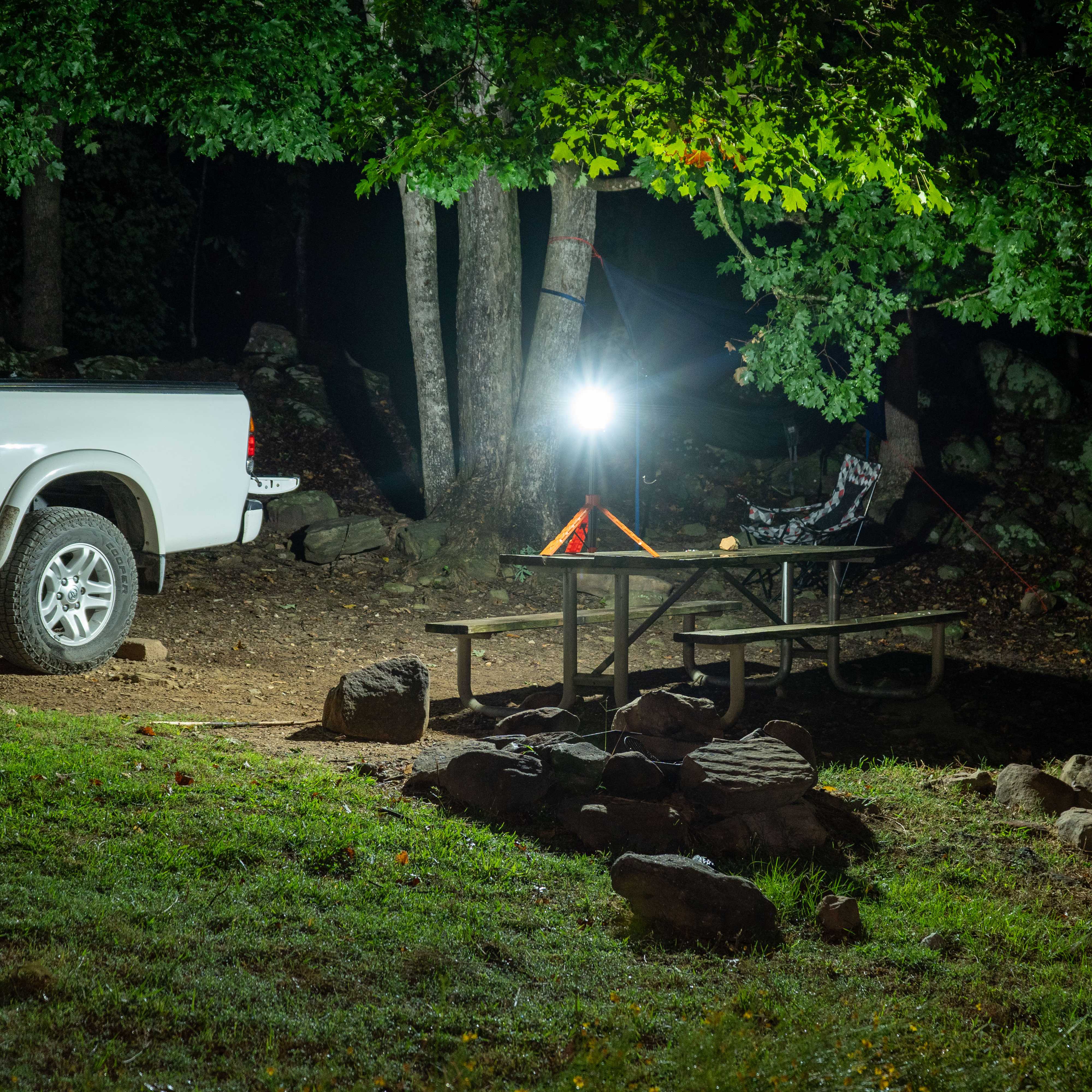
A fully charged solar unit should run 8–12 hours depending on the model and output setting. For a party that runs from 7 PM to midnight, that's well within range even after a partly cloudy day. The Hykoont TW030 and BM024 are designed for all-night operation and have larger battery capacities than typical residential solar stakes.
Are solar street lights bright enough for outdoor dining?
Yes — commercial-grade solar street lights like the TW030 (42,000 lumens) and BM024 (21,600 lumens per unit) produce significantly more light than decorative solar fixtures. For outdoor dining, you want the light source positioned to the side or above the table rather than directly overhead, which reduces glare while maintaining good visibility.
What's the best way to control mosquitoes at an outdoor party without chemicals?
The most effective chemical-free approach is a combination of UV bug zappers positioned upwind of the seating area, plus eliminating standing water in the yard before the party (mosquitoes breed in as little as a bottle cap of water). The 19W Standard at the perimeter and the 30W Pro near the patio creates a layered defense that significantly reduces the insect population in your outdoor space.
Can I leave solar lights installed year-round?
Yes. The Hykoont street lights and bug zappers are designed for permanent outdoor installation and handle rain, humidity, and temperature variation. In northern US climates, the bug zappers won't attract many insects below 50°F, but the street lights will continue operating through fall and winter. There's no need to bring them in seasonally.
Do I need a permit to install solar street lights in my backyard?
For pole-mounted solar street lights, some municipalities require a permit if you're installing a new pole. Check with your local building department before installation. Ground-stake and hanging units (like the bug zappers) typically don't require permits. If you're mounting to an existing structure, most jurisdictions don't require a permit for solar fixtures since they don't connect to the electrical grid.
What's the difference between the TW030 1-pack and 2-pack?
The TW030 1-pack ($129) is a single unit — ideal for a standard driveway or single entry point. The TW030 2-pack ($242) gives you two units at a lower per-unit cost, which makes sense for longer driveways, dual entry points, or covering both the front and back of a property. At $121 per unit in the 2-pack vs. $129 for a single, the savings are modest but the coverage improvement is significant.

Leave a comment
This site is protected by hCaptcha and the hCaptcha Privacy Policy and Terms of Service apply.