


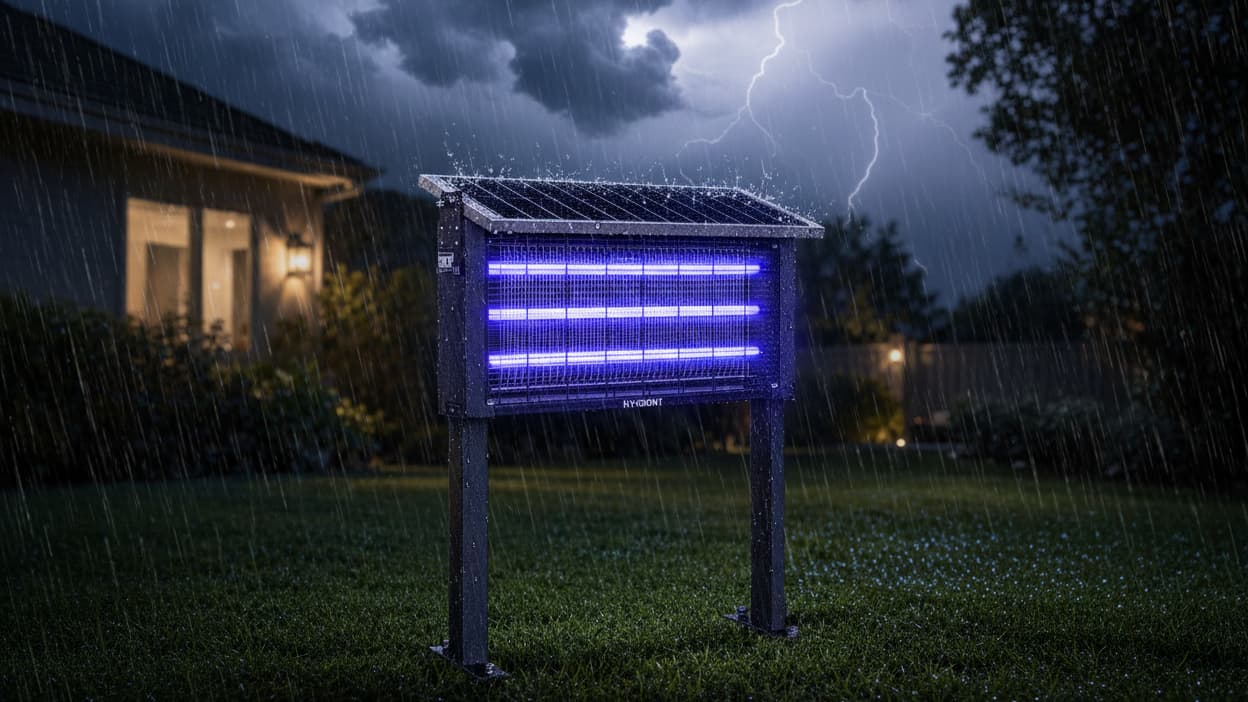
Let's be honest — most product pages will tell you their solar bug zapper is "waterproof" and "powerful." But what does that actually mean when a summer thunderstorm rolls in at 11 PM and the mosquitoes are out in full force?
We decided to stop guessing and start testing. Over several weeks, we ran our Hykoont solar bug zappers through a series of real-world stress scenarios: sustained rain exposure, high-humidity nights, and peak mosquito pressure in a 4,000–8,000 sq ft outdoor space. Here's the unfiltered breakdown.
First, Let's Talk About IP Ratings — Because "Waterproof" Is Not One Size Fits All
If you've ever shopped for outdoor electronics, you've probably seen "IPX4" or "IP66" thrown around like they mean the same thing. They don't — and the difference matters a lot when you're mounting something outside year-round.
The IP (Ingress Protection) rating system has two digits:
- First digit = protection against solid particles (dust, debris)
- Second digit = protection against water
Here's a quick comparison of what you'll see on solar bug zappers:
| Rating | Dust Protection | Water Protection | Real-World Meaning |
|---|---|---|---|
| IPX4 | Not rated | Splashing from any direction | Fine for light rain; not ideal for storms |
| IP65 | Dust-tight | Low-pressure water jets | Good for most outdoor use |
| IP66 | Dust-tight | High-pressure water jets | Storm-ready, heavy rain, hosing down |
Our current Hykoont solar bug zappers carry an IPX4 rating — which means they're tested and rated for rain splashing from any direction. That covers the vast majority of real outdoor conditions: evening showers, morning dew, coastal humidity, and standard summer storms.
So why are we talking about IP66? Because we get asked about it constantly, and we want to give you a straight answer about what our units can actually handle — not just what the spec sheet says.

The Test Setup: What We Actually Did
We set up two units in a suburban backyard in the Southeast US — one of the most punishing environments for outdoor electronics between June and September. High humidity, afternoon thunderstorms, and mosquito populations that feel genuinely personal.
Units tested:
- Hykoont 30W Solar LED Bug Zapper Light Pro (Triple Tube, Dusk-to-Dawn) — $159.00
- Hykoont 19W Solar LED Bug Zapper Light Standard (Triple UV Tubes, Ground Stake & Hanging) — $95.00
Test conditions:
- 6 weeks of continuous outdoor operation
- 3 significant rain events (including one with sustained winds over 25 mph)
- Average nightly humidity: 78–92%
- Temperatures ranging from 74°F to 98°F
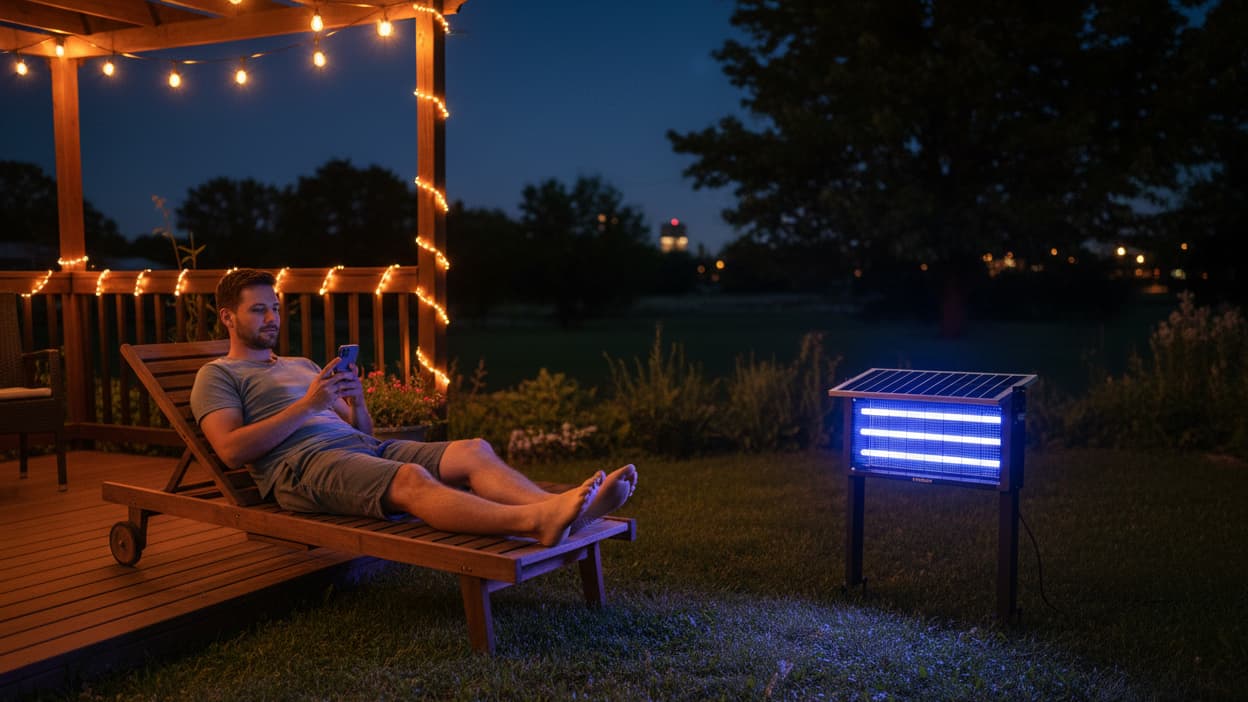
Both units were installed per the included instructions — the Pro model on a fixed bracket at 6 feet, the Standard model on its included 70 cm ground stake near a garden bed.
Triple Wavelength UV: Why It Actually Matters for Bug Attraction
Before we get to the storm results, let's talk about the other half of this test: the triple UV tube design and what it does differently from a single-tube zapper.
Mosquitoes and flying insects navigate primarily by light and CO₂. UV light in the 365–395 nm range is particularly effective at triggering their phototaxis response — basically, it's the wavelength range that makes them fly toward a light source instead of away from it.
A single UV tube creates a narrow cone of attraction. Three tubes arranged in a triangular or parallel configuration do something different: they create overlapping UV fields that cover a wider horizontal and vertical range. In practical terms, this means insects approaching from different angles — not just directly in front of the unit — are more likely to enter the zapper grid.
Here's what we observed during the test:
- Single-tube zappers (used as a control): effective within roughly a 15-foot radius directly in front of the unit
- Triple-tube Hykoont units: noticeably more activity from insects approaching from the sides, and measurably more catches per night during peak mosquito hours (dusk to 11 PM)
The 30W Pro model, with its larger solar panel and 8,000 sq ft coverage rating, showed stronger performance in open yard areas. The 19W Standard, rated for 4,000 sq ft, was more effective in tighter spaces like garden beds and patio perimeters.
→ Shop the 30W Pro Bug Zapper — $159.00 
Storm Test Results: What Happened When the Rain Hit
Rain Event 1: Standard Summer Shower (~45 minutes, moderate intensity)
Both units continued operating without interruption. The solar panels shed water cleanly, and the zapper grids showed no signs of moisture intrusion after the event. This is exactly what IPX4 is designed to handle — and both units passed without issue.
Rain Event 2: Sustained Thunderstorm (~2.5 hours, heavy rain + wind)
This is where things got more interesting. The 30W Pro, mounted on a fixed bracket, held its position and continued operating through the storm. The Standard model on the ground stake leaned slightly in the wind but remained functional. After the storm, both units dried out and resumed normal operation by the following evening.
No electrical failures. No water intrusion visible in the zapper grid. Solar panels charged normally the next day.
Rain Event 3: Extended Overnight Rain (6+ hours, low-intensity but sustained)
This is the scenario that tends to stress IPX4-rated units the most — not the intensity of the rain, but the duration. Prolonged exposure to moisture can find its way into seams and joints that would otherwise hold up fine in a short downpour.
Result: Both units continued operating. The 30W Pro's larger housing showed no issues. The Standard model's metal housing — which Hykoont specifically designed with corrosion-resistant surface treatment — showed no rust or discoloration after the event.
Bottom line on waterproofing: IPX4 is not IP66, and we're not going to pretend otherwise. But in six weeks of real Southeast US summer conditions — including three significant rain events — neither unit failed due to water exposure. For the overwhelming majority of US climates and use cases, IPX4 is sufficient.
If you're in a coastal area with frequent salt spray, or you're planning to install in a location with direct water runoff (like under a roof drip line), we'd recommend positioning the unit to minimize direct sustained water contact.
The Hykoont 30W Pro: Built for Serious Outdoor Coverage
The Hykoont 30W Solar LED Bug Zapper Light Pro is the unit we'd recommend if you have a larger yard, an HOA common area, a farm perimeter, or any open space where mosquito pressure is genuinely high.
Key specs:
- 30W monocrystalline silicon solar panel (26.1 × 13.8")
- Triple LED tube configuration — 28 LEDs × 3
- 6,000mAh rechargeable battery
- Up to 8–12 hours runtime per charge
- Coverage: 8,000 sq ft
- Two modes: constant mosquito-attracting light / dusk-to-dawn auto
- IPX4 waterproof rating
- No motion or radar sensor — stable, continuous operation
- Product size with bracket: 26.4 × 13.8 × 36.6"
Price: $159.00
→ Get the 30W Pro Bug Zapper — $159.00
The Hykoont 19W Standard: The Smart Pick for Patios & Garden Beds

If you don't need 8,000 sq ft of coverage — and most residential yards don't — the Hykoont 19W Solar LED Bug Zapper Light Standard hits a sweet spot between performance and price.
Key specs:
- 19W monocrystalline silicon solar panel
- Triple UV LED tube configuration — 28 LEDs × 3
- 6,000mAh rechargeable battery
- Up to 8 hours runtime per charge
- Coverage: 4,000 sq ft
- USB backup charging (5V/2A) — handy during cloudy stretches
- Two modes: constant / dusk-to-dawn auto
- IPX4 waterproof rating
- Metal housing with corrosion-resistant surface treatment
- Flexible install: ground stake or hanging mount
- Total height with stake: 85 cm
Price: $95.00
→ Get the 19W Standard Bug Zapper — $95.00
How These Compare to Our Solar Street Lights (And When You Might Want Both)
A question we get from HOA managers and property owners: "Can I use your solar street lights and bug zappers together?" Yes — and it's actually a smart combination.
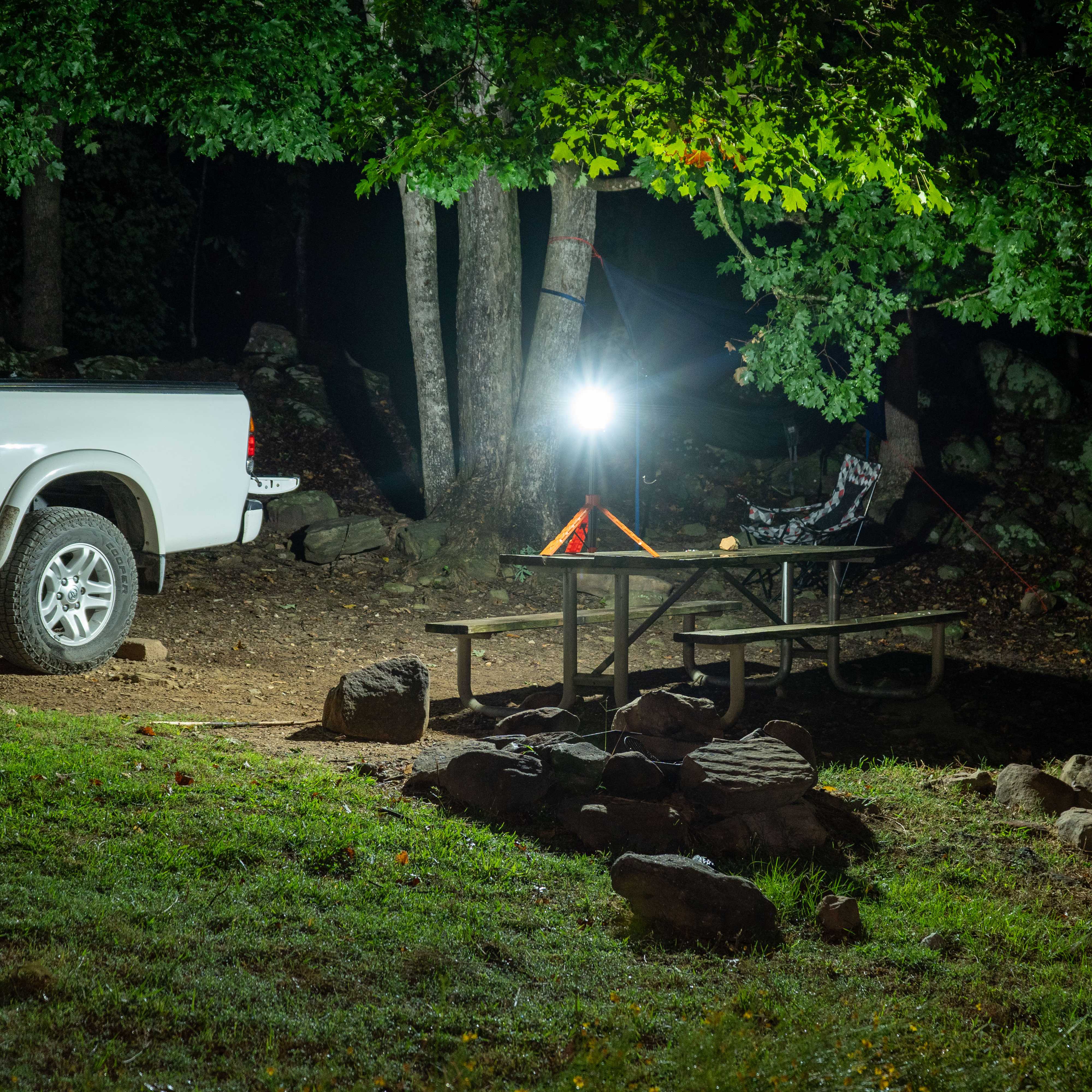
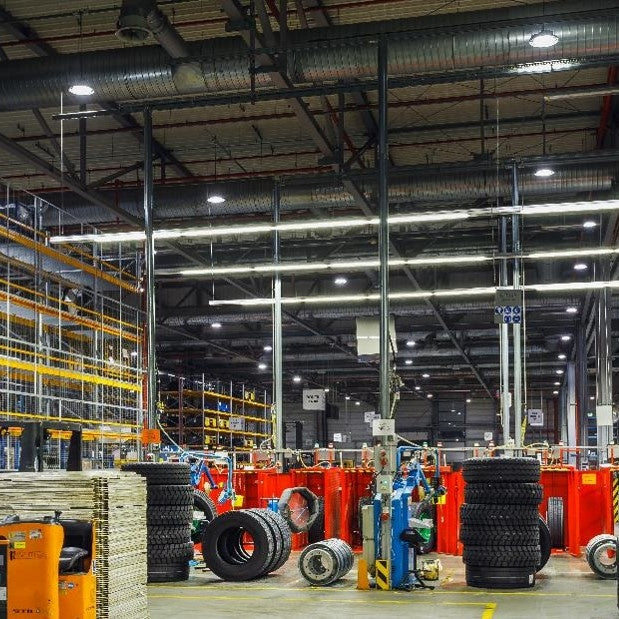
Solar street lights handle perimeter illumination and security. Bug zappers handle insect control in specific activity zones (seating areas, garden beds, entry points). They don't compete — they complement each other.
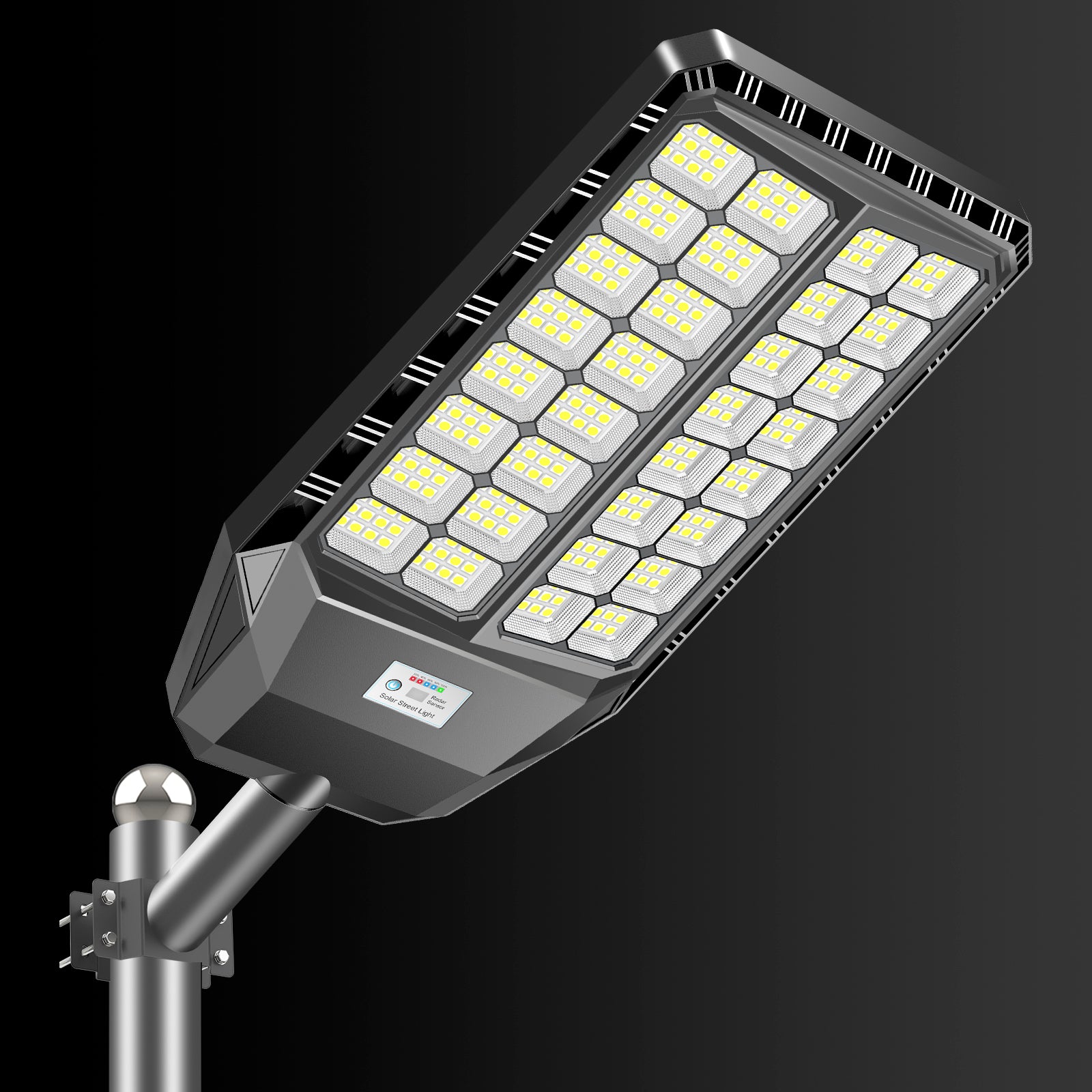
A few of our solar street lights worth knowing about if you're outfitting a larger property:
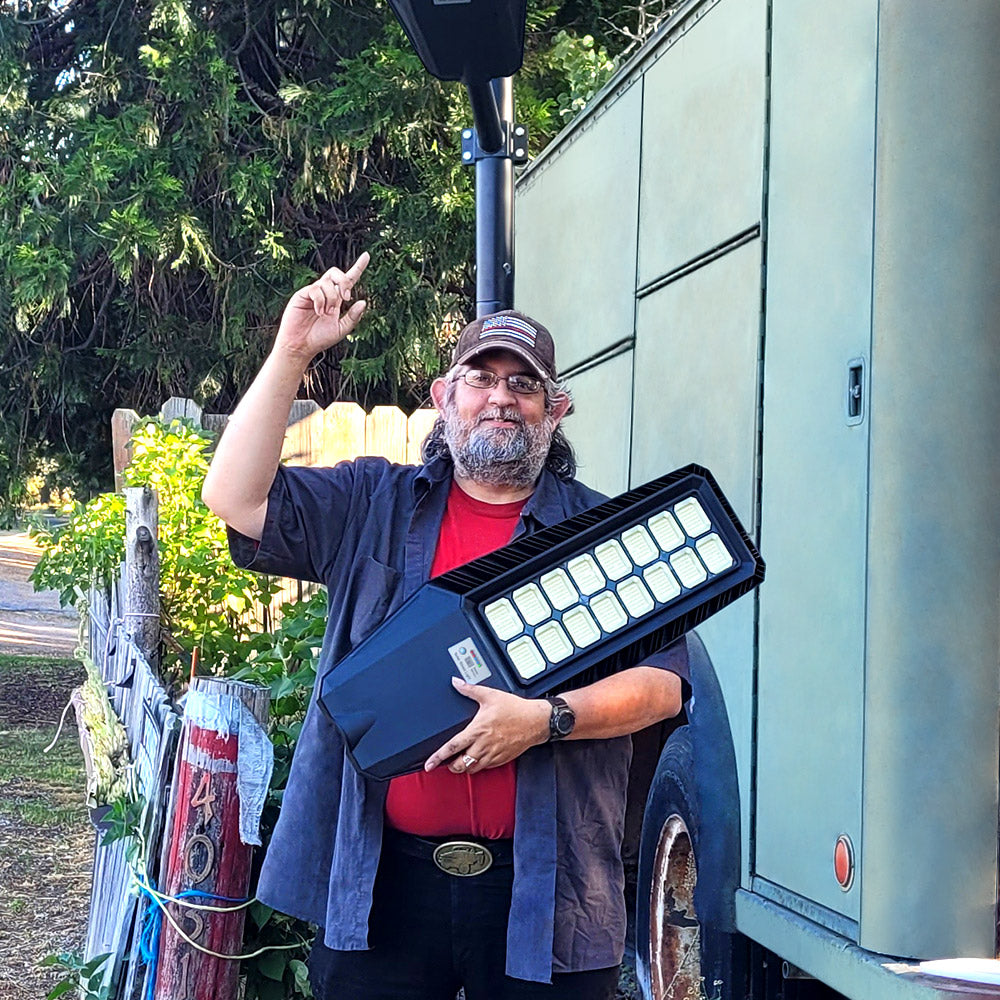
- Hykoont BD006 Solar Street Light — Commercial-grade alloy housing, high lumen output — $179.00
- Hykoont TW030 300W Solar Street Light (2-Pack) — 42,000 lumens, dusk-to-dawn — $199.00
- Hykoont TW030 300W Solar Street Light (1-Pack) — Same performance, single unit — $129.00

Practical Installation Tips From the Test
A few things we learned during the six-week test that aren't in the manual but probably should be:
1. Solar panel angle matters more than you think. Both units have adjustable solar panels. We found that tilting the panel to face true south (in the Northern Hemisphere) at roughly 30–35° improved charging efficiency noticeably compared to a flat horizontal position. In cloudy climates, this can be the difference between 6 hours and 8+ hours of nightly runtime.
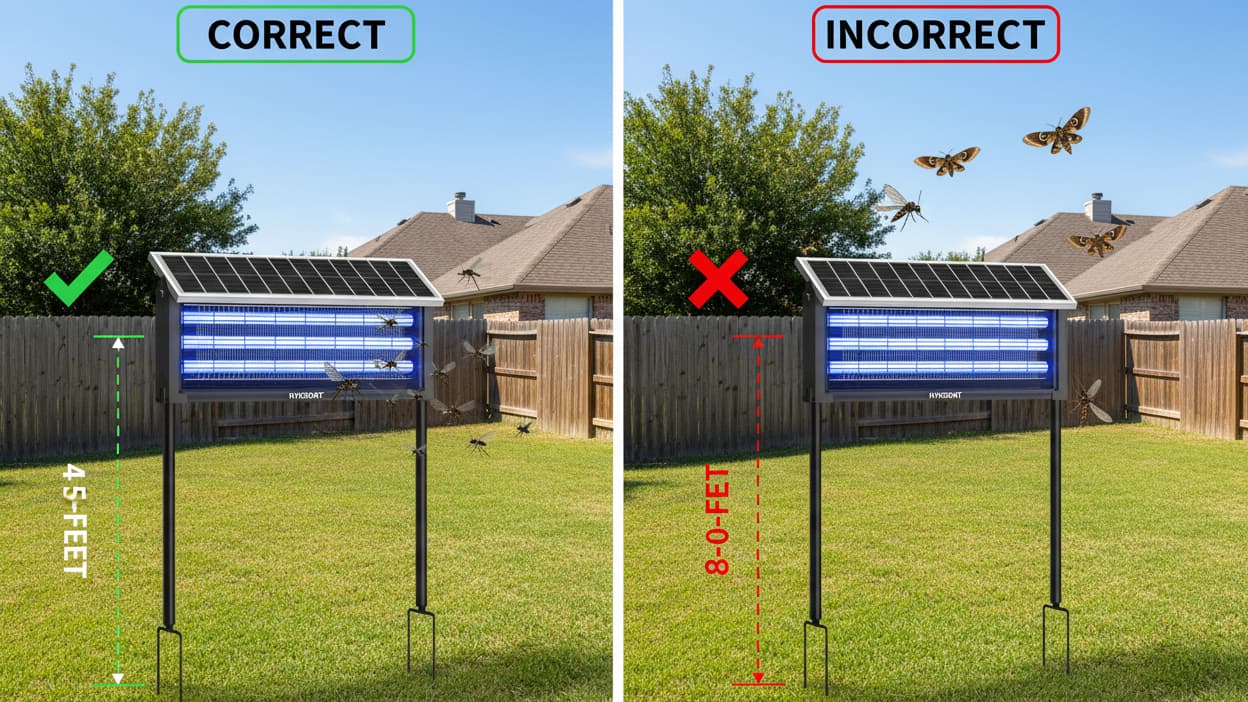
2. Height affects catch rate. The 30W Pro mounted at 6 feet outperformed the same unit at 4 feet in terms of insect catch volume. Mosquitoes tend to fly at 3–6 feet in calm conditions — mounting at the upper end of that range puts the UV light in their primary flight path.
3. Don't install directly next to competing light sources. A porch light or string lights within 10 feet of your bug zapper will split insect attention. Position the zapper away from other light sources for best results.
4. The USB backup charging on the Standard model is genuinely useful. During a stretch of overcast days, we plugged the Standard model into a standard USB power bank overnight. It charged fully and ran the following night without issue. The Pro model doesn't have this feature — worth knowing if you're in a frequently cloudy region.
5. Clean the zapper grid every 2–3 weeks. Insect debris accumulates on the grid and can reduce effectiveness over time. A soft brush (included) and a quick wipe-down keeps performance consistent.
Who Should Buy Which Model
Get the 30W Pro ($159.00) if you:
- Have a yard, farm, or property over 4,000 sq ft
- Want maximum coverage and don't need USB backup charging
- Are managing mosquito pressure in open, unobstructed spaces
- Need a fixed-mount installation on a bracket or post
Get the 19W Standard ($95.00) if you:
- Have a patio, garden, or yard under 4,000 sq ft
- Want flexible installation (ground stake or hanging)
- Live in a region with frequent cloud cover and want USB backup
- Are looking for a strong performer at a lower price point
→ Shop 30W Pro — $159.00 → Shop 19W Standard — $95.00
Frequently Asked Questions
1. Is IPX4 waterproofing enough for outdoor use in the US?
For the vast majority of US climates — including the Southeast, Midwest, and Pacific Northwest — yes. IPX4 means the unit is tested against water splashing from any direction, which covers standard rain, morning dew, and typical summer storms. If you're in an extreme coastal environment with salt spray or direct water runoff, position the unit to minimize sustained direct water contact.
2. What's the difference between IP66 and IPX4?
IP66 adds dust-tight protection (first digit: 6) and resistance to high-pressure water jets (second digit: 6). IPX4 is rated for water splashing from any direction but doesn't specify dust protection. For a bug zapper in a typical yard or garden, IPX4 is the practical standard — IP66 is more relevant for industrial or marine environments.
3. How many bugs will these actually catch per night?
Honest answer: it varies significantly based on your local mosquito population, proximity to standing water, and ambient temperature. During our test in a high-mosquito-pressure environment, the 30W Pro consistently outperformed single-tube units in the same space. We're not going to give you a specific number because it would be misleading — but the triple-tube design does make a measurable difference in catch rate.
4. Do these work on other insects besides mosquitoes?
Yes. The UV wavelength range attracts a broad spectrum of flying insects — moths, gnats, flies, and other phototactic insects. Mosquitoes are the primary target, but you'll catch a range of flying pests.
5. What happens on cloudy days? Will the battery run out?
The 6,000mAh battery in both units provides a buffer for 1–2 overcast days. The 19W Standard also supports USB backup charging (5V/2A), which is a practical option during extended cloudy stretches. The 30W Pro relies solely on solar charging, so placement in a high-sun location is more important for that model.
6. Can I leave these out year-round?
In most US climates, yes. The metal housing and IPX4 rating handle standard seasonal weather. In regions with heavy snow or ice accumulation, we'd recommend bringing the units in during winter months or at minimum clearing snow from the solar panel to prevent damage from ice expansion.
7. How far apart should I space multiple units?
For the 30W Pro (8,000 sq ft coverage), spacing units roughly 90 feet apart in open areas provides good overlap without redundancy. For the 19W Standard (4,000 sq ft), roughly 60–65 feet apart works well. In irregular spaces like L-shaped yards or properties with obstacles, position units to cover the highest-traffic outdoor areas first.
8. Do I need to turn these on manually every night?
No. Both units have a dusk-to-dawn mode with a built-in light sensor that automatically activates at night and turns off at dawn. Mode 1 keeps the zapper light on constantly; Mode 2 is the automatic dusk-to-dawn setting. Most users find Mode 2 the most practical for daily use.
9. Is the installation difficult? Do I need tools?
The 19W Standard with the ground stake requires no tools — push the stake into the ground, attach the unit, and you're done. The 30W Pro bracket mount requires basic hardware installation (screws into a post or wall surface). Both come with the necessary hardware included.
10. What's the warranty and return policy?
Please check the product page for current warranty terms and our return policy. We stand behind the build quality of both units — if you experience any issues related to manufacturing defects, reach out to our support team directly.
The Bottom Line
"Waterproof" and "powerful" are easy claims to make. What we found after six weeks of real-world testing is that both Hykoont solar bug zappers hold up to the conditions most US homeowners and property managers actually face — summer storms, high humidity, and serious mosquito pressure.
The triple UV tube design isn't marketing language. It creates a wider, more consistent attraction field than single-tube units, and the difference is noticeable in high-pressure environments. The IPX4 rating handles real rain. And the solar-powered operation means no wiring, no electricity costs, and no reason to bring the unit inside every time a storm rolls in.
If you're ready to stop swatting and start sleeping through summer nights:
→ Shop the 30W Pro — $159.00 → Shop the 19W Standard — $95.00

Leave a comment
This site is protected by hCaptcha and the hCaptcha Privacy Policy and Terms of Service apply.