



Walk into most commercial buildings in America and you'll find the same thing: one light setting, running from open to close, regardless of what's happening in the room. Morning meetings, afternoon focus work, evening wind-down — same flat 4000K output, same brightness, same everything.
It's not that facility managers don't care. It's that until recently, changing light color meant changing fixtures. That's expensive, disruptive, and hard to justify on a maintenance budget.
Tunable white LED panels changed that equation. One fixture, one installation, and you can dial in the right light for any time of day or any task — without touching the ceiling again. This guide covers how they work, where they make the most sense, what they actually cost, and how to avoid the mistakes that make these projects more complicated than they need to be.
The Problem With "Set It and Forget It" Lighting
Fixed-CCT lighting made sense when the alternative was re-lamping. But we're past that now. The research on light and human performance has gotten specific enough that "good enough" lighting is starting to look like a liability.
Here's what the science actually says, without the marketing spin:
- Cool light (5000K+) in the morning suppresses melatonin and increases cortisol — the hormones associated with alertness. This is a feature, not a bug, if you're trying to get a team focused at 8 AM.
- Neutral light (3500K–4000K) mid-day maintains alertness without the harshness of high-CCT light during extended work periods.
- Warm light (2700K–3000K) in the late afternoon and evening allows melatonin to rise naturally, which matters for sleep quality — especially in buildings where people work late.
The American Medical Association has issued guidance recommending that indoor lighting be designed with circadian health in mind. The Illuminating Engineering Society (IES) has updated its standards to include circadian metrics alongside traditional photometric measurements.
None of this requires expensive smart building infrastructure. A tunable white panel with a simple scheduling controller handles it automatically.
How Tunable White Actually Works (The Short Version)
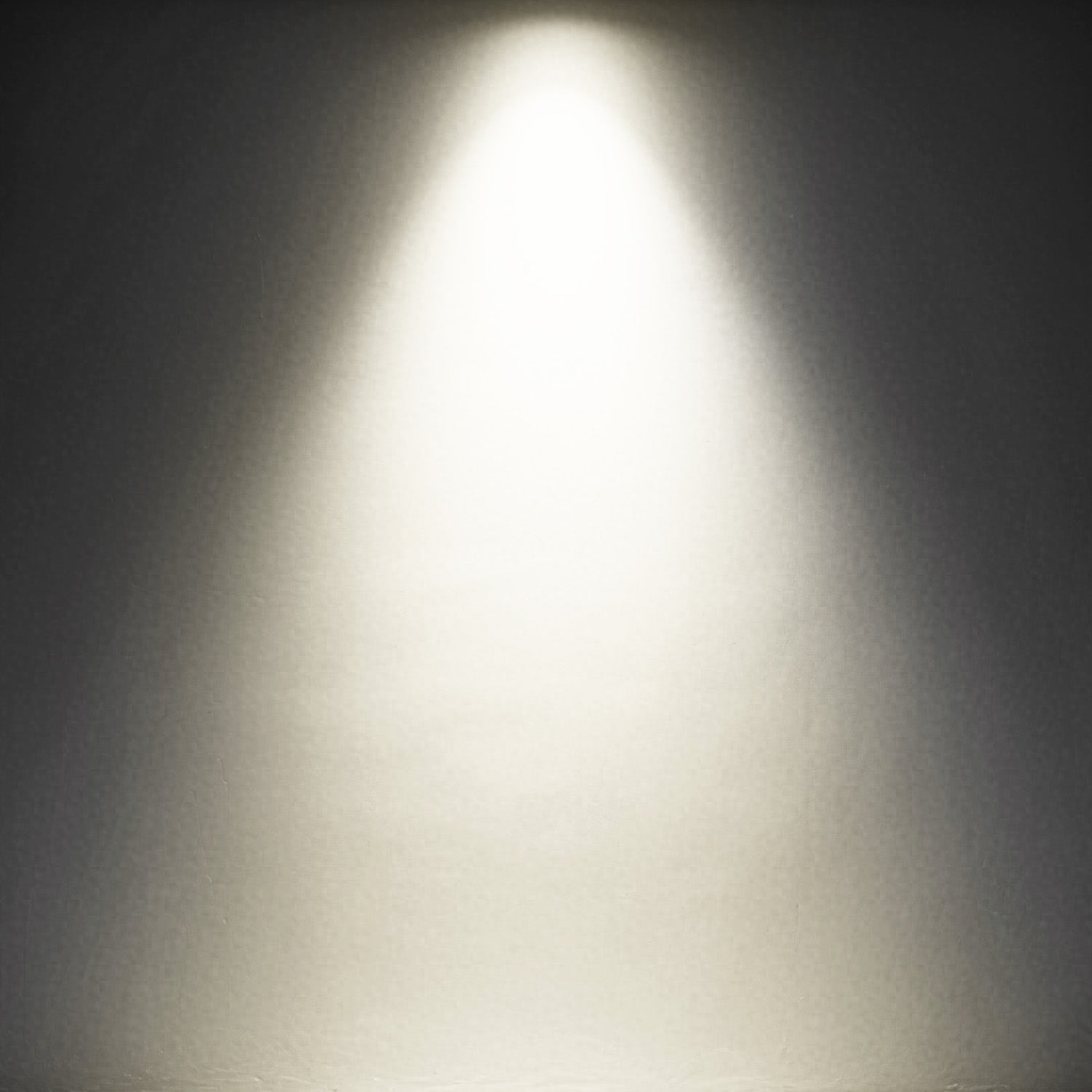
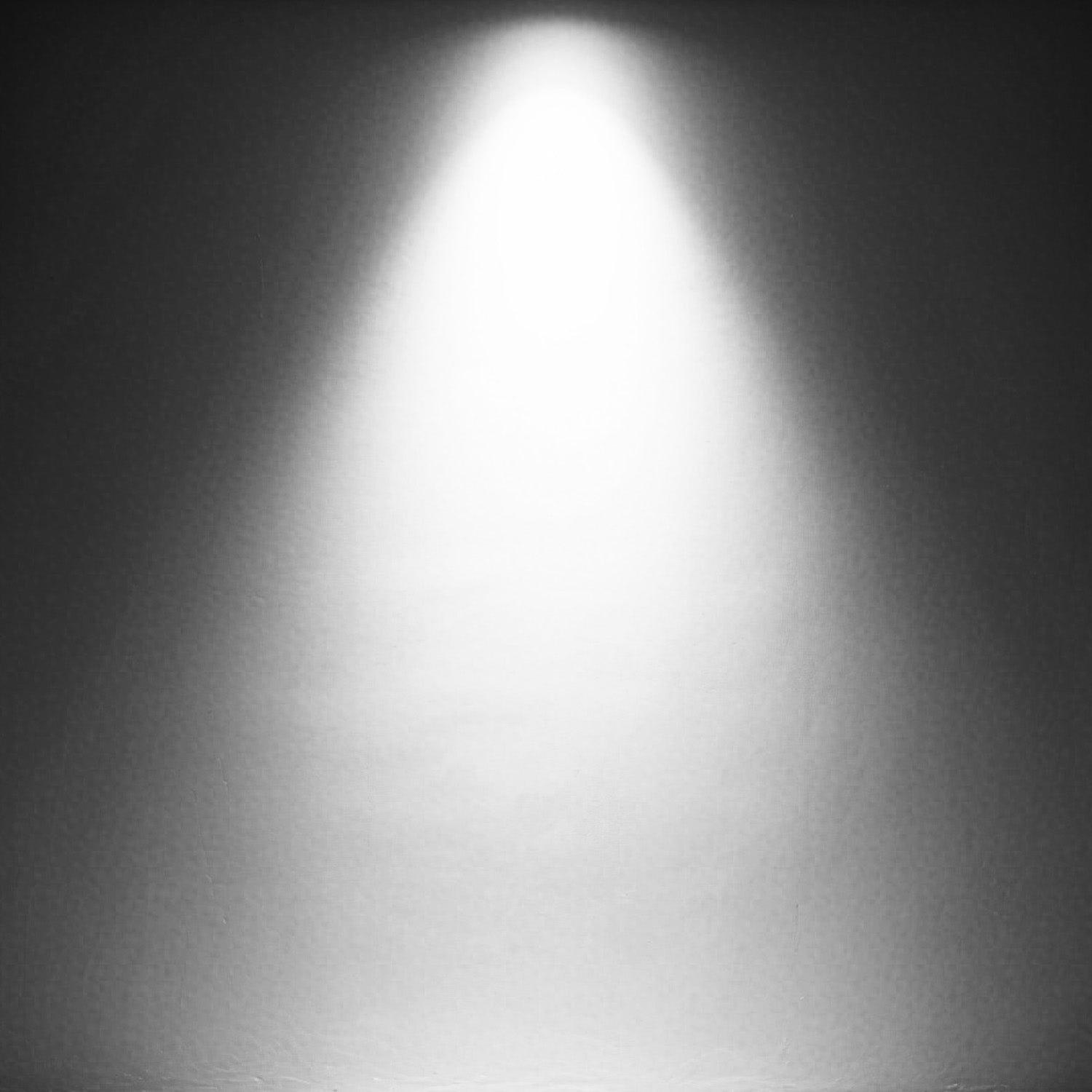
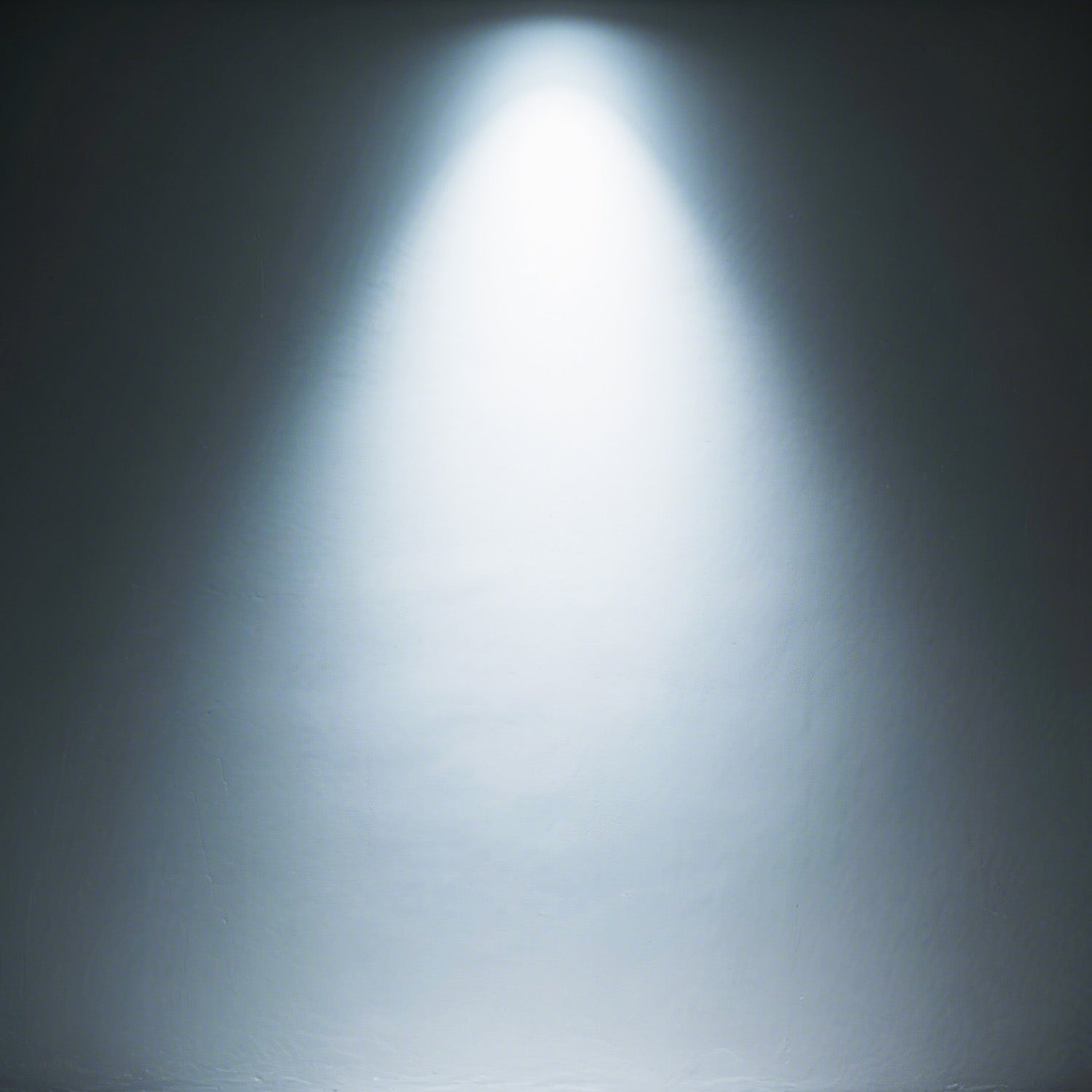
A standard LED panel has one type of LED chip — usually a phosphor-converted white chip tuned to a fixed color temperature. A tunable white panel has two: one warm-white chip set (typically 2700K–3000K) and one cool-white chip set (typically 5000K–6500K).
The driver blends the output ratio between the two chip sets. More warm chips = lower CCT. More cool chips = higher CCT. The total wattage stays the same — you're not adding energy, just shifting the spectral balance.
This is different from RGBW or full-color tunable systems, which add red, green, and blue LEDs to produce color. Tunable white stays within the white spectrum — which is what you want for commercial, educational, and healthcare applications where color rendering and professional appearance matter.
What "5 CCT Selectable" Actually Means
When a panel is described as "5 CCT selectable," it means there are five discrete color temperature settings — typically 3000K, 3500K, 4000K, 5000K, and 6500K. You select the setting via a switch on the driver (usually accessible through the ceiling grid) or via a compatible control system.
"3 CCT selectable" panels offer three settings — typically 3500K, 4000K, and 5000K. This covers the most common commercial range and is sufficient for most office and retail applications.
The difference matters when you need the extremes: 3000K for hospitality or patient rooms, or 6500K for inspection areas, medical exam rooms, or high-detail task work.

Where Tunable White Panels Make the Most Sense
Not every space needs tunable white. Here's an honest breakdown of where the investment pays off and where it doesn't.
High-Value Applications
K–12 Schools and Universities
Classrooms are one of the strongest use cases. Multiple studies — including research from the Fraunhofer Institute and the Lighting Research Center — have documented measurable improvements in student attention, reading speed, and test performance under circadian-aligned lighting. Morning classes benefit from higher CCT; afternoon sessions from warmer, less stimulating light.
Schools also tend to have predictable schedules, which makes automated CCT scheduling straightforward. And many school districts qualify for utility rebates on DLC-certified fixtures, which significantly reduces the net cost.

Healthcare Facilities
Patient rooms, nursing stations, and exam rooms have fundamentally different lighting requirements at different times. Exam rooms need high CCT (5000K+) for accurate clinical assessment. Patient rooms need warm light (3000K) for comfort and sleep. Nursing stations need neutral light for extended work periods.
Tunable white handles all of these from a single fixture type, which simplifies procurement, installation, and maintenance.

Corporate Offices with Flexible Layouts
Open-plan offices that shift between collaboration and focused work benefit from the ability to change light character without changing fixtures. A zone set to 5000K for morning stand-ups can shift to 3500K for afternoon deep work — either manually or on a schedule.
Retail with Changing Merchandise
Different products look better under different color temperatures. Warm light flatters food, textiles, and skin tones. Cool light makes electronics, jewelry, and white goods look crisp. A tunable white system lets a retailer optimize for whatever's on display without re-lamping.

Lower-Value Applications
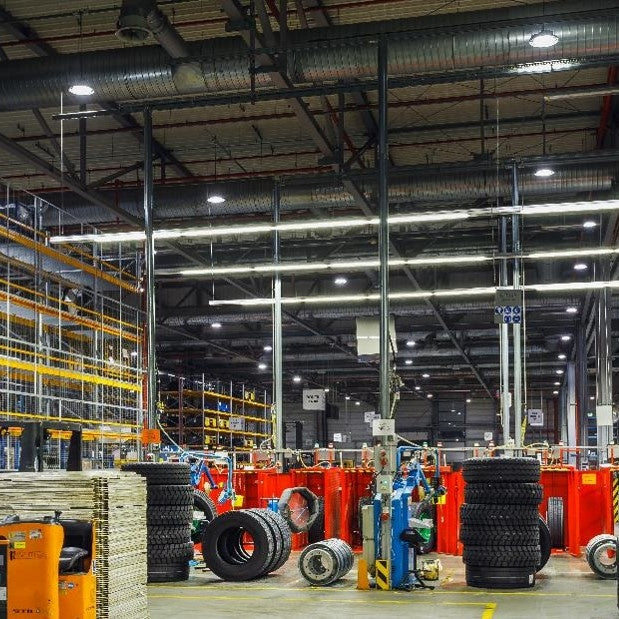
Warehouses, parking structures, and utility spaces with fixed tasks and no occupant wellbeing requirements don't benefit much from tunable white. A high-quality fixed-CCT panel at the right color temperature is the better choice for those spaces — lower cost, simpler installation, same performance.
The Hykoont Panel Lineup: Matching the Right Fixture to the Right Space
Hykoont's tunable white panel lineup covers two tiers — Standard (3 CCT, UL/DLC certified) and Pro (5 CCT, ETL/RoHS certified) — across three form factors. Here's how to match them to your project.
For Large Open Spaces: 2x4FT Panels
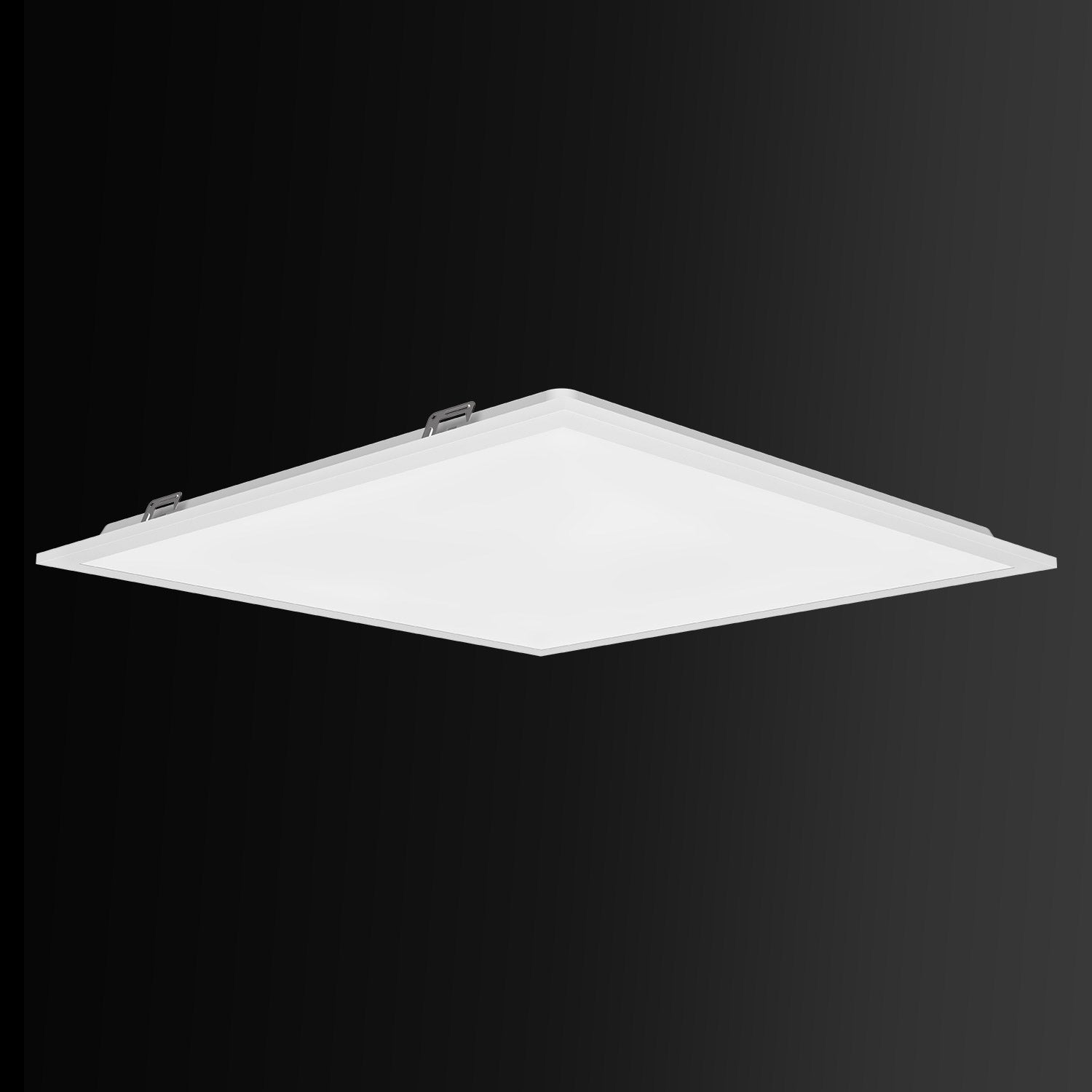
Hykoont 2x4FT Pro LED Flat Panel — 5 CCT, 30W–72W

Five wattage steps (30W, 40W, 50W, 60W, 72W) and five CCT settings (3000K through 6500K) give you genuine flexibility for large, variable-use spaces. The wide wattage range means you can use the same fixture in a 9-foot office ceiling (40W) and a 20-foot warehouse (72W) without stocking two different products.
- Price: From $288.00 (single) to $865.00 (multi-pack)
- Certifications: ETL, RoHS
- Best for: Open offices, university classrooms, retail floors, large conference centers
- Dimming: 0–10V compatible
View 2x4FT Pro Panel — From $288.00 →
Hykoont 2x4FT Standard LED Flat Panel — 3 CCT, 30W–50W

The DLC-certified option for rebate-eligible projects. Three CCT settings (3500K, 4000K, 5000K) cover the core commercial range. Three wattage options (30W, 40W, 50W) handle most ceiling heights. UL and DLC certification means this fixture qualifies for utility rebates through most US programs.
- Price: From $115.00 (single) to $195.00 (multi-pack)
- Certifications: UL, DLC
- Best for: Budget-conscious retrofits, rebate-eligible projects, schools, municipal buildings
- Dimming: 0–10V compatible
View 2x4FT Standard Panel — From $115.00 →
For Medium Spaces: 2x2FT Panels
Hykoont 2x2FT Pro LED Flat Panel — 5 CCT, 15W–40W

The 2x2 format fits standard 2x2 drop ceiling grid modules — common in conference rooms, private offices, hotel rooms, and exam rooms. Five CCT settings make it the right choice for healthcare and hospitality applications where the full 3000K–6500K range matters.
- Price: From $229.00 (single) to $695.00 (multi-pack)
- Certifications: ETL, RoHS
- Best for: Conference rooms, exam rooms, hotel rooms, private offices
- Dimming: 0–10V compatible
View 2x2FT Pro Panel — From $229.00 →
Hykoont 2x2FT Standard LED Flat Panel — 3 CCT, 20W–40W

The most affordable entry point into tunable white for 2x2 spaces. Three CCT settings, three wattage options, UL and DLC certified. For conference rooms and offices where rebate eligibility matters more than the full CCT range, this is the practical choice.
- Price: From $85.00 (single) to $155.00 (multi-pack)
- Certifications: UL, DLC
- Best for: Small conference rooms, private offices, rebate-eligible 2x2 retrofits
- Dimming: 0–10V compatible
View 2x2FT Standard Panel — From $85.00 →
For Corridors and Narrow Spaces: 1x4FT Panels
Hykoont 1x4FT Pro LED Flat Panel — 5 CCT, 15W–40W

The 1x4 format is the right choice for corridors, hallways, and narrow rooms where a 2x4 panel would be oversized. Five CCT settings let you match the corridor lighting to the adjacent spaces — useful in healthcare facilities where corridor and room lighting should feel consistent.
- Price: From $239.00 (single) to $699.00 (multi-pack)
- Certifications: ETL, RoHS
- Best for: Corridors, hallways, narrow offices, supplemental task lighting
- Dimming: 0–10V compatible
View 1x4FT Pro Panel — From $239.00 →
The Certification Question: UL vs. ETL vs. DLC — What Actually Matters
Certifications on LED panels can feel like alphabet soup. Here's what each one actually means for your project:
UL (Underwriters Laboratories)
UL certification means the fixture has been tested and listed by Underwriters Laboratories for electrical safety. It's required by most US building codes for commercial installations. If a fixture isn't UL or ETL listed, your electrician may not be able to legally install it in a commercial space.
ETL (Intertek)
ETL is functionally equivalent to UL — it's a different testing laboratory (Intertek) but the same ANSI/UL standards. Both are accepted by the National Electrical Code (NEC) and by AHJs (Authorities Having Jurisdiction) across the US. Either certification satisfies the code requirement.
DLC (DesignLights Consortium)
DLC certification is specifically about energy efficiency and rebate eligibility. A DLC-listed fixture meets the efficiency thresholds required by most US utility rebate programs. If you're planning to apply for utility rebates — and you should be — DLC certification is the key qualifier.
Hykoont's Standard line carries UL and DLC certification. The Pro line carries ETL and RoHS. For rebate-eligible projects, the Standard line is the practical choice. For projects where the full CCT range matters more than rebate eligibility, the Pro line delivers.

Control Options: From Simple to Sophisticated
One of the most common questions about tunable white panels is how to control them. The answer depends on your budget and how much automation you actually need.
Option 1: Manual Switch Selection
The simplest approach: a small DIP switch or rotary selector on the driver sets the CCT at installation. You pick 4000K, install the panel, and it stays at 4000K. No control wiring, no controller, no complexity. This works fine for spaces where you want a specific CCT but don't need to change it.
Option 2: Wall-Mounted CCT Selector
A low-voltage wall switch lets occupants select from the available CCT settings. This is the right choice for conference rooms and classrooms where different users have different preferences. Installation requires a low-voltage signal wire from the switch to the driver — straightforward for any commercial electrician.
Option 3: 0–10V Dimming Controller with CCT Scheduling
A 0–10V compatible controller (Lutron, Leviton, Acuity, or similar) can automate both dimming and CCT changes on a schedule. Morning = 5000K at 100%. Afternoon = 4000K at 80%. Evening = 3000K at 60%. The controller handles it automatically. This is the setup that delivers the full circadian benefit without requiring occupants to do anything.
Option 4: Building Management System (BMS) Integration
For large facilities with existing BMS infrastructure, tunable white panels can be integrated into the building's central control system via DALI, BACnet, or 0–10V interfaces. This enables coordinated control across lighting, HVAC, and shading — the full smart building package. Requires more planning and a controls specialist, but delivers the most comprehensive energy management.
Common Installation Mistakes (And How to Avoid Them)
These are the issues that come up most often in commercial tunable white installations. Most are avoidable with a little planning.
Mistake 1: Mixing CCT Settings in the Same Zone
If you have multiple panels in the same visual zone and they're set to different CCTs, the inconsistency is immediately visible and looks unprofessional. Always set all panels in a continuous visual zone to the same CCT. If you want different CCTs in different areas, use physical separation (walls, partitions) to define the zones.
Mistake 2: Ignoring the Ceiling Reflectance
Light output calculations assume a certain ceiling reflectance (typically 80% for white ceilings). If your ceiling is a different color or material, your actual foot-candle levels will be lower than calculated. Account for this in your fixture count.
Mistake 3: Placing Occupancy Sensors Over HVAC Vents
PIR occupancy sensors detect infrared radiation — which includes heat from HVAC vents. A sensor placed directly over a vent can trigger false-on events when the HVAC cycles. Keep sensors at least 3 feet from supply air vents.
Mistake 4: Not Accounting for Glare
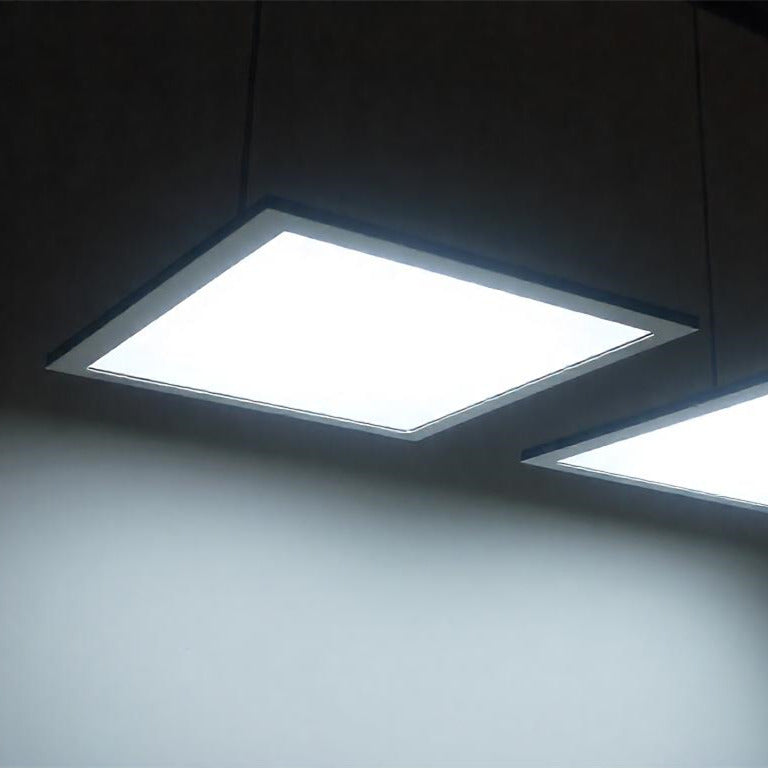
Flat panel lights with high-gloss diffusers can cause glare in spaces with computer screens. Look for panels with matte or micro-prismatic diffusers, and avoid placing panels directly in the line of sight from workstations. Hykoont's flat panels use uniform diffusers designed to minimize glare in office environments.
Mistake 5: Skipping the Photometric Layout
Eyeballing fixture placement based on "one per ceiling tile" works for simple spaces but leads to uneven light distribution in irregular rooms. A basic photometric layout (free tools like DIALux or AGi32 handle this) takes 30 minutes and prevents the problem entirely.

Rebate Programs by Region: A 2026 Overview
Utility rebates for DLC-certified LED panels are available across most of the US. Here's a current overview by region — but always verify with your specific utility, as programs change.
Northeast
Strong rebate programs through Eversource (CT, MA, NH), National Grid (NY, MA, RI), and ConEd (NY). Typical rebates: $15–$45 per DLC-certified fixture. Massachusetts and Connecticut have some of the most generous programs in the country.
Mid-Atlantic
PECO (PA), BGE (MD), Dominion (VA) all offer commercial LED rebates. Typical range: $10–$30 per fixture. Maryland's EmPOWER program is particularly active for commercial retrofits.
Southeast
Duke Energy (NC, SC, FL, IN, OH, KY) and Georgia Power offer rebates, though amounts tend to be lower than the Northeast. Typical range: $8–$20 per fixture.
Midwest
ComEd (IL), Ameren (IL, MO), and Consumers Energy (MI) have active commercial LED programs. Illinois has particularly strong incentives through the Energy Efficiency Portfolio Standard. Typical range: $10–$35 per fixture.
Southwest and Mountain West
Xcel Energy (CO, MN, TX, NM), SRP (AZ), and NV Energy (NV) offer commercial LED rebates. Colorado's programs are especially robust. Typical range: $10–$30 per fixture.
California
PG&E, SCE, and SDG&E all offer substantial rebates through the California Energy Commission's programs. California typically has the highest rebate amounts in the country. Typical range: $20–$65 per fixture for DLC Premium-listed products.
Pacific Northwest
Puget Sound Energy (WA) and Pacific Power (OR, WA) offer rebates, often supplemented by Bonneville Power Administration (BPA) programs. Typical range: $15–$40 per fixture.
To find the exact rebate amount for your utility and fixture, use the DSIRE database or the DLC Qualified Products List.
Project Planning Checklist
Before you order fixtures, work through this list. It'll save you from the most common project headaches.
- ☐ Measure your ceiling grid: Confirm 2x4, 2x2, or 1x4 module size
- ☐ Check ceiling height: Determines wattage requirement
- ☐ Identify your target foot-candle levels by zone (use IES guidelines)
- ☐ Run a basic photometric layout to confirm fixture count
- ☐ Decide on control strategy: Manual, wall switch, scheduled controller, or BMS
- ☐ Verify 0–10V compatibility with your existing control system (if applicable)
- ☐ Check DLC certification requirement for your utility rebate program
- ☐ Submit rebate pre-approval before installation (required by most utilities)
- ☐ Confirm electrician familiarity with 0–10V dimming wiring
- ☐ Plan occupancy sensor placement to avoid HVAC vents and blind spots
Frequently Asked Questions
Q: Can I retrofit tunable white panels into an existing fluorescent fixture housing?
A: Hykoont's flat panel lights are designed as direct replacements for the ceiling grid opening — they drop into the same T-bar grid that held your fluorescent troffer. You remove the old fixture and drop in the new panel. No housing modification required. The electrical connection is standard line voltage (120–277V).
Q: What's the color rendering index (CRI) on these panels?
A: Hykoont's panels are rated at CRI 90+. For reference, the IES recommends CRI 80+ for general commercial spaces and CRI 90+ for retail, healthcare, and spaces where accurate color rendering matters. CRI 90+ means colors look close to how they appear under natural daylight.
Q: Can I dim these panels to zero, or is there a minimum dim level?
A: Most 0–10V dimmable panels have a minimum dim level of around 10–20% — they don't go fully dark via the dimming signal. To turn them fully off, you need a separate switched circuit. This is standard for commercial 0–10V dimming and your electrician will be familiar with the wiring approach.
Q: How do I handle a space with both 2x4 and 2x2 ceiling grid sections?
A: Order the appropriate panel format for each section. Hykoont's Standard and Pro lines are available in both 2x4 and 2x2 formats with matching CCT ranges, so you can maintain consistent light quality across both grid types. Set all panels in the same visual zone to the same CCT setting.
Q: What happens if a panel fails? Is it easy to replace?
A: LED flat panels are field-replaceable — you disconnect the wiring, lift out the old panel, drop in the new one, and reconnect. No special tools required. At 50,000+ hour rated life, you shouldn't need to do this often, but when you do, it's a 15-minute job for a qualified electrician.
Q: Do these panels work with emergency battery backup systems?
A: Emergency battery backup (EBB) compatibility depends on the specific EBB unit and the panel's driver. Most commercial EBB units are designed for 0–10V dimmable LED drivers. Verify compatibility with your EBB supplier before ordering. For life-safety applications, always consult with a licensed electrical engineer.
Q: Is there a warranty on Hykoont panels?
A: Contact Hykoont directly for current warranty terms. For commercial projects, always confirm warranty coverage before finalizing your order — particularly for large installations where warranty service logistics matter.
Q: Can I use these panels outdoors or in wet locations?
A: Hykoont's flat panel lights are rated for dry or damp locations — suitable for indoor commercial spaces and covered outdoor areas. They are not rated for wet locations (direct rain exposure). For outdoor applications, Hykoont's flood light and area light products are the appropriate choice.
Q: How do I apply for a utility rebate?
A: The typical process: (1) Check your utility's rebate program requirements and confirm your fixture is on the DLC QPL. (2) Submit a pre-approval application before installation — most utilities require this. (3) Complete the installation and collect documentation (invoices, fixture spec sheets, installation photos). (4) Submit the post-installation rebate application with documentation. Processing time varies by utility, typically 4–12 weeks.
Q: What's the lead time for large orders?
A: For standard stock quantities, Hykoont typically ships within a few business days. For large project orders (50+ fixtures), contact Hykoont directly to confirm availability and lead time before committing to an installation schedule.
Wrapping Up
The case for tunable white LED panels isn't complicated. Fixed-CCT lighting is a compromise — it's optimized for no particular time of day or task. Tunable white removes that compromise without adding meaningful complexity or cost, especially when you factor in utility rebates.
The Hykoont lineup gives you a clear path from budget-conscious DLC-certified retrofits (Standard line, from $85) to precision-control installations with the full 3000K–6500K range (Pro line, from $229). Both tiers are dimmable, both fit standard drop ceiling grids, and both are backed by US-recognized certifications.
If you're planning a commercial lighting project and you're still deciding between fixed-CCT and tunable white, the honest answer is: the price difference is smaller than you think, and the performance difference is larger than you'd expect.
Shop 2x4FT Standard — From $115 → Shop 2x2FT Standard — From $85 → Shop 2x4FT Pro — From $288 →




Leave a comment
This site is protected by hCaptcha and the hCaptcha Privacy Policy and Terms of Service apply.