


Let's be honest: most commercial lighting setups are stuck in the past. Fixed color temperature, no dimming, lights blazing away in empty conference rooms at 11 PM. If that sounds familiar, you're not alone — and you're definitely leaving money on the table.
This guide is for facility managers, office designers, school administrators, and anyone who's tired of paying for light nobody's using. We're going to walk through tunable white LED panels, how they pair with occupancy sensing lighting systems, what real-world installations look like, and — most importantly — what it actually costs and saves.
No fluff. Just practical information you can act on today.
Why "Just Install LEDs" Isn't Enough Anymore
Switching from fluorescent to LED was the right call five years ago. But a standard LED panel with a fixed 4000K output and a manual switch? That's table stakes now. The buildings that are genuinely cutting energy costs and improving occupant wellbeing have moved to the next level: tunable white panels with demand-based controls.
Here's what that actually means in plain terms:
- Tunable white = the light color shifts between warm (2700K–3000K) and cool (5000K–6500K) depending on time of day, task, or user preference
- Occupancy sensing = the lights know when a room is occupied and adjust or shut off automatically
- Together = a system that's comfortable for people and efficient for your utility bill
The Department of Energy estimates that lighting controls alone can reduce commercial lighting energy use by 24–38%. Add tunable white and you're also reducing reliance on HVAC (cooler light = less heat output) and improving circadian health for occupants.
What Tunable White LED Panels Actually Do
A tunable white LED panel contains two sets of LEDs: one warm-white chip set and one cool-white chip set. By blending the output ratio between them, the fixture produces any color temperature across its range — typically 3000K to 6500K, though some panels go wider.
Why does this matter?
Human alertness, mood, and even melatonin production are directly tied to light color. Cool, blue-rich light (5000K+) in the morning suppresses melatonin and promotes focus. Warm light (3000K and below) in the evening signals the body to wind down. In a workplace, school, or healthcare setting, getting this right isn't just a comfort issue — it's a productivity and health issue.
Studies from the Lighting Research Center have shown that tunable white lighting in classrooms improves student attention scores by measurable margins. In offices, workers report fewer headaches and better sleep quality when their workspace uses circadian-aligned lighting.

CCT Ranges to Know
| Color Temp | Appearance | Best For |
|---|---|---|
| 2700K–3000K | Warm white / amber | Hospitality, break rooms, evening wind-down |
| 3500K–4000K | Neutral white | General office, retail, classrooms |
| 5000K–5700K | Cool white / daylight | Task areas, labs, morning productivity |
| 6000K–6500K | Crisp daylight | Inspection areas, medical, high-focus zones |
A tunable panel covers all of these from a single fixture. No re-lamping, no fixture swap — just a setting change.
The Occupancy Sensing Side of the Equation
Occupancy sensing in lighting systems works through one of three main technologies:
- Passive Infrared (PIR) — detects body heat movement. Reliable, low-cost, best for smaller rooms with clear sightlines.
- Ultrasonic — detects micro-movements (like someone typing at a desk). Better for cubicle environments where PIR might miss stationary occupants.
- Dual-technology (PIR + Ultrasonic) — combines both for maximum accuracy. Fewer false-offs, fewer false-ons.
Modern occupancy-sensing systems go beyond simple on/off. They can:
- Dim to 20–30% during low-occupancy periods rather than switching off entirely (better for safety and re-entry comfort)
- Integrate with HVAC and building management systems (BMS) for coordinated energy management
- Log occupancy data for space utilization analysis — useful for real estate decisions
- Adjust color temperature automatically based on time of day (circadian scheduling)
When you pair occupancy sensing with tunable white panels, you get a system that's both responsive (reacts to who's in the room) and proactive (adjusts light quality based on time and task). That's the combination that delivers the biggest ROI.

Real-World Applications: Where This Setup Shines
Open-Plan Offices
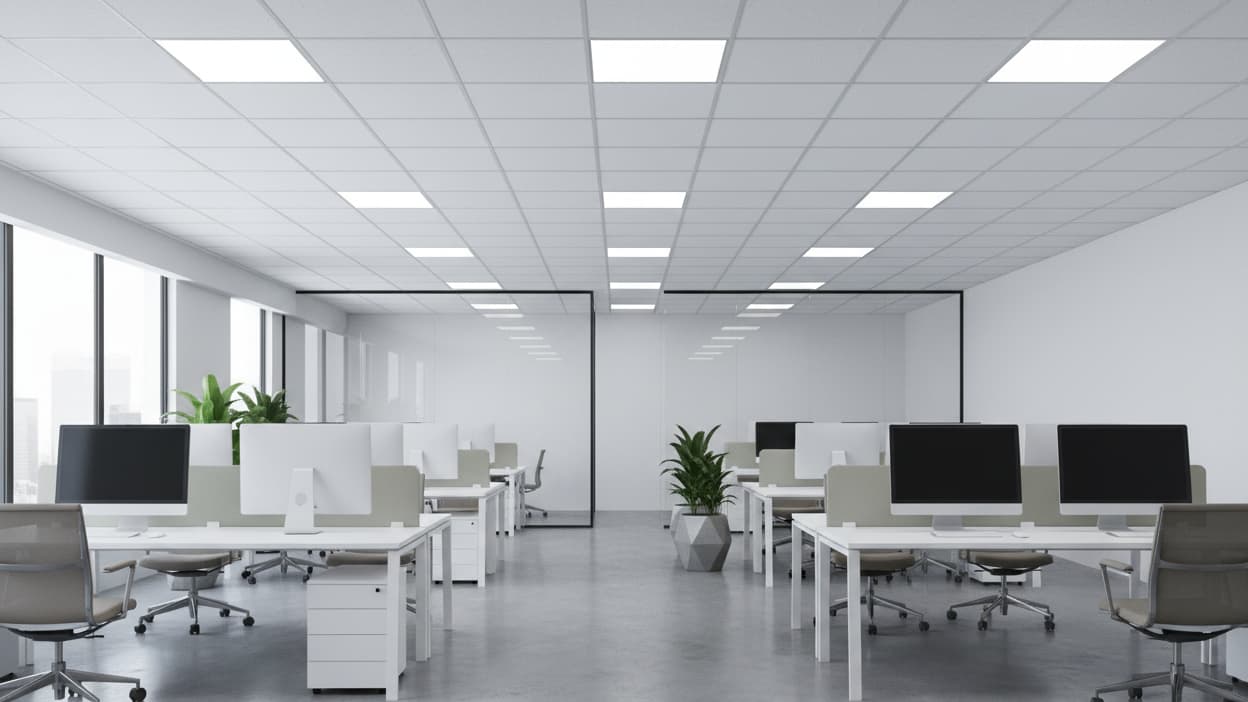
The classic challenge: some zones are always occupied, others are ghost towns after 2 PM. Occupancy sensing handles the empty zones automatically. Tunable white keeps the occupied zones energized in the morning and comfortable in the afternoon. Energy savings of 30–45% over fixed-output LED are common in this setup.
Conference Rooms
Conference rooms are notoriously wasteful — often lit for 8 hours when they're used for 2. Occupancy sensing cuts that waste immediately. Tunable white lets the room shift from bright presentation mode (5000K) to relaxed discussion mode (3500K) with a simple preset.
K–12 Schools and Universities
Classrooms benefit enormously from circadian lighting. Morning classes get energizing cool light; afternoon sessions shift warmer to prevent the post-lunch slump. Occupancy sensing ensures hallways and restrooms aren't lit 24/7. Many school districts qualify for utility rebates that significantly offset installation costs.
Healthcare Facilities
Patient rooms, nursing stations, and exam rooms all have different lighting needs at different times. Tunable white handles the clinical requirements (high CCT for exams, warm for patient comfort) while occupancy sensing manages common areas and corridors.
Retail and Hospitality
Merchandise looks different under different color temperatures. Tunable white lets retailers optimize product presentation without changing fixtures. Back-of-house areas with occupancy sensing stop wasting energy in storage rooms and loading docks.

Hykoont Tunable White LED Panels: What's Available and What It Costs
Let's get specific. Here are the Hykoont panels that work best for tunable white commercial installations, with real pricing.
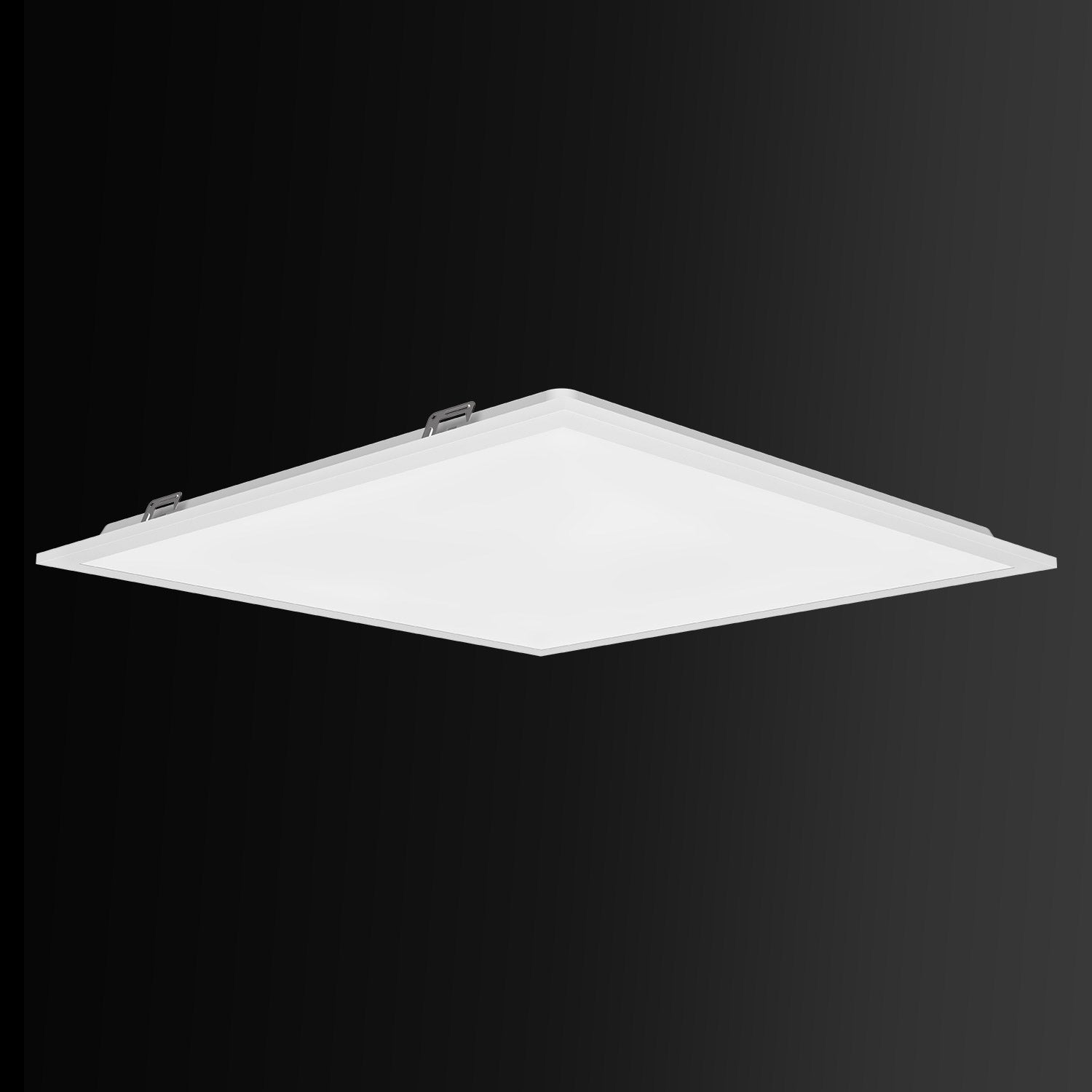
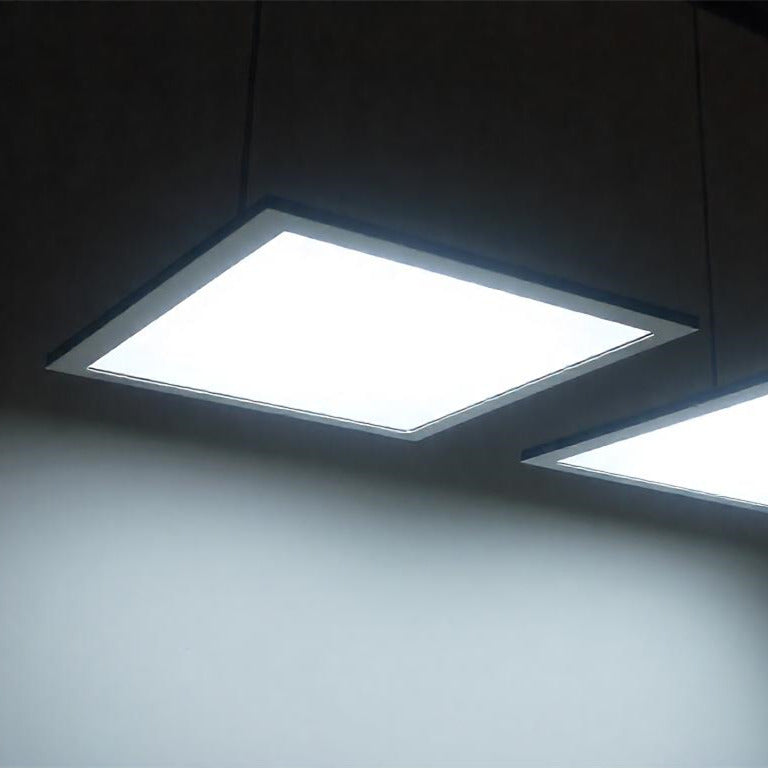
1. Hykoont 2x4FT Pro LED Flat Panel — 5 CCT Selectable, 30W–72W

This is the workhorse for large open-plan spaces. Five wattage options (30W, 40W, 50W, 60W, 72W) and five CCT settings (3000K, 3500K, 4000K, 5000K, 6500K) give you genuine flexibility without needing multiple SKUs. ETL and RoHS certified.
- Price: From $288.00 (single) to $865.00 (multi-pack)
- Best for: Open offices, classrooms, retail floors, warehouses
- Certifications: ETL, RoHS
Shop 2x4FT Pro Panel — From $288.00 →
2. Hykoont 2x2FT Pro LED Flat Panel — 5 CCT Selectable, 15W–40W

The 2x2 format fits standard drop ceiling grids and works perfectly in conference rooms, private offices, and smaller classrooms. Same five-CCT flexibility as the 2x4, scaled down for tighter spaces.
- Price: From $229.00 (single) to $695.00 (multi-pack)
- Best for: Conference rooms, private offices, hotel rooms, exam rooms
- Certifications: ETL, RoHS
Shop 2x2FT Pro Panel — From $229.00 →
3. Hykoont 1x4FT Pro LED Flat Panel — 5 CCT Selectable, 15W–40W

The 1x4 format is ideal for corridors, narrow rooms, and supplemental task lighting. Five CCT options make it versatile across different zones in the same building.
- Price: From $239.00 (single) to $699.00 (multi-pack)
- Best for: Hallways, corridors, narrow offices, supplemental lighting
- Certifications: ETL, RoHS
Shop 1x4FT Pro Panel — From $239.00 →
4. Hykoont 2x4FT LED Flat Panel — 3 CCT Options, 30W–50W (Budget-Friendly)

If you need tunable white capability without the Pro-tier price, this 2x4 panel delivers three CCT options (3500K, 4000K, 5000K) and three wattage settings. UL and DLC certified — which means it qualifies for most utility rebate programs in the US.
- Price: From $115.00 (single) to $195.00 (multi-pack)
- Best for: Budget-conscious retrofits, rebate-eligible projects, large-scale installations
- Certifications: UL, DLC
Shop 2x4FT Standard Panel — From $115.00 →
5. Hykoont 2x2FT LED Flat Panel — 3 CCT Options, 20W–40W

The compact 2x2 version of the standard line. Three CCT settings, three wattage options, UL and DLC certified. A solid choice for conference rooms and private offices where you want tunable white without the Pro price tag.
- Price: From $85.00 (single) to $155.00 (multi-pack)
- Best for: Small conference rooms, private offices, hotel rooms
- Certifications: UL, DLC
Shop 2x2FT Standard Panel — From $85.00 →
How to Size Your Installation: A Practical Guide
Before you order anything, you need to know how many fixtures you actually need. Here's a quick method that works for most commercial spaces:
Step 1: Calculate Your Target Foot-Candles
Different tasks require different light levels. General guidelines from the Illuminating Engineering Society (IES):
- Corridors and lobbies: 10–20 fc
- General office work: 30–50 fc
- Detailed task work / drafting: 50–75 fc
- Medical exam rooms: 75–100 fc
- Retail display areas: 50–100 fc
Step 2: Use the Zonal Cavity Method (Simplified)
A rough formula: Number of fixtures = (Target fc × Room Area in sq ft) ÷ (Lumens per fixture × Coefficient of Utilization)
For a typical 1,000 sq ft open office targeting 40 fc, using a 2x4 panel at 5,000 lumens with a CU of 0.7:
(40 × 1,000) ÷ (5,000 × 0.7) = 40,000 ÷ 3,500 ≈ 11–12 fixtures
Step 3: Account for Occupancy Zones
Divide your space into zones based on typical occupancy patterns. High-traffic zones (reception, main work areas) can use standard spacing. Low-traffic zones (storage, secondary corridors) can use wider spacing since occupancy sensing will handle the rest.

Utility Rebates: How to Get Paid to Upgrade
This is the part most people skip, and it's a mistake. DLC-certified LED panels qualify for rebates through most US utility companies. The numbers vary by state and utility, but here's a realistic picture:
- Northeast (ConEd, Eversource, National Grid): $15–$40 per fixture for DLC-certified panels
- California (PG&E, SCE, SDG&E): $20–$60 per fixture through the California Energy Commission programs
- Midwest (ComEd, Ameren): $10–$30 per fixture
- Texas (Oncor, CenterPoint): $8–$25 per fixture
On a 50-fixture installation using Hykoont's DLC-certified 2x4 panels at $115 each, that's $5,750 in fixtures. With a $25/fixture rebate, you're getting $1,250 back — effectively reducing your per-fixture cost to $90. That changes the ROI calculation significantly.
To find rebates in your area, visit the DSIRE database (Database of State Incentives for Renewables & Efficiency) — it's free and comprehensive.
Installation Considerations: What Your Electrician Needs to Know
Tunable white panels with occupancy sensing integration aren't dramatically more complex to install than standard LED panels, but there are a few things worth flagging before you start:
Wiring
Most tunable white panels use standard line voltage (120–277V). The CCT and dimming controls typically run on a separate low-voltage signal wire (0–10V dimming is the most common protocol). Make sure your electrician is familiar with 0–10V dimming wiring — it's standard in commercial work but not universal in residential.
Occupancy Sensor Placement
Ceiling-mounted sensors should be placed to cover the full room without blind spots. For rooms larger than 400 sq ft, plan on multiple sensors. Avoid placing sensors directly above HVAC vents (temperature fluctuations can cause false triggers with PIR sensors).
Control System Compatibility
If you're integrating with an existing building management system (BMS) or lighting control system (Lutron, Leviton, Acuity, etc.), verify compatibility before ordering. Most 0–10V dimmable panels work with any 0–10V compatible controller, but it's worth confirming.
Ceiling Type
Hykoont's flat panel lights are designed for drop ceiling (T-bar grid) installation. Surface mount and pendant mount kits are available separately if your space has a hard ceiling.
ROI Calculation: What to Actually Expect
Let's run a real scenario. A 10,000 sq ft office currently using 40W fluorescent troffers (50 fixtures), running 10 hours/day, 250 days/year, at $0.12/kWh:
Current annual energy cost:
50 fixtures × 40W × 10 hrs × 250 days × $0.12/kWh = $600/year
After switching to Hykoont 2x4FT Pro at 40W with occupancy sensing (assume 30% reduction from controls):
50 fixtures × 40W × 0.70 × 10 hrs × 250 days × $0.12/kWh = $420/year
Annual savings: $180 (this is a conservative estimate — many installations see 40–50% reductions)
Fixture cost: 50 × $288 = $14,400
Less rebates (est. $25/fixture): -$1,250
Net fixture cost: $13,150
Simple payback: ~7.3 years on energy alone
But here's what that calculation misses: maintenance costs. Fluorescent lamps need replacement every 2–3 years. LED panels rated at 50,000+ hours don't. Factor in lamp costs, labor, and disposal fees, and the payback period typically drops to 4–5 years. For a building you plan to occupy for 10+ years, that's a straightforward financial decision.
Choosing Between the Standard and Pro Lines
Hykoont offers two tiers of tunable white panels. Here's how to decide which is right for your project:
| Feature | Standard Line | Pro Line |
|---|---|---|
| CCT Options | 3 (3500K, 4000K, 5000K) | 5 (3000K, 3500K, 4000K, 5000K, 6500K) |
| Wattage Options | 3 | 5 |
| Certifications | UL, DLC | ETL, RoHS |
| Rebate Eligibility | Yes (DLC) | Check local utility |
| Price (2x4) | From $115 | From $288 |
| Best For | Budget retrofits, rebate projects | Precision control, healthcare, premium spaces |
For most commercial retrofits where rebate eligibility matters, the Standard line is the practical choice. For healthcare, high-end hospitality, or spaces where precise CCT control is critical, the Pro line's wider range (3000K–6500K) and finer wattage steps are worth the premium.

Frequently Asked Questions
Q: Can I use Hykoont tunable white panels with my existing occupancy sensors?
A: In most cases, yes. If your existing sensors output a 0–10V dimming signal, they'll work with Hykoont's dimmable panels. For on/off occupancy control (no dimming), any standard occupancy sensor will work. If you're integrating with a full lighting control system, verify 0–10V compatibility with your controls vendor.
Q: What's the difference between tunable white and RGBW lighting?
A: Tunable white panels blend warm and cool white LEDs to shift color temperature — they stay within the white spectrum (2700K–6500K). RGBW adds red, green, and blue LEDs to produce color. For commercial and office applications, tunable white is the right choice: it looks professional, meets IES standards, and doesn't create the "party light" effect that RGBW can produce.
Q: Do these panels work with Lutron or Leviton dimmer systems?
A: Hykoont's Pro line panels use 0–10V dimming, which is compatible with most commercial dimming systems including Lutron EcoSystem, Leviton Lumina RF, and similar 0–10V controllers. Standard line panels also support 0–10V dimming. Always verify with your controls supplier before finalizing your order.
Q: What does DLC certification mean for my rebate application?
A: DLC (DesignLights Consortium) certification is the standard qualification for most US utility rebate programs. If a fixture is on the DLC Qualified Products List, it's eligible for rebates from participating utilities. Hykoont's Standard line panels carry DLC certification. You can verify any product on the DLC QPL at designlights.org.
Q: How long do these panels actually last?
A: Hykoont's LED panels are rated at 50,000+ hours. At 10 hours per day of operation, that's over 13 years before you'd expect to see significant lumen depreciation. Compare that to fluorescent lamps at 10,000–15,000 hours (1–4 year replacement cycles in commercial settings).
Q: Can I install these panels myself, or do I need an electrician?
A: For commercial installations, a licensed electrician is required in most US jurisdictions. The panels themselves are straightforward to install in a standard T-bar drop ceiling grid, but the electrical connections must be made by a qualified professional. For 0–10V dimming integration, your electrician should be familiar with low-voltage control wiring.
Q: What's the best CCT setting for a general office environment?
A: Most lighting designers recommend 4000K as the baseline for general office work — it's neutral, comfortable for extended periods, and renders colors accurately. In the morning, bumping to 5000K can help with alertness. In the afternoon, dropping to 3500K reduces eye strain. If you're using a scheduling controller, a simple morning/afternoon/evening program handles this automatically.
Q: Do tunable white panels cost more to operate than fixed-CCT panels?
A: No. The tunable white mechanism (blending two LED chip sets) doesn't consume additional power compared to a fixed-CCT panel of the same wattage. You're not adding energy — you're just changing the ratio of warm to cool output within the same power envelope.
Q: How do I calculate how many panels I need for my space?
A: A quick estimate: for general office lighting targeting 40–50 foot-candles, plan on one 2x4 panel per 80–100 sq ft of floor area in a standard 9-foot ceiling space. For higher ceilings or higher target light levels, you'll need more fixtures or higher-wattage settings. For a precise calculation, use a free photometric tool like AGi32 or DIALux, or contact us for a lighting layout recommendation.
Q: Are there volume pricing options for large commercial projects?
A: Yes. For orders of 20+ fixtures, contact Hykoont directly for project pricing. Large commercial and contractor orders typically qualify for significant discounts off list price, plus dedicated project support.

The Bottom Line
Tunable white LED panels paired with occupancy sensing aren't a luxury upgrade — they're the baseline for any commercial lighting project that takes energy efficiency and occupant wellbeing seriously. The technology is mature, the products are certified, the rebates are real, and the ROI is calculable.
The question isn't really whether to make the switch. It's which fixtures fit your space, your budget, and your timeline.
Hykoont's panel lineup covers the full range — from the budget-friendly DLC-certified Standard line starting at $85 to the precision-control Pro line with five CCT settings and five wattage options. Both are built for commercial use, both are dimmable, and both are ready to integrate with occupancy sensing controls.
Shop 2x4FT Pro — From $288 → Shop 2x4FT Standard — From $115 → Shop 2x2FT Standard — From $85 →



Leave a comment
This site is protected by hCaptcha and the hCaptcha Privacy Policy and Terms of Service apply.