





Most mosquito control advice treats the problem like it's the same all year. It's not. Mosquito pressure in March is completely different from mosquito pressure in July, which is completely different from October. And what you do — or don't do — in the off-season directly affects how bad your first summer nights are going to be.
I started keeping a mosquito journal three years ago. Sounds obsessive, I know. But after two summers of inconsistent results with bug zappers, I wanted to understand the actual pattern: when do they show up, when do they peak, when do they disappear, and what does that mean for how I should be running my solar bug zapper setup?
What I found was that timing matters a lot more than most people realize. This is the calendar I wish I'd had from the start.
Note: This calendar is written for the continental US. Timing shifts by 4–6 weeks depending on your region — Southern states run earlier, Northern states run later. I'll call out regional variations throughout.
The Products I Use Year-Round
Before getting into the calendar, quick context on the setup I'm running. I use two Hykoont solar bug zapper models depending on the space:


Both run triple UV tubes, monocrystalline solar panels, 6000mAh batteries, and IPX4 water resistance. The difference is panel size (19W vs 30W) and coverage area. I'll reference both throughout the calendar.
January – February: The Quiet Months (Don't Ignore Them)
In most of the US, January and February are genuinely low-mosquito months. If you're in the Deep South or Florida, you might still see some activity on warm nights, but for the majority of the country, this is the off-season.
What most people do: nothing. What you should do: a little bit of maintenance that pays off in May.
What to do in January–February:
Inspect your units. Pull them out of storage (or check them if you left them out) and look for any housing cracks, corrosion on the zapper grid, or debris in the catch tray. Winter moisture can work its way into small gaps over time.
Clean the solar panel. Dust, pollen, and grime accumulate on the panel surface and reduce charging efficiency. A damp cloth is all you need. Do this before the season starts, not after you've already lost a few weeks of performance.
Check the battery. If you stored the unit indoors, the battery should be fine. If it stayed outside all winter, run it through a full charge cycle on the first sunny day and see if it holds charge through the night. Lithium batteries degrade faster in extreme cold.
Plan your placement for the coming season. Did last year's placement work? Were there spots where mosquito pressure was still high despite having a unit nearby? January is a good time to think through adjustments before you're dealing with actual mosquitoes.
Regional note: Florida, Gulf Coast, and Southern California may still have active mosquito populations in January–February. If you're in these areas, your units should stay operational year-round.
March: The Setup Month
March is when things start moving. Temperatures are climbing, standing water from winter rain and snowmelt is everywhere, and the first mosquito eggs from last fall are starting to hatch. You won't see peak pressure yet, but the population is building.
This is the most important month to get your setup right, because the decisions you make in March affect your entire summer.
What to do in March:
Get your units operational by mid-March. Don't wait until you're already getting bitten. The goal is to start reducing the local mosquito population before it reaches peak levels. Every night of operation in March is a night of population reduction that compounds into June and July.
Do a full placement audit. Walk your property at dusk and identify where mosquitoes are coming from. Look for standing water (even small amounts — a clogged gutter, a low spot in the lawn, a forgotten bucket), dense vegetation, and shaded areas that stay damp. These are your mosquito source zones. Orient your units to face them.
Check solar panel orientation. The sun angle in March is lower than in summer. Make sure your panels are angled to catch the available light. South-facing with a slight upward tilt is ideal for most US locations.
Run a test night. After setup, check the catch tray the next morning. If it's empty or nearly empty, either the mosquito population isn't active yet (fine) or something is wrong with the unit (investigate). A working unit in an active mosquito area should have some catch within the first week.
Regional note: In the Northeast and Upper Midwest, March may still be too cold for significant mosquito activity. You can wait until April. In the Southeast and Texas, March is already active season — don't delay.
→ Get the 19W Standard Ready for Spring — $125
April: Population Building Phase
April is when you start to feel the mosquito pressure picking up. Temperatures are consistently warmer, spring rain has created breeding habitat, and the population that's been building since March is now noticeable.
This is also when a lot of people make the mistake of thinking their bug zapper isn't working because they're still seeing mosquitoes. They are working — you're just fighting a growing population. The key metric isn't "do I see zero mosquitoes" but "is the pressure lower than it would be without the units."
What to do in April:
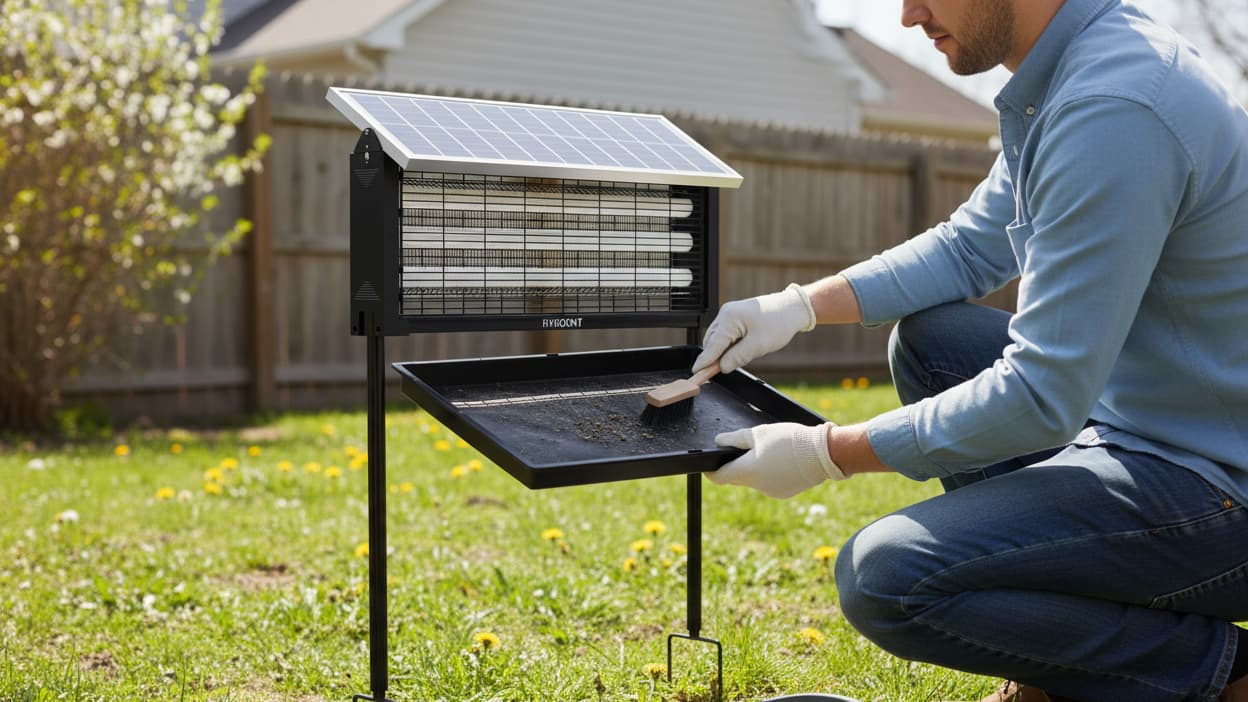
First catch tray cleaning of the season. By mid-April, your catch tray should have meaningful accumulation. Clean it out. A full tray blocks airflow to the zapper grid and reduces effectiveness.
Eliminate standing water sources. Bug zappers reduce adult mosquito populations, but they don't address breeding habitat. April is the time to walk your property and eliminate every standing water source you can find: empty containers, clean gutters, treat ornamental ponds with Bt dunks, fix low spots in the lawn that hold water after rain.
Consider adding a second unit if needed. If you're seeing high pressure in areas your current unit isn't covering well, April is the time to add coverage — not July when you're already miserable.
Note your "hot spots." Where are you still getting bitten despite having units running? These spots tell you where your coverage gaps are. Adjust placement or add units accordingly.

May: Pre-Peak Preparation
May is the last month before peak mosquito season in most of the US. Temperatures are warm enough for rapid mosquito development (the life cycle from egg to adult can be as short as 7–10 days in warm weather), and the population is accelerating.
If you haven't gotten your setup fully dialed in by now, May is your last chance before things get serious.
What to do in May:
Increase cleaning frequency. Move from monthly to every 10–14 days. During peak buildup, catch trays fill faster.
Verify solar panel performance. May has longer days and higher sun angles than March and April. Your units should be charging fully and running all night. If a unit is shutting off before dawn, check for shading issues or panel debris.
Set up any additional units you're adding for the season. Give them 2–3 weeks to start making a dent in the local population before peak season hits.
Check the zapper grid. After a full spring of operation, the grid may have accumulated debris that reduces its effectiveness. A soft brush (with the unit off and discharged) can clean it out.
→ Add the 30W Pro Before Peak Season — $259
June – August: Peak Season — Maintain, Don't Neglect
This is it. Peak mosquito season across most of the US. The combination of heat, humidity, and abundant standing water from summer rain creates ideal breeding conditions. Mosquito populations are at their highest, and the pressure on your outdoor spaces is maximum.
The good news: if you've been running your units since March, you've already been reducing the local population for months. The bad news: you're also fighting constant replenishment from breeding sources, so maintenance becomes critical.
What to do June–August:
Clean catch trays every 7–10 days. During peak season, trays fill faster. A full tray is a significant performance hit — don't let it go more than two weeks without cleaning.
Check solar panel output after storms. Summer thunderstorms can deposit debris on panels. After any significant storm, wipe the panel surface and check that the unit is charging properly.
Watch for placement issues caused by summer vegetation growth. Plants that were small in March may now be tall enough to partially block your unit's UV light or cast shade on the solar panel. Adjust placement if needed.
Don't move units to seating areas during parties. I know it's tempting when guests are complaining about mosquitoes. Resist. Moving the unit next to the seating area creates an attraction point right where people are sitting. Keep it at the perimeter and let it do its job from a distance.
Manage expectations near water. If you're near a pond, creek, or wetland, you're fighting a constantly replenishing mosquito source. Your units will significantly reduce pressure but won't eliminate it. This is normal and expected — not a sign that the units aren't working.

19W Standard — Peak Season Operation

30W Pro — Large Area Summer Coverage
A Note on Cloudy Summer Weeks
Summer isn't always sunny. Extended overcast periods — common in the Pacific Northwest, Great Lakes region, and during hurricane season in the Southeast — can affect solar charging.
The 19W Standard handles 1–2 consecutive cloudy days without issue. After 3+ days of minimal sun, it may start shutting off before dawn. The 30W Pro handled 4 consecutive overcast days in my testing without early shutoff. If you're in a frequently overcast summer climate, the Pro is the more reliable choice for uninterrupted peak-season operation.
September: The Overlooked Month
Here's something most people don't know: September is often the second-worst month for mosquitoes in many parts of the US. The population that built up all summer is still large, temperatures are still warm enough for activity, and late-summer rain creates new breeding habitat.
A lot of people start winding down their mosquito control in September because summer "feels over." This is a mistake. Keep your units running and maintain your cleaning schedule through at least mid-September in most regions, and through October in the South.
What to do in September:
Maintain peak-season cleaning frequency through mid-September. Don't drop to monthly cleaning just because Labor Day has passed.
Start thinking about winterization. In the last two weeks of September, assess whether you'll be leaving units out through fall or bringing them in. If you're in a region with hard freezes, plan to bring them in before the first freeze.
Eliminate late-season breeding habitat. End-of-summer rain and cooling temperatures create conditions where mosquito eggs can overwinter in standing water. Eliminating these sources in September reduces next spring's starting population.
October – November: Wind-Down and Winterization
Mosquito activity drops significantly as temperatures fall below 50°F consistently. In most of the US, October marks the end of meaningful mosquito season, though the exact timing varies significantly by region.
What to do in October–November:
Reduce cleaning frequency. With lower insect activity, catch trays fill more slowly. Monthly cleaning is sufficient.
Decide on winter storage vs. year-round operation. The units are IPX4 rated and can handle winter weather. The question is whether they're useful in winter (probably not in most of the US) and whether you want to preserve battery life by storing them indoors during extreme cold.
If storing indoors: Clean the catch tray thoroughly, wipe down the housing, and store in a dry location above freezing. Charge the battery to about 50–60% before storage — storing lithium batteries fully charged or fully depleted accelerates degradation.
If leaving outdoors: The units will handle winter weather fine from a housing perspective. Solar charging will be reduced due to shorter days and lower sun angles, but the units will still run on nights when they've charged adequately. In northern states with very short winter days, they may not charge enough to run all night.
Regional note: Florida, Gulf Coast, and Southern California should keep units operational year-round. Mosquito activity never fully stops in these regions.

December: Rest and Review
December is the true off-season for most of the US. Mosquito activity is minimal to nonexistent. This is the time to review what worked and what didn't, and plan for next year.
What to do in December:
Review your season notes. Where were the persistent problem spots? Where did you still get bitten despite having units running? What would you change about placement?
Assess whether you need additional units for next season. If you had coverage gaps, December is the time to plan and budget for additional units — not May when you're already dealing with mosquitoes.
Check unit condition. Any housing damage, grid corrosion, or panel issues should be noted now so you can address them before March.
→ Plan Ahead: 19W Standard — $125
The Full Year at a Glance
| Month | Mosquito Activity | Key Action | Cleaning Frequency |
|---|---|---|---|
| Jan–Feb | Minimal (South: low) | Inspect, clean panel, plan placement | Monthly or as needed |
| March | Low–building | Deploy units, placement audit | Every 2–3 weeks |
| April | Building | First cleaning, eliminate standing water | Every 2 weeks |
| May | Moderate–high | Add units if needed, increase cleaning | Every 10–14 days |
| Jun–Aug | Peak | Maintain, clean frequently, check panels after storms | Every 7–10 days |
| September | High–declining | Maintain peak schedule, plan winterization | Every 10–14 days |
| Oct–Nov | Declining–low | Wind down, winterize or store | Monthly |
| December | Minimal | Review season, plan next year | As needed |
Regional Timing Adjustments
The calendar above is calibrated for the mid-Atlantic and Midwest. Here's how to adjust for your region:
Southeast (Georgia, Alabama, Mississippi, Louisiana): Shift everything 4–6 weeks earlier. Start deployment in late February, expect peak season from May through September, wind down in October.
Florida and Gulf Coast: Year-round operation. There is no true off-season. Clean monthly in winter, every 7–10 days in summer.
Texas: Similar to Southeast, with the added complication of drought years (lower mosquito pressure) vs. wet years (much higher pressure). Adjust based on rainfall patterns.
Pacific Northwest (Oregon, Washington): Shift 2–4 weeks later than the standard calendar. Peak season is July–September. The 30W Pro is strongly recommended here due to frequent overcast conditions affecting solar charging.
Northeast (New England, New York, Pennsylvania): Shift 2–3 weeks later. Peak season is July–August. Shorter peak season but can be intense.
Mountain West (Colorado, Utah, Montana): Highly variable by elevation. Lower elevations follow the standard calendar; higher elevations have a compressed season (June–August only).
Southwest (Arizona, New Mexico): Monsoon season (July–September) drives mosquito pressure more than temperature. Deploy before monsoon season starts in late June.
Product Gallery

19W Standard — Triple UV Tubes

30W Pro — 30W Monocrystalline Panel

19W Standard — Dusk-to-Dawn Operation

30W Pro — Year-Round Outdoor Installation
Frequently Asked Questions
Q: When should I start running my solar bug zapper in spring?
A: Mid-March for most of the US, late February for the Southeast, and early April for the Northeast and Upper Midwest. The goal is to start before mosquito pressure builds, not after. Every week of early operation reduces the population you'll be fighting in peak season.
Q: Can I leave my solar bug zapper out all winter?
A: The IPX4 rating handles rain and snow fine. The main concern is battery performance in extreme cold — lithium batteries lose capacity below freezing and degrade faster with repeated freeze-thaw cycles. If you're in a region with hard winters (below 20°F regularly), storing indoors extends battery life. If you're in a mild-winter region, year-round outdoor operation is fine.
Q: How do I store my bug zapper for winter?
A: Clean the catch tray thoroughly, wipe down the housing and solar panel, and store in a dry location above freezing. Charge the battery to 50–60% before storage — don't store fully charged or fully depleted. A garage or basement works well.
Q: Why are mosquitoes still bad in September? I thought summer was ending.
A: September is often the second-worst month for mosquitoes in many US regions. The population that built up all summer is still large, temperatures are still warm enough for activity, and late-summer rain creates new breeding habitat. Don't wind down your mosquito control until temperatures are consistently below 50°F at night.
Q: How does solar charging change across the seasons?
A: Solar panel output varies significantly by season. Summer (June–August) provides the longest days and highest sun angles — optimal charging. Spring and fall have shorter days and lower sun angles, reducing charging time. Winter has the shortest days and lowest angles. The 30W Pro's larger panel handles seasonal variation better than the 19W Standard, particularly in spring, fall, and winter.
Q: Should I clean the catch tray more often in summer?
A: Yes. During peak season (June–August), clean every 7–10 days. In spring and fall, every 10–14 days is sufficient. In winter (if running), monthly is fine. A full catch tray blocks airflow to the zapper grid and meaningfully reduces effectiveness — it's the most common maintenance mistake people make.
Q: My bug zapper worked great in July but seems less effective in September. Why?
A: A few possible reasons. First, September mosquito pressure is genuinely high — you may be fighting a larger population than you realize. Second, summer vegetation growth may have created shading on your solar panel, reducing charge. Third, the catch tray may be full and blocking airflow. Check all three before concluding the unit has a problem.
Q: Do I need to do anything special for the Southwest monsoon season?
A: Deploy your units before monsoon season starts (late June in Arizona and New Mexico). The rapid mosquito population growth during monsoon season means you want units already operational and reducing the local population before the rains arrive. Also check that your units are positioned to handle the heavy rain that comes with monsoon storms — IPX4 handles normal rain, but extreme monsoon downpours warrant checking unit positioning.
Q: How long does it take to see results after deploying in spring?
A: Typically 2–4 weeks of consistent nightly operation before you notice a meaningful reduction in mosquito pressure. The units are working from night one, but the local population takes time to decline. If you deploy in mid-March, you should notice a real difference by mid-April — right as the population would otherwise be peaking.
Q: Is the 19W Standard or 30W Pro better for year-round use in the South?
A: Both work year-round in the South. The 30W Pro is the better choice if you're in a region with frequent afternoon thunderstorms (which temporarily reduce solar charging) or if you're covering a large space. The 19W Standard is sufficient for residential decks and patios in the South's high-sun climate.
The Takeaway
Mosquito control isn't a switch you flip on in June and off in September. It's a season-long process that starts in March, peaks in summer, and winds down in fall. The people who get the best results from solar bug zappers are the ones who treat it like a system — consistent operation, regular maintenance, and smart placement — not a set-it-and-forget-it gadget.
The good news is that once you have the rhythm down, it's genuinely low-effort. Clean the tray every week or two, wipe the panel after storms, and let the dusk-to-dawn automation handle the rest.
Ready to get your setup running before mosquito season peaks?
For residential decks, patios, and smaller spaces:
For large properties, commercial spaces, and overcast climates:




Leave a comment
This site is protected by hCaptcha and the hCaptcha Privacy Policy and Terms of Service apply.