


Every summer, the same argument plays out on patios and porches across America: should I get a solar bug zapper or just plug one in?
You'd think it'd be a simple question. It's not. And honestly, the "which is better" framing misses the point entirely. The real question is: which one is better for your specific situation? Because a solar zapper that's perfect for a farmhouse in rural Texas might be completely useless for a shaded apartment balcony in Seattle.
We're going to break this down the way a neighbor who actually knows their stuff would — no fluff, no vague comparisons, just real talk about what each type does well, where it falls short, and which one you should actually buy.
First, Let's Get Clear on What We're Comparing
Bug zappers — whether solar or electric — work on the same basic principle: UV light attracts flying insects (mosquitoes, moths, gnats, flies), and when they get close enough, they're eliminated by an electric grid. The difference is purely in the power source.
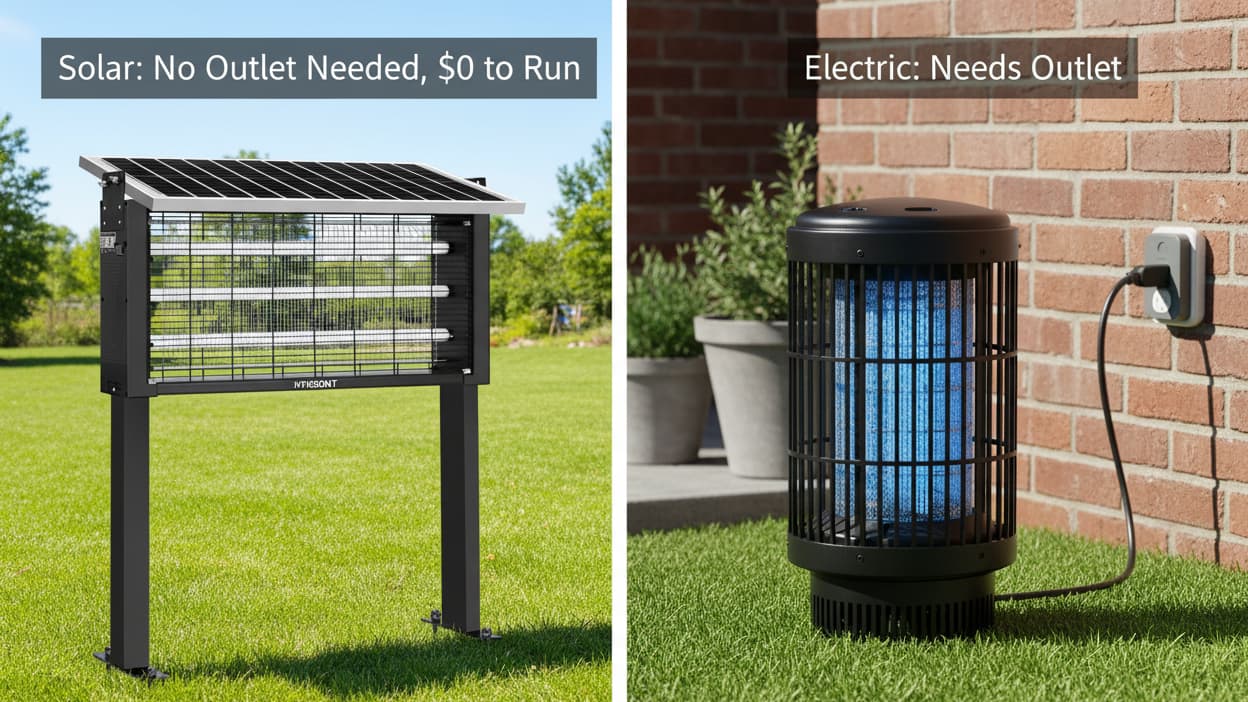
- Electric bug zappers plug into a standard outlet. Consistent power, consistent performance. Simple.
- Solar bug zappers charge during the day using a solar panel, store energy in a built-in battery, and run at night. No cords, no outlet needed.
That's it. The core technology is the same. But that power source difference creates a cascade of real-world implications that matter a lot depending on where you live and how you use them.
The Case for Solar Bug Zappers (It's Stronger Than You Think)
Solar bug zappers have a reputation problem. Early models were underpowered, unreliable, and frankly kind of a joke. But that was five years ago. Modern solar zappers — especially ones built with monocrystalline silicon panels and high-capacity lithium batteries — are a completely different product.
No Outlet? No Problem.
This is the obvious one, but it's worth saying clearly: if you want bug protection in your garden, along a fence line, near a pond, or anywhere more than 25 feet from your house, solar is your only practical option without running extension cords. And nobody wants extension cords snaking through their yard.
They Run Automatically
Good solar bug zappers have a built-in light sensor. When the sun goes down, they turn on. When the sun comes up, they turn off and start charging. You literally don't have to think about it. For people who forget to turn things on and off (most of us), this is genuinely useful.
The Operating Cost Is Zero
Electric bug zappers typically draw 20–40 watts continuously. Run one for 8 hours a night, 5 months a year, and you're looking at roughly $15–$30 added to your electricity bill annually. Not a lot, but it's not nothing either. Solar zappers cost nothing to run after purchase.
They've Gotten Seriously Powerful
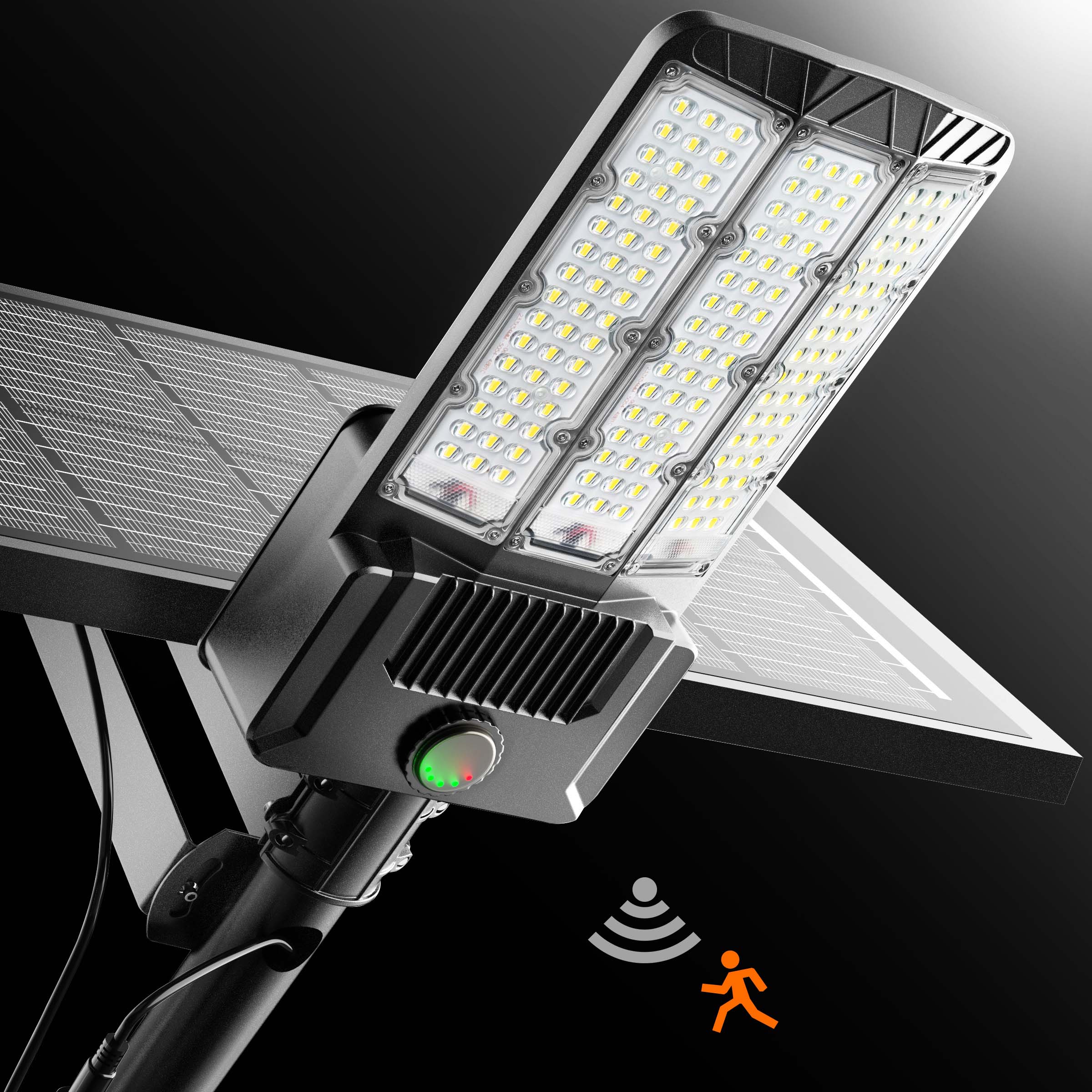
Take the Hykoont 30W Solar LED Bug Zapper Light Pro as an example. It runs on a 30W monocrystalline solar panel, carries a 6000mAh battery, and covers up to 8,000 square feet. That's not a decorative garden light — that's serious coverage for a large yard, farm, or commercial outdoor space.

Hykoont 30W Solar LED Bug Zapper Light Pro — Triple Tube, 8,000 sq ft coverage
👉 Shop Now — From $125.00
The Case for Electric Bug Zappers (They Still Have a Place)
Electric zappers aren't going anywhere, and for good reason. In the right context, they're the better tool.
Consistent Power = Consistent Performance
This is the big one. Solar zappers depend on sunlight. Three cloudy days in a row? Your battery might be running low by night three. Electric zappers don't care about the weather. They run at full power every single night, no exceptions.
If you live somewhere with frequent overcast skies — Pacific Northwest, Great Lakes region, New England — this matters more than you might think.
Better for Shaded Areas
Solar panels need direct sunlight to charge efficiently. If your patio is under a pergola, surrounded by tall trees, or on the north side of your house, a solar zapper might never get enough charge to run effectively. Electric zappers don't have this problem at all.
Lower Upfront Cost (Usually)
Basic electric bug zappers can be found for $20–$50. Entry-level solar zappers with decent specs typically start around $80–$125. If you're on a tight budget and have easy outlet access, electric might make more financial sense upfront — though the operating costs will add up over time.
Indoor Use
Solar zappers are outdoor-only products. If you need bug control in a garage, barn, screened porch, or indoor space, electric is your only option.
Head-to-Head: The Honest Comparison
| Factor | Solar Bug Zapper | Electric Bug Zapper |
|---|---|---|
| Placement flexibility | ✅ Anywhere outdoors | ⚠️ Near outlet only |
| Performance in cloudy weather | ⚠️ Depends on battery reserve | ✅ Unaffected |
| Operating cost | ✅ Free | ⚠️ $15–$30/year |
| Upfront cost | ⚠️ Higher ($125+) | ✅ Lower ($20–$80) |
| Installation | ✅ No wiring needed | ⚠️ Needs outlet/extension cord |
| Shaded areas | ❌ Poor performance | ✅ Works fine |
| Auto on/off | ✅ Built-in light sensor | ⚠️ Manual or timer needed |
| Indoor use | ❌ Outdoor only | ✅ Indoor & outdoor |
| Coverage area (high-end models) | ✅ Up to 8,000 sq ft | ✅ Varies by model |
| Long-term value | ✅ Better ROI over time | ⚠️ Ongoing electricity cost |
Real Scenarios: Which One Should You Actually Buy?
Let's get specific, because "it depends" is the most useless answer in the world.
Scenario 1: Large Backyard in the Suburbs (Midwest or South)
Winner: Solar, no contest.
You've got space, you've got sun, and you probably don't have an outlet conveniently located in the middle of your yard. A solar zapper with 4,000–8,000 sq ft coverage is exactly what you need. The Hykoont 30W Pro at $125–$259 is built for this.
Scenario 2: Covered Patio with Outlet Access
Winner: Electric (or solar if you have partial sun nearby).
If your patio is covered and shaded, solar charging will be inconsistent. An electric zapper plugged into your outdoor outlet is more reliable here. That said, if you can mount a solar panel in a sunnier spot nearby, a solar unit can still work.
Scenario 3: Farm, Ranch, or Large Rural Property
Winner: Solar, decisively.
Running power lines to a barn, pasture, or field perimeter is expensive and impractical. Solar zappers were practically made for this use case. Multiple units placed strategically around the property give you comprehensive coverage without any electrical infrastructure.
Scenario 4: Apartment Balcony or Small Urban Outdoor Space
Winner: Electric (small unit).
You probably have an outlet on your balcony, your space is small, and you might not get great solar exposure depending on your building's orientation. A compact electric zapper is the practical choice here.
Scenario 5: Pacific Northwest or Frequently Overcast Climate
Winner: Electric, or solar with USB backup charging.
If you're in Seattle, Portland, or anywhere that sees weeks of gray skies, solar reliability becomes a real concern. Look for solar zappers that include a USB charging backup — like the Hykoont 19W Standard, which supports 5V/2A USB-DC charging as a backup power option.
Scenario 6: Garden, Vegetable Patch, or Orchard
Winner: Solar.
Gardens are usually in full sun (that's why plants grow there), and you want bug protection right where your plants are — not 50 feet away near the house outlet. Solar zappers with ground stake installation options are perfect for this. The Hykoont 19W Standard comes with both a ground stake and hanging design, giving you flexibility for exactly this kind of setup.
A Closer Look at Two Solar Zappers Worth Considering
Since we're talking about solar specifically, let's look at two models that represent different ends of the solar zapper spectrum.
Hykoont 19W Solar LED Bug Zapper Light Standard — $125.00

This is the entry point into serious solar bug zapping. "Entry point" doesn't mean weak — it covers 4,000 square feet, runs triple UV LED tubes, and has a 6000mAh battery for up to 8 hours of runtime. The metal housing with corrosion-resistant treatment means it's built to stay outside year-round, not just for a season.
What makes it practical: the flexible installation. You can stake it into the ground along a garden path, hang it from a pergola, or mount it on a post. The 70cm metal pole is included. And that USB backup charging option is a genuine lifesaver when you hit a stretch of cloudy weather.
Best for: Medium-sized yards, gardens, patios, and anyone who wants solid performance without going all-in on the premium model.
👉 Get the Hykoont 19W Standard — $125.00

Hykoont 30W Solar LED Bug Zapper Light Pro — From $125.00

This is the heavy-duty option. The 30W solar panel is significantly larger (26.1" × 13.8") and charges faster and more efficiently than smaller panels. The 8,000 sq ft coverage area is the real headline — that's nearly a fifth of an acre. If you have a large property, a farm, or a commercial outdoor space, this is the unit that actually makes a dent.
The triple LED tube configuration uses 84 total LEDs (28 per tube) to create a wide, consistent UV attraction zone. The dusk-to-dawn automatic operation means you set it up once and forget about it. No timers, no switches, no remembering to turn it on before your evening cookout.
Best for: Large yards, farms, ranches, commercial properties, and anyone who's been disappointed by underpowered zappers before.
👉 Get the Hykoont 30W Pro — From $125.00

The Stuff Nobody Talks About (But Should)
Bug Zappers Don't Kill Mosquitoes as Efficiently as You Think
Here's an uncomfortable truth: traditional bug zappers are actually better at killing moths and beetles than mosquitoes. Mosquitoes are primarily attracted to CO2 (the carbon dioxide you exhale) and body heat — not UV light. UV light does attract them to some degree, but it's not their primary trigger.
Modern zappers with UV LED tubes do better than older fluorescent models, but if mosquitoes are your primary concern, you'll get better results combining a zapper with other strategies: eliminating standing water, using fans to disrupt their flight patterns, and considering CO2-based traps for serious infestations.
That said, zappers are excellent at controlling gnats, moths, flies, and other flying insects that are genuinely attracted to UV light. And reducing the overall flying insect population around your yard does help with mosquitoes indirectly.
Placement Matters More Than Power
A 10,000 sq ft coverage rating means nothing if you put the zapper in the wrong spot. A few placement principles that actually make a difference:
- Height matters: Most flying insects travel at 3–6 feet off the ground. Mount your zapper at that height, not 10 feet up.
- Away from competing light sources: Don't put your zapper right next to a bright porch light. The competing light reduces its effectiveness.
- Between insects and people: Place the zapper between where insects breed (standing water, dense vegetation) and where people gather. You want to intercept them before they reach your patio.
- Not directly above food: This is obvious but worth saying — don't hang a zapper directly over your picnic table.
Solar Panel Angle and Orientation
For solar zappers, the panel needs to face south (in the Northern Hemisphere) and be angled to maximize sun exposure. Most solar zappers have adjustable panels — take the time to set the angle correctly when you install it. A poorly oriented panel can reduce charging efficiency by 30–50%.
Battery Degradation Over Time
Lithium batteries in solar zappers typically last 2–4 years before you notice significant capacity reduction. After that, the unit might only run 4–5 hours instead of 8. This is normal and expected — it's not a product defect. High-quality units with 6000mAh batteries (like both Hykoont models) give you more buffer as the battery ages.
What About Maintenance?
Both types need occasional cleaning. Dead insects accumulate in the collection tray and on the electric grid, which can reduce effectiveness over time. Most zappers have a removable tray — clean it every 2–4 weeks during peak season.
Solar zappers also need occasional panel cleaning. Dust, pollen, and bird droppings on the panel reduce charging efficiency. A quick wipe with a damp cloth every few weeks keeps things running optimally.
Electric zappers have one additional maintenance consideration: the UV bulbs eventually burn out and need replacement. LED-based zappers (like both Hykoont models) have much longer LED lifespans — typically 30,000–50,000 hours — so this is rarely an issue in practice.
The Bottom Line: Which Should You Buy?
Here's the honest summary:
Get a solar bug zapper if:
- You want to place it away from your house or any outlet
- You live in a sunny climate (most of the US qualifies)
- You want automatic dusk-to-dawn operation without thinking about it
- You're covering a large outdoor area (yard, garden, farm)
- You want zero ongoing operating costs
Get an electric bug zapper if:
- Your placement area is shaded and won't get good solar charging
- You live in a frequently overcast climate
- You need indoor bug control
- You have a small space with easy outlet access and want the lowest upfront cost
For most American homeowners with a yard, garden, or outdoor entertaining space — especially in the South, Midwest, Southwest, or anywhere with reliable summer sun — a quality solar bug zapper is the better long-term investment. The convenience of no cords, no electricity costs, and automatic operation adds up to a genuinely better experience over a full season.
The key is buying a solar zapper that's actually powerful enough for your space. Cheap $30 solar zappers with tiny panels and small batteries will disappoint you. A properly spec'd unit like the Hykoont 19W or 30W Pro is a different product category entirely.
Shop 19W Standard — $125 Shop 30W Pro — From $125
Frequently Asked Questions
Do solar bug zappers actually work, or are they just a gimmick?
Modern solar bug zappers with high-wattage panels (19W+) and large batteries (6000mAh+) work genuinely well. Early cheap models gave solar zappers a bad reputation, but the technology has improved significantly. The key is buying a properly spec'd unit — not a $25 novelty item.
How many hours will a solar bug zapper run on a full charge?
Quality models like the Hykoont 19W and 30W Pro run approximately 8–12 hours on a full charge, depending on weather conditions and which operating mode you use. Constant-on mode drains the battery faster than dusk-to-dawn auto mode.
What happens to a solar bug zapper on cloudy days?
Solar panels still charge on cloudy days — just more slowly. A full overcast day might give you 30–50% of normal charging. After 2–3 consecutive cloudy days, battery reserves can get low. Some models (like the Hykoont 19W Standard) include USB backup charging for exactly this situation.
Can I use a solar bug zapper indoors?
No. Solar zappers need outdoor sun exposure to charge. For indoor use, you need an electric bug zapper.
How far should a bug zapper be from where people sit?
At least 15–20 feet away. You want the zapper to intercept insects before they reach your seating area, not compete with you for their attention. Placing it between the insect source (standing water, vegetation) and your patio is the most effective strategy.
Are bug zappers safe around kids and pets?
The electric grid in bug zappers delivers a low-amperage shock that's painful but not dangerous to humans or pets. That said, keep them mounted out of reach of small children and curious dogs. Most outdoor models are designed to be mounted at height, which naturally keeps them away from ground-level contact.
Do bug zappers work against mosquitoes specifically?
Partially. Mosquitoes are more attracted to CO2 and body heat than UV light, so zappers are less effective against them than against moths, gnats, and flies. They do catch some mosquitoes, and reducing the overall flying insect population helps. For serious mosquito problems, combine a zapper with standing water elimination and consider CO2-based traps.
What's the difference between UV LED and fluorescent UV bulbs in bug zappers?
LED UV tubes last much longer (30,000–50,000 hours vs. 1,000–2,000 hours for fluorescent), use less power, and maintain consistent UV output over their lifespan. Fluorescent bulbs dim over time, reducing effectiveness. Modern solar zappers almost exclusively use LED UV tubes for these reasons.
How large of an area does a bug zapper actually cover?
Coverage ratings are theoretical maximums under ideal conditions. Real-world coverage is typically 50–70% of the rated area. A unit rated for 8,000 sq ft will realistically cover 4,000–6,000 sq ft effectively. Factor this in when choosing a model for your space.
Is it worth spending more on a higher-wattage solar zapper?
Yes, if you have a large space or live in a climate with variable sun. A 30W panel charges significantly faster and more reliably than a 10W panel, which means better battery reserves and more consistent nighttime performance. The price difference between entry-level and premium solar zappers is usually $50–$100 — worth it for the reliability improvement.
How do I clean a bug zapper?
Turn it off and let it discharge for a few minutes first. Remove the collection tray and empty it. Use a soft brush to clean the electric grid — never use water directly on the grid. For solar panels, wipe with a damp cloth. Clean every 2–4 weeks during peak season for best performance.



Leave a comment
This site is protected by hCaptcha and the hCaptcha Privacy Policy and Terms of Service apply.