







There's something almost poetic about a pathway lit entirely by sunlight. No wires buried underground, no monthly electricity bill, no carbon footprint from the grid. Just photons collected during the day, stored in a battery, and quietly released after dark to guide your steps.
Across the United States, communities are waking up to this idea — not just as a feel-good environmental gesture, but as a genuinely smart infrastructure decision. Solar pathway lighting has matured dramatically over the past decade. Today's commercial-grade solar path lights aren't the dim, flickering garden novelties of the early 2000s. They're engineered systems with LiFePO4 battery chemistry, MPPT charge controllers, and motion-sensing intelligence that rivals hardwired installations.
This guide is for anyone thinking seriously about solar pathway lighting — whether you're a homeowner wanting to light a quarter-mile driveway, a property manager responsible for a multi-building campus, or a municipal planner exploring off-grid street lighting for a new development. We'll cover how the technology actually works, what to look for when comparing products, real installation scenarios, and honest answers to the questions people actually ask before buying.
Why Pathways Are the Perfect Starting Point for Solar Lighting
If you're new to solar lighting, pathways are the ideal entry point — and not just because they look good. Pathway lighting has a few characteristics that make solar particularly well-suited:
Consistent, predictable usage. Pathway lights typically run on a dusk-to-dawn schedule, or with motion sensing that dims the light when no one's around. This predictable load makes it straightforward to size the solar panel and battery correctly.
Distributed installation. Unlike a single large floodlight covering a parking lot, pathway lights are spread out. Each fixture is self-contained, which means there's no single point of failure and no need to trench wiring across long distances.
High visibility ROI. When a community installs solar pathway lighting, residents notice immediately. The lights work, they're bright, and the electricity meter doesn't move. That's a tangible, visible demonstration of what zero-carbon infrastructure looks like in practice.
Scalability. You can start with three lights on a garden path and expand to fifty lights along a community trail without any electrical infrastructure changes. Each light is independent.

The Technology Behind Modern Solar Path Lights
Understanding what's inside a quality solar pathway light helps you make better purchasing decisions and set realistic expectations. Here's what matters:
Solar Panel Efficiency and Sizing
The solar panel is the energy source. Modern commercial solar lights use monocrystalline silicon panels, which convert roughly 20-23% of incoming sunlight into electricity — significantly better than the polycrystalline panels used in older or cheaper fixtures.
Panel sizing is matched to the battery capacity and the expected daily runtime. A light designed to run 10-12 hours per night needs a panel large enough to fully recharge the battery on a typical sunny day, with enough reserve for 2-3 cloudy days. Quality manufacturers publish these specifications; be cautious of products that don't.
LiFePO4 Battery Chemistry
This is where the biggest quality gap exists between budget and commercial-grade solar lights. Lithium iron phosphate (LiFePO4) batteries offer several advantages over the lithium-ion or lead-acid alternatives found in cheaper fixtures:
- Rated for 2,000-3,000+ charge cycles (versus 300-500 for standard lithium-ion)
- Stable performance across a wide temperature range (-4°F to 140°F)
- No thermal runaway risk — they don't catch fire if damaged or overcharged
- Consistent voltage output throughout the discharge cycle, meaning the light stays bright rather than dimming as the battery depletes
For pathway lighting that needs to work reliably for 5-10 years with minimal maintenance, LiFePO4 is the right choice.
MPPT Charge Controllers
Maximum Power Point Tracking (MPPT) controllers optimize the energy harvest from the solar panel by continuously adjusting the electrical load to match the panel's peak output point. Compared to simpler PWM (Pulse Width Modulation) controllers, MPPT systems extract 15-30% more energy from the same panel — which translates directly to longer runtime and better performance on partially cloudy days.
Motion Sensing and Dimming Intelligence
Smart solar pathway lights don't run at full brightness all night. They typically operate at 20-30% brightness when no motion is detected, then ramp up to 100% when someone approaches. This dramatically extends battery life and allows the light to maintain consistent performance even after several cloudy days.
Radar-based motion sensors (used in some commercial fixtures) detect movement through walls and at longer ranges than PIR (passive infrared) sensors, making them more reliable in cold weather when PIR sensitivity can drop.

Hykoont Solar Pathway Lights: What's Actually Available
Let's get specific. Here are the Hykoont solar lights that work well for pathway and community lighting applications, with honest notes on where each one fits best.
Hykoont BM027 — The Versatile Pathway Workhorse

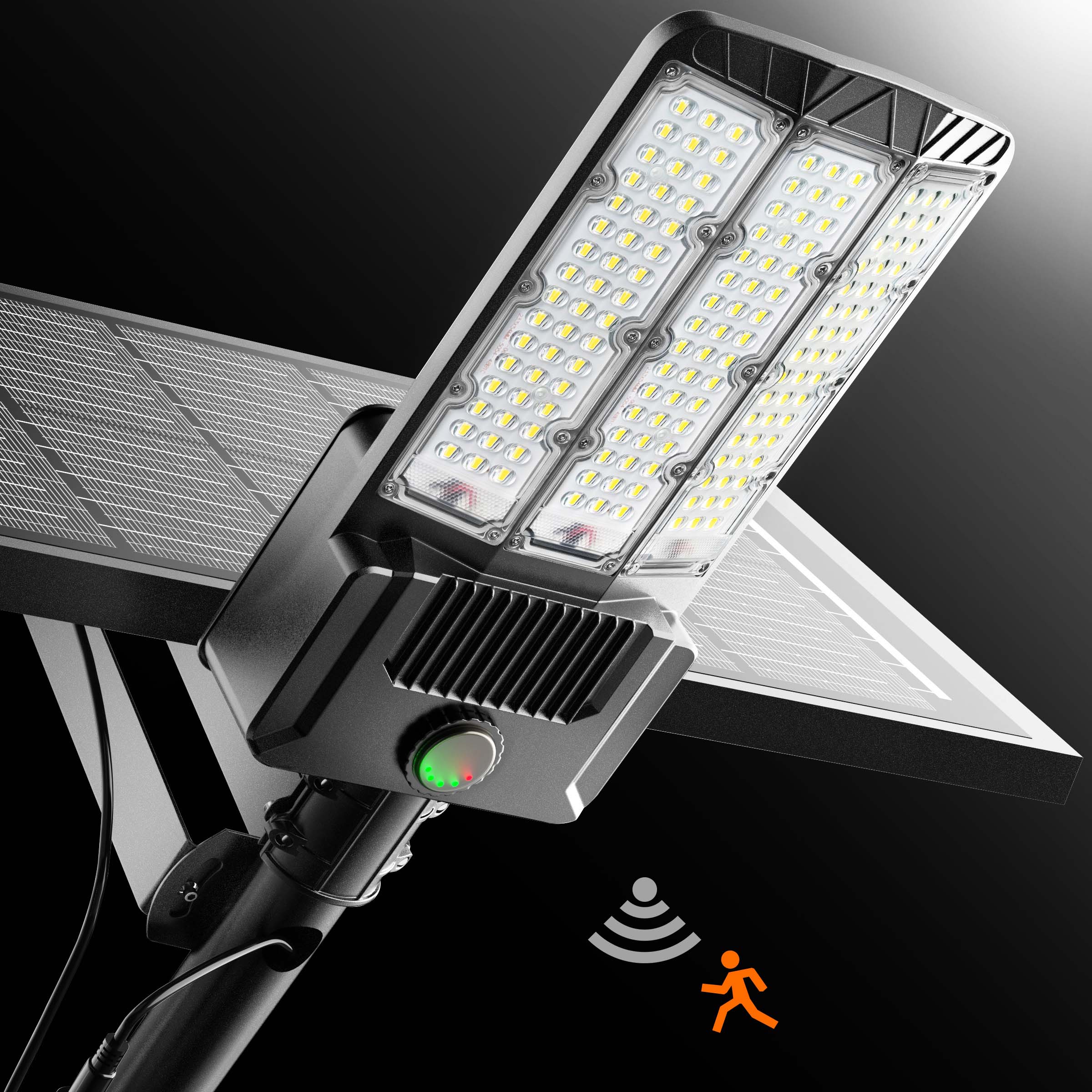
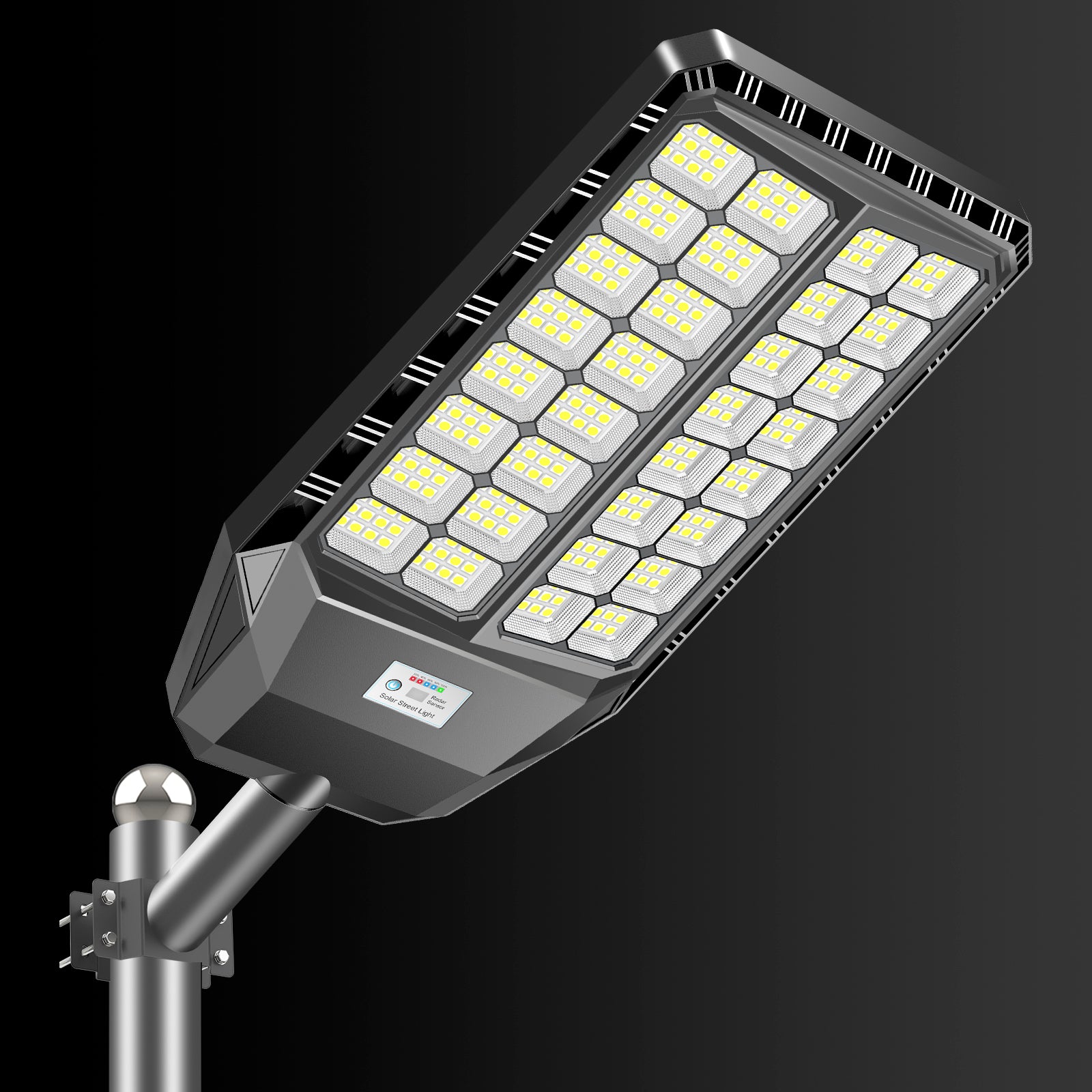
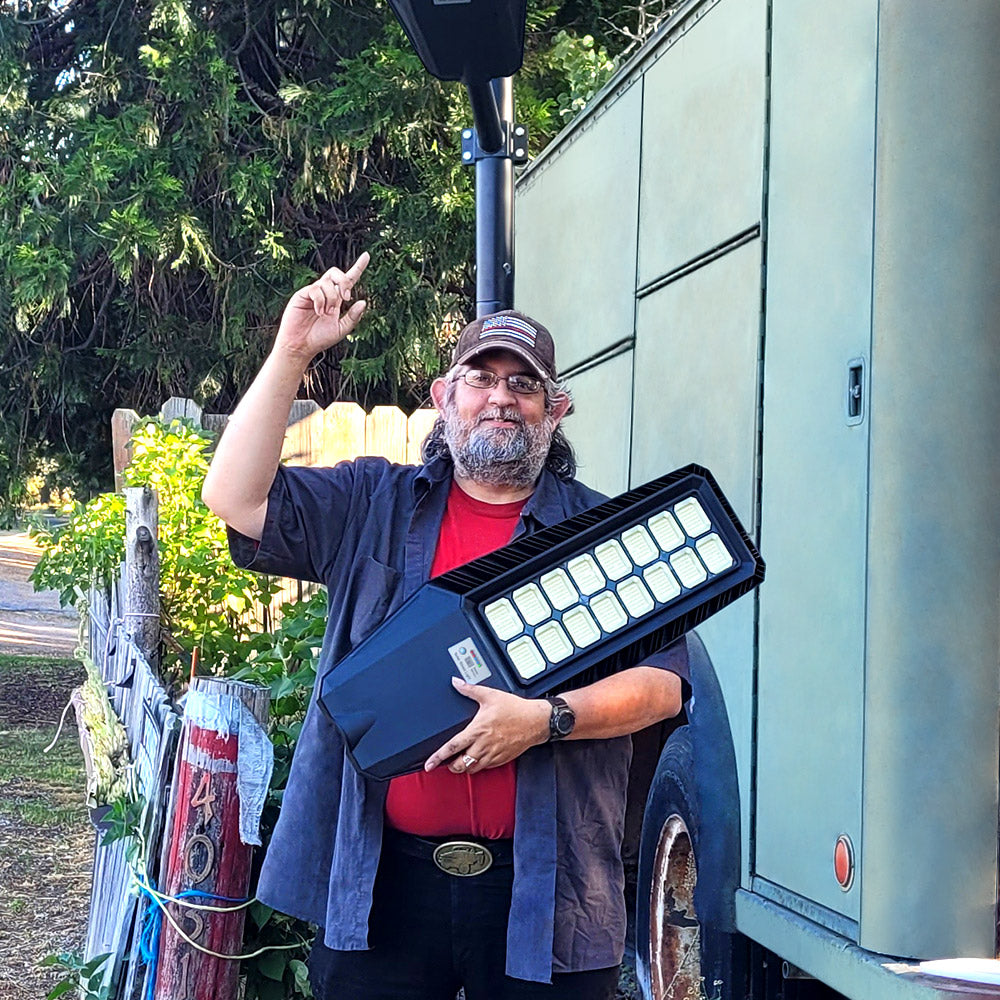
The Hykoont BM027 is a 190W solar street light producing 25,650 lumens — enough to illuminate a 30-40 foot section of pathway at comfortable reading-level brightness. At $169.00, it sits in the sweet spot between residential and light commercial applications.
What makes the BM027 particularly well-suited for pathway use is its IP66 weatherproofing and radar motion control. The radar sensor detects approaching pedestrians before they're directly under the light, giving a smooth, anticipatory brightening effect rather than a sudden flash. For community pathways where people are walking at night, this feels more natural and less startling.
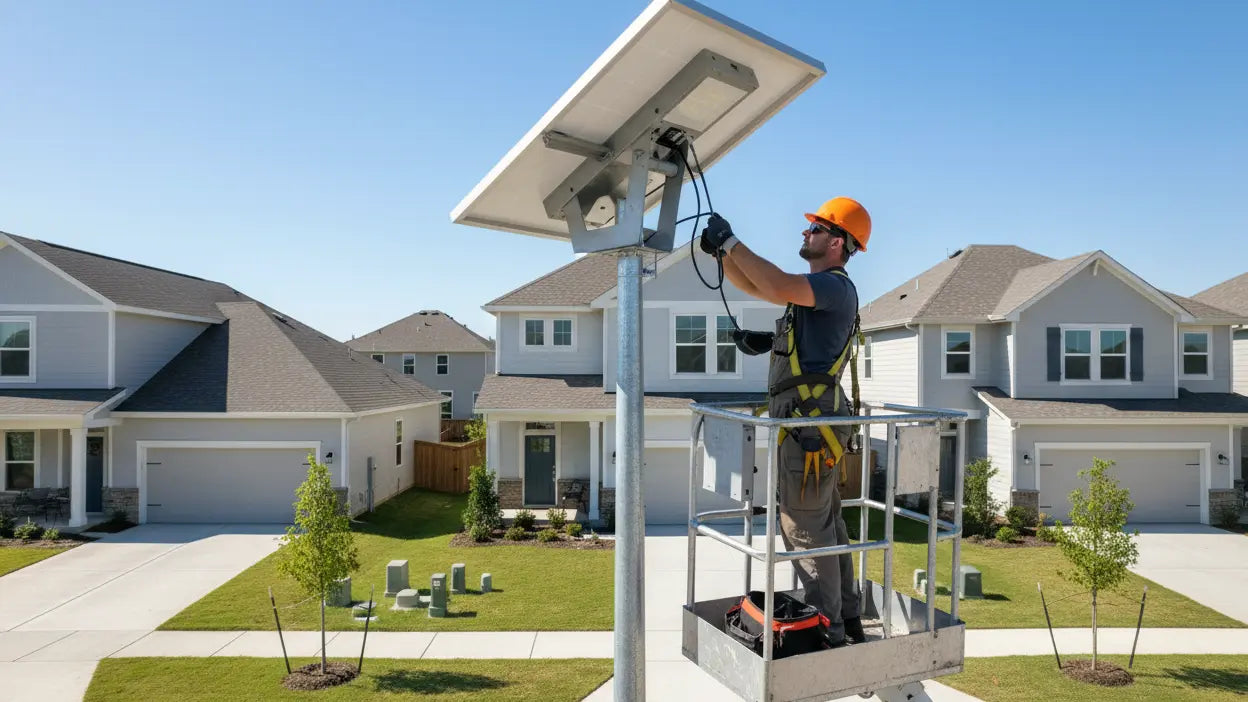
Installation is straightforward: the fixture mounts on a standard pole (sold separately) and the integrated solar panel means there's no separate panel to position. The all-in-one design keeps the installation footprint small, which matters when you're placing lights along a narrow garden path or between landscaping.
Best for: Residential driveways, garden paths, community walking trails, small parking areas adjacent to pathways.
Hykoont TS048 — Wide-Area Pathway Coverage

The Hykoont TS048 takes a different approach to pathway lighting. Its 4-sided hemispherical design distributes 42,000 lumens in a 180° pattern, making it ideal for intersections, plaza areas, or wide pathway junctions where you need coverage in multiple directions simultaneously.
At $159.00, it's actually the most affordable option in this lineup despite its higher lumen output. The trade-off is that the omnidirectional light distribution means less concentrated illumination in any single direction — it's better for broad area coverage than for lighting a narrow linear path.
The TS048 includes both motion detection and timer modes, giving you flexibility in how you manage the light's runtime. For community pathways that see heavy evening foot traffic followed by quiet late-night hours, the timer mode lets you run full brightness during peak hours and dim automatically after midnight.
Best for: Pathway intersections, community plazas, park entrances, wide walkways, areas where 360° visibility matters.
Hykoont TW002C — The Budget-Conscious Community Option
For communities working with tighter budgets but still wanting reliable solar pathway lighting, the Hykoont TW002C at $99.00 delivers 24,000 lumens with a spherical lens designed for broad, even coverage. The dusk-to-dawn auto mode means zero management after installation — it simply turns on at sunset and off at sunrise, every day.
The TW002C's spherical lens design is worth noting: rather than directing all light downward in a tight beam, it spreads illumination more evenly across a wider area. This reduces harsh shadows and creates a more comfortable nighttime environment for pedestrians — important for pathways where people need to see the ground clearly without being blinded by a direct light source.
Best for: Budget-conscious installations, community grant projects, supplemental lighting along existing pathways, residential side yards and garden paths.
Hykoont 100W Solar Flood Light — Pathway Accent and Security
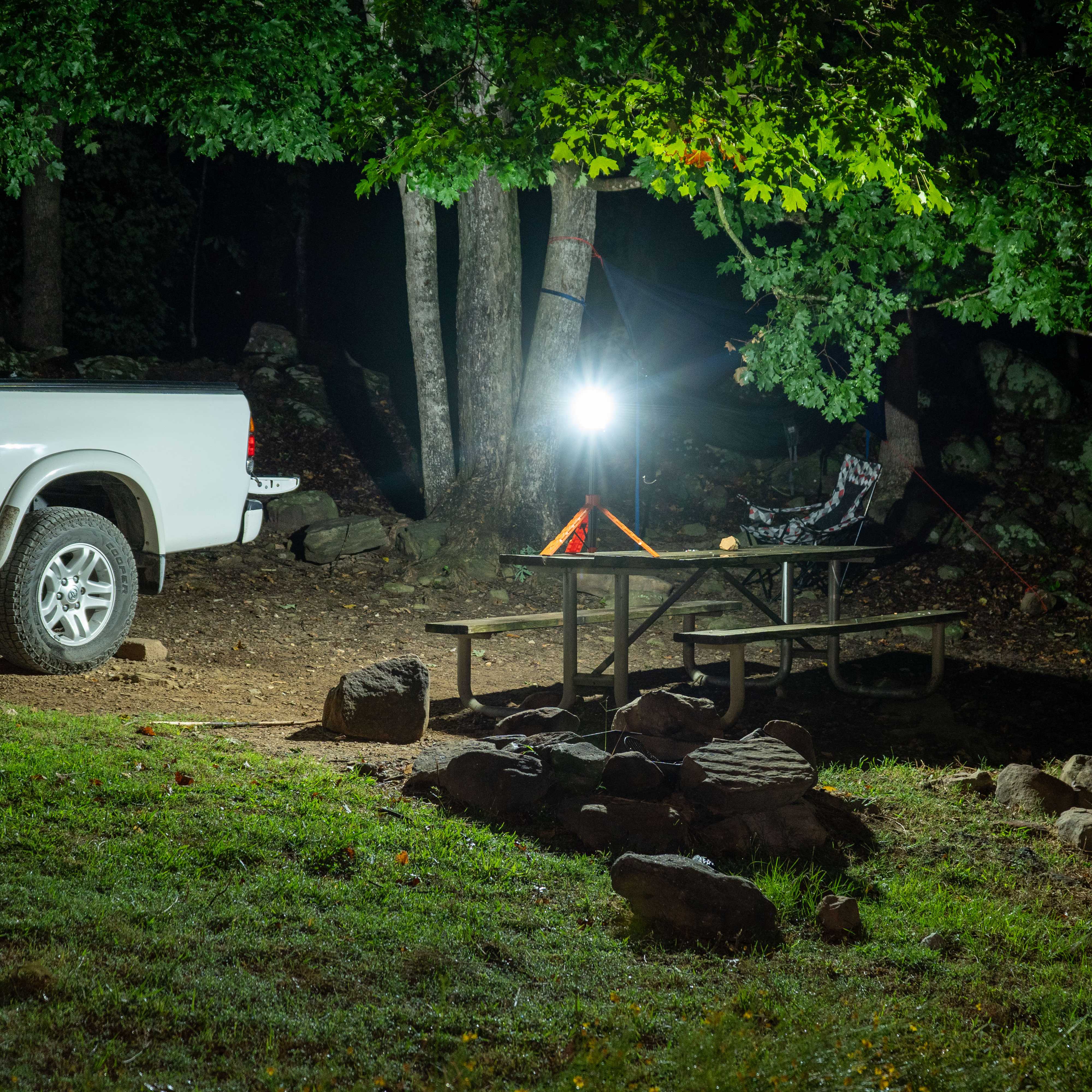
Not every pathway lighting need is best served by a street-light-style fixture. The Hykoont 100W Solar Flood Light at $85.00 produces 10,000 lumens and covers up to 2,000 square feet — making it ideal for illuminating the area around a pathway entrance, lighting a garden feature adjacent to a path, or providing security lighting at a pathway's end point.
The included smart remote lets you adjust brightness and modes without climbing a ladder, which is genuinely useful for seasonal adjustments or when you want to change the lighting behavior for a community event.
Best for: Pathway entrances and exits, security lighting at pathway endpoints, garden areas adjacent to walking paths, accent lighting for landscape features along pathways.
Shop 100W Flood Light — $85.00 →
Planning a Solar Pathway Lighting Project: A Practical Framework
Whether you're lighting a 50-foot garden path or a half-mile community trail, the planning process follows the same basic framework.
Step 1: Map Your Pathway and Identify Coverage Zones
Walk the pathway at night (with a flashlight) and note where you actually need light. Not every foot of a pathway needs to be illuminated — what matters is that pedestrians can see the ground clearly and identify any hazards. Typically, this means placing lights at:
- Pathway entrances and exits
- Intersections and decision points
- Changes in elevation (steps, ramps, slopes)
- Curves where visibility is reduced
- Areas adjacent to hazards (water features, drop-offs, traffic)
Between these key points, you can space lights further apart — 30-50 feet is typical for commercial solar street lights at 20,000+ lumens.
Step 2: Assess Your Solar Resource
Solar lighting performance depends on how much sunlight your location receives. The continental United States ranges from about 3.5 peak sun hours per day (Pacific Northwest, winter) to 6+ peak sun hours (Southwest, summer). Most quality solar lights are designed to perform reliably with 4+ peak sun hours.
Check whether your pathway has any significant shading from trees, buildings, or terrain. Even partial shading during peak sun hours can significantly reduce charging efficiency. If shading is unavoidable, look for fixtures with separate solar panels that can be positioned independently of the light head.
Step 3: Choose Your Mounting Solution
Solar pathway lights can be mounted on:
- Existing poles — if your pathway already has light poles, many solar fixtures can be retrofitted onto standard pole diameters
- New poles — steel or aluminum poles in 10-20 foot heights are the most common choice for pathway lighting
- Wall mounts — for pathways adjacent to buildings, wall mounting can eliminate the need for poles entirely
- Ground stakes — for lower-output decorative pathway lights (not applicable for commercial-grade fixtures)
Step 4: Calculate Your Budget
A complete solar pathway lighting installation typically costs:
- Fixture: $85-$169 per light (Hykoont range)
- Pole: $40-$120 per pole (depending on height and material)
- Installation labor: $50-$150 per fixture (concrete footing, pole setting, fixture mounting)
- Total per light point: $175-$440
Compare this to grid-connected pathway lighting, which adds trenching costs ($5-$15 per linear foot), conduit, wiring, and connection to the electrical panel — often $500-$1,500 per light point before the fixture cost. For pathways more than 50 feet from an electrical panel, solar is almost always the more economical choice.

Zero-Carbon Communities: What Solar Pathway Lighting Actually Contributes
Let's put some numbers on the environmental impact, because the story is more compelling than most people realize.
A typical grid-connected pathway light running 10 hours per night at 100W consumes 365 kWh per year. At the U.S. average grid carbon intensity of about 0.85 lbs CO₂ per kWh, that's roughly 310 lbs of CO₂ per light per year.
A community with 50 pathway lights is generating about 7.75 tons of CO₂ annually just from pathway lighting. Switch to solar, and that number drops to zero — not reduced, eliminated.
For communities pursuing carbon neutrality commitments, pathway lighting is one of the easiest wins available. The technology is proven, the economics are favorable, and the installation is straightforward. It's not a pilot program or an experiment — it's a mature solution that works.
Beyond carbon, there are other environmental benefits worth noting:
- No light pollution from inefficient fixtures — modern solar LED lights direct illumination downward, reducing sky glow
- No trenching disruption — solar installation preserves existing landscaping and hardscaping
- Reduced grid demand — distributed solar generation reduces peak load on local electrical infrastructure
- Resilience — solar lights continue operating during grid outages, maintaining safety lighting when it's most needed
Installation Tips from the Field
A few practical notes from real installations that don't always make it into product manuals:
Orient panels south. In the Northern Hemisphere, solar panels should face south for maximum energy harvest. Most all-in-one solar lights have fixed panel orientation — make sure the pole is positioned so the panel faces south, not the light head.
Check for seasonal shading. A tree that provides no shade in winter may cast significant shade in summer when leaves are full. Assess your installation sites in the season when shading will be worst.
Allow for a break-in period. New LiFePO4 batteries often reach full capacity after 3-5 charge cycles. Don't judge performance in the first week — give the system time to calibrate.
Clean panels periodically. Dust, pollen, and bird droppings reduce panel efficiency. A quick wipe with a damp cloth twice a year maintains peak performance.
Document your installation. Take photos of each installation location, note the pole coordinates, and keep a record of installation dates. This makes future maintenance much easier.

Frequently Asked Questions
How many hours will a solar pathway light run on a full charge?
Most commercial-grade solar pathway lights are designed to run 10-14 hours on a full charge in motion-sensing mode (dimmed when no motion detected, full brightness when triggered). In full-brightness mode, runtime is typically 6-8 hours. The Hykoont fixtures in this guide are designed to handle 2-3 consecutive cloudy days before performance degrades noticeably.
Do solar pathway lights work in cloudy climates?
Yes, though performance varies. Solar panels generate electricity from diffuse daylight, not just direct sunlight — they just generate less of it on cloudy days. In consistently cloudy climates (Pacific Northwest, Great Lakes region), look for fixtures with larger panel-to-battery ratios and consider spacing lights slightly closer together to compensate for reduced per-fixture performance.
What's the difference between IP65 and IP66 weatherproofing?
Both ratings indicate dust-tight protection. IP65 protects against water jets from any direction; IP66 protects against powerful water jets. For outdoor pathway lighting in most U.S. climates, IP65 is sufficient. IP66 (like the BM027) provides additional protection in areas with heavy rain, pressure washing, or coastal salt spray.
Can I install solar pathway lights myself, or do I need an electrician?
Because solar lights don't connect to the electrical grid, no licensed electrician is required for the fixture installation itself. You will need someone to set the pole in concrete (a standard DIY or handyman task), and some municipalities require permits for any permanent outdoor lighting installation regardless of power source. Check your local requirements before starting.
How long do the batteries last before they need replacement?
LiFePO4 batteries in quality solar lights are rated for 2,000-3,000 charge cycles, which translates to roughly 5-8 years of daily use. When batteries do eventually need replacement, they're typically user-serviceable — you don't need to replace the entire fixture.
What happens to solar pathway lights during a power outage?
Nothing changes — they keep working exactly as normal. This is one of the underappreciated advantages of solar lighting: it's completely independent of the grid. During hurricanes, ice storms, or other events that knock out grid power, solar pathway lights continue providing safety lighting when it's most needed.
Are there tax incentives or grants available for solar pathway lighting?
Yes, several programs may apply depending on your location and project type. The federal Investment Tax Credit (ITC) applies to commercial solar installations. Many states have additional incentives. For municipalities and nonprofits, USDA Rural Energy for America Program (REAP) grants and EPA Environmental Justice grants have funded solar lighting projects. Check with your state energy office for current programs.
How do I calculate how many lights I need for my pathway?
A practical starting point: for a pathway where pedestrian safety is the primary concern, place lights so that no point on the path is more than 25-30 feet from a light source (for fixtures producing 20,000+ lumens). For decorative or accent lighting where safety is less critical, 40-50 foot spacing works well. When in doubt, start with fewer lights and add more if needed — solar fixtures are easy to add without any electrical work.
Can solar pathway lights handle extreme cold?
LiFePO4 batteries perform significantly better in cold weather than lithium-ion alternatives. They maintain usable capacity down to about -4°F (-20°C), though capacity is reduced at extreme temperatures. For installations in Minnesota, Montana, or other cold-climate states, LiFePO4 chemistry is specifically the right choice.
What's the warranty on Hykoont solar pathway lights?
Hykoont products include manufacturer warranties covering defects in materials and workmanship. For specific warranty terms on individual products, check the product page or contact Hykoont customer support directly. Commercial installations may have different warranty considerations than residential use.
The Bigger Picture
Solar pathway lighting isn't a compromise. It's not "good enough for off-grid" or "acceptable if you can't run wires." At this point in the technology's development, commercial-grade solar pathway lights are genuinely competitive with grid-connected alternatives on every metric that matters: brightness, reliability, lifespan, and total cost of ownership.
The zero-carbon benefit is real and measurable. The grid independence is genuinely valuable. And the installation simplicity — no trenching, no electrician, no utility coordination — makes solar the practical choice for most new pathway lighting projects.
If you're planning a pathway lighting project and haven't seriously considered solar, the question worth asking isn't "why solar?" It's "why not?"
Browse the full Hykoont solar pathway lighting lineup and find the right fixture for your project:





Leave a comment
This site is protected by hCaptcha and the hCaptcha Privacy Policy and Terms of Service apply.