


It's 2:47 AM. A delivery driver pulls into your warehouse lot. Half the lights are out. The other half are flickering. Your security camera catches nothing useful because the scene is too dark.
Sound familiar? If you've been running solar-powered commercial lights that die before dawn, the culprit is almost never the solar panel itself. Nine times out of ten, it's the charge controller — specifically, the absence of a proper MPPT (Maximum Power Point Tracking) controller.
This guide is for property managers, facility directors, and business owners who are done guessing. We'll walk through exactly how MPPT technology works, why it matters for all-night commercial lighting, and which Hykoont HY-series commercial solar street lights are actually built to deliver on that promise in 2026.
What Is an MPPT Solar Controller — And Why Should You Care?
Most people shopping for commercial solar lights focus on lumens, wattage, and IP ratings. Those things matter. But the charge controller is the brain of the entire system — it determines how efficiently your solar panel charges the battery, which directly determines how long your lights stay on after dark.
There are two main types of solar charge controllers:
- PWM (Pulse Width Modulation): The older, cheaper technology. It works by connecting the solar panel directly to the battery and reducing current as the battery fills. Simple, but inefficient — especially in cold weather or partial shade.
- MPPT (Maximum Power Point Tracking): The smarter option. It continuously calculates the optimal voltage and current from the solar panel, then converts that power to match what the battery actually needs. The result: 20–30% more energy harvested from the same panel.
For a residential garden light that runs 4 hours a night, PWM is fine. For a commercial parking lot light that needs to run 10–12 hours through winter nights? MPPT isn't a luxury — it's a requirement. Every light in the Hykoont HY commercial series ships with a built-in MPPT controller. That's not a marketing bullet point — it's the reason these lights actually make it to sunrise.
The Math That Makes MPPT Worth It
Here's a simplified example. Say your solar panel produces 200W at peak sun. A PWM controller might capture 160W of usable power after losses. An MPPT controller captures 185–195W from the same panel. Over a full day of charging, that 20% difference means your battery is fuller when the sun goes down — and your lights stay on longer.
In northern U.S. states where winter days are short and temperatures drop, that efficiency gap widens even further. MPPT controllers are specifically designed to handle low-light and cold-weather conditions better than PWM alternatives.

What "All-Night" Actually Means for Commercial Solar Lights
Marketing copy loves the phrase "all-night lighting." But what does that actually mean in practice?
A well-designed commercial solar light with MPPT charging should be able to:
- Run at full brightness for 4–6 hours after dusk (peak activity hours)
- Shift to a reduced-brightness or motion-activated mode for the remaining overnight hours
- Maintain at least 3 consecutive nights of operation after a cloudy day
- Recover to full charge within 1–2 sunny days
The Hykoont HY series is engineered around exactly these requirements — large LiFePO4 battery packs, high-efficiency monocrystalline panels, and MPPT controllers that work together to keep the lights on when you need them most.
The 5 Commercial Scenarios Where MPPT Solar Lights Pay Off Fastest
1. Parking Lots and Garages
High-traffic areas need consistent, bright illumination from dusk to dawn. Motion sensors help conserve battery during low-traffic hours, while MPPT charging ensures the battery is full enough to handle the full night. The HY100 at 18,000 lumens covers large parking areas with room to spare.
2. Warehouse and Industrial Perimeters
Security lighting around warehouses needs to be reliable — not just bright. MPPT-equipped lights with large LiFePO4 battery reserves are critical for facilities that can't afford dark spots. The HY120's 1,152Wh battery capacity is specifically designed for this kind of demanding, all-night commercial use.
3. Roadways and Private Driveways
Long driveways on commercial properties — farms, resorts, campuses — often lack grid access. The HY080 with adjustable CCT and 80W output is a practical, self-contained solution. No trenching, no utility bills, no monthly costs.
4. Construction Sites
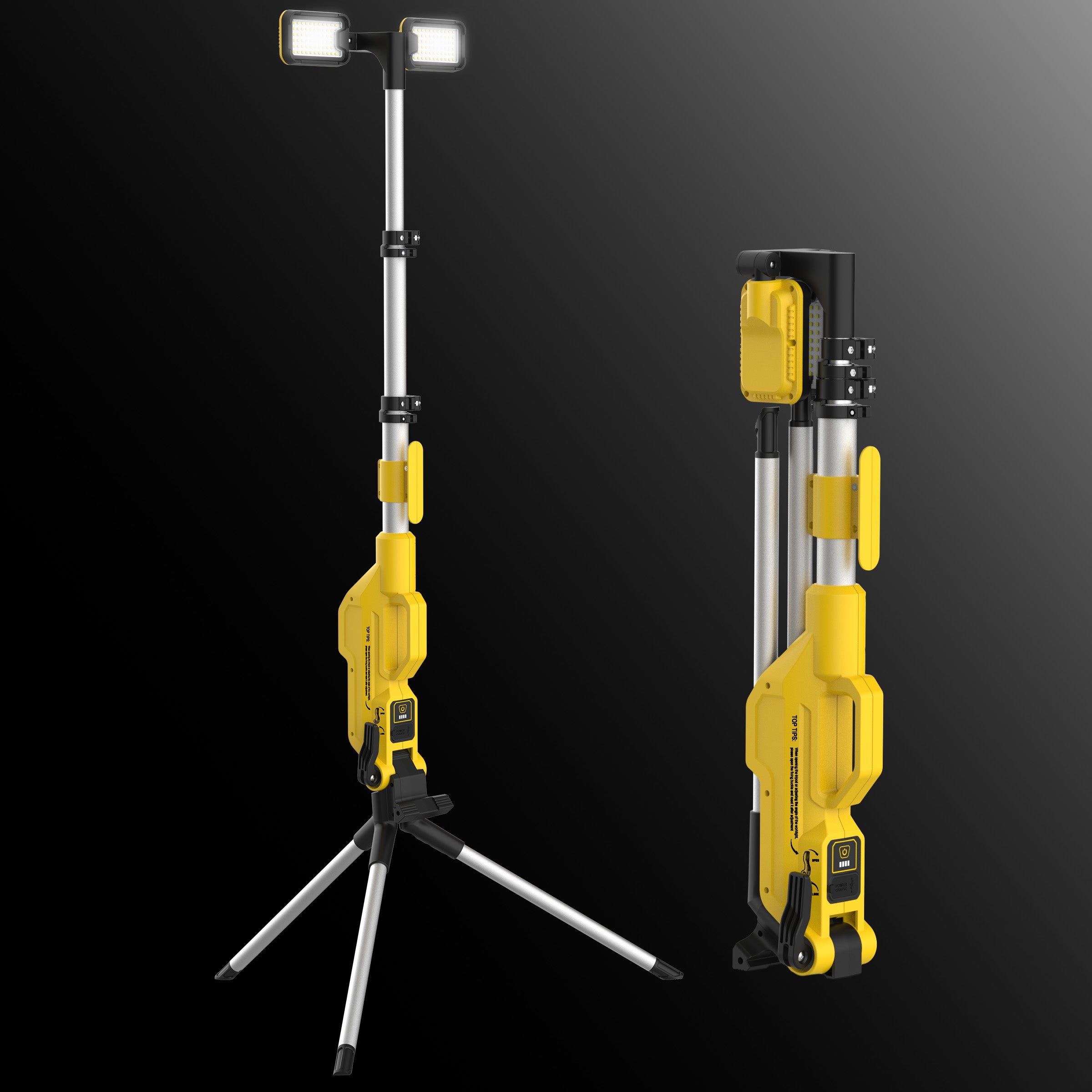
Temporary lighting that needs to move with the project. The HY050's 480Wh battery and 9,000 lumen output make it a capable portable commercial light that can be repositioned as the site evolves.
5. Farms and Rural Properties
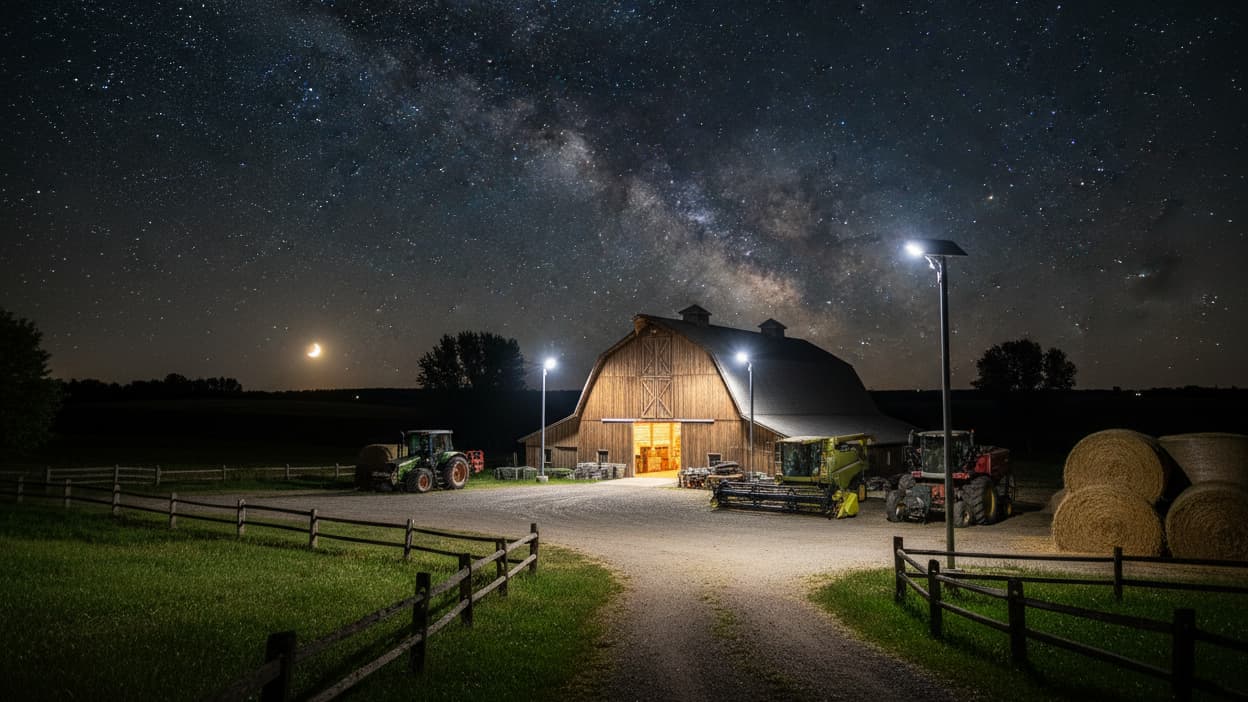
Grid power is expensive to extend to outbuildings, barns, and field perimeters. The HY100 with its 768Wh LiFePO4 battery and 150W monocrystalline solar panel can illuminate large barn entrances and equipment yards with zero ongoing electricity cost.

Hykoont HY Series: Commercial MPPT Solar Street Lights for 2026
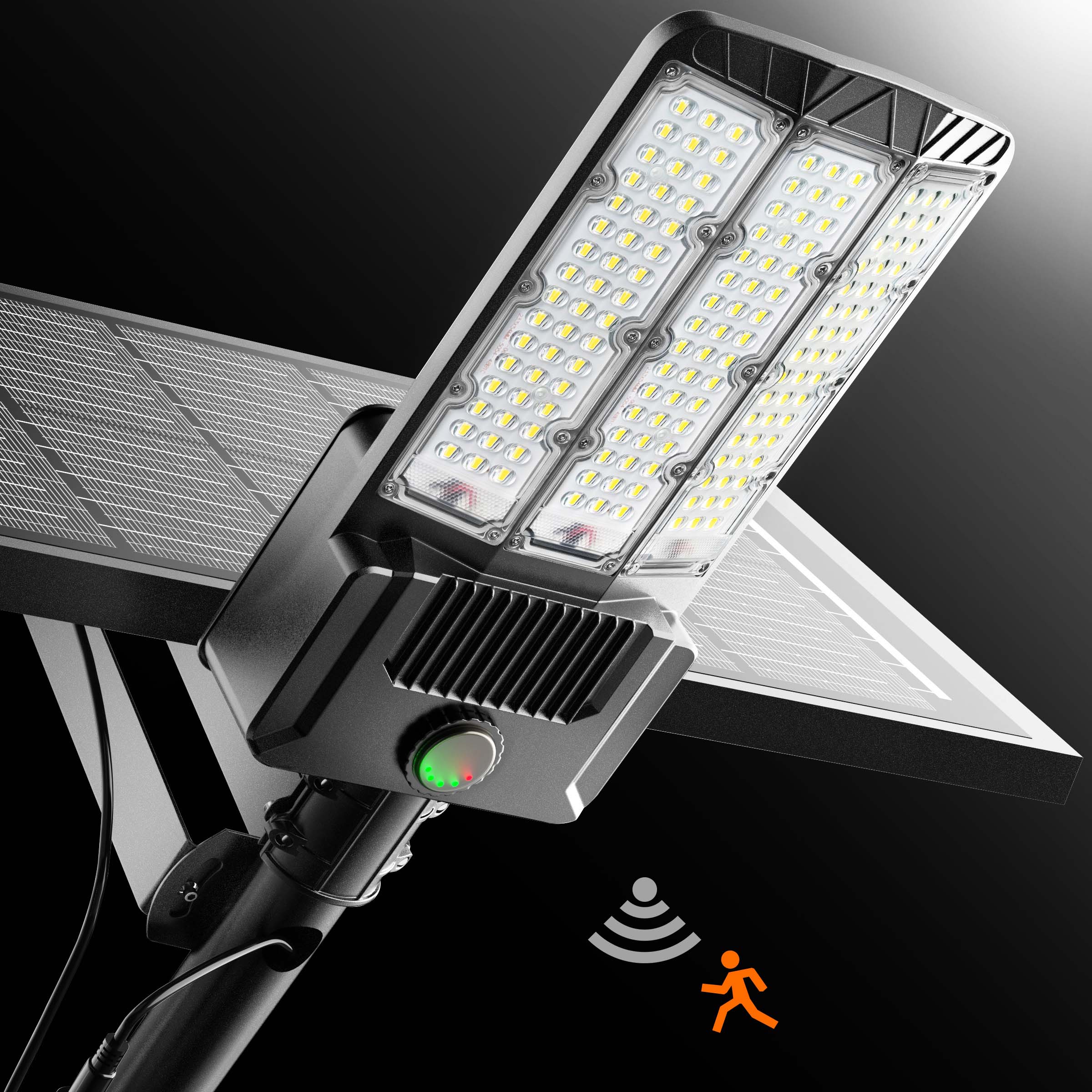
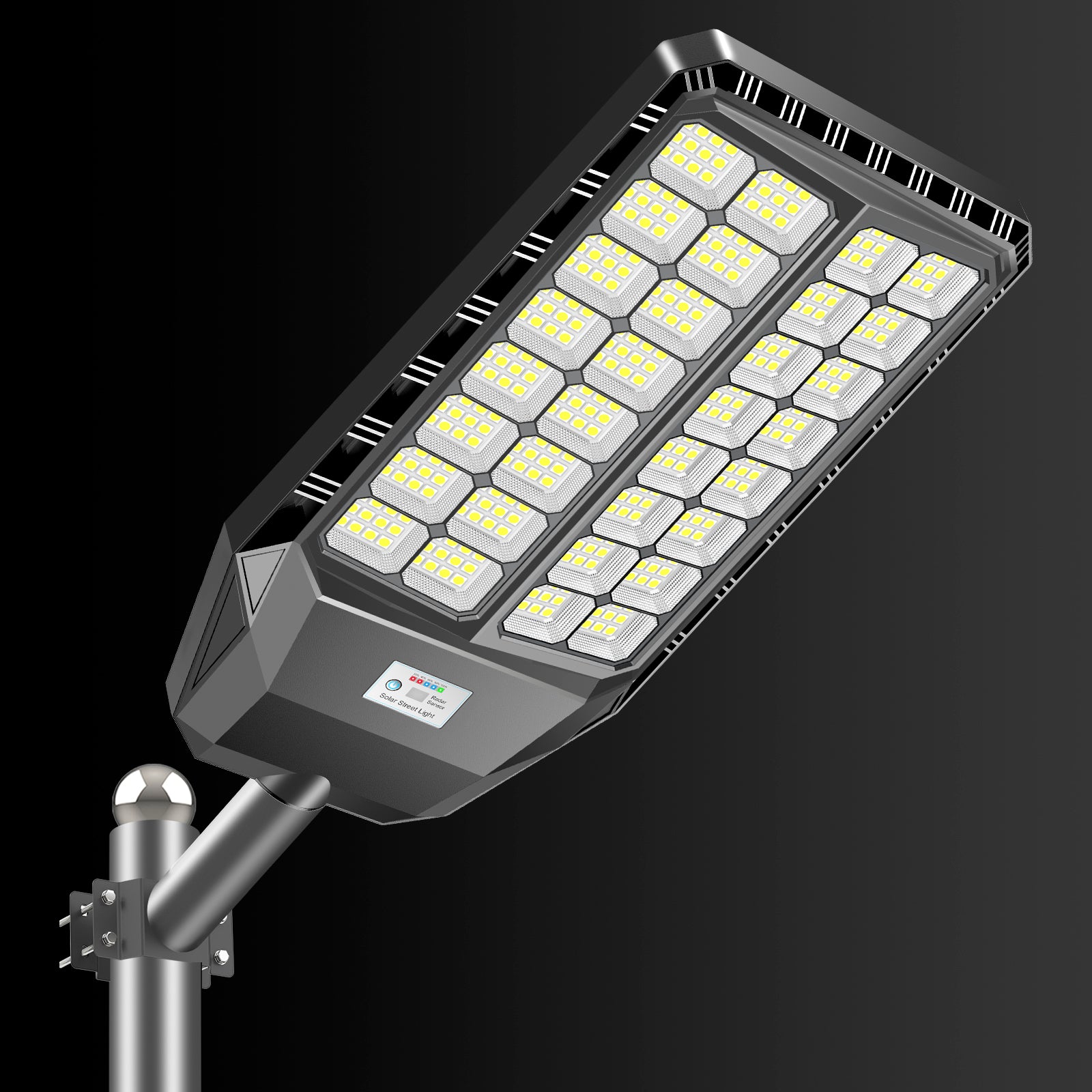
The HY series is Hykoont's dedicated commercial lineup — engineered with MPPT controllers, LiFePO4 batteries, and monocrystalline solar panels from the ground up. These aren't consumer lights with a commercial label. They're purpose-built for properties that need reliable, all-night illumination year after year.
1. HY050 — Entry-Level Commercial MPPT Solar Street Light

Price: $696.00
The HY050 is where the HY commercial series starts — and it already outperforms most consumer-grade solar lights on the market. At 50W with a 480Wh LiFePO4 battery and 9,000 lumens of output, it's a serious commercial fixture for smaller lots, pathways, and perimeter lighting.
Key specs:
- 9,000 lumens output
- 50W rated power
- 480Wh LiFePO4 battery
- Built-in MPPT charge controller
- Monocrystalline solar panel
- IP66 waterproof
- Ideal for: small commercial lots, pathway lighting, perimeter security
The LiFePO4 battery chemistry is a key differentiator here. Unlike the lithium-ion batteries in consumer solar lights, LiFePO4 handles deep discharge cycles without significant capacity loss — meaning the HY050 will still perform reliably after 5+ years of nightly use.
2. HY080 — Mid-Range Commercial Solar Light with Adjustable CCT

Price: $999.00
The HY080 steps up to 80W with a 538Wh LiFePO4 battery and adds adjustable CCT (Correlated Color Temperature) — a feature that matters more than most buyers realize. Different commercial environments need different light color temperatures: warmer tones for hospitality settings, cooler daylight tones for security and industrial applications. The HY080 lets you dial that in.
Key specs:
- 80W rated power
- 538Wh LiFePO4 battery
- Adjustable CCT (color temperature)
- Adjustable brightness levels
- Built-in MPPT charge controller
- IP66 waterproof
- Ideal for: mid-size parking lots, hospitality properties, campus pathways, roadways
The adjustable brightness feature also extends battery life significantly. Running at 60% brightness during low-traffic late-night hours can add 2–3 hours of additional runtime compared to full-brightness operation all night.
3. HY100 — High-Output Commercial Solar Street Light with 150W Mono Panel

Price: $1,399.00
The HY100 is the most popular fixture in the HY commercial series for good reason. At 100W with 18,000 lumens and a 768Wh LiFePO4 battery paired with a 150W monocrystalline solar panel, it has the output and battery reserve to handle large commercial areas through full winter nights in northern U.S. states.
Key specs:
- 18,000 lumens output
- 100W rated power
- 768Wh LiFePO4 battery
- 150W monocrystalline solar panel
- Built-in MPPT charge controller
- IP66 waterproof
- Ideal for: large parking lots, warehouse perimeters, farm entrances, suburban roadways
The 768Wh battery capacity is the real story here. At 18,000 lumens, the HY100 can run for approximately 10–12 hours on a full charge — enough to cover the longest winter nights in the continental U.S. And with MPPT charging from a 150W monocrystalline panel, it recovers to full charge in a single sunny day.
4. HY120 — Flagship Commercial Solar Street Light with MPPT Control

Price: $1,914.00
The HY120 is the flagship of the HY series — and it shows. At 200W with a 1,152Wh LiFePO4 battery, adjustable CCT, and a dedicated MPPT controller, it's engineered for the most demanding commercial applications: large industrial facilities, highway-adjacent properties, and any site where lighting failure is simply not an option.
Key specs:
- 200W rated power
- 1,152Wh LiFePO4 battery (largest in the HY series)
- Adjustable CCT
- Dedicated MPPT charge controller
- 36V 200W monocrystalline solar panel
- IP66 waterproof
- Ideal for: large industrial facilities, highway perimeters, multi-acre commercial properties, high-security installations
The 1,152Wh battery is what sets the HY120 apart. Even in the worst-case scenario — three consecutive overcast days in a northern state in December — the HY120 has enough stored energy to maintain meaningful illumination. That's the kind of reliability that commercial properties actually need.
HY Series Comparison: Which Commercial Solar Light Is Right for Your Property?
| Model | Power | Lumens | Battery | MPPT | Price | Best For |
|---|---|---|---|---|---|---|
| HY050 | 50W | 9,000 lm | 480Wh LiFePO4 | ✓ | $696 | Small lots, pathways |
| HY080 | 80W | — | 538Wh LiFePO4 | ✓ | $999 | Mid-size lots, hospitality |
| HY100 | 100W | 18,000 lm | 768Wh LiFePO4 | ✓ | $1,399 | Large lots, warehouses, farms |
| HY120 | 200W | — | 1,152Wh LiFePO4 | ✓ | $1,914 | Industrial, high-security |
→ Browse the Full HY Commercial Series
How to Size an MPPT Solar Lighting System for Your Commercial Property
Buying the right commercial solar light isn't just about picking the brightest fixture. You need to match the system to your specific site conditions. Here's a practical framework:
Step 1: Calculate Your Coverage Area
Measure the total area you need to illuminate. The HY100 at 18,000 lumens mounted at 20 feet typically covers 2,500–3,500 sq. ft. at adequate brightness. Divide your total area by the per-fixture coverage to get your unit count.
Step 2: Assess Your Sun Hours
The U.S. averages 4–6 peak sun hours per day, but this varies significantly by region and season. Southern states (Texas, Arizona, Florida) average 5.5–6.5 hours. Northern states (Minnesota, Michigan, Maine) average 3.5–4.5 hours in winter. The HY series' MPPT controllers help compensate for lower sun hours, but the HY120's larger panel and battery give it a meaningful edge in northern climates.
Step 3: Define Your Runtime Requirements
How many hours per night does your property need illumination? A warehouse that operates 24/7 has different requirements than a retail parking lot that empties by 10 PM. The HY080 and HY100's adjustable brightness modes let you match runtime to actual operational needs.
Step 4: Factor in Mounting Height
Higher mounting heights require higher lumen output to achieve the same ground-level illuminance. A light mounted at 20 feet needs roughly 4x the lumens of the same fixture at 10 feet to achieve equivalent brightness at ground level. The HY100 at 18,000 lumens is well-suited for 18–25 foot mounting heights.
Step 5: Consider Your Climate
All HY series lights carry IP66 waterproof ratings. In coastal environments, the aluminum alloy housings resist corrosion. In heavy snow regions, the panel mounting angle matters — steeper angles shed snow better and maintain charging efficiency through winter.

MPPT vs. PWM: A Side-by-Side Comparison for Commercial Buyers
| Feature | PWM Controller | MPPT Controller (HY Series) |
|---|---|---|
| Charging Efficiency | 70–80% | 93–97% |
| Cold Weather Performance | Degrades significantly | Maintains efficiency |
| Partial Shade Handling | Poor | Good (tracks optimal point) |
| Battery Type | Usually Li-ion | LiFePO4 (longer lifespan) |
| Battery Longevity | 2–4 years | 8–10+ years |
| Best For | Small residential systems | Commercial, all-night operation |
Real-World ROI: What Commercial Solar Lighting Actually Saves
Let's run the numbers on a realistic commercial scenario: a 6-unit parking lot lighting installation using the HY100.
Grid-powered alternative:
- Trenching and wiring: $8,000–$15,000
- Fixture cost (6 units): $3,000–$5,000
- Monthly electricity cost (6 lights × 12 hours × 365 days × $0.14/kWh): ~$1,300/year
- 5-year total cost: $17,500–$26,500
Solar alternative (HY100 × 6 units):
- Fixture cost (6 × HY100): $8,394
- Installation (pole mounting, no trenching): $1,000–$2,500
- Monthly electricity cost: $0
- 5-year total cost: $9,394–$10,894
5-year savings: $7,000–$16,000+ — plus zero utility rate exposure going forward.
And that math gets better every year as utility rates climb. The HY100's LiFePO4 battery is rated for 2,000+ charge cycles — roughly 5–7 years of nightly use before any capacity degradation becomes noticeable.
→ Get a Quote on HY100 for Your Property
Installation Tips for Commercial MPPT Solar Lights
Panel Orientation
In the U.S., solar panels should face true south (not magnetic south) for maximum annual energy harvest. Tilt angle should roughly match your latitude — 30° for southern states, 45° for northern states. The HY series' separate panel mounting allows independent angle adjustment.
Pole Height and Spacing
For parking lot applications, 20–25 foot poles with the HY100 or HY120 spaced 60–80 feet apart typically achieve adequate illuminance levels. For pathway lighting, 12–15 foot poles with the HY050 or HY080 spaced 40–50 feet apart work well.
Battery Maintenance
The HY series uses LiFePO4 batteries, which require minimal maintenance. Keeping the solar panel clean — especially in dusty or pollen-heavy environments — can improve charging efficiency by 10–15%. A quarterly wipe-down with a damp cloth is typically sufficient.
Seasonal Adjustments
In northern states, use the HY080 or HY120's adjustable brightness to set a dimmer mode for late-night hours in winter. This conserves battery during the longest nights and ensures the lights make it to sunrise even after a cloudy day.
Frequently Asked Questions
Q: Do the HY series lights actually use MPPT controllers?
A: Yes. Every light in the Hykoont HY commercial series — HY050, HY080, HY100, and HY120 — includes a built-in MPPT charge controller. This is one of the primary distinctions between the HY commercial series and the consumer-grade TW/BM/XH series.
Q: Can HY series commercial solar lights really run all night in winter?
A: Yes, with the right model for your climate. The HY100 (768Wh battery) and HY120 (1,152Wh battery) are specifically designed for all-night operation in northern U.S. states. The HY120 can maintain meaningful illumination through 3+ consecutive cloudy days.
Q: What's the difference between LiFePO4 and standard lithium-ion batteries in solar lights?
A: LiFePO4 (lithium iron phosphate) batteries handle deep discharge cycles far better than standard lithium-ion. They're rated for 2,000–3,000 charge cycles vs. 500–800 for standard Li-ion — meaning the HY series batteries last 3–5x longer before needing replacement. They're also safer, with no thermal runaway risk.
Q: What's the minimum lumen output for a commercial parking lot?
A: The Illuminating Engineering Society (IES) recommends a minimum of 1 foot-candle (fc) for general parking areas and 2–5 fc for high-security or high-activity areas. The HY100 at 18,000 lumens mounted at 20 feet typically achieves 2–4 fc across a 2,500–3,000 sq. ft. area — adequate for most commercial parking applications.
Q: Do I need a permit to install commercial solar lights?
A: It depends on your municipality. Pole-mounted lights over a certain height (typically 15–20 feet) often require a permit. Check with your local building department before installation. Solar installations typically face fewer permitting hurdles than grid-tied electrical work because there's no utility connection involved.
Q: How long do HY series commercial solar lights last?
A: The LED components are rated for 50,000+ hours (roughly 15–20 years at 8 hours/night). The LiFePO4 batteries are rated for 2,000–3,000 charge cycles — approximately 6–8 years of nightly use. The monocrystalline solar panels carry a 25-year power output warranty.
Q: What happens during extended cloudy periods?
A: The HY100 and HY120's large battery reserves handle 3–5 consecutive cloudy days before brightness is noticeably reduced. The adjustable brightness modes on the HY080 and HY120 allow you to extend runtime further by reducing output during low-traffic hours.
Q: Can I use HY series lights in areas with heavy snow?
A: Yes. All HY series lights are IP66 rated and built with aluminum alloy housings that handle cold and moisture. The separate panel mounting allows you to set a steeper angle (45°+) that sheds snow more effectively in heavy snow regions.
Q: How many HY100 units do I need for my parking lot?
A: A rough rule of thumb: one HY100 per 2,500–3,500 sq. ft. of parking area at 20-foot mounting height. For a 20,000 sq. ft. lot, that's 6–8 fixtures. Actual requirements depend on mounting height, desired illuminance level, and local lighting codes.
Q: Are there tax incentives for commercial solar lighting in the U.S.?
A: Yes. Commercial solar installations may qualify for the federal Investment Tax Credit (ITC), which currently offers a 30% tax credit on qualifying solar equipment. Some states offer additional incentives. Consult a tax professional to determine eligibility for your specific installation.
The Bottom Line
If your commercial property needs reliable outdoor lighting that runs all night without a utility bill, MPPT solar technology is the foundation you need — and the Hykoont HY series is built around it from the ground up.
The HY050 starts at $696 for smaller commercial applications. The HY100 at $1,399 is the sweet spot for most parking lots and warehouse perimeters. And the HY120 at $1,914 is the right call for large industrial facilities where lighting failure isn't an option.
These aren't consumer lights with a commercial label. They're purpose-built commercial fixtures with LiFePO4 batteries, monocrystalline panels, and MPPT controllers — the combination that actually keeps the lights on when you need them most.



Leave a comment
This site is protected by hCaptcha and the hCaptcha Privacy Policy and Terms of Service apply.