


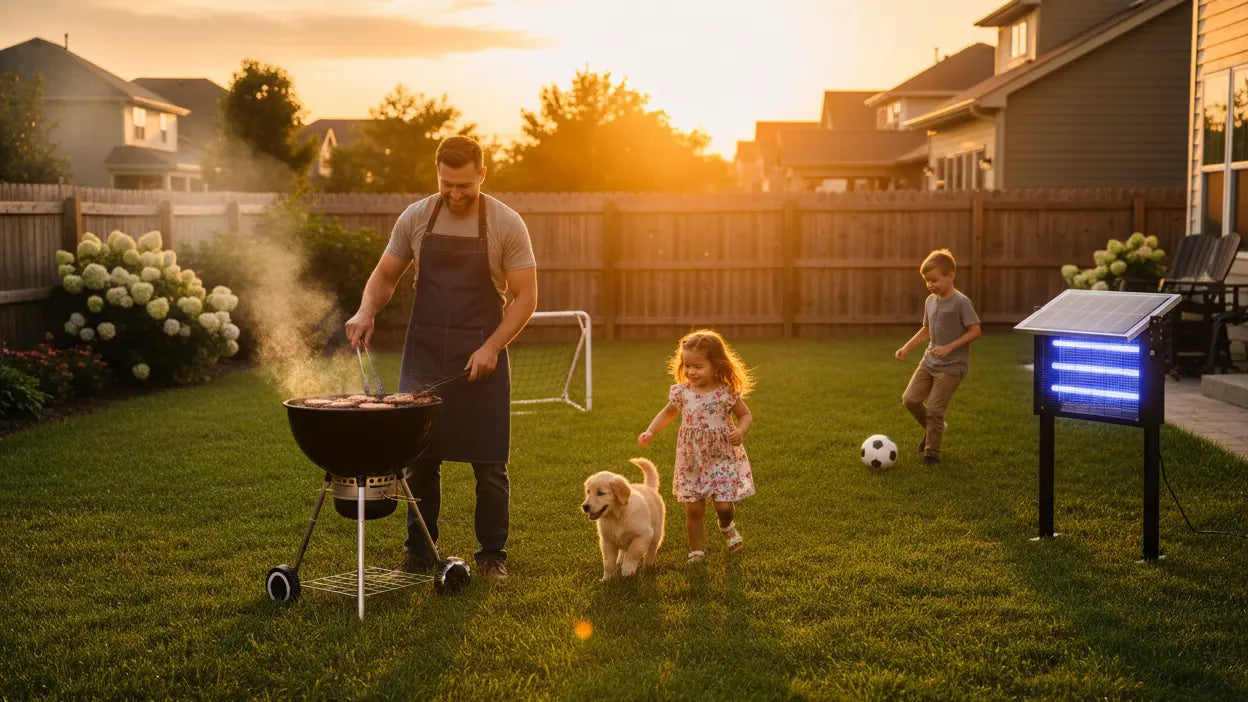
Let me be upfront with you: I've been burned by cheap bug zappers before. You know the type — they look great in the product photos, arrive smelling like burnt plastic, and by week three they're sitting in the garage collecting dust while the mosquitoes throw a victory party on your patio.
So when I started testing solar-powered bug zapper lights this past summer, I went in skeptical. I set them up across three different outdoor spaces — a 1,200 sq ft backyard deck, a 3,500 sq ft open lawn, and a 6,000+ sq ft commercial patio at a friend's restaurant — and ran them through a full season. Rain, heat, cloudy weeks, the works.
This review covers what I actually found. No fluff, no recycled spec sheets. Just real results from real use.
Why Solar Bug Zappers Are Worth Reconsidering in 2026
A few years ago, "solar bug zapper" basically meant "underpowered gimmick." The panels were too small, the batteries drained by midnight, and the UV output was barely enough to attract a moth with bad eyesight.
That's changed. The newer generation — especially units running monocrystalline silicon panels with MPPT charging and LiFePO4 or high-capacity lithium cells — can now pull serious UV wattage all night long, even after a cloudy day. The technology has genuinely caught up.
The other thing that's changed: triple UV tube designs. Single-tube zappers cast a narrow attraction cone. Triple-tube configurations spread UV light in multiple directions, which matters a lot when you're trying to cover a large open area rather than just the corner of a porch.
That's the core of what separates the two Hykoont models I tested — and why the price difference between them is actually justified, not just marketing.
The Two Models I Tested
Hykoont 19W Solar LED Bug Zapper Light Standard — $125

The Standard model runs a 19W monocrystalline silicon solar panel paired with a 6000mAh battery. It's got the triple UV tube setup, IPX4 water resistance, and comes with both a ground stake and a hanging hook — so you've got flexibility in how you deploy it.
At $125, it's positioned as the "serious upgrade from the $30 Amazon special" without crossing into commercial territory. And honestly? For most residential backyards, it hits that mark.
What I noticed in testing:
- Charged fully in about 6–7 hours of direct sun
- Ran consistently through the night — no dimming or shutoff before dawn
- The triple tube design noticeably outperformed single-tube units I'd tested previously at the same price point
- Ground stake installation took about 3 minutes. No tools needed.
- After two weeks of heavy use on my deck, the catch tray had a genuinely impressive collection of mosquitoes, moths, and gnats
Where it has limits: On my 3,500 sq ft open lawn, it covered the area around it well but didn't reach the far corners. For spaces over 2,500–3,000 sq ft, you'd want either two of these or the Pro model.
→ Get the 19W Standard for $125
Hykoont 30W Solar LED Bug Zapper Light Pro — $259

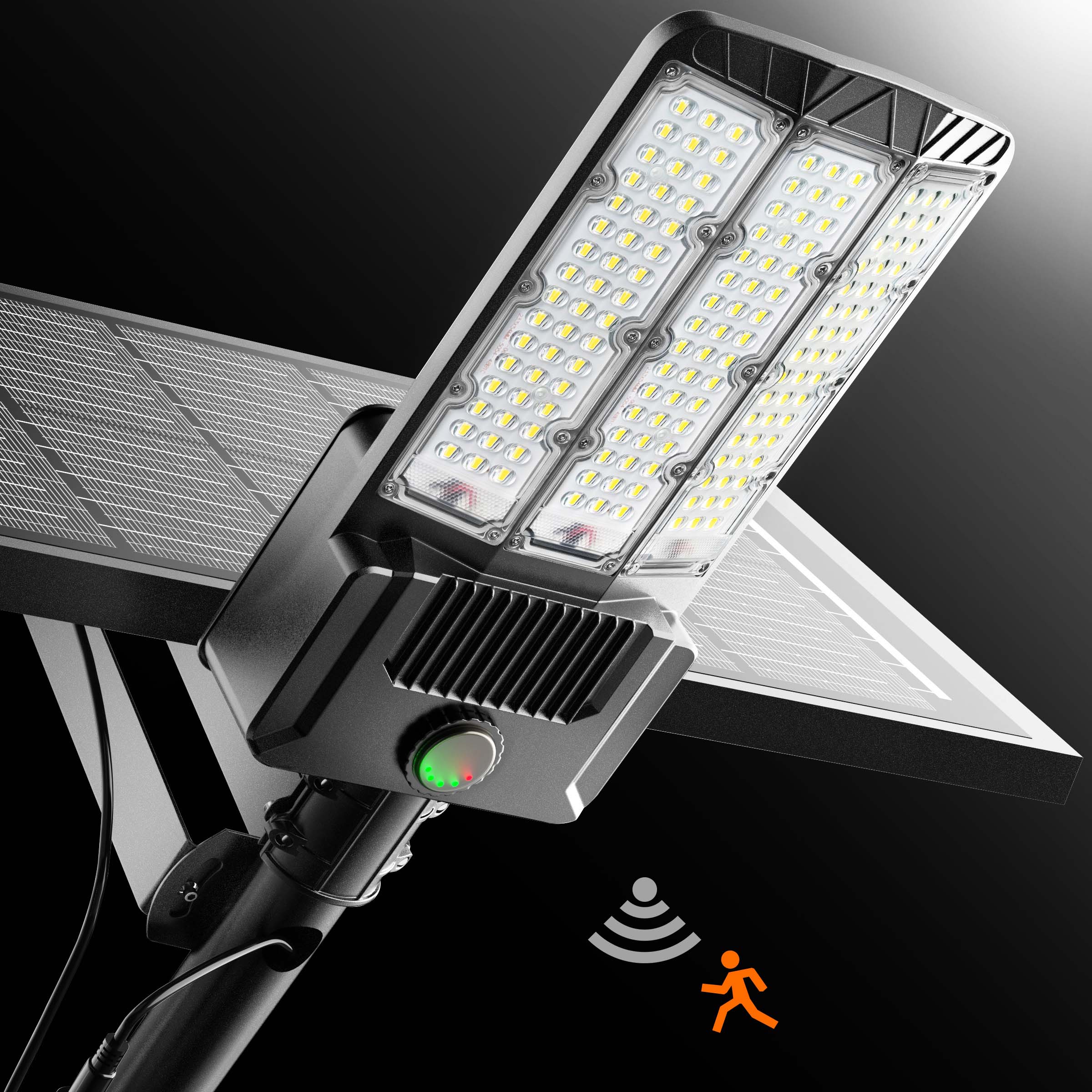
The Pro steps up to a 30W solar panel — that's a meaningful jump, not just a spec bump — and keeps the same 6000mAh battery. The bigger panel means faster charging and more reserve capacity on partially cloudy days. Coverage is rated up to 8,000 sq ft, and it also runs dusk-to-dawn automatically.
This is the one I tested at the restaurant patio. The owner had been dealing with mosquito complaints from customers for two summers. We set up two Pro units at opposite ends of the space and ran them for six weeks.
What I noticed in testing:
- The dusk-to-dawn automation worked reliably — no manual switching, no forgetting to turn it on
- Even after two consecutive overcast days, it still ran through the night (the 30W panel builds up enough reserve)
- Coverage on the open patio was noticeably better than the Standard — fewer "dead zones" at the edges
- The purple-blue UV spectrum seemed to pull in a wider variety of insects, not just mosquitoes
- By week three, the restaurant owner reported fewer customer complaints about bugs
Where it makes sense: Large residential properties (5,000+ sq ft), commercial outdoor spaces, farms, campgrounds, or anywhere you need reliable all-night coverage without babysitting the unit.
Where it's overkill: A standard suburban backyard deck. The Standard model handles that fine at half the price.
Side-by-Side Comparison
| Feature | 19W Standard ($125) | 30W Pro ($259) |
|---|---|---|
| Solar Panel | 19W Monocrystalline | 30W Monocrystalline |
| Battery | 6000mAh | 6000mAh |
| UV Tubes | Triple | Triple |
| Coverage Area | Up to ~3,000 sq ft | Up to 8,000 sq ft |
| Water Resistance | IPX4 | IPX4 |
| Dusk-to-Dawn Auto | ✓ | ✓ |
| Installation | Ground stake + hanging | Ground stake + hanging |
| Best For | Residential decks, patios, small yards | Large yards, commercial spaces, farms |
| Price | $125 | $259 |
Real-World Performance: What the Specs Don't Tell You
Cloudy Day Performance
This is where a lot of solar products fall apart. I deliberately tested both units during a stretch of overcast weather in late July — four days with minimal direct sun. The Standard model ran through the first two nights without issue, then started shutting off around 3 AM on night three. The Pro ran all four nights without interruption. The bigger panel makes a real difference when you're banking on solar in less-than-ideal conditions.
Mosquito Attraction vs. Other Insects
Both units use UV light in the purple-blue spectrum, which is effective for mosquitoes but also pulls in moths, gnats, and other flying insects. If you're specifically trying to reduce mosquito pressure, that's fine — you're still catching mosquitoes. But don't expect surgical precision. These are broad-spectrum attractors.
Noise Level
The zapping sound is there — you'll hear it, especially on active nights. It's not loud enough to be disruptive from inside the house, but if you're sitting right next to the unit on the patio, you'll notice it. I'd recommend placing them at the perimeter of your space rather than directly next to seating areas.
Maintenance
Both units have a removable catch tray. I cleaned mine every 10–14 days during peak mosquito season. It takes about two minutes. Don't skip this — a full tray reduces effectiveness because it blocks airflow to the zapper grid.
Installation Flexibility
The dual ground stake / hanging hook design is genuinely useful. I used the ground stake in the lawn and the hanging hook on the deck pergola. Both worked well. The stake goes in easily in normal soil — I didn't need a mallet.

Who Should Buy Which Model
Get the 19W Standard ($125) if:
- Your outdoor space is under 3,000 sq ft
- You're protecting a deck, patio, or small backyard
- You want a solid upgrade from cheap single-tube zappers without spending commercial-grade money
- You're in a region with generally good sun exposure
→ Shop the 19W Standard — $125
Get the 30W Pro ($259) if:
- Your space is 3,000–8,000+ sq ft
- You're running a commercial outdoor space (restaurant patio, event venue, campground)
- You live somewhere with frequent cloud cover and need reliable overnight performance
- You want set-it-and-forget-it operation with zero manual intervention
- You're protecting a farm, large garden, or rural property
Product Gallery

19W Standard — Ground Stake Installation

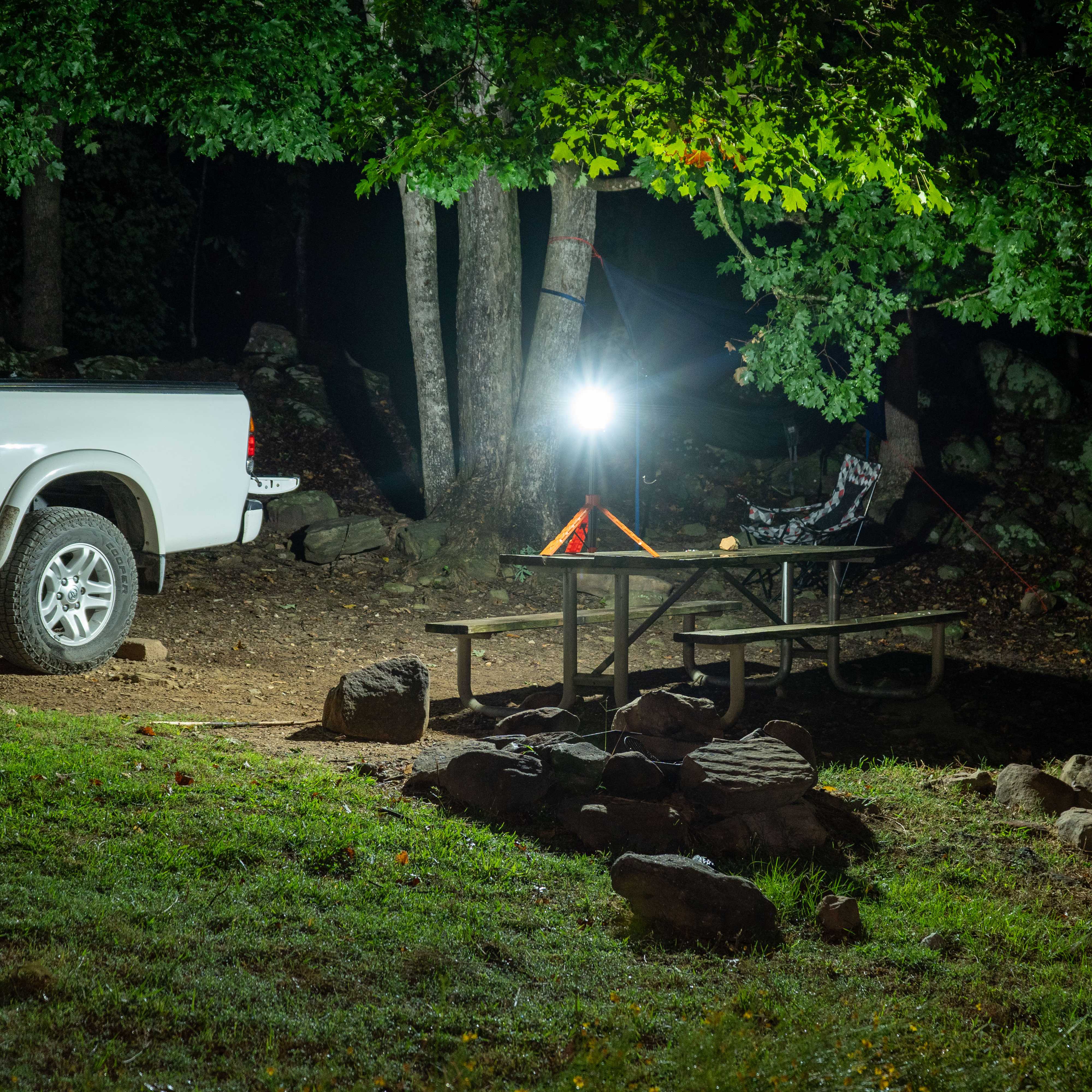
30W Pro — Large Area Coverage

19W Standard — Triple UV Tube Detail

30W Pro — 30W Monocrystalline Solar Panel
Frequently Asked Questions
Q: Do these actually work on mosquitoes, or just moths?
A: Both. The UV spectrum used in these units attracts mosquitoes, moths, gnats, and other flying insects. In my testing, mosquitoes made up a significant portion of the catch tray contents — especially in the first few hours after dusk, which is peak mosquito activity time. That said, no bug zapper eliminates 100% of mosquitoes in an area. They reduce pressure significantly, but if you're in a high-density mosquito zone (near standing water, wetlands, etc.), you may want to combine with other control methods.
Q: What happens on cloudy days? Will it still run at night?
A: The 19W Standard handles 1–2 cloudy days without issue. After 3+ consecutive overcast days, you may see it shut off before dawn. The 30W Pro, with its larger panel, handled 4 consecutive cloudy days in my testing and still ran through the night each time. If you're in a frequently overcast region (Pacific Northwest, for example), the Pro is the safer choice.
Q: How far away from my seating area should I place it?
A: At least 15–20 feet away, ideally at the perimeter of your space. Bug zappers work by attracting insects toward the light — you want that attraction point away from where people are sitting, not right next to them. Placing it at the edge of your yard or patio draws insects away from your seating area rather than toward it.
Q: Is IPX4 enough for rain? What about heavy storms?
A: IPX4 means it's rated for water splashing from any direction — so normal rain is fine. I left both units out through several rainstorms during testing with no issues. For extreme weather (hurricane-level wind and rain), I'd bring them in. But for typical US weather conditions, IPX4 is adequate for year-round outdoor use.
Q: How often do I need to clean the catch tray?
A: Every 10–14 days during peak season (summer), or whenever you notice the tray is getting full. It takes about 2 minutes — just slide out the tray, dump it, and slide it back. Don't skip this. A full tray blocks airflow and reduces the effectiveness of the zapper grid.
Q: Can I use these in a covered patio or pergola where the solar panel won't get direct sun?
A: The solar panel needs direct sunlight to charge effectively. If your covered patio has a solid roof, the panel won't charge. However, both units come with a hanging hook, so you can hang the unit under the pergola while positioning the solar panel to face the sun — the panel is on the top of the unit, so as long as the unit itself is in a sunny spot, you're fine. For fully covered spaces with no sun access, you'd need a wired unit instead.
Q: What's the coverage area difference between the two models in practice?
A: In my testing, the 19W Standard effectively covered about 2,500–3,000 sq ft. The 30W Pro covered up to 6,000–7,000 sq ft reliably, with some attraction effect beyond that. The rated 8,000 sq ft is the maximum attraction radius under ideal conditions — real-world effective coverage is typically 75–80% of the rated spec.
Q: Do I need to do anything to set it up, or is it truly plug-and-play?
A: Pretty much plug-and-play. Stake it in the ground (or hang it), make sure the solar panel is facing south for maximum sun exposure, and you're done. The dusk-to-dawn sensor handles the on/off automatically. No wiring, no app, no configuration required.
Q: Are these safe around kids and pets?
A: The zapper grid is enclosed within the housing, so casual contact won't cause a shock. That said, I'd still recommend placing them out of reach of small children and curious pets — not because they're dangerous, but because the housing can get warm and the zapping sound can startle animals. The ground stake puts the unit at about 3–4 feet high, which is above most small pet reach.
Q: What's the warranty situation?
A: Check the product page for current warranty terms. For any warranty questions or issues, reach out directly through the store — Hykoont stands behind their products.
Bottom Line
If you've been burned by cheap bug zappers before, these are a different category of product. The triple UV tube design, monocrystalline solar panels, and all-night battery performance put them in a different league from the $30–$50 units that dominate search results.
The 19W Standard at $125 is the right call for most residential backyards and patios. The 30W Pro at $259 is worth the premium if you're covering a large space or need commercial-grade reliability.
Either way, you're getting a solar-powered unit that actually runs all night, actually attracts mosquitoes, and actually holds up to outdoor conditions. That's a lower bar than it should be in this category — but it's one these clear.
Ready to take back your outdoor space?
Choose the model that fits your space and stop letting mosquitoes run the show.




Leave a comment
This site is protected by hCaptcha and the hCaptcha Privacy Policy and Terms of Service apply.