



Last updated: September 2026
Let's skip the usual opener about "going green" and get straight to the number that actually matters to a facilities manager or property developer: how much does it cost to light a commercial parking lot, and which option — grid power or solar — leaves more money in your pocket ten years from now?
We ran the math. And the answer is more lopsided than most people expect.
First, Let's Define the Playing Field
We're talking about a mid-size commercial parking lot — think a strip mall, an HOA community lot, a corporate campus overflow area, or a distribution center. Somewhere between 20 and 60 light fixtures, operating dusk-to-dawn (roughly 11–12 hours per night), 365 days a year.
The two options on the table:
- Option A — Grid-tied LED lighting: Standard utility-powered pole lights, fed by trenched conduit, metered electricity, and routine lamp/ballast maintenance.
- Option B — Solar-powered LED lighting: Self-contained solar street lights with integrated or separate panels, lithium batteries, and zero grid dependency.
Both options use LED light sources. We're not comparing 1990s metal halide to solar — we're comparing apples to apples on the light output side, and letting the power source tell the real story.

The Grid-Tied Setup: What You Actually Pay
Upfront Installation Costs
People underestimate this part. A lot. The light fixture itself is often the cheapest line item on a grid-tied project.
Here's a realistic breakdown for a 40-fixture commercial parking lot install in the continental US (2025–2026 pricing):
| Item | Estimated Cost |
|---|---|
| Trenching and conduit (per linear foot, avg. 300 ft run) | $8,000–$18,000 |
| Electrical panel upgrades / new circuit breakers | $2,000–$6,000 |
| Utility connection / permit fees | $1,500–$5,000 |
| Pole foundations (concrete, anchors) | $4,000–$10,000 |
| Poles (40 units × $150–$300 ea.) | $6,000–$12,000 |
| LED fixtures (40 units × $80–$250 ea.) | $3,200–$10,000 |
| Labor (electrician hours) | $12,000–$28,000 |
| Total Upfront (Grid) | $36,700 – $89,000 |
The wide range reflects real regional differences — trenching in rocky terrain costs more, union labor markets cost more, urban permitting is slower and pricier. A reasonable mid-point for planning purposes is around $55,000–$65,000 for a 40-fixture lot.
Monthly Operating Costs
Here's where grid power quietly bleeds your budget year after year.
A 150W LED parking lot fixture running 12 hours/night consumes roughly 657 kWh per year. At the current US commercial average electricity rate of $0.12–$0.16/kWh (EIA, 2025), that's $79–$105 per fixture per year.
Multiply that across 40 fixtures: $3,160–$4,200/year in electricity alone.
But electricity rates don't stay flat. The EIA reports a compound annual growth rate of roughly 2.5–3.5% for commercial electricity over the past decade. Project that forward 10 years and your Year 10 electricity bill looks noticeably different from Year 1.
Add maintenance:
- LED fixtures typically need driver replacements or lamp swaps every 5–7 years: $50–$150/fixture
- Annual inspection / cleaning: $800–$2,000/visit
- Occasional pole or wiring repairs: variable, budget $500–$2,000/year
10-Year Total Cost of Ownership (Grid-Tied, 40 Fixtures)
| Cost Category | 10-Year Estimate |
|---|---|
| Initial installation | $55,000–$65,000 |
| Electricity (with 3% annual rate escalation) | $36,000–$52,000 |
| Maintenance & repairs | $12,000–$22,000 |
| Total 10-Year Cost | $103,000–$139,000 |

The Solar Setup: What You Actually Pay
Upfront Installation Costs
Solar's biggest structural advantage is what it doesn't need: trenching, conduit, panel upgrades, or utility hookups. Each fixture is its own self-contained power station.
| Item | Estimated Cost |
|---|---|
| Solar street light fixtures (40 units, commercial grade) | $5,160–$11,600 |
| Poles & concrete foundations (40 units) | $6,000–$14,000 |
| Labor (no electrician required for wiring, just mounting) | $4,000–$10,000 |
| Permitting (simpler, no utility tie-in) | $500–$1,500 |
| Total Upfront (Solar) | $15,660–$37,100 |
That's a realistic range for commercial-grade solar street lights that actually perform — not the bargain-bin imports that quit after 18 months of rain. A quality 200W–400W solar street light for a commercial lot runs $129–$364 per unit, depending on wattage, battery capacity, and panel configuration.
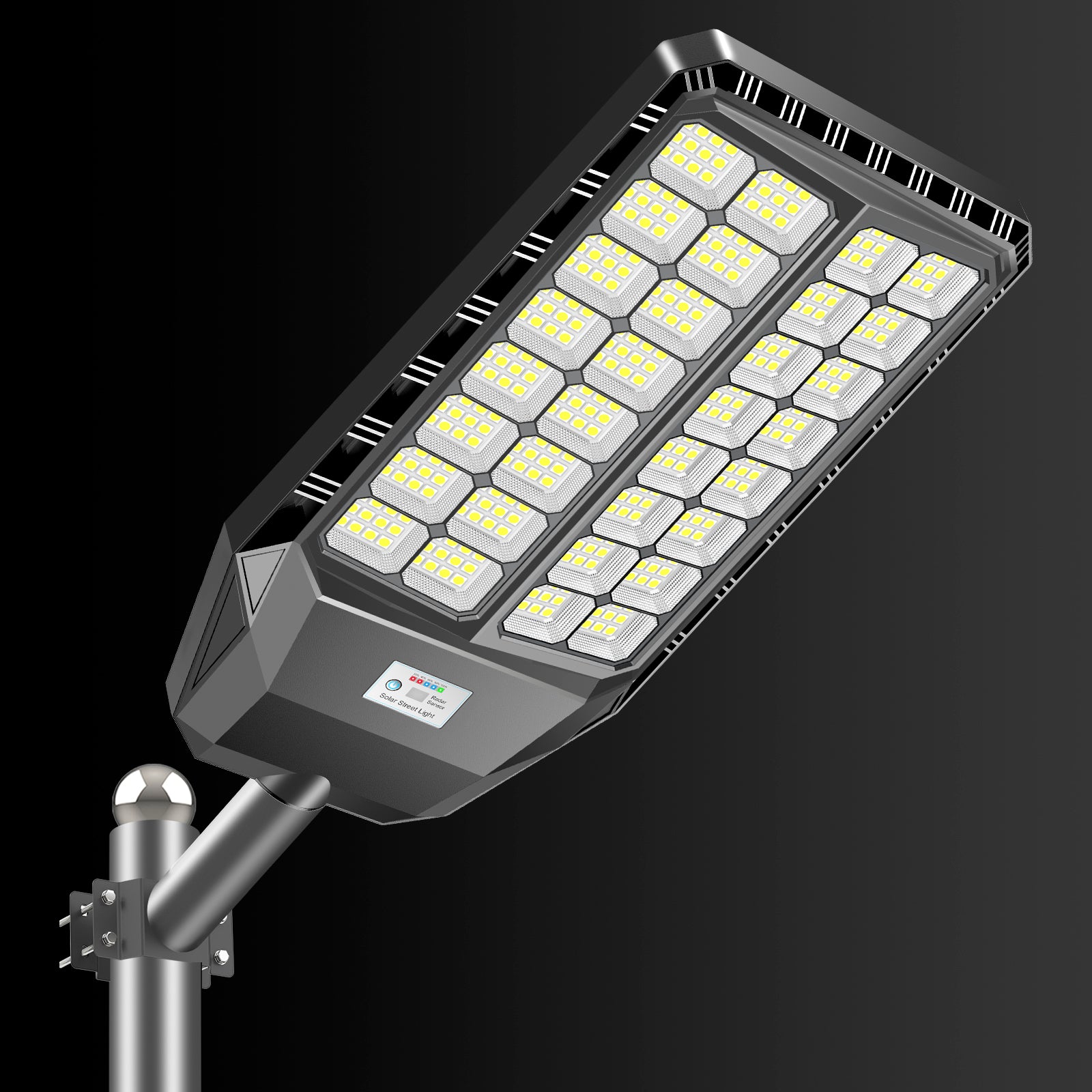
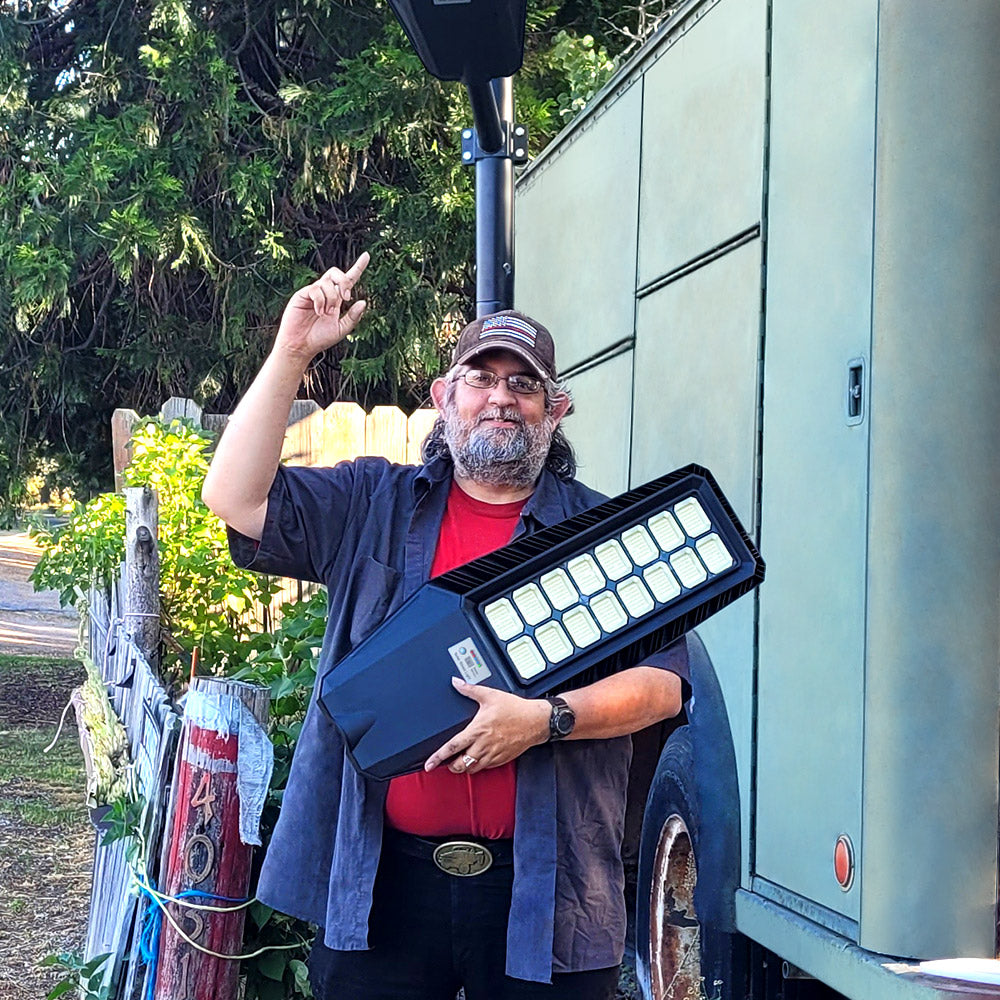
💡 Real product pricing for reference: The Hykoont SZ300 Commercial Solar Street Light (400W, 60,000LM) is priced at $129/unit — delivering serious lumen output for large parking lots without the grid infrastructure cost.

→ Hykoont SZ300 Commercial Solar Street Light — 400W, 60,000LM | From $129
Operating Costs: The Part That Changes Everything
Once the lights are up, your electricity cost is $0.00/month. No meter. No utility bill line item. No rate escalation risk.
Maintenance on quality solar street lights is minimal:
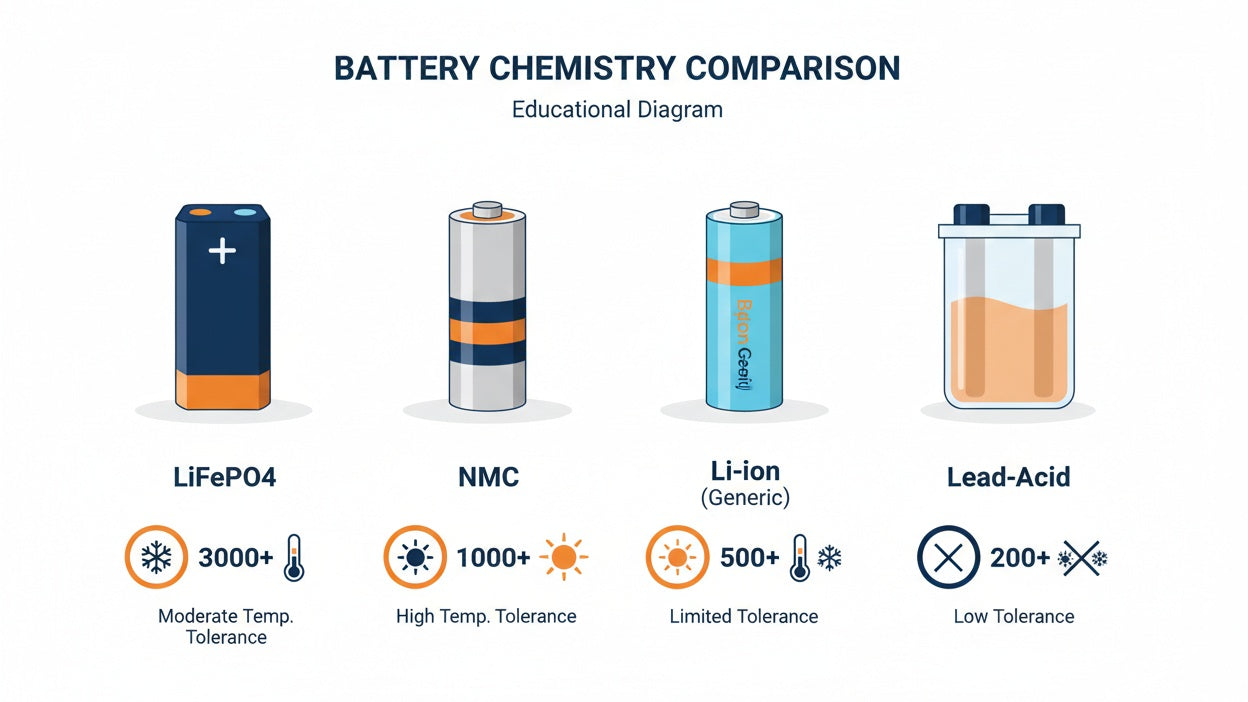
- Battery replacement (lithium LiFePO4): every 5–8 years, $30–$80/unit
- Panel cleaning (optional in most regions): $200–$600/year for the whole lot
- Controller or LED board replacement (rare): $20–$60/unit
10-Year Total Cost of Ownership (Solar, 40 Fixtures)
| Cost Category | 10-Year Estimate |
|---|---|
| Initial installation | $15,660–$37,100 |
| Electricity | $0 |
| Battery replacement (Year 6–7) | $1,200–$3,200 |
| Maintenance & cleaning | $2,000–$6,000 |
| Total 10-Year Cost | $18,860–$46,300 |
Side-by-Side: The Numbers That Matter
| Metric | Grid-Tied | Solar |
|---|---|---|
| Upfront Installation | $55K–$65K | $16K–$37K |
| Annual Electricity Cost | $3,160–$4,200 | $0 |
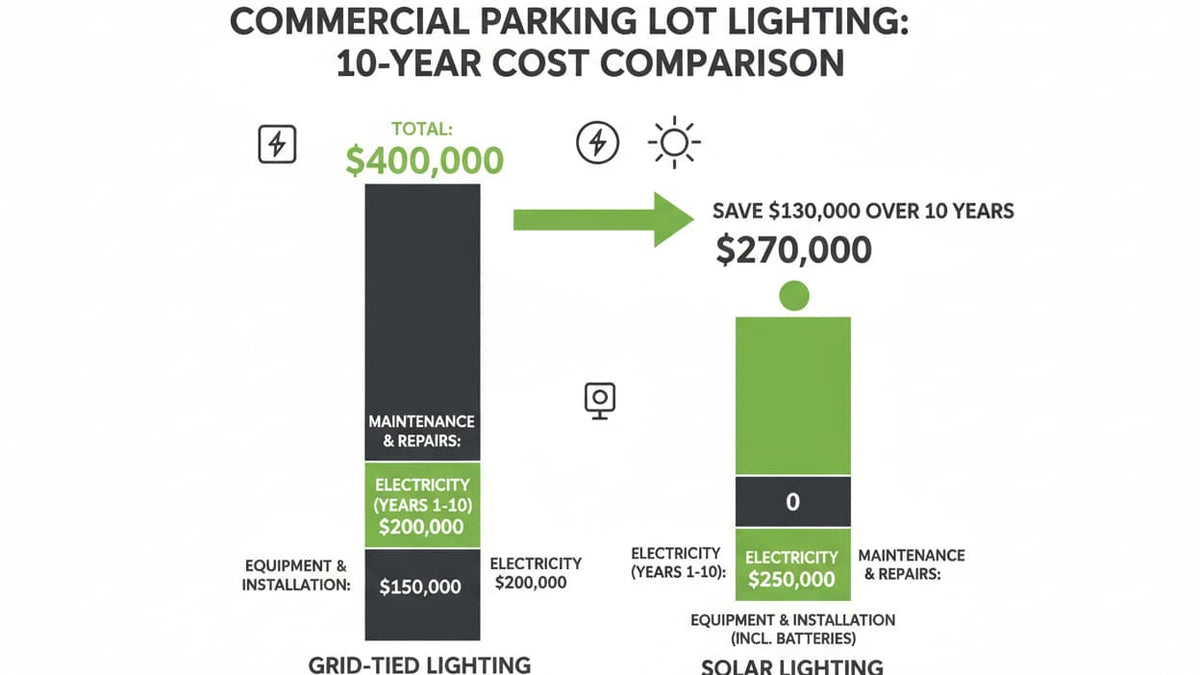
| 10-Year Total | $103K–$139K | $19K–$46K |
| Breakeven vs. Grid | — | Year 2–4 |
| Grid Dependency | Full | None |
| Outage Risk | High | Low (battery backup) |
Even at the high end of solar's cost range and the low end of grid's cost range, solar comes out $57,000–$93,000 cheaper over a decade. That's not a rounding error — that's a significant capital return on the same lighting result.
"But What About Cloudy Days?" — The Reliability Question
It comes up in every conversation. Fair question.
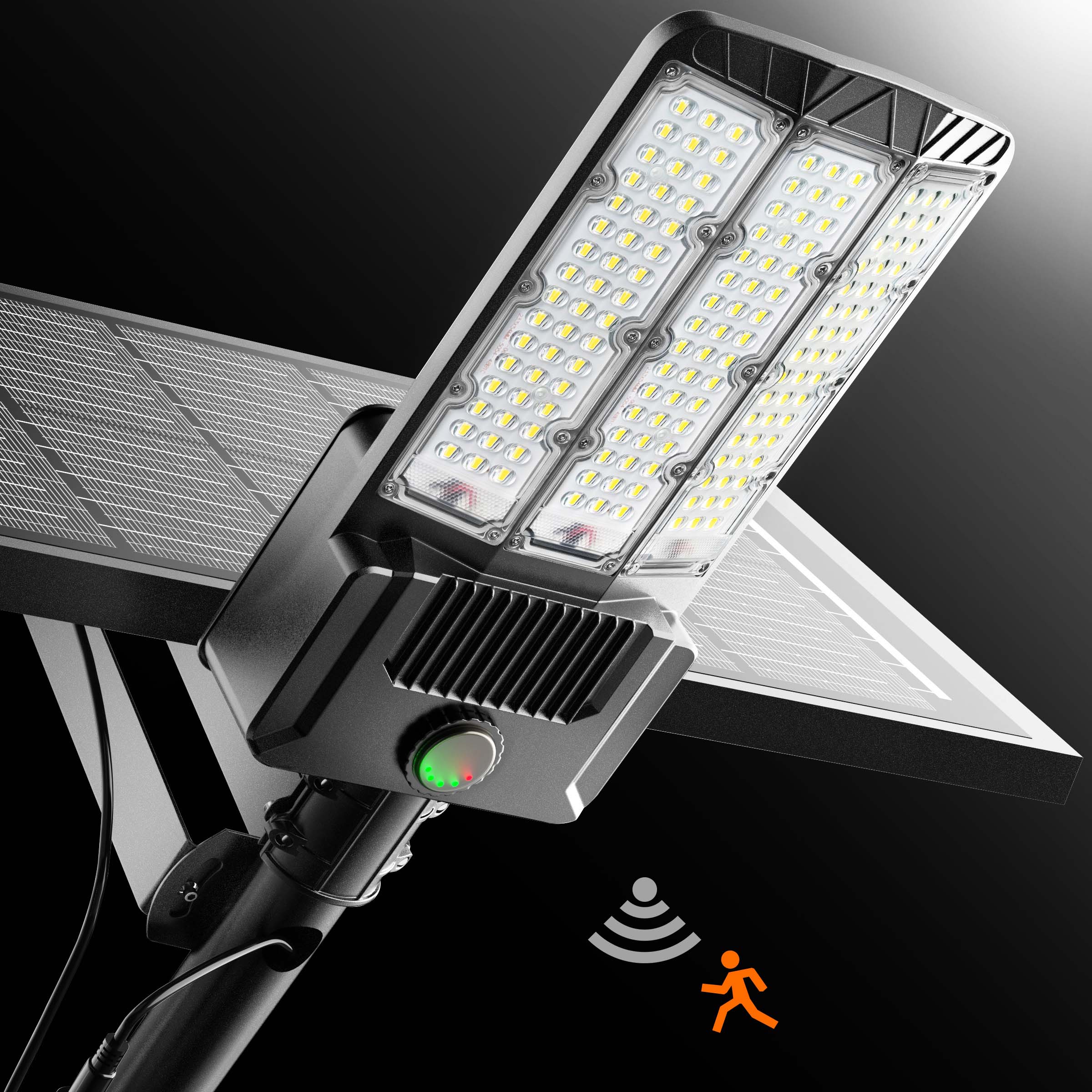
Modern commercial solar street lights don't just have a panel and hope for the best. The better units — like the Hykoont TW020 Series (200W) — include:
- Oversized lithium battery banks (often 3–5 days of reserve capacity)
- Intelligent dimming algorithms that reduce output during low-charge periods rather than shutting off entirely
- Dual-mode operation that maintains security-level illumination (50–80% output) even after consecutive overcast days

→ Hykoont TW020 Series Solar Street Light — 200W | From $91
In US cities where average peak sun hours are above 4.0 (which covers most of the lower 48, including the Pacific Northwest for summer-heavy parking demand), well-specified commercial solar lighting performs reliably year-round.
The key is sizing. A fixture rated for 4 peak sun hours that's deployed in Phoenix (6+ hours average) runs with so much headroom it's almost over-specified. The same fixture in Seattle needs careful winter modeling. This is where talking to a supplier who does commercial specs — not just sells boxes — matters.
IRA Tax Incentives: Solar Gets Even Cheaper After Credits
The Inflation Reduction Act (IRA) extended and expanded commercial solar tax incentives through at least 2032. Under current rules:
- Section 48 Investment Tax Credit (ITC): 30% of the system cost can be claimed as a direct federal tax credit for businesses. For a $25,000 solar lighting installation, that's a $7,500 credit off your federal tax bill.
- Bonus depreciation (MACRS): Solar equipment qualifies for accelerated depreciation, often allowing businesses to recover a large portion of cost in Year 1.
- State and utility rebates: Many states layer additional incentives on top — check DSIRE (dsireusa.org) for your state's current programs.
When you factor in the ITC, the effective upfront cost of solar drops another 30%, pushing the 10-year savings comparison even further in solar's favor.
When Does Grid-Tied Still Make Sense?
We're not here to tell you solar wins in every single situation. It doesn't. Here are the honest exceptions:
- Dense urban environments with no direct sky exposure — underground garages, multi-level structures, or lots completely shaded by adjacent buildings. Solar panels need sky access.
- Lots where existing electrical infrastructure is already paid for — if you're replacing fixtures in a lot that already has trenched conduit and metered circuits, you're only comparing fixture cost, not infrastructure cost. The grid may win on a marginal basis.
- Very high-density applications requiring extremely high lumen output continuously — say, a 24/7 port logistics yard where every square foot needs 50+ foot-candles at all hours. Current solar battery technology can cover this, but the system sizing gets complex.
- Jurisdictions with very low commercial electricity rates (below $0.07/kWh) — uncommon in 2026, but a few rural cooperative territories still have rates in this range.
For the vast majority of surface commercial parking lots in the US — strip malls, office parks, HOA facilities, apartment complexes, warehouses — solar wins on both upfront cost and lifetime economics.

Flood Lighting for Perimeter and Security Zones
Parking lot lighting isn't always just pole-mounted street lights. Many commercial properties also need flood lighting for perimeter walls, building facades, camera coverage zones, and signage illumination.
Solar flood lights have gotten genuinely useful for commercial settings in the past few years. The Hykoont OK50C (50W, 288Wh) is a solid example — it has a large integrated battery, customizable lighting modes, and aluminum housing that actually holds up to weather without rusting out in 18 months.

→ Hykoont OK50C Solar Flood Light — 50W, 288Wh Battery | $364
For smaller perimeter zones or pathway lighting, the OK30B (30W, 192Wh) covers the job at a lower price point without compromising on weather resistance.

→ Hykoont OK30B Solar Flood Light — 30W, 192Wh Battery | $265
Planning a Commercial Solar Lighting Project: The Practical Checklist
If you're moving from research to actual planning, here's what a realistic project sequence looks like:
- Site survey: Map your lot's dimensions, pole spacing requirements (typically 80–120 ft between poles for parking), and any shading obstructions.
- Lumen target: IES RP-20 recommends a minimum of 1 footcandle average (0.5 FC minimum) for basic parking lots; security-critical areas often spec at 2–5 FC. Know your target before sizing fixtures.
- Peak sun hours: Look up your city's average peak sun hours (NREL has a free tool at pvwatts.nrel.gov). This determines your panel and battery sizing requirements.
- Product selection: Match wattage and battery capacity to your sun hours and lumen target. Don't just buy the cheapest fixture — calculate whether the battery lasts through your worst-case consecutive cloudy stretch.
- Tax credit eligibility: Talk to your accountant before purchase. The ITC requires the system to be placed in service by your business; residential property owners have a separate 25D credit pathway.
- Permitting: Most jurisdictions still require a permit for pole installation (foundation work), even for solar. Electrical permits are usually not needed since there's no utility connection, which simplifies things considerably.
- Installation: Solar street light installation is significantly faster than grid-tied work. A 2-person crew can typically mount and commission 8–12 fixtures per day. No electrician license required in most states for the fixture work.
Real-World Example: HOA Parking Lot in Texas
To make this concrete: an HOA in the Dallas–Fort Worth metro was replacing aging HPS lights in a 32-space surface lot. They got two bids:
- Grid-tied LED retrofit: $41,000 installed (existing conduit helped), $2,400/year electricity
- Solar street lights (24 units): $18,500 installed, $0/year electricity
With the 30% ITC, their effective solar cost dropped to ~$13,000 net. Breakeven against the grid option was just under 11 months. By Year 5, they'd saved over $22,000 compared to the grid path — money that went back into HOA reserves rather than to the utility company.
That's not a cherry-picked scenario. DFW has excellent solar resource (avg. 5.2 peak sun hours). But even in states with 4.0–4.5 peak sun hours, the economics work — the payback just stretches to 18–30 months instead of 11.
The SZ300: Built for Exactly This Use Case
If there's one product that fits the "commercial parking lot replacement" use case directly, it's the SZ300. At 60,000 lumens from a die-cast aluminum housing, monocrystalline panel, and a price point of $129/unit, it's priced more like a mid-grade grid fixture — but without the installation cost multiplier that comes with trenching.
→ Shop the SZ300 Commercial Solar Street Light — From $129
Frequently Asked Questions
1. How long do commercial solar street lights actually last?
Quality commercial solar street lights have LED lifespans of 50,000–100,000 hours (roughly 10–20 years at 12 hours/night). The limiting component is typically the lithium battery, which lasts 5–8 years before needing replacement. The battery swap cost is a fraction of what you'd spend on electricity over the same period with a grid-tied system.
2. What wattage do I need for a commercial parking lot?
For a surface parking lot meeting IES RP-20 standards (1–2 FC average), you're typically looking at 150W–400W all-in-one solar street lights mounted at 18–25 ft, spaced 80–100 ft apart. Higher security applications (transit hubs, hospitals, retail centers) may spec 2–5 FC and require closer pole spacing or higher-output fixtures. A photometric simulation using your actual lot dimensions gives you the most accurate spec.
3. Can solar lights work in northern states like Minnesota or Michigan?
Yes, but they require careful sizing. Northern latitudes have lower winter sun hours (sometimes 2.5–3.5 peak hours in December), so the battery and panel need to be sized with that worst-case in mind. Look for fixtures with at least 3–5 days of battery autonomy and intelligent dimming that preserves charge during extended cloudy stretches. Cities like Minneapolis average 4.0+ annual peak sun hours when the full year is considered — solar works, but over-spec by 20% for winter buffer.
4. Do commercial solar lights qualify for the federal tax credit?
Commercial solar lighting systems generally qualify for the Section 48 Investment Tax Credit (ITC) at 30% of installed cost under the Inflation Reduction Act. Consult a CPA familiar with energy tax credits to confirm eligibility for your specific entity type and installation circumstances. The MACRS accelerated depreciation benefit is separate and may provide additional Year 1 deductions.
5. How much does it cost to replace the battery in a solar street light?
LiFePO4 battery packs for commercial solar street lights typically run $30–$80 per unit depending on capacity. For a 40-fixture lot, a full battery refresh costs $1,200–$3,200 — which is still less than 1–2 years of electricity costs for an equivalent grid-tied installation.
6. What happens during a power outage with solar lights?
Nothing. That's the point. Solar street lights with onboard battery storage are entirely grid-independent. A grid outage — storm, utility fault, rolling blackout — has zero effect on solar-powered parking lot lighting. For properties where continuous lighting is a safety or liability concern (hospitals, logistics facilities, HOAs), this is a meaningful advantage that doesn't show up in a cost spreadsheet but is very visible during the next hurricane season.
7. Can I retrofit my existing poles with solar lights?
Often, yes. Many commercial solar street lights can be pole-top mounted on standard pipe poles using adapter brackets. The feasibility depends on pole diameter and height. If your existing poles are in good structural condition and at roughly the right spacing, a solar retrofit can be significantly cheaper than a full pole-and-fixture replacement — just the fixtures and adapters, no new concrete work.
8. How do I get a photometric layout for my specific parking lot?
Most reputable commercial solar lighting suppliers will provide a free photometric layout using AGi32 or DIALux software if you supply your lot dimensions and target footcandle level. This layout shows predicted illuminance levels across your lot surface, helping you confirm fixture count, spacing, and mounting height before buying. Don't skip this step — over-buying is expensive and under-buying creates dark spots that create liability.
9. Is there a warranty on commercial solar street lights?
Quality commercial units carry 3–5 year warranties on the full fixture, with separate coverage for the LED driver and panel. Always confirm what's covered and what the RMA process looks like before committing to a bulk order. Domestic US warehousing for replacement parts matters a lot when a fixture goes down and you need a swap within a week.
10. What's the minimum order for a commercial parking lot project?
There's no minimum for most online solar lighting retailers — you can buy one fixture or a hundred. For larger projects (20+ units), it's worth reaching out directly to discuss bulk pricing, project support, and coordinated shipping. Volume pricing on commercial orders of 20+ units can reduce per-unit costs noticeably from the listed retail price.
Bottom Line
The grid vs. solar decision for commercial parking lots isn't really about environmental values (though that matters too). It's a straightforward capital allocation question: do you want to spend $103,000–$139,000 over ten years to light your lot, or $19,000–$46,000?
For most surface commercial parking lots in the US, the math has been in solar's favor for several years now. The IRA credits accelerated that shift. And the product quality at the commercial end of the solar street light market has caught up to where you can deploy it without worrying it'll fail in the first rainy season.
If you're evaluating a parking lot lighting project — new construction, replacement, or expansion — run the actual numbers for your site before committing to a grid-tied approach out of habit.
Shop Commercial Solar Street Lights →
View TW020 Series (200W) — From $91 View OK50C Solar Flood Light — $364

Leave a comment
This site is protected by hCaptcha and the hCaptcha Privacy Policy and Terms of Service apply.