


Understanding UGR and Why It Actually Matters in Your Space
You know that feeling when you walk into an office and the lights just feel... harsh? Maybe you can't quite put your finger on it, but something about the lighting makes you squint or gives you a headache after a few hours. That's glare doing its thing, and it's more than just annoying—it's affecting productivity, comfort, and even health.
UGR, or Unified Glare Rating, measures exactly this kind of discomfort. The scale runs from 10 to 30, and here's the thing: anything below 19 is considered comfortable for most work environments. When we talk about UGR<19 LED panels and linear lighting, we're talking about fixtures specifically engineered to keep glare in check.
Think about it this way. Traditional fluorescent panels? They're often sitting at UGR 22 or higher. That's the difference between ending your workday with tired eyes versus feeling pretty good. For offices, schools, healthcare facilities, or anywhere people spend extended time under artificial light, hitting that UGR<19 benchmark isn't just nice to have—it's essential.

LED Panels vs. Linear Lighting: What's the Real Difference?
Let's clear up some confusion. Both LED panels and linear LED fixtures can achieve UGR<19, but they do it differently and work better in different situations.
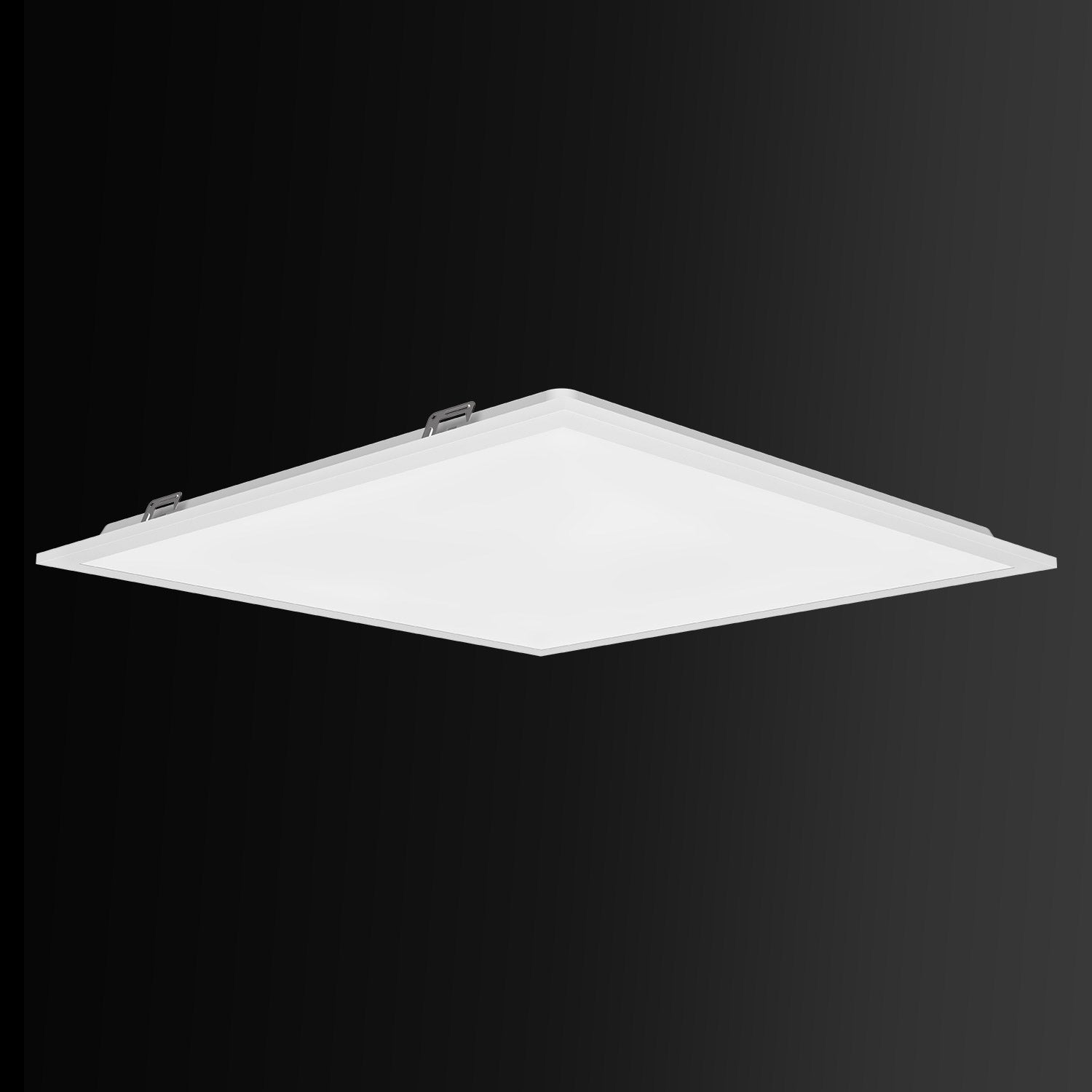
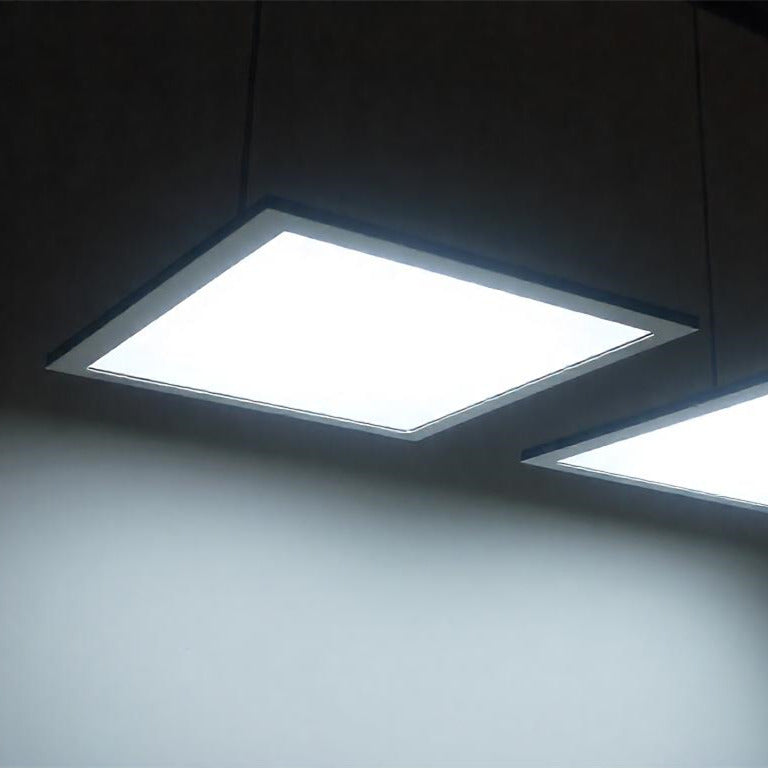
LED flat panels are those sleek, rectangular fixtures that sit flush with your ceiling. They distribute light evenly across a broad area, making them perfect for offices, conference rooms, and retail spaces where you want consistent, shadow-free illumination. The Hykoont 2x4FT LED Flat Panel Light ($115) is a solid example—it gives you adjustable wattage from 30W to 50W and lets you switch between color temperatures, so you're not locked into one lighting scenario.

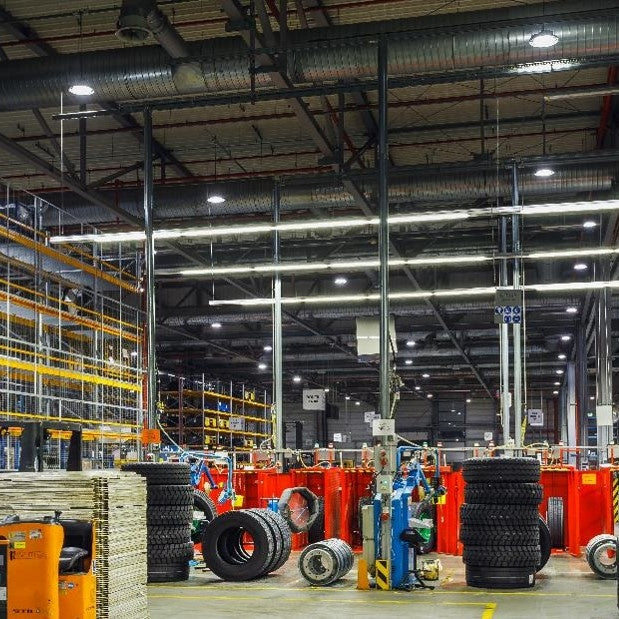
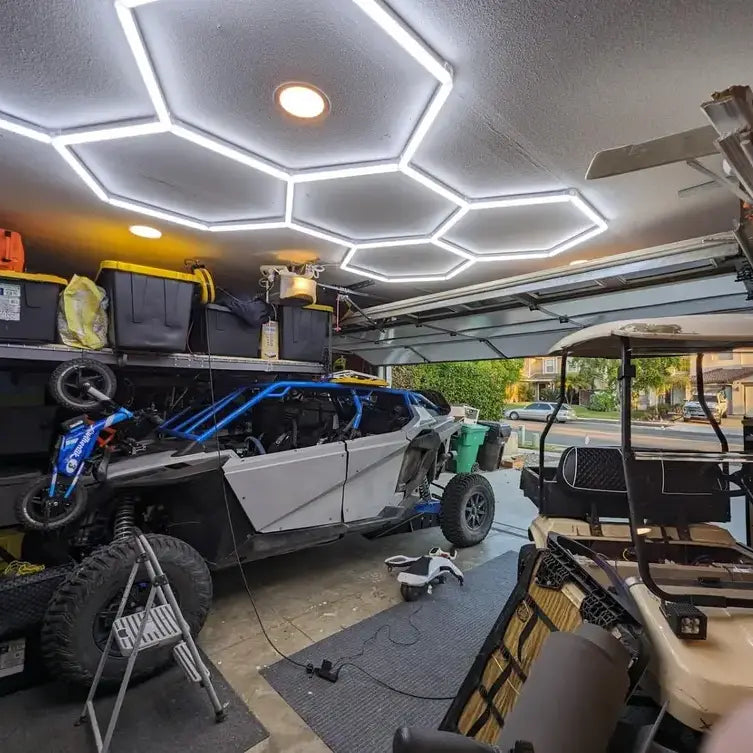
Linear LED lighting, on the other hand, comes in long, narrow strips. These are your go-to for task lighting, accent lighting, or spaces where you need directional illumination. Warehouses, garages, retail displays, and modern office designs often use linear fixtures because they're versatile and can be mounted in various configurations. The Hykoont GC376 150W Linear LED High Bay Light ($129) pumps out 22,500 lumens, making it ideal for high-ceiling applications where you need serious light output without the glare.

So which one should you choose? If you're lighting a general workspace with standard ceiling heights (8-12 feet), panels usually make more sense. If you're dealing with high ceilings, need focused task lighting, or want a more industrial aesthetic, linear fixtures are the way to go.
The Science Behind Low-Glare Lighting (Without Getting Too Technical)
Here's what actually happens when a fixture achieves UGR<19. It's not magic—it's engineering.
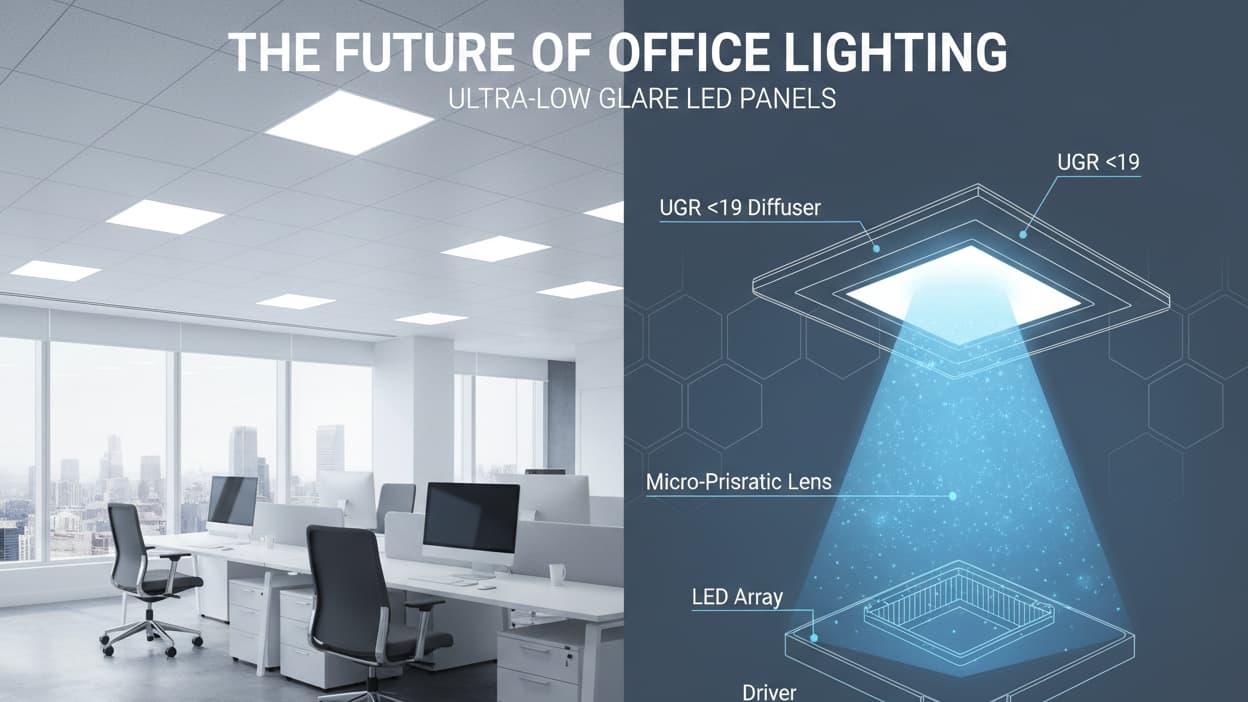
First, the light source itself matters. Quality LED chips with proper diffusion reduce hot spots—those super bright areas that cause glare. Second, the fixture design plays a huge role. Prismatic diffusers, micro-prismatic lenses, and carefully angled reflectors all work to spread light evenly without creating harsh contrasts.
The Hykoont 2x2FT LED Flat Panel Light ($85) uses this approach with its adjustable wattage system (20W-40W). You can dial in exactly the light level you need, which means you're not over-lighting a space and creating unnecessary glare.
Color temperature also affects perceived glare. Cooler temperatures (5000K-6500K) can feel harsher, while warmer temperatures (3000K-4000K) tend to be easier on the eyes. That's why adjustable CCT (correlated color temperature) fixtures are so valuable—you can match the lighting to the task and the time of day.

Real-World Applications: Where UGR<19 Makes the Biggest Impact
Office Environments
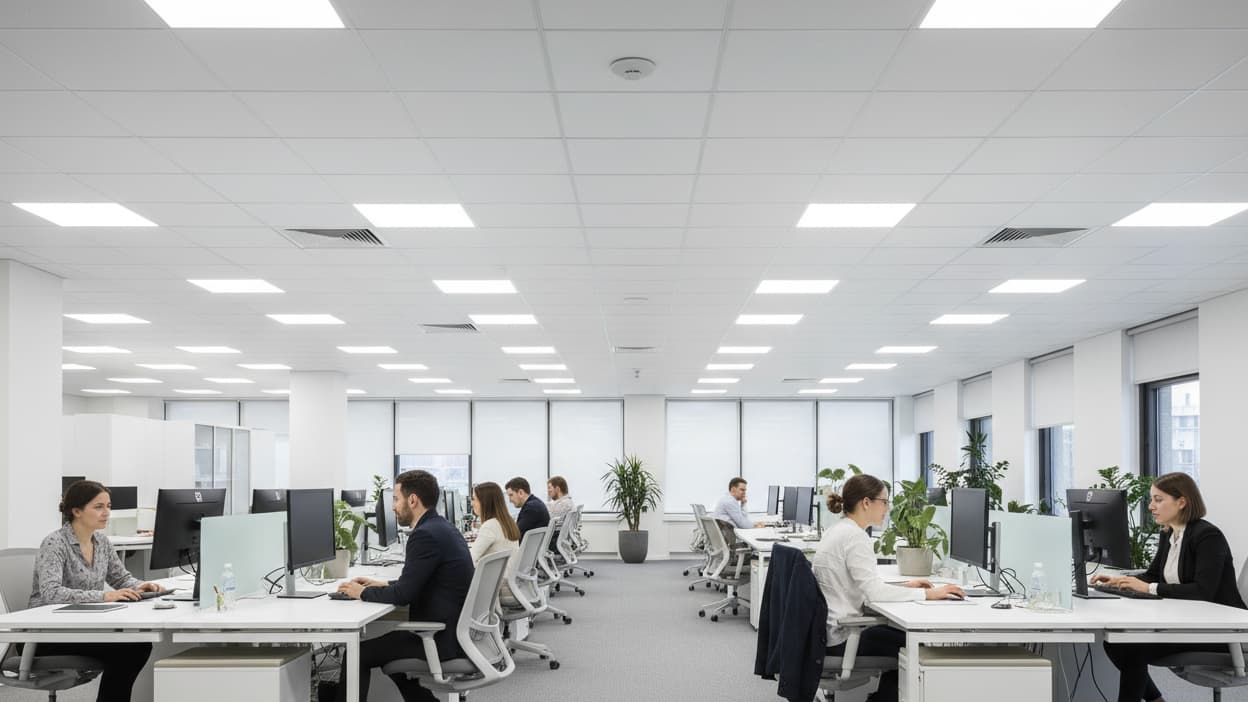
This is where UGR<19 really shines. Computer work is particularly sensitive to glare because you're staring at a screen for hours. Reflections on monitors, harsh overhead lighting, and inconsistent illumination all contribute to eye strain and fatigue. Installing low-glare LED panels can genuinely improve employee comfort and productivity. We're not talking about marginal gains here—studies show proper lighting can reduce eye strain complaints by up to 50%.

Healthcare Facilities
Hospitals, clinics, and dental offices need precise, comfortable lighting. Patients are already stressed, and harsh lighting doesn't help. Medical professionals need clear visibility without glare interfering with their work. UGR<19 fixtures provide that balance.
Educational Spaces
Students spend 6-8 hours a day in classrooms. Poor lighting contributes to headaches, difficulty concentrating, and general discomfort. Schools upgrading to UGR<19 LED panels often report improved student focus and fewer complaints about lighting-related issues.
Retail and Commercial Spaces
You want customers to see your products clearly, but you don't want lighting that makes them uncomfortable. Linear LED fixtures work great for accent lighting and highlighting merchandise, while panels provide ambient illumination. The Hykoont SP05 Linear Strip Light ($60) comes in 2FT, 4FT, and 8FT lengths, giving you flexibility for different display configurations.

Installation Considerations: What You Need to Know Before Buying
Let's talk practical stuff. You've decided UGR<19 lighting is the way to go—now what?
Ceiling Type and Mounting
LED panels typically require drop ceiling grids (2x2 or 2x4 configurations), though surface-mount and suspended options exist. Linear fixtures offer more flexibility—you can surface mount them, suspend them, or even recess them depending on the model.
Wiring and Compatibility
Most modern LED fixtures work with standard 120-277V AC power, making them compatible with typical commercial electrical systems. If you're replacing old fluorescent fixtures, you might need to bypass the ballast, but many LED panels are designed for direct wire installation.
Dimming Capabilities
Not all LED fixtures dim the same way. Some use 0-10V dimming, others use TRIAC dimming, and some support both. The Hykoont 1x4FT Pro LED Flat Panel Light ($239) offers five power options (15W-40W) and five CCT selections, plus full dimming capability. That level of control means you can fine-tune the lighting for different times of day or different tasks.

Certifications Matter
Look for UL, DLC, and ETL certifications. These aren't just bureaucratic checkboxes—they ensure the fixture meets safety standards and energy efficiency requirements. DLC certification, in particular, often qualifies you for utility rebates, which can offset a significant portion of your upfront costs.
Energy Savings: The Numbers That Actually Matter
Everyone talks about LED energy savings, but let's get specific. A typical 2x4 fluorescent troffer uses about 64 watts. Replace it with a 40-watt LED panel, and you're saving 24 watts per fixture. That might not sound like much, but multiply it across an entire building.
Let's say you have 100 fixtures running 12 hours a day, 260 days a year. That's 74,880 kWh saved annually. At $0.12 per kWh (average commercial rate in the US), you're looking at nearly $9,000 in annual savings. The fixtures typically pay for themselves in 2-3 years, then it's pure savings for the next 7-10 years of their lifespan.
The Hykoont SP07 Linear Strip Light ($129) ranges from 24W to 80W depending on configuration, giving you the flexibility to match wattage to your actual needs rather than over-lighting spaces.

Common Mistakes When Choosing LED Lighting (And How to Avoid Them)
Mistake #1: Focusing Only on Price
Cheap LED fixtures often use inferior components that fail prematurely or don't deliver the promised light output. You end up replacing them sooner, negating any initial savings. Look at the total cost of ownership, not just the purchase price.
Mistake #2: Ignoring Color Rendering Index (CRI)
CRI measures how accurately colors appear under a light source. Anything below 80 CRI makes colors look washed out or distorted. For most commercial applications, you want 80+ CRI, and for retail or design work, 90+ CRI is ideal.
Mistake #3: Over-Lighting or Under-Lighting
More light isn't always better. Over-lighting wastes energy and can actually increase glare. Under-lighting creates eye strain and safety issues. Use lighting design software or consult with a lighting professional to calculate the right light levels for your space.
Mistake #4: Not Planning for Maintenance
Even though LEDs last 50,000+ hours, they're not immortal. Plan for eventual replacement and make sure you can access fixtures easily. Suspended fixtures are easier to service than recessed ones.

The Future of LED Lighting: What's Coming Next
LED technology keeps evolving. Here's what's on the horizon:
Smart Lighting Integration
More fixtures are incorporating wireless controls, occupancy sensors, and daylight harvesting. You'll be able to program lighting scenes, track energy usage in real-time, and integrate with building management systems.
Human-Centric Lighting
This approach adjusts color temperature throughout the day to match natural circadian rhythms. Cooler light in the morning to promote alertness, warmer light in the evening to support relaxation. Early research shows promising results for sleep quality and overall well-being.
Improved Efficiency
Current LED fixtures achieve around 130-150 lumens per watt. Next-generation chips are pushing toward 200+ lumens per watt, meaning even greater energy savings.

Making the Switch: Your Action Plan
Ready to upgrade your lighting? Here's a practical roadmap:
Step 1: Assess Your Current Situation
Walk through your space and note where lighting feels uncomfortable. Are there areas with excessive glare? Dark corners? Inconsistent illumination? Take photos and measurements.
Step 2: Calculate Your Needs
Determine the required light levels for each area. Offices typically need 30-50 foot-candles, retail spaces 50-100 foot-candles, and warehouses 10-30 foot-candles depending on the task.
Step 3: Choose Your Fixtures
Match fixture types to your applications. For general office lighting, the Hykoont 2x4FT LED Panel offers excellent value and performance. For high-bay applications, the GC376 Linear High Bay delivers the output you need.
Step 4: Plan Your Installation
Decide whether to do a complete retrofit all at once or phase it in over time. Phased approaches spread out costs but take longer to realize full energy savings.
Step 5: Check for Rebates
Many utilities offer substantial rebates for DLC-certified LED fixtures. These can cover 25-50% of your project costs. Check with your local utility before purchasing.
Frequently Asked Questions
Q: What exactly does UGR<19 mean in practical terms?
A: UGR (Unified Glare Rating) below 19 means the fixture produces minimal discomfort glare. It's the recommended standard for office environments and spaces where people work on computers or perform detailed tasks. The lower the number, the less glare you'll experience.
Q: Can I use UGR<19 LED panels in a drop ceiling?
A: Absolutely. Most LED panels are designed specifically for drop ceiling grids. The 2x2FT panels fit standard 2x2 grids, and 2x4 panels fit 2x4 grids. Just make sure your ceiling grid can support the weight (usually not an issue since LEDs are lighter than old fluorescent fixtures).
Q: How long do these LED fixtures actually last?
A: Quality LED panels and linear fixtures are rated for 50,000+ hours. If you run them 12 hours a day, that's over 11 years of service. Even at 24/7 operation, you're looking at 5-6 years before needing replacement.
Q: What's the difference between 3000K, 4000K, and 5000K color temperatures?
A: 3000K is warm white (yellowish, similar to incandescent bulbs), 4000K is neutral white (clean, balanced), and 5000K is cool white (bluish, similar to daylight). For offices, 4000K is usually ideal. For retail or hospitality, 3000K creates a warmer atmosphere. For industrial or task lighting, 5000K provides crisp visibility.
Q: Do I need an electrician to install these fixtures?
A: For safety and code compliance, yes. While the fixtures themselves are straightforward to install, working with line voltage requires proper licensing. An electrician can also ensure proper grounding, verify circuit capacity, and handle any wiring modifications needed.
Q: Can these fixtures be dimmed?
A: Most modern LED panels and linear fixtures support dimming, but you need to verify compatibility with your dimmer type. The Hykoont Pro series includes full dimming capability with 0-10V dimmers.
Q: What's the difference between UL and DLC certification?
A: UL certification verifies safety standards—that the fixture won't cause electrical hazards. DLC certification verifies energy efficiency and performance standards. DLC-certified fixtures also qualify for utility rebates in most areas, making them more cost-effective.
Q: Will LED lighting work in cold environments like warehouses or outdoor covered areas?
A: Yes, LEDs actually perform better in cold temperatures than fluorescent fixtures, which struggle below 50°F. LEDs maintain full brightness and efficiency even in freezing conditions.
Q: How do I calculate how many fixtures I need for my space?
A: It depends on your space dimensions, ceiling height, and required light levels. As a rough guide, for an office with 9-foot ceilings, you'd need about one 2x4 LED panel per 100-120 square feet. For precise calculations, use a lighting design calculator or consult with a lighting professional.
Q: What happens if one LED chip fails in a panel?
A: Quality LED panels use multiple LED chips, so if one fails, the others continue operating. You might notice a slight reduction in brightness, but the fixture remains functional. This is different from fluorescent tubes, which fail completely when the tube burns out.
Final Thoughts: Is UGR<19 Worth It?
Here's the bottom line: if you're spending money on new lighting anyway, choosing UGR<19 fixtures costs roughly the same as standard LEDs but delivers measurably better comfort and performance. The difference in price is minimal—often just a few dollars per fixture—but the impact on eye comfort and productivity is significant.
For commercial spaces, schools, healthcare facilities, or anywhere people spend extended time under artificial light, UGR<19 isn't a luxury feature. It's a practical investment in creating a better environment.
Whether you go with LED panels for general illumination or linear fixtures for task lighting, the key is choosing quality products from manufacturers who actually test and certify their UGR ratings. Look for UL and DLC certifications, check the warranty terms, and don't be afraid to ask for photometric data.
Ready to upgrade your lighting? Start with the areas where people spend the most time. You'll notice the difference immediately, and so will everyone else in the space.
Shop our complete range of UGR<19 LED lighting:

Leave a comment
This site is protected by hCaptcha and the hCaptcha Privacy Policy and Terms of Service apply.