




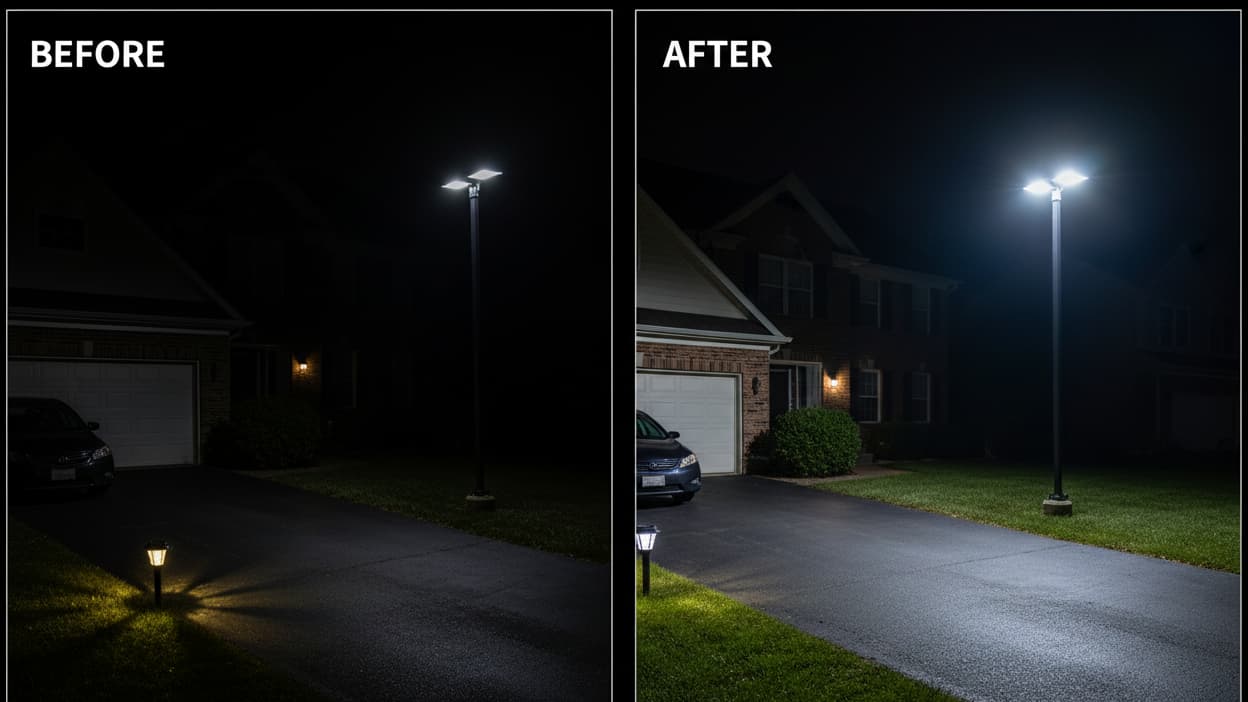
Your Solar Light Is Flashing — Here's Exactly What's Going On (And How to Fix It Fast)
You installed your solar lights, everything looked great for a few weeks, and now they're doing that annoying blink-blink-blink thing. Or maybe they're dimming out way too early in the night. Either way, something's off — and you want answers, not a wall of technical jargon.
Good news: most solar light problems are fixable without replacing anything. This guide walks you through every real cause of solar light flashing and premature battery drain, with honest, practical solutions. We'll also cover which products are worth upgrading to if your current setup just isn't cutting it anymore.
Let's get into it.
First, Let's Talk About What "Flashing" Actually Means
Not all flashing is the same. Before you start troubleshooting, it helps to know what kind of blink you're dealing with:
- Rapid flashing (multiple times per second): Usually a low-battery warning or a charging fault.
- Slow, rhythmic blinking: Often a motion sensor cycling on and off, or a mode-switching signal.
- Random, irregular flashing: Could be a loose connection, water intrusion, or a failing LED driver.
- Flashing then going dark: Classic sign of a battery that can't hold a charge anymore.
Keep that in mind as we go through the causes below — it'll help you zero in on the right fix faster.

Reason #1: The Battery Is Drained (Or Dying)
This is the most common culprit, by a wide margin. Solar lights run on rechargeable batteries — usually NiMH, Li-ion, or LiFePO4 — and those batteries have a finite lifespan. When they start to go, you'll see:
- Lights that only stay on for 1–2 hours instead of all night
- Flashing that starts around midnight or early morning
- Lights that seem fully charged but die quickly
What to do:
- Check the battery type listed in your manual and buy a direct replacement.
- For budget lights, NiMH AA batteries are usually swappable at any hardware store.
- For higher-end units with built-in lithium packs, contact the manufacturer — many offer replacement battery kits.
If your light is more than 2–3 years old and the battery is original, replacement is almost always the fix.
Upgrade tip: If you're tired of replacing batteries, look for lights with LiFePO4 (lithium iron phosphate) batteries. They last 5–10 years and handle deep discharge cycles far better than standard lithium-ion.
The Hykoont HY100C 100W Commercial Solar Light uses a 960WH LiFePO4 battery rated for a 10-year lifespan — that's the kind of longevity that makes the upfront cost worth it for driveways, parking areas, and commercial properties.

Hykoont HY100C — $1,890.00 | View Product →
Reason #2: The Solar Panel Isn't Getting Enough Sun
This one catches a lot of people off guard. You installed the light in what seemed like a sunny spot — but "sunny in summer" and "sunny in December" are very different things. Seasonal sun angle changes can put your panel in partial shade for months without you realizing it.
Other common shading culprits:
- Tree branches that have grown since installation
- A new fence, shed, or structure nearby
- Roof overhangs that block low-angle winter sun
- The panel facing the wrong direction (should face true south in the US)
What to do:
- Check the panel's sun exposure at different times of day — ideally between 10am and 2pm when the sun is highest.
- Trim any branches or vegetation blocking the panel.
- If the mounting position is fixed, consider a light with a separate, adjustable solar panel so you can aim it independently.
- Aim for a minimum of 6 direct sun hours per day for reliable all-night operation.
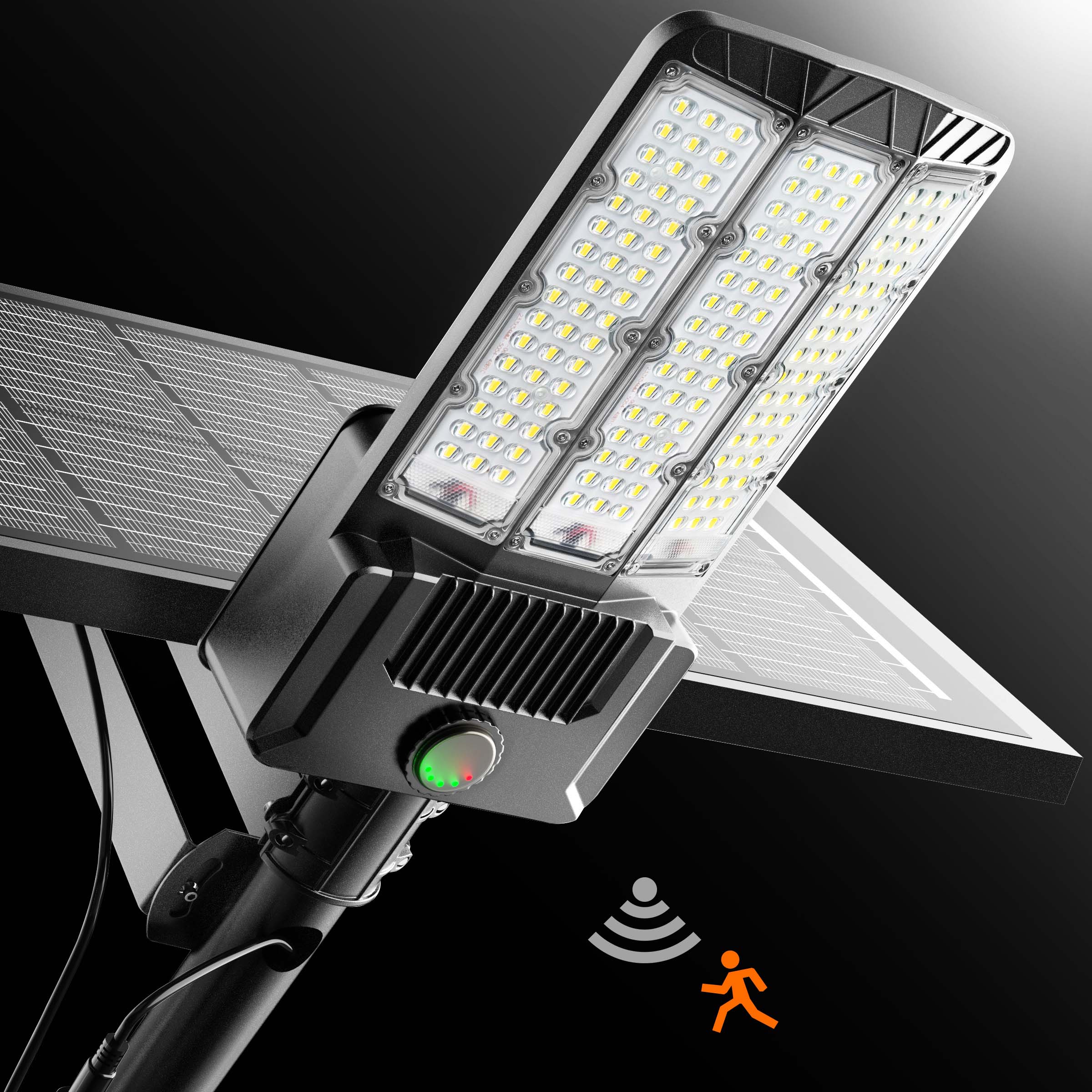
The Hykoont BM027 Outdoor Solar Street Light features an adjustable panel angle, making it easy to optimize sun capture even in tricky installation spots. Starting at $169.00.

Hykoont BM027 — From $169.00 | View Product →
Reason #3: A Dirty Solar Panel
This is the most overlooked maintenance issue in solar lighting. A thin layer of dust, pollen, bird droppings, or grime on the panel surface can reduce charging efficiency by 20–40%. In dusty or high-pollen areas, panels can get noticeably dirty within weeks.
What to do:
- Wipe the panel with a damp microfiber cloth every 4–6 weeks.
- For stubborn grime, use a mild soap solution — avoid abrasive cleaners that can scratch the panel surface.
- After cleaning, check if the light's runtime improves over the next 2–3 nights.
This is a free fix that takes 5 minutes. Do it before anything else.

Reason #4: The Motion Sensor Is Misfiring
If your light is in motion-sensor mode and it keeps flashing on and off randomly, the PIR (passive infrared) sensor may be picking up false triggers. Common causes include:
- Nearby heat sources (HVAC vents, dryer exhausts)
- Passing cars or headlights reflecting off surfaces
- Small animals — squirrels, cats, even large insects
- Wind-blown vegetation in the sensor's field of view
- The sensor sensitivity set too high
What to do:
- Lower the sensitivity setting if your light has an adjustable dial.
- Reposition the light so the sensor isn't aimed at a heat source or high-traffic area.
- Switch to a different mode (constant dim + motion boost) if available — this reduces the on/off cycling that drains batteries faster.

Reason #5: Water or Moisture Intrusion
Solar lights are rated for outdoor use, but IP ratings aren't all equal. An IP44-rated light can handle splashing water but not heavy rain or standing water. If moisture gets into the housing, it can cause:
- Corrosion on battery terminals
- Short circuits in the LED driver
- Erratic flashing or complete failure
What to do:
- Check the IP rating on your light. For outdoor use in rain-prone areas, you want at least IP65.
- Inspect the housing for cracks, loose seals, or missing gaskets.
- If moisture got in, open the housing (if possible), dry it out completely, and reseal with silicone.
- For lights that have been submerged or heavily rained on, the battery may need replacement even after drying
Reason #6: The Light Mode Is Set Incorrectly
Many solar lights have multiple operating modes — constant on, motion-only, dim + motion boost, timed, etc. If the light was accidentally switched to a mode you didn't intend, it can look like a malfunction when it's actually working as designed.
What to do:
- Pull out the manual (or find it online) and review the mode options.
- Reset the light to factory defaults if available — usually done by holding the power button for 5–10 seconds.
- Cycle through modes deliberately and observe the behavior change.
This is especially common with lights that have a small button on the panel or housing that's easy to accidentally press during installation or cleaning.
Reason #7: Extreme Temperatures
Battery performance drops significantly in cold weather. At 32°F (0°C), a lithium-ion battery can lose 20–30% of its effective capacity. At 14°F (-10°C), that can jump to 40–50%. This means your light might work fine in summer but flash and die early every winter night.
What to do:
- If you're in a cold climate, look for lights specifically rated for low-temperature operation.
- LiFePO4 batteries handle cold better than standard Li-ion — another reason to prioritize them.
- In extreme cold snaps, temporarily switching to a lower brightness mode can extend runtime.
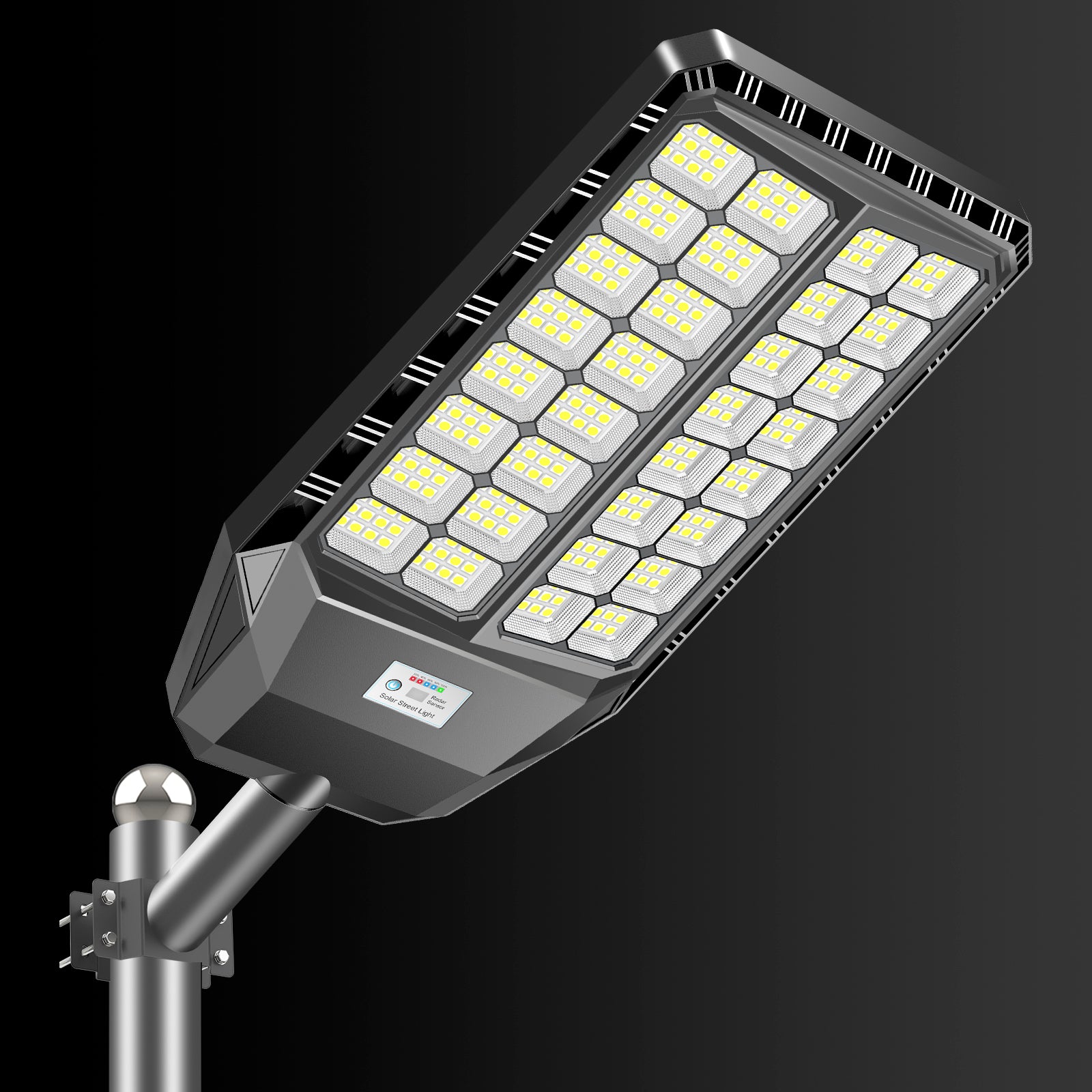
The Hykoont TW030 300W Solar Street Light is built for all-weather performance with 42,000 lumens and a robust charging system designed to handle variable weather conditions. Available as a 2-pack for $289.00 or single unit for $142.00.

Hykoont TW030 2-Pack — $289.00 | View Product →
How to Actually Extend Your Solar Light Battery Life (Not Just Survive It)
Fixing the flashing is one thing. Getting your battery to last longer — and your lights to perform better year after year — is another. Here's what actually works:
1. Clean the Panel Monthly
We said it above, but it's worth repeating: a clean panel charges faster and more completely. Set a monthly reminder. It takes 5 minutes and makes a measurable difference.
2. Don't Let the Battery Fully Discharge Repeatedly
Deep discharge cycles degrade lithium batteries faster. If your light is consistently dying before dawn, either reduce the brightness setting or upgrade to a higher-capacity battery system. Running a battery to 0% every night is the fastest way to kill it.
3. Use the Right Mode for Your Needs
If you don't need constant full brightness all night, don't run it that way. A dim-with-motion-boost mode can extend battery life by 40–60% compared to constant full-on mode — and it's often more practical for security lighting anyway.
4. Optimize Panel Angle Seasonally
The optimal tilt angle for a solar panel changes with the seasons. In winter, a steeper angle (closer to vertical) captures more of the low-angle sun. If your panel is adjustable, tilt it up a bit in fall and back down in spring.
5. Give New Batteries a Full Charge Before First Use
When you replace a battery, let the light charge for 2–3 full sunny days before relying on it for overnight operation. This conditions the battery and gives you an accurate baseline for its capacity.
6. Upgrade to a Higher-Capacity System If Your Needs Have Grown
Sometimes the honest answer is that your original light was undersized for what you're asking it to do. If you've added security cameras, extended your driveway, or just need more coverage, a higher-lumen, higher-capacity system will serve you better than constantly nursing a marginal one.
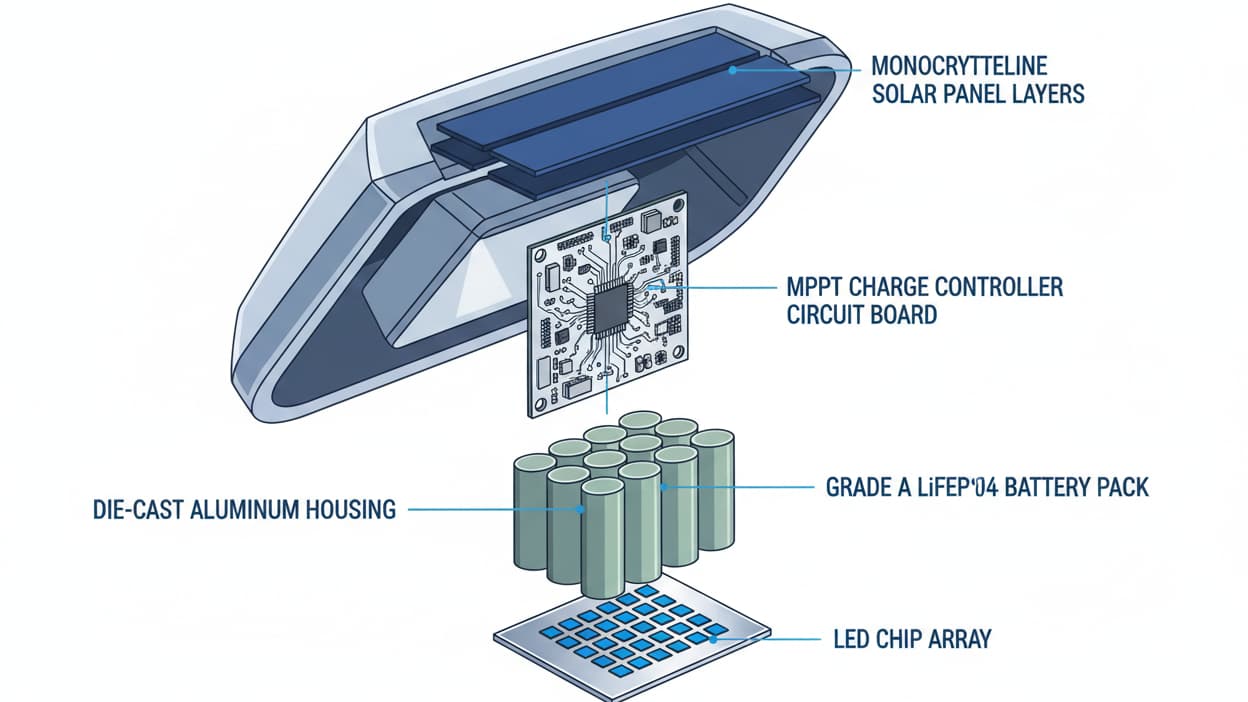
The Hykoont SZ300 Commercial Solar Street Light delivers up to 60,000 lumens with a mono solar panel and die-cast aluminum housing — built for properties that need serious, reliable illumination. Starting at $145.00.

Hykoont SZ300 Commercial Solar Street Light — From $145.00 | View Product →
When to Replace vs. Repair
Here's a simple decision framework:
| Situation | Recommendation |
|---|---|
| Light is under 2 years old, battery replaceable | Replace battery, clean panel |
| Light is 2–4 years old, battery sealed | Evaluate cost of replacement unit vs. repair |
| Light is 4+ years old, multiple issues | Upgrade to a newer, higher-efficiency model |
| Water damage to electronics | Usually replace — repair rarely cost-effective |
| Panel cracked or delaminated | Replace panel or full unit |
Choosing a Replacement: What to Actually Look For
If you've decided it's time to upgrade, here's what matters — in order of importance:
- Battery type and capacity: LiFePO4 > Li-ion > NiMH for longevity. Look for Wh (watt-hours) rating, not just mAh.
- Panel wattage and efficiency: Monocrystalline panels are more efficient than polycrystalline, especially in low-light conditions.
- IP rating: IP65 minimum for most outdoor US climates. IP66 if you're in a high-rain or coastal area.
- Lumen output vs. battery capacity ratio: A light that claims 10,000 lumens but only has a 10Wh battery is lying to you. Do the math.
- Warranty: A 2–3 year warranty is the baseline for quality. Anything less is a red flag.
Product Spotlight: Our Top Picks for Reliable, Long-Life Solar Lighting
Based on the criteria above, here are five products worth serious consideration:
Best for Driveways & Pathways: Hykoont BM024 160W Solar Street Light
21,600 lumens, IP66 rated, available as a 2-pack. Solid mid-range option for residential driveways and pathway lighting that needs to run all night reliably.

$199.00 for 2-pack | Shop Now →
Best for Commercial/Municipal Use: Hykoont TW030 Mini 42000LM
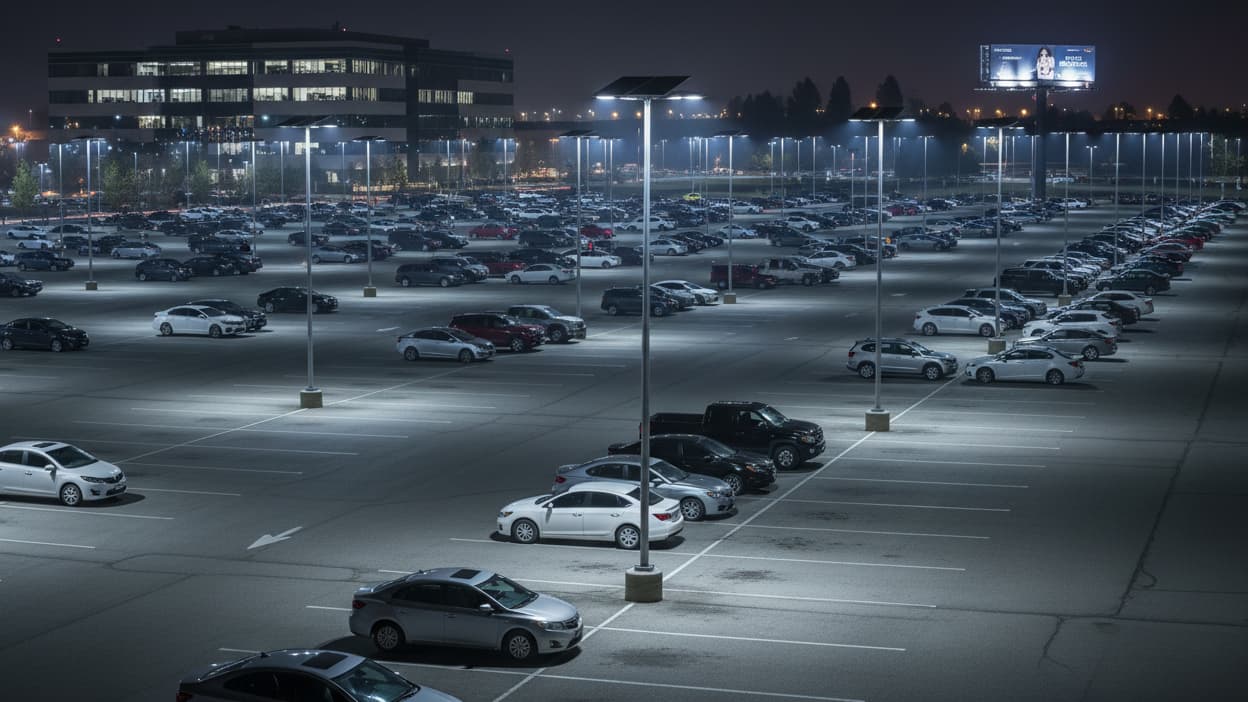
Compact form, serious output. The TW030 Mini delivers 42,000 lumens in a smaller housing — ideal for parking lots, commercial properties, and HOA-managed streets where aesthetics matter alongside performance. Starting at $135.00.

From $135.00 | Shop Now →
FAQ: Solar Light Flashing & Battery Life
Q: Why does my solar light flash 3 times and then turn off?
A: Three flashes followed by shutoff is a common low-battery protection signal. The light is telling you the battery voltage has dropped below the safe operating threshold. Charge the light in full sun for 2–3 days. If the problem persists, the battery likely needs replacement.
Q: My solar light worked fine for a year and now it flashes all night. What changed?
A: Battery degradation is the most likely cause. Rechargeable batteries lose capacity over time — after 300–500 charge cycles (roughly 1–1.5 years of daily use), many budget batteries hold only 60–70% of their original capacity. The light is running out of juice earlier in the night and signaling it with a flash.
Q: Can I replace the battery in my solar light myself?
A: In most cases, yes. Many solar lights use standard AA or AAA NiMH batteries that are easy to swap. Higher-end lights may use 18650 Li-ion cells or custom lithium packs — these are also replaceable but require more care. Always match the voltage and capacity of the original battery.
Q: How many hours of sun does a solar light need to charge fully?
A: Most solar lights need 6–8 hours of direct sunlight for a full charge. "Direct" is the key word — partial shade or overcast skies significantly reduce charging efficiency. In winter or cloudy climates, expect longer charge times and shorter runtimes.
Q: My solar light is new but already flashing. Is it defective?
A: Not necessarily. New lights often need 2–3 full charge cycles before the battery reaches optimal capacity. Make sure the pull tab (if any) has been removed from the battery compartment, and give it 3 full sunny days before judging performance. If it's still flashing after that, check the mode setting — it may be in a blinking/strobe mode by default.
Q: Does cold weather affect solar light battery life?
A: Yes, significantly. Lithium batteries lose 20–50% of their effective capacity in freezing temperatures. If your lights work fine in summer but flash and die early in winter, cold weather battery performance is likely the issue — not a defect. LiFePO4 batteries handle cold better than standard Li-ion.
Q: Why does my solar light stay on during the day?
A: The light sensor (photoresistor) that tells the light when it's dark may be covered, dirty, or malfunctioning. Clean the sensor area and make sure nothing is casting a shadow on it during daylight hours. If the problem persists, the sensor may need replacement.
Q: How do I know if my solar panel is charging the battery?
A: Some lights have a charging indicator LED that glows red or orange during charging. If yours doesn't, you can use a multimeter to check the panel's output voltage in direct sunlight — it should read higher than the battery's rated voltage. If the panel reads near zero in full sun, it may be damaged.
Q: Is it worth repairing a cheap solar light, or should I just replace it?
A: If the light cost under $30 and is more than 18 months old, replacement is almost always more cost-effective. The time and parts cost of repair often exceeds the value of the unit. For higher-end lights ($100+), repair — especially battery replacement — is usually worth it.
Q: What's the best way to store solar lights in winter?
A: If you're in a climate with harsh winters and don't need the lights seasonally, bring them indoors and store them with a partial charge (40–60% battery level). Storing lithium batteries fully discharged accelerates degradation. Clean the panels before storage and check the seals for any cracks.
Bottom Line
Solar light flashing is almost never a mystery once you know what to look for. Work through the checklist: battery age, panel cleanliness, sun exposure, moisture, mode settings, and temperature. Most issues resolve with one of those fixes.
If you're at the point where repairs aren't worth it, the good news is that solar lighting technology has improved dramatically in the last few years. Today's quality units — with LiFePO4 batteries, monocrystalline panels, and IP66 ratings — are genuinely more reliable than what was available even 3 years ago.
Browse our full lineup of outdoor solar lighting below and find the right fit for your property:
- Hykoont TW030 300W Solar Street Light 2-Pack — $289.00
- Hykoont BM024 160W Solar Street Light 2-Pack — $199.00
- Hykoont ZZ077 300W Solar Flood Lights 2-Pack — $238.00
- Hykoont XH300 Solar Flood Light — $79.00
- Hykoont SZ300 Commercial Solar Street Light — From $145.00
Questions about which light is right for your setup? Reach out to our team — we're happy to help you find the right fit.

Leave a comment
This site is protected by hCaptcha and the hCaptcha Privacy Policy and Terms of Service apply.