


What's Actually Inside That $25 Solar Light? The Battery Truth Nobody Talks About
Here's something the product listing won't tell you: two solar lights can have identical specs on paper — same wattage, same lumen count, same IP rating — and perform completely differently in the real world. One runs reliably all night for years. The other starts dimming after six months and is dead by year two.
The difference almost always comes down to one thing: what's inside the battery.
This isn't a niche technical issue. It's the single biggest quality gap in the solar lighting market right now, and most buyers have no idea it exists until they're replacing their third set of lights in four years.
Let's pull back the curtain on how battery quality actually works in solar lights — what "Grade A" means, what recycled or B-grade cells look like in practice, and how to tell the difference before you buy.
The Solar Light Market Has a Dirty Little Secret
The lithium battery supply chain is enormous and complex. Every year, millions of battery cells are pulled from consumer electronics — laptops, phones, power tools — that have reached the end of their useful life for those applications. Many of these cells still hold some charge. Not enough for a laptop that needs consistent high-drain performance, but enough to power a small LED light for a few hours.
These cells get harvested, tested (loosely), repackaged, and sold into the low-cost solar lighting market.
It's not illegal. It's not even hidden, exactly — it's just not disclosed. The product listing says "lithium battery" and that's technically accurate. What it doesn't say is whether that lithium battery is a fresh Grade A cell manufactured to spec, or a recycled cell that's already been through 200+ charge cycles in someone's old Dell laptop.
That distinction matters enormously for outdoor solar lighting, where the battery charges and discharges every single day, year-round, in temperature extremes.

Battery Grades Explained: A, B, C, and Recycled
The battery industry uses a grading system that most consumers never see. Here's what each grade actually means:
Grade A Cells
Fresh cells manufactured to the original specification. They've never been used, meet the rated capacity within a tight tolerance (typically ±2%), have consistent internal resistance, and are expected to deliver their rated cycle life — often 500–2,000+ cycles depending on chemistry. This is what a quality solar light should use.
Grade B Cells
New cells that didn't pass Grade A quality control — usually because they're slightly outside capacity tolerance, have higher internal resistance, or showed minor inconsistencies during testing. They're not defective, but they're not performing at spec either. Capacity might be 80–90% of rated, and cycle life is shorter. Common in budget electronics and low-cost solar lights.
Grade C Cells
Cells with more significant deviations — lower capacity, higher resistance, less predictable performance. Often used in very cheap power banks and no-name solar lights. You'll notice these as lights that work fine for the first few weeks and then rapidly degrade.
Recycled / Reclaimed Cells
Pulled from used battery packs, tested for remaining capacity, and resold. The capacity can vary wildly — anywhere from 40% to 80% of original rated capacity — and the remaining cycle life is unknown. These are the cells that make a solar light look fine in the store demo but fail within a year of real-world use.
The price difference between Grade A and recycled cells at the manufacturer level can be 60–80%. That's a huge margin incentive to cut corners, especially in a market where buyers are comparing on price and lumen claims rather than battery specs.

How Recycled Batteries Fail in Solar Lights Specifically
Solar lighting is one of the harshest use cases for a battery. Think about what the battery goes through:
- A full charge cycle every single day (or attempted charge — more on that below)
- Temperature swings from below freezing in winter to 100°F+ in summer, often while mounted in direct sun
- Partial charge states on cloudy days, which stress lithium chemistry more than full cycles
- Years of continuous operation with no maintenance
A Grade A cell with 500 rated cycles handles this reasonably well. A recycled cell that's already used 200 of its cycles before it even gets installed? It might have 100–150 real-world cycles left. At one cycle per day, that's less than six months before significant capacity loss.
Here's what that looks like in practice:
- Month 1–3: Light works as advertised. Runtime seems fine.
- Month 4–6: Light starts going dim around 2–3am instead of lasting until dawn.
- Month 7–12: Runtime drops to 3–4 hours. Flashing starts. Light may not turn on at all after cloudy days.
- Month 12–18: Battery can barely hold a charge. Light is effectively dead.
Sound familiar? This is the experience that drives the "solar lights are junk" narrative online. And it's not wrong — for that category of product, it's accurate. But it's a battery quality problem, not a solar technology problem.

The LiFePO4 Difference: Why Chemistry Matters as Much as Grade
Beyond cell grade, the type of lithium chemistry used makes a significant difference for outdoor solar applications.
Most budget solar lights use standard lithium-ion (Li-ion) or lithium polymer (LiPo) cells — the same chemistry in your phone. These are energy-dense and cheap, but they have real limitations for outdoor use:
- Rated for 300–500 full cycles before significant capacity loss
- Performance drops sharply below 32°F (0°C)
- Thermal runaway risk if overcharged or physically damaged
- Capacity degrades faster with partial charge cycles (common on cloudy days)
LiFePO4 (lithium iron phosphate) is a different chemistry with a fundamentally different performance profile:
- Rated for 2,000–5,000+ cycles — 4–10x the cycle life of standard Li-ion
- Maintains 80%+ capacity down to 14°F (-10°C)
- Inherently stable chemistry — no thermal runaway risk
- Handles partial charge cycles much better
- Flat discharge curve means consistent brightness until the battery is nearly empty
The tradeoff is cost and energy density — LiFePO4 cells are more expensive and slightly heavier per watt-hour. But for a solar light that's going to charge and discharge every day for 5–10 years outdoors, the math strongly favors LiFePO4.
A Grade A LiFePO4 cell in a solar light is a fundamentally different product than a recycled Li-ion cell in a solar light, even if both listings say "lithium battery."

How to Spot Battery Quality Before You Buy
You can't open the housing and inspect the cells before purchasing. But there are signals that correlate strongly with battery quality:
1. Look for Specific Battery Specs, Not Just "Lithium"
A quality manufacturer will tell you the battery chemistry (LiFePO4 vs Li-ion), capacity in watt-hours (Wh) or milliamp-hours (mAh) at a specific voltage, and cycle life rating. Vague listings that just say "built-in lithium battery" are a red flag.
2. Check the Warranty Length
A manufacturer using Grade A cells is confident enough to back them with a real warranty. 2–3 years is the baseline for quality. 90-day or 1-year warranties on solar lights are often a signal that the manufacturer knows the battery won't last much longer than that.
3. Price Reality Check
A solar light with a genuine Grade A LiFePO4 battery, quality LED chips, and a real IP65+ housing cannot be profitably manufactured and sold for $20–30. The battery alone costs more than that at wholesale. If the price seems too good to be true for the claimed specs, the battery is where the cost was cut.
4. Runtime Claims vs. Battery Capacity
Do the math. If a light claims 12 hours of runtime at 10W output, that requires 120Wh of battery capacity. If the listing says the battery is 10,000mAh at 3.7V, that's only 37Wh — physically impossible to deliver 12 hours at 10W. Inflated runtime claims almost always indicate either inflated wattage claims or a battery that can't actually deliver the stated capacity.
5. Brand Transparency
Brands that publish detailed spec sheets, have real customer support, and stand behind their products with meaningful warranties are more likely to be using quality components throughout — including batteries.

The Real Cost of Cheap: A 5-Year Comparison
Let's run the numbers on two hypothetical scenarios for lighting a residential driveway with two fixtures:
Scenario A: Budget lights at $40/pair
- Year 1: $40 (purchase)
- Year 1.5: Lights failing, replace: $40
- Year 3: Replace again: $40
- Year 4.5: Replace again: $40
- 5-year total: $160 + installation time x4
Scenario B: Quality lights with Grade A LiFePO4 at $199/pair
- Year 1: $199 (purchase)
- Years 2–5: No replacement needed
- 5-year total: $199 + installation time x1
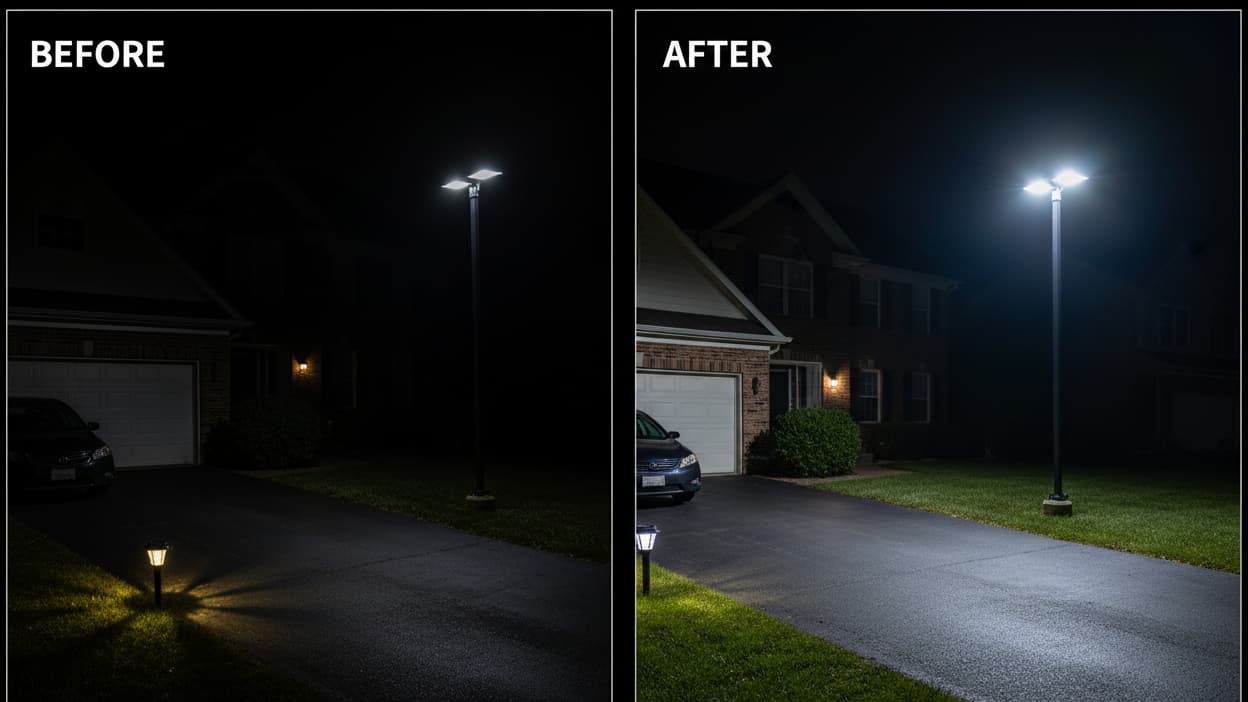
The "expensive" option saves $39 over five years and eliminates three reinstallation headaches. And that's before accounting for the performance difference — the quality light actually illuminates the driveway properly all night, every night.
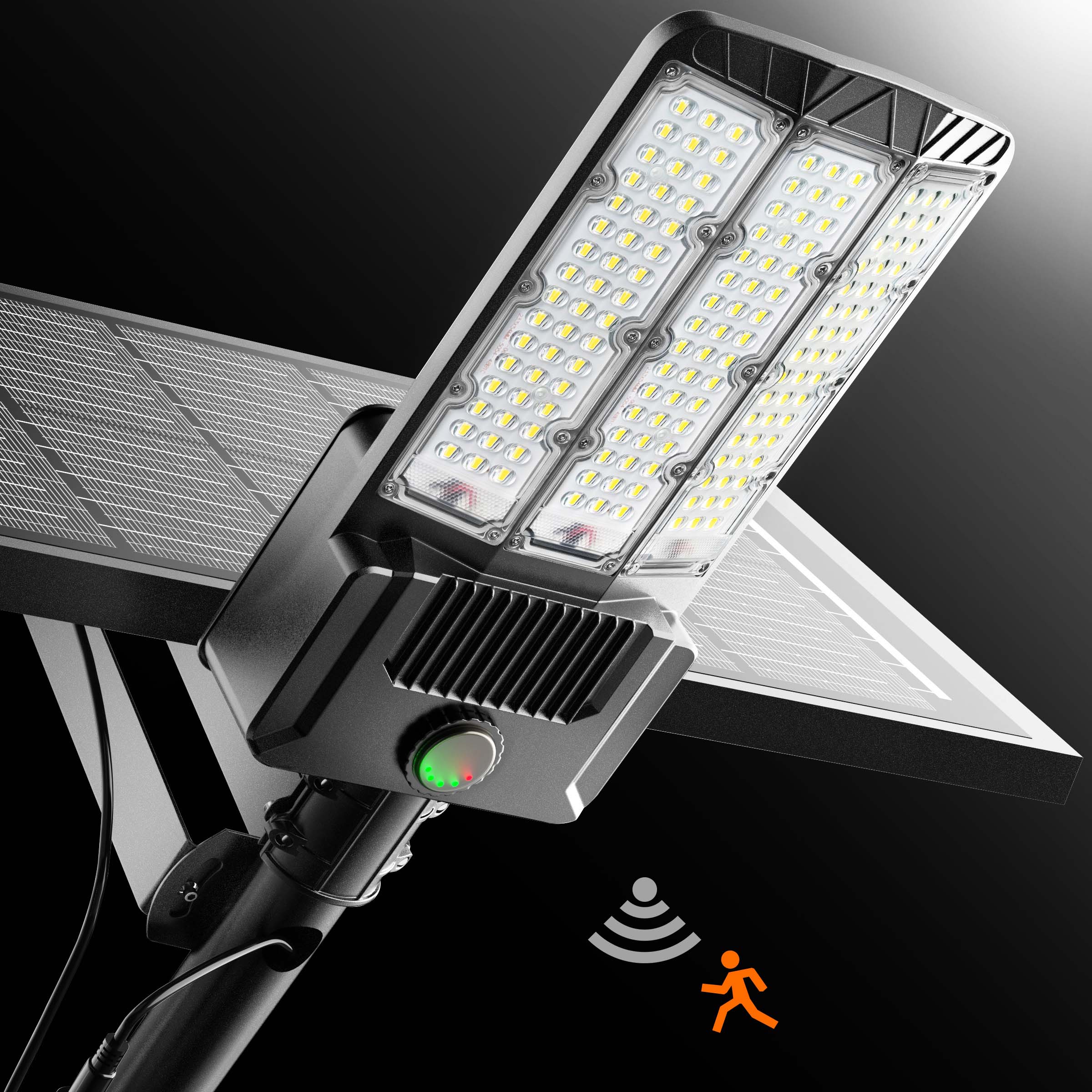
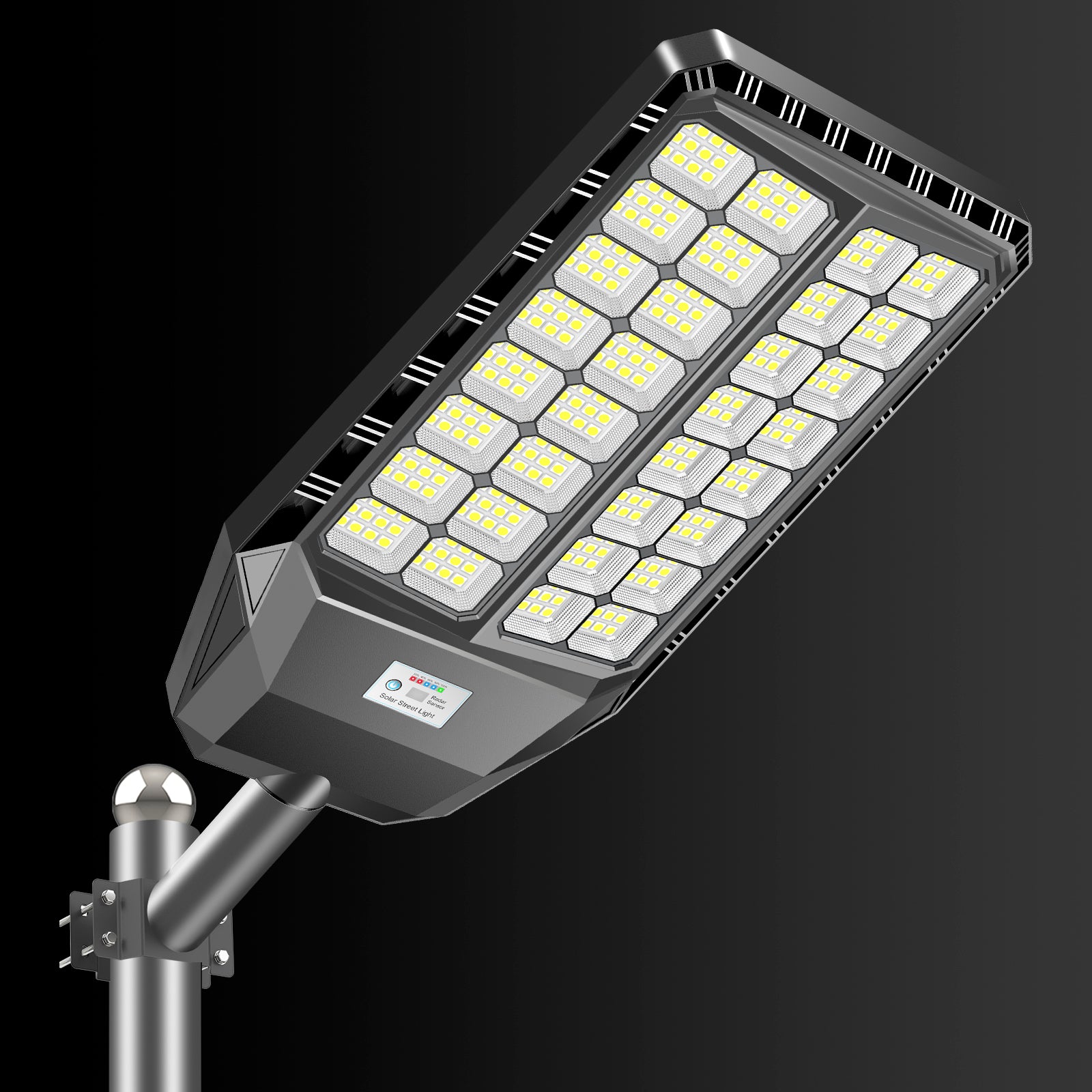
This is exactly the value proposition of the Hykoont BM024 160W Solar Street Light 2-Pack at $199.00. Grade A cells, IP66 weatherproofing, 21,600 lumens, and built to run reliably for years — not months.

Hykoont BM024 160W Solar Street Light 2-Pack — $199.00 | Shop Now →
What "Grade A" Actually Looks Like in a Real Product
Let's get specific about what Grade A battery quality translates to in real-world solar light performance:
Consistent Runtime, Night After Night
A Grade A cell delivers its rated capacity reliably across thousands of cycles. That means your light runs the same duration in month 36 as it did in month 1 — not 40% shorter because the battery has degraded.
Stable Performance in Cold Weather
Grade A LiFePO4 cells maintain meaningful capacity down to 14°F (-10°C). Budget Li-ion cells — especially recycled ones with already-degraded chemistry — can lose 50%+ of their effective capacity at freezing temperatures. This is why cheap solar lights often seem to "break" every winter.
Safe Operation
Recycled Li-ion cells have unknown thermal histories. Cells that have been overcharged, deeply discharged, or physically stressed in their previous life are more prone to thermal runaway — a failure mode that can cause fires. Grade A LiFePO4 cells are inherently stable and don't exhibit thermal runaway even under abuse conditions.
Predictable Warranty Coverage
When a manufacturer uses Grade A cells, they can accurately predict failure rates and offer real warranty coverage. When they use recycled cells, failure rates are unpredictable — which is why warranties on budget lights are often short, vague, or difficult to actually claim.
Products That Don't Cut Corners on Battery Quality
Here are specific products worth considering if you're done replacing cheap lights every 18 months:
For High-Output Street and Driveway Lighting
The Hykoont TW030 300W Solar Street Light delivers 42,000 lumens with a robust charging system designed for all-weather, all-season reliability. Available as a 2-pack for $289.00 — that's $144.50 per fixture for commercial-grade output.

Hykoont TW030 2-Pack — $289.00 | Shop Now →
For Flood Lighting Applications
The Hykoont ZZ077 300W Solar Flood Light 2-Pack at $238.00 brings IP66 weatherproofing and serious output to backyards, parking areas, and commercial perimeters. The IP66 rating means it's tested against powerful water jets — not just rain splash.

Hykoont ZZ077 Solar Flood Lights 2-Pack — $238.00 | Shop Now →
For Commercial and Municipal Installations
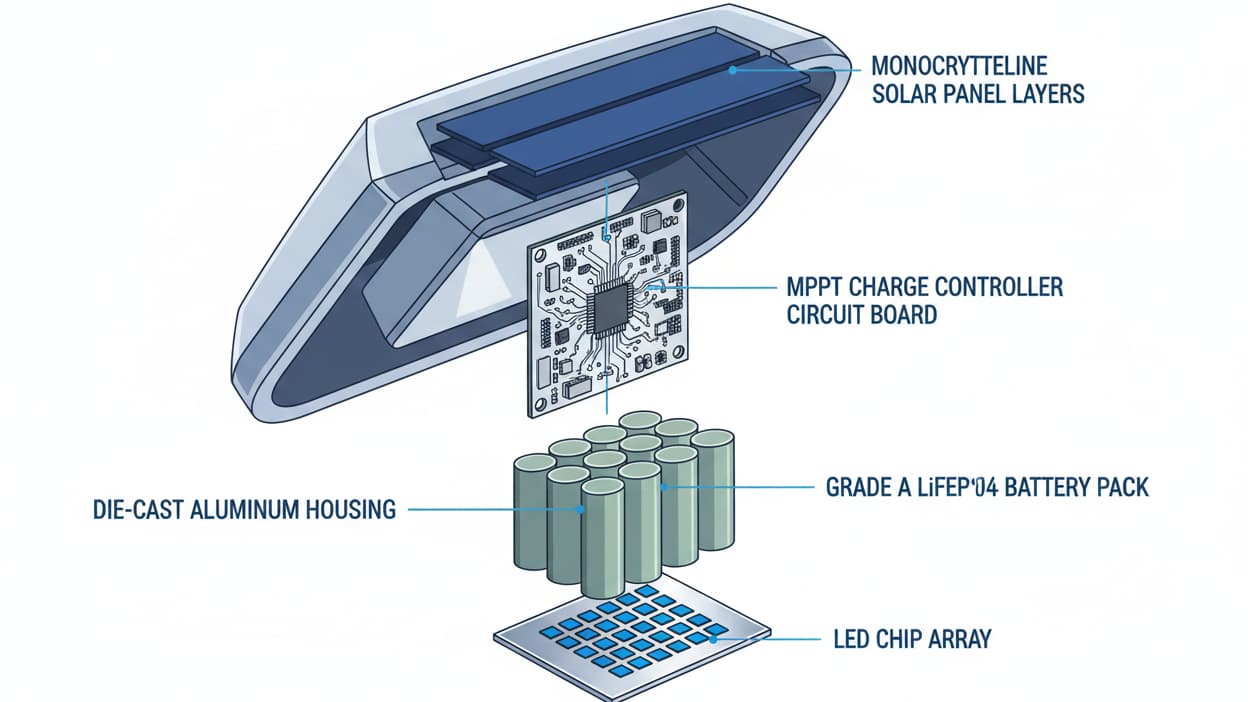
The Hykoont SZ300 Commercial Solar Street Light is built for properties that can't afford downtime — 60,000 lumens, monocrystalline solar panel, die-cast aluminum housing. Starting at $145.00 per unit.

Hykoont SZ300 Commercial Solar Street Light — From $145.00 | Shop Now →
Red Flags to Watch for When Shopping Solar Lights Online
Before we get to the FAQ, here's a quick checklist of warning signs that a solar light is likely using low-grade or recycled batteries:
- ✗ No specific battery chemistry listed (just "lithium" or "rechargeable")
- ✗ No watt-hour (Wh) capacity listed — only mAh without voltage
- ✗ Runtime claims that don't match the battery capacity math
- ✗ Warranty under 12 months, or warranty that requires return shipping to China at buyer's expense
- ✗ Price under $40 for a light claiming 5,000+ lumens and 10+ hour runtime
- ✗ No customer support contact information beyond a generic email
- ✗ Reviews that are overwhelmingly positive for the first 3 months, then sharply negative after 6–12 months
- ✗ "Solar panel wattage" listed but no battery capacity — a common misdirection tactic
And the green flags that suggest a manufacturer is using quality components:
- ✓ LiFePO4 chemistry explicitly stated
- ✓ Battery capacity in Wh (not just mAh)
- ✓ Cycle life rating provided (e.g., "2,000+ cycles")
- ✓ 2–3 year warranty with clear terms
- ✓ IP65 or IP66 rating (not just "waterproof")
- ✓ Monocrystalline solar panel specified
- ✓ MPPT charge controller mentioned
FAQ: Solar Light Battery Quality
Q: How can I tell if my solar light has a recycled battery?
A: You usually can't tell from the outside. The most reliable indicators are price (very cheap lights almost always use low-grade cells), warranty length (short warranties suggest the manufacturer knows the battery won't last), and performance over time — recycled cells typically show significant capacity loss within 6–12 months of daily use.
Q: Is it safe to use solar lights with recycled batteries?
A: For most residential applications, the main risk is performance failure rather than safety. However, recycled Li-ion cells with unknown thermal histories do carry a slightly elevated risk of thermal runaway compared to Grade A cells. For lights mounted near structures, vehicles, or dry vegetation, this is worth considering. LiFePO4 chemistry — Grade A or otherwise — is inherently safer than Li-ion.
Q: Can I replace the battery in a cheap solar light with a Grade A cell?
A: Sometimes, yes. If the light uses standard 18650 cells or AA/AAA NiMH batteries, you can swap in higher-quality replacements. The challenge is that the charge controller in cheap lights is often also low-quality and may not properly manage a Grade A cell, potentially undercharging it or not protecting against deep discharge. It's a partial fix at best.
Q: What does MPPT mean and why does it matter for battery life?
A: MPPT stands for Maximum Power Point Tracking — a charging algorithm that continuously optimizes the power drawn from the solar panel based on current conditions. Compared to simpler PWM (Pulse Width Modulation) controllers, MPPT can improve charging efficiency by 15–30%, especially in partial shade or low-light conditions. Better charging means the battery reaches full capacity more consistently, which extends its lifespan.
Q: Why do solar lights from the same brand vary so much in quality?
A: Many brands source components from multiple suppliers and adjust specs based on price point. A brand's $150 light and their $30 light may share a name but use completely different battery grades, LED chips, and charge controllers. Always evaluate the specific model, not just the brand.
Q: How long should a quality solar light battery last?
A: A Grade A LiFePO4 battery in a well-designed solar light should maintain 80%+ of its original capacity after 2,000 charge cycles — roughly 5–6 years of daily use. Standard Grade A Li-ion cells typically reach that threshold at 500 cycles, or about 1.5 years. Recycled cells may show significant degradation within 6–12 months.
Q: Does cold weather permanently damage solar light batteries?
A: Repeated deep discharge in cold temperatures can accelerate degradation in Li-ion cells. LiFePO4 cells are more resilient to cold-weather cycling. If you're in a climate with harsh winters, LiFePO4 chemistry is strongly recommended. Temporary capacity loss in cold weather is normal and reversible; permanent degradation from repeated cold-weather deep discharge is not.
Q: Are more expensive solar lights always better?
A: Not automatically — but there's a real price floor below which quality components simply can't be sourced. A solar light under $30 claiming high lumens and long runtime is almost certainly using low-grade batteries and cheap LEDs. Above $100–150 for a quality outdoor fixture, you start to see meaningful differences in battery grade, panel efficiency, and build quality. Price alone isn't a guarantee, but it's a useful filter.
Q: What's the difference between IP65 and IP66 waterproofing?
A: Both ratings protect against dust ingress completely (the "6" in the first digit). The second digit indicates water protection: IP65 protects against low-pressure water jets from any direction; IP66 protects against powerful water jets. For most residential outdoor use, IP65 is sufficient. For coastal areas, high-rain climates, or lights mounted where they might be hit by sprinklers or pressure washing, IP66 is worth the upgrade.
Q: Can I verify battery quality claims before purchasing?
A: You can ask the manufacturer directly for battery spec sheets or cell model numbers. Reputable manufacturers will provide this information. You can also look for third-party reviews that test runtime over extended periods (6+ months) rather than just out-of-box performance. Review patterns that show sharp performance drops after 6–12 months are a strong signal of low-grade batteries.
The Bottom Line
The solar lighting market has a real quality problem, and it's almost entirely a battery problem. The technology works — solar panels, LED chips, and charge controllers have all matured to the point where reliable, long-lasting outdoor solar lighting is genuinely achievable at reasonable prices.
What undermines it is the race to the bottom on battery quality. Recycled cells, B-grade Li-ion, and undersized battery packs are the reason "solar lights are junk" is a common sentiment online. It's not wrong for that category of product. But it's not the whole story.
When you buy a solar light with Grade A LiFePO4 cells, a real MPPT controller, and a genuine IP65+ rating, you're buying a different product — one that will actually do what it says for years, not months.
That's the standard we hold our products to. Browse our full lineup below:
- Hykoont BM024 160W Solar Street Light 2-Pack — $199.00
- Hykoont TW030 300W Solar Street Light 2-Pack — $289.00
- Hykoont ZZ077 300W Solar Flood Lights 2-Pack — $238.00
- Hykoont XH300 Solar Flood Light — $79.00
- Hykoont SZ300 Commercial Solar Street Light — From $145.00
Have questions about which product is right for your property? Contact our team — we're happy to help you find the right fit without the guesswork.

Leave a comment
This site is protected by hCaptcha and the hCaptcha Privacy Policy and Terms of Service apply.