


Why Commercial Properties Are Switching to Solar Lighting
Here's something most property managers don't realize until they see their first electric bill: traditional parking lot lighting can cost anywhere from $2,000 to $5,000 per year in electricity alone. That's before you factor in maintenance calls, bulb replacements, and the headache of dealing with underground wiring.
Solar lighting has changed the game completely. We're talking about lights that charge themselves during the day and automatically turn on at night—no trenching, no electrician bills, and no monthly energy costs eating into your budget.

What Makes Commercial Solar Lights Different from Residential Options
You can't just grab any solar light off the shelf and expect it to handle a commercial parking lot. The difference comes down to three main factors: brightness output, battery capacity, and build quality.
Commercial-grade solar lights typically deliver 15,000 to 60,000 lumens—that's roughly 10 to 40 times brighter than your average residential solar path light. They're built with industrial-grade materials like die-cast aluminum and come with batteries that can power through multiple cloudy days without dimming.
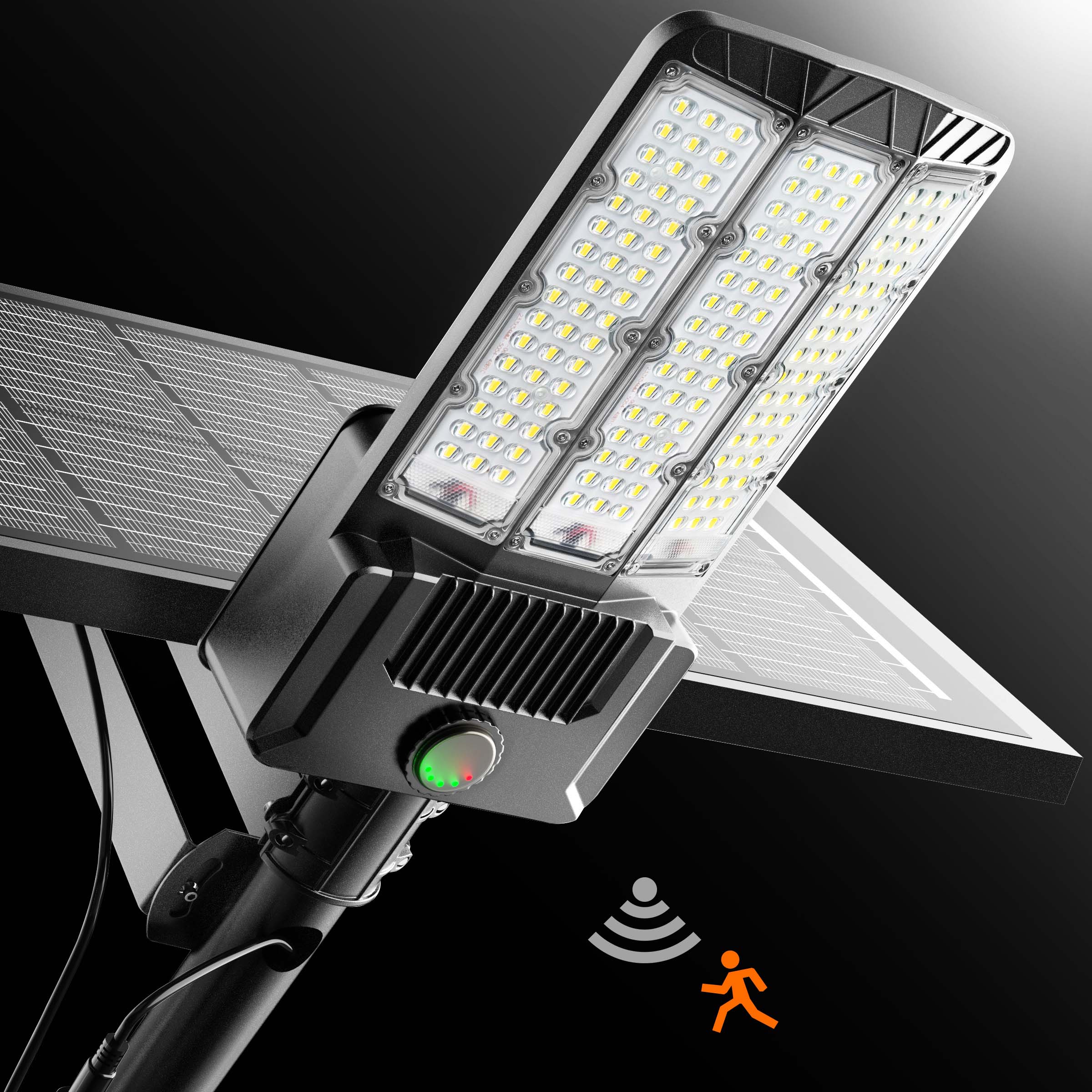
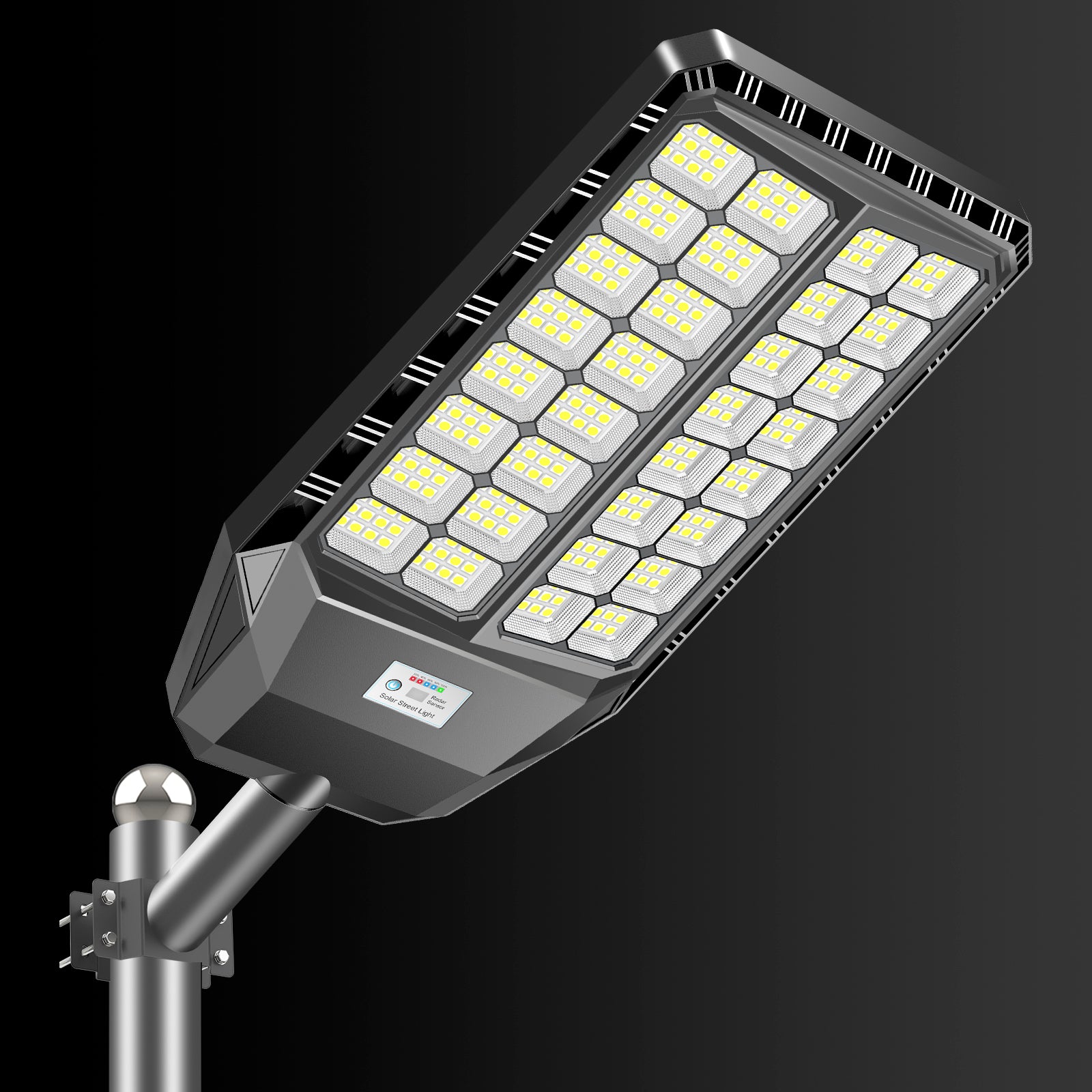
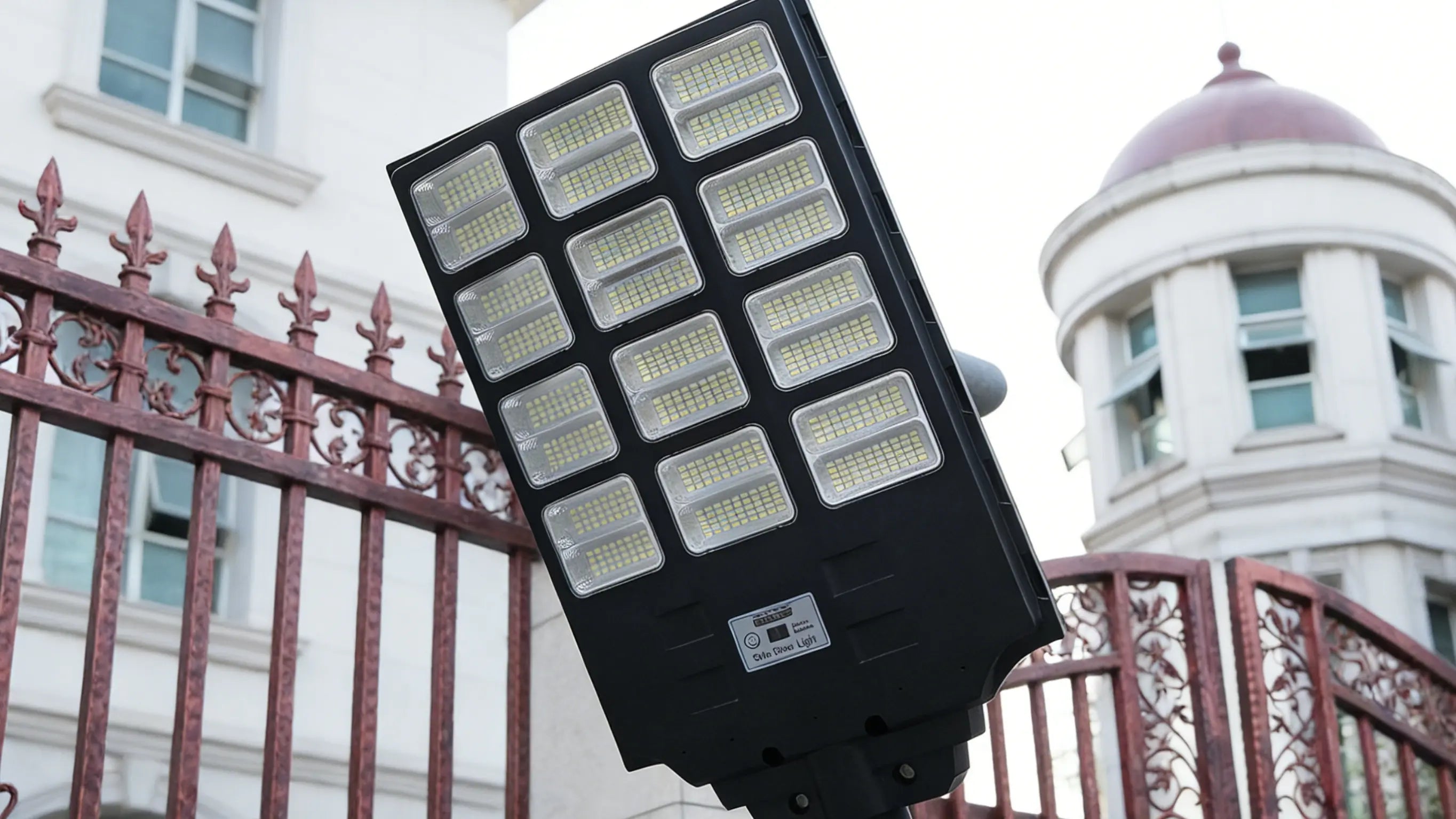
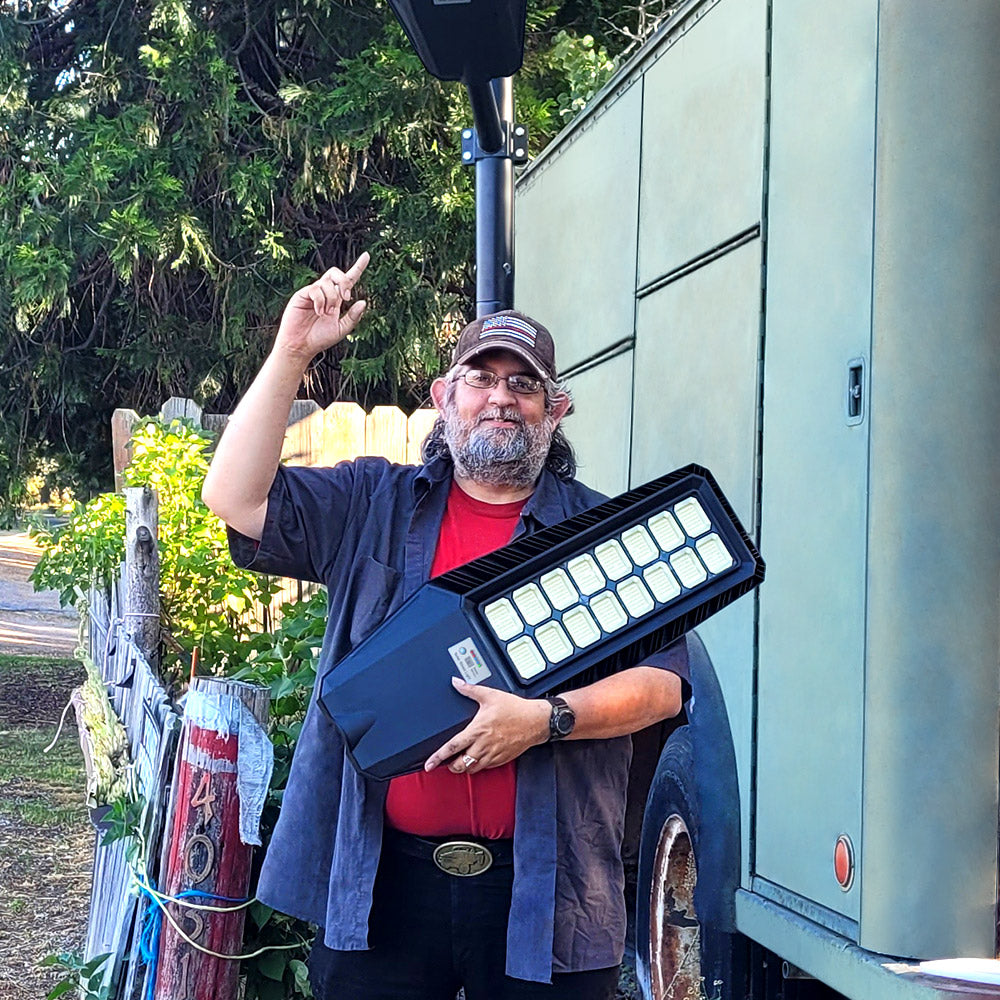
Take the Hykoont SZ300 Commercial Solar Street Light ($145-$293), for example. This unit pumps out 60,000 lumens and covers about 4,200 square feet—enough to light up several parking spaces or a long pathway section. The 35,000mAh battery keeps it running all night, even after a cloudy day.

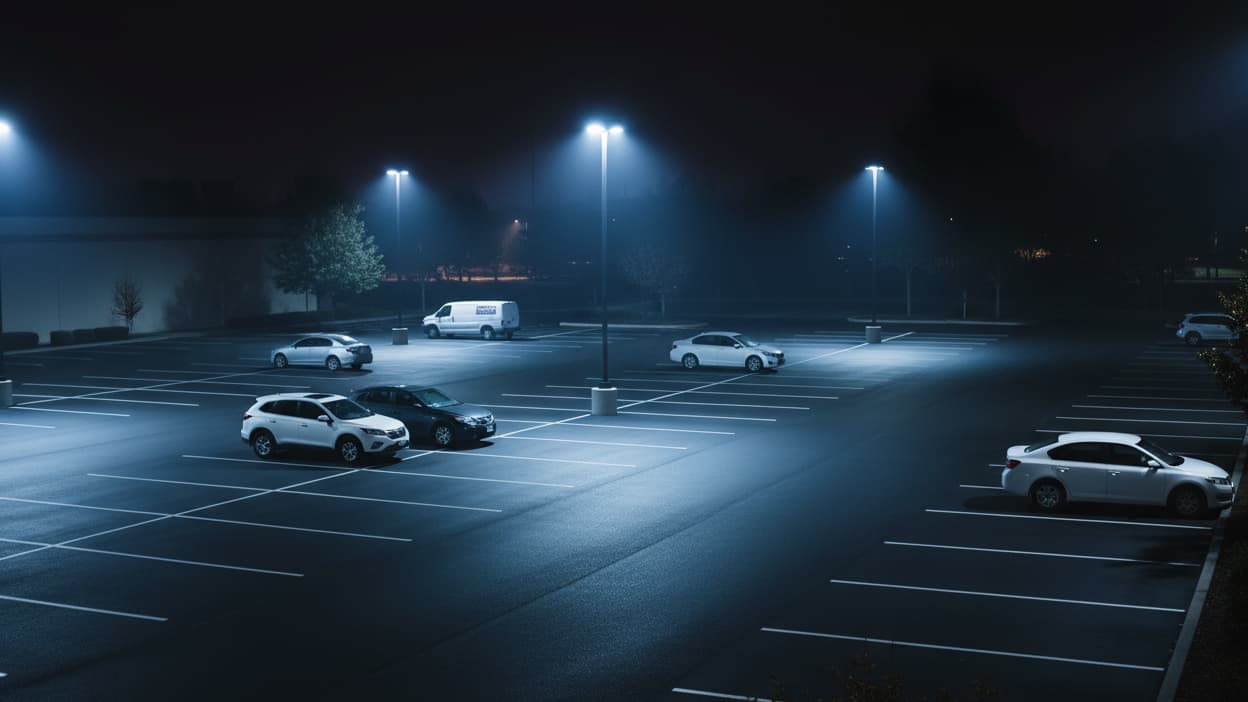
Parking Lot Lighting: Getting the Coverage Right
Most parking lot lighting projects fail because of poor planning, not poor products. The key question isn't "how many lights do I need?" but rather "how much usable light reaches the ground?"
Understanding Lumens vs. Coverage Area
Here's a practical breakdown based on real-world installations:
- Small parking areas (10-15 spaces): 15,000-20,000 lumens per light, mounted 12-15 feet high
- Medium lots (20-40 spaces): 25,000-35,000 lumens per light, 15-20 feet mounting height
- Large commercial lots (40+ spaces): 40,000-60,000 lumens per light, 20-25 feet mounting height
The HY100C 100W Commercial Solar Light ($1,890) is designed specifically for larger installations. With 27,000 lumens and a 10-year lifespan solar panel, it's built for properties that need reliable lighting at 10-12 meter mounting heights. The 300AH lithium battery means it'll keep running for three consecutive rainy days without any sunlight.

Spacing Your Lights Properly
A common mistake is spacing lights too far apart, creating dark spots that defeat the whole purpose of security lighting. For parking lots, aim for 30-40 feet between poles for 20,000+ lumen lights. Pathway lighting can be spaced 20-30 feet apart with lower lumen outputs.
Shop the SZ300 Commercial Solar Street Light →
Pathway and Walkway Lighting: Safety Meets Efficiency
Pathway lighting serves a different purpose than parking lot floods. You're not trying to light up a football field—you need consistent, glare-free illumination that guides people safely from point A to point B.
The Right Brightness for Pathways
For commercial pathways, you're looking at 8,000-20,000 lumens per fixture, depending on path width and surrounding ambient light. The goal is to create pools of light that overlap slightly, eliminating dark patches where people might trip or feel unsafe.
The Hykoont TW016 Solar Street Light ($79.99) hits a sweet spot for pathway applications. At 19,200 lumens with a 2,385 square foot coverage area, it's perfect for walkways, building perimeters, and smaller access roads. The motion sensor feature is particularly useful—it runs at 30% brightness normally, then jumps to 100% when it detects movement within 26 feet.

Motion Sensors: Smart Energy Management
Motion-activated lighting isn't just about saving energy—it's about extending battery life during winter months when sunlight is scarce. Most commercial solar lights now include radar or PIR sensors that can detect movement from 15-30 feet away.
Here's how it works in practice: The light operates at 30-50% brightness during quiet hours (say, midnight to 5 AM), then ramps up to full power when someone approaches. This can extend your runtime from 10 hours to 15+ hours on a single charge.
Real-World Costs: What You'll Actually Spend
Let's talk numbers, because that's what matters when you're presenting a lighting proposal to management or clients.
Initial Investment Breakdown
Budget-Friendly Option (Small Pathway Project):
- 4x TW016 Solar Street Lights at $79.99 each = $320
- Mounting poles (if needed): $100-200
- Installation labor: $200-400
- Total: $620-920
Mid-Range Option (Medium Parking Lot):
- 6x SZ300 Commercial Lights at $220 average = $1,320
- Mounting poles and hardware: $400-600
- Professional installation: $800-1,200
- Total: $2,520-3,120
Premium Option (Large Commercial Property):
- 8x HY100C 100W Commercial Lights at $1,890 each = $15,120
- Heavy-duty poles and mounting: $2,000-3,000
- Professional installation: $2,500-4,000
- Total: $19,620-22,120
Comparing to Traditional Lighting
Now compare that to traditional grid-tied lighting for the same medium parking lot:
- 6x LED fixtures: $1,200-1,800
- Trenching and electrical work: $3,000-6,000
- Electrician labor: $2,000-3,500
- Permits and inspections: $300-800
- Initial Total: $6,500-12,100
- Annual electricity cost: $1,200-2,400
- Maintenance over 5 years: $800-1,500
The solar option pays for itself in 2-3 years, then it's pure savings after that.
Get the HY100C Commercial Solar Light →
Installation Tips That Actually Matter
Solar lights are marketed as "easy installation," but there's a difference between getting them mounted and getting them to perform optimally.
Solar Panel Positioning
This is where most DIY installations go wrong. Your solar panel needs direct sunlight for at least 6-8 hours daily. "Partial shade" sounds harmless, but even 2-3 hours of shade can cut your charging efficiency by 40-50%.
Face panels true south in the Northern Hemisphere (true north in the Southern Hemisphere). Tilt them at an angle roughly equal to your latitude—for most of the US, that's 30-40 degrees. Some lights like the SZ300 have adjustable panels, which is a huge advantage if you're dealing with less-than-ideal mounting locations.
Mounting Height Matters More Than You Think
Mount too low, and you get glare and poor coverage. Mount too high, and the light disperses too much before reaching the ground. Here's what works:
- Pathway lights: 8-12 feet for 8,000-15,000 lumen units
- Parking area lights: 15-20 feet for 20,000-40,000 lumen units
- Large lot lights: 20-30 feet for 40,000+ lumen units
The TW016 Series 160W Solar Street Light ($389.99 for a 2-pack) comes with adjustable mounting brackets that make it easier to get the angle right. At 21,000 lumens per unit, these work great at 15-18 foot mounting heights for parking areas or wider pathways.

Battery Technology: Why It's the Most Important Spec
Everyone focuses on lumens and wattage, but the battery is what determines whether your lights actually work when you need them.
LiFePO4 vs. Standard Lithium-Ion
LiFePO4 (Lithium Iron Phosphate) batteries are becoming the standard for commercial solar lights, and for good reason. They handle 2,000-3,000 charge cycles compared to 500-1,000 for standard lithium-ion. In real terms, that's 5-8 years of reliable performance vs. 2-3 years.
The HY100C uses a 300AH LiFePO4 battery—that's massive capacity that can power through 3 consecutive cloudy days without any solar charging. For businesses in areas with unpredictable weather, that reliability is worth the higher upfront cost.
Battery Capacity Math
Here's a simple way to calculate if a light has enough battery for your needs:
Battery capacity (mAh) ÷ LED power draw (mA) = Runtime hours
For example, the SZ300's 35,000mAh battery powering 400W of LEDs gives you roughly 12-15 hours of full-brightness runtime. Factor in the motion sensor dimming feature, and you can stretch that to 18-20 hours.
Weather Resistance: IP Ratings Explained Simply
IP ratings look like random numbers, but they tell you exactly how well a light handles weather. The format is always IP followed by two digits.
First digit (dust protection):
- 5 = Dust protected (some dust may enter but won't harm operation)
- 6 = Dust tight (no dust enters)
Second digit (water protection):
- 5 = Protected against water jets from any direction
- 6 = Protected against powerful water jets and heavy seas
- 7 = Protected against temporary immersion in water
For commercial outdoor lighting, you want minimum IP65. The TW016 and SZ300 both carry IP65-IP66 ratings, meaning they'll handle everything from dust storms to pressure washing without issues.
Adjustable Brightness Modes
Most commercial solar lights now offer 3-5 brightness modes. This isn't just about saving energy—it's about adapting to different situations. Maybe you want 100% brightness from dusk to 11 PM when the business is open, then 50% through the night, then back to 100% from 6-8 AM.
The XC940 offers multiple modes including motion detection, emergency lighting, and timed dimming. That flexibility means one light can serve multiple purposes depending on your needs.
Maintenance: What to Expect Over Time
Solar lights are low-maintenance, not no-maintenance. Here's what you'll actually need to do:
Monthly Tasks
- Wipe down solar panels with a damp cloth (dust and pollen reduce charging efficiency by 15-25%)
- Check for any physical damage or loose mounting hardware
- Verify lights are turning on/off at appropriate times
Quarterly Tasks
- Clean solar panels more thoroughly with mild soap and water
- Test motion sensors to ensure they're still responsive
- Check battery performance (lights should run all night on a full charge)
Annual Tasks
- Inspect all wiring connections for corrosion
- Verify mounting hardware is still secure
- Consider battery replacement if runtime has dropped significantly (typically after 5-8 years)
Total maintenance time for a 10-light installation: about 2-3 hours per year. Compare that to traditional lighting where you're replacing bulbs, dealing with electrical issues, and paying for service calls.
Common Problems and How to Fix Them
Lights Not Turning On at Night
First, check if the light sensor is covered or dirty. Second, verify the battery had enough time to charge (needs 6-8 hours of direct sunlight). Third, make sure you didn't accidentally leave it in "off" mode via the remote or switch.
Dim Light Output
Usually means the battery isn't fully charging. Clean the solar panel, check for shade issues, and verify the panel angle is optimized for your latitude. If the problem persists after a week of sunny weather, you might have a failing battery.
Motion Sensor Not Working
Check the sensitivity settings first—they might be turned down too low. Make sure nothing is blocking the sensor (spider webs are a common culprit). If it's still not working, the sensor might need replacement, which is typically a $20-40 part.
Choosing Between Flood Lights and Street Lights
This confuses a lot of people, so let's clear it up.
Solar Flood Lights (like the XC940) create a wide, intense beam that's perfect for:
- Building facades and signage
- Loading docks and service areas
- Security lighting for specific zones
- Accent lighting for landscaping or architectural features
Solar Street Lights (like the TW016 and SZ300) provide broader, more even coverage ideal for:
- Parking lots and driveways
- Pathways and sidewalks
- Street and roadway lighting
- Large open areas requiring consistent illumination
Many commercial properties use both—street lights for general area coverage and flood lights for specific security or accent needs.
ROI Calculation: When Solar Makes Sense
Solar lighting isn't always the right answer. Here's when it makes financial sense:
Solar is a Clear Winner When:
- You're more than 50 feet from existing electrical infrastructure
- Trenching would require cutting through concrete or asphalt
- You're in an area with high electricity costs (above $0.15/kWh)
- You need temporary or seasonal lighting
- Local regulations make electrical work expensive or complicated
Traditional Lighting Might Be Better When:
- You have existing electrical infrastructure in place
- Your location gets less than 4-5 hours of direct sunlight daily
- You need extremely high light levels (80,000+ lumens) continuously
- You're in an area with very low electricity costs (below $0.08/kWh)
Warranty and Support: What to Look For
A good warranty tells you the manufacturer stands behind their product. For commercial solar lights, look for:
- Minimum 2-year comprehensive warranty (the SZ300 offers 3 years)
- 5+ year warranty on solar panels (the HY100C panel is rated for 10 years)
- Separate battery warranty (should be at least 2 years)
- Responsive customer support (email and phone, not just a contact form)
Also check what the warranty actually covers. Some manufacturers only cover defects, not performance degradation. You want coverage that includes both.
Frequently Asked Questions
How long do commercial solar lights actually last?
The LED components typically last 50,000-60,000 hours (about 10-15 years of nightly use). The solar panels are usually rated for 10-25 years. The battery is the limiting factor, typically needing replacement every 5-8 years. With proper maintenance, you can expect 10-15 years of service from quality commercial solar lights.
Will solar lights work in winter or cloudy climates?
Yes, but with reduced runtime. Solar panels still charge on cloudy days, just at 10-25% efficiency instead of 100%. Quality commercial lights with large batteries (like the HY100C with its 300AH battery) can store enough power to run through 2-3 cloudy days. In consistently cloudy climates, you might need to add 20-30% more lights to maintain coverage.
Can I install commercial solar lights myself?
For smaller lights (under 50 pounds) mounted on existing poles or walls, yes—it's a straightforward DIY project. For larger lights requiring new pole installation or mounting above 15 feet, professional installation is recommended for safety and to ensure proper positioning. Most installations take 1-3 hours per light.
How bright should parking lot lights be?
The Illuminating Engineering Society (IES) recommends 1-2 foot-candles for basic parking lot lighting, which translates to roughly 15,000-25,000 lumens per light for standard parking areas. High-security areas might need 3-5 foot-candles (35,000-50,000 lumens). The key is even distribution—better to have more moderately bright lights than fewer super-bright ones with dark spots between them.
Do solar lights require any electrical work?
No, that's one of their biggest advantages. Solar lights are completely self-contained—no wiring, no trenching, no electrician needed. You just mount them where they'll get good sun exposure. This also means no electrical permits or inspections in most jurisdictions.
What happens if the battery dies?
Most commercial solar lights use replaceable batteries. When a battery reaches end-of-life (typically after 5-8 years), you can order a replacement for $50-200 depending on capacity. It's usually a simple swap—remove a few screws, disconnect the old battery, connect the new one. Much cheaper than replacing the entire light.
Can solar lights be vandalized or stolen easily?
Quality commercial solar lights use tamper-resistant hardware and are typically mounted 12-25 feet high, making casual theft difficult. The lights themselves have minimal resale value since they're designed for specific applications. That said, if theft is a major concern in your area, consider lights with security mounting systems or install them in locations with camera coverage.
How do I know if my location gets enough sunlight?
You need at least 4-6 hours of direct sunlight daily for solar lights to work reliably. Check your location at different times of day—shadows from buildings and trees change with seasons. A simple test: if the area is in full sun from 10 AM to 3 PM, you're good. If it's shaded during those peak hours, solar might not be ideal.
What's the difference between lumens and watts?
Watts measure power consumption, lumens measure actual light output. For solar lights, you care about lumens—that's how much light you're actually getting. A 100W LED might produce 15,000 lumens, while a 400W LED might produce 60,000 lumens. Higher wattage usually means more lumens, but efficiency varies by manufacturer.
Can I adjust the brightness after installation?
Most modern commercial solar lights offer adjustable brightness through remote controls or built-in switches. The XC940, TW016, and SZ300 all include multiple brightness modes. This lets you optimize for different situations—full brightness during business hours, dimmed overnight, motion-activated for security, etc.
Making Your Final Decision
Choosing commercial solar lighting comes down to matching your specific needs with the right products. Here's a quick decision framework:
For budget-conscious pathway projects: Start with the TW016 Solar Street Light at $79.99. It delivers solid performance for walkways, building perimeters, and smaller access areas.
For standard parking lots and larger pathways: The SZ300 Commercial Solar Street Light ($145-293) offers the best balance of brightness, coverage, and price. The 60,000 lumens and 3-year warranty make it a reliable workhorse.
For premium installations requiring maximum reliability: The HY100C 100W Commercial Solar Light ($1,890) is built for critical applications where failure isn't an option. The 10-year solar panel and massive battery capacity justify the investment.
Whatever you choose, remember that solar lighting is an investment that pays dividends for years. No monthly electric bills, minimal maintenance, and the satisfaction of knowing you're reducing your property's carbon footprint while improving safety and security.
Ready to make the switch? Start with a small pilot project—maybe 2-4 lights in a high-visibility area. See how they perform, get feedback from tenants or customers, then expand from there. That's how most successful commercial solar lighting projects begin.


Leave a comment
This site is protected by hCaptcha and the hCaptcha Privacy Policy and Terms of Service apply.