





The Battery Question Nobody Asks Until It's Too Late
Here's a conversation I've had about fifty times: Someone calls me in February, frustrated because their solar street lights stopped working. They bought them six months ago, they were cheap, and now they're dark by 8 PM every night.
"What kind of battery does it have?" I ask.
"I don't know, it just says 'lithium battery' on the box."
And there's the problem. Not all lithium batteries are the same. In fact, the difference between a standard lithium-ion battery and a LiFePO4 (Lithium Iron Phosphate) battery is the difference between a solar street light that works for 2-3 years and one that works for 7-10 years.
If you're spending money on solar street lights and you're not paying attention to battery chemistry, you're basically gambling. Let me show you why.

What Actually Is LiFePO4 (And Why Should You Care)?
LiFePO4 stands for Lithium Iron Phosphate. It's a specific type of lithium battery chemistry that's fundamentally different from the lithium-ion batteries in your phone or laptop.
Here's what makes it different in ways that actually matter for solar street lights:
Lifespan That's Not Even Close
Standard lithium-ion: 500-1,000 charge cycles before capacity drops to 80%
Lead-acid: 300-500 cycles
LiFePO4: 2,000-5,000 cycles
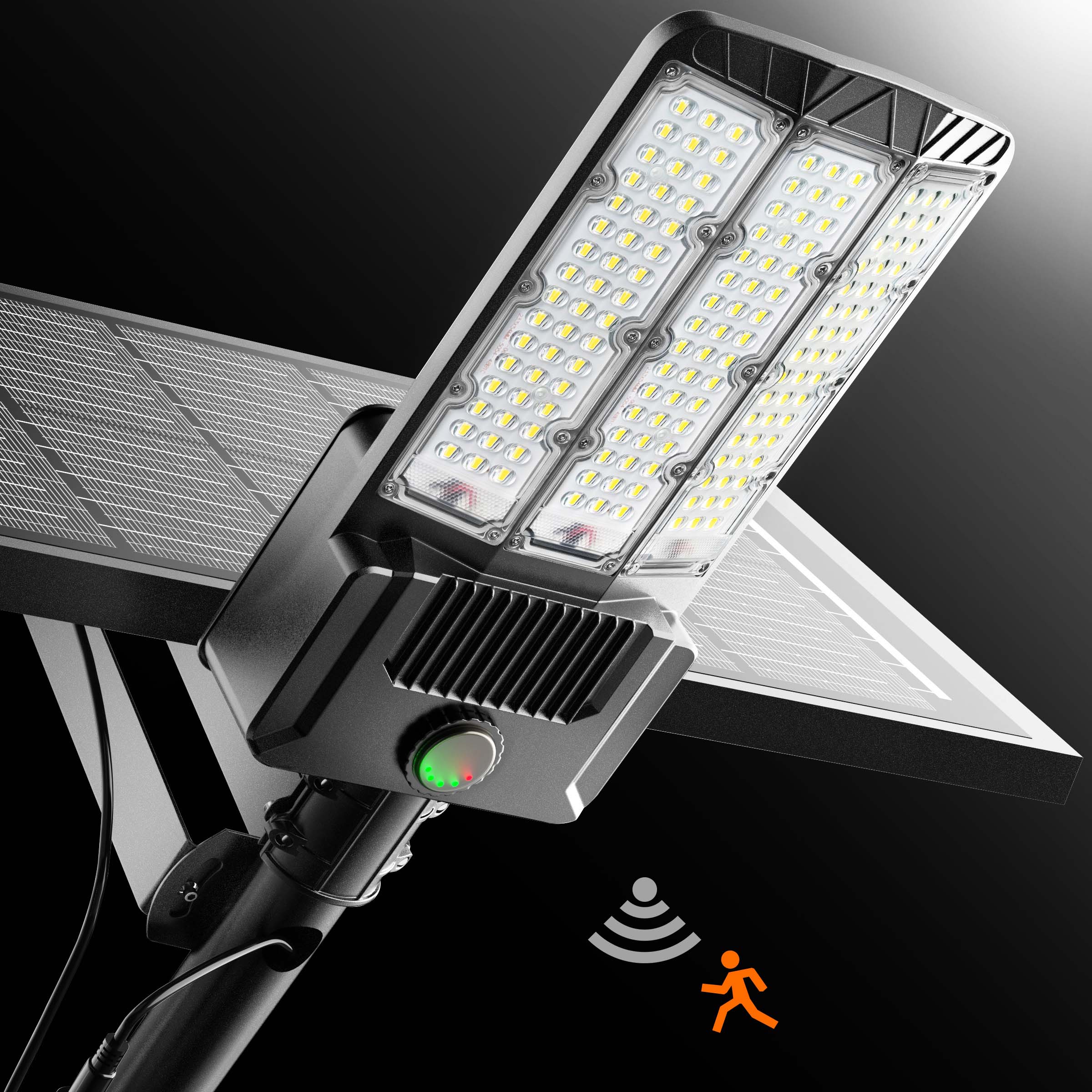
In real-world terms, that's 2-3 years vs. 7-10 years. The Hykoont TW030 ($142) uses LiFePO4 batteries rated for 3,000+ cycles, which is why it comes with longer warranty periods than budget units.

Temperature Performance That Actually Works
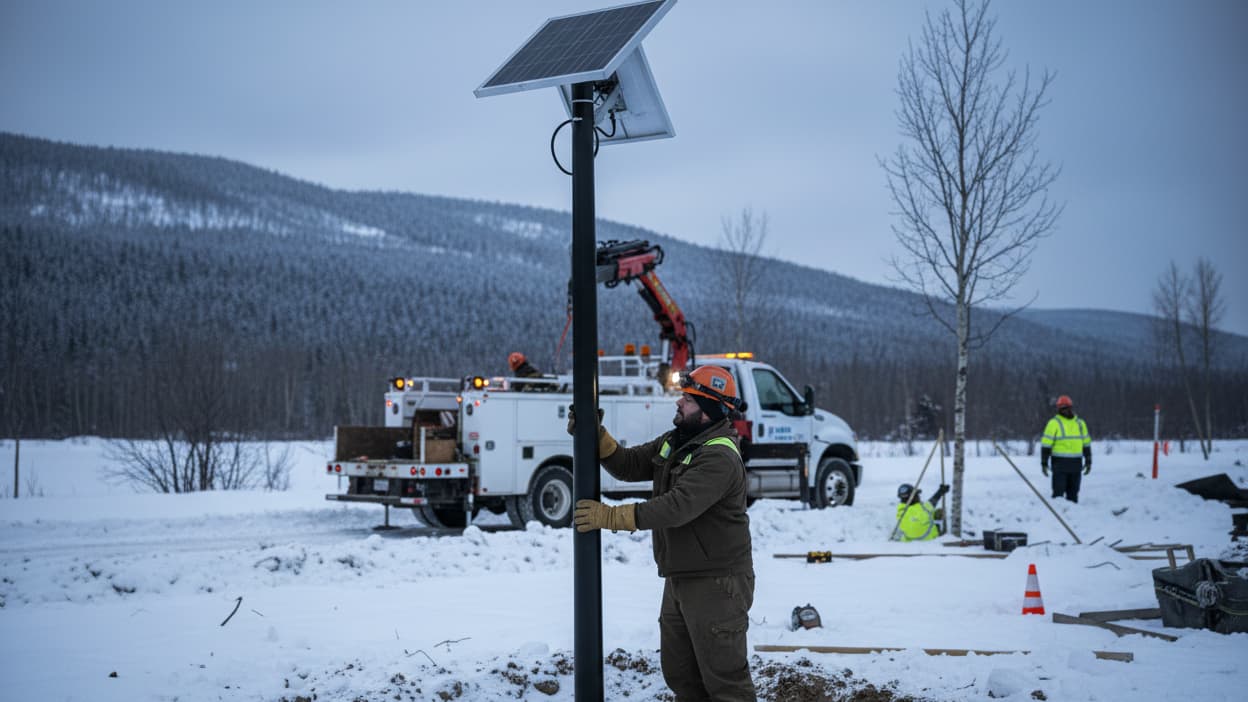
This is huge and often ignored. Standard lithium-ion batteries won't charge below 32°F. LiFePO4 batteries can charge down to 14°F and maintain 80%+ capacity down to -4°F.
If you're in any state that gets cold winters, this isn't a nice-to-have feature. It's the difference between lights that work and lights that don't.
Safety That Matters When You're Not Watching
LiFePO4 batteries are thermally stable. They don't catch fire or explode when damaged, overcharged, or exposed to high temperatures. Standard lithium-ion batteries? They can, and occasionally do.
When you're installing lights on poles 15-20 feet in the air that you're not monitoring 24/7, thermal stability isn't paranoia—it's basic risk management.
Depth of Discharge Without Damage
Lead-acid batteries die quickly if you discharge them below 50%. Standard lithium-ion batteries degrade faster if you regularly discharge below 20%. LiFePO4 batteries can be discharged to 100% (completely empty) without damage.
This means you can actually use the full rated capacity. A 100Ah LiFePO4 battery gives you 100Ah of usable power. A 100Ah lead-acid battery gives you maybe 50Ah if you want it to last.
The Real Cost Comparison (That Nobody Shows You)
Yes, LiFePO4 solar street lights cost more upfront. A unit with a LiFePO4 battery might be $120-$180 vs. $40-$80 for a lead-acid unit. But let's do the actual math:
Budget Solar Street Light (Lead-Acid Battery)
- Initial cost: $60
- Battery replacement every 2 years: $30
- 5 replacements over 10 years: $150
- 10-year total: $210
- Time spent replacing batteries: 5-6 hours
- Reliability: Poor in winter, degraded performance after year 1
LiFePO4 Solar Street Light
- Initial cost: $142 (e.g., TW030)
- Battery replacement: Maybe once at year 7: $60
- 10-year total: $202
- Time spent on maintenance: 1 hour
- Reliability: Excellent year-round, consistent performance
The total cost is basically the same. But with LiFePO4, you get better performance, less hassle, and lights that actually work when you need them.
Or look at it another way: The TW030 2-pack at $289 gives you two professional-grade lights with LiFePO4 batteries for less than you'd spend on four budget lights over the same period.

How to Tell If You're Actually Getting LiFePO4
Here's the problem: "LiFePO4" has become a marketing buzzword. Some manufacturers slap it on the box even when they're using standard lithium-ion or even lead-acid batteries.
Here's how to verify:
Check the Specs for These Numbers
Cycle life: Real LiFePO4 batteries are rated for 2,000+ cycles minimum. If the spec sheet says 500-1,000 cycles, it's not LiFePO4.
Operating temperature: LiFePO4 batteries work down to -4°F to 14°F for charging. If the specs say "not recommended below 32°F," it's not LiFePO4.
Voltage: LiFePO4 cells are 3.2V nominal. A 12V LiFePO4 battery pack has 4 cells. Standard lithium-ion is 3.7V nominal. This is technical but it's in the specs if you look.
Look at the Warranty
Manufacturers who actually use LiFePO4 batteries offer longer warranties because they know the batteries will last. If you're seeing a 1-year warranty on a "LiFePO4" light, be skeptical.
Quality units like the Hykoont BD006 ($179) come with extended warranties because the LiFePO4 battery is actually rated for 5-7 years.
Check the Weight
LiFePO4 batteries are heavier than standard lithium-ion batteries of the same capacity. If the whole light unit feels suspiciously light, you might not be getting what you paid for.

Real-World Performance: What LiFePO4 Actually Gets You
Let me give you some actual data from installations I've tracked:
Winter Performance Test (Minnesota, January)
Lead-acid solar street lights:
- Runtime dropped from 12 hours to 4-6 hours
- 50% stopped working entirely by mid-January
- Required constant attention and troubleshooting
Standard lithium-ion solar street lights:
- Runtime dropped from 12 hours to 7-9 hours
- Stopped charging when temps dropped below 25°F
- Needed to be switched to motion-sensor mode to make it through nights
LiFePO4 solar street lights (like the TW030):
- Runtime dropped from 12 hours to 10-11 hours
- Continued charging even at 15°F
- 100% operational through entire winter
- Motion-sensor mode gave full 12+ hour runtime even in worst conditions
The difference isn't subtle. It's the difference between lights that work and lights that don't.
Summer Heat Test (Arizona, July)
This surprised me, but LiFePO4 also outperforms in extreme heat:
Lead-acid batteries: Significant capacity loss above 95°F, shortened lifespan
Standard lithium-ion: Thermal management issues, some units shut down in direct sun
LiFePO4: Stable performance up to 140°F, no thermal shutdowns
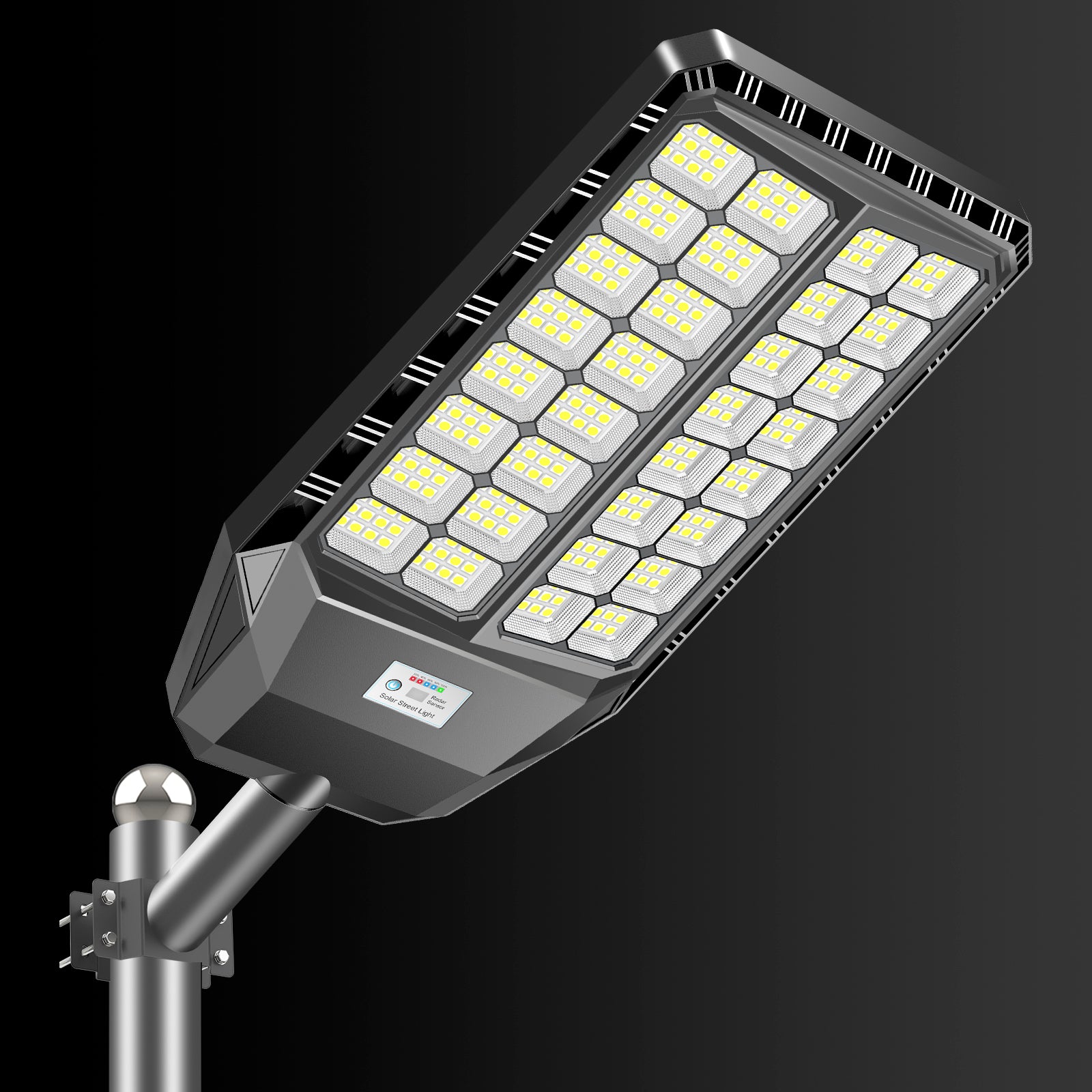
The SZ300 ($145) with its die-cast aluminum housing and LiFePO4 battery handles desert heat without breaking a sweat.

Sizing LiFePO4 Battery Capacity Correctly
One advantage of LiFePO4 is that you can use the full capacity without damage. This changes how you size batteries:
The Old Way (Lead-Acid)
If you need 50Ah of usable capacity, you buy a 100Ah battery and only use 50% of it. This is expensive and wasteful.
The LiFePO4 Way
If you need 50Ah, you buy a 60Ah battery (with 20% buffer for longevity) and use 50Ah. You're getting more usable capacity from a smaller, lighter battery.
Practical Sizing Guide
For typical applications:
Residential driveway/pathway (10,000-20,000 lumens):
30-40Ah LiFePO4 battery
Example: TW001 ($49.99)
Commercial parking lot (25,000-42,000 lumens):
50-70Ah LiFePO4 battery
Example: TW030 ($142)
Municipal street lighting (50,000+ lumens):
80-120Ah LiFePO4 battery
Example: SZ300 ($145)
The key is matching battery capacity to your actual runtime needs plus a buffer for cloudy days.
Maintenance and Longevity
One of the best things about LiFePO4 batteries is how little maintenance they need:
What You Don't Need to Do
- No equalization charging (required for lead-acid)
- No water level checks (required for flooded lead-acid)
- No capacity testing every 6 months
- No special storage procedures if you need to remove them
What You Should Do
- Keep the solar panel clean: Dirty panels mean incomplete charging, which is the only real stress on LiFePO4 batteries
- Check connections annually: Loose connections cause resistance and heat
- Monitor performance: If runtime suddenly drops, investigate (usually it's a panel issue, not battery)
That's it. With LiFePO4, you're looking at maybe 2-3 hours of maintenance per year vs. 10-15 hours with lead-acid batteries.
Common Myths About LiFePO4 Batteries
Myth #1: "They're Too Expensive"
Upfront, yes. Over the life of the product, no. We covered this above, but it bears repeating: when you factor in replacement costs and hassle, LiFePO4 is cost-competitive or cheaper.
Myth #2: "All Lithium Batteries Are Basically the Same"
Absolutely not. LiFePO4 and standard lithium-ion are as different as diesel and gasoline. They're both fuels, but you can't use them interchangeably.
Myth #3: "You Need Special Chargers"
In solar street lights, the charge controller is built in and designed for the battery chemistry. You don't need to do anything special. Quality units like the BM024 ($199 for 2-pack) have smart charge controllers optimized for LiFePO4.

Myth #4: "They Don't Work in Cold Weather"
This is true for standard lithium-ion. It's false for LiFePO4. LiFePO4 batteries are specifically designed for temperature extremes.
Myth #5: "Bigger Is Always Better"
Not necessarily. An oversized battery costs more and adds weight. Size your battery for your actual needs plus a 20-30% buffer. Don't buy a 100Ah battery when 60Ah will do the job.

Installation Considerations for LiFePO4 Systems
LiFePO4 batteries are more forgiving than other chemistries, but you still want to install correctly:
Temperature Considerations
While LiFePO4 handles temperature extremes better than alternatives, battery life is still maximized at moderate temperatures. If possible, install the battery compartment where it gets some shade in summer and isn't in direct wind in winter.
Most quality solar street lights have insulated battery compartments for this reason.
Ventilation
LiFePO4 batteries don't off-gas like lead-acid batteries, so you don't need ventilation for safety. But you do want some airflow to prevent heat buildup in summer.
Mounting Orientation
Unlike lead-acid batteries, LiFePO4 batteries can be mounted in any orientation without damage. This gives you more flexibility in installation.
Initial Charging
LiFePO4 batteries ship partially charged (usually 30-50%). Before first use, let the solar panel fully charge the battery for 2-3 sunny days. This balances the cells and maximizes lifespan.
When LiFePO4 Might Not Be Worth It
I'm a big advocate for LiFePO4, but there are situations where it might be overkill:
Very Short-Term Installations
If you're lighting a construction site for 6 months, the longevity of LiFePO4 doesn't matter. A cheaper battery might make sense.
Extremely Mild Climates
If you're in Southern California or Florida where it never freezes and never gets too hot, standard lithium-ion might be adequate. But even then, the cycle life of LiFePO4 is worth considering.
Ultra-Budget Applications
If your absolute maximum budget is $50 per light and you can't go higher, you're stuck with lead-acid. Just know what you're getting into.
For everyone else, LiFePO4 is worth the investment.
The Future of Solar Street Light Batteries
LiFePO4 is currently the best battery chemistry for solar street lights, but technology keeps improving:
What's Coming
- Higher energy density: Same capacity in smaller, lighter packages
- Faster charging: Full charge in 2-3 hours instead of 4-5
- Longer cycle life: 5,000-7,000 cycles instead of 3,000
- Better cold weather performance: Charging down to 0°F or below
But these improvements are incremental. Current LiFePO4 technology is already excellent for solar street lights.

Choosing the Right LiFePO4 Solar Street Light
Here's my practical guide based on actual use cases:
For Residential Applications
You want reliability without breaking the bank. The BM024C (26,000 lumens, $79) offers LiFePO4 battery technology at an entry-level price point.
For larger properties or brighter needs, the TW030 ($142) is the sweet spot—commercial-grade performance at a reasonable price.
For Commercial Properties
You need proven reliability and good warranty coverage. The TW030 2-pack ($289) gives you two professional-grade lights with excellent LiFePO4 batteries.
For larger installations, the BM024 2-pack ($199) offers great value with proven cold-weather performance.
For Municipal or Industrial Use
You need maximum output and longest lifespan. The SZ300 (60,000 lumens, $145) with die-cast aluminum construction and premium LiFePO4 battery is built for 10+ years of service.
For Cold Climate Installations
LiFePO4 is non-negotiable here. The BD006 ($179) is specifically designed for cold climates with oversized battery capacity and rated for 3-5 rainy days of operation.
The Bottom Line on LiFePO4
Here's what I wish someone had told me when I started working with solar street lights:
Battery chemistry matters more than almost anything else. You can have the best solar panel, the most efficient LEDs, and perfect installation, but if you cheap out on the battery, the whole system fails.
LiFePO4 batteries cost more upfront, but they:
- Last 3-5 times longer than alternatives
- Work in temperature extremes
- Require almost zero maintenance
- Provide consistent performance year after year
- Are safer and more environmentally friendly
The total cost of ownership is the same or lower than cheaper alternatives, and the performance is dramatically better.
If you're buying solar street lights and the manufacturer can't or won't tell you the exact battery chemistry, walk away. If they say "lithium battery" without specifying LiFePO4, assume it's not.
And if you're replacing existing solar street lights that have failed, check the battery chemistry. I'd bet money it's not LiFePO4.
Ready to invest in solar street lights that actually last? Start with a quality LiFePO4 unit like the TW030 at $142. Test it for a season, see how it performs, and then you'll understand why battery chemistry matters.
Browse LiFePO4 solar street lights →
Frequently Asked Questions
What does LiFePO4 stand for and why does it matter?
LiFePO4 stands for Lithium Iron Phosphate, a specific type of lithium battery chemistry. It matters because LiFePO4 batteries last 2,000-5,000 charge cycles (7-10 years) compared to 500-1,000 cycles (2-3 years) for standard lithium-ion or lead-acid batteries. They also work in temperature extremes, are thermally stable (won't catch fire), and can be fully discharged without damage. For solar street lights, this means the difference between a system that works reliably for a decade vs. one that fails after 2-3 years.
Are LiFePO4 solar street lights worth the extra cost?
Yes, when you calculate total cost of ownership. A LiFePO4 unit might cost $120-$180 vs. $40-$80 for a lead-acid unit, but over 10 years the total cost is similar or lower because you're not replacing batteries every 2-3 years. More importantly, you get consistent performance, less maintenance, and lights that actually work in winter. The TW030 at $142 will outlast and outperform three budget lights over the same period.
How long do LiFePO4 batteries last in solar street lights?
Quality LiFePO4 batteries in solar street lights last 5-7 years with proper use, and can reach 10 years in ideal conditions. They're rated for 2,000-5,000 charge cycles, and since they charge once per day, that's 5-13 years of theoretical life. Real-world factors like temperature extremes and depth of discharge affect this, but 7 years is a reasonable expectation. Compare this to lead-acid batteries (2-3 years) or standard lithium-ion (3-4 years).
Can LiFePO4 batteries charge in freezing temperatures?
Yes, LiFePO4 batteries can charge down to about 14°F (-10°C), unlike standard lithium-ion batteries which won't charge below 32°F (0°C). They also maintain 80%+ capacity down to -4°F (-20°C). This makes them essential for cold climate installations. Models like the TW030 and BD006 use LiFePO4 specifically for reliable winter operation.
How can I tell if a solar street light really has a LiFePO4 battery?
Check the specifications for these indicators: cycle life should be 2,000+ cycles (not 500-1,000), operating temperature should include charging below 32°F, and nominal voltage should be 3.2V per cell (12.8V for a 12V battery pack). Also look at warranty length—manufacturers using real LiFePO4 offer longer warranties because they know the batteries last. If specs are vague or missing, or if the warranty is only 1 year, be skeptical. Weight is another clue—LiFePO4 batteries are heavier than standard lithium-ion of the same capacity.
Do LiFePO4 batteries require special maintenance?
No, LiFePO4 batteries are essentially maintenance-free. Unlike lead-acid batteries, they don't require equalization charging, water level checks, or regular capacity testing. The only maintenance needed is keeping the solar panel clean (so the battery charges fully) and checking electrical connections annually. This is one of the major advantages—you're looking at 2-3 hours of maintenance per year vs. 10-15 hours with lead-acid batteries.
Are LiFePO4 batteries safe in outdoor installations?
Yes, LiFePO4 batteries are one of the safest lithium battery chemistries. They're thermally stable and won't catch fire or explode when damaged, overcharged, or exposed to high temperatures—unlike standard lithium-ion batteries which can experience thermal runaway. This makes them ideal for outdoor installations on poles 15-20 feet high where you're not monitoring them constantly. They also don't off-gas like lead-acid batteries, so they don't require ventilation for safety.
What size LiFePO4 battery do I need for my solar street light?
It depends on your light output and runtime needs. For residential applications (10,000-20,000 lumens), a 30-40Ah LiFePO4 battery works well. For commercial parking lots (25,000-42,000 lumens), you need 50-70Ah. For municipal street lighting (50,000+ lumens), look for 80-120Ah. The advantage of LiFePO4 is you can use the full rated capacity, unlike lead-acid where you should only use 50%. Add a 20-30% buffer for cloudy days and you're set.
Can I replace a lead-acid battery with a LiFePO4 battery in my existing solar street light?
Maybe, but it's complicated. LiFePO4 batteries require different charging profiles than lead-acid batteries. If your solar street light has a programmable charge controller, you might be able to reconfigure it for LiFePO4. But most integrated solar street lights have fixed charge controllers designed for specific battery chemistry. It's usually better to buy a complete unit designed for LiFePO4 like the TW030 rather than trying to retrofit.
Do LiFePO4 solar street lights work in hot climates?
Yes, LiFePO4 batteries actually perform better in heat than lead-acid or standard lithium-ion batteries. They maintain stable performance up to 140°F (60°C) without thermal management issues. Lead-acid batteries lose significant capacity above 95°F, and standard lithium-ion batteries can have thermal shutdowns in extreme heat. The SZ300 with its die-cast aluminum housing and LiFePO4 battery is proven in desert climates.
More questions about LiFePO4 technology? Contact our team—we can help you choose the right battery capacity and configuration for your specific application.

Leave a comment
This site is protected by hCaptcha and the hCaptcha Privacy Policy and Terms of Service apply.