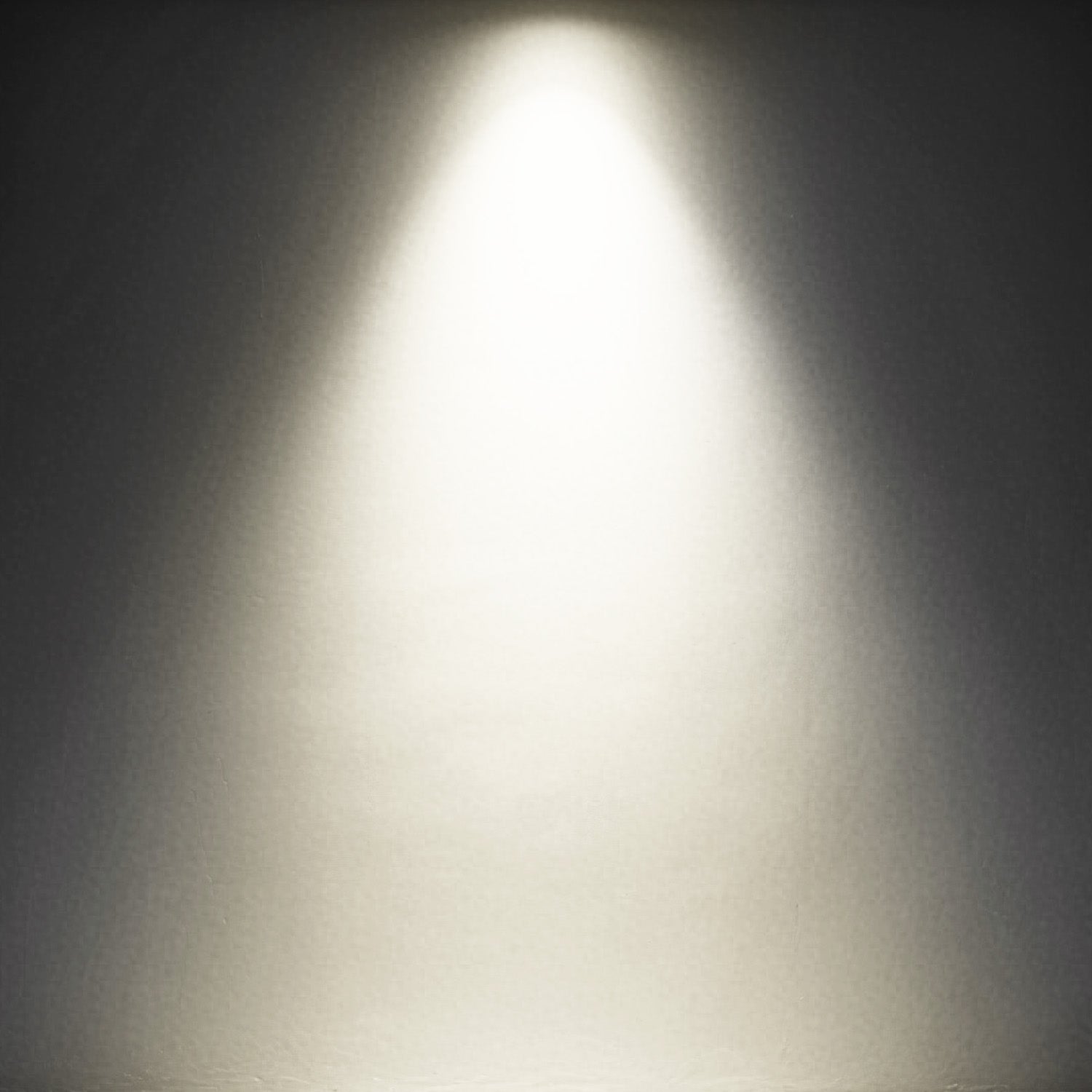
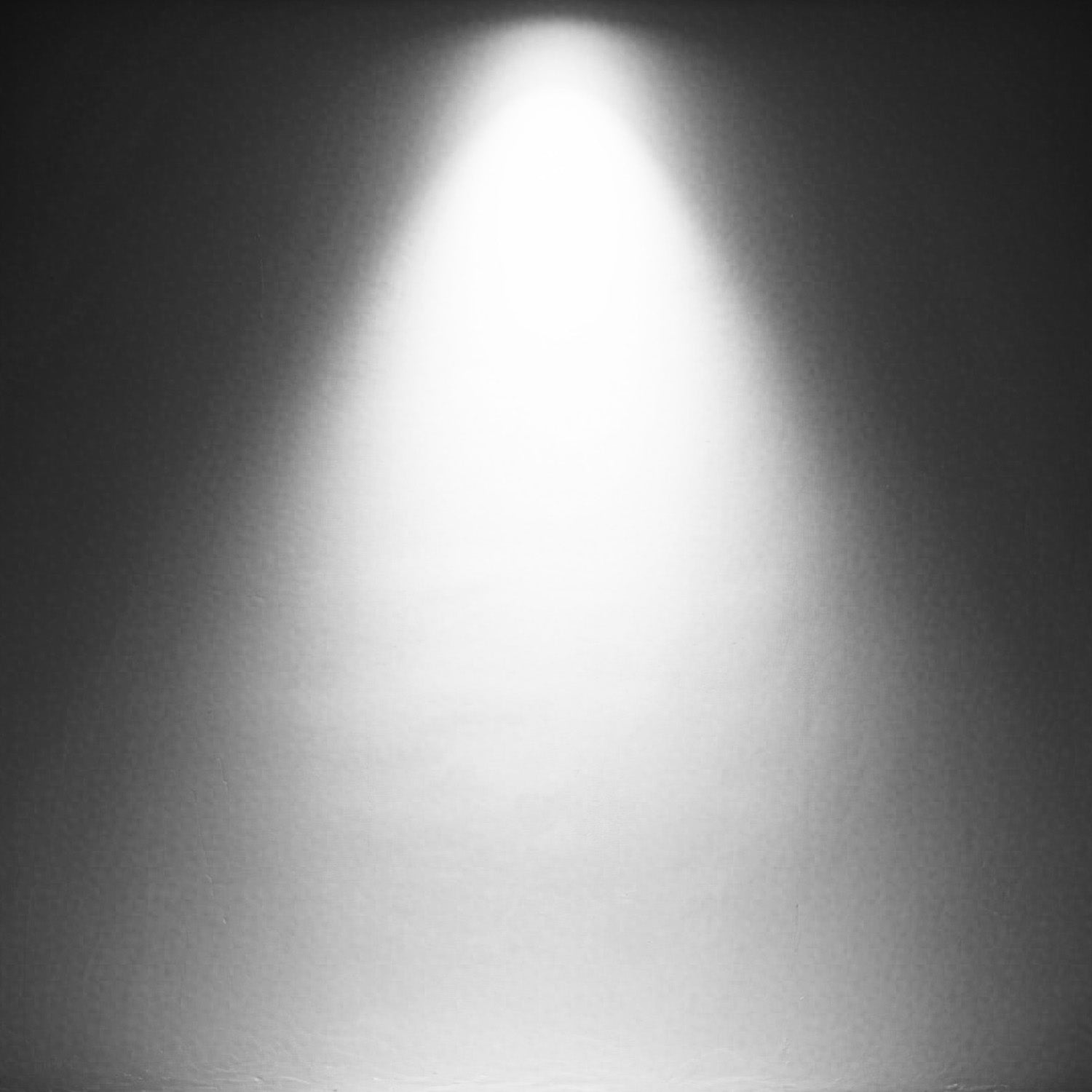
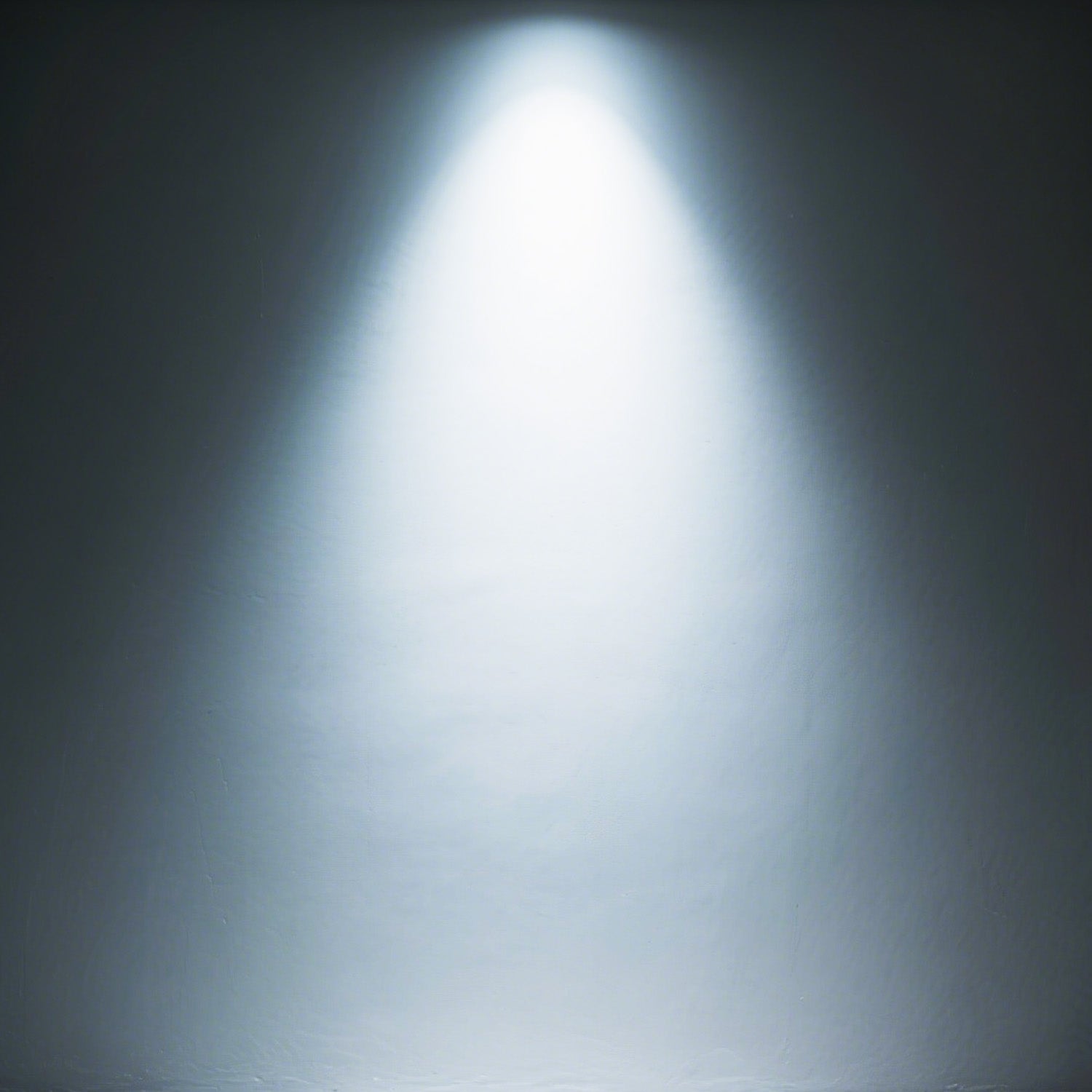

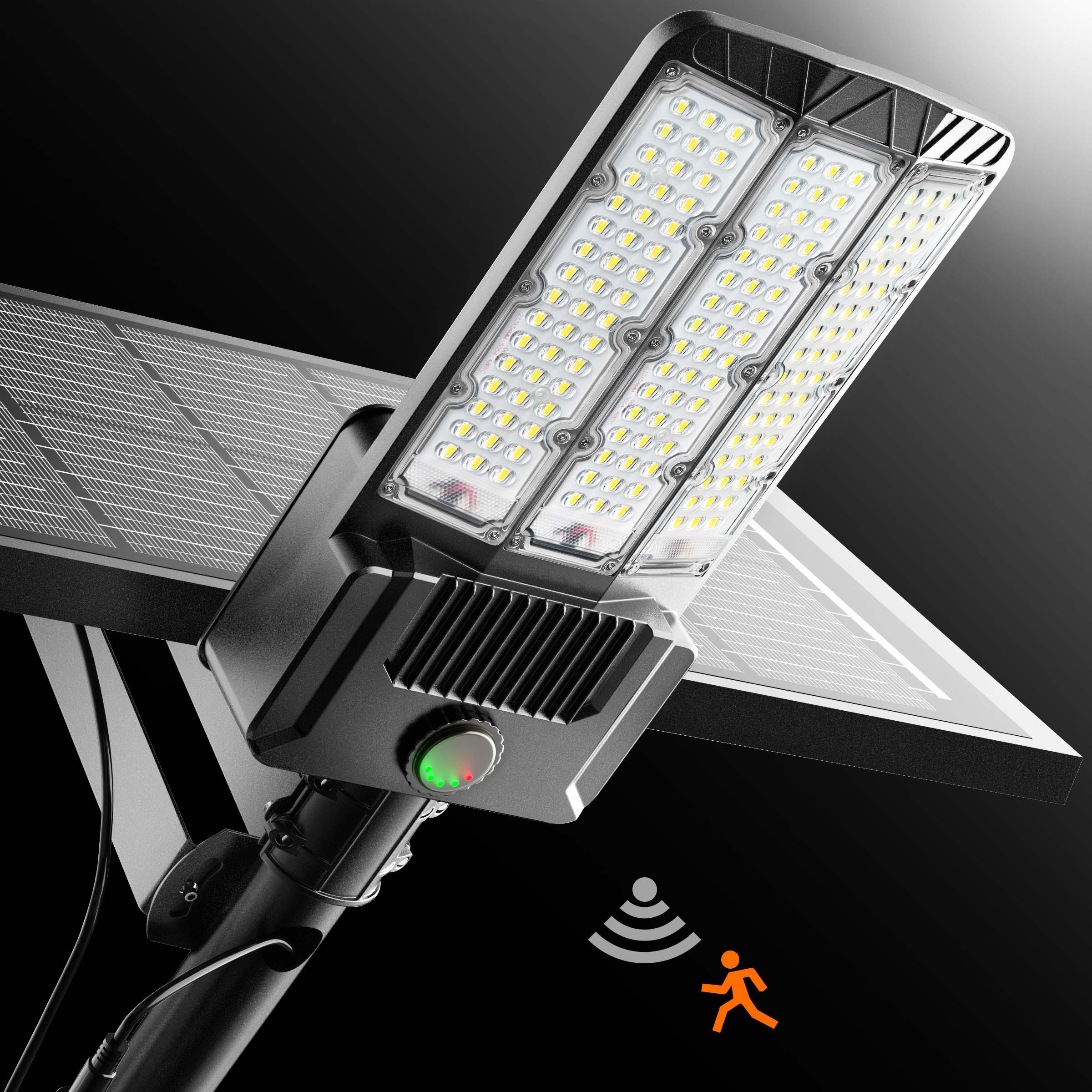


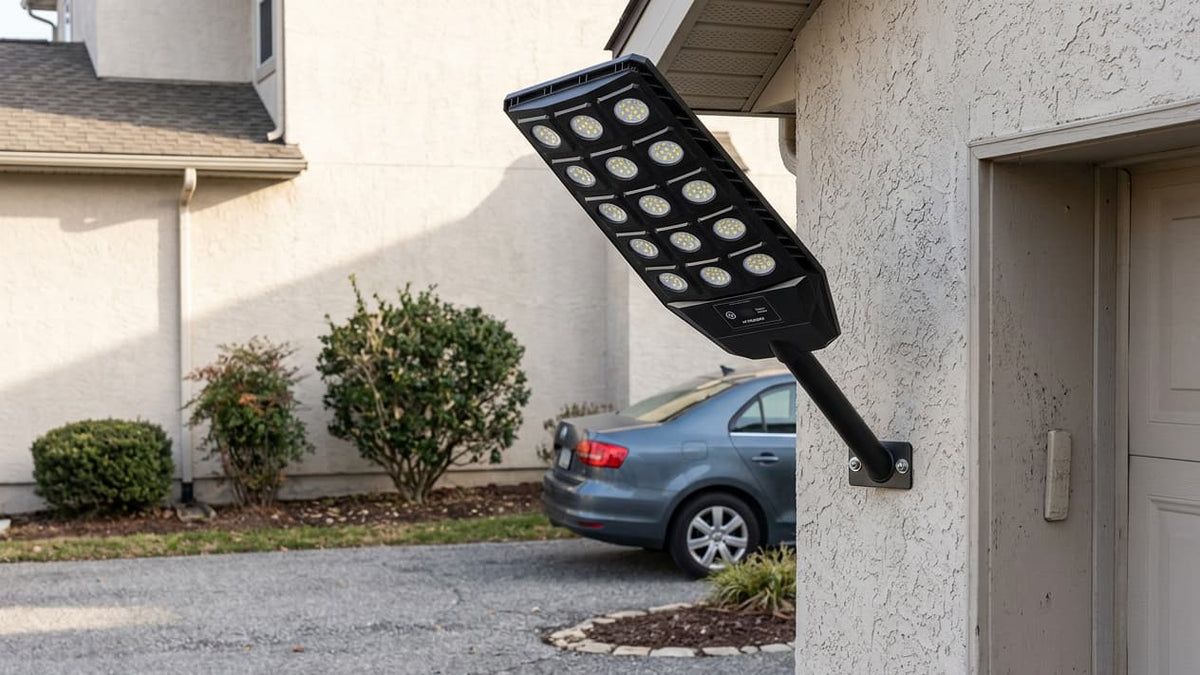
You pull into the driveway after dark. The solar light above the entrance looks bright, but the place where you actually need to see, the gate latch, the edge of the pavement, or the path beside your parked car, still feels poorly lit. That mismatch is easy to overlook when shopping. A fixture can look impressive from across the yard without putting enough useful light on the task in front of you.
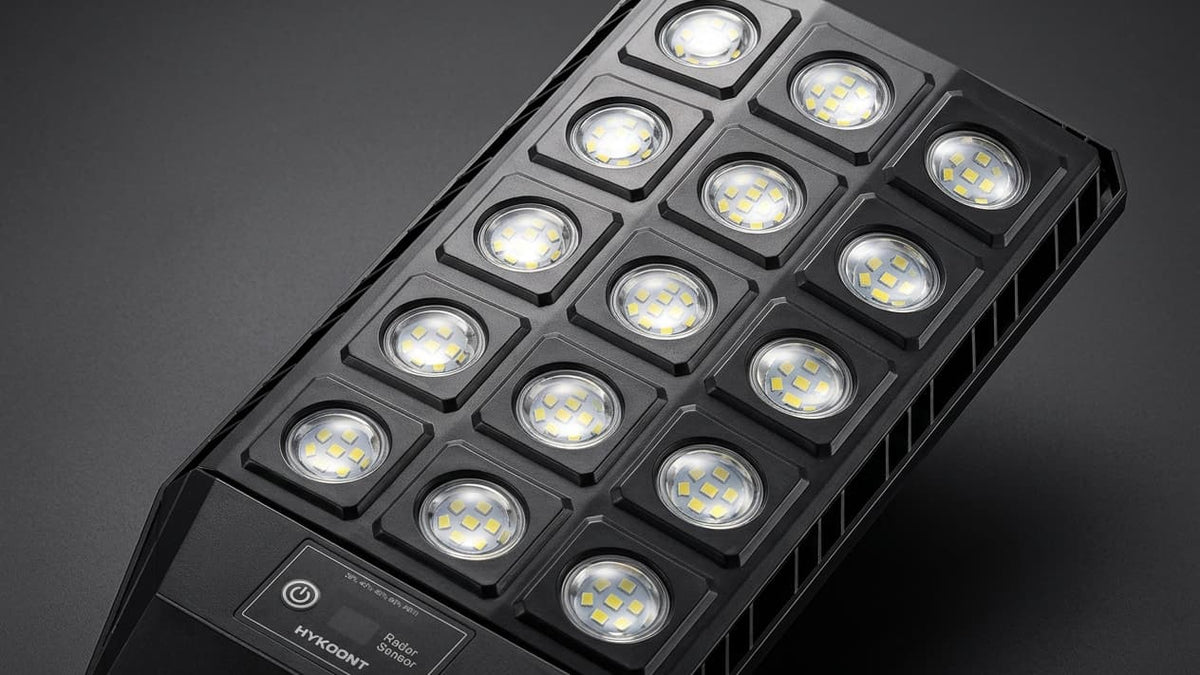
That is the problem the HYKOONT HY015 is designed to address. Instead of relying only on a broad illuminated face, it combines 15 large optical lenses with deep reflector cups. HYKOONT calls this a dual-focus optics system: two optical elements working together to shape light toward a target area.
For homeowners comparing solar street lights for driveway lighting, that distinction matters. You are not buying a glowing rectangle. You are choosing a tool to help you move through a real outdoor space.
The title’s comparison needs one qualification. HY015’s design is intended to improve targeted illumination compared with a basic flat-cover light that spreads light without comparable beam control. It is not proof that HY015 outperforms every flat-looking fixture. No side-by-side photometric test, verified beam angle, or measured throw distance is supplied here. The practical advantage is the optical approach, and whether it suits your particular driveway, gate, or yard.
Why a bright-looking solar light can leave the wrong places dark
Picture a typical suburban driveway. There is a garage door, a strip of planting along one side, a walkway branching toward the house, and perhaps a fence or gate at the road. Those surfaces do not all need equal attention. The walking route and changes in level matter more than a brightly lit patch of siding.
A basic wide-spreading light may send some output toward useful ground, some toward the wall, and some into a viewer’s line of sight. From the street it can look powerful. Standing beside the car, however, you may notice that the light source itself is much easier to see than the objects below it.
This is why choosing solar lighting by appearance alone is unreliable. A photograph of an illuminated fixture does not tell you how evenly the driveway is lit. It also does not tell you whether the darkest section remains at the gate, where you need to find a lock or guide a delivery.
The better starting point is a simple question: where should the light land? Once you can answer that, optical design becomes more useful than counting visible LED chips or choosing the largest-looking housing. HY015 is particularly interesting when the answer is a defined route, entrance, or working area rather than an entire property.

What dual-focus optics means on the HY015
The HY015 listing describes 15 large optical focusing lenses paired with deep reflector cups. These are not two brightness settings and they are not a mechanical zoom function. Dual-focus refers to the combination of optical components, not a user-adjustable switch between two focal distances.
In general lighting terms, a lens redirects transmitted light, while a reflector redirects light through reflection. The shape and arrangement of those components influence where the output goes. Used together, they give a designer more control over distribution than a simple cover with little directional control.
HYKOONT describes the HY015 system as concentrating the beam for greater center-point brightness and lighting distance. That makes the product a logical candidate for targeted outdoor lighting. It does not give us a numerical beam spread, a cutoff classification, or a guaranteed distance at which a particular object will be visible.
The distinction is important because useful buying advice should stay connected to what the product actually documents. We can explain why lenses and reflector cups matter. We should not invent a percentage improvement, claim twice the reach, or promise a uniform rectangle of light without supporting measurements.
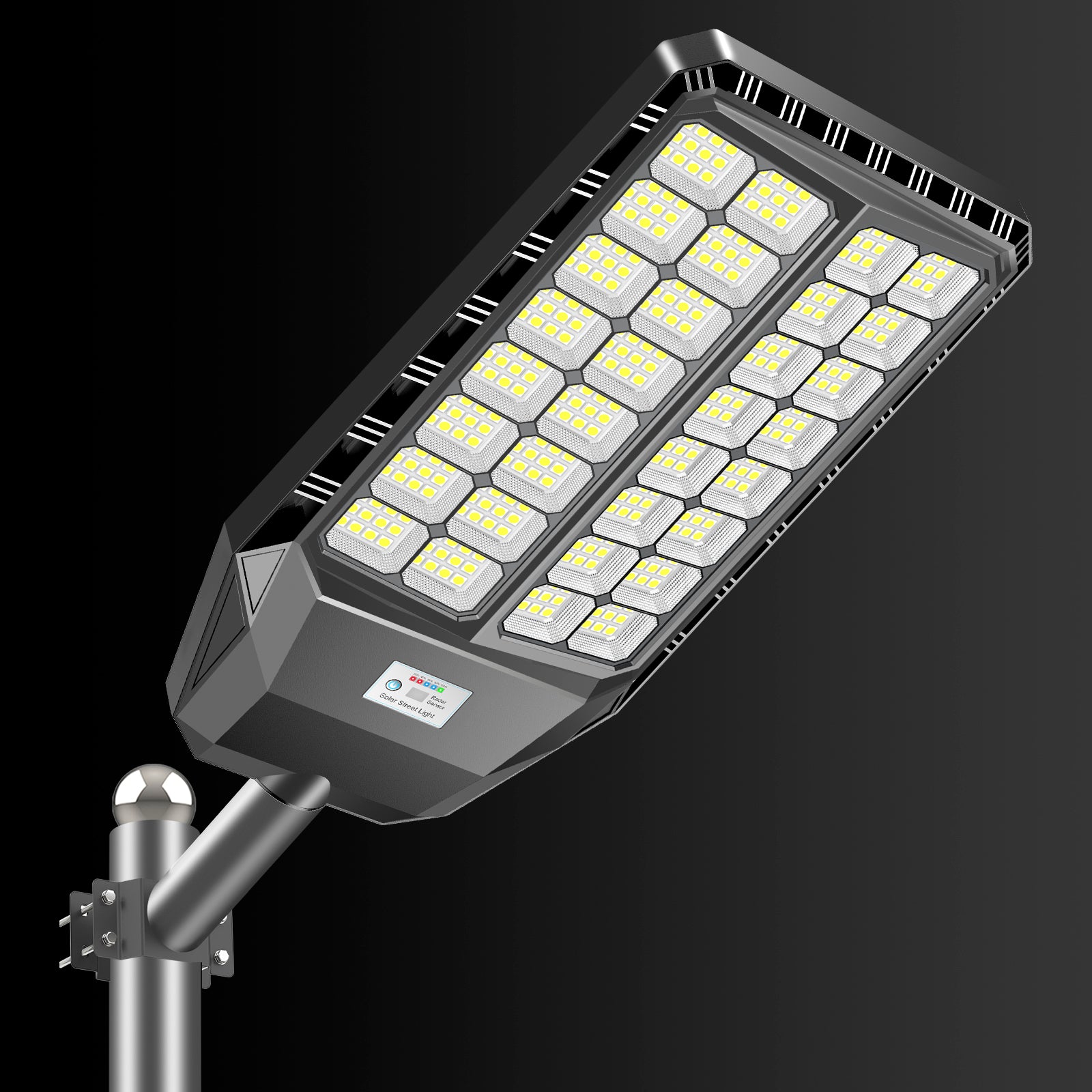
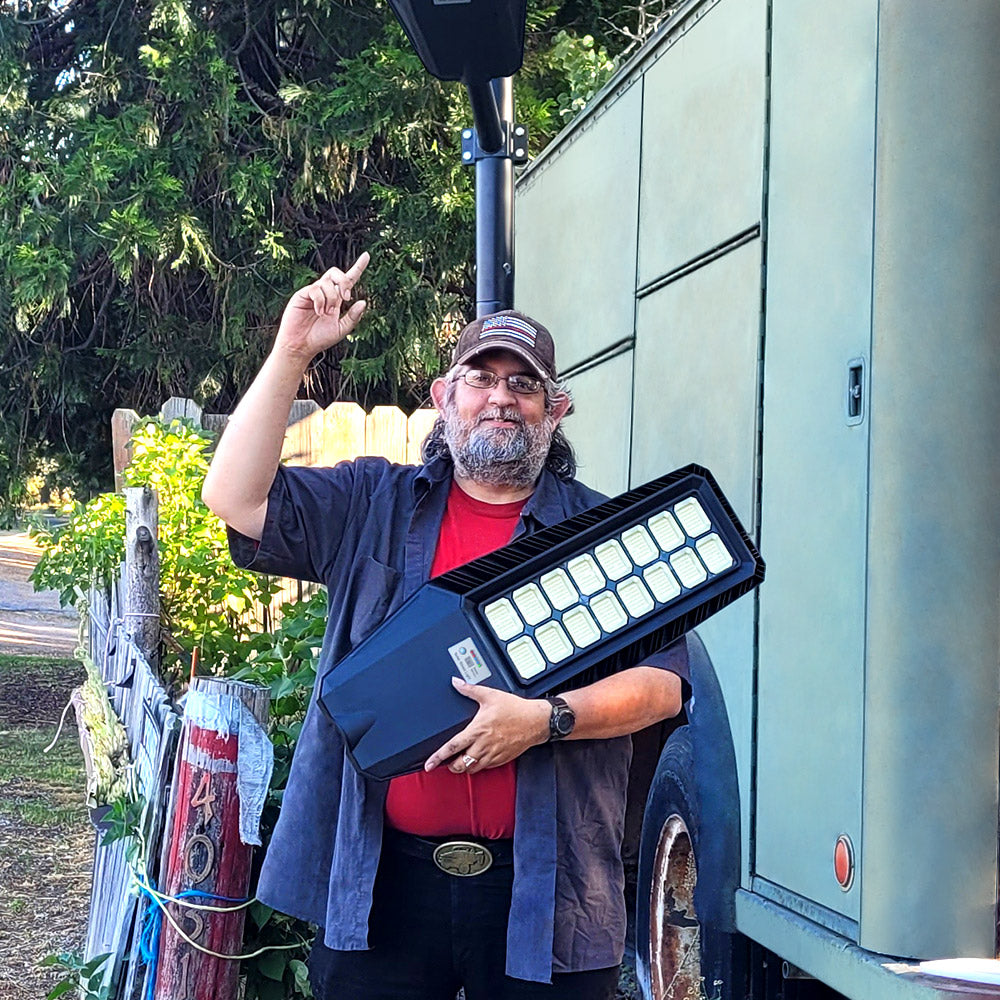
The real product photo shows the recognizable arrangement: fifteen circular lens positions across the face of the fixture. That gives HY015 a different visual character from a light with rows of rectangular LED sections. The meaningful point, though, is what those optics are intended to do after sunset, not simply how distinctive they look during the day.

Lumens, beam intensity, and light on the ground are different things
Lumens describe total light output. They do not, by themselves, describe the shape of a beam or how much light reaches a driveway surface. Two fixtures with similar lumen ratings can create noticeably different results if their optics send that output in different directions.
Beam intensity describes how strongly light is directed in a particular direction. Illuminance describes the light arriving at a surface and is commonly expressed in lux or foot-candles. For a homeowner, that last idea is especially practical: can you distinguish the edge of a step, see the latch, and find your route around the vehicle?
The HY015 listing states 15,000 lumens and coverage across 2,000 square feet. Treat those as listed product specifications, not a site-specific lighting plan. The usable footprint depends on mounting position, aim, operating mode, obstructions, surface colors, and the level of illumination your task requires.
A stated coverage area does not mean every point inside that area receives the same illumination. Nor does it establish that the farthest corner is suitable for detailed work. A driveway used for walking and parking has different needs from a repair area where you need to identify small tools or read labels.
This is the useful way to compare optics: look beyond the largest lumen number and ask how the available output will serve the task. Concentrating light can help a defined target, but concentrating too narrowly can leave adjacent routes underserved. Better lighting is the right distribution, not simply the tightest beam.

Where HY015’s focused approach makes the most sense
A driveway entrance with a clear destination
A driveway entrance often has one obvious visual task. You need to identify the opening, see the boundary, and approach without guessing where paving ends and planting begins. If the light is placed and aimed appropriately, a targeted optical design can help direct attention to that entry rather than toward a broad patch of unrelated background.
Consider the direction from which both drivers and pedestrians approach. A fixture that seems well aimed from the garage may shine toward someone arriving from the street. Evaluate the entrance from both directions, and avoid assuming that a higher mounting position automatically solves every visibility problem.
A gate where hands need useful light
At a gate, the useful target may be much smaller than the overall yard. A latch, keypad, padlock, or change in ground level deserves attention. This is a good example of why a defined beam can matter more than a wide field that looks impressive from a distance.
Do not aim only at the middle of the gate panel. Think about where someone stands while opening it and where the gate moves. A beam that makes the hardware visible while leaving the standing area dark has solved only half the problem.
A side route between the driveway and backyard
A narrow passage beside a house is another setting where uncontrolled spread may be unhelpful. Light that lands on neighboring windows or high on a fence adds little to your walk. A more deliberate distribution can be a better match for the route, provided the installation also receives enough sunlight for charging.
Long or turning paths may need more than one light. One bright fixture cannot reliably illuminate around a corner, through a parked vehicle, or past a solid fence. Use HY015 as part of a layout rather than expecting optics to overcome physical obstructions.
Explore HY015 for focused driveway and gate lighting, currently $85. The listing is marked pre-order and currently states shipping in one month; confirm the latest timing before ordering for a scheduled project.

Flat solar lights are not all the same
It is tempting to divide the category into focused lights and flat lights. Real products are more varied. A fixture can have a relatively flat exterior and still use shaped lenses, reflectors, or engineered optical surfaces. The face alone does not reveal the whole distribution.
For this comparison, a basic flat-cover light means a fixture with limited directional control that spreads output broadly. That design can be perfectly reasonable when you want general illumination close to the mounting point. A small patio, nearby storage area, or broad wall-adjacent zone may benefit from spread rather than concentration.
HY015’s argument is strongest when a specific target needs attention. If light is being spent on surfaces you do not use, directing more of it toward the task can be more valuable than simply increasing total output. This is a design rationale, not a universal ranking of every competing fixture.
There is also a trade-off. More concentration can mean a smaller useful footprint or stronger contrast between the main beam and its surroundings. If your property needs soft, even background light across several directions, a targeted fixture may need support from other lights.
The right question is not whether a product looks flat. It is whether its distribution matches the space. Ask for beam information when it is available, look at the optical design, and avoid comparing two unrelated marketing photos as though they were controlled performance tests.
Glare control starts with placement, not a promise
The HY015 description emphasizes reducing blinding glare through its optical arrangement. That is a useful design objective, but no outdoor light should be treated as glare-free in every installation. A concentrated beam can still be uncomfortable if it points directly toward someone’s eyes.
Glare is especially relevant at driveways because viewing angles change. A person on foot, someone sitting in a vehicle, and a neighbor looking through a window experience the same fixture differently. Your best viewing position is not necessarily theirs.
Begin by directing illumination onto the ground or task area rather than horizontally across the property. Keep the intended travel route visible without putting the brightest part of the beam directly in the approach direction. Follow the product’s mounting instructions and adjust only within the supported installation range.
Next, check nearby windows and reflective surfaces. A pale garage door, glossy vehicle, or wet paved area can change how the scene feels. The goal is not to eliminate every reflection; it is to avoid an installation where the source or its reflections dominate the view.
Finally, walk the area after dark. Stand at the gate, near the road, beside the car, and at the neighboring boundary where you have permission to assess it. If the fixture is uncomfortable to look toward, review aim and brightness before assuming that discomfort is evidence of good coverage.

The HY015 specifications that matter to a homeowner
The current product listing gives HY015 a 255-piece array of 2535 LEDs, 15 large focusing lenses, and deep reflector cups. Its stated color temperature is 6500K–7000K, a cool daylight-white appearance rather than a warm decorative glow.
That color temperature can suit an outdoor area where you want a crisp visual impression. It may feel less appropriate beside a seating area designed around warm porch lights. Color temperature is a preference and application choice; a higher Kelvin value does not automatically mean more useful illumination.
The listed solar charging hardware is a 5V, 10W monocrystalline panel measuring 171 by 322 millimeters. The battery is listed as 3.2V, 9,200mAh, also expressed as 9.2Ah. These specifications describe the charging and storage components, not a guarantee of full-brightness runtime under every weather condition.
The light body is listed at 400 by 220 millimeters, approximately 15.7 by 8.6 inches, with ABS and PC housing materials. The description calls the build weather-resistant. An exact HY015 ingress-protection rating is not supplied in the retrieved specification, so do not assume it shares the rating of a different HYKOONT model.
Controls include automatic light sensing, radar motion detection, and a wireless remote. Together, these features support more flexible operation than a simple always-on switch. Actual performance still depends on the selected mode, the charge available, and the conditions at the installation site.
Why motion response matters as much as beam shape
Optics decide where light goes. Controls help decide when and how much light is used. Both matter for a solar fixture, because the energy collected during daylight must support the operating period after dark.
The HY015 description says the light automatically activates at dusk and switches off at dawn. It also describes radar detection increasing output to full brightness when motion is detected, then returning to an energy-saving dim mode when the path is clear.
This makes practical sense for an intermittently used driveway or garden gate. You may want a low background level most of the evening and more light when someone approaches. That operating pattern is different from requiring maximum brightness continuously through a long winter night.
Do not confuse dusk-to-dawn automation with a promise of constant full-output lighting from sunset to sunrise. Automatic activation describes a control function. Runtime depends on stored energy, operating mode, weather, and other factors. The current information does not provide a verified HY015 runtime curve for different brightness settings.
After installation, test the motion response along the actual walking route. Notice when brightness changes as you approach and whether objects block the useful illuminated area. Consult the supplied instructions for remote functions instead of assuming that every button or timing option matches another solar light you already own.

Sunlight is part of the lighting plan
A focused beam cannot compensate for a consistently undercharged battery. Before choosing a mounting point, look at the sunlight reaching the charging surface, not just the convenience of the wall or the view of the driveway.
Check the site at several points during the day. Rooflines, trees, fences, and neighboring buildings can create shade that is not obvious during a quick afternoon inspection. Seasonal changes matter as well. A location that receives generous summer sun may face shorter days and longer shadows in winter.
Keep the charging surface clean and clear of leaves, dirt, or accumulated snow where it is safe and appropriate to do so. Follow the product instructions for cleaning and access. Do not climb onto improvised supports or modify the fixture simply to reach a supposedly better sun angle.
Use the actual installation instructions and supplied hardware to determine the permitted mounting arrangement. The product photo and listing should not be treated as permission to relocate components, extend cables, or attach the light to unsupported structures.
If the only useful lighting location is deeply shaded, reconsider the system rather than hoping the lumen rating will make up for it. A different location, a different fixture arrangement, or a wired solution may be the more dependable choice for that particular task.
How to plan a driveway installation before you buy
Start with a short nighttime walk. Note where you naturally slow down because you cannot see clearly. It may be a step near the side door, a low border at the gate, or the area between two parked cars. Those observations tell you more than the overall square footage alone.
Then identify a secure mounting surface and check the manufacturer’s installation requirements. Do not choose a height or angle simply because it looks tidy in a photograph. The mounting structure must be suitable, and the fixture must remain within its intended installation method.
Think about obstructions in their normal positions. A driveway that appears open at midday may be filled with vehicles every evening. A beam that crosses the driveway from one side can be blocked by a tall truck, leaving the path behind it in shadow.
Consider the whole route rather than one bright spot. If someone walks from the road through a gate and then turns toward a side entrance, each transition matters. You may need overlapping lighting zones rather than a single source aimed at the first section.
Finally, decide what success means. For one household it is seeing a gate latch and walking comfortably to the door. For another it is maintaining visibility over a larger parking area. Matching the product to that goal is more useful than choosing a model because its name includes street light.
Three current HYKOONT options, and how to choose between them
The following products are active in the current catalog. Prices were checked on October 16, 2026, and may change. These are shopping alternatives, not a controlled head-to-head test, and their listed lumen values do not establish identical measurement conditions.
HY015: the optical-design choice for a defined target
HYKOONT HY015 15000LM Large Lens Solar Street Light is currently $85. Its distinguishing feature in this article is the 15-lens array combined with deep reflector cups. The listed controls include light sensing, radar motion detection, and remote operation.
Choose it for consideration when your priority is a defined driveway entrance, gate, or yard route and you want to explore a more deliberately concentrated optical approach. Check sunlight, mounting requirements, and the current pre-order timeline before committing to a project date.
The product title presently states pre-order with shipping in one month. That timing matters if you are preparing for a move, an event, or a contractor visit. An active catalog listing should not be mistaken for a guarantee of immediate dispatch.
TW016: a nearby price-point alternative

HYKOONT TW016 Solar Street Lights is currently $79.99. The listing states 19,200 lumens, a 6V 20Ah battery, motion-responsive controls, and an IP66 rating. Its current product handle also identifies lens optical design, which is another reason not to label every flatter-looking product as optically uncontrolled.
TW016 is worth comparing if you want another solar street light near HY015’s price point. Compare the complete specifications, mounting needs, and control behavior rather than declaring a winner from the lumen figures alone. The two products have different documented component arrangements and should be evaluated as complete systems.
TW040: a higher-budget option for a different project scale

HYKOONT TW040 Solar Street Light currently has a $152–$306 product price range across available variants. Its listing states 56,000 lumens, a 6V 48Ah battery, light, time, remote, and radar controls, plus an IP66 rating. Verify the exact variant and what is included before comparing its purchase price with a single HY015.
Consider TW040 when planning a larger-area project and comparing systems beyond the HY015 price bracket. A higher listed output does not remove the need for layout planning, suitable sunlight, or checking where the light will land. For demanding site requirements, ask for photometric information rather than relying on marketing coverage language.
Review HY015’s current specifications and pre-order details if a defined driveway or gate target is your priority. Compare TW016 and TW040 when your budget, intended footprint, or installation needs point elsewhere.
Common mistakes that hide the benefit of better optics
The first mistake is aiming too far outward. It can feel logical to point the fixture toward the darkest distant area, but that may push the bright beam toward approaching people while leaving the ground immediately below poorly served. Start with the task, then adjust within the approved mounting arrangement.
The second is assuming one light can solve an irregular layout. Corners, fences, parked vehicles, and planting create separate visual zones. A carefully placed second source may improve the route more than trying to stretch the first beam past an obstruction.
The third is overlooking ambient balance. A very bright patch beside a dark route can make the transition feel abrupt. Aim for useful continuity along the path, not a dramatic spotlight effect designed mainly to impress from a window.
The fourth is judging solar performance after a single night without considering charging. A cloudy day, a shaded panel, or an unsuitable setting can affect the result. Evaluate the installation across normal conditions and consult the troubleshooting instructions before deciding that the optics are the problem.
The fifth is transferring specifications between models. HY015, TW016, and TW040 have different listings. Do not assume one model’s ingress rating, warranty, battery, detection range, or runtime applies to the others. Compare the exact product you intend to purchase.
How to evaluate the result after installation
A useful check begins with the fixture fully set up according to its instructions and operating in the mode you intend to use. Recreate normal conditions: park the car where it usually sits, close the gate, and walk the actual route with your hands occupied as they might be when carrying groceries.
Look for practical improvements. Can you identify the pavement edge without staring at the light? Can you reach the latch without standing in your own shadow? Does the motion-responsive change happen at a useful point along the approach?
Check from several viewing positions rather than only beneath the fixture. If the beam causes discomfort at the entrance or reaches a nearby bedroom window, adjust the installation within the manufacturer’s guidance. Good lighting should make the area easier to use, not merely brighter to photograph.
If you want to compare two lights, keep the conditions as consistent as possible. Different camera exposure, mounting height, operating mode, or charge level can make photos misleading. A proper performance comparison requires more than placing two unrelated promotional images beside each other.
Frequently asked questions
What is HY015’s dual-focus optics system?
It is the combination of 15 large optical focusing lenses and deep reflector cups described in HY015’s product listing. The system is intended to concentrate and direct output toward useful target areas. It does not mean that the user can mechanically zoom the light or choose between two specified beam angles.
Is HY015 better than every flat solar light?
No universal claim is supported here. HY015’s focused design is a relevant advantage to consider against a basic broad-spreading flat-cover light for a defined target. Some flat-looking fixtures also use engineered optics, and a wider distribution may be preferable for a different application.
How bright is HY015?
The current listing states 15,000 lumens and coverage across 2,000 square feet. Those are product specifications rather than a guarantee of uniform illuminance on your property. Mounting, aim, charge level, operating mode, and site conditions affect the practical result.
Will HY015 run at full brightness all night?
The listing describes automatic dusk-to-dawn activation and motion-responsive operation that returns to a dim mode after the path is clear. That is not the same as a verified guarantee of continuous full output all night. Review the supplied instructions and consider sunlight and mode selection when planning operation.
Is the HY015 light warm white?
No. Its listed color temperature is 6500K–7000K, which is a cool daylight-white appearance. If your goal is a warm, relaxed patio atmosphere, consider whether that color matches the surrounding lighting before choosing it for the space.
Can focused optics eliminate glare?
Optical control can help direct output, but glare also depends on aim, brightness, mounting position, viewing direction, and reflections. HY015 should not be treated as glare-free in every installation. Check the approach route and neighboring windows after dark and follow the mounting guidance.
How much does HY015 cost, and is it ready to ship?
The checked price is $85 as of October 16, 2026. The product title currently marks it as a pre-order and states shipping in one month. Confirm the latest price and expected shipping timing on the product page before purchasing.
Which other HYKOONT solar lights should I compare?
TW016 is a nearby price-point option at the checked price of $79.99. TW040 sits in a higher bracket with a checked product price range of $152–$306. Compare exact variants, controls, battery specifications, installation requirements, and distribution needs rather than ranking them solely by lumen claims.
The bottom line: buy light for the task, not brightness for the photograph
HY015’s strongest argument is straightforward. Its 15 large lenses and deep reflector cups are designed to give the light a more deliberate direction. For a gate, driveway entrance, or defined yard route, that is a more useful conversation than simply asking which fixture has the biggest glowing face.
That advantage still depends on a sensible installation. Give the charging surface suitable sun, use a secure supported mounting arrangement, aim toward the task, and check the result from the positions where people actually walk and drive. Optics, controls, and placement should work together.
If you have been searching for how to improve dim driveway lighting with a focused solar light, start by identifying the exact area that needs attention. Then compare the product’s optical approach with the needs of that area. A more focused design can be the right tool without being the right answer for every outdoor space.
Shop the HYKOONT HY015 and check current pre-order availability. Choose it for a targeted lighting plan, not an unsupported promise that one fixture will illuminate every corner of your property.


Leave a comment
This site is protected by hCaptcha and the hCaptcha Privacy Policy and Terms of Service apply.