


You've seen the purple glow from across the yard. You've heard that satisfying zap. But have you ever stopped to think about what's actually going on inside one of those solar bug zappers — and whether it's doing what you think it's doing?
Most people buy a solar bug zapper, stick it in the ground, and assume it's handling the mosquito problem. Sometimes it is. Sometimes it's mostly zapping moths and beetles while the mosquitoes keep biting. The difference usually comes down to understanding how these devices actually work — and setting them up accordingly.
This guide covers the real mechanics: how UV attraction works, what the electric grid actually does, how the solar charging cycle affects nightly performance, and what separates a genuinely effective outdoor bug zapper from one that just looks impressive. We'll also cover the products worth buying in 2026, with real prices and honest assessments.
Step One: The UV Light — How Insects Actually Get Attracted
The core of any bug zapper is the UV light source. But "UV light attracts bugs" is an oversimplification that leads a lot of people to set up their zappers wrong.
Here's what's actually happening:
Most flying insects — including mosquitoes, gnats, moths, and flies — navigate using light. They use the moon and stars as orientation points, a behavior called phototaxis. Artificial UV light sources confuse this navigation system, drawing insects toward the light source instead of wherever they were headed.
The specific wavelength matters. Most quality bug zappers use UV tubes that emit light in the 320–400 nanometer range — the near-UV spectrum that insects are most sensitive to. Human eyes can barely detect this range (it appears as a faint purple-blue glow), but to a mosquito or moth, it's essentially a beacon.
Here's the nuance that most product descriptions skip: mosquitoes are not primarily attracted to UV light. They're attracted to CO₂, body heat, and certain skin chemicals. UV light is a secondary attractant for them — effective, but not as powerful as it is for moths or beetles.
What this means practically: a solar bug zapper will catch mosquitoes, but it works best as part of a broader strategy. It's excellent at reducing the overall flying insect population in your yard, which indirectly reduces mosquito pressure. Don't expect it to be a mosquito-specific weapon — it's more of a general flying insect interceptor that happens to catch mosquitoes along the way.
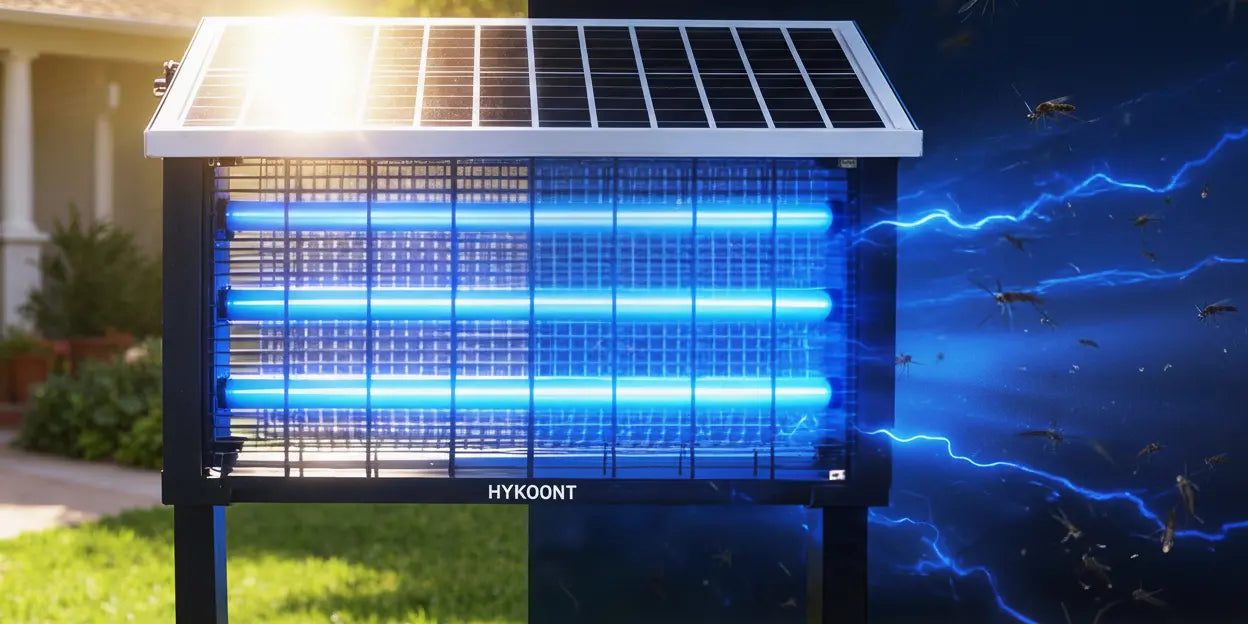
Triple-tube designs matter here. More UV tubes = more light output = wider attraction radius. A single-tube zapper might effectively cover a 20-foot radius. A triple-tube design can pull insects from significantly further away, which is why the Hykoont models use three tubes rather than one.

Step Two: The Electric Grid — What Actually Does the Killing
Once an insect is drawn to the UV light, it flies into the electric grid surrounding the light source. This is where the actual elimination happens.
The grid consists of two sets of wires carrying opposite electrical charges, typically at 2,000–4,000 volts. When an insect makes contact with both sets simultaneously, it completes the circuit and receives a lethal electric shock. The characteristic "zap" sound is the electrical discharge.
A few things worth knowing about the grid:
- Voltage vs. amperage: The high voltage sounds alarming, but the amperage (actual current) is extremely low — typically less than 1 milliamp. This is why the grid is lethal to insects but not dangerous to humans or pets who accidentally brush against it. It'll startle you, not hurt you.
- Grid spacing matters: The wire spacing determines which insects get caught. Grids designed for mosquitoes and gnats have tighter spacing than those targeting larger insects. Most outdoor zappers use a spacing that catches a wide range of flying insects.
- Grid cleanliness affects performance: Dead insect buildup on the grid reduces its effectiveness over time. The residue can insulate the wires, reducing the voltage differential. This is why cleaning the collection tray and wiping down the grid periodically actually matters — it's not just aesthetics.
The collection tray at the bottom of the unit catches the remains. On a busy night in mosquito season, you'll be surprised how much ends up there.

Step Three: The Solar Charging Cycle — How the Power Actually Works
This is the part most people understand least, and it's where a lot of solar bug zappers underperform.
A solar bug zapper has three main electrical components: the solar panel, the battery, and the UV tubes + electric grid. Here's how they interact across a 24-hour cycle:
During the Day: Charging
The solar panel converts sunlight into DC electricity, which charges the internal battery. The efficiency of this process depends on:
- Panel wattage: A 30W panel charges faster and reaches full capacity more reliably than a 10W panel, especially on partly cloudy days. This is one of the real differences between budget zappers and quality ones.
- Sun exposure: The panel needs direct sunlight — not filtered through tree canopy or shaded by an umbrella. Even 30% shading can cut charging efficiency by more than half.
- Battery capacity: A larger battery stores more energy, which means longer runtime and better performance after cloudy days. Look for lithium-based batteries (Li-ion or LiFePO4) rather than older NiMH designs — they hold charge better over time and perform more consistently in temperature extremes.
At Dusk: Automatic Activation
Quality solar bug zappers include a light sensor (photoresistor) that detects the drop in ambient light at dusk. When light levels fall below a threshold, the sensor triggers the circuit to activate the UV tubes and electric grid automatically. No manual switching required.
This dusk-to-dawn automation is genuinely useful — mosquitoes are most active at dawn and dusk, so having the zapper running precisely during those windows without any effort on your part is the whole point.
Through the Night: Runtime
The battery powers the UV tubes and grid through the night. Runtime depends on battery capacity and the power draw of the UV system. Quality units are designed to run 8–12 hours on a full charge — enough to cover a full summer night from dusk to dawn.
On cloudy days when the panel doesn't reach full charge, runtime will be shorter. Most quality units have enough reserve capacity to handle one or two cloudy days without significant performance loss.
At Dawn: Automatic Shutoff
The same light sensor that triggered activation at dusk detects the rising light at dawn and shuts the system off, preserving battery charge for the next night's cycle.

Why Solar Beats Plug-In for Outdoor Use
The obvious answer is "no cords" — but it goes deeper than that.
Traditional plug-in bug zappers require an outdoor outlet within extension cord range. For most backyards, that means the zapper ends up near the house, near the outlet — which is usually near where people sit. That's the opposite of where you want it. You want the zapper drawing insects away from your seating area, not toward it.
Solar removes the outlet constraint entirely. You can place the zapper wherever it's most effective — near standing water, upwind of the seating area, in the middle of the garden — without worrying about cord length or tripping hazards.
The other advantage is operating cost. Once you've bought a solar bug zapper, the sun handles the electricity. A plug-in zapper running 8 hours a night through a 6-month mosquito season adds up on your electric bill. Solar doesn't.
The Products: What's Actually Worth Buying in 2026
Understanding the mechanics makes it easier to evaluate products. Here's what to look for — and what we'd actually recommend.
🏆 Hykoont 30W Solar LED Bug Zapper Light Pro — Triple Tube, Dusk-to-Dawn
Price: $125.00 – $259.00

The 30W Pro is the most capable solar bug zapper in the Hykoont lineup, and the specs back that up. The 30W solar panel is the key differentiator — it charges faster, maintains battery levels better on overcast days, and gives you more consistent nightly runtime than lower-wattage competitors.
The triple UV tube configuration means three times the UV output of single-tube designs. In practical terms, that's a significantly wider attraction radius — important if you're trying to cover a large backyard or property with heavy insect pressure.
What the specs tell you:
- 30W solar panel → reliable charging even on partly cloudy days
- Triple UV tubes → wide-area insect attraction, not just a localized effect
- Dusk-to-dawn light sensor → fully automatic, zero manual operation
- Weatherproof construction → year-round outdoor use without babysitting it
- Multiple configuration options → reflected in the $125–$259 price range
Best for: Large backyards, properties near water, anyone who wants maximum coverage and doesn't want to think about it.
💡 Hykoont 19W Solar LED Bug Zapper Light Standard — Triple UV Tubes, Ground Stake & Hanging
Price: $125.00

The 19W Standard hits the sweet spot for most residential backyards. It still runs triple UV tubes — so you're getting the same wide-area attraction as the Pro — but at a flat $125 with no configuration complexity. The dual mounting design is genuinely useful: ground stake for garden beds and open lawn areas, hanging hook for pergolas, eaves, and tree branches.
The IPX4 weather resistance rating means it handles rain from any direction without issue. For a device that's going to live outside year-round, that's the minimum you want.
What the specs tell you:
- Triple UV tubes → same wide-area coverage as the Pro model
- 19W solar panel → solid charging for typical residential use
- Dual mounting (stake + hook) → flexibility to place it wherever it's most effective
- IPX4 rated → handles real outdoor weather without issue
- Fixed $125 price → no variant confusion, straightforward value
Best for: Mid-size backyards, patios, decks. The go-to recommendation for most homeowners.
→ Shop the 19W Standard Bug Zapper
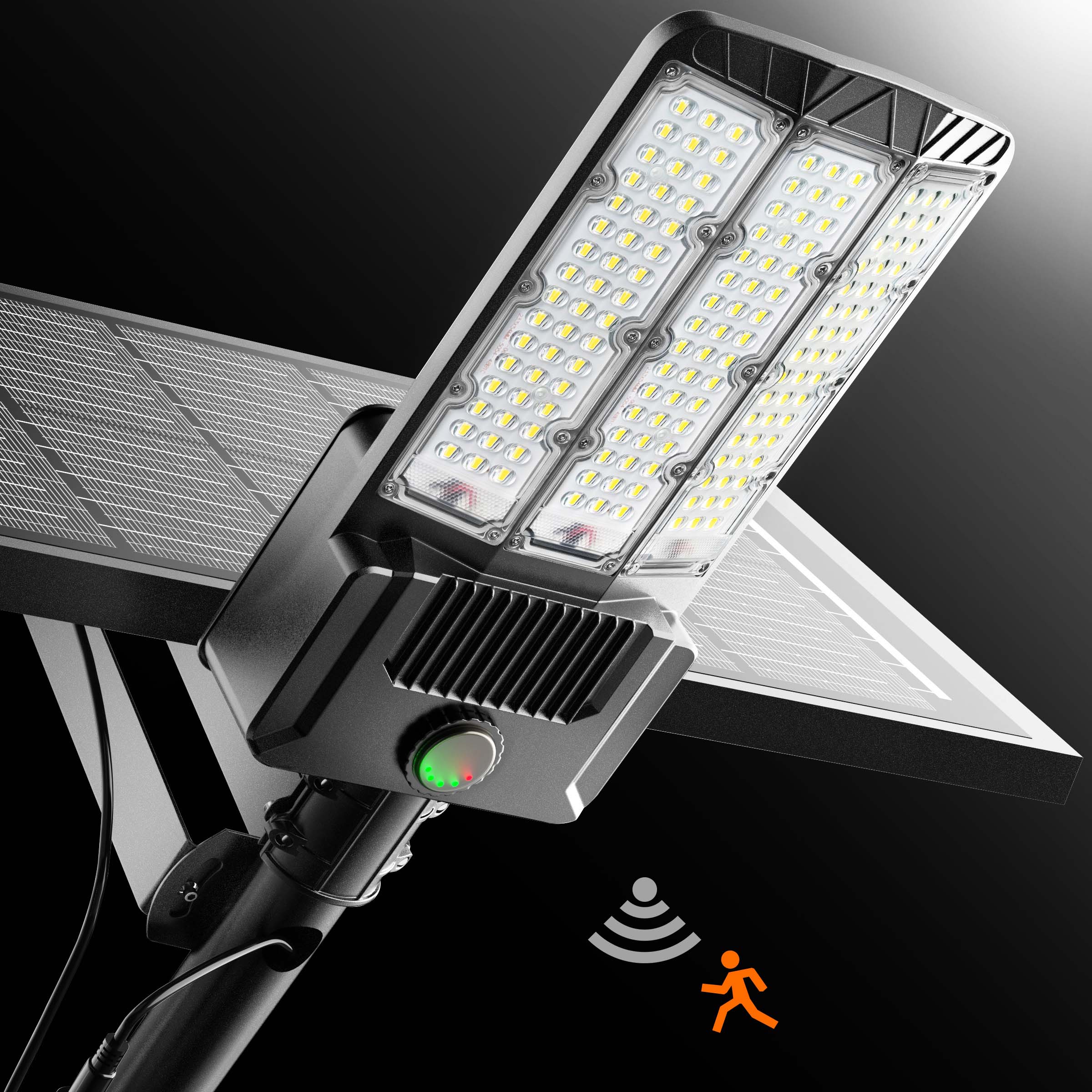
🌟 Hykoont AMS193 Solar Wall Light — 3-Head, 3000LM, Motion Sensor
Price: $25.00 – $259.00

Not a bug zapper — but relevant to this conversation. Here's the connection: mosquitoes are most active in low-light, humid conditions. A well-lit backyard is a less hospitable environment for them, and it makes your outdoor space more usable after dark. The AMS193 throws 3000 lumens across a 270° arc from three independently adjustable heads.
Pair it with one of the bug zappers above and you've got a backyard that's both actively eliminating insects and well-lit enough to actually enjoy. The replaceable battery design also means this light has a longer useful lifespan than sealed-battery competitors.
Best for: Homeowners who want to combine mosquito control with genuine outdoor lighting. Mount it near the bug zapper to maximize the UV attraction zone.
→ Shop the AMS193 Solar Wall Light
Why Your Solar Bug Zapper Might Not Be Working as Well as It Should
Now that you understand the mechanics, the common failure modes make a lot more sense.
Problem: It's placed too close to where you sit
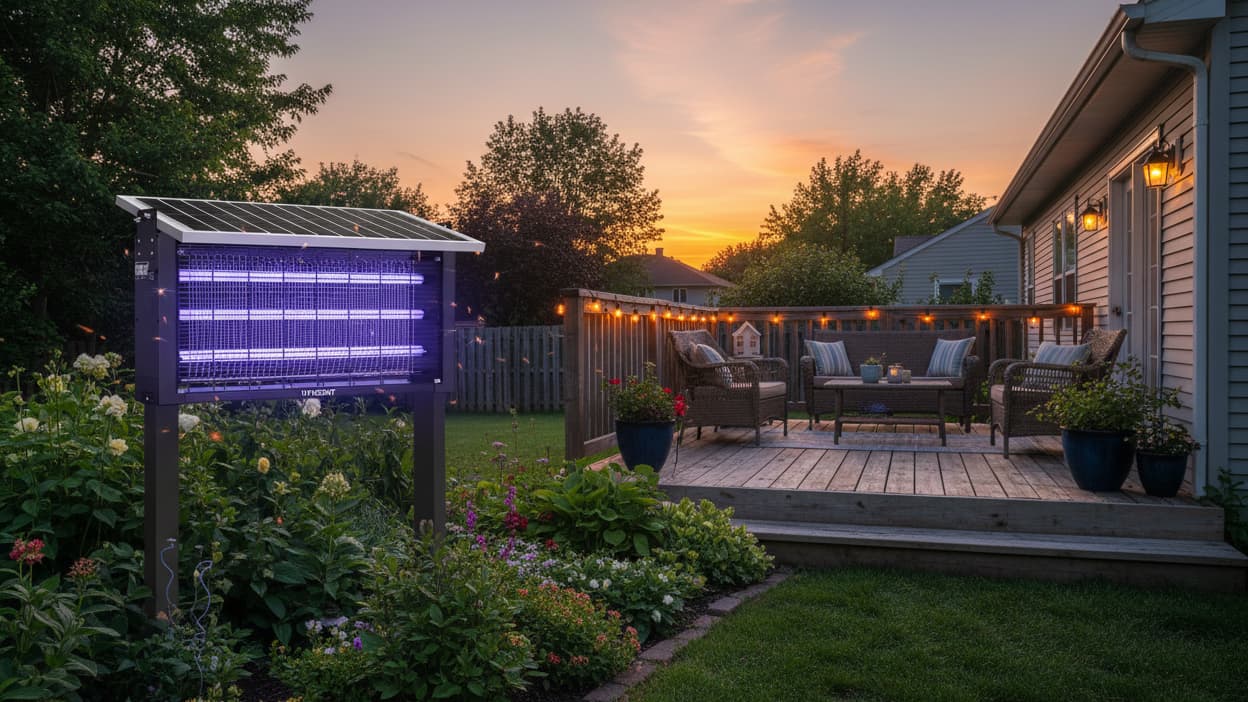
This is the most common mistake. The zapper attracts insects — if it's on your patio table, it's pulling mosquitoes toward you, not away. Place it 15–20 feet away from your seating area, ideally upwind. The zapper should be intercepting insects before they reach you, not acting as a centerpiece.
Problem: The solar panel is shaded
A solar panel under a tree canopy or patio umbrella during peak sun hours (10 AM – 3 PM) might be getting 20–30% of its rated charging capacity. The result is a battery that never fully charges, which means the zapper shuts off at 2 AM instead of running through dawn. Move it to a spot with clear sky exposure during the day, even if that means it's not in the "perfect" spot for insect attraction.
Problem: The grid hasn't been cleaned
Dead insect buildup on the electric grid acts as insulation, reducing the voltage differential between the wires. A grid that hasn't been cleaned in a month during peak season can be significantly less effective than a clean one. Empty the collection tray and wipe down the grid weekly during summer.
Problem: It's in a corner or against a fence
UV light travels in straight lines. A zapper tucked into a corner or against a fence wall is only attracting insects from one direction instead of all directions. Open placement in the yard — where the UV light has a clear line of sight in multiple directions — is significantly more effective.
Problem: It's too low or too high
Mosquitoes typically fly at 1–3 feet off the ground. Hanging your zapper at 4–6 feet puts the UV light in the optimal zone to intercept them. Too low and you're missing the flight path; too high and you're mostly catching moths.
Problem: Expecting it to work alone
A solar bug zapper is most effective as part of a layered approach. Eliminate standing water (mosquito breeding sites), use the zapper for ongoing population reduction, and apply repellent when you're sitting outside for extended periods. No single device eliminates mosquitoes completely — but a well-placed solar zapper makes a meaningful, measurable difference.

Solar Bug Zapper Maintenance: The Short Version
These devices are low-maintenance, but not zero-maintenance. Here's what actually needs doing:
- Weekly during peak season: Empty and rinse the collection tray. Wipe down the electric grid with a dry brush or cloth (unit powered off).
- Monthly: Clean the solar panel surface with a damp cloth. Dust and pollen accumulation reduces charging efficiency more than most people expect.
- Annually: Check UV tube output. UV tubes degrade over time — most quality tubes last 8,000–10,000 hours, but if you notice reduced effectiveness after a year or two of heavy use, tube replacement may be needed.
- Seasonally: In northern climates, consider storing the unit indoors during winter months to preserve battery life. Lithium batteries don't like extended exposure to freezing temperatures.
How Solar Bug Zappers Compare to Other Outdoor Insect Control Methods
Understanding how the technology works makes it easier to see where it fits relative to other options.
vs. Propane CO₂ Traps
Propane traps (like Mosquito Magnet) mimic human breath by releasing CO₂, which is a primary mosquito attractant. They're highly effective specifically for mosquitoes — more so than UV zappers. But they cost $300–$600 upfront plus ongoing propane costs, and they require regular maintenance. A solar UV zapper at $125 with zero operating costs is a much more accessible option, and it catches a broader range of flying insects.
vs. Chemical Foggers and Sprays
Foggers and yard sprays (permethrin-based) are effective at reducing mosquito populations quickly, but they require reapplication every few weeks, they affect beneficial insects like pollinators, and they're not ideal around kids or pets. A solar zapper runs every night without any chemical exposure or reapplication effort.
vs. Citronella Products
Citronella candles, torches, and plants create a localized repellent effect — they make a small area less appealing to mosquitoes, but they don't kill anything. Wind significantly reduces effectiveness. A UV zapper actively attracts and eliminates insects rather than just discouraging them from a small zone.
vs. Traditional Electric Plug-In Zappers
Plug-in zappers work well but require an outlet and a cord, which constrains placement. As discussed above, placement flexibility is one of the most important factors in bug zapper effectiveness. Solar removes that constraint entirely.
vs. Ultrasonic Repellers
Ultrasonic devices claim to repel insects with high-frequency sound. The scientific evidence for their effectiveness is weak at best. UV zappers have a clear, well-understood mechanism of action. If you're choosing between the two, the UV zapper is the evidence-based choice.

Frequently Asked Questions
How does a solar bug zapper work at night if the solar panel isn't generating power?
The solar panel charges a battery during the day. At night, the battery powers the UV tubes and electric grid. The solar panel and the zapper's operation are on separate cycles — the panel charges during daylight, and the stored energy runs the device through the night. A fully charged battery on a quality unit provides 8–12 hours of runtime.
Do solar bug zappers work on mosquitoes specifically?
Yes, but with an important caveat. Mosquitoes are attracted to UV light, but they're more strongly attracted to CO₂ and body heat. UV zappers catch mosquitoes, but they're not as mosquito-specific as CO₂ traps. They're more effective as general flying insect reducers — catching mosquitoes, gnats, moths, flies, and other insects. Reducing the overall flying insect population in your yard does meaningfully reduce mosquito pressure over time.
What's the effective coverage area of a solar bug zapper?
It depends on the UV output. Single-tube designs typically cover a 20–30 foot radius effectively. Triple-tube designs like the Hykoont models extend that radius significantly — potentially 40–60 feet under good conditions. Coverage also depends on placement: an open location with clear line of sight in all directions outperforms a corner placement significantly.
How long does the battery last on a full charge?
Quality units like the Hykoont models are designed for 8–12 hours of runtime on a full charge. That covers a full summer night from dusk to dawn. Performance varies based on battery age, temperature, and how fully the panel charged during the day.
Will a solar bug zapper work on cloudy days?
The solar panel still generates power on cloudy days — typically 20–40% of its peak output on heavily overcast days, and 40–60% on partly cloudy days. A 30W panel handles cloudy conditions better than a lower-wattage panel because it has more capacity to work with. Most quality units have enough battery reserve to run through a night after a cloudy day, though extended periods of heavy overcast can reduce performance.
Is the electric grid dangerous to touch?
The grid operates at high voltage (2,000–4,000V) but extremely low amperage (less than 1 milliamp). Accidental contact will produce a sharp, startling shock but is not dangerous to healthy adults. Quality units have protective housing around the grid to reduce the chance of accidental contact. Keep young children and pets from handling the unit directly.
How often do I need to clean it?
During peak mosquito season, empty the collection tray and wipe down the grid weekly. Clean the solar panel surface monthly. Annual UV tube inspection is recommended for units used heavily year-round. The whole maintenance routine takes about 5 minutes — it's genuinely low-effort.
Why does my solar bug zapper stop working mid-night?
The most common cause is insufficient charging during the day — either the solar panel is shaded, the panel surface is dirty, or the battery is aging and no longer holds a full charge. Check panel placement first (clear sky exposure during 10 AM – 3 PM), then clean the panel surface. If the problem persists after those fixes, the battery may need replacement.
Can I use a solar bug zapper indoors?
Technically yes, but it's not ideal. The solar panel needs outdoor sun exposure to charge. If you bring the unit indoors at night, you'd need to move it back outside during the day for charging. Most people find it more practical to leave it outdoors permanently. For indoor use, a plug-in UV trap is a better fit.
What's the difference between UV-A and UV-B in bug zappers?
Most bug zappers use UV-A light (315–400nm wavelength), which is the range insects are most sensitive to. UV-B (280–315nm) is less commonly used in zappers and is associated with sunburn in humans. UV-A is the effective, safe choice for insect attraction. Quality UV tubes in bug zappers are specifically designed to emit in the UV-A range.
The Bottom Line
A solar bug zapper isn't magic — it's physics. UV light exploits insect phototaxis to draw flying insects toward an electric grid, which eliminates them on contact. The solar panel charges a battery during the day, and a light sensor automates the whole cycle from dusk to dawn. When you understand the mechanics, the setup decisions become obvious: clear panel exposure during the day, open placement away from seating areas, regular grid cleaning, and realistic expectations about what UV attraction can and can't do.
For most American backyards, the Hykoont 19W Standard at $125 is the right starting point — triple UV tubes, flexible mounting, IPX4 weather resistance, and a straightforward price. If you have a larger property or want the most capable setup, the 30W Pro ($125–$259) gives you more solar capacity and configuration options. Add the AMS193 Solar Wall Light for a backyard that's both well-lit and actively working to reduce the insect population every night.
Set it up right. Let the sun handle the rest.
Shop 30W Pro Bug Zapper → Shop 19W Standard Bug Zapper → Shop AMS193 Solar Wall Light →

Leave a comment
This site is protected by hCaptcha and the hCaptcha Privacy Policy and Terms of Service apply.