


There's a particular kind of dark you only understand if you've driven a rural road at night. No streetlights. No ambient glow from a nearby town. Just your headlights, a narrow strip of asphalt, and the occasional deer deciding your bumper looks interesting. If you manage a farm, own rural property, or live on a county road that the utility company seems to have forgotten, you already know the problem. The question is what to do about it.
Grid-tied streetlights are expensive to install — trenching, permits, utility hookups, monthly bills. For a quarter-mile farm driveway or a gravel road shared by three neighbors, the math rarely works out. That's where high-lumen solar street lights have quietly become the practical answer for rural America. No trenching. No electric bill. No waiting on the utility company. Just mount, aim, and let the sun do the rest.
This guide breaks down exactly what to look for, which products actually deliver in real-world rural conditions, and how to size your setup so you're not left in the dark at 2 a.m. when a coyote spooks the cattle.
Why Rural Roads and Farms Are a Different Lighting Problem
Urban solar lighting is relatively forgiving. Buildings block wind. Ambient light from neighboring properties means a dim fixture still feels okay. Maintenance crews are nearby. Rural installations are a different animal entirely.
On a farm or country road, you're dealing with:
- Long stretches between fixtures — a single light needs to cover 30–60 feet of road width and 80–120 feet of throw distance to be useful
- No backup illumination — if your light fails or dims, there's nothing else
- Harsh weather exposure — wind, ice, driving rain, and summer heat all hit harder in open country
- Wildlife and vehicle traffic — deer, farm equipment, and delivery trucks all create safety hazards that adequate lighting directly reduces
- Consecutive cloudy days — a good rural solar light needs enough battery reserve to handle 3–5 overcast days without dimming to useless
The bottom line: rural solar street lights need to be brighter, tougher, and smarter than what you'd hang over a suburban parking lot. Lumens matter. Battery chemistry matters. IP ratings matter. Let's get into it.

What "High Lumen" Actually Means for Rural Safety
Lumen counts on solar lights are one of the most abused specs in the industry. A lot of budget fixtures advertise 20,000 lumens but deliver something closer to 8,000 under real conditions. Here's a quick reality check:
- A standard residential streetlight (the cobra-head style on suburban streets) typically outputs 5,000–9,500 lumens
- A rural road or farm driveway needs at least 15,000–25,000 lumens per fixture to achieve safe illumination levels across a wide throw area
- High-traffic farm entrances, equipment yards, or shared county roads benefit from 40,000+ lumens per pole
The key metric isn't just raw lumens — it's lumens per watt (efficacy) and beam angle. A 150W fixture with a tight 60° beam might light a small area brilliantly but leave the edges of your road pitch black. A well-designed 300W fixture with a Type II or Type III road-optimized beam pattern will push light exactly where vehicles and pedestrians need it.
Color temperature also matters more than most people realize. For rural roads, 5000K–6500K (cool daylight) dramatically improves contrast and makes it easier to spot animals, obstacles, and road edges at a glance. Warm white (3000K) looks nice on a patio but is genuinely less safe on a dark road.
The Products That Actually Work: Real Picks with Real Prices
Here are the solar street lights we'd actually recommend for rural roads and farm applications — based on lumen output, battery specs, build quality, and real-world durability.
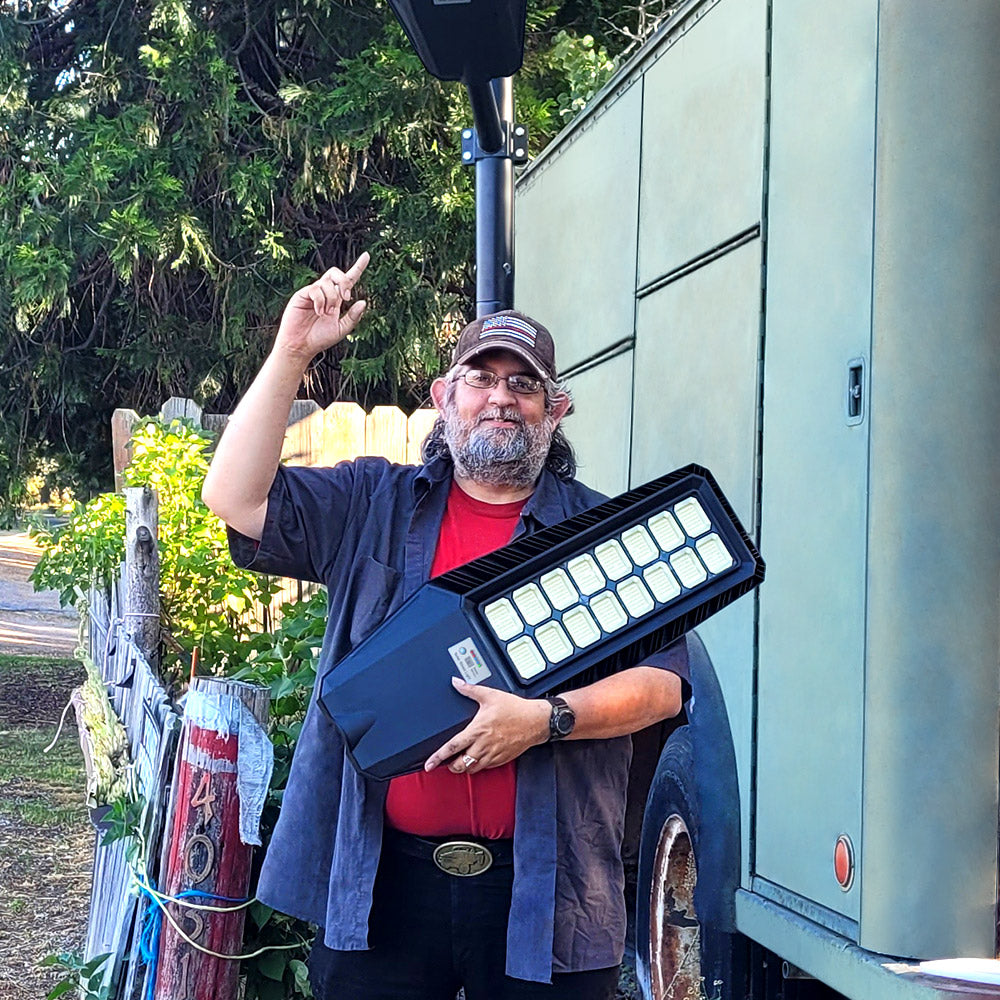
1. Best Overall for Rural Roads: Hykoont TW030 — 42,000 Lumens, 300W

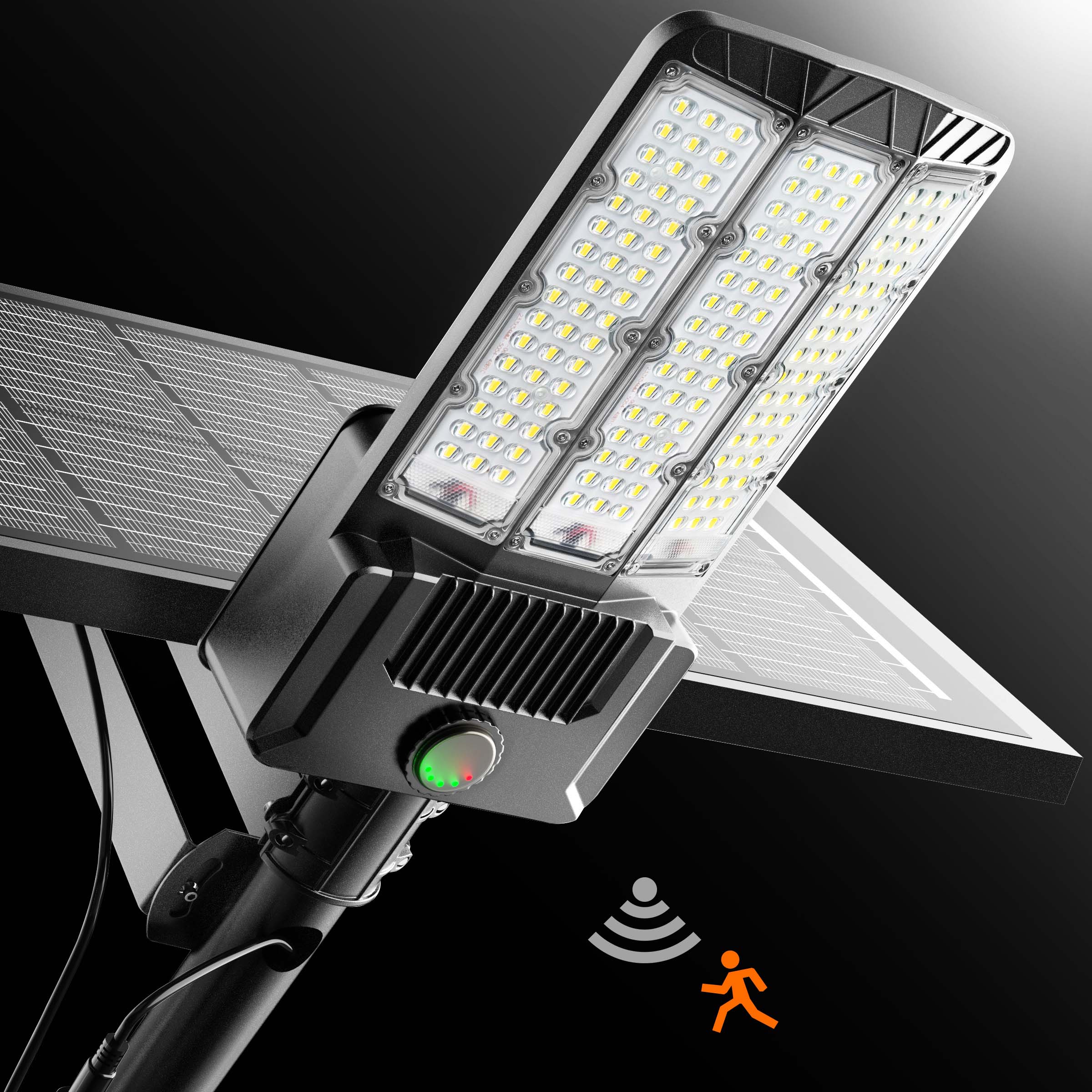
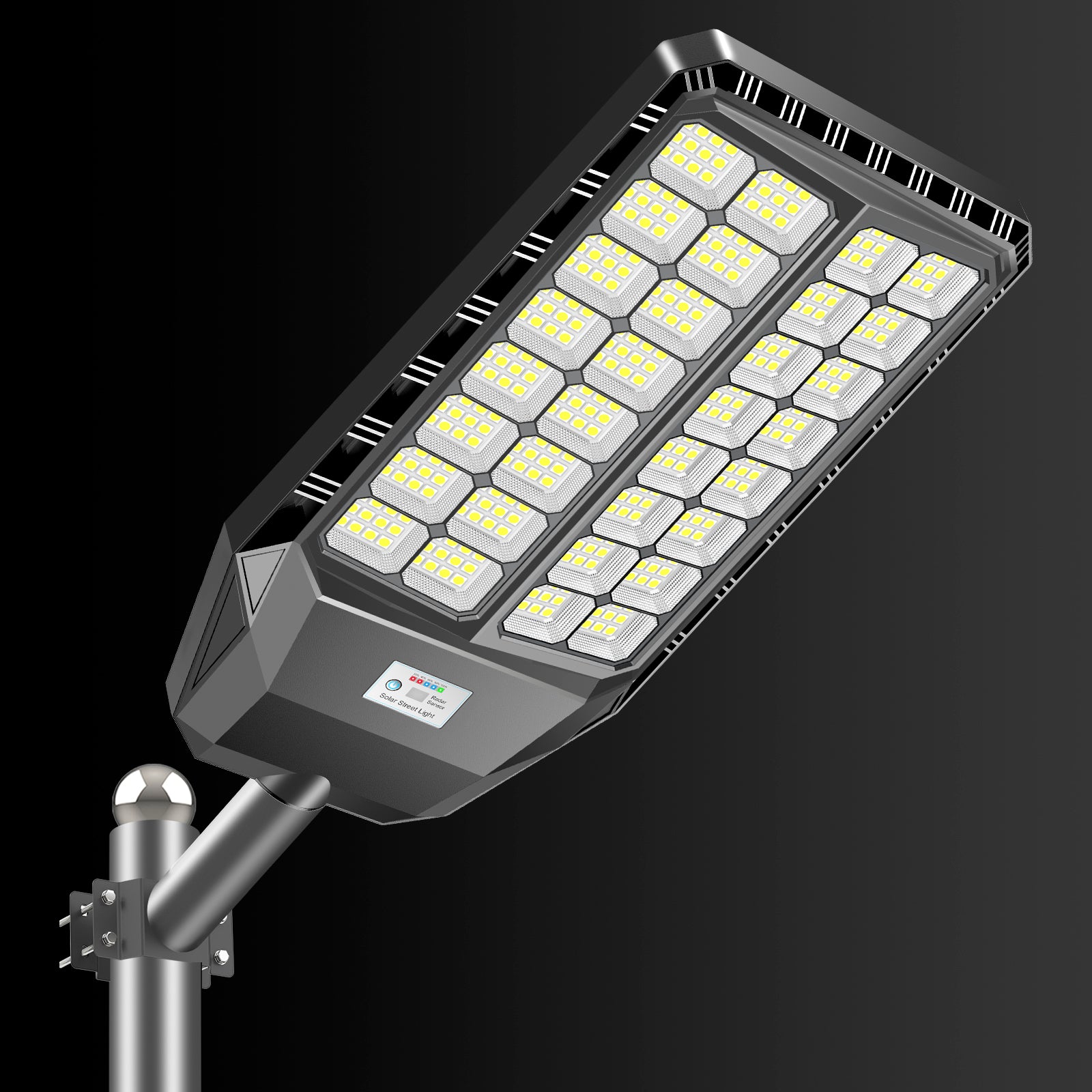
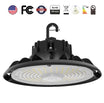
If you have one stretch of road that genuinely worries you at night, this is the fixture to put there. The TW030 pushes 42,000 lumens from a 300W monocrystalline solar panel — that's roughly four times the output of a standard suburban streetlight. Dusk-to-dawn operation is automatic, and the motion sensor lets you run at reduced power during quiet hours to extend battery life, then blast to full brightness when a vehicle or animal triggers it.
The die-cast aluminum housing is built for weather. IP66 rated, which means it handles driving rain and dust without complaint. For a farm entrance, a shared rural road, or a long driveway where you've had near-misses with deer, this is the fixture that ends the problem.
Price: $129.00 (1-pack) | $242.00 (2-pack)
Shop TW030 1-Pack — $129 Shop TW030 2-Pack — $242
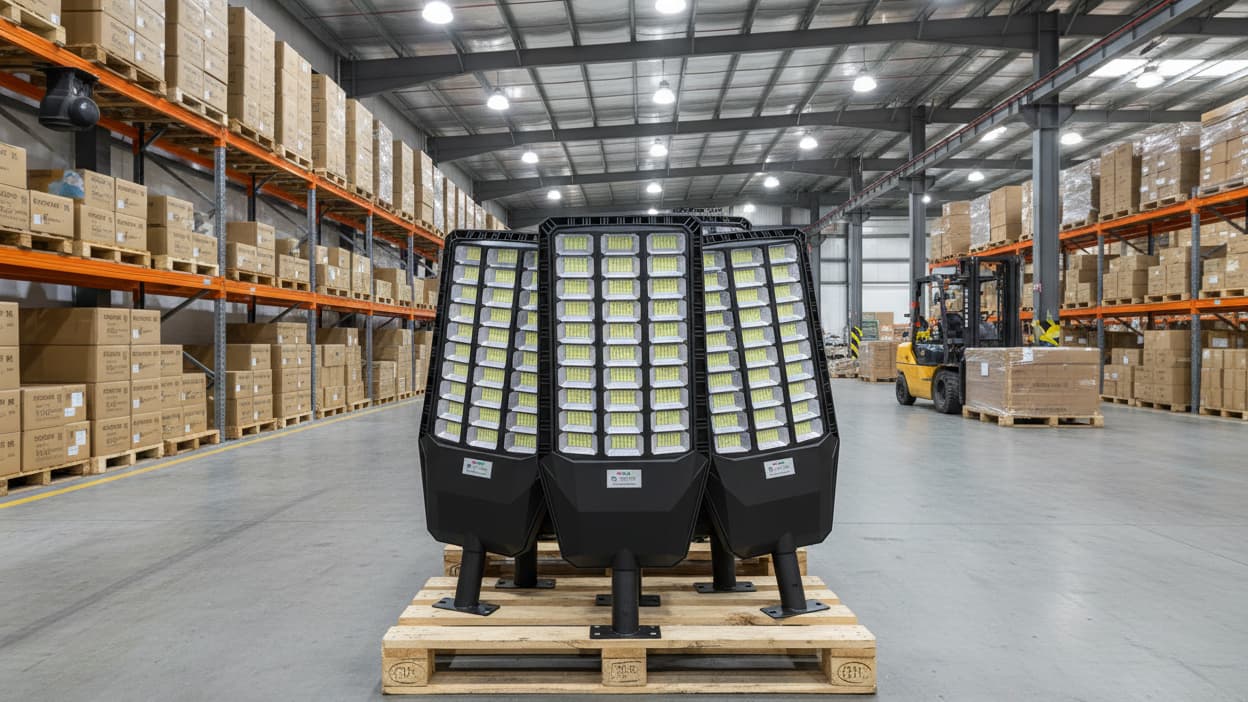
2. Best for Farm Yards & Equipment Areas: Hykoont SZ300 — 60,000 Lumens, 400W

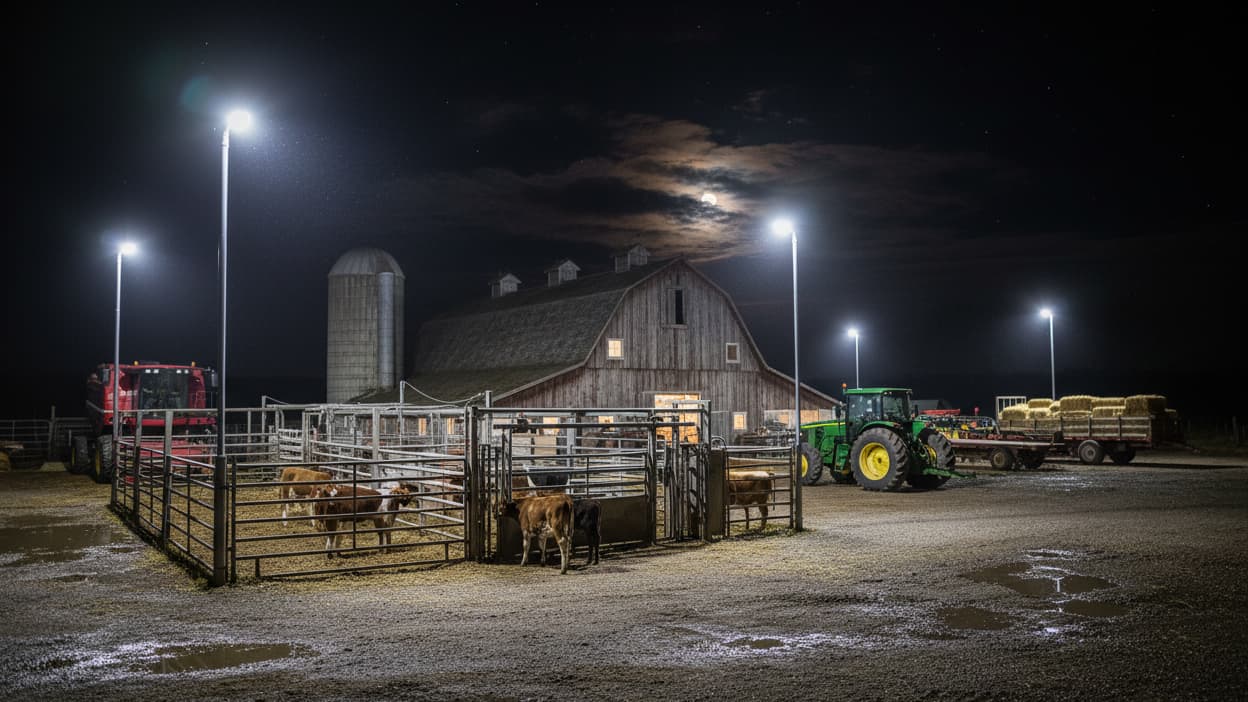
Farm equipment yards, grain storage areas, and livestock handling facilities need serious light — the kind where you can actually see what you're doing at 5 a.m. during calving season or when you're moving equipment after dark. The SZ300 is a commercial-grade fixture that doesn't mess around: 60,000 lumens from a 400W monocrystalline panel, die-cast aluminum housing, and a design that's meant to run night after night without babysitting.
The monocrystalline panel charges efficiently even in partial sun, which matters in the Pacific Northwest, the upper Midwest, and anywhere that gets real winters. The MPPT charge controller squeezes every usable watt out of available daylight, so you're not losing 20–30% of your charge to an inefficient controller like you would with cheaper units.
Price: $145.00–$293.00 (single unit, configuration dependent)
Shop SZ300 Commercial Solar Light →
3. Best Mid-Range for Driveways & Barn Approaches: Hykoont BM024 — 21,600 Lumens, 160W

Not every rural lighting need requires a 400W commercial fixture. For a barn approach, a side gate, a parking area near the house, or a stretch of driveway that's more about convenience than high-traffic safety, the BM024 hits a sweet spot. At 21,600 lumens and 160W, it's genuinely bright — brighter than most people expect from a mid-range solar light — without the cost or installation complexity of the larger commercial units.
The 2-pack option makes it easy to cover both sides of a driveway entrance or light two separate areas of a property without doubling your per-unit cost. IP66 rated, aluminum housing, and a clean design that doesn't look out of place on a well-kept rural property.
Price: $199.00 (2-pack)
4. Best Flexible Option: BM024C — 26,000 Lumens, 160W (Multiple Configurations)

The BM024C is the version of the BM024 that gives you more configuration options — useful when you're lighting a mix of areas with different pole heights, mounting angles, or coverage needs. At 26,000 lumens and 6500K color temperature, it's sharp, bright, and renders detail well. The 6500K output is particularly good for spotting animals on the road edge or identifying vehicles and people in a farm yard.
The price range reflects the different configuration options available, so you can match the fixture to your specific pole and mounting situation without overpaying for hardware you don't need.
Price: $79.00–$309.00
5. Best for Pathways, Gates & Secondary Areas: Hykoont BM027 — 25,650 Lumens

The BM027 is the fixture for the spots that aren't the main road but still matter: the path from the house to the barn, the side gate where you park the ATV, the area around the chicken coop that the fox has been eyeing. At 25,650 lumens with IP66 weatherproofing and a 6500–7000K output, it's more than capable for secondary rural applications — and the price range makes it easy to deploy multiple units across a property without a major budget hit.
Price: $169.00–$299.00
How to Size Your Rural Solar Lighting Setup
One of the most common mistakes rural buyers make is under-sizing. They buy one fixture for a 500-foot driveway and wonder why the far end is still dark. Here's a practical sizing framework:
Road Lighting (Shared Rural Roads, Farm Entrances)
- Fixture spacing: 80–120 feet between poles for 40,000+ lumen fixtures; 50–80 feet for 20,000–25,000 lumen fixtures
- Mounting height: 18–25 feet for road applications
- Beam pattern: Type II (asymmetric) or Type III for road throw; avoid flood/symmetrical patterns that waste light upward
- Minimum recommendation: TW030 (42,000 lm) or SZ300 (60,000 lm) for primary road coverage
Farm Yard & Equipment Areas
- Think in zones: one fixture per 2,500–4,000 sq ft of active work area
- Mounting height: 20–30 feet for wide-area coverage
- Minimum recommendation: SZ300 (60,000 lm) for large equipment yards; BM024 or BM024C for smaller work areas
Driveways & Pathways
- One fixture every 60–80 feet for driveways; 40–60 feet for pedestrian pathways
- Mounting height: 12–18 feet works well for most residential driveways
- Minimum recommendation: BM027 or BM024C for driveways; BD006 for shorter pathways and gates
Battery Chemistry: Why LiFePO4 Matters in Cold Climates
If you're in the northern US — Minnesota, Wisconsin, Montana, the Dakotas, upstate New York — battery chemistry is not a minor detail. It's the difference between a light that works in January and one that gives up when you need it most.
Most budget solar lights use lithium-ion (Li-ion) or lead-acid batteries. Both have significant performance degradation below freezing. Li-ion loses 20–40% of its capacity at 14°F (-10°C). Lead-acid is even worse. LiFePO4 (lithium iron phosphate) batteries, by contrast, retain 80%+ of their rated capacity at -4°F (-20°C) and have a cycle life of 2,000–3,000+ charge cycles versus 300–500 for lead-acid.
For a rural installation where you're not going to be swapping batteries every two years, LiFePO4 is the only chemistry worth considering. It costs more upfront, but the total cost of ownership over a 5–10 year installation is dramatically lower.
Installation Tips for Rural Properties
Rural solar street light installation is straightforward, but a few details make a big difference in long-term performance:
Pole Placement
Avoid placing poles directly under or near large trees. Even partial shading during peak sun hours (10 a.m.–2 p.m.) can cut your daily charge by 30–50%. If you have to work around trees, tilt the panel slightly to catch unobstructed sky.
Panel Orientation
In the US, solar panels should face true south (not magnetic south). For most of the continental US, a tilt angle equal to your latitude works well — roughly 30° in the South, 45° in the northern states. Most integrated solar street lights have adjustable panel angles; use them.
Concrete Footings
In rural areas with soft soil, frost heave, or high wind exposure, a proper concrete footing is worth the extra hour of work. A 12-inch diameter, 36-inch deep footing with a steel anchor bolt pattern will keep your pole plumb through freeze-thaw cycles that would shift a surface-mounted post.
Motion Sensor Calibration
Most high-lumen solar street lights include adjustable motion sensitivity and dim-to-bright modes. For rural roads, set the motion zone wide and the response time fast — you want the light at full brightness before a vehicle reaches the illuminated area, not after. For farm yards, a slightly delayed response reduces false triggers from wind-blown debris or small animals.

Real-World Scenarios: Matching the Right Light to the Right Problem
Scenario 1: Quarter-Mile Farm Driveway, No Grid Power
The problem: Delivery trucks, farm visitors, and family members navigating a long gravel driveway after dark. Two near-misses with deer in the past year.
The solution: Four TW030 units (42,000 lm each) spaced 100 feet apart, mounted at 20 feet. Total cost: approximately $516 for four 1-packs, or less with 2-pack pricing. No trenching, no utility hookup, no monthly bill.
Result: Full driveway coverage from dusk to dawn, with motion-triggered full brightness for approaching vehicles.
Scenario 2: Cattle Operation, Nighttime Handling Facility
The problem: Calving season means 2 a.m. barn checks and occasional nighttime moves. The existing single incandescent fixture is inadequate and the extension cord situation is a hazard.
The solution: Two SZ300 units (60,000 lm each) mounted at 25 feet on opposite corners of the handling area. Total cost: approximately $290–$586 depending on configuration.
Result: Bright, even illumination across the entire handling area. No cords, no tripping hazards, no electric bill.
Scenario 3: Rural Road Shared by Five Properties
The problem: A half-mile county road with no lighting. The county won't install streetlights. Five property owners want to split the cost of a solution.
The solution: Eight BM024C units (26,000 lm each) spaced 80 feet apart, each property owner responsible for the pole(s) nearest their entrance. Total cost per owner: approximately $125–$250 depending on configuration chosen.
Result: Consistent road lighting across the full stretch, with each owner maintaining their own unit independently.
What to Ignore When Shopping for Rural Solar Lights
A few things that get marketed heavily but matter less than you'd think:
"Equivalent wattage" claims: A fixture advertised as "equivalent to 1000W" is marketing language, not a spec. Look at actual lumen output and actual solar panel wattage.
Waterproof ratings below IP65: For rural outdoor use, IP65 is the minimum. IP66 is better. Anything below IP65 will have problems within a year or two in real weather.
Fixtures without adjustable panels: Fixed-angle panels are a compromise. Adjustable panels let you optimize for your latitude and local shading conditions.
Warranties under 2 years: A quality solar street light should last 5–10 years. If the manufacturer won't back it for at least 2 years, that tells you something about their confidence in the product.
The Safety Case: What Better Lighting Actually Does
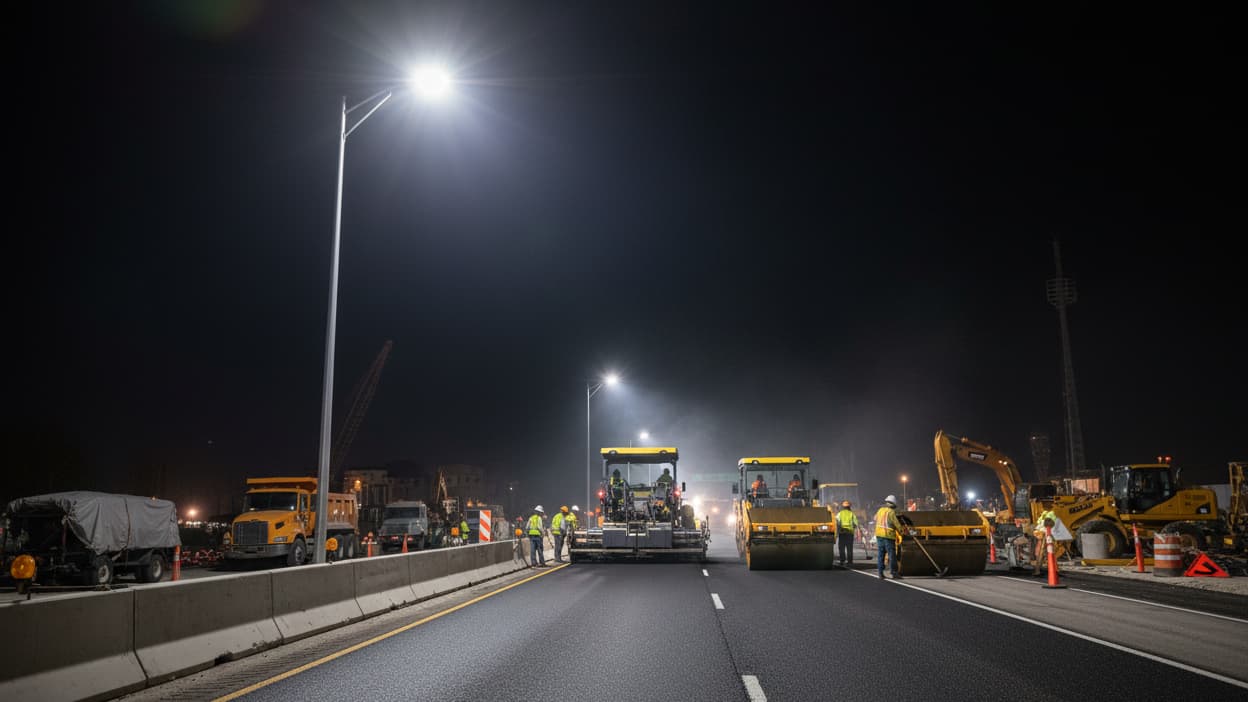
It's worth being direct about why this matters beyond convenience. Rural road fatalities in the US are disproportionately high — rural roads account for roughly 45% of vehicle miles traveled but nearly 60% of traffic fatalities, according to NHTSA data. Inadequate lighting is a contributing factor in a significant percentage of nighttime rural crashes.
For farms specifically, OSHA and agricultural safety organizations consistently identify poor lighting as a contributing factor in nighttime equipment accidents, livestock handling injuries, and slip-and-fall incidents. A $129–$293 solar street light that prevents one serious accident pays for itself many times over.
This isn't about aesthetics. It's about being able to see what's in front of you when it matters.
Ready to Light Up Your Property?
Whether you're dealing with a dangerous stretch of rural road, a farm yard that needs reliable nighttime visibility, or a long driveway that's been a hazard for too long, there's a solar street light in this lineup that fits your situation and your budget.
TW030 — 42,000 LM | $129 SZ300 — 60,000 LM | From $145 BM024 — 21,600 LM | $199 (2-pack)
Not sure which fixture is right for your property? Contact us — we're happy to help you size a setup that actually works for your specific situation.
FAQ: Solar Street Lights for Rural Roads & Farms
Q: How many lumens do I actually need for a rural road?
A: For a standard rural road or farm driveway, aim for at least 20,000–25,000 lumens per fixture with fixtures spaced 60–80 feet apart. For higher-traffic roads or wide farm yards, 40,000–60,000 lumens per fixture gives you the coverage and visibility margin you need. The TW030 (42,000 lm) and SZ300 (60,000 lm) are the right tools for serious rural road applications.
Q: Will solar street lights work in cloudy climates like the Pacific Northwest or upper Midwest?
A: Yes, with the right fixture. The key is a large monocrystalline panel (which charges in diffuse light, not just direct sun) and a high-capacity LiFePO4 battery that can store 3–5 days of reserve. Fixtures like the TW030 and SZ300 are designed with this in mind. That said, if you're in a location that regularly sees 10+ consecutive overcast days in winter, you may want to supplement with a second fixture or choose a unit with a larger battery bank.
Q: How long do solar street lights last?
A: The LED chips in quality fixtures typically last 50,000+ hours — that's over 13 years of nightly operation. The limiting factor is usually the battery. LiFePO4 batteries last 2,000–3,000 charge cycles (roughly 6–8 years of daily use). Li-ion and lead-acid batteries in cheaper units may need replacement in 2–4 years. Buy LiFePO4 if longevity matters to you.
Q: Do I need a permit to install solar street lights on my rural property?
A: In most rural US jurisdictions, installing solar lights on private property doesn't require a permit. However, if you're mounting on a public road right-of-way or shared easement, check with your county. For pole heights over 35 feet, some counties require a building permit. When in doubt, a quick call to your county planning office takes five minutes and saves potential headaches.
Q: What's the best mounting height for a rural driveway?
A: For a residential farm driveway, 15–20 feet is the practical sweet spot. High enough to throw light across the full road width without glare at driver eye level, low enough to install without specialized equipment. For wider farm roads or equipment yards, 20–25 feet gives you better area coverage.
Q: Can I use these lights for a shared road between multiple property owners?
A: Absolutely — this is actually one of the best use cases for solar street lights. Because each unit is self-contained (no wiring between fixtures), different property owners can install and maintain their own units independently. The BM024C is a popular choice for this scenario because of its flexible configuration options and mid-range price point.
Q: How do I handle snow and ice on the solar panel?
A: Most solar panels have a slick tempered glass surface that sheds snow reasonably well, especially with a steeper tilt angle. In heavy snow areas, tilt your panel to 45–50° to encourage shedding. After major snowstorms, a quick wipe with a soft brush restores full charging capacity. Avoid metal scrapers — they scratch the glass and reduce efficiency over time.
Q: What's the difference between IP65 and IP66 waterproofing?
A: IP65 means the fixture is protected against water jets from any direction. IP66 means it can handle powerful water jets — think pressure washing or driving rain in a severe storm. For rural applications where fixtures are fully exposed to weather, IP66 is the better choice. All the fixtures featured in this guide are IP66 rated.
Q: Do solar street lights work with motion sensors in cold weather?
A: Yes. PIR (passive infrared) motion sensors work based on heat differential, not ambient temperature, so they function reliably in cold weather. The main cold-weather concern is battery performance, not sensor performance — which is why LiFePO4 chemistry matters in northern climates.
Q: How do I calculate how many lights I need for my property?
A: Start with your total linear footage of road or driveway, then divide by your fixture spacing (60–100 feet depending on lumen output). For area lighting (yards, equipment areas), divide your total square footage by the coverage area per fixture (roughly 2,500–4,000 sq ft for a 40,000+ lumen fixture at 20-foot mounting height). When in doubt, err on the side of one more fixture — the cost difference is small and the safety margin is worth it.

Leave a comment
This site is protected by hCaptcha and the hCaptcha Privacy Policy and Terms of Service apply.