


The difficult part of coming home after dark usually isn't the driveway. It's the last few steps: the narrow passage beside the garage, the turn toward the gate, the uneven edge where concrete meets gravel. You know the route by daylight. At night, with groceries in one hand and your phone in the other, it becomes a small obstacle course.
That is where solar pathway security lighting should earn its place. Not by making the whole property look like a stadium, but by helping you see the decisions ahead: where to step, where to turn, and who is approaching.
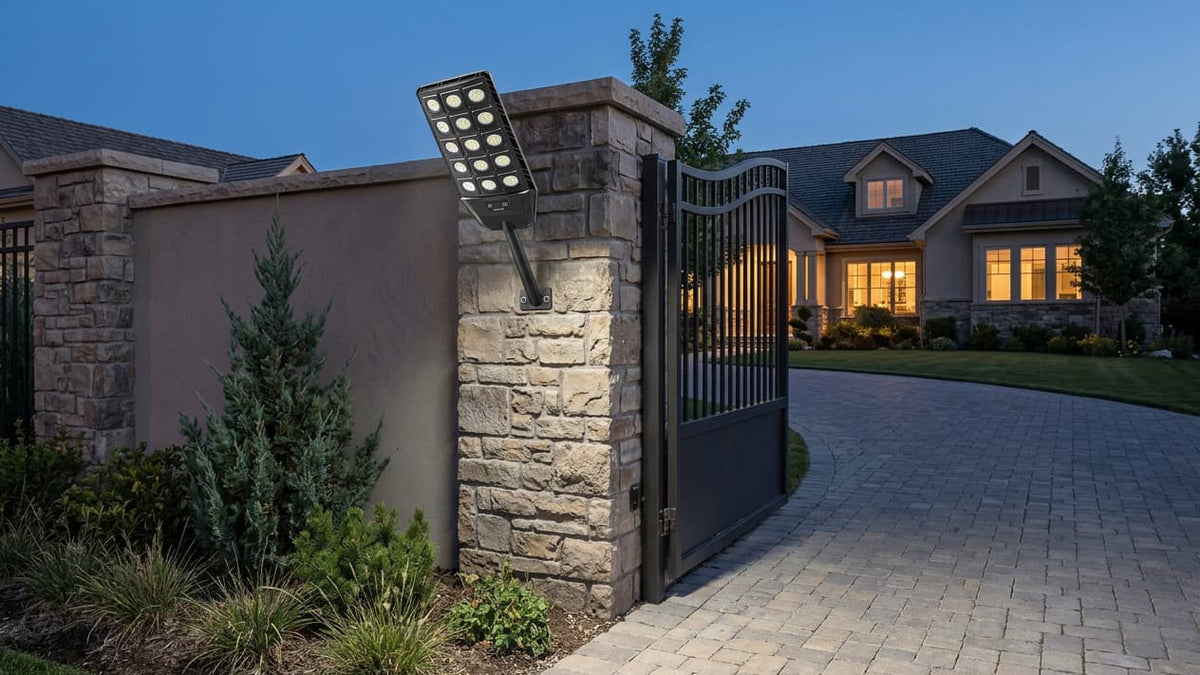
The HYKOONT HY015 offers an interesting starting point. Its current listed price is $85, and its product page describes a monocrystalline solar panel, a large-lens optical array, automatic dusk activation, radar motion detection, and remote control. It is a wall-mounted option for targeted outdoor illumination, rather than a little decorative stake light.
There is an important purchasing detail: the current HY015 listing is a pre-order marked “Ships in 1 month.” Treat that as a planning consideration, not a delivery appointment. Check the product page before ordering, particularly if you are preparing a rental property, hosting guests, or working toward a contractor's installation date.
This guide approaches the project from the ground up: follow the route, identify the awkward moments, give the panel a realistic chance to charge, and use the light where it makes walking easier. Bigger numbers can wait.
Check the HY015's $85 price and current pre-order details.
The first design tool is a walk after sunset
Before measuring a wall, walk your property the way someone unfamiliar with it would. Start at the parking space, not the front porch. Leave your phone flashlight off while you observe the route, but use a portable light whenever you need it to move safely.
Notice where you hesitate. A gate latch can disappear against a dark fence. A hose can blend into the edge of a path. A parked SUV can block illumination that seemed perfectly adequate when the driveway was empty. These are more useful observations than simply deciding that the yard feels dark.
Try the same route in both directions. Lighting that works when you leave the house may shine directly into your eyes when you return. A bright fixture can make its immediate surroundings look impressive while making the next dark stretch harder to read.
For most homes, the useful objective is a connected sequence of visible surfaces. You should understand the next part of the route before leaving the current one. You do not need identical brightness everywhere, and you certainly do not need to illuminate the neighbor's bedroom to find your own gate.
Make a simple sketch with the house, garage, walking surface, doors, and turns. Mark the places where people change direction or elevation. Then add the obstacles that move: vehicles, trash carts, patio furniture, and a gate that swings across the path. Now you have a lighting brief based on actual use.
Meet the HY015 without turning the spec sheet into a promise

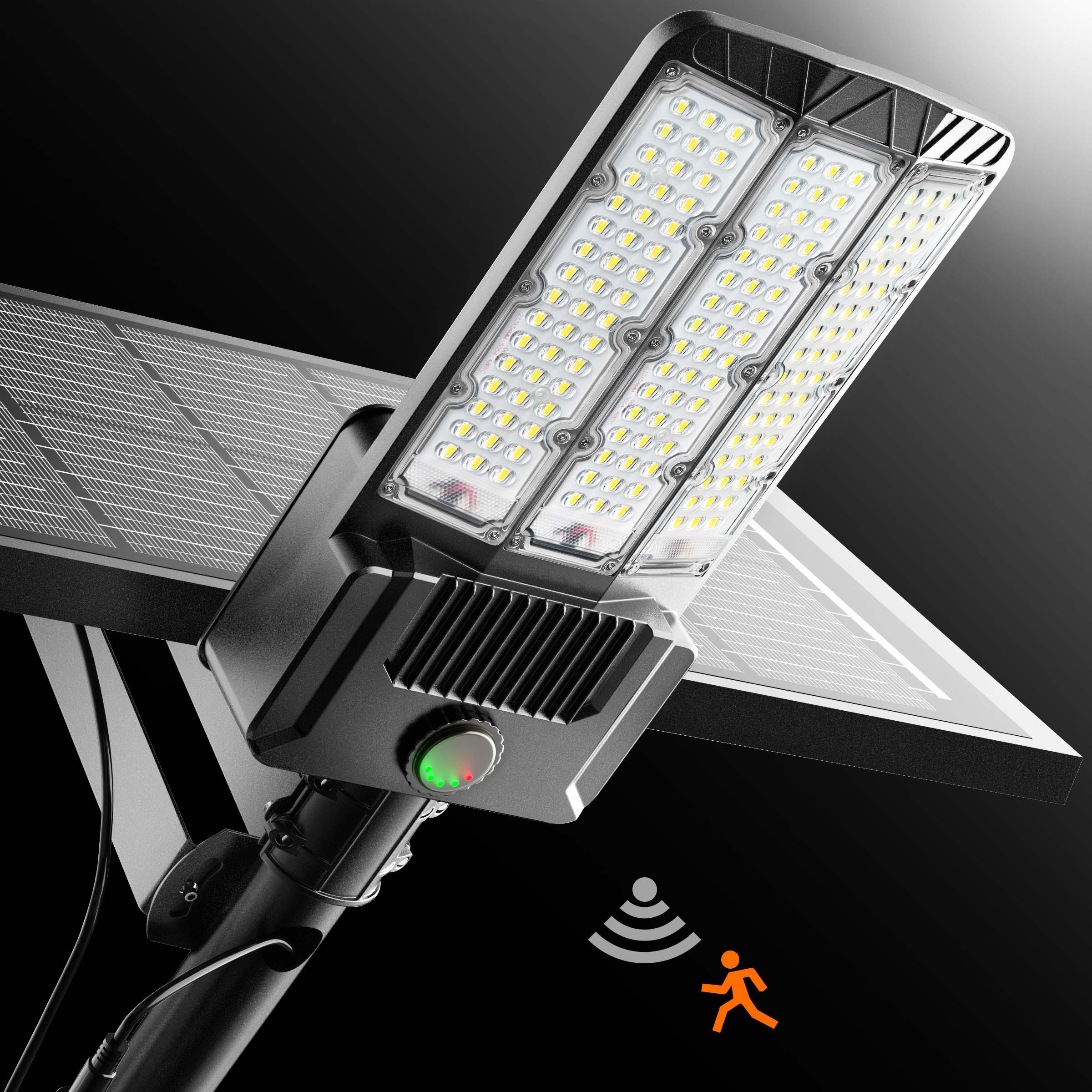
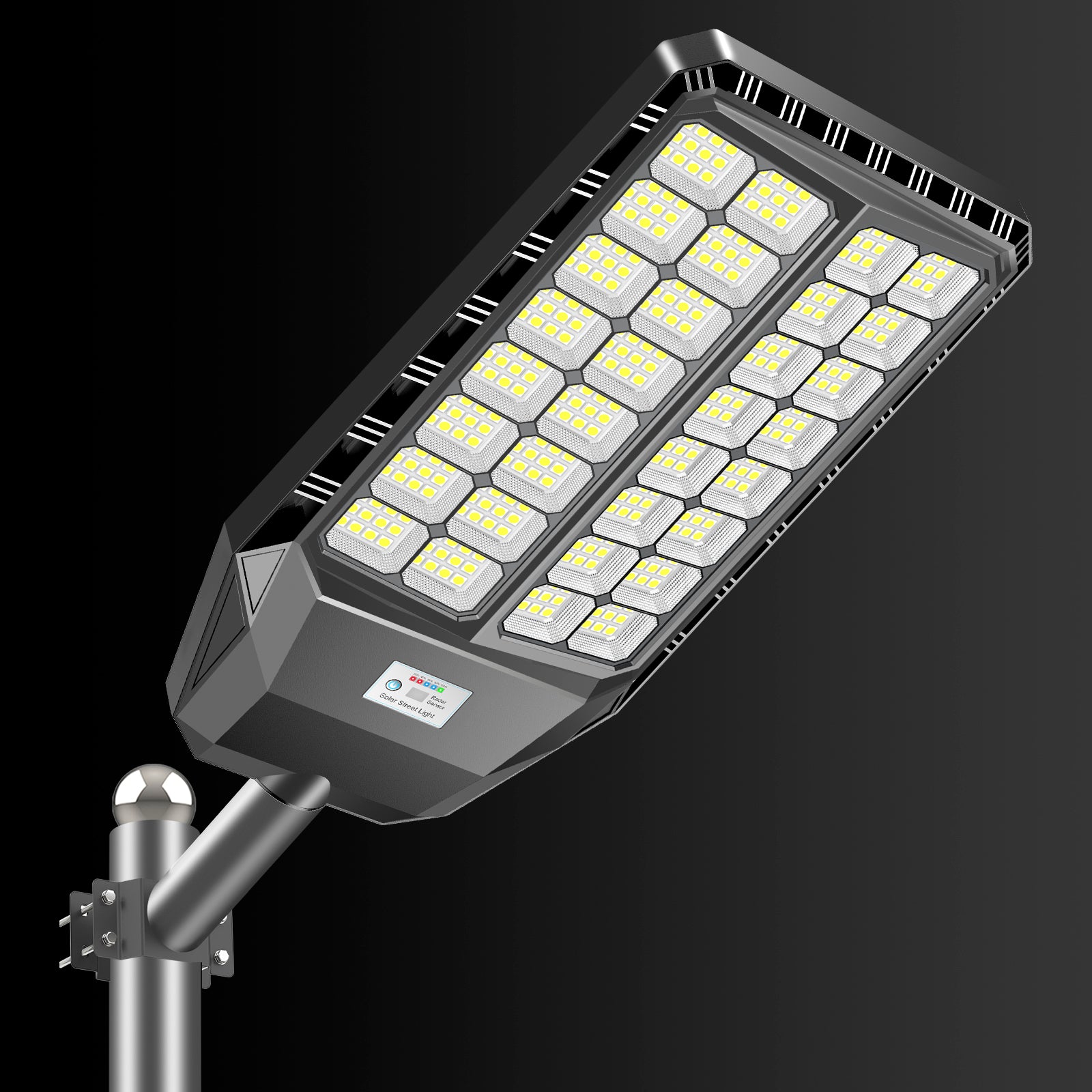
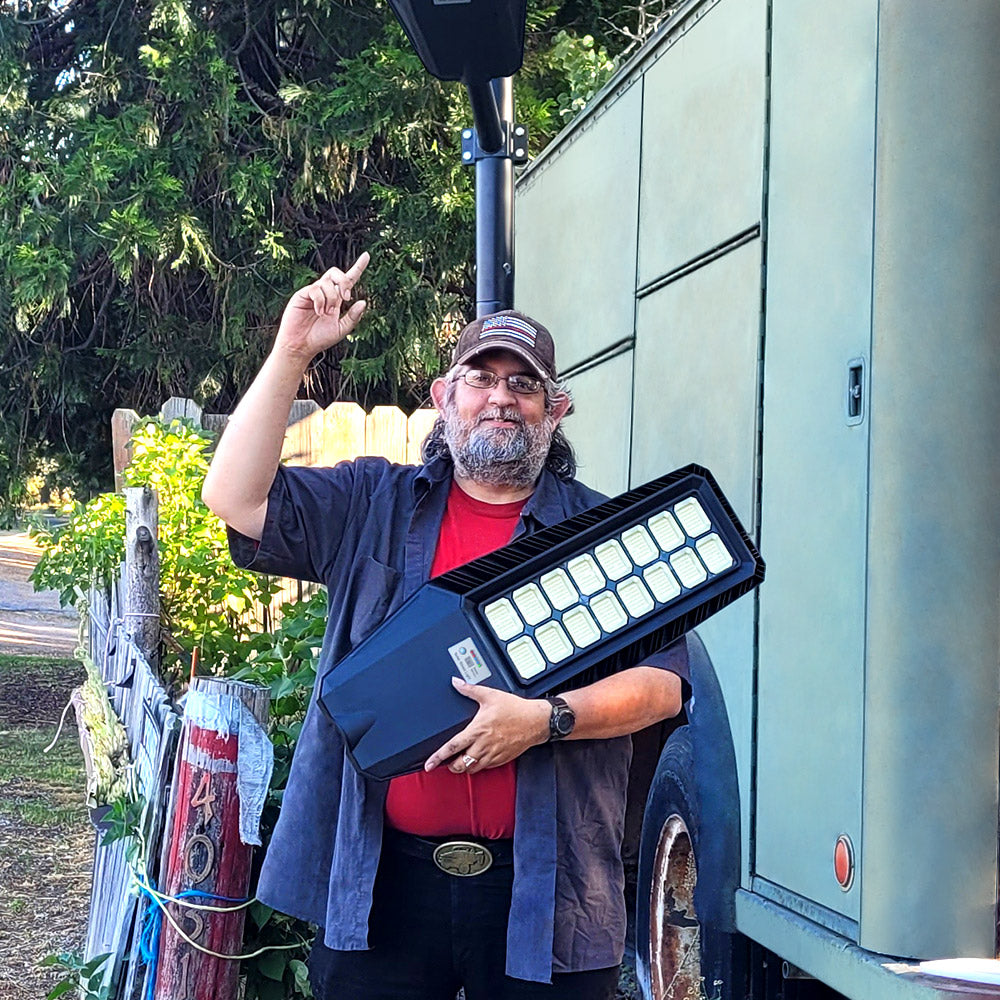
The HY015's most recognizable feature is its array of 15 large optical lenses paired with deep reflector cups. The product description positions this arrangement as a way to concentrate light for targeted areas such as pathways, driveway approaches, garden entrances, and property edges.
The current listing specifies 255 high-output 2535 LEDs, a claimed 15,000-lumen output, and a cool daylight color temperature of 6500K–7000K. It also lists a 5V, 10W monocrystalline solar panel and a 3.2V, 9,200mAh rechargeable battery. The light body measures approximately 15.7 by 8.6 inches, with ABS and PC housing materials.
Those are product-page specifications, not measurements from an independent field test. In particular, the listed coverage figure of 2,000 square feet should not be read as a guarantee that every part of an area that size will receive equally useful light. Mounting position, aiming, obstacles, and the brightness level all change what reaches the ground.
The control arrangement is more relevant to everyday use than an impressive headline alone. The listing describes automatic light sensing, radar motion detection, and a wireless remote. In motion operation, it describes a switch to full brightness when movement is detected, followed by an energy-saving dim state after the route clears.
Do not turn that description into an invented detection range, exact standby percentage, or guaranteed number of full-output hours. Those details need confirmation in the supplied instructions or directly with HYKOONT. Good planning leaves room for what the site and the actual settings reveal.
Wall-mounted means wall-mounted
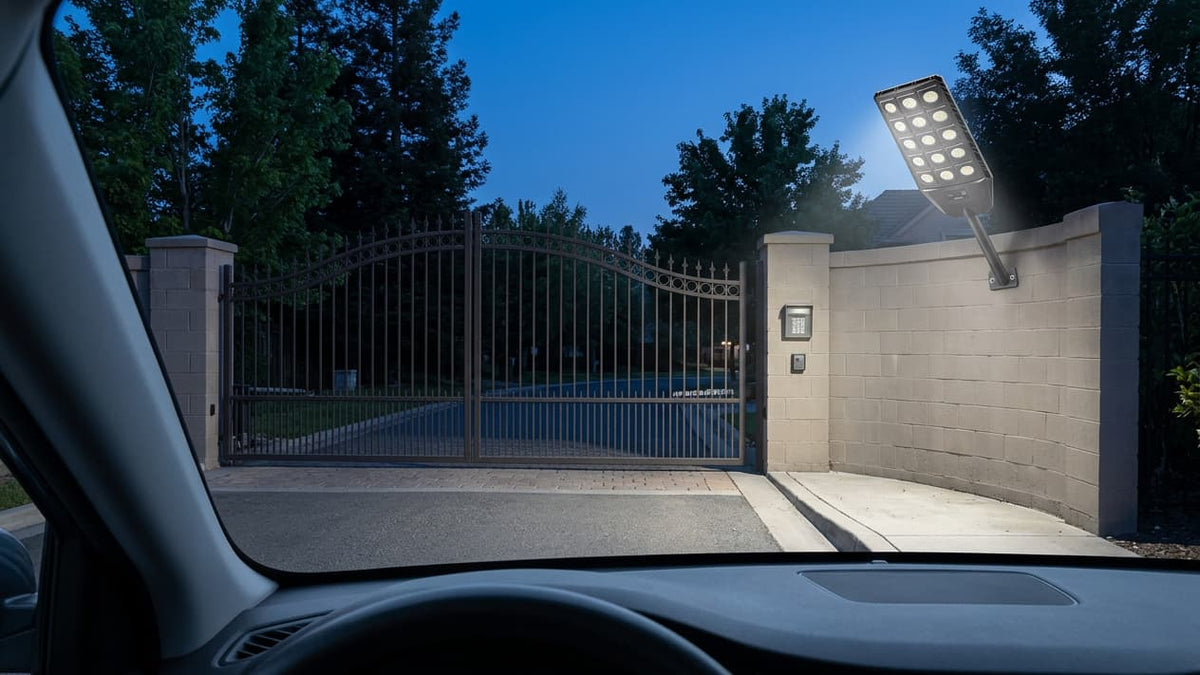
For this project, treat the HY015 as a wall-mount-only fixture. Plan around a solid wall, a straight rigid support bracket, and a visibly secured baseplate. Do not design a freestanding pole installation, improvise a gatepost mounting, or assume hardware from a different solar light will fit.
This changes where the model makes sense. A side walkway beside a garage is a natural candidate. So is a service entrance along a masonry wall or a gate approach within reach of a suitable building wall. A long garden path crossing an open lawn is a different problem, even if the product's lighting description sounds appealing.
The mounting surface matters as much as the fixture. Thin trim, loose siding, and decorative boards should not be treated as structural support. Have a qualified installer assess the substrate and select appropriate fasteners, following the supplied instructions. A bracket that looks level in a photo is not evidence that its anchors are suitable.
Keep the gate's full swing clear. Leave space for doors, screens, gutters, and routine maintenance. Think about how someone will reach the fixture later without balancing a ladder over stairs or landscaping. A convenient installation today can become an awkward maintenance job next season.
There is no universal mounting height worth guessing here. The correct location must satisfy the manufacturer's guidance, the wall's strength, solar exposure, and the way the beam reaches your particular route. If a proposed wall position fails one of those tests, change the plan rather than forcing the fixture into it.

Monocrystalline helps, but sunlight still gets the final vote
A monocrystalline solar panel is part of the HY015's appeal. What it does not do is remove the need for a sensible charging location. A panel in persistent shade is still a panel in persistent shade, regardless of the cell technology.
Look at the proposed position several times during a clear day. The spot that receives sun at breakfast may sit beneath an eave's shadow for the rest of the afternoon. Nearby trees, a taller neighboring building, a chimney, and the house itself can all reduce useful exposure.
For many US sites, a view toward the southern sky is a sensible starting consideration, but the actual obstruction pattern matters more than a compass direction alone. A theoretically favorable orientation beneath a deep roof overhang can be less useful than a clearer exposure elsewhere. Follow the product's assembly and orientation instructions rather than assuming every angle is independently adjustable.
Do not assume the HY015 includes a remote-panel extension kit, a particular cable length, or permission to modify its panel assembly. Confirm the supplied configuration before planning around a panel on a different part of the building. Moving the collection surface may sound simple until a cable or mounting limitation makes the proposed location impossible.
Seasonal changes deserve attention too. Summer foliage can shade a panel that was clear in early spring. Winter brings shorter days and a different sun angle. If your path is most important during dark winter mornings, evaluate the installation for that season rather than for a sunny July afternoon.
Dusk-to-dawn is an operating strategy, not unlimited energy
The phrase “dusk-to-dawn” is easy to overread. It describes the intended automatic lighting behavior, but it does not mean a solar fixture has an unlimited supply of power or that its brightest state will last through every night under every condition.
Solar lighting has a daily budget. Daytime collection replenishes stored energy; nighttime operation spends it. Longer nights, shading, cloudy weather, and frequent motion-triggered boosts can put more pressure on that budget. The practical question is whether the selected mode and installation suit the route's real demand.
This is why motion-assisted operation is worth considering for a residential side path. Most of the night, nobody is there. A lower standby state can preserve energy while still providing orientation, with increased brightness when someone approaches. The HY015 listing describes this dim-to-bright behavior, although the exact settings should be checked in the manual.
A constantly busy walkway is different. If people, vehicles, or nearby activity repeatedly trigger the sensor, the fixture can spend much more time at higher output. Two homes with the same model can therefore have different overnight results, even with similar weather.
Decide what matters most before choosing the mode. A path used briefly for late arrivals may suit motion-based operation. A route that must remain continuously illuminated for a specific operational purpose needs a more rigorous assessment. Do not rely on an untested residential solar setup for a critical lighting obligation.

Light the decisions, not every square inch of the yard
Think of the route as a series of small tasks. At the garage, you need to orient yourself. At a turn, you need to recognize where the path continues. At the gate, you need to see the latch and the ground while opening it. These are different targets, and one bright patch in the middle does not automatically solve all three.
Place emphasis on transitions. A change from concrete to gravel, a single step, a narrowing passage, or the edge of a raised bed can matter more than the open area beside it. If the proposed beam leaves that transition dark, an impressive illuminated lawn is not a useful trade.
Avoid using a published square-foot claim as a spacing formula. Dividing your yard area by 2,000 does not tell you how many HY015 fixtures to buy. A narrow path around a corner can be harder to serve than a larger open rectangle because the building blocks the light.
Start with the most important wall-side segment, then observe where the usable light ends. If another fixture is needed, plan for a readable handoff rather than two dazzling pools separated by darkness. The eye should not have to keep recovering from a bright source to find the next step.
Where the path leaves the building and crosses open ground, be willing to use a different lighting approach. Staying with one model for visual consistency is less important than choosing equipment that can be mounted and charged appropriately. The right deployment sometimes includes deciding where not to use the HY015.
A three-zone example: driveway, side passage, gate
Imagine a detached home with a driveway along the garage and a pedestrian gate farther down the side passage. This is an illustrative layout, not a tested coverage plan. Its value is the sequence of questions it gives you.
At the driveway-to-path transition, observe where a person steps after getting out of the car. A wall position should help reveal that surface without putting the light source directly in the driver's eyes. Test with the vehicle parked where it usually sits, including an open door or tailgate.
In the side passage, look for the first point where the person and the sensor can interact before the ground becomes difficult to see. Do not assume a motion sensor will respond exactly when you want merely because it points vaguely toward the walkway. Approach from both ends and test at normal walking speed.
At the gate, check two things separately: can you see the latch, and can you see where your feet will go as the gate opens? A shadow from the gate itself can interfere with one even when the other looks fine. Move the test viewpoint, not just the fixture aim.
If the only suitable wall receives poor sun, that is a real limitation. The solution may be a different mounting location or a different lighting system, not simply a second identical light on the same shaded wall. More fixtures do not correct the same charging problem.
Cool white light should work for the route, not dominate it
The HY015's listed 6500K–7000K color temperature is a cool daylight appearance. That can suit a utility-focused approach beside a garage or service entrance. It is a different visual experience from the warm glow many homeowners prefer around dining patios and bedroom windows.
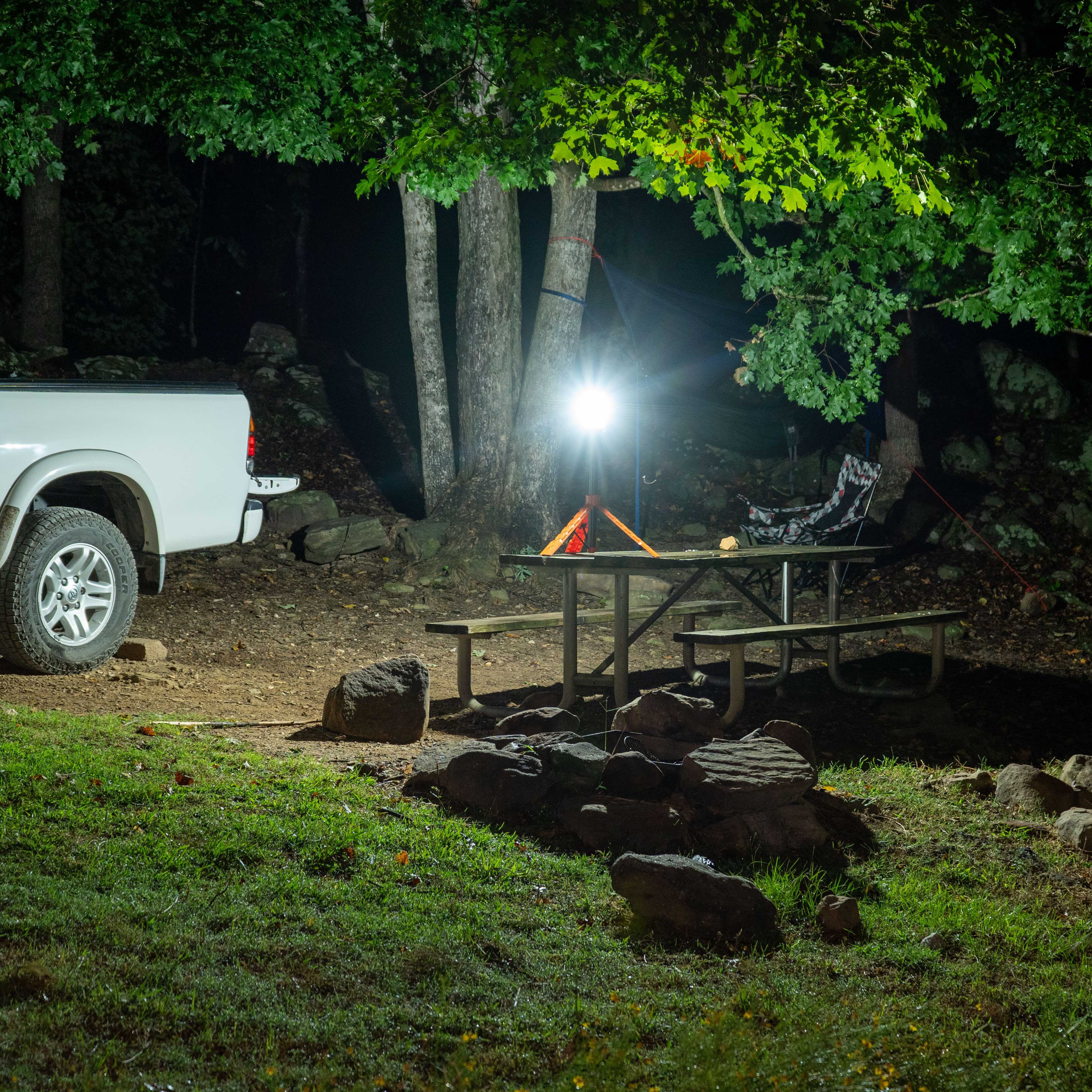
Think about where the light lands beyond the path. A pale wall, glossy vehicle, wet pavement, or light-colored fence may reflect a noticeable amount toward other viewing positions. The relevant test is not just whether the ground is bright, but whether people can comfortably look along the route.
The product description emphasizes glare-reducing optics. Even so, optics do not make every mounting angle comfortable. A direct view into the illuminated face can still be unpleasant. Aim and location need to do their share of the work.
Stand at a child's eye level as well as your own. Check from a seated position on the patio and from inside nearby windows. If someone must look toward the fixture while approaching a step, reconsider the arrangement. A good path light should make the step easier to see, not make looking in that direction harder.
For a property combining security-focused circulation and evening entertaining, separate those jobs. Use the HY015 where its daylight appearance suits the task, rather than expecting it to create a warm lounge atmosphere. Lighting feels more intentional when every zone has a clear purpose.

Commission the installation with ordinary household routines
The first night should be a test, not a photo opportunity. Let the unit receive its initial charge according to the instructions, confirm the selected mode, and then use the route the way your household actually uses it.
Walk with grocery bags. Open the gate. Bring out the trash cart. Park the larger vehicle in its usual spot. These mundane actions reveal shadows and sensor behavior that a clear, empty driveway can hide. They also show whether you instinctively reach for a flashlight at a particular point.
Test the motion response from every normal approach. A fixture may detect someone well from one direction and less conveniently from another, depending on geometry and obstacles. Adjust only within the manufacturer's permitted settings and mounting arrangement.
Observe the standby state as well as the bright state. If standby lighting is too faint for comfortable orientation, the installation may not meet your goal even though motion boosts are bright. Conversely, if the bright state is uncomfortable, the solution may be a different aim or position rather than more output.
Repeat the observation later in the night or early in the morning when practical. A fixture that looks excellent shortly after sunset has not yet demonstrated overnight suitability. Keep simple notes about weather, mode, and performance so adjustments are based on a pattern rather than one memorable evening.
Price the project honestly, including the parts nobody photographs
At the time of this article's preparation, the HY015 is listed at $85. Two units would therefore have a fixture-only subtotal of $170, and three would total $255. These examples are arithmetic, not recommended quantities or an installation quote.
The full project can include suitable wall fasteners, professional installation, access equipment, and preparation of the mounting surface. Check what the supplied kit includes before buying additional hardware. Taxes and any applicable delivery charges should be confirmed at checkout.
Solar power means the fixture does not need grid electricity for its normal solar-powered operation. It does not mean ownership costs disappear. Cleaning, inspection, service, and eventual component or fixture replacement still belong in a sensible budget.
Do not invent a payback period without a baseline. If you are replacing a working light, you need to know its actual consumption and operating schedule. If you are adding lighting to a previously unlit route, you are buying visibility and convenience rather than automatically reducing an existing electric bill.
The HY015's current pre-order notice also affects the project budget indirectly. Avoid scheduling paid installation around an assumed arrival date. Confirm the current shipping estimate and allow for delivery before committing to a time-sensitive job.

Three active HYKOONT options, three different buying conversations
The products below are active catalog listings with current USD prices checked for this article. Active status is not the same as a promise of immediate shipment. Prices, availability, and listing details can change, so review the linked product page before purchase.
HY015: $85 for a focused wall-side deployment
The HYKOONT HY015 15000LM Large Lens Solar Street Light is the centerpiece here because its optical design and automatic controls fit the discussion of targeted pathway illumination. Choose it around a suitable solid wall, not as a freestanding pole solution.
Its current listing pairs a 10W monocrystalline panel with a 3.2V, 9.2Ah battery and radar-assisted dim-to-bright operation. The key decision is whether your wall location offers both useful charging exposure and sensible beam placement. Its pre-order status should remain part of that decision.
Plan your wall-side route with the $85 HY015 and review the current shipping estimate.
TW020: $91 when the path opens into a broader area

The HYKOONT TW020 Series Solar Street Light is currently listed at $91. Its description emphasizes a wide-angle lighting arrangement, motion sensing, timed lighting, and brightness adjustment. It is worth comparing when a narrow approach opens onto a driveway apron or a larger outdoor working area.
Do not treat it as an automatic upgrade merely because its listing carries a higher lumen figure. The useful question is whether its distribution and documented installation options fit your site better. Compare dimensions, mounting requirements, charging exposure, and controls before deciding.
Compare the $91 TW020 for a wider driveway-side lighting task.
BD006: $179 for a different scale of project

The HYKOONT BD006 Solar Street Commercial Light is currently $179. Its listing describes aluminum-alloy construction, a monocrystalline solar panel, and applications such as driveways, parking areas, and larger outdoor spaces.
This is a different conversation from lighting a short residential side passage. A larger fixture and a commercial-oriented description still require careful siting and verification. If a project involves parking circulation, shared access, or other demanding conditions, seek a site-specific lighting assessment rather than selecting by a product headline.
Explore the $179 BD006 for a larger outdoor lighting plan.
Cloudy weeks are where a sensible plan proves itself
A solar installation should be evaluated on ordinary imperfect days, not just under ideal conditions. Several cloudy days, an unusually busy evening, or a long winter night can reveal a mismatch between the available charging energy and the chosen operating pattern.
If performance falls short, start with observations. Has foliage grown across the panel's view? Is the panel dirty? Has a nearby light affected automatic behavior? Is the sensor repeatedly reacting to activity beyond the intended walkway? Work through those possibilities before assuming the battery is defective.
Cleaning should follow the manufacturer's care instructions. Use methods suitable for the panel and housing, and avoid improvised pressure washing or abrasive treatment. If reaching the fixture requires unsafe ladder positioning, arrange appropriate help rather than making routine upkeep a hazard.
After storms, visually check for movement, loose-looking hardware, or new obstructions. Do not open sealed components or attempt battery modifications without manufacturer guidance. If the fixture behaves inconsistently despite a suitable location and correct settings, contact support with the model, mode, weather pattern, and observed symptoms.
Keep a portable light available while you evaluate changes. If a route needs dependable illumination regardless of recent sunlight, discuss a powered or appropriately backed-up alternative with a qualified professional. That is not a failure of solar lighting; it is a recognition that different jobs call for different energy arrangements.
Security begins with visibility, not a dramatic claim
Better pathway lighting can help you see the walking surface, find an entrance, and notice activity. It should not be presented as a guarantee against crime, injury, or unwanted visitors. A bright fixture is one part of property planning, not a replacement for sound locks, clear sightlines, and sensible routines.
Trim vegetation that hides the path or blocks the light. Keep hoses, tools, and bins out of the walking line. Repair an uneven surface rather than expecting illumination to make it harmless. These changes can make the lighting itself more useful.
If you use a camera, test it after installing the fixture. Look for reflections, overexposed patches, and changes when motion lighting activates. A camera image that looks washed out may need a different relationship between the light and the camera, not simply a more powerful light.
For shared properties or spaces with formal lighting requirements, obtain a professional review of the complete arrangement. A consumer product listing is not evidence that a particular site meets every applicable requirement. Keep product selection and site assessment as related but separate decisions.
Questions worth asking before you drill
1. Can the HY015 be installed on a freestanding pole?
No. Plan the HY015 as a wall-mount-only fixture, with a solid supporting wall, a straight rigid bracket, and a securely attached baseplate. Do not transfer pole-mount assumptions from other HYKOONT models to this one. If your route has no suitable wall, choose a different mounting-compatible solution.
2. Will the HY015 stay at full brightness from dusk until dawn?
Do not assume so. The listing describes dusk-to-dawn automation and motion-triggered full brightness followed by a dim energy-saving state. Actual overnight behavior depends on charging conditions, settings, night length, and activity. Confirm the available modes and follow the initial charging instructions before judging performance.
3. What does the HY015 cost, and is it ready to ship?
The checked listing price is $85 in USD. The product is currently marked as a pre-order with “Ships in 1 month” in its title. Review the current page before purchasing, and confirm timing before arranging installation. The listed price alone does not establish the final checkout total.
4. How do I fix a solar pathway light that fades before morning?
Begin with the charging location and operating mode. Look for shade, dirt, a changed sun angle, or frequent motion-triggered boosts. Follow the manual when adjusting settings. If suitable exposure and correct operation do not resolve the issue, contact support rather than modifying the battery or assuming a larger lumen rating will solve it.
5. How many HY015 fixtures do I need for a side walkway?
There is no reliable universal quantity based on path length alone. Corners, walls, parked vehicles, and the position of steps matter. Start with a layout of the critical transitions, then verify usable illumination on site. Treat the published coverage figure as a product claim, not a spacing diagram.
6. Is HY015 lighting warm enough for an outdoor dining area?
Its listed 6500K–7000K color temperature is cool daylight, not warm patio lighting. That can suit a utility route or garage approach, but it may not create the atmosphere you want around a dining table. Separate circulation lighting from decorative or entertaining lighting when their goals differ.
7. Does a monocrystalline panel make the HY015 work in deep shade?
No panel technology removes the need for adequate sunlight. Assess the actual site throughout the day and across seasons. Also confirm the supplied panel arrangement before assuming it can be relocated remotely. If the available wall position stays shaded, changing the lighting approach may be more effective than adding another identical unit.
8. Should I choose HY015, TW020, or BD006?
Start with the mounting location and lighting task. HY015 is the wall-side, targeted-pathway focus of this guide. TW020 is worth comparing for a wider driveway-side area, while BD006 belongs in the discussion for larger outdoor projects. Compare their current product details and installation requirements, not just prices or lumen claims.
The best result is a path you stop thinking about
Good outdoor lighting rarely becomes the main event. You get out of the car, recognize the route, open the gate, and reach the door without searching for your footing. The fixture has done its job when that sequence feels uneventful.
For a suitable wall-side path, the HY015 offers a focused starting point: a monocrystalline solar panel, a distinctive lens array, automatic control, and a current $85 entry price. Give it a sound mounting surface, adequate sun exposure, and an operating mode matched to actual use.
Then test it with the car parked, the gate moving, and the household coming home as usual. Adjust the plan around what you see on the ground. That is a better route to useful dusk-to-dawn pathway security lighting than buying the biggest number and hoping it lands in the right place.


Leave a comment
This site is protected by hCaptcha and the hCaptcha Privacy Policy and Terms of Service apply.