





It was August 2023. Phoenix hit 110°F for 31 consecutive days. Dallas never dropped below 90°F at night for three weeks straight. And somewhere in a parking lot in Tucson, a solar street light that had been working perfectly for two years quietly started failing to reach full brightness by midnight.
Nobody called it a battery problem at first. The installer assumed it was a wiring issue. The property manager blamed the panel. It took a technician with a multimeter and a little patience to find the real culprit: the lithium battery had been slowly cooked by weeks of ambient temperatures that exceeded what the enclosure was designed to dissipate.
That story played out hundreds of times during the 2023–2024 El Niño cycle — the strongest in two decades. And it raised a question that more solar buyers are now asking before they purchase, not after: what does extreme heat actually do to a solar battery, and which chemistry holds up best?
This is the answer that question deserves.
First, Let's Be Honest About What "Heat Resistant" Actually Means
Every solar product listing says something like "operates from -20°C to 60°C." That spec is real, but it's also the most misunderstood number in the industry.
Operating range and optimal performance range are two completely different things. A LiFePO4 cell can operate at 60°C (140°F). What it can't do is operate at 60°C without accelerating degradation. The battery won't stop working — it'll just age faster than the warranty assumes.
Here's what the chemistry actually looks like under heat stress:
The Arrhenius Problem
Battery aging follows the Arrhenius equation — a chemistry principle that says reaction rates roughly double for every 10°C increase in temperature. For a LiFePO4 cell rated for 2,000 charge cycles at 25°C, operating consistently at 45°C cuts that to roughly 1,000 cycles. At 55°C, you're looking at 500–700 cycles before capacity drops below 80%.
In a parking lot in Phoenix, the battery enclosure surface temperature can easily hit 50–60°C in direct sun during a heatwave — even with the insulation a good aluminum housing provides. If your solar light doesn't have adequate thermal management, the Arrhenius math is working against your battery every single day of summer.
Why LiFePO4 Still Wins the Chemistry Battle
Not all lithium batteries age equally under heat. The two main chemistries in solar street lights are NMC (lithium nickel manganese cobalt) and LiFePO4 (lithium iron phosphate). Here's the practical comparison:
- NMC at high temps: Thermal runaway risk increases significantly above 50°C. Capacity fade is steep. More energy-dense, but structurally less stable under sustained heat.
- LiFePO4 at high temps: Thermally stable up to ~270°C before decomposition risk. Capacity fade is gradual and predictable. Lower energy density, but the chemistry itself is fundamentally safer.
For an outdoor solar light that sits in full sun in Texas or Arizona, LiFePO4 isn't just a marketing bullet point — it's a functionally important safety and longevity choice. The phosphate-oxygen bond is significantly stronger than the oxide bond in NMC, which is why LiFePO4 doesn't release oxygen during thermal stress events the way NMC can.
That said, LiFePO4 chemistry alone doesn't save a poorly designed product. The enclosure, the charge controller logic, and the placement of the battery within the housing all matter.

What El Niño Actually Tested (And What It Revealed)
The 2023–2024 El Niño event created a near-perfect stress test for outdoor solar installations across the US Sun Belt. Average summer temperatures in states like Arizona, Nevada, Texas, and Florida ran 3–5°F above the 30-year mean — not a dramatic number until you consider that solar equipment is often already operating near its thermal ceiling on a normal summer day.
The Three Failure Modes That Showed Up
1. Premature capacity fade. Units with lower-grade LiFePO4 cells or suboptimal BMS (battery management system) calibration showed 15–25% capacity loss after one summer of El Niño conditions. A light that used to run 12 hours was finishing at 9–10 hours by September.
2. MPPT controller drift. Some charge controllers lost calibration accuracy at sustained high temperatures, causing the panel to stop charging at the optimal voltage point. The battery wasn't getting fully charged even on sunny days — a compounding problem when nights were hotter and the light ran longer to compensate.
3. BMS over-temperature cutoff. Better-designed units actually did exactly what they were supposed to do: the battery management system triggered a protection cutoff when internal temps exceeded threshold. The light went dark. That's the correct failure mode — but it still left parking lots unlit and property managers confused.
What Survived — And Why
Units that made it through the 2023–2024 summer with less than 5% capacity loss shared a few common traits:
- Battery cells with ≥2,000 cycle rating at 25°C (implying sufficient headroom for real-world heat)
- Aluminum alloy enclosures with adequate thermal mass (not thin-walled plastic or composite)
- MPPT controllers with temperature compensation built into the charging algorithm
- IP65 or higher weatherproofing (which also reduces internal humidity that accelerates corrosion under heat)
- Proper installation height (6m+ gets the enclosure further from ground-level radiant heat)

The Recommended Products Built for This Reality
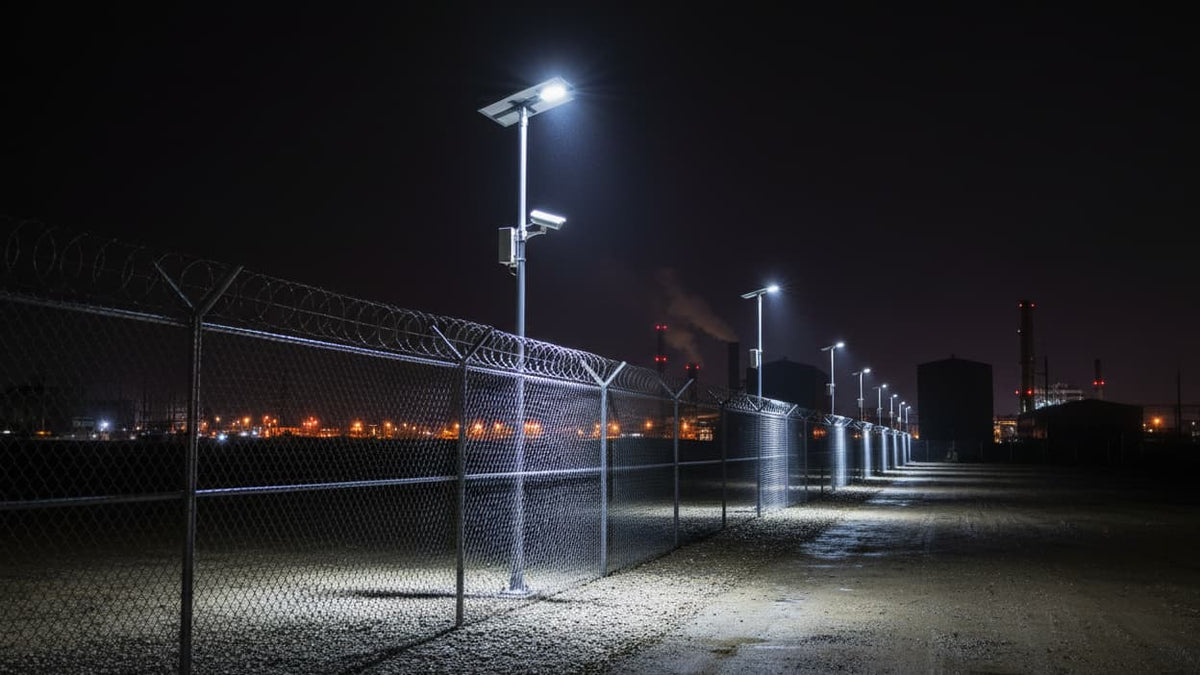
If you're sourcing solar street lights for a US commercial property — parking lot, HOA, campus perimeter, industrial yard — these are the units from Hykoont's current lineup that are specifically engineered to handle sustained summer heat.
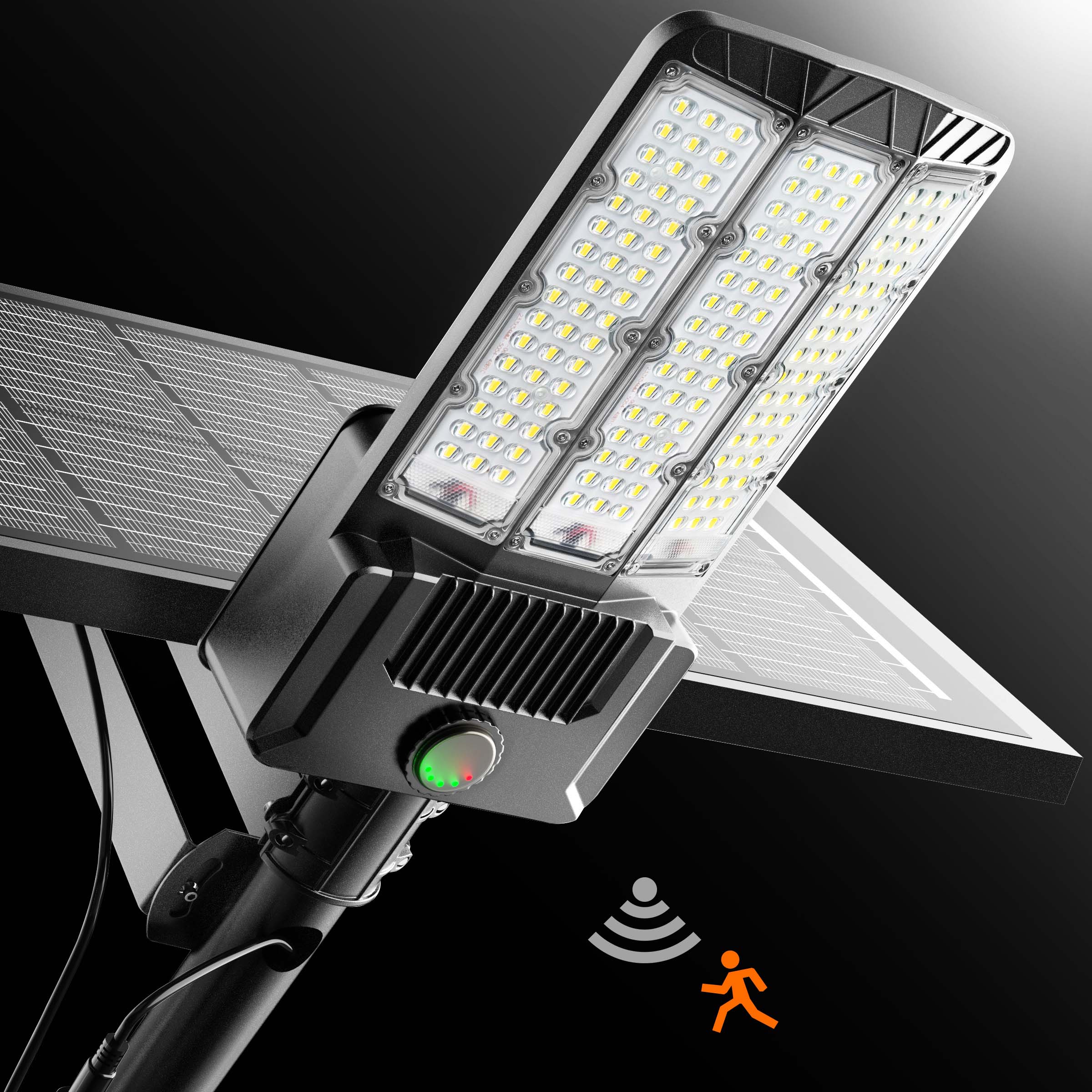
1. NT100A — 100W Commercial Solar Street Light with 320WH LiFePO4 + MPPT

The NT100A is what we'd spec for a hot-climate parking lot with no room for failure. The 80W monocrystalline panel feeds a 320WH (12.8V/25AH) LiFePO4 battery through a 6.4V MPPT controller with temperature-compensated charging. In practice, that MPPT logic adjusts the target charge voltage based on ambient temperature — so the battery isn't being pushed to its maximum at 100°F any more than it would be at 70°F.
192 SMD 3030 LED chips produce 7,200+ lumens at 100W. The aluminum body handles ambient temps from -20°C to 60°C. Three-year warranty, RoHS/CE/ISO-9001 certified. Installation height 6–8m, coverage up to 30m.
Price: $762.00
2. HK80 — 80W Solar Street Light with 10-Year LiFePO4 Battery

The HK80 carries what we consider the most significant single battery spec in Hykoont's lineup: a 3.2V/75AH LiFePO4 battery rated for 8–10 years of service life. At a normal Arrhenius degradation rate in moderate climates, that implies a cycle count north of 3,000 — which means in a hot-climate installation, even with accelerated aging, you're still looking at 5–7 years of reliable performance.
The 80W LED source delivers 160 LM/W efficiency with 96 SMD 3030 chips. The MPPT controller handles 5 hours of effective sunshine charging. Light sensor, motion sensor, and time control are all standard. Operating temp: -20°C to 60°C. Aluminum construction throughout.
Price: $499.00
3. NT60A — 60W Solar Street Light with 230WH LiFePO4 + MPPT

The NT60A hits the practical sweet spot for smaller commercial applications: HOA entrance roads, residential development lighting, and light-duty industrial perimeters where 100W is oversized but you still need heat-resilient chemistry.
The 230WH (12.8V/18AH) LiFePO4 pack runs through a 3.2V MPPT controller. Power is 60W with ≥4,800 lumens through SMD 3030 chips, 70°×140° beam. Three color temp options (3000K–6500K). Operating range -20°C to 60°C, IP65, aluminum body. Installation height 5–7m, coverage 20–25m. Three-year warranty.
Price: $582.00
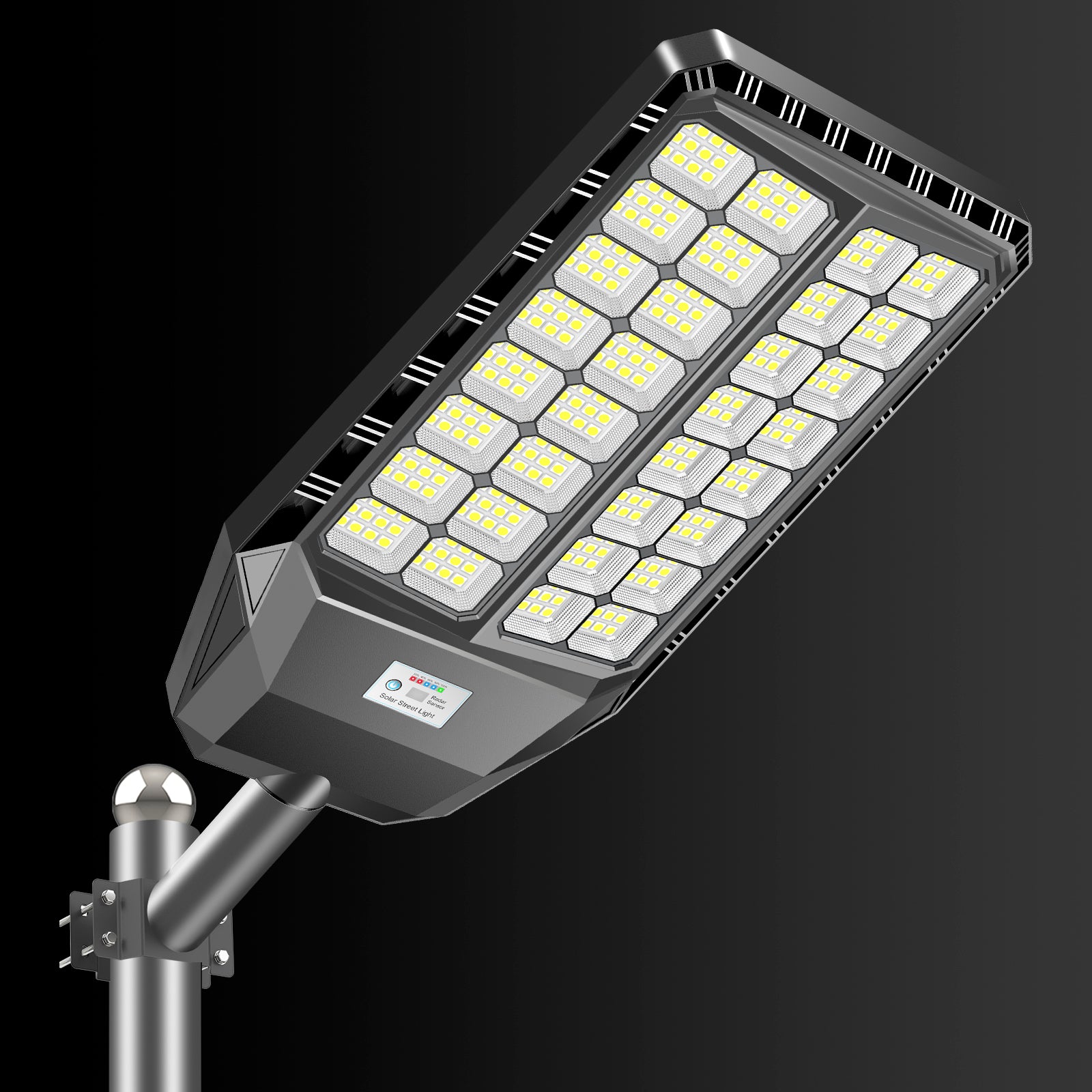
4. HY080 — 80W Solar Street Light with 538WH LiFePO4 + Adjustable CCT

The HY080 carries a 538WH (12.8V/42AH) LiFePO4 battery — the largest capacity in Hykoont's mid-range lineup. That extra reserve capacity has a secondary benefit in heatwave conditions: a larger battery pack operates at a lower depth-of-discharge per cycle, which directly reduces heat-related stress on individual cells.
100W monocrystalline panel with MPPT charging. 72 SMD 5050 LEDs producing 14,400 lumens. Adjustable CCT (3000K–6500K). IP65-rated aluminum alloy body, -20°C to 60°C operating range. Coverage 20–25m at 9–10m installation height. Three-day cloudy weather reserve. Three-year warranty, CE/RoHS/ISO-9001.
Price: $999.00
5. HY100C — 100W Commercial Solar Light with 960WH LiFePO4 + 10-Year Panel

The HY100C is the unit you specify when a parking lot or industrial site genuinely cannot have a light go dark. The 960WH (3.2V/300AH) LiFePO4 battery is in a different class from the rest of the lineup — it's designed for five-day weather reserves and covers a large enough capacity buffer that even aggressive Arrhenius degradation won't shorten the functional service life below 8–10 years in most US climates.
150W monocrystalline panel with 10-year rated lifespan. 27,000 lumens from SMD 5050 chips at 180 LM/W. MPPT controller with all-day and segmented modes. Installation height 10–12m, suitable for large commercial lots. -20°C to 60°C, aluminum construction.
Price: $1,890.00
How to Think About Battery Sizing in Hot Climates
One of the clearest lessons from the 2023–2024 heatwave data is that battery sizing matters more than most buyers realize — not just for runtime, but for thermal management.
Here's the counterintuitive part: a larger battery pack in the same form factor runs cooler per cycle. If your light needs 100Wh to run through the night and your battery holds 230Wh, you're drawing from 43% of total capacity. If your battery holds 320Wh for the same load, you're drawing from 31%. Lower depth of discharge = lower electrochemical stress = less heat generated internally = slower degradation.
This is why the HY080's 538WH pack and the HY100C's 960WH pack are genuinely better investments for hot-climate installations — not just because they give you more cloudy-day reserve, but because they run further from their electrochemical limits every single cycle.
The Rule of Thumb
For US installations in USDA Hardiness Zones 8–10 (California Central Valley, Arizona, Nevada, Texas, Florida, Georgia, South Carolina), size your battery at least 2x your nightly energy demand. In zones 6–7 with normal summers, 1.5x is usually adequate. El Niño years or above-average heat summers can push zone 7 behavior toward zone 9 standards.
Installation Practices That Protect Your Battery From Heat
The chemistry is half the battle. The installation is the other half. These are the practices that have the most impact on thermal management in the field:
Pole Height and Orientation
Ground-level radiant heat is significantly more intense than ambient air temperature — asphalt in summer sun can reach 150°F+ at the surface. Installing your light at 6m+ versus 4m makes a measurable difference in the equilibrium temperature of the battery enclosure. Taller poles aren't just about light distribution.
Panel Angle and Azimuth
In the US Sun Belt, panels facing true south at 15–25° tilt (flatter than typical PV installations) often produce more consistent summer output than steep-angled arrays. Steep angles optimize for winter sun; flat angles capture more of the summer mid-day peak without the panel overheating. Many Hykoont units ship with adjustable panel brackets for exactly this reason.
Avoid Dark-Surface Installations
Dark asphalt, black-painted concrete, and metal grating all radiate significantly more heat than light concrete or natural ground. If you have a choice of mounting surface, lighter is cooler. If you don't have a choice, account for it in your battery sizing calculation.
Check BMS Logs After the First Hot Summer
Premium solar lights with accessible BMS data will show you whether over-temperature protection trips occurred during the summer. If your unit tripped more than 5–10 times in a season, consider whether a higher-capacity battery (lower DoD per cycle) or a shaded installation position would prevent it going forward.

The Climate Reality Buyer's Checklist
Before you finalize a solar street light purchase for a US commercial property, run through this list:
- ✅ Battery chemistry: Confirm LiFePO4, not NMC or LiPo
- ✅ Battery capacity: Is it ≥2x your estimated nightly load?
- ✅ MPPT controller: Does it include temperature compensation in the charging algorithm?
- ✅ Enclosure material: Aluminum alloy, not plastic or composite
- ✅ IP rating: IP65 minimum (keeps humidity out, which compounds heat damage)
- ✅ Operating temp spec: At least -20°C to 60°C (140°F) confirmed
- ✅ Cycle life rating: ≥2,000 cycles at 25°C standard conditions
- ✅ Warranty: ≥3 years on the full unit, not just the panel
- ✅ Certifications: CE, RoHS, and ISO-9001 as a quality floor
Every product listed in this article checks all nine boxes. That's not accidental — it's the baseline specification standard that justifies recommending them for US commercial installations where a failure isn't just inconvenient, it's a liability.
Frequently Asked Questions
1. Will a heatwave permanently damage my LiFePO4 solar battery?
Not instantly, and not necessarily permanently — it depends on how severe the heat is and how long it lasts. A single heatwave where your battery enclosure hits 55–60°C will cause measurable but modest capacity loss (typically 2–5% per event if the BMS is functioning correctly). Sustained summer temperatures above 45°C for multiple months will accelerate degradation more significantly — potentially 10–20% capacity loss in a single season in extreme cases. The good news: LiFePO4 capacity fade is gradual and predictable, not sudden. Your light will dim before it fails, giving you time to plan.
2. What's the actual operating temperature limit of the LiFePO4 batteries in Hykoont solar lights?
Hykoont's LiFePO4-equipped models (NT100A, NT60A, HK80, HY080, HY100C) all carry a stated operating range of -20°C to 60°C (-4°F to 140°F). That's the survival spec. For optimal long-term cycle life, internal battery temperature should stay below 45°C during charging — which is why MPPT temperature compensation and adequate enclosure thermal mass matter.
3. How does the MPPT controller protect my battery during a heatwave?
A temperature-compensating MPPT controller lowers the target charge voltage when battery temperature rises. This prevents overcharging at elevated temperatures, which is one of the main mechanisms of heat-accelerated degradation. Without temperature compensation, a battery charging in a 55°C enclosure is being pushed to a voltage ceiling that's calibrated for 25°C — effectively overcharging it. Hykoont's MPPT-equipped models handle this automatically.
4. Is LiFePO4 better than NMC for solar street lights in hot climates?
Yes, meaningfully so. NMC cells begin to exhibit thermal runaway risk above 50°C and degrade faster under sustained heat. LiFePO4's phosphate-oxygen bond is thermally stable to ~270°C and shows more linear, predictable degradation. For an outdoor installation in the American Sun Belt, LiFePO4 is the correct chemistry — the safety margin and longevity justification are both real, not just marketing.
5. Can I install a solar street light in direct sun in Phoenix or Las Vegas?
Yes — and plenty of commercial installations do exactly that. The practical precaution is to size the battery conservatively (use the 2x nightly load rule), confirm LiFePO4 chemistry, and choose units with MPPT temperature compensation. All five models recommended in this article are appropriate for Sun Belt installation. The HY100C and HY080, with their larger battery reserves, offer the most thermal headroom for the most extreme conditions.
6. How many consecutive cloudy days can these lights handle during a monsoon or overcast summer stretch?
The NT100A and NT60A are rated for 3 consecutive cloudy/rainy days in power-saving mode. The HY080 (538WH pack) and HY100C (960WH pack) extend that to 3–5 days depending on the load profile selected. During the 2023 monsoon season in the Southwest, extended cloud cover of 4–7 days was reported in some areas — if your installation is in a monsoon climate, the HY100C is the safest sizing choice.
7. Does higher installation height actually help with heat management?
Yes. Ground-level radiant heat from asphalt can exceed 150°F on a summer afternoon. At 6m (roughly 20 feet), the battery enclosure sits in ambient air rather than the intense radiant layer near the surface. This can reduce equilibrium enclosure temperature by 10–15°F compared to a shorter installation — a meaningful difference in the Arrhenius equation.
8. Will the panel efficiency drop in extreme heat?
Yes — all photovoltaic panels lose efficiency at high temperatures. Monocrystalline silicon panels (used in all Hykoont models) typically lose about 0.3–0.5% efficiency per degree Celsius above 25°C. At 60°C panel temperature, that's roughly 10–17% power output reduction. This is one reason Hykoont's panel specs are sized with headroom — an 80W or 100W panel delivering 85% output still adequately charges the battery in normal peak sun hours.
9. What's the difference between a 3-year and a 10-year battery warranty for solar street lights?
A 3-year warranty covers manufacturing defects and early-life failures. A 10-year battery warranty (like the HK80's rated service life) implies the cell chemistry is robust enough that the manufacturer expects greater than 80% capacity retention through decade-length use. In practice, LiFePO4 cells with ≥3,000 cycle ratings at 25°C can realistically reach 7–10 years in moderate climates and 5–7 years in hot ones. The rated life is the engineering ceiling; climate determines where you land within it.
10. Which Hykoont model do you recommend for a commercial parking lot in Texas or Florida?
For most commercial parking lots in Texas or Florida (high ambient temps, significant monsoon or hurricane season humidity), we recommend the NT100A as the baseline spec and the HY100C for larger lots or mission-critical applications. Both have aluminum construction, LiFePO4 chemistry, MPPT controllers, and IP65 weatherproofing. The NT100A at $762 is the practical workhorse. The HY100C at $1,890 is the spec for a site where a lighting failure carries real liability.
The Bottom Line
El Niño didn't break well-engineered solar street lights. It exposed poorly engineered ones.
LiFePO4 chemistry is the right foundation for hot-climate solar lighting — not because it's immune to heat, but because it degrades predictably, safely, and slowly enough that a correctly sized installation in Arizona or Texas will still be delivering reliable illumination years after an NMC-based competitor has failed. The MPPT controller, the enclosure material, and the battery capacity relative to your nightly load are the variables you can control at purchase time.
Get those right, and the next El Niño won't be a problem. It'll be a proof of concept.


Leave a comment
This site is protected by hCaptcha and the hCaptcha Privacy Policy and Terms of Service apply.