




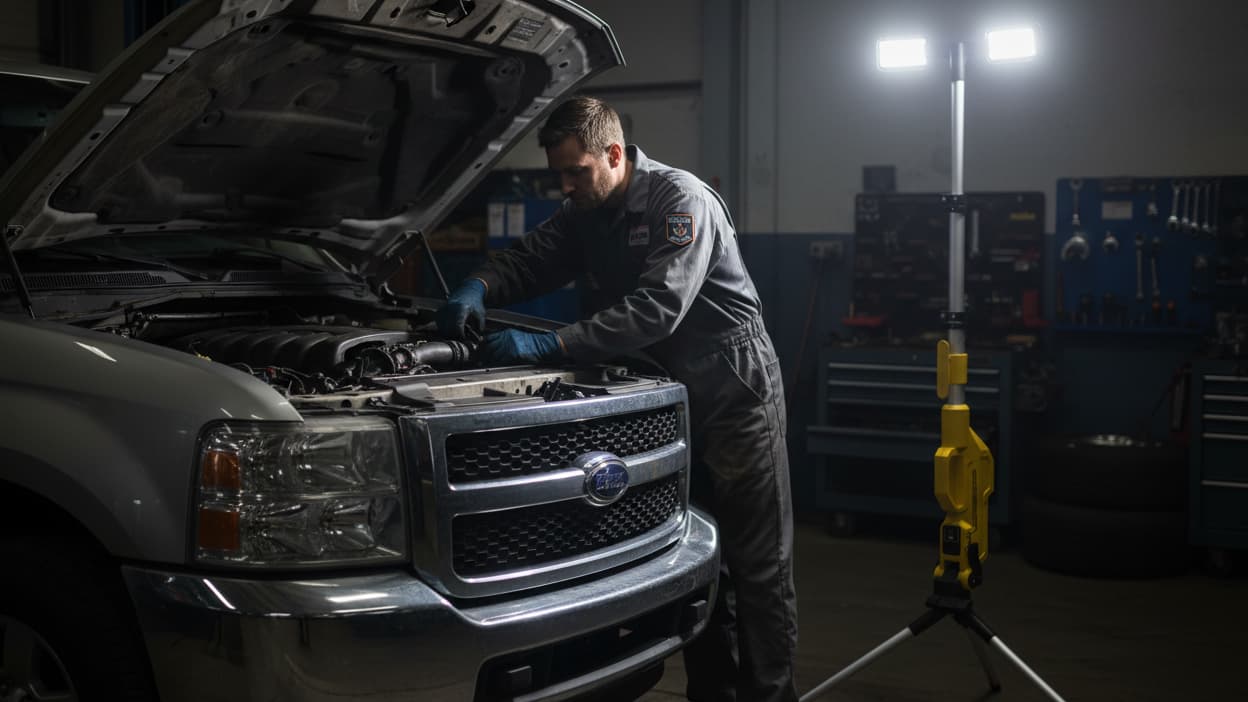
If you manage a commercial property, a job site, or a municipal facility and you're still running grid-powered lighting, there's a very real chance you're paying for electricity you don't have to — and missing out on rebate money that's sitting unclaimed right now.
Let's talk about what's actually happening with commercial solar lighting incentives in 2026, why this year is different from previous years, and how a single product — the Hykoont MX5085 WorkMax Light — fits into a smarter, rebate-eligible outdoor lighting strategy.
Why 2026 Is a Turning Point for Commercial Solar Lighting Rebates
The Inflation Reduction Act (IRA) didn't just tweak a few tax credits — it fundamentally restructured how the U.S. government supports clean energy adoption at the commercial level. And 2026 is the year many of those provisions hit their stride.
Here's what's changed:
- The Investment Tax Credit (ITC) remains at 30% for commercial solar installations through 2032. That includes solar-powered lighting systems when they're part of a qualifying energy project.
- Bonus credits for low-income and energy communities can push that figure to 40% or even 50% in some cases.
- State-level programs have expanded — California, Texas, New York, Illinois, and Florida all have active utility rebate programs specifically targeting commercial outdoor lighting upgrades.
- USDA REAP grants (Rural Energy for America Program) now cover solar lighting for agricultural and rural commercial properties at up to 50% of project costs.
The window is open. The question is whether you're positioned to walk through it.
What Qualifies as a "Commercial Solar Lighting" System for Rebate Purposes?
This is where a lot of property managers get tripped up. Not every solar light qualifies for every rebate — and the definitions matter.
Generally speaking, rebate-eligible commercial solar lighting systems share these characteristics:
- Self-contained solar power generation — the unit generates its own electricity via photovoltaic panels
- LED light source — virtually all modern programs require LED (not fluorescent or HID)
- Commercial-grade durability — IP65 or higher weatherproofing is typically required
- Documented lumen output — most programs require minimum 3,000–5,000 lumens for area lighting
- Displacement of grid electricity — the system must demonstrably reduce utility consumption
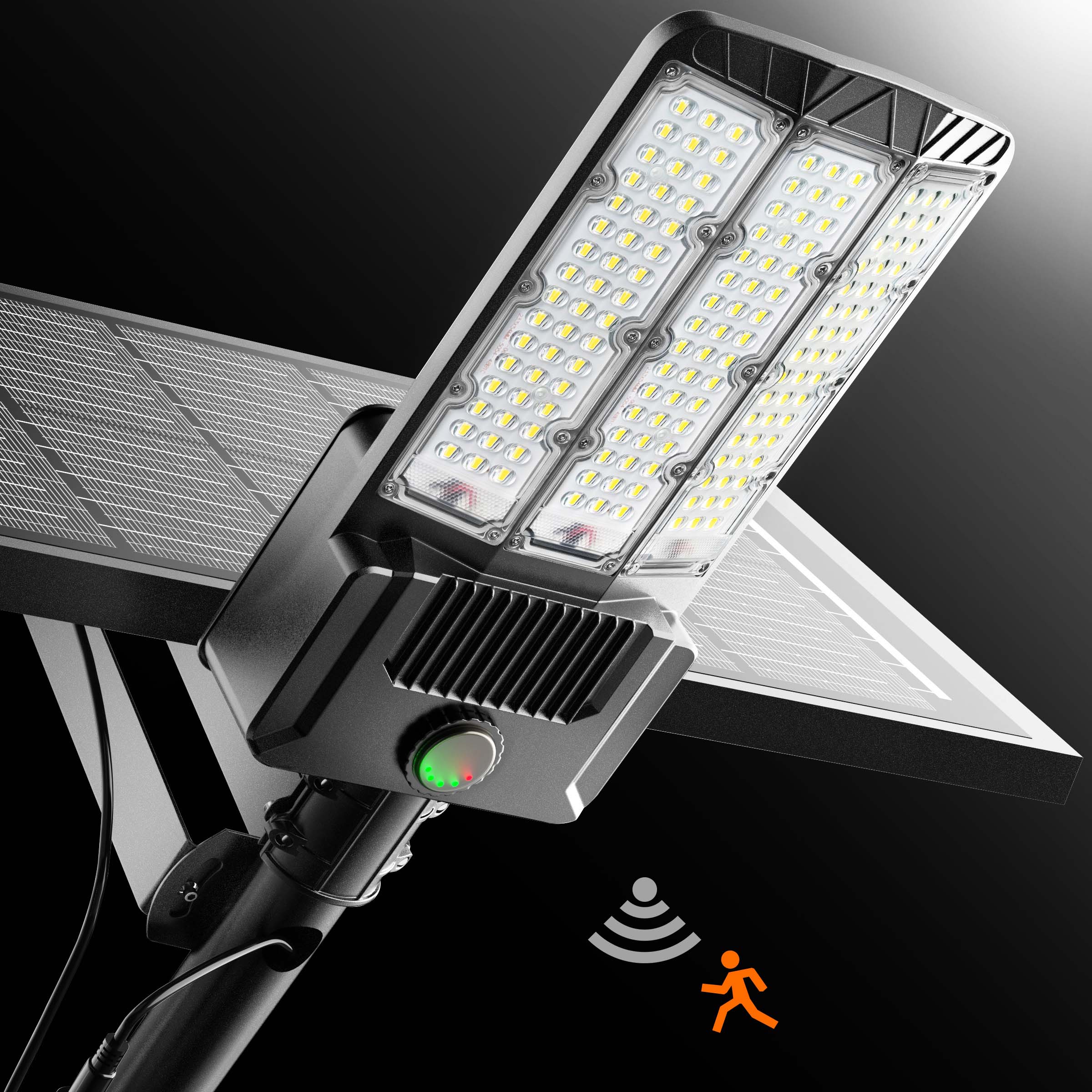
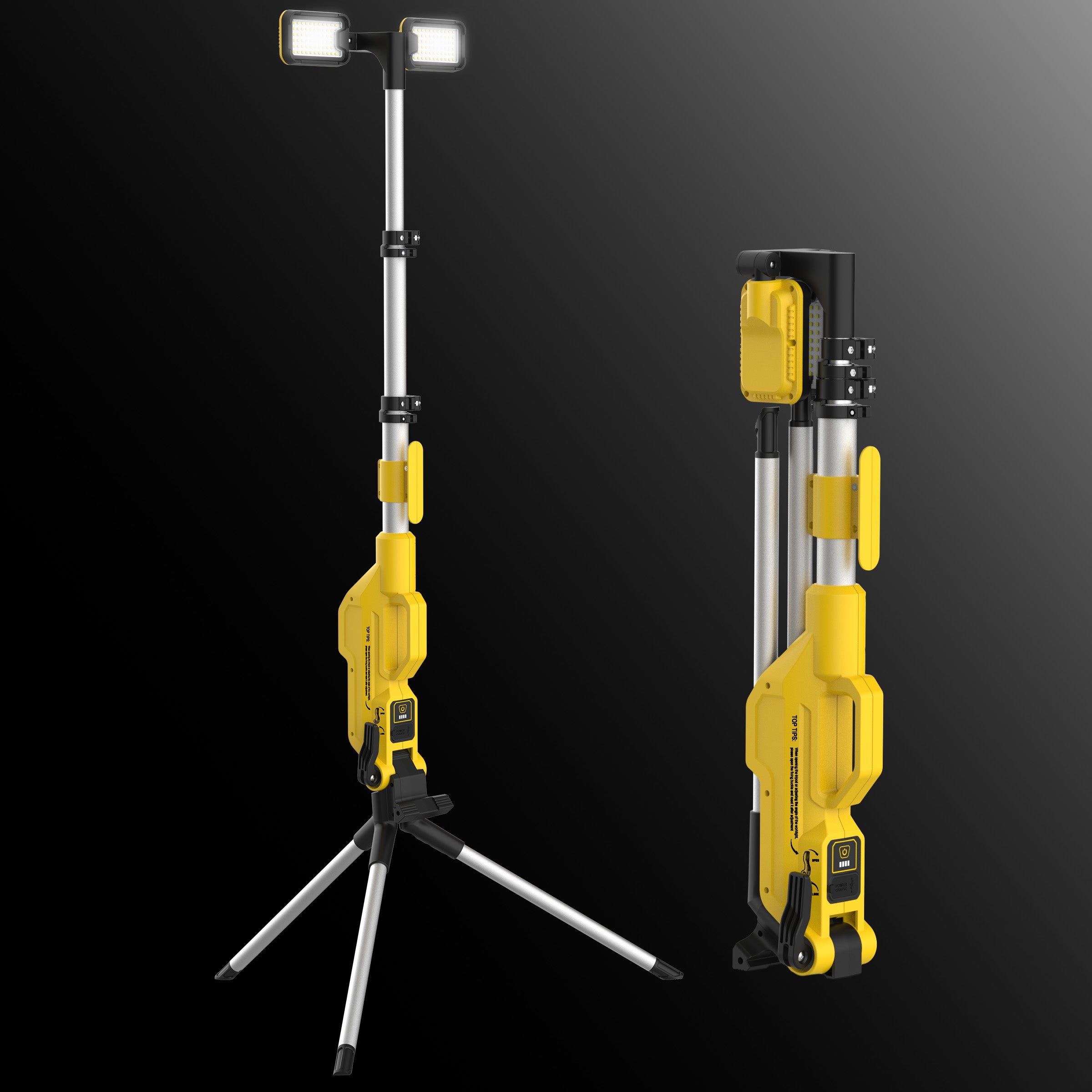
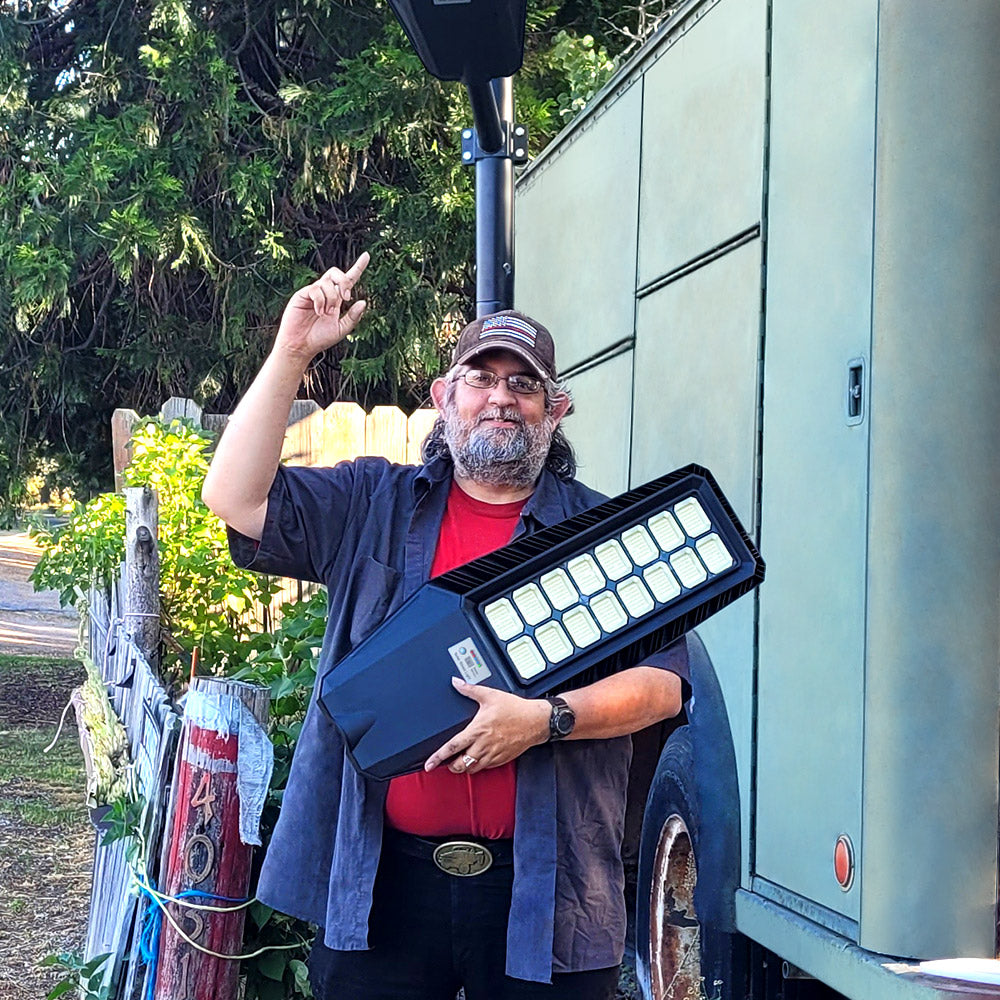
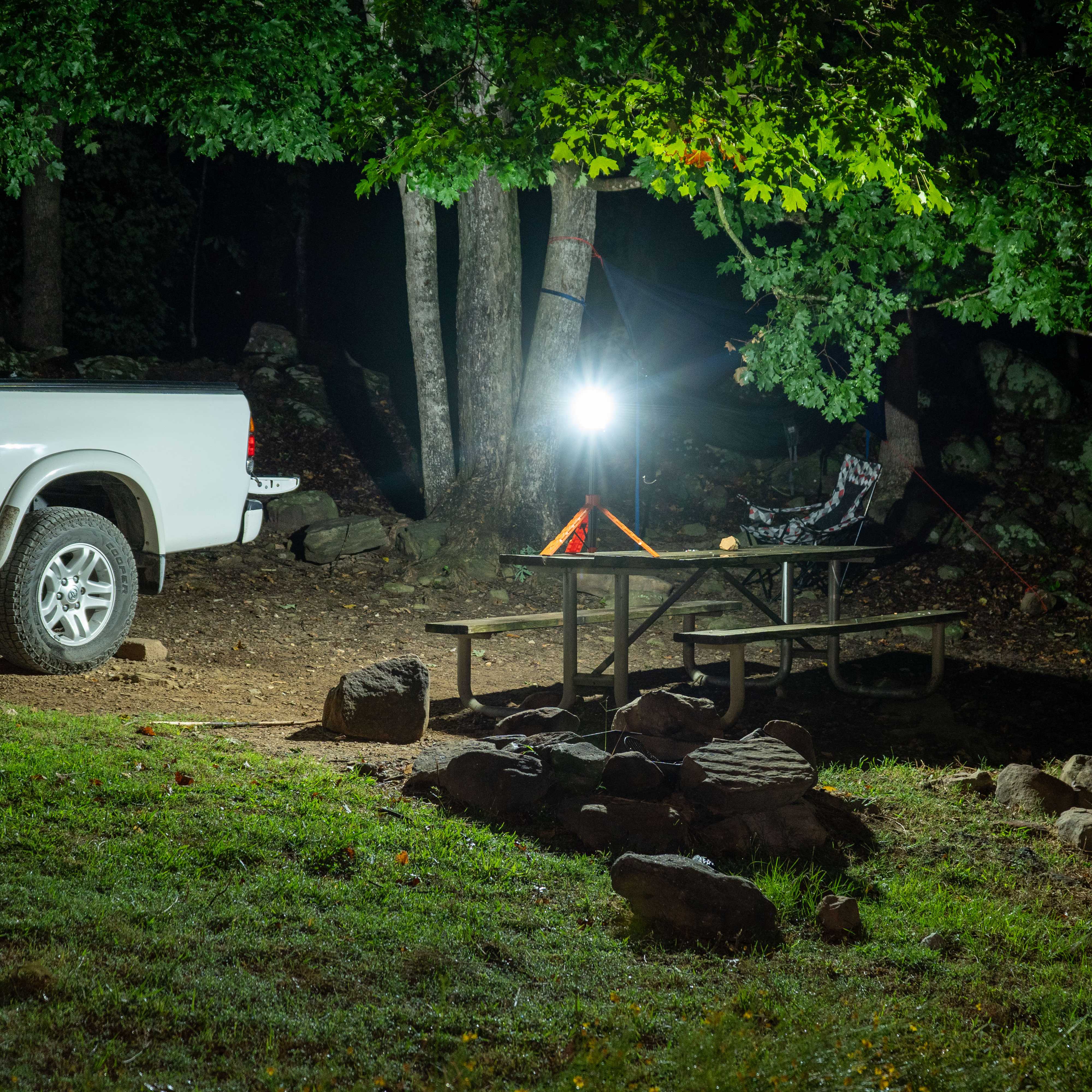
The Hykoont MX5085 checks every one of these boxes. It delivers 8,000 lumens of LED output, carries an IP65 weatherproof rating, runs entirely on its built-in power bank (charged via solar or AC), and is designed for exactly the kind of commercial and emergency applications that rebate programs are built around.

👉 Hykoont MX5085 WorkMax Light — $118.00 | Shop Now
The MX5085: Built for the Job Sites and Properties That Rebates Are Designed to Help
Let's get specific about what the MX5085 actually does, because the specs tell a story that matters for rebate documentation.
8,000 Lumens — That's Not a Typo
Most portable work lights top out around 3,000–5,000 lumens. The MX5085 pushes 8,000 — enough to illuminate a full construction bay, a loading dock, or a large outdoor work area without supplemental lighting. For rebate purposes, this lumen output puts it firmly in the "area lighting" category, which typically qualifies for higher incentive tiers.
IP65 Weatherproofing — Rain, Dust, Job Site Reality
IP65 means it's fully dust-tight and protected against water jets from any direction. That's not just a nice-to-have — it's a requirement for most commercial rebate programs. A light that fails in the rain isn't a commercial lighting solution; it's a liability.
Built-In Power Bank — The Dual-Source Advantage
Here's what makes the MX5085 genuinely different from a standard solar street light: it has a built-in power bank that can be charged via solar or AC power. This means:
- On sunny days, it charges from solar — zero grid draw
- On cloudy days or in covered areas, it charges from AC — but stores that energy for later use
- In emergencies, it functions as a power bank for other devices
For rebate documentation, this dual-source capability is actually an asset. It demonstrates intentional energy management, which is exactly what utility programs want to see.
Tripod-Compatible — Flexibility That Fixed Installations Can't Match
Fixed solar street lights are great for permanent installations. But what about construction sites that move? Temporary event spaces? Emergency response staging areas? The MX5085's tripod compatibility means you can deploy it exactly where you need it, reposition it as the job evolves, and redeploy it to the next project.
That flexibility has real dollar value — one unit can serve multiple projects rather than being locked to a single pole.

How to Actually Claim Solar Lighting Rebates in 2026: A Practical Walkthrough
Rebate programs sound great until you try to navigate the paperwork. Here's a realistic, step-by-step approach that works for most commercial property owners and contractors.
Step 1: Identify Your Applicable Programs
You're likely eligible for multiple programs simultaneously. Start with:
- Federal ITC (Form 3468) — 30% tax credit on qualifying solar equipment. File with your business tax return.
- Your state's energy office — search "[your state] commercial solar rebate 2026" or visit dsireusa.org for a comprehensive database
- Your utility company — most major utilities (Duke Energy, Pacific Gas & Electric, Xcel Energy, etc.) have commercial lighting rebate programs that don't require solar — just LED upgrades
- USDA REAP — if your property is in a rural area or you're in agriculture, this is often the most generous program available
Step 2: Document Your Current Lighting Costs
Rebate programs want to see displacement — proof that your new system is replacing something that was drawing grid power. Pull 12 months of utility bills and identify your lighting-specific consumption. If you don't have submetering, your utility can often provide estimates based on your fixture inventory.
Step 3: Get a Pre-Approval Letter (Where Required)
Some state programs require pre-approval before you purchase equipment. Don't skip this step — buying first and applying later can disqualify you from certain incentives.
Step 4: Purchase Qualifying Equipment
This is where the MX5085 comes in. At $118.00 per unit, it's priced to make the math work even before rebates. After a 30% federal ITC, your effective cost drops to around $82.60 per unit. If your state has additional incentives, you could be looking at 50–60% of the purchase price back.
→ Order the MX5085 at $118.00 — Start Your Rebate Clock Today
Step 5: Keep Your Documentation
Save everything: purchase receipts, product spec sheets, installation photos, and any correspondence with your utility or state energy office. The IRS and state programs can audit rebate claims, and documentation is your protection.
Step 6: File and Follow Up
Federal credits go on your tax return. State and utility rebates typically involve a separate application with supporting documentation. Processing times vary — budget 60–120 days for most programs.

Real-World Scenarios: Where the MX5085 + Rebates Make the Most Sense
Construction Site Lighting
A mid-size construction company running 10 MX5085 units across two active job sites is looking at $1,180 in equipment costs. After federal ITC: ~$826. If the company is in a qualifying energy community, that could drop further. Meanwhile, they've eliminated the cost of running temporary power for lighting — which on a large site can run $200–$400/month in electricity alone.
Parking Lot Upgrades
Commercial parking lots are one of the highest-priority targets for utility rebate programs because they represent significant, consistent energy consumption. A property manager replacing 20 grid-powered fixtures with solar alternatives — including portable MX5085 units for coverage gaps — can often qualify for both the federal ITC and utility rebates simultaneously.
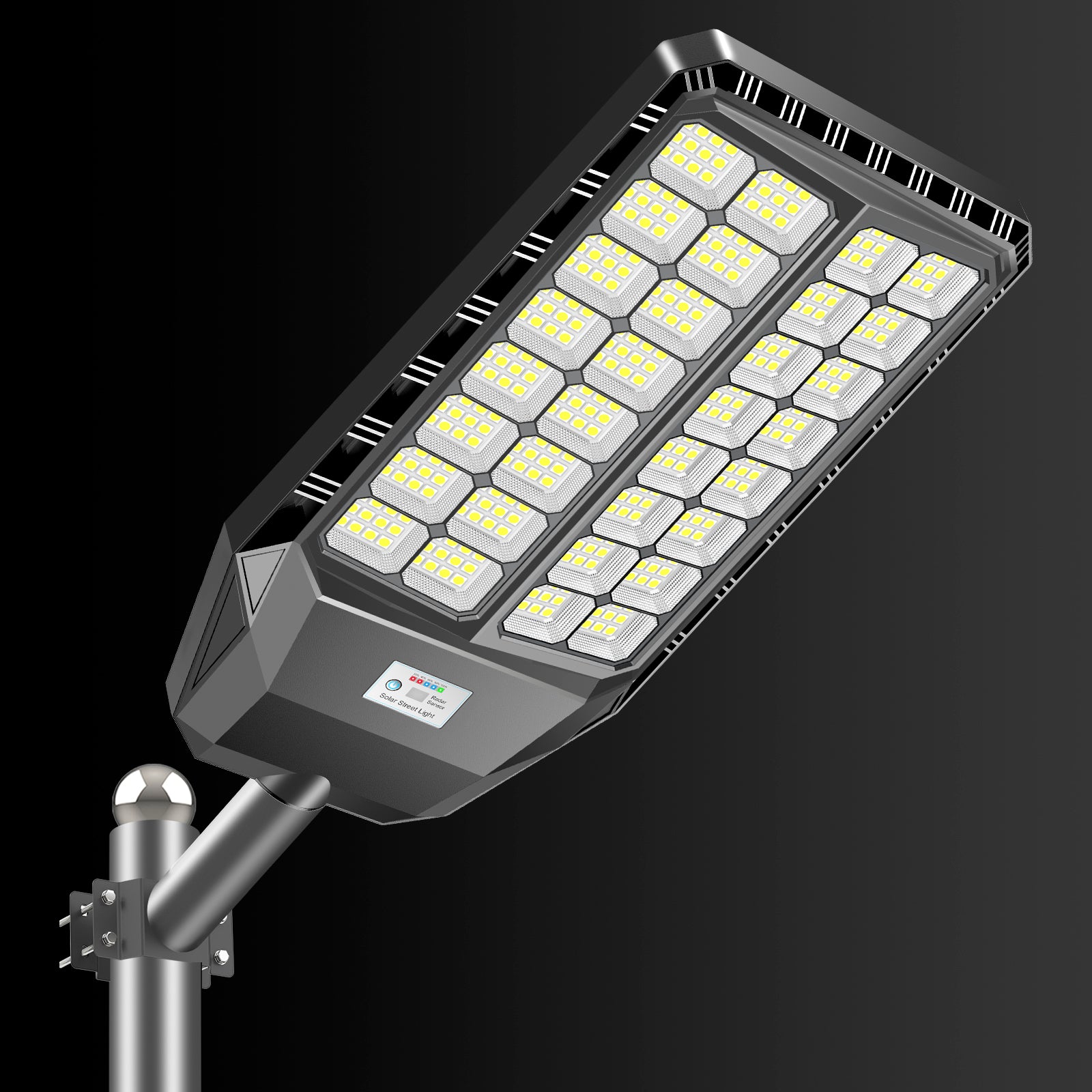
For permanent pole-mounted installations, pair the MX5085 with a fixed solar street light like the Hykoont TW040:

Hykoont TW040 Solar Street Light — $179.00 | Shop Now
Emergency Management and Municipal Use
Municipalities and emergency management agencies are increasingly using portable solar lighting as part of disaster preparedness infrastructure. FEMA's Hazard Mitigation Grant Program (HMGP) can cover solar lighting equipment for qualifying jurisdictions. The MX5085's emergency power bank function makes it particularly relevant here — it's not just a light, it's a power source.
Agricultural and Rural Properties
USDA REAP is specifically designed for this use case. A farm operation installing solar lighting for equipment yards, livestock areas, or processing facilities can receive grants covering up to 50% of project costs. At $118/unit for the MX5085, a 10-unit installation costs $1,180 — with REAP, that could be $590 out of pocket.
Comparing Solar Lighting Options: Portable vs. Fixed for Rebate Purposes
One question that comes up a lot: does a portable solar light like the MX5085 qualify for the same rebates as a fixed installation like a solar street light?
The honest answer: it depends on the program.
- Federal ITC: Generally applies to solar energy property that is "placed in service" — portable units can qualify if they're used in a business context and documented as business equipment
- Utility rebates: Most utility programs focus on permanent fixture replacements, so fixed solar street lights typically have a clearer path to these rebates
- State grants: Varies significantly — some programs are equipment-agnostic, others require permanent installation
The smart approach for most commercial properties: use fixed solar street lights for permanent area lighting (and the clearest rebate path), and use the MX5085 for flexible, task-specific, and emergency lighting where portability has operational value.
Here's a look at the fixed solar options that pair well with the MX5085 strategy:

Hykoont TW024 Solar Street Light — $99.00 | Shop Now

BC024 Solar Street Light 180W — $159.00 | Shop Now
The Numbers: What Does a Solar Lighting Rebate Actually Save You?
Let's run a realistic scenario for a mid-size commercial property — say, a 50,000 sq ft warehouse with a parking lot and loading dock area.
Current State (Grid-Powered)
- 20 metal halide fixtures, 400W each
- Running 12 hours/night, 365 days/year
- Total consumption: 35,040 kWh/year
- At $0.12/kWh average commercial rate: $4,205/year in lighting electricity
- Plus maintenance: bulb replacements, ballast repairs — easily another $800–$1,200/year
After Solar Upgrade
- 15 fixed solar street lights (TW040 at $179 each = $2,685) for permanent coverage
- 5 MX5085 units ($118 each = $590) for loading dock, emergency, and flexible use
- Total equipment cost: $3,275
- Federal ITC (30%): -$982.50
- State utility rebate (estimated 15%): -$491.25
- Net out-of-pocket: ~$1,801
- Annual electricity savings: ~$4,000+
- Payback period: under 6 months
That's not a hypothetical — that's the math for a real commercial property making a real upgrade. The rebates don't just make solar lighting affordable; they make it one of the fastest-payback capital investments available to commercial property owners right now.
Common Mistakes That Kill Rebate Applications
A few things that trip people up, based on how these programs actually work:
- Buying before getting pre-approval — some programs won't reimburse equipment purchased before the application is approved. Always check the program rules first.
- Missing the documentation window — most programs have a deadline for submitting post-installation documentation. Missing it means losing the rebate.
- Using non-qualifying equipment — if the product doesn't meet the program's minimum specs (lumen output, IP rating, etc.), the application gets rejected. The MX5085's specs are well above typical minimums.
- Not stacking programs — many property owners claim one rebate and stop. Federal + state + utility rebates can often be combined. Don't leave money on the table.
- Treating it as a one-time event — if you're adding lighting in phases, each phase can potentially qualify separately. Plan your purchases with the rebate calendar in mind.
What to Look for in a Solar Lighting Product for Rebate Documentation
When you're submitting a rebate application, the product documentation you provide matters. Here's what programs typically ask for — and how the MX5085 delivers:
| Documentation Required | MX5085 Status |
|---|---|
| Lumen output specification | ✅ 8,000 lumens (documented) |
| IP weatherproof rating | ✅ IP65 certified |
| LED light source confirmation | ✅ Full LED array |
| Solar power generation | ✅ Built-in solar charging |
| Purchase receipt | ✅ Provided at purchase |
| Product spec sheet | ✅ Available from Hykoont |
State-by-State Snapshot: Where the Best Commercial Solar Lighting Rebates Are in 2026
This isn't exhaustive — programs change frequently — but here's a quick orientation for the states with the most active commercial lighting incentive programs:
- California: CPUC Self-Generation Incentive Program (SGIP), utility rebates through PG&E, SCE, and SDG&E. Strong incentives for commercial solar, especially in disadvantaged communities.
- New York: NY-Sun program, NYSERDA commercial incentives. One of the most generous state programs in the country.
- Texas: Oncor, CPS Energy, and Austin Energy all have commercial lighting rebate programs. No state income tax means federal ITC has full impact.
- Illinois: Illinois Shines program, ComEd and Ameren rebates. Strong utility incentives for commercial customers.
- Florida: FPL, Duke Energy Florida, and Tampa Electric commercial programs. Growing solar incentive landscape.
- Colorado: Xcel Energy commercial rebates, state tax credits. Strong rural programs through USDA REAP.
- Massachusetts: SMART program, utility rebates. One of the highest solar incentive rates per watt in the country.
If your state isn't listed, check dsireusa.org — it's the most comprehensive database of state and local incentive programs and is updated regularly.

Frequently Asked Questions
1. Does the Hykoont MX5085 qualify for the federal Investment Tax Credit?
The federal ITC applies to solar energy property used in a trade or business. The MX5085, when used for commercial purposes (job sites, commercial properties, emergency management), can qualify as business equipment eligible for the ITC. Consult your tax advisor to confirm eligibility based on your specific business structure and use case.
2. What's the difference between a tax credit and a rebate?
A tax credit reduces your tax liability dollar-for-dollar — so a 30% ITC on $1,000 of equipment means you owe $300 less in taxes. A rebate is a direct payment or bill credit from a utility or government program. Both reduce your net cost, and they can often be combined.
3. Can I claim rebates on portable solar lights, or only fixed installations?
It depends on the program. Federal ITC can apply to portable solar equipment used in a business context. Most utility rebate programs focus on permanent fixture replacements. State programs vary. The safest approach: use fixed solar street lights for utility rebate claims and document portable units like the MX5085 for federal ITC purposes.
4. How many lumens do I need for a commercial parking lot?
The Illuminating Engineering Society (IES) recommends 1–5 foot-candles for commercial parking lots, depending on the security level. For a standard parking space (roughly 160 sq ft), you need approximately 160–800 lumens per space. The MX5085's 8,000 lumens can cover multiple spaces from a single unit — making it effective for coverage gaps and supplemental lighting.
5. What is IP65 and why does it matter for rebate eligibility?
IP65 is an international standard for enclosure protection. The "6" means fully dust-tight; the "5" means protected against water jets from any direction. Most commercial rebate programs require IP65 or higher for outdoor lighting equipment. The MX5085 meets this standard.
6. How long does it take to get a solar lighting rebate?
Federal ITC is claimed on your annual tax return — so the timing depends on when you file. State and utility rebates typically take 60–120 days from application submission to payment. Some programs offer instant rebates at the point of purchase through participating retailers.
7. Can I stack multiple rebate programs on the same equipment?
Yes, in most cases. Federal ITC, state tax credits, and utility rebates are generally stackable. The key is to read each program's rules carefully — some programs reduce their incentive if you're receiving other incentives, but outright prohibition of stacking is rare.
8. What documentation do I need to keep for a solar lighting rebate claim?
At minimum: purchase receipts, product specification sheets, photos of installation, and any pre-approval letters from the rebate program. For federal ITC, you'll also need to complete IRS Form 3468. Keep all documentation for at least 7 years in case of audit.
9. Is the USDA REAP grant available for lighting equipment specifically?
Yes. REAP covers renewable energy systems and energy efficiency improvements for agricultural producers and rural small businesses. Solar lighting qualifies as a renewable energy system. Grants cover up to 50% of eligible project costs, with a maximum of $1 million for grants and $25 million for loan guarantees.
10. What's the best way to find rebate programs in my area?
Start with three resources: (1) dsireusa.org for a comprehensive database of state and local programs, (2) your utility company's website — look for "commercial rebates" or "business energy programs," and (3) your state's energy office website. For federal programs, energy.gov is the authoritative source.
The Bottom Line
2026 is genuinely one of the best years in recent memory to invest in commercial solar lighting. The federal ITC is at its peak, state programs have expanded, and utility companies are actively incentivizing commercial customers to reduce grid demand.
The Hykoont MX5085 WorkMax Light at $118.00 is a product that was built for exactly this moment — high lumen output, IP65 durability, solar charging capability, and the flexibility to serve construction sites, parking lots, emergency staging areas, and agricultural properties alike.
The math is straightforward. The rebates are real. The only question is whether you act on them before the window shifts.
Order the MX5085 — $118.00 | Free Shipping Available
And if you're planning a full property lighting upgrade, explore the complete Hykoont solar lineup — from portable work lights to permanent street light installations — to build a system that maximizes both your coverage and your rebate eligibility.

Leave a comment
This site is protected by hCaptcha and the hCaptcha Privacy Policy and Terms of Service apply.