


That bargain parking lot light you installed two years ago? It's quietly costing you more than you think.
Let's skip the preamble. You manage a commercial property — a strip mall, a warehouse complex, an apartment community, a corporate campus — and at some point, someone on your team picked the least expensive lighting option to stay under budget. Maybe it was $40 fixtures from a big-box supplier. Maybe it was a low-bid electrical contractor who spec'd fixtures you'd never heard of.
Now, two winters later, three of those fixtures are flickering. One burned out completely. Your utility bill has barely budged despite the "energy efficient" label on the box. And you just got a quote for $800 to have an electrician come out and replace four bulbs in hard-to-reach pole mounts.
Sound familiar?
This article is going to walk you through exactly how cheap commercial lighting bleeds your budget — and what a real, long-term solution looks like. We'll do the actual math. No fluff, no vague promises about "going green." Just dollars and cents, plus a clear look at the products worth considering.
The Real Cost Formula Most Buyers Ignore
When property managers and facilities directors evaluate lighting, they almost always look at the purchase price. That's the sticker. But the sticker is probably the least important number in the equation.
The number that actually matters is Total Cost of Ownership (TCO) — which covers:
- Purchase price (one-time)
- Installation cost (one-time, but sometimes recurring if fixtures fail)
- Energy consumption (monthly, ongoing)
- Maintenance and replacement (ongoing, often unpredictable)
- Compliance and liability costs (the ones nobody talks about)
A $45 fixture that draws 150W of power, fails after 18 months, and requires a bucket truck to replace isn't a bargain. It's a recurring expense dressed up as a one-time purchase.
Let's look at this in real numbers.
Scenario: 20-Unit Parking Lot, Mid-Size Strip Mall
| Category | Cheap Fixtures (20 units) | Quality Solar Fixtures (20 units) |
|---|---|---|
| Purchase price | $900 ($45/unit) | $13,920 ($696/unit) |
| Installation (wiring, conduit) | $6,000–$12,000 | $1,200–$2,400 (no grid wiring) |
| Annual energy cost (avg $0.13/kWh) | $3,415/yr | $0/yr (solar powered) |
| Maintenance yr 1–3 | $2,400 (bulb/driver replacements) | $0–$200 (cleaning) |
| 3-Year Total | $22,545–$28,545 | $15,120–$16,520 |
By year three, the "cheap" option has already cost you $6,000–$13,000 more. And that gap widens every year after that.

Where Cheap Lighting Actually Fails You
1. Energy Costs That Never Stop
Most budget commercial fixtures are sold with wattage numbers that sound acceptable — 80W, 100W, 120W. But the efficiency (lumens per watt) is often terrible. You're paying for power, not light.
A low-quality 100W fixture might produce 6,000–7,000 lumens. A well-engineered solar LED fixture at the same effective output might draw zero from the grid because it's running entirely on harvested solar energy.
Run 20 fixtures for 12 hours a night, and a grid-dependent system at $0.13/kWh costs you roughly $3,400+ per year just in electricity — before any rate increases. Over 10 years? You've spent $34,000+ on power alone for one small parking lot.
2. Maintenance Is the Hidden Budget Killer
This one catches property managers off guard every time. Here's what a typical service call for a failed pole-mounted commercial fixture actually costs:
- Electrician's truck roll: $150–$300 minimum
- Bucket truck rental (if needed): $300–$600/half day
- Parts: $40–$150
- Labor: $100–$200
One service call: $590–$1,250. For one light.
If you have 20 fixtures and three fail per year (a conservative estimate for low-quality units), that's $1,770–$3,750 annually just in reactive maintenance.
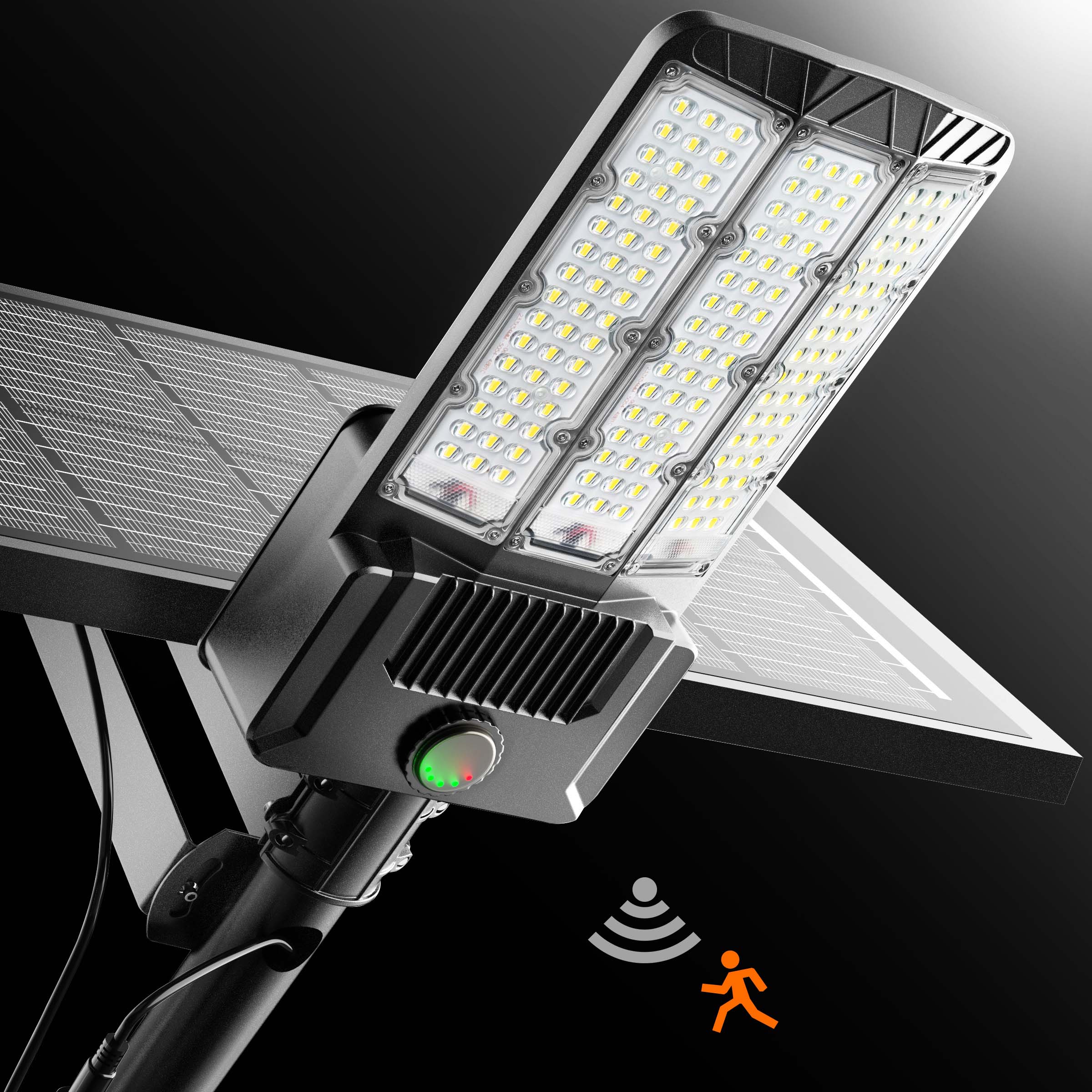
High-quality solar street lights with sealed LED modules, MPPT charge controllers, and LiFePO4 battery systems have dramatically lower failure rates — and when something does need attention, it's typically accessible without specialized equipment.
3. Light Quality Affects Your Property's Perception
This one is harder to quantify but absolutely real.
Flickering lights in a parking lot signal neglect. Dim, yellowish coverage creates dark corners. Tenants notice. Customers notice. Security camera footage suffers. Insurance underwriters notice during property reviews.
A property with consistent, bright, even 5000K daylight-spectrum lighting reads as well-maintained and secure. That perception has direct impact on lease renewals, tenant satisfaction scores, and your ability to attract quality tenants at market rates.
4. Liability Exposure You May Not Have Priced In
Here's the one that keeps risk managers up at night: a slip-and-fall in a poorly lit parking lot.
If someone is injured in an area you're responsible for maintaining, and it can be shown that lighting was inadequate or non-functional, your liability exposure is significant. Settlement costs for commercial premises liability cases routinely run $50,000–$500,000+.
Proper lighting isn't just a comfort amenity. In many jurisdictions, it's a legal obligation under property maintenance codes. Cutting corners on lighting quality is cutting corners on risk management.

What to Actually Look for in Commercial-Grade Solar Lighting
Not all solar lights are created equal. The residential solar lights you see at hardware stores for $29.99 will not survive a commercial application — period. Here's what separates genuinely commercial-grade products from everything else:
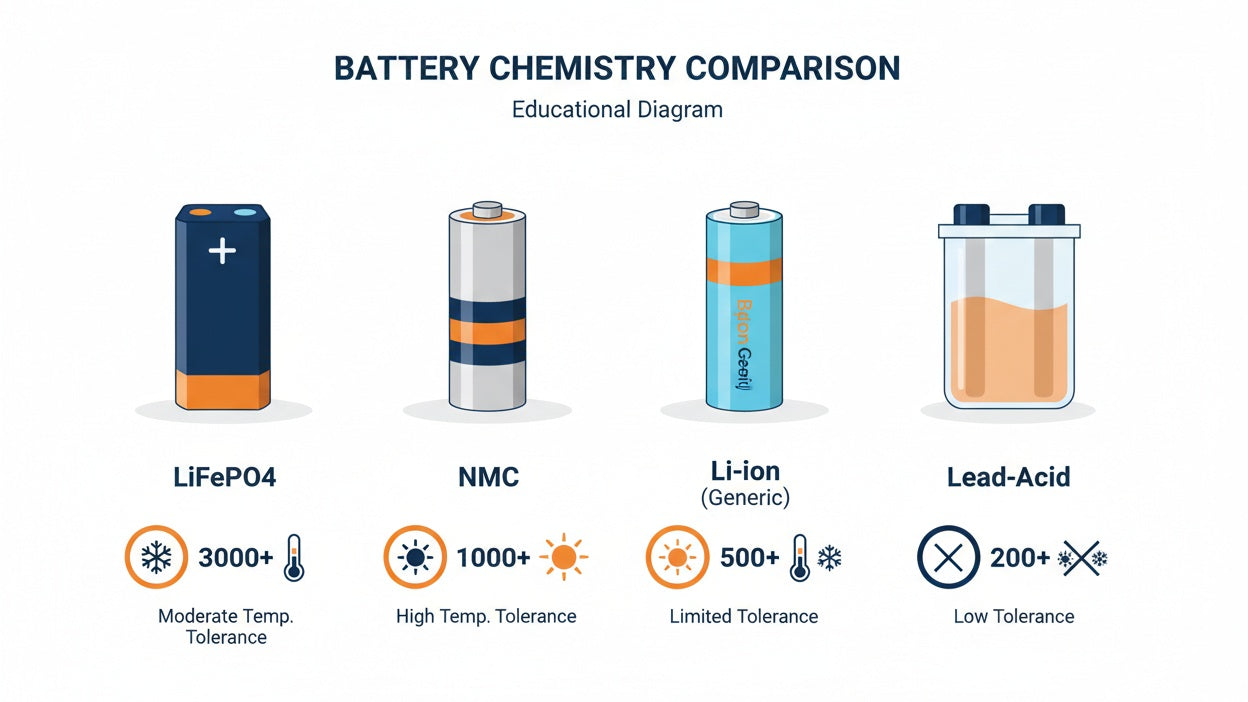
Battery Technology: LiFePO4 vs. Lead-Acid vs. Generic Li-ion
LiFePO4 (lithium iron phosphate) batteries are the standard for serious commercial solar applications. They offer 2,000–4,000+ charge cycles (vs. 300–500 for lead-acid), stable performance in temperature extremes, and no thermal runaway risk.
Any commercial solar light without specifying LiFePO4 or at least premium Li-ion chemistry should be scrutinized carefully.
MPPT Charge Controllers
Maximum Power Point Tracking (MPPT) charge controllers extract 20–30% more energy from solar panels compared to basic PWM controllers. In cloudy conditions, winter months, or partially shaded installations, this difference can mean the light stays on all night vs. dimming out at 2 AM.
Monocrystalline Solar Panels
Monocrystalline panels are more efficient per square inch than polycrystalline alternatives — important when panel size is constrained by fixture design. Look for efficiency ratings above 20%.
IP65 or Higher Ingress Protection
Commercial outdoor fixtures need to handle rain, dust, insects, and humidity year-round. IP65 is the minimum acceptable standard. Some premium fixtures achieve IP66 or IP67.
Die-Cast Aluminum Housing
Heat dissipation is critical for LED longevity. Die-cast aluminum bodies conduct heat away from LED modules far more effectively than plastic or stamped steel, extending driver and LED life significantly.
Adjustable CCT (Color Temperature)
The ability to switch between warm (3000K), neutral (4000K), and daylight (5000K–6000K) color temperatures allows you to match the lighting to the application — security areas benefit from 5000K+, while hospitality or residential-adjacent zones may prefer warmer tones.

Real Products Worth Considering for Commercial Applications
Here's where we get specific. These are actual Hykoont commercial solar street lights with real-world specs and pricing — not marketing estimates.
HY050 — 50W Commercial Solar Street Light, 9,000LM | $696

The HY050 is the entry point for genuine commercial solar lighting — and it's a serious product. At 50W with 9,000 lumens output, it's delivering approximately 180 lm/W efficiency, which is exceptional by any standard.
Key specs:
- 480Wh battery capacity (LiFePO4)
- 9,000 lumens — covers a 30–40 ft diameter area effectively
- MPPT charge controller built in
- IP65 rated, die-cast aluminum housing
- Motion sensing capability (optional mode)
- 3–5 cloudy day backup autonomy
Best for: Walkways, smaller parking areas, perimeter lighting, campground or RV park pathways, residential community streets
Price: $696/unit
→ View HY050 Details & Buy Now
HY100 — 100W Commercial Solar Street Light, 18,000LM | $1,399

This is where commercial-grade performance really starts to shine — literally. The HY100 delivers 18,000 lumens from a 100W system powered by a 150W monocrystalline solar panel and a 768Wh LiFePO4 battery pack.
For context: 18,000 lumens is roughly equivalent to what you'd get from a 175W metal halide fixture — except this one draws exactly zero from your utility bill.
Key specs:
- 768Wh LiFePO4 battery — enough for 3–4 consecutive cloudy/rainy days
- 150W monocrystalline solar panel (high-efficiency, built-in)
- MPPT controller with intelligent dimming modes
- 18,000 lumens output — large parking lots, loading docks, main access roads
- IP65+ weatherproofing
- Pole mount compatible (25–35 ft poles)
Best for: Parking lots (500+ spaces), warehouse exteriors, logistics hubs, municipal streets, large commercial campuses
Price: $1,399/unit
→ View HY100 Details & Buy Now
HY120 — 200W Commercial Solar Street Light, Adjustable CCT | $1,914

The HY120 is the flagship unit in this series — a 200W system with a 1,152Wh battery and adjustable CCT, giving you full control over light color temperature. This is the specification choice for high-security areas, large logistics properties, or installations where light quality requirements are non-negotiable.
Key specs:
- 1,152Wh LiFePO4 battery — exceptional reserve capacity
- 36V / 200W monocrystalline solar panel
- Adjustable CCT (warm to daylight spectrum)
- MPPT control system with programmable dimming schedules
- Designed for 25–40 ft pole mounting
- Suitable for installations with frequent overcast conditions (Pacific Northwest, Great Lakes region, Northeast)
Best for: High-security commercial zones, airports/aviation ground operations, large distribution centers, municipal infrastructure, industrial parks
Price: $1,914/unit
→ View HY120 Details & Buy Now
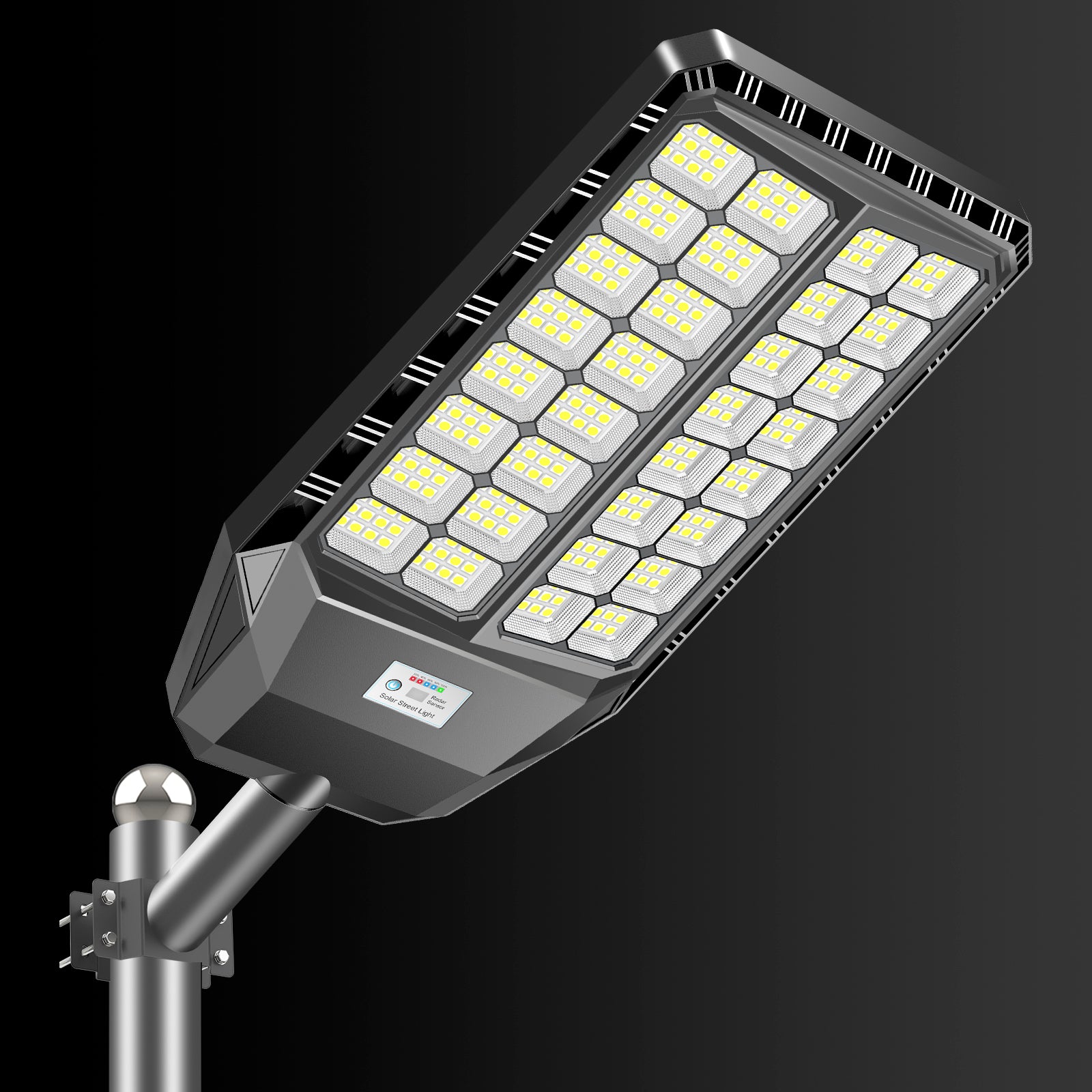
SZ300 — 400W Commercial Solar Street Light, 60,000LM | $129

The SZ300 is in a different category entirely — a 400W-equivalent, 60,000-lumen output system built on die-cast aluminum with a monocrystalline solar panel array. This is infrastructure-scale lighting.
Key specs:
- 60,000 lumens — covers large intersections, wide roads, or multi-lane parking structures
- Die-cast aluminum housing for maximum heat dissipation
- Monocrystalline solar panel
- IP65 rated for all-weather performance
- Designed for municipal road lighting, large commercial property perimeter lighting
Best for: Municipal roads, shopping mall main approaches, stadium/arena parking, industrial complex main access routes
Price: $129/unit
→ View SZ300 Details & Buy Now
OK50C — 50W Solar Flood Light, 288Wh | $364

Not every commercial lighting need is a tall-pole street light. The OK50C addresses wall-mounted and low-mount flood applications — signage illumination, building facades, loading bay approaches, dumpster enclosures, stairwell overhangs.
Key specs:
- 50W LED with 288Wh battery capacity
- Customizable lighting modes (motion-triggered, dusk-to-dawn, scheduled dimming)
- Durable aluminum construction, IP65
- Wall/surface mount or ground stake options
- Easy DIY installation — no electrician required
Best for: Building floodlighting, signage, loading areas, back-of-house zones, storage facilities, construction sites
Price: $364/unit
→ View OK50C Flood Light Details & Buy Now
How to Calculate Your Actual Payback Period
Here's a simple framework you can run on any commercial lighting project:
Step 1 — Calculate annual energy savings
Take your current fixture wattage × daily hours of operation × 365 × local kWh rate. Compare that to $0 (solar).
Example: 20 fixtures × 0.1kW × 12 hrs × 365 days × $0.13 = $1,138/year saved per 10W of reduced load
Step 2 — Estimate annual maintenance savings
Factor in your current average service calls per year × average cost per call.
Step 3 — Add installation cost differential
Solar fixtures don't need trenching, conduit, or electrical panel upgrades. A typical grid-connected installation adds $300–$600 per fixture in electrical work. Solar eliminates this almost entirely.
Step 4 — Divide total investment by annual savings
Most commercial solar lighting projects break even in 2.5–4 years when all cost categories are included — and have a useful life of 8–12 years.
That's a 2–4× return on invested capital, with zero ongoing energy cost after payback.
The Installation Question: Grid-Connected vs. Off-Grid Solar
One concern we hear frequently: "Does solar work in my climate? We get a lot of overcast days."
It's a fair question, and the honest answer is: it depends on the battery reserve and panel sizing.
Systems like the HY100 (768Wh) and HY120 (1,152Wh) are engineered specifically for 3–5 days of autonomy without solar input. In practical terms, that covers a full week of poor weather with residual charge. This is critical for installations in the Pacific Northwest, Northeast, or Great Lakes regions — the areas where people most often write off solar.
If your location consistently averages fewer than 3 peak sun hours per day (which is rare in the continental US), a hybrid grid-tied + solar system may make more sense. But for the vast majority of US commercial properties from California to Florida to the Midwest, pure solar street lighting works reliably year-round.
Installation Basics for Commercial Solar Street Lights
- No trenching or underground conduit required
- Pole foundation (concrete footing) may be needed for new pole installations
- Most systems can be assembled and mounted by two people in 2–4 hours per fixture
- No electrical permit required in most jurisdictions (consult local codes)
- Panel angle should be adjusted to site latitude for optimal harvest
Red Flags When Evaluating Commercial Lighting Vendors
Since we're being direct here: the commercial lighting market has a lot of noise. Here are the things that should make you pause before signing a purchase order:
- No lumen specifications listed — wattage alone tells you nothing about actual light output
- Battery type not disclosed — a sign that it's likely low-grade lithium or even lead-acid
- "Up to X hours" claims without specifying brightness level — lights that run 12 hours at 10% brightness are not useful lights
- No IP rating mentioned — or IP44/IP54 listed as commercial-grade (it isn't)
- Warranty under 2 years — any quality commercial fixture should carry a minimum 3-year warranty; 5 years is better
- No mention of charge controller type — MPPT vs. PWM is a meaningful performance distinction that reputable manufacturers always disclose
Making the Case Internally: How to Justify the Upgrade
If you're not the final decision-maker, you'll need to make the case to ownership, a board, or a finance committee. Here's how to frame it:
Frame it as CapEx with documented ROI, not as an operating expense. A $28,000 lighting upgrade that saves $6,000/year in energy and maintenance has a 4.7-year payback and a positive NPV at almost any reasonable discount rate. That's a capital improvement, not a cost center.
Bring in the insurance angle. Document the current lighting performance (or non-performance) with photos and work orders. If you can show that existing fixtures are creating documented liability exposure, the conversation changes quickly.
Use the utility incentive angle. Many utility companies offer rebates or incentives for commercial LED upgrades. Check your local utility's commercial energy efficiency programs — it's not uncommon to recover 10–30% of project cost through rebates.
Cite the deferred maintenance cost. If you've been putting off lighting repairs because of budget constraints, quantify the backlog. That deferred maintenance is a liability on your books, and addressing it proactively has clear value.
Frequently Asked Questions
How long do commercial solar street lights actually last?
Quality commercial solar street lights are designed for 8–12 years of service life. LED modules typically carry rated lifespans of 50,000–100,000 hours (that's 11–22 years at 12 hours/night). LiFePO4 batteries have 2,000–4,000 charge cycles — at one cycle per day, that's 5.5–11 years before meaningful capacity degradation. The solar panels themselves typically maintain 80%+ efficiency for 20–25 years. The weakest link is usually the battery, which can be replaced without replacing the entire fixture.
Can solar street lights really work in northern states with harsh winters?
Yes, with caveats. Systems with larger battery reserves (like the HY100 at 768Wh or HY120 at 1,152Wh) are specifically designed to handle 3–5 consecutive days without solar input. Most northern US markets average enough winter sun to recharge between cloudy periods. That said, you should verify average peak sun hours for your specific location (the National Renewable Energy Laboratory's PVWatts calculator is a free resource for this) and match battery sizing accordingly.
Do I need permits to install solar street lights on my commercial property?
Permit requirements vary significantly by jurisdiction. Because solar street lights don't connect to the electrical grid, many jurisdictions don't require an electrical permit for the fixture itself. However, if you're installing new poles with concrete footings, a building/structural permit may be required. Check with your local building department before starting any installation project. In general, solar installations involve significantly less permitting friction than grid-connected lighting upgrades.
What maintenance do commercial solar street lights actually require?
Minimal, but not zero. Best practices include: cleaning solar panel surfaces 1–2 times per year (dust and bird droppings meaningfully reduce efficiency), inspecting mounting hardware annually for corrosion or loosening, checking battery connections every 2–3 years, and verifying controller settings after major firmware updates (if applicable). Most quality systems will run for years without any intervention — but a simple annual inspection keeps everything performing optimally.
How do I size solar street lights for my specific property?
The key variables are: required illuminance level (measured in foot-candles or lux at ground level), spacing between fixtures, pole height, and local solar resource (peak sun hours). As a general rule of thumb for parking lot applications, aim for 1–2 foot-candles average maintained illuminance for general parking areas and 3–5 foot-candles for high-activity areas (entrances, ATMs, drop-off zones). A 50W system like the HY050 at 9,000 lumens effectively covers a 30–40 ft radius at typical pole heights. A 100W system like the HY100 at 18,000 lumens covers 50–70 ft spacing.
Are there utility rebates available for commercial solar lighting?
Yes, in many markets. The Database of State Incentives for Renewables & Efficiency (DSIRE, at dsireusa.org) is the most comprehensive free resource for identifying available incentives by state. Many investor-owned utilities offer commercial LED/solar rebates ranging from $25–$200 per fixture. Additionally, commercial solar projects may be eligible for the federal Investment Tax Credit (ITC), which can offset a portion of project cost. Consult with your tax advisor on specific eligibility.
What's the difference between the HY050, HY100, and HY120 models?
Primarily battery capacity and lumen output. The HY050 ($696) is optimized for moderate-coverage applications with 9,000 lumens and a 480Wh battery. The HY100 ($1,399) doubles the output to 18,000 lumens with a 768Wh battery — better suited for larger spacing or higher poles. The HY120 ($1,914) is the premium unit with 1,152Wh battery capacity, 200W solar panel input, and adjustable CCT — appropriate for critical applications where reliability and light quality are paramount.
Can I install commercial solar street lights myself, or do I need a contractor?
Most commercial solar street light systems are designed for straightforward installation by a qualified handyperson or small crew. No licensed electrician is typically required for the fixture itself since there's no grid connection. However, if new poles are being installed with concrete footings, involving a contractor for that phase is advisable. Fixture assembly, panel mounting, and controller programming can typically be completed by two people with basic tools in 2–4 hours per unit.
What happens to solar street lights during a long stretch of cloudy weather?
High-capacity systems manage this through intelligent dimming. Most MPPT-controlled commercial solar fixtures include programmable dimming profiles — for example, operating at 100% brightness from dusk to midnight, then stepping down to 50% from midnight to dawn. This extends effective battery life significantly during low-charge periods. A well-specified system (like the HY100 or HY120) can maintain functional lighting through 4–5 consecutive days of minimal solar input.
How does the TCO of solar street lights compare to LED grid-connected lights?
LED grid-connected lighting is a genuine improvement over older HID (metal halide, HPS) technology — but it still carries an ongoing energy cost. A 100W LED street light running 12 hours/night costs approximately $57/year in electricity at $0.13/kWh. Multiply by 20 fixtures and 10 years, and you've spent $11,400 on electricity alone — before any maintenance or rate increases. Solar eliminates that category entirely. The premium for solar vs. comparable-output grid LED is typically recovered within 3–5 years through energy savings, plus reduced installation costs (no trenching, no panel upgrades).
Bottom Line
Cheap commercial lighting isn't a budget decision. It's a liability-accumulation decision disguised as a budget decision.
The math is not ambiguous: when you account for energy costs, maintenance, installation, and risk exposure, quality solar commercial lighting delivers better returns in most scenarios — typically breaking even in under four years and running cost-free for the following 6–8 years of useful life.
Whether you're managing a 20-space strip mall parking lot or a 500-space logistics hub, the approach is the same: define your illuminance requirements, size the system correctly, and choose products with documented battery chemistry, controller specs, and weatherproofing ratings.
The fixtures we've covered here — from the HY050 at $696 for moderate applications to the HY120 at $1,914 for mission-critical commercial zones — represent the kind of specification-driven product design that actually holds up in real commercial environments.
Stop paying for lights that are costing you money. Start investing in lights that pay you back.
→ Shop Commercial Solar Street Lights — HY100 ($1,399)

Leave a comment
This site is protected by hCaptcha and the hCaptcha Privacy Policy and Terms of Service apply.