


Your garage deserves better than that single flickering fluorescent tube from 1987. Whether you're working on cars, building projects, or just trying to find stuff without tripping over boxes, good lighting makes all the difference between a functional workspace and a frustrating cave.
But walk into any hardware store and you're hit with dozens of options: LED shop lights, hexagon lights, linear fixtures, canopy lights, motion-activated systems. Different wattages, lumens, color temperatures, mounting options. It's overwhelming, and most people end up either overpaying for features they don't need or buying cheap lights that barely illuminate anything.
Here's the truth: garage lighting doesn't have to be complicated or expensive. You just need to understand a few key concepts, know what actually matters for your specific situation, and choose quality products that deliver real performance.
In this guide, we'll walk through everything you need to know about garage lighting in 2026—what works, what doesn't, and how to get professional-level illumination without a professional-level budget.
Why Most Garage Lighting Fails (And How to Avoid It)
Before we talk about solutions, let's understand why so many garages have terrible lighting.
The Single-Bulb Problem
Most garages were built with one or two ceiling fixtures, maybe 60-100 watts each. That might have seemed adequate when the garage was empty, but add a car, workbench, storage shelves, and tools, and suddenly you're working in shadows everywhere except directly under the light.
The problem isn't just brightness—it's coverage. A single light source creates harsh shadows and leaves corners completely dark. You end up moving around trying to get light on your work, which is inefficient and frustrating.
The Fluorescent Failure
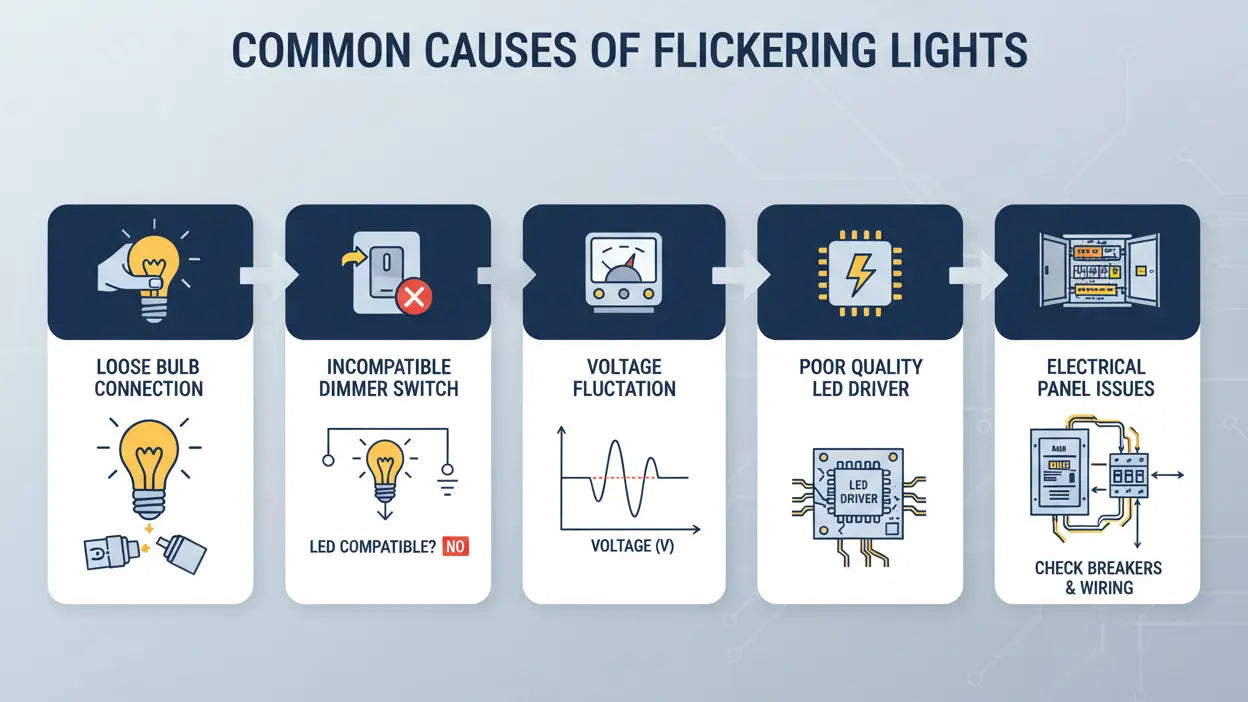
Fluorescent shop lights were the standard garage upgrade for decades. They're cheap, reasonably bright, and easy to install. They're also slow to start in cold weather, flicker as they age, contain mercury, and produce a harsh, unflattering light that makes it hard to see colors accurately.
Plus, fluorescent tubes fail gradually, getting dimmer over time until you don't even realize how bad your lighting has become. By the time you notice, you've been working in inadequate light for months.
The Cheap LED Trap
LED technology solved many of fluorescent's problems, but not all LEDs are created equal. Cheap LED shop lights from big-box stores often use inferior components that fail quickly, produce uneven light with dark spots, or have terrible color rendering that makes everything look washed out.
You save $20 upfront, then spend hours dealing with flickering, early failures, or lighting that's technically bright but somehow still doesn't help you see what you're doing.
The Overcomplication Issue
On the flip side, some people overthink garage lighting and end up with complex systems that cost thousands of dollars and require professional installation. Unless you're running a professional shop, you probably don't need commercial-grade fixtures with advanced controls and custom wiring.
The sweet spot is quality LED lighting that's easy to install, provides excellent coverage, and costs a reasonable amount. That's what we'll focus on.

Understanding Garage Lighting Basics
Let's cover the fundamentals so you can make informed decisions.
Lumens vs. Watts: What Actually Matters
Forget watts—that's a measure of energy consumption, not light output. What you care about is lumens, which measure actual brightness.
For garage lighting, you want 50-75 lumens per square foot for general use, or 75-100+ lumens per square foot for detailed work. A typical two-car garage (400-500 square feet) needs 20,000-40,000 lumens total, distributed across multiple fixtures.
One 40,000-lumen fixture in the center won't work as well as four 10,000-lumen fixtures spread around the space. Distribution matters as much as total output.
Color Temperature: The Secret to Better Visibility
Color temperature, measured in Kelvin (K), affects how things look under your lights. Lower numbers (2700-3000K) are warm and yellowish, like old incandescent bulbs. Higher numbers (5000-6500K) are cool and bluish, like daylight.
For garages, 5000-6500K is ideal. This "daylight" color temperature provides excellent color accuracy, makes it easier to see details, and creates a more alert, productive atmosphere. It's what professional shops use.
Avoid warm white (3000K) in garages—it makes everything look dingy and makes it harder to distinguish colors, which matters when you're matching paint, identifying wires, or inspecting parts.
CRI: Why Some Lights Make Everything Look Better
Color Rendering Index (CRI) measures how accurately colors appear under a light source, on a scale of 0-100. Sunlight is 100. Cheap LEDs might be 70-75. Quality LEDs are 80-90+.
The difference is dramatic. Under low-CRI lights, reds look brownish, blues look grayish, and everything seems flat and lifeless. Under high-CRI lights, colors pop and details are easier to see.
For garage work, aim for CRI 80 or higher. It costs a bit more but makes a huge difference in visibility and reduces eye strain.
Mounting Options and Coverage Patterns
How you mount lights affects coverage. Ceiling-mounted fixtures provide general illumination but can create shadows under shelves and workbenches. Wall-mounted lights fill in those shadows. Under-shelf lighting illuminates work surfaces directly.
The best garage lighting uses multiple mounting positions to eliminate shadows and provide even coverage throughout the space.

The Hexagon Revolution: Modular LED Garage Lighting
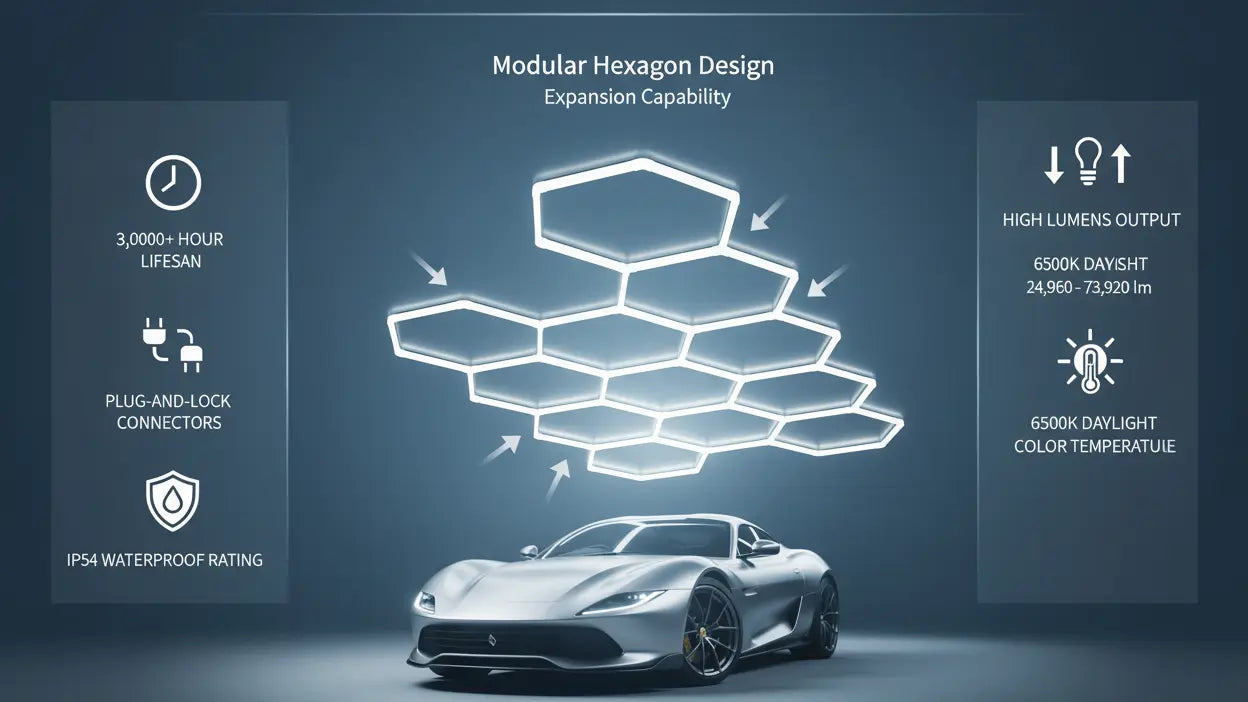
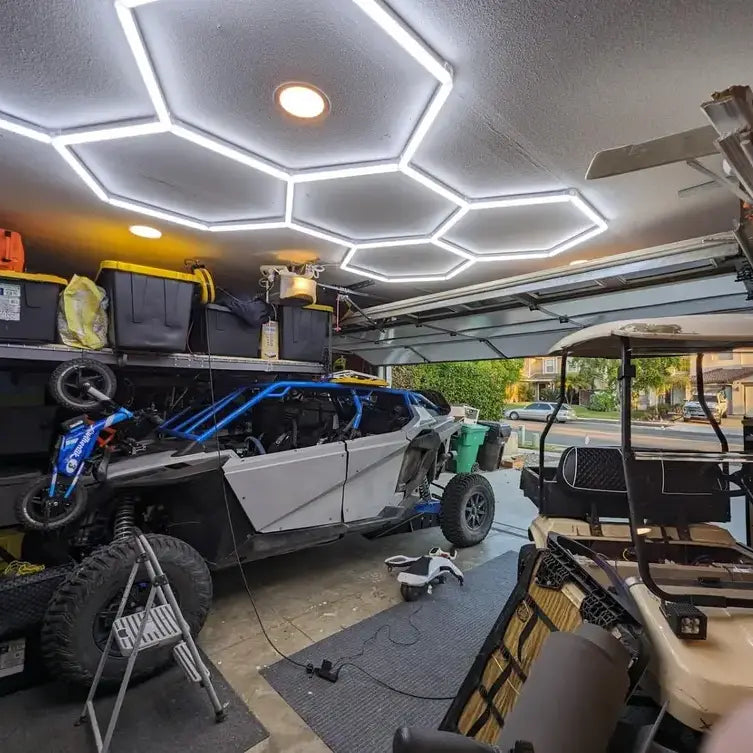
One of the biggest innovations in garage lighting is modular hexagon LED systems. Instead of traditional linear fixtures, these use interconnected hexagonal panels that you can arrange however you want.

Why Hexagon Lights Are Taking Over Garages
The Hykoont LED Hexagon Garage Lights represent this new approach. Available in 5-grid (24,960 lumens, $99.00) or 11-grid (47,840 lumens, $249.00) configurations, these modular systems offer flexibility that traditional fixtures can't match.
Here's why they work so well: each hexagon panel contains multiple LED chips arranged to provide even light distribution. Connect multiple panels together and you create a continuous light source that eliminates the dark gaps between traditional fixtures.
The 6500K color temperature provides crisp, daylight-quality illumination that makes detail work easier. The secure plug-and-lock connectors mean you can expand your system anytime—start with 5 grids, add more later if needed.
Installation is straightforward: mount the base panel to your ceiling, connect additional panels, plug in power. No complicated wiring, no electrician required. The whole system can be up and running in under an hour.
With a 30,000+ hour lifespan and 3-year warranty, these aren't disposable lights you'll replace in a year. They're a long-term solution that actually performs.
Scaling Up: The 14-Grid System

For larger garages or workshops, the Hykoont 14 Grid LED Hexagon Garage Lights deliver serious illumination. At 73,920 lumens from 700W, this system can light up even a three-car garage or professional workshop.
What makes this system special is the DIY flexibility. You get 71 tubes, multiple connectors, and accessories to create custom configurations that match your exact space. Want a large cluster over your main work area and smaller clusters in corners? No problem. Need to work around ceiling obstructions or skylights? Easy.
The IP54 waterproof rating means these work in unheated garages where condensation is an issue. The 6500K color temperature and high CRI ensure excellent visibility for detailed work.
At $99.00-$359.00 depending on configuration, this represents exceptional value for the amount of light you're getting. Compare that to installing a dozen traditional fixtures at $30-50 each, plus wiring and installation costs.
Plus, right now you get a free 5-grid system with the 14-grid purchase—perfect for adding supplemental lighting in another area or giving you expansion options.
Canopy Lights: The Professional Alternative
If you prefer a more traditional fixture style with modern performance, canopy lights offer a sleek, professional solution.

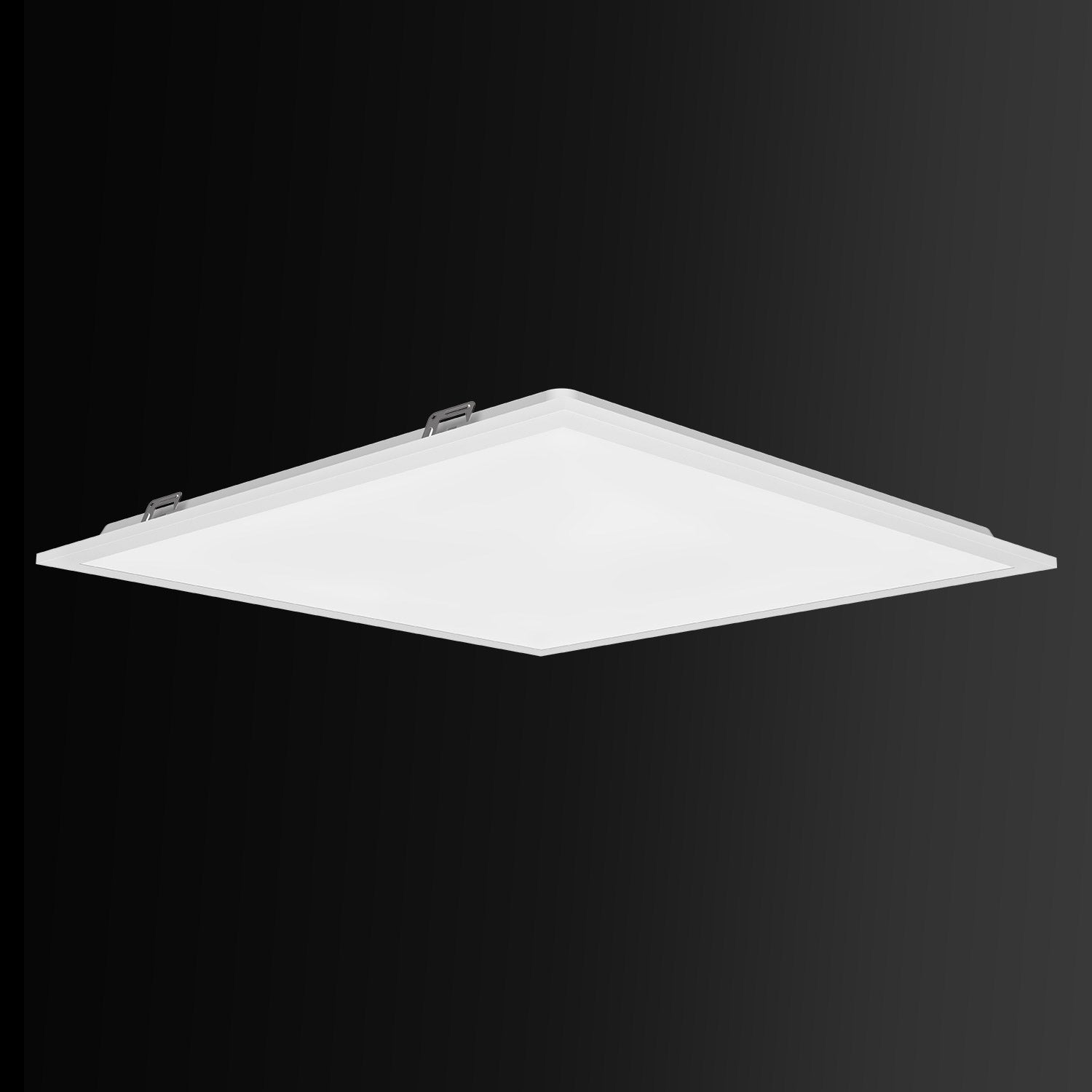
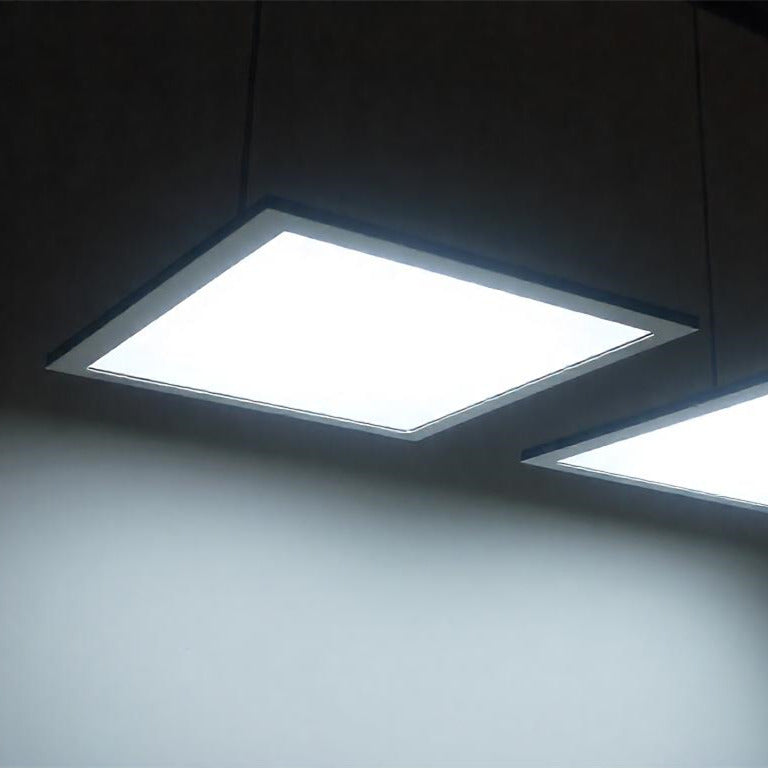
The Hykoont GP04 Series Tunable LED Garage Canopy Light brings commercial-grade features to residential garages. At $139.00, it's positioned between basic shop lights and professional fixtures.
What sets the GP04 apart is tunability. You can adjust the wattage between 40W, 30W, and 20W, giving you 5200, 3900, or 2600 lumens respectively. This lets you optimize brightness for different areas—full power over workbenches, lower power in storage areas.
The slim, durable design mounts flush to the ceiling, creating a clean look that's more finished than hanging shop lights. The 0-10V dimming capability means you can integrate it with smart controls if you want, though it works perfectly fine with a standard switch too.
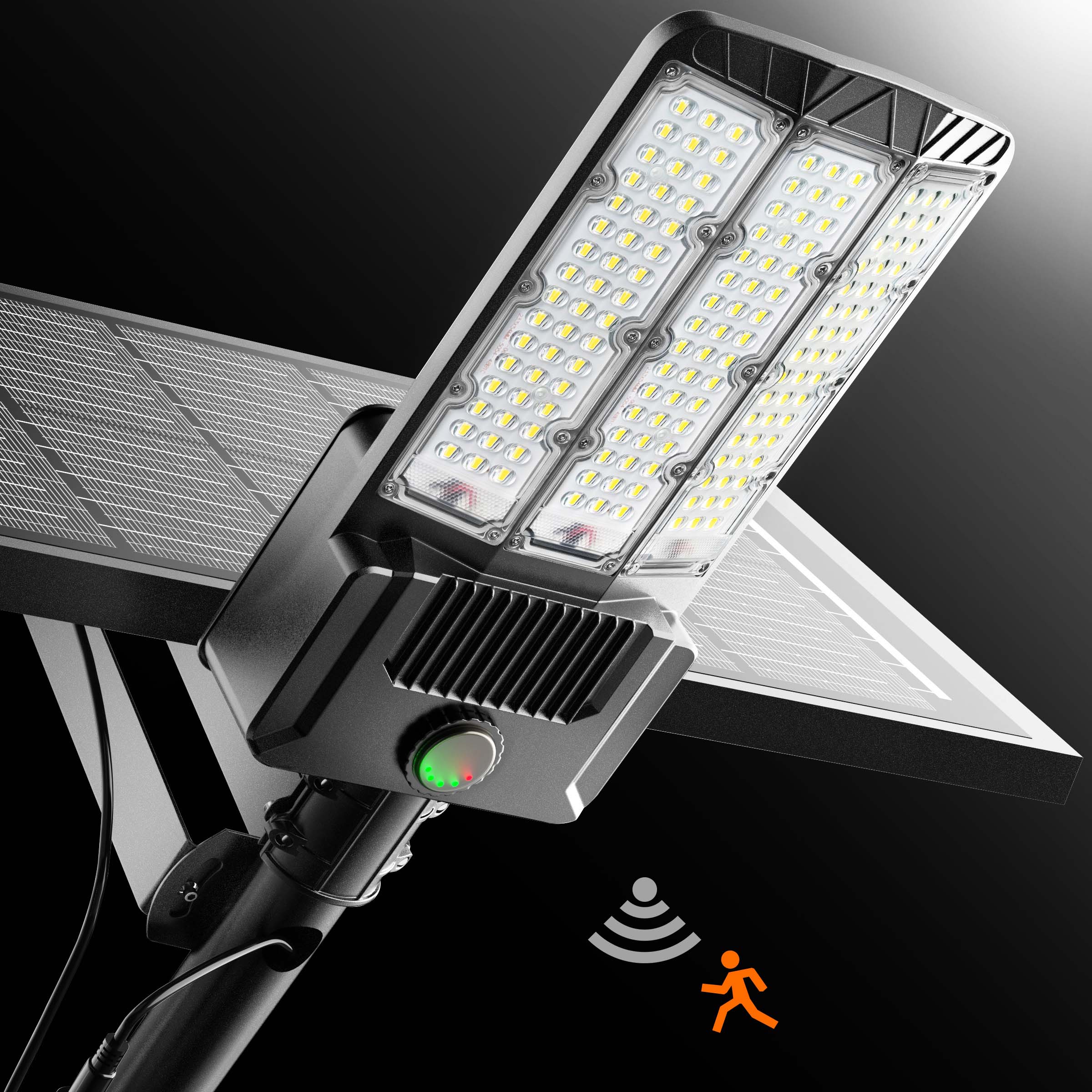
Optional motion sensor control is brilliant for garages where you want lights to turn on automatically when you enter and off when you leave. No more fumbling for switches with your hands full, and you save energy by not leaving lights on accidentally.
The wide input voltage range (AC120-277V/347V) means it works with any residential or commercial electrical system. The 5-year warranty shows Hykoont's confidence in the build quality.
For garages where aesthetics matter—attached garages visible from living spaces, or garages that double as workshops you show off—the GP04 provides performance without the industrial look of shop lights.
Planning Your Garage Lighting Layout
Having great lights doesn't help if they're in the wrong places. Here's how to plan an effective layout.
Assess Your Space
Start by measuring your garage and noting ceiling height, obstructions (garage door tracks, storage racks), and work areas. Sketch a simple floor plan showing where you park vehicles, where workbenches are located, and where you need the most light.
Identify shadow-prone areas: under shelves, behind vehicles, in corners. These need special attention in your lighting plan.
Calculate Your Lighting Needs
Multiply your garage's square footage by 50-75 for general use, or 75-100 for detailed work. A 400 sq ft garage needs 20,000-40,000 lumens total.
Divide that total by the number of fixtures you plan to install. Four fixtures in a 400 sq ft garage means each should provide 5,000-10,000 lumens.
Position for Even Coverage
Avoid the single-light-in-the-center approach. Instead, distribute lights to minimize shadows:
For a two-car garage, four lights in a grid pattern works well. For a three-car garage, six lights in two rows. For workshops, concentrate more light over work areas and less in storage zones.
With hexagon systems, you can create custom patterns that match your exact layout. With canopy lights, plan spacing based on the fixture's coverage pattern (usually 8-12 feet between fixtures for even illumination).
Consider Task Lighting
General overhead lighting provides ambient illumination, but task lighting targets specific work areas. Add under-cabinet lights above workbenches, portable work lights for detailed tasks, or additional fixtures directly over primary work zones.
The combination of good general lighting plus targeted task lighting creates a truly functional workspace.

Installation Tips for DIY Success
Most modern garage lights are designed for DIY installation, but a few tips will make the process smoother.
Safety First
Turn off power at the breaker before doing any electrical work. Use a voltage tester to confirm power is off. If you're not comfortable with electrical work, hire a licensed electrician—it's worth the cost for safety and code compliance.
Plan Your Wiring
Most LED garage lights can daisy-chain, meaning you run power to one fixture and then connect additional fixtures in series. This minimizes wiring runs and makes installation cleaner.
Check the maximum number of fixtures you can chain together—it varies by product but is usually 4-8 fixtures on a single circuit.
Mount Securely
LED fixtures are light, but they still need solid mounting. Use appropriate anchors for your ceiling type (wood joists, metal studs, concrete). Make sure fixtures are level and secure—you don't want them falling on your car or head.
Test Before Finalizing
Before permanently mounting everything, temporarily connect your lights and test the layout. Turn them on and work in the space for a bit. Are there unexpected shadows? Is the light too bright or too dim in certain areas? It's easier to adjust now than after everything is permanently installed.
Consider Switching Options
A single switch for all garage lights is simple but inflexible. Consider multiple switches or zones so you can light just the area you're using. Motion sensors are great for automatic operation. Smart switches let you control lights from your phone or integrate with home automation.

Maximizing Your Garage Lighting Investment
Once your lights are installed, a few additional steps will optimize performance and longevity.
Keep Them Clean
Dust and dirt reduce light output. Wipe down fixtures every few months with a dry cloth. In dusty workshops, you might need to clean monthly.
Paint Walls and Ceiling White
Light-colored surfaces reflect light, effectively multiplying your lighting's brightness. White or light gray paint on walls and ceiling can increase perceived brightness by 20-30% compared to dark surfaces.
Add Reflective Elements
Shiny tool chests, white storage containers, and reflective tape on shelves all help bounce light around the space, reducing shadows and dark spots.
Maintain Consistent Color Temperature
If you add lights over time, stick with the same color temperature (6500K if you're using the Hykoont products mentioned here). Mixing 3000K and 6500K lights in the same space looks weird and can cause eye strain.
Plan for Expansion
With modular systems like hexagon lights, you can start small and expand later. Leave room in your electrical panel for additional circuits, and plan your initial layout with future expansion in mind.

Common Garage Lighting Mistakes to Avoid
Learn from others' errors and skip these common pitfalls.
Mistake #1: Buying Based on Price Alone
The cheapest lights are cheap for a reason. They use inferior LEDs, cheap drivers that fail quickly, and flimsy construction. Spending $30 on a light that lasts two years costs more than spending $100 on a light that lasts 15 years.
Mistake #2: Ignoring Color Temperature
Warm white (3000K) might seem cozy, but it's terrible for garage work. You'll struggle to see details and colors won't look right. Stick with 5000-6500K for garages.
Mistake #3: Insufficient Total Lumens
People consistently underestimate how much light they need. Don't try to light a 500 sq ft garage with 10,000 lumens—you'll be disappointed. Do the math and get enough light.
Mistake #4: Poor Distribution
One super-bright light in the center creates harsh shadows everywhere. Multiple moderate lights distributed evenly work much better.
Mistake #5: Forgetting About Ceiling Height
Higher ceilings need more lumens to achieve the same brightness at floor level. If your garage has 10+ foot ceilings, increase your lumen target by 25-50%.
Mistake #6: Not Planning for Vehicles
When your car is parked in the garage, it blocks light and creates shadows. Plan your lighting layout with vehicles in place, not with an empty garage.

Frequently Asked Questions
How many lumens do I need for a two-car garage?
A typical two-car garage is 400-500 square feet. For general use, you need 20,000-37,500 lumens (50-75 lumens per square foot). For detailed work like car repair or woodworking, aim for 30,000-50,000 lumens (75-100 lumens per square foot). The Hykoont 11-grid hexagon system at 47,840 lumens would be perfect for a two-car garage with a workbench.
What's better: hexagon lights or traditional shop lights?
Hexagon lights offer better coverage with fewer dark spots, modular expandability, and a more modern look. Traditional shop lights are simpler and more familiar. For most garages, hexagon lights provide superior performance and flexibility. They're especially good if you might want to expand your lighting later or if you have an irregular ceiling layout.
Can I install garage lights myself or do I need an electrician?
Most modern LED garage lights are designed for DIY installation if you're comfortable with basic electrical work. You'll need to connect wires, mount fixtures, and possibly install a new circuit breaker. If you're not confident working with electricity, hire an electrician—it's worth the $200-400 for safe, code-compliant installation. The lights themselves are the easy part; the electrical connections are where expertise matters.
What color temperature is best for garage lighting?
5000-6500K (daylight white) is ideal for garages. This color temperature provides excellent color accuracy, makes details easier to see, and creates an alert, productive atmosphere. Avoid warm white (2700-3000K) which makes garages feel dingy and makes it harder to distinguish colors. All the Hykoont garage lights mentioned use 6500K, which is perfect for workshop and garage applications.
How long do LED garage lights last?
Quality LED garage lights last 30,000-50,000 hours. At 4 hours per day, that's 20-35 years of use. Cheap LEDs might only last 10,000-15,000 hours (7-10 years). The Hykoont hexagon lights are rated for 30,000+ hours with a 3-year warranty, while the GP04 canopy light has a 5-year warranty, indicating confidence in long-term performance.
Do I need motion sensors for garage lights?
Motion sensors are convenient but not essential. They're great if you frequently enter the garage with your hands full, want to save energy by ensuring lights turn off automatically, or have kids who forget to turn off lights. The GP04 canopy light offers optional motion sensor control. For always-on workshop spaces, standard switching works fine.
Can garage lights work in unheated garages?
Yes, quality LED lights work fine in cold temperatures—they actually perform better in cold than heat. Unlike fluorescent lights that struggle to start in freezing weather, LEDs turn on instantly regardless of temperature. The Hykoont hexagon lights have IP54 waterproof rating, making them suitable for unheated garages where condensation might occur.
How do I eliminate shadows in my garage?
Shadows come from having too few light sources or poor distribution. Use multiple fixtures spread across the ceiling rather than one central light. Add task lighting over workbenches. Paint walls and ceiling white to reflect light. Consider wall-mounted lights to fill in shadows created by ceiling fixtures. The modular nature of hexagon lights makes it easy to position light exactly where you need it.
What's the difference between lumens and watts for LED lights?
Watts measure energy consumption; lumens measure light output. For LEDs, watts don't tell you much about brightness. A 40W LED might produce 5,200 lumens while a 40W incandescent only produces about 450 lumens. Always choose LED lights based on lumens (how bright they are) not watts (how much power they use). The GP04 canopy light, for example, uses just 40W to produce 5,200 lumens.
Can I mix different types of garage lights?
Yes, but keep color temperature consistent (all 6500K or all 5000K). Mixing warm and cool white looks odd and can cause eye strain. You can combine hexagon lights for general illumination with canopy lights over specific areas, or add task lighting to supplement overhead fixtures. Just make sure they're all the same color temperature for a cohesive look.
Making Your Decision: Which Garage Lighting Is Right for You?
Let's make this simple with some real-world scenarios.
Choose Hexagon Lights If:
You want maximum flexibility and the ability to expand later. The modular design means you can start with 5 grids and add more anytime. You have an irregular ceiling layout or obstructions that make traditional fixtures awkward. You want modern aesthetics and even light distribution without dark spots between fixtures. You're lighting a standard one or two-car garage and want excellent value—the 5-grid system at $99 or 11-grid at $249 provides tremendous light for the price.
Choose Canopy Lights If:
You prefer a sleek, professional look over modular flexibility. Your garage is attached to your home and visible from living spaces, so aesthetics matter. You want advanced features like tunability, dimming, or motion sensors. You're lighting a smaller space or specific zones rather than a whole garage. The GP04 at $139 is perfect for single-car garages or as supplemental lighting in larger spaces.
Choose the 14-Grid System If:
You have a large garage (three-car or bigger) or a professional workshop. You need serious illumination—73,920 lumens lights up even large spaces brilliantly. You want DIY flexibility to create custom configurations. You're getting exceptional value at $99-$359, especially with the free 5-grid bonus.
Final Thoughts: Invest in Light, Invest in Productivity
Good garage lighting isn't a luxury—it's a fundamental upgrade that makes everything you do in that space easier, safer, and more enjoyable. Whether you're parking cars, working on projects, or just storing stuff, proper lighting transforms the experience.
The technology has never been better or more affordable. Modern LED systems like the Hykoont hexagon lights and GP04 canopy lights deliver professional-level performance at DIY-friendly prices. They're easy to install, last for decades, and actually work the way garage lighting should.
Don't settle for dim, flickering fluorescents or cheap LEDs that fail in two years. Invest in quality lighting once and enjoy the benefits for the next 20+ years. Your eyes, your projects, and your productivity will thank you.
Ready to upgrade your garage lighting?
- Hykoont LED Hexagon Garage Lights (5-Grid or 11-Grid) - From $99.00
- Hykoont 14-Grid LED Hexagon System + Free 5-Grid - From $99.00
- Hykoont GP04 Tunable LED Canopy Light - $139.00
Have questions about which system is right for your garage? Drop a comment below and we'll help you figure out the perfect lighting solution for your space!


Leave a comment
This site is protected by hCaptcha and the hCaptcha Privacy Policy and Terms of Service apply.