


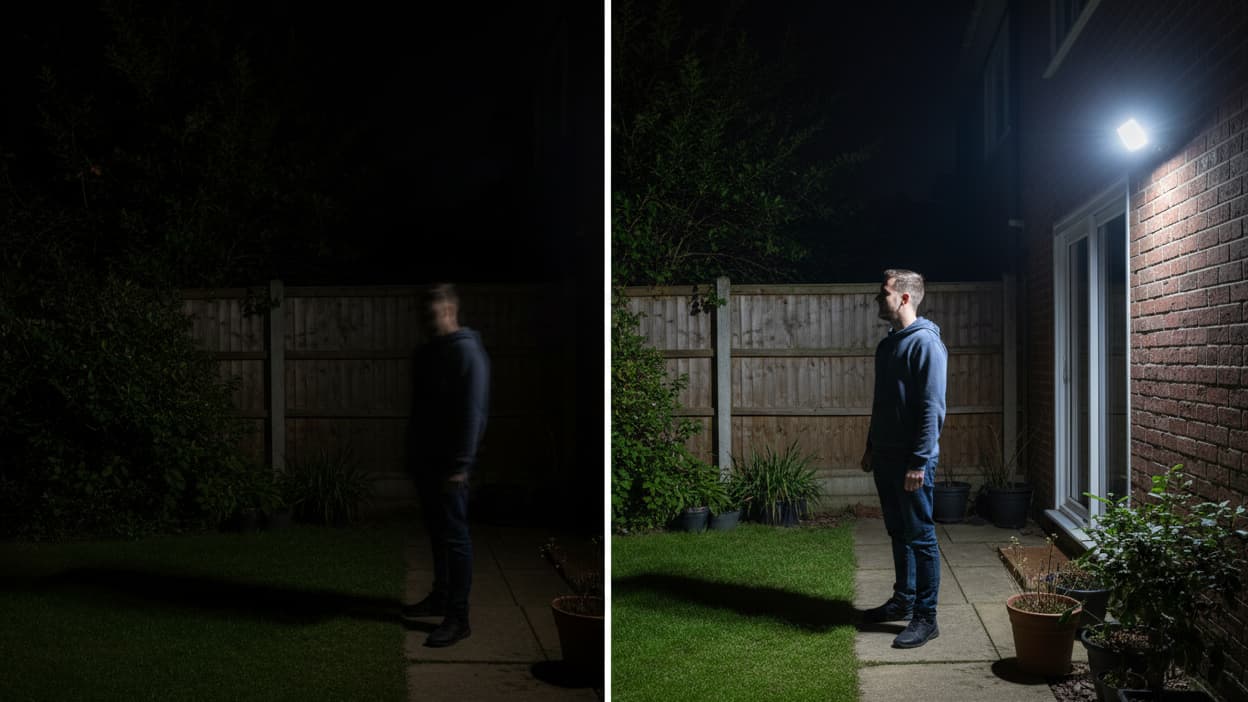
Motion sensor lights are one of the most effective ways to enhance home security, improve safety, and reduce energy costs. However, the effectiveness of these lights largely depends on where you install them. In this comprehensive guide, we'll explore the 7 best locations to install motion sensor lights for maximum effectiveness in 2026.
🎯 Key Takeaways
✅ Front doors and entryways are the #1 priority for motion sensor lights
✅ Install lights 8-10 feet high for optimal coverage
✅ Solar-powered motion sensor lights offer energy efficiency and easy installation
✅ Strategic placement can deter 90% of potential intruders
✅ Combine multiple locations for comprehensive home security
📋 Table of Contents
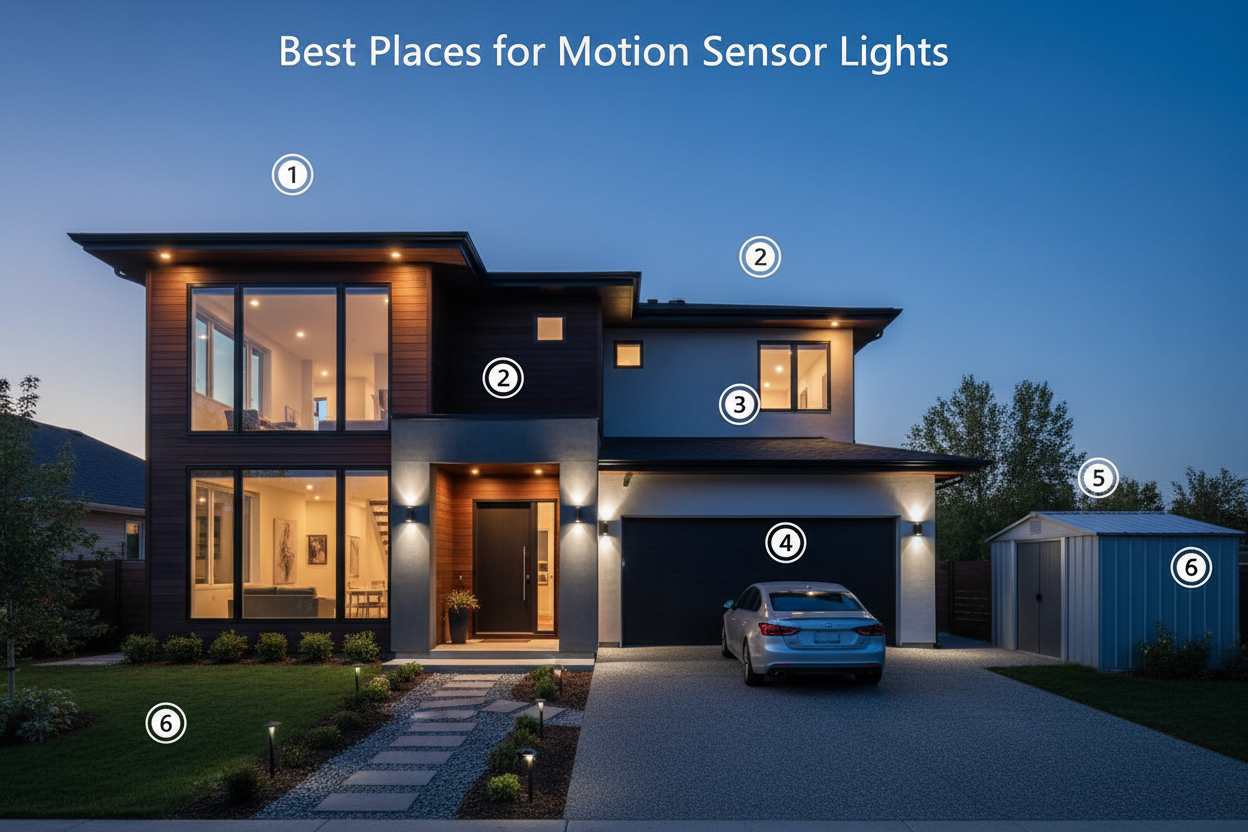
- At the Front Door or Entryway
- Driveways and Garages
- Backyard or Garden Paths
- Around Outdoor Entrances and Windows
- Near Outdoor Storage Sheds or Fencing
- Near Pools or Hot Tubs
- On Steps or Staircases
1. 🚪 At the Front Door or Entryway
The front door is the most critical location for motion sensor lights. According to security statistics, 34% of burglars enter through the front door, making this your first line of defense.

Why This Location Matters:
Security: Deters potential intruders before they reach your door
Safety: Illuminates the path for family members and guests arriving after dark
Convenience: Automatically lights up when you arrive home with groceries or packages
Visibility: Helps you identify visitors through windows or peepholes
Installation Best Practices:
Mount the light above or beside the door frame
Ensure the sensor covers the entire walkway and porch area
Adjust sensitivity to avoid false triggers from passing cars or pedestrians
Consider a solar-powered motion sensor light for easy installation without wiring
2. 🚗 Driveways and Garages
Driveways and garages are high-traffic areas that benefit greatly from motion-activated lighting. These spaces are often targeted by thieves looking for tools, bikes, or easy access to your home.

Key Benefits:
Vehicle Safety: Prevents accidents when backing out at night
Theft Prevention: 60% of garage break-ins occur at night - lighting is a powerful deterrent
Convenience: Automatic illumination when arriving or leaving
Property Protection: Protects valuable items stored in garages
Recommended Placement:
Above garage doors (center position for even coverage)
Along driveway edges at 15-20 foot intervals
Near side doors leading from garage to house
At the end of long driveways for early detection
3. 🌳 Backyard or Garden Paths
Backyards are often overlooked but are actually the second most common entry point for burglars (22% of break-ins). Motion sensor lights in these areas provide both security and functional lighting for outdoor activities.

Strategic Advantages:
Perimeter Security: Illuminates hidden areas where intruders might hide
Pathway Safety: Prevents trips and falls on uneven terrain
Wildlife Deterrent: Keeps animals away from gardens and trash areas
Entertainment Lighting: Automatically lights up for evening gatherings
Installation Tips:
Place lights along main pathways and garden borders
Install at fence corners to eliminate blind spots
Use adjustable sensors to cover large open areas
Choose weatherproof models with IP65 or IP66 rating
Solar options work excellently in sunny backyard locations
4. Around Outdoor Entrances and Windows
Ground-floor windows and side entrances are vulnerable access points. 23% of burglars enter through first-floor windows, making these locations critical for motion sensor light placement.

Why Protect These Areas:
Vulnerability: Windows are easier to breach than doors
Privacy: Prevents peeping and surveillance
Early Warning: Alerts you to suspicious activity before entry attempts
Comprehensive Coverage: Fills security gaps in your home defense
Best Practices:
Install lights above or beside each ground-floor window
Focus on windows hidden from street view
Ensure sensors detect movement before someone reaches the window
Use bright lights (1500+ lumens) to maximize deterrent effect
Consider lights with adjustable detection angles
5. 🏠 Near Outdoor Storage Sheds or Fencing
Sheds, tool storage, and perimeter fencing often contain valuable equipment and provide cover for intruders. These areas deserve dedicated motion sensor lighting.

Protection Benefits:
Asset Protection: Safeguards expensive tools, equipment, and outdoor furniture
Perimeter Defense: Creates a security boundary around your property
Access Control: Monitors who approaches storage areas
Maintenance Safety: Provides light when accessing stored items after dark
Installation Guidelines:
Mount lights on shed walls facing entry points
Install along fence lines at 20-30 foot intervals
Position sensors to detect movement along fence perimeter
Use solar-powered options for remote locations without electrical access
Ensure lights illuminate lock mechanisms for easy access
6. 🏊 Near Pools or Hot Tubs
Pool and hot tub areas require special attention for both safety and security reasons. Motion sensor lights in these locations can literally save lives while also protecting expensive equipment.

Critical Reasons:
Drowning Prevention: Immediate illumination if someone approaches the pool unexpectedly
Slip Prevention: Wet surfaces are hazardous in the dark
Equipment Protection: Deters theft of pool equipment and furniture
Liability Reduction: Demonstrates reasonable safety precautions
Nighttime Use: Enables safe evening swimming
Special Considerations:
Use lights rated for high-moisture environments (IP66 or higher)
Install multiple lights around pool perimeter for complete coverage
Position sensors to detect anyone approaching from house or yard
Ensure lights don't create glare on water surface
Consider lights with adjustable brightness for ambiance control
7. On Steps or Staircases
Outdoor stairs and staircases are accident-prone areas that absolutely require proper lighting. Motion sensor lights provide automatic illumination exactly when needed.
Safety Imperatives:
Fall Prevention: Stairs are the #1 cause of outdoor home injuries
Visibility: Ensures every step is clearly visible
Weather Safety: Critical during rain, snow, or ice conditions
Guest Protection: Prevents liability from visitor injuries
Elderly Safety: Especially important for homes with senior residents
Installation Recommendations:
Install lights at both top and bottom of stairways
Use downward-facing lights to eliminate shadows on steps
Ensure sensors activate before someone reaches the stairs
Choose lights with instant-on capability (no warm-up delay)
Consider step lights in addition to overhead motion sensors
Maintain minimum 100 lumens per step for adequate visibility
📊 Location Comparison Table
| Location | Priority | Primary Benefit | Recommended Lumens |
|---|---|---|---|
| Front Door | ⭐⭐⭐⭐⭐ | Security & Convenience | 1000-1500 |
| Driveway/Garage | ⭐⭐⭐⭐⭐ | Theft Prevention | 1500-2000 |
| Backyard Paths | ⭐⭐⭐⭐ | Perimeter Security | 800-1200 |
| Windows | ⭐⭐⭐⭐ | Entry Point Protection | 1500+ |
| Storage/Sheds | ⭐⭐⭐ | Asset Protection | 1000-1500 |
| Pool/Hot Tub | ⭐⭐⭐⭐ | Safety | 1200-1800 |
| Stairs | ⭐⭐⭐⭐⭐ | Fall Prevention | 800-1000 |
🔧 Technical Considerations for Motion Sensor Lights
Understanding PIR Sensors
Most motion sensor lights use Passive Infrared (PIR) sensors that detect heat signatures from moving objects. Understanding how they work helps you position them effectively:
Detection Range: Typically 20-40 feet, but varies by model
Detection Angle: Usually 180-270 degrees
Sensitivity: Adjustable to prevent false triggers from small animals or wind-blown objects
Response Time: Quality sensors activate within 0.5-1 second
IP Rating Guide
Choose the right weatherproof rating for your location:
IP65: Protected from water jets - suitable for covered areas
IP66: Protected from powerful water jets - ideal for most outdoor locations
IP67: Protected from temporary immersion - best for pool areas
Power Options
Hardwired: Most reliable, requires electrical installation
Solar-Powered: Easy installation, eco-friendly, no electricity costs (recommended for most locations)
Battery-Powered: Portable, requires regular battery replacement
❓ Frequently Asked Questions
How high should motion sensor lights be installed?
The optimal height is 8-10 feet for most applications. This height provides good coverage while being difficult to tamper with. For stairs, install lights 6-7 feet high to properly illuminate steps.
What is the ideal detection range for motion sensor lights?
For home security, choose lights with a 20-40 foot detection range. This gives you early warning of approaching people while minimizing false triggers from distant movement.
How many lumens do I need for outdoor motion sensor lights?
It depends on the location:
Pathways and stairs: 800-1000 lumens
Entryways and doors: 1000-1500 lumens
Driveways and large areas: 1500-2000+ lumens
Security-focused areas: 1500+ lumens for maximum deterrent effect
Will motion sensor lights work in cold weather?
Yes, quality motion sensor lights are designed to operate in temperatures from -20°F to 120°F (-29°C to 49°C). However, solar-powered lights may have reduced battery performance in extreme cold.
How do I prevent false triggers from animals or wind?
Most modern motion sensors have adjustable sensitivity settings. Set the sensitivity lower to ignore small animals, and angle the sensor to avoid detecting tree branches or bushes that move in the wind.
Are solar motion sensor lights as bright as wired ones?
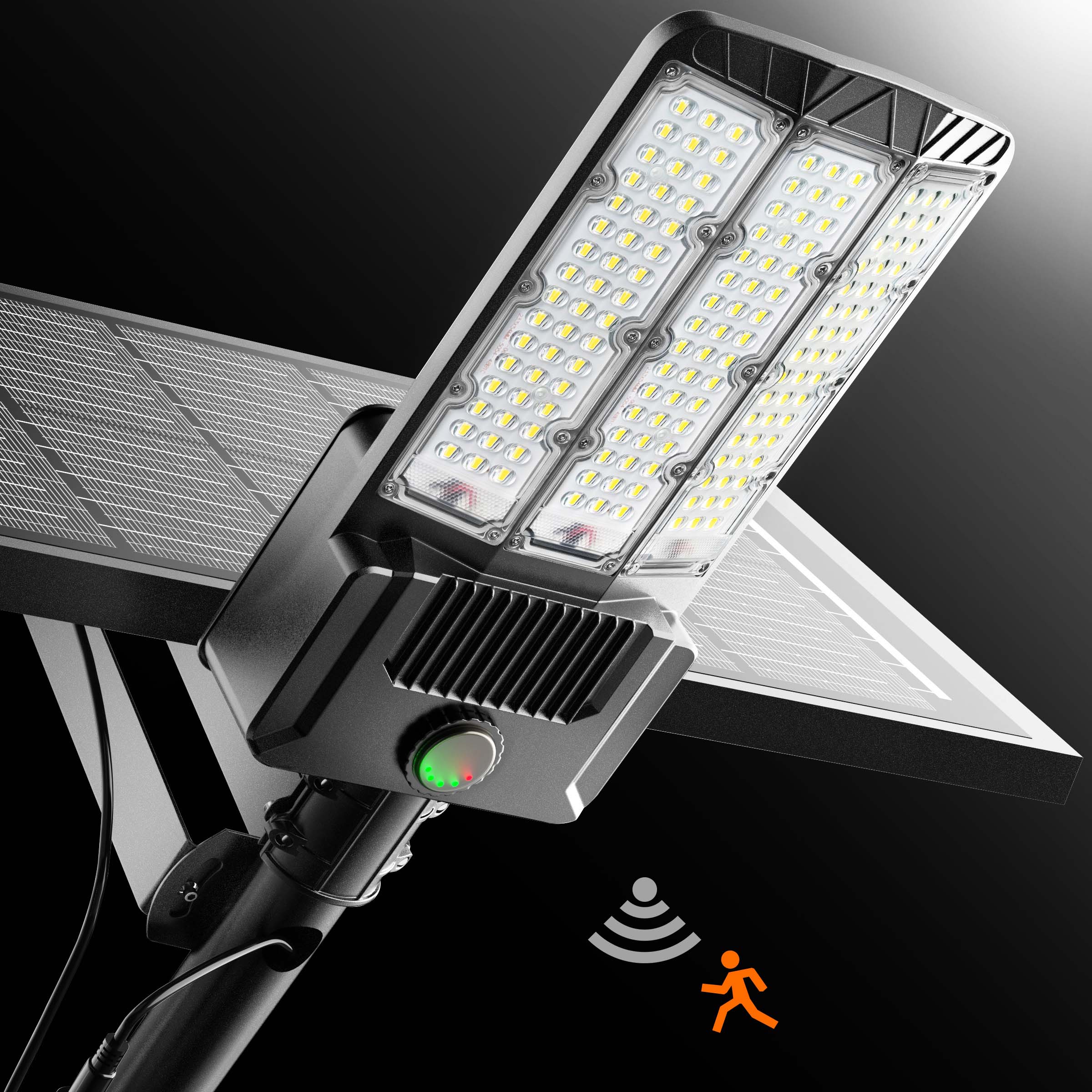
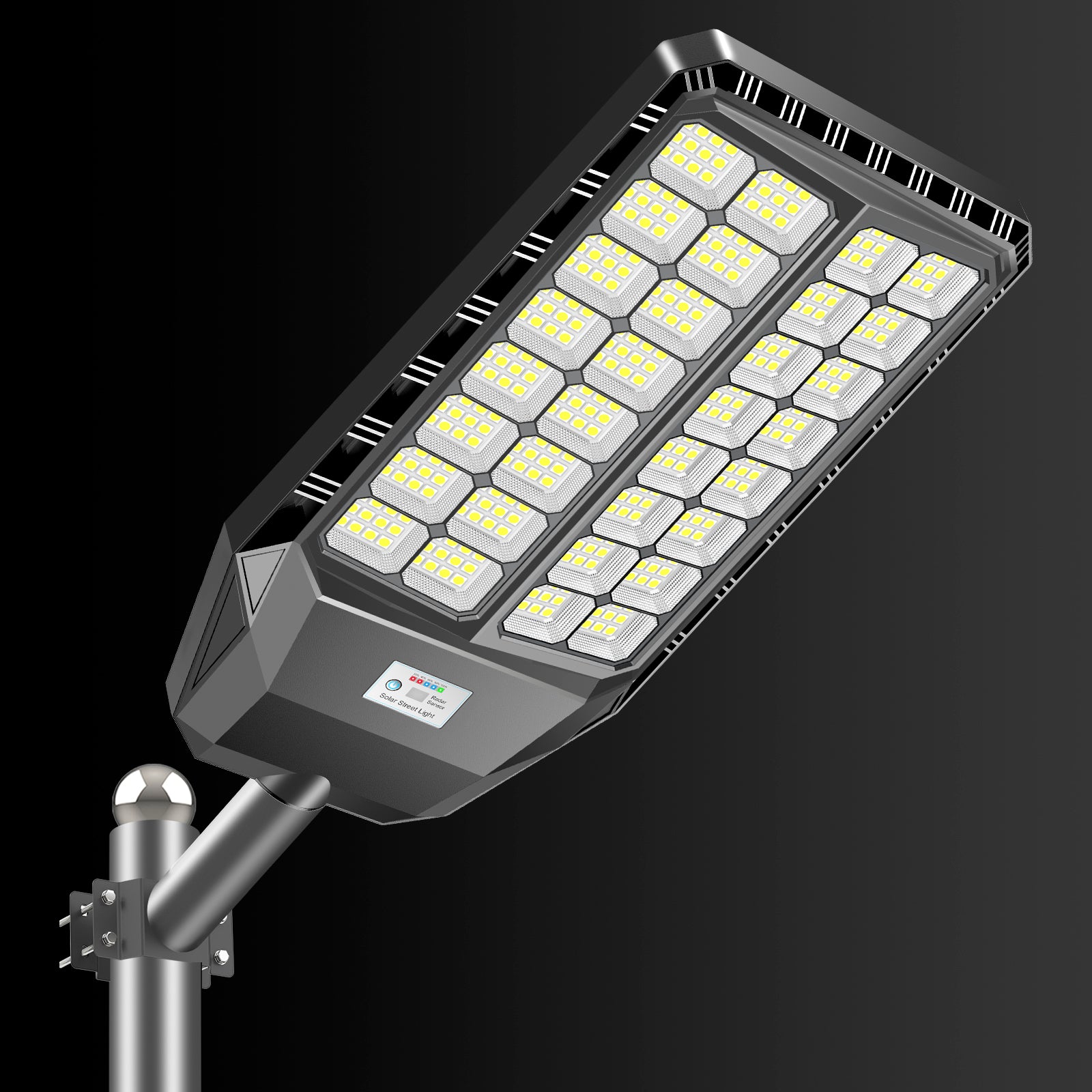
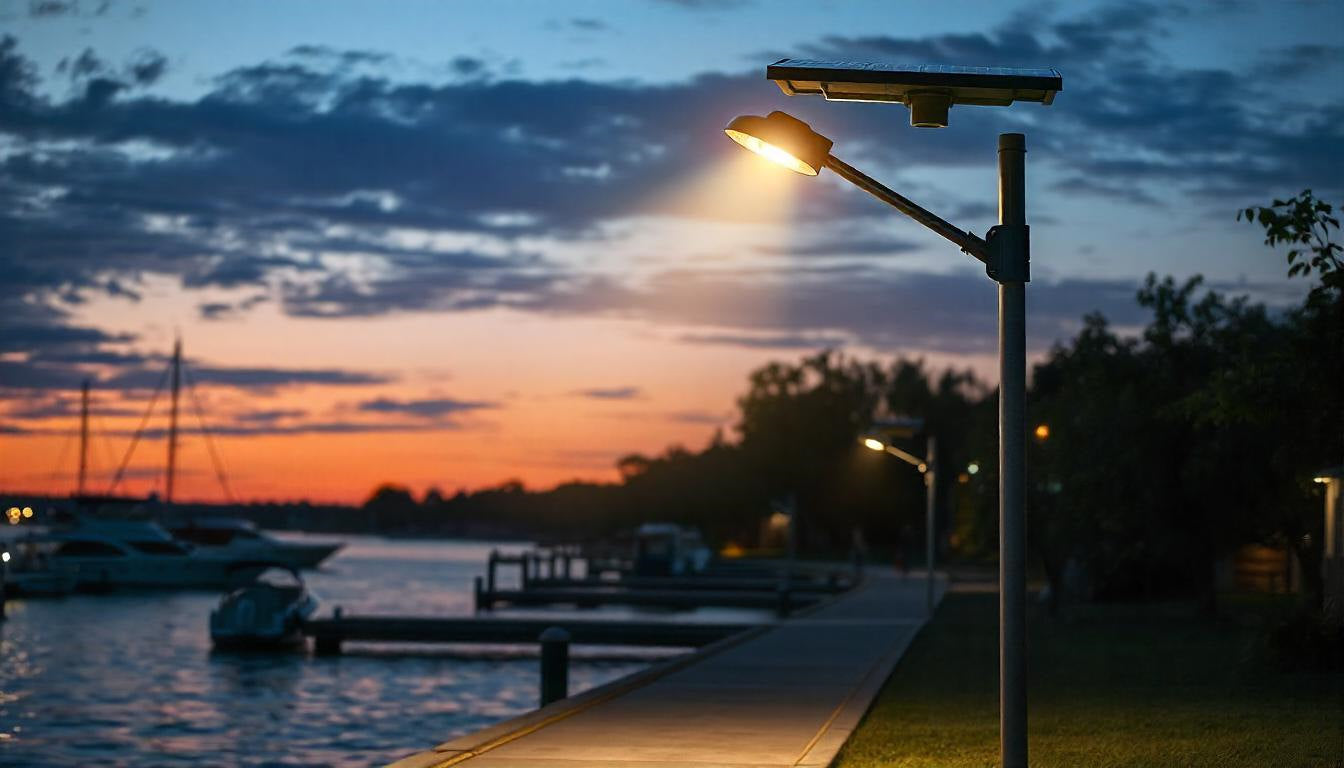
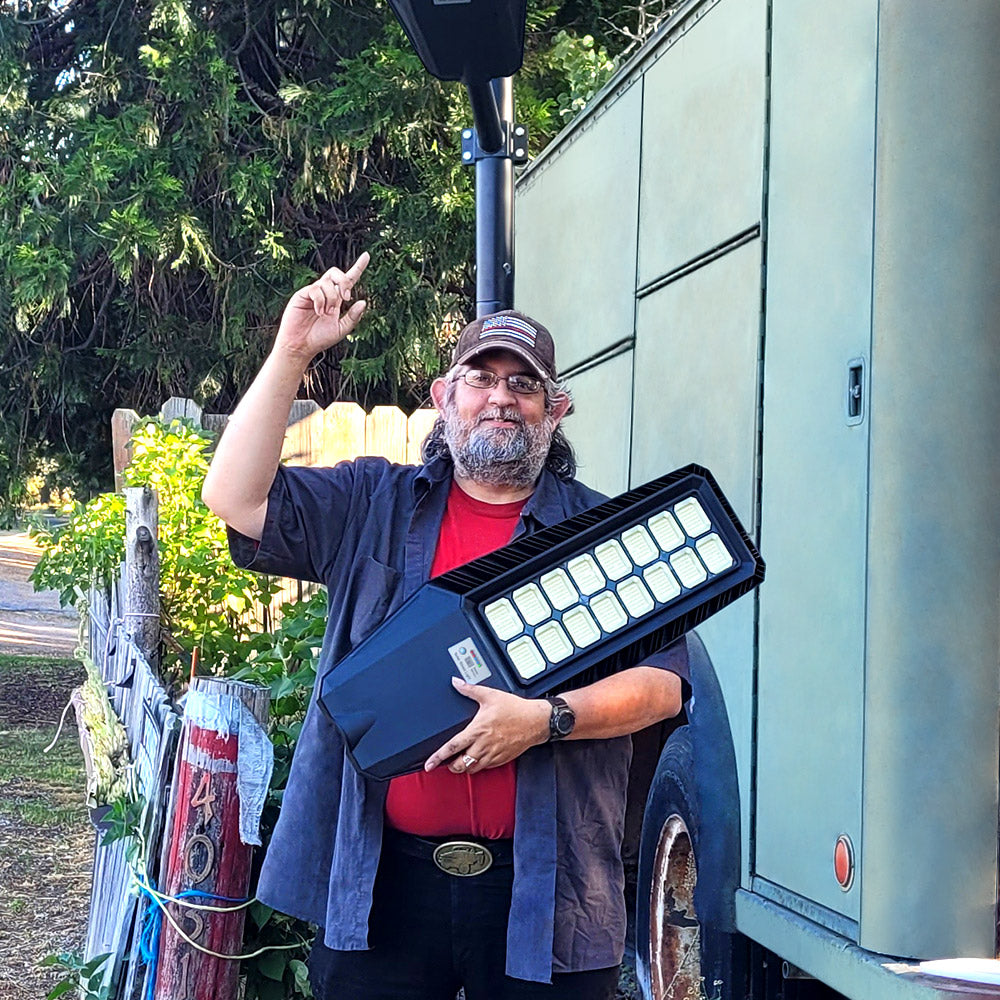
Modern solar motion sensor lights can be just as bright as wired options. Look for models with high-capacity batteries and efficient LED technology. The Hykoont TW002C 160W Solar Street Light delivers 21,600 lumens, comparable to traditional wired lights.
How long do motion sensor lights stay on?
Most motion sensor lights have adjustable timer settings ranging from 10 seconds to 10 minutes. For security purposes, 1-3 minutes is typically ideal. For convenience lighting, 30-60 seconds is usually sufficient.
🎯 Conclusion: Creating a Comprehensive Lighting Security System
Installing motion sensor lights in the right locations is one of the most cost-effective ways to improve your home's security, safety, and convenience. By strategically placing lights at your front door, driveway, backyard, windows, storage areas, pool, and stairs, you create multiple layers of protection and functionality.
Key Recommendations:
✅ Start with high-priority areas: front door, driveway, and stairs
✅ Choose solar-powered options for easy installation and energy savings
✅ Select lights with appropriate lumens for each location
✅ Ensure proper IP rating for weather protection
✅ Adjust sensitivity and timer settings for optimal performance
✅ Create overlapping coverage zones for comprehensive protection
Ready to Upgrade Your Home Security?
Explore our range of high-quality solar motion sensor lights designed for maximum effectiveness and easy installation.


Leave a comment
This site is protected by hCaptcha and the hCaptcha Privacy Policy and Terms of Service apply.