


LED lights have transformed the way we illuminate our homes, businesses, streets, and outdoor spaces. Their energy efficiency, long lifespan, and versatility have made them the dominant lighting technology of the 21st century. But despite their many advantages, LED lights share one significant vulnerability with virtually all electronic devices: moisture.
Whether it's rain, humidity, condensation, flooding, or even the moisture from your breath, water and electronics are a notoriously dangerous combination. Understanding exactly how moisture damages LED lights — and what you can do to prevent that damage — is essential knowledge for anyone who uses LED lighting in outdoor, industrial, marine, or high-humidity environments.
In this comprehensive guide, we'll explore the science behind moisture damage in LED lights, explain the international IP (Ingress Protection) rating system, walk through proven moisture protection strategies, and recommend the best waterproof LED lighting solutions for demanding outdoor applications. Whether you're a homeowner looking to protect your garden lights or a facility manager responsible for industrial lighting systems, this guide will give you the knowledge to make informed decisions and protect your lighting investment.
Why Moisture Is the Enemy of LED Lights
To understand why moisture is so damaging to LED lights, it helps to understand what's inside a typical LED light fixture. A modern LED light is a sophisticated assembly of multiple components, each of which can be affected by moisture in different ways:
The LED chip is the heart of the fixture — a tiny semiconductor device that converts electrical energy into light. LED chips are manufactured from materials like gallium nitride (GaN) that are sensitive to contamination and chemical attack.
The driver circuit regulates the electrical current flowing to the LED chip. It contains capacitors, resistors, transistors, and other electronic components that are highly sensitive to moisture-induced corrosion and short circuits.
The phosphor coating (in white LEDs) converts blue LED light into the broad-spectrum white light we see. Moisture can degrade this coating, altering the color and quality of the light output.
The heat sink dissipates the heat generated by the LED chip. Moisture can accelerate corrosion of aluminum or steel heat sinks, reducing their thermal conductivity and causing the LED to overheat.
The electrical connections — solder joints, wire terminals, and contact points — are particularly vulnerable to moisture-induced corrosion, which increases electrical resistance and can cause intermittent failures or complete circuit breakdown.
When moisture infiltrates any of these components, the consequences range from minor performance degradation to catastrophic failure. Let's examine each type of moisture damage in detail.

The Four Major Effects of Moisture on LED Lights
1. Corrosion of Metal Components
Corrosion is the most pervasive and insidious form of moisture damage in LED lighting. When water — particularly water containing dissolved salts, acids, or other contaminants — comes into contact with metal components, it initiates electrochemical reactions that gradually destroy the metal.
In LED light fixtures, corrosion most commonly affects:
- Electrical contacts and terminals: Corroded contacts increase electrical resistance, causing voltage drops, heat generation, and eventually open circuits. A contact that was once a reliable electrical connection becomes an intermittent fault point.
- Circuit board traces: The thin copper traces on LED driver circuit boards can corrode and break, interrupting the circuit and causing the light to fail. In severe cases, corrosion can create unintended electrical paths (dendrite growth) that cause short circuits.
- Solder joints: Moisture accelerates the degradation of solder joints, particularly in environments with temperature cycling (hot days, cold nights). Weakened solder joints can crack and fail, disconnecting components from the circuit board.
- Housing and mounting hardware: Corroded housing components can compromise the structural integrity of the fixture and allow further moisture ingress, creating a destructive feedback loop.
Coastal environments are particularly harsh for LED lighting due to the presence of salt in the air and water. Salt spray dramatically accelerates corrosion rates compared to fresh water, which is why marine-grade LED fixtures use specialized corrosion-resistant materials and coatings.
2. Reduced Luminous Efficiency and Light Output
Even before moisture causes permanent damage, it can significantly degrade the performance of LED lights. Water droplets or condensation on the surface of LED lenses or diffusers scatter and absorb light, reducing the amount of useful illumination that reaches the intended area.
Inside the fixture, moisture can affect the LED chip itself. The phosphor coating used in white LEDs is particularly vulnerable — moisture can cause the phosphor particles to clump, degrade, or detach from the LED chip surface, resulting in:
- Reduced lumen output (the light becomes dimmer)
- Color shift (the light changes color temperature, often becoming more blue or more yellow)
- Uneven light distribution (hot spots or dark areas in the beam pattern)
- Reduced Color Rendering Index (CRI), making colors appear less accurate and vibrant
In high-humidity environments, even sealed fixtures can experience internal condensation as warm, humid air enters the fixture during the day and then cools and condenses at night. This internal condensation can gradually accumulate and cause all of the above performance issues even in fixtures that appear externally intact.

3. Electrical Short Circuits and Safety Hazards
Water is an excellent conductor of electricity when it contains dissolved minerals and salts — which virtually all real-world water does. When water infiltrates the electrical components of an LED light, it can create unintended conductive paths between circuit elements that should be electrically isolated from each other.
These moisture-induced short circuits can cause:
- Immediate fixture failure: The short circuit trips protective fuses or circuit breakers, cutting power to the fixture.
- Component damage: The sudden surge of current through unintended paths can destroy sensitive electronic components, including the LED driver IC, capacitors, and the LED chip itself.
- Fire hazards: In severe cases, moisture-induced short circuits can generate enough heat to ignite surrounding materials, particularly if the fixture is mounted near flammable materials or if the short circuit bypasses protective fuses.
- Electric shock risk: Water infiltration into a live electrical fixture creates a serious shock hazard for anyone who touches the fixture or stands in water near it.
These safety risks underscore why proper waterproofing is not merely a matter of protecting your investment — it's a fundamental safety requirement for any LED lighting used in outdoor or wet environments.
4. Color Shifting and Optical Degradation
One of the most subtle but frustrating effects of moisture on LED lights is color shifting — a gradual change in the color of the light output that can be difficult to detect until it becomes severe. Moisture-induced color shifting occurs through several mechanisms:
Phosphor degradation: As mentioned above, moisture degrades the phosphor coating in white LEDs, altering the spectral output of the light. This typically causes a shift toward cooler (bluer) color temperatures as the yellow phosphor degrades.
Lens discoloration: Moisture can cause yellowing or hazing of plastic lenses and diffusers, filtering out certain wavelengths of light and altering the apparent color of the output.
Oxidation of reflective surfaces: The reflective coatings inside LED fixtures can oxidize when exposed to moisture, reducing reflectivity and altering the spectral characteristics of the reflected light.
Contamination of optical surfaces: Mineral deposits left behind when water evaporates (limescale, salt crystals) can accumulate on optical surfaces, scattering light and causing color distortion.
In applications where color consistency is important — retail lighting, photography studios, medical facilities, art galleries — moisture-induced color shifting can render an otherwise functional LED fixture unsuitable for its intended purpose.

Understanding IP Ratings: Your Guide to Waterproof LED Lighting
When shopping for outdoor or moisture-resistant LED lights, you'll inevitably encounter IP ratings — a standardized system for classifying the degree of protection provided by an enclosure against solid particles and liquids. Understanding IP ratings is essential for choosing the right LED lights for your specific environment.
IP ratings are defined by the international standard IEC 60529 and consist of two digits:
The first digit (0–6) indicates protection against solid particles:
- 0: No protection
- 1: Protected against objects larger than 50mm (e.g., hands)
- 2: Protected against objects larger than 12.5mm (e.g., fingers)
- 3: Protected against objects larger than 2.5mm (e.g., tools)
- 4: Protected against objects larger than 1mm (e.g., wires)
- 5: Dust-protected (limited ingress, no harmful deposit)
- 6: Dust-tight (no ingress of dust)
The second digit (0–9) indicates protection against liquids:
- 0: No protection
- 1: Protected against vertically dripping water
- 2: Protected against dripping water when tilted up to 15°
- 3: Protected against spraying water (up to 60° from vertical)
- 4: Protected against splashing water from any direction
- 5: Protected against water jets from any direction
- 6: Protected against powerful water jets and heavy seas
- 7: Protected against temporary immersion (up to 1 meter for 30 minutes)
- 8: Protected against continuous immersion (depth specified by manufacturer)
- 9: Protected against high-pressure, high-temperature water jets
For common outdoor applications, here's a practical guide to the minimum IP rating you should look for:
- Covered outdoor areas (porches, carports): IP44 minimum
- Exposed outdoor areas (gardens, driveways, facades): IP65 minimum
- Areas exposed to water jets (car washes, industrial washdowns): IP66 minimum
- Submerged or frequently flooded areas (ponds, fountains, flood-prone pathways): IP67 or IP68
- Marine environments (boats, docks, coastal installations): IP68 with marine-grade materials

Proven Moisture Protection Strategies for LED Lights
Whether you're selecting new LED fixtures or trying to extend the life of existing ones, these moisture protection strategies will help you minimize the risk of moisture-related damage.
1. Choose the Right IP Rating for Your Environment
The single most important moisture protection decision you'll make is choosing LED fixtures with an appropriate IP rating for their intended environment. Don't underestimate the moisture exposure your fixtures will face — it's always better to over-specify than to under-specify.
Consider not just the typical conditions but the worst-case scenarios: Will the fixture ever be exposed to pressure washing during cleaning? Could it be temporarily submerged during heavy flooding? Is it in a coastal area where salt spray is a factor? Choose your IP rating based on the worst conditions the fixture might encounter, not the average conditions.
2. Sealant and Gasketing
For fixtures that will be installed in wet or humid environments, proper sealing is critical. Silicone sealants and rubber gaskets create watertight barriers at the joints, seams, and cable entry points of LED fixtures.
Key sealing best practices include:
- Use UV-resistant silicone sealant for outdoor applications — standard silicone degrades rapidly under UV exposure
- Ensure gaskets are properly compressed when the fixture is assembled — a gasket that isn't fully compressed won't provide an effective seal
- Inspect and replace gaskets periodically — rubber gaskets harden and crack over time, losing their sealing effectiveness
- Pay special attention to cable entry points — these are common weak points where moisture can infiltrate even well-sealed fixtures

3. Enclosure Design and Material Selection
The design and materials of the LED fixture enclosure play a crucial role in moisture resistance. Key considerations include:
Material choice: Aluminum is the most common material for quality outdoor LED fixtures — it's lightweight, thermally conductive (important for heat dissipation), and naturally forms a protective oxide layer that resists corrosion. For marine environments, marine-grade aluminum alloys or stainless steel are preferred. Avoid fixtures with zinc die-cast housings in coastal environments, as zinc corrodes rapidly in salt air.
Drainage design: Well-designed outdoor fixtures include drainage channels or weep holes that allow any water that does infiltrate the fixture to drain out rather than accumulate. This is particularly important for fixtures mounted horizontally (like ceiling-mounted outdoor lights) where water can pool.
Lens and diffuser materials: Polycarbonate (PC) lenses offer better impact resistance and UV stability than acrylic (PMMA) lenses, making them a better choice for outdoor applications. Tempered glass lenses provide the best optical clarity and UV resistance but are heavier and more fragile.
4. Ventilation and Breathable Membranes
A counterintuitive but highly effective moisture protection strategy is to incorporate controlled ventilation into LED fixture design. Completely sealed fixtures can experience internal condensation as temperature changes cause the air inside to expand and contract, drawing in humid air through any microscopic gaps.
Breathable membranes (also called Gore-Tex vents or PTFE vents) allow water vapor to pass through while blocking liquid water. When installed in LED fixtures, they equalize pressure between the inside and outside of the fixture, preventing the pressure differential that drives moisture infiltration, while allowing any internal moisture vapor to escape.
This technology is widely used in high-quality outdoor LED fixtures and is one reason why premium fixtures often outperform budget alternatives in long-term moisture resistance, even when both carry the same IP rating.
5. Conformal Coating of Circuit Boards
Conformal coating is a thin protective film applied to the circuit boards and electronic components inside LED fixtures. It provides an additional barrier against moisture, dust, chemicals, and other environmental contaminants that might penetrate the fixture enclosure.
Common conformal coating materials include:
- Acrylic: Easy to apply and remove, good moisture resistance, suitable for most indoor and light outdoor applications
- Silicone: Excellent temperature resistance and flexibility, good for extreme temperature environments
- Polyurethane: Superior chemical and abrasion resistance, good for industrial environments
- Epoxy: Excellent moisture and chemical resistance, but difficult to rework once applied
Conformal coating is particularly valuable for LED fixtures used in high-humidity environments like greenhouses, swimming pool areas, food processing facilities, and coastal locations where salt air can penetrate even well-sealed enclosures over time.
6. Proper Installation Practices
Even the best-designed waterproof LED fixture can fail prematurely if it's installed incorrectly. Common installation mistakes that compromise moisture protection include:
- Incorrect cable entry orientation: Cable entries should face downward or be sealed with appropriate cable glands to prevent water from running down the cable and into the fixture
- Damaged gaskets during installation: Overtightening screws can damage gaskets; follow manufacturer torque specifications
- Incompatible sealants: Some sealants are not compatible with certain plastics or metals and can actually accelerate degradation
- Inadequate support: Fixtures that vibrate or move due to inadequate mounting can develop cracks in seals and gaskets over time
- Mixing IP ratings in a system: The weakest link determines the overall moisture protection of a lighting system — don't connect IP65-rated fixtures with non-rated junction boxes or conduit fittings

7. Regular Inspection and Maintenance
Even the highest-quality waterproof LED fixtures require periodic inspection and maintenance to maintain their moisture protection over time. Establish a regular maintenance schedule that includes:
- Visual inspection of fixture housings for cracks, corrosion, or damaged seals
- Cleaning of lenses and diffusers to remove mineral deposits, dirt, and biological growth
- Inspection and replacement of gaskets and sealants as needed
- Checking cable entries and conduit connections for signs of moisture infiltration
- Testing fixture performance (lumen output, color temperature) to detect early signs of moisture-related degradation
Special Considerations for Different Environments
Coastal and Marine Environments
Salt air is one of the most aggressive environments for LED lighting. Salt particles in the air deposit on fixture surfaces and, when combined with moisture, create a highly corrosive electrolyte solution. For coastal and marine applications:
- Specify IP66 or higher ratings
- Choose fixtures with marine-grade aluminum (6061 or 6063 alloy) or 316 stainless steel housings
- Look for fixtures with anodized or powder-coated finishes specifically tested for salt spray resistance
- Increase maintenance frequency — inspect and clean fixtures at least quarterly
- Consider fixtures with sacrificial anodes to protect against galvanic corrosion in marine installations
Industrial and Chemical Environments
Industrial facilities often expose LED lights to not just moisture but also chemicals, solvents, oils, and other aggressive substances. In these environments:
- Specify fixtures with chemical-resistant housing materials (fiberglass, certain plastics)
- Use polyurethane or epoxy conformal coatings on circuit boards
- Consider explosion-proof (ATEX-rated) fixtures in areas with flammable vapors
- Implement more frequent maintenance schedules due to accelerated degradation
High-Humidity Indoor Environments
Greenhouses, swimming pools, food processing facilities, laundries, and car washes present unique challenges because the humidity is consistently high rather than intermittent. For these environments:
- IP65 is the minimum; IP66 or IP67 is preferred
- Specify fixtures with breathable membranes to prevent internal condensation
- Choose fixtures with stainless steel or plastic hardware (avoid zinc or uncoated steel fasteners)
- Ensure adequate ventilation in the space to reduce overall humidity levels

Featured Products: Hykoont Waterproof Solar LED Lighting Solutions
At Hykoont, we engineer our solar LED lighting products to meet the demanding moisture protection requirements of real-world outdoor environments. Here are three of our top waterproof solar LED solutions:
1200W Solar Street Light – IP66 Waterproof, 70,000 Lumens

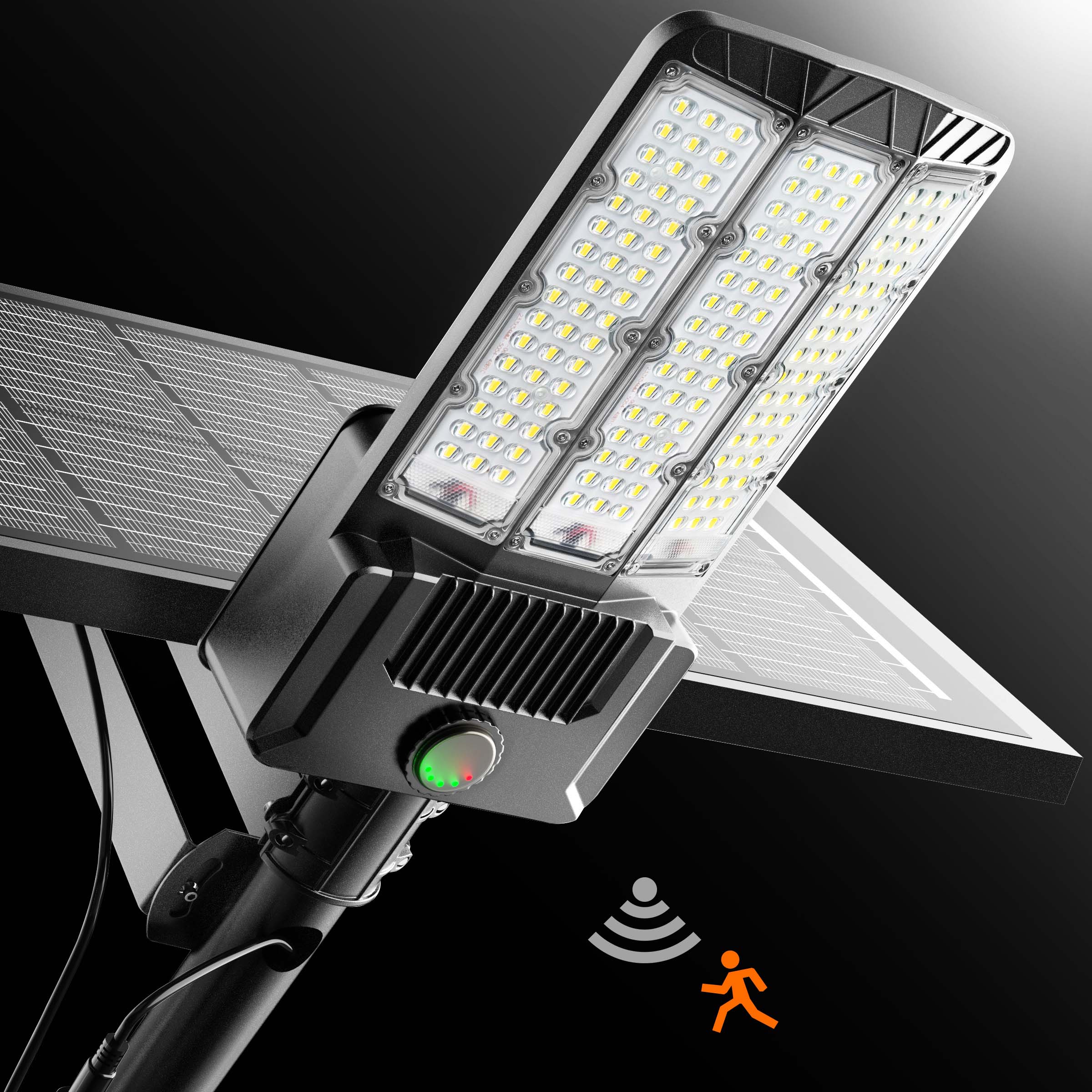
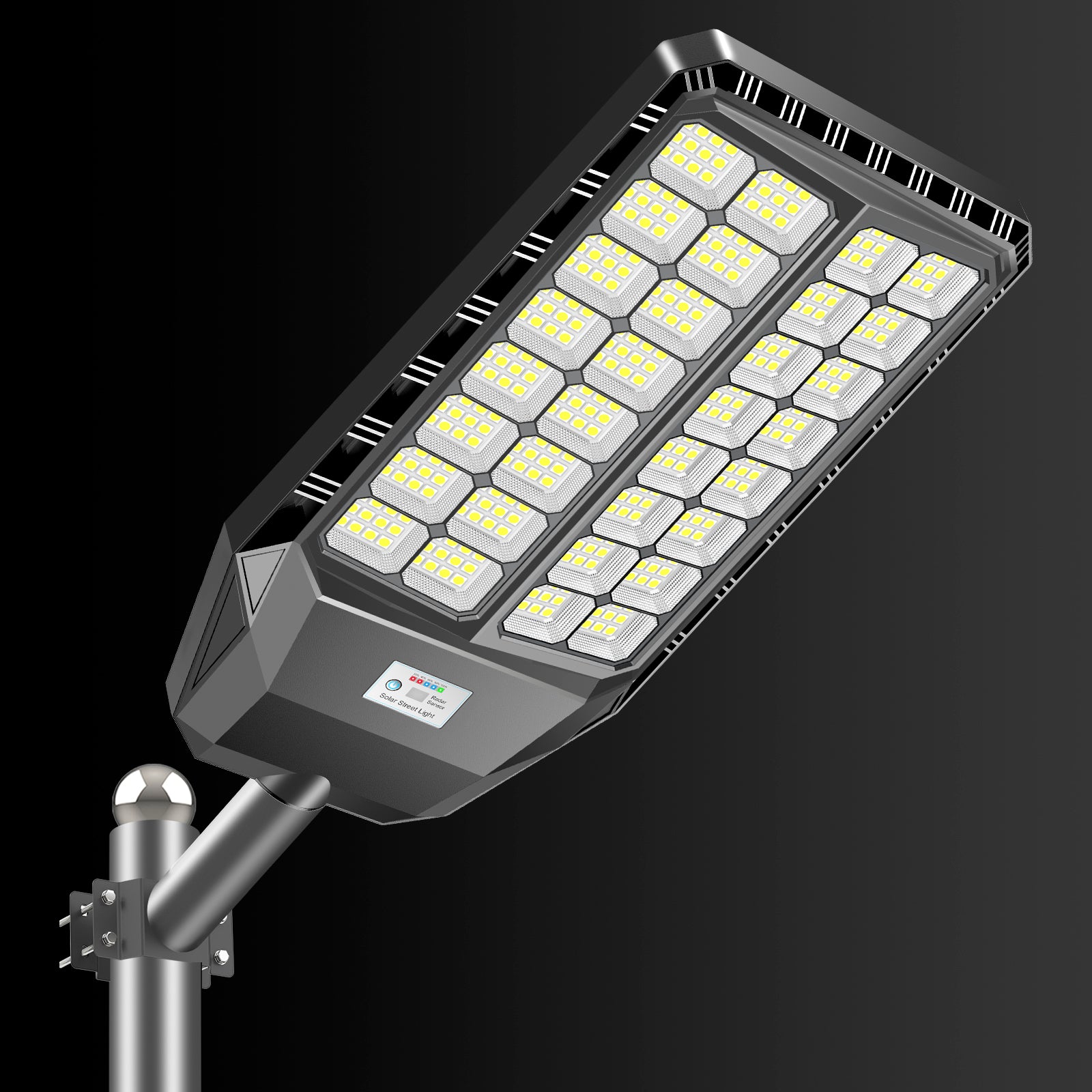
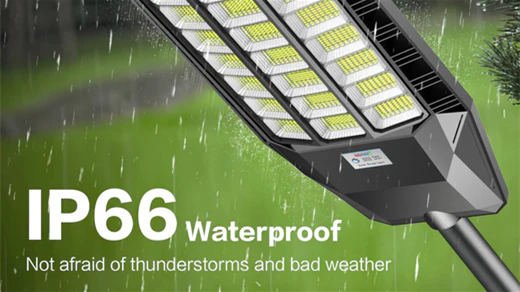
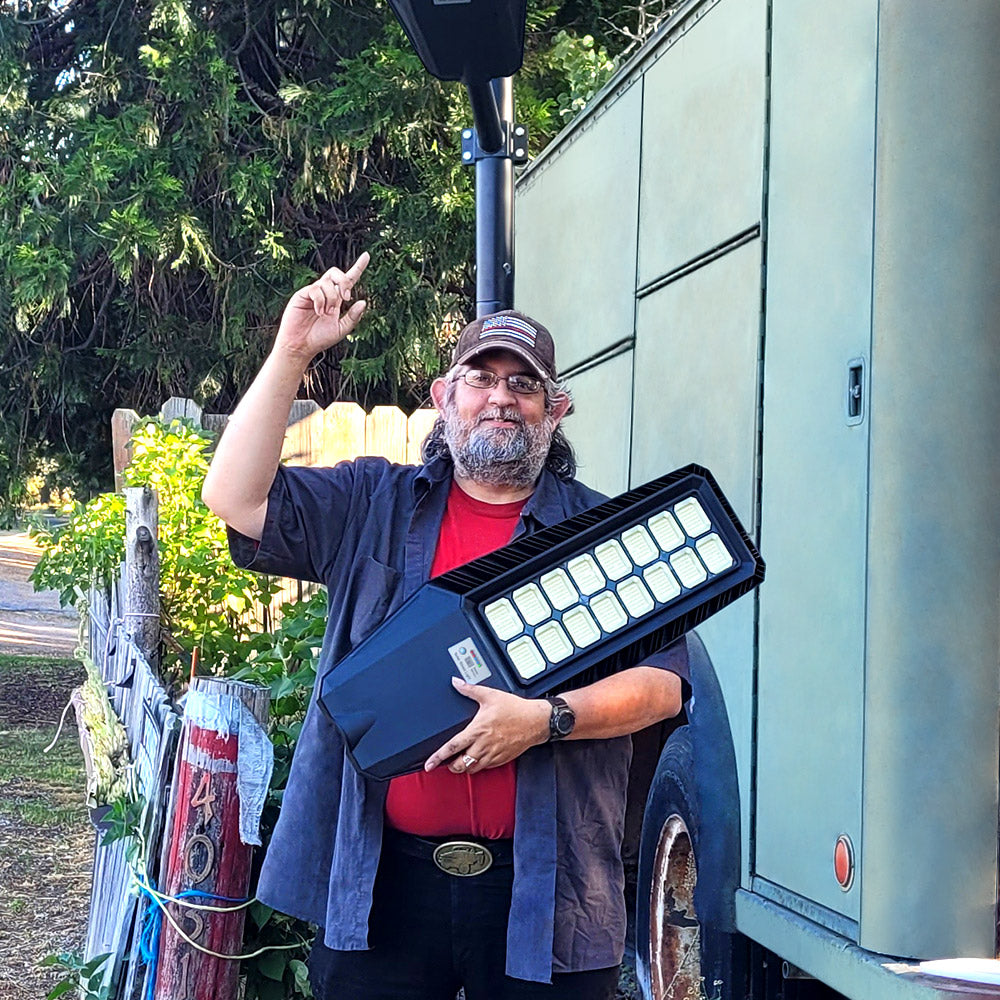
For large-area outdoor illumination that can withstand even the most severe weather conditions, the 1200W Solar Street Light delivers 70,000 lumens of powerful 6000K daylight illumination with IP66 waterproof protection.
IP66 certification means this street light is protected against powerful water jets from any direction — it can handle driving rain, pressure washing, and the most severe storm conditions without moisture infiltration. The ABS housing is engineered for outdoor durability, and the high-efficiency monocrystalline silicon solar panels (25% conversion rate) ensure reliable charging even in suboptimal sunlight conditions.
Key moisture protection features:
- IP66 rating — protected against powerful water jets from any direction
- ABS housing engineered to withstand all outdoor weather conditions including thunderstorms
- Operating temperature range: -50°F to 140°F (-45°C to 60°C)
- High-efficiency solar panels with good heat dissipation for thermal management
- Motion sensor with 26ft radar sensing range — minimizes unnecessary operation time
- 8–10 hours of solar charging provides 15–18 hours of continuous illumination
Hykoont XC940 Solar Flood Lights

For versatile, high-output flood lighting with robust weather resistance, the Hykoont XC940 Solar Flood Lights combine powerful illumination with the convenience of solar power and the reliability of weatherproof construction.
The XC940 features a 48,000mAh large-capacity battery capable of more than 2,000 charge/discharge cycles, ensuring years of reliable service even in environments with frequent rain and overcast conditions. The 16.4ft (5m) extension cable between the solar panel and the flood light body allows flexible installation — positioning the solar panel in the optimal sun-facing location while mounting the light where it's needed most.
Key features:
- Weatherproof construction for reliable outdoor performance
- 48,000mAh battery with 2,000+ charge cycles for long-term reliability
- Optical convex lens for wide-area light distribution
- Remote control with multiple modes: auto, gradient, full bright, half bright, and 2/4/6/8-hour timer
- Emergency flash mode with red/blue indicator light
- 16.4ft extension cord for flexible solar panel placement
- Two installation methods: ground stakes or screw mounting
The Long-Term Cost of Inadequate Moisture Protection
Choosing LED lights without adequate moisture protection might seem like a way to save money upfront, but the long-term costs can far exceed the initial savings. Consider the full cost of moisture-related LED light failure:
Replacement costs: A failed LED fixture must be replaced, often at a cost equal to or greater than the original purchase price. If moisture damage is systemic (affecting multiple fixtures in an installation), replacement costs can be substantial.
Labor costs: Replacing outdoor LED fixtures often requires specialized labor — electricians, lift equipment for high-mounted fixtures, or specialized marine technicians for boat lighting. Labor costs can easily exceed the cost of the fixture itself.
Downtime costs: In commercial or industrial settings, failed lighting can mean operational downtime, safety hazards, or regulatory non-compliance. The cost of downtime can dwarf the cost of the lighting itself.
Safety incident costs: Moisture-induced electrical failures can cause fires, electric shocks, or other safety incidents with potentially catastrophic human and financial consequences.
When you factor in these total lifecycle costs, investing in properly rated, high-quality waterproof LED fixtures is almost always the economically rational choice — even when the upfront cost is higher than budget alternatives.
Frequently Asked Questions About Moisture and LED Lights
Can moisture damage be repaired in LED lights?
Minor moisture damage — such as a loose connection or a corroded contact — can sometimes be repaired by cleaning the affected components and resealing the fixture. However, moisture damage to the LED chip, driver circuit, or circuit board traces is generally not repairable in the field. In most cases, a moisture-damaged LED fixture should be replaced rather than repaired.
How can I tell if my LED lights have moisture damage?
Common signs of moisture damage include: flickering or intermittent operation, reduced brightness, color shifting (particularly toward blue or yellow), visible condensation inside the lens, corrosion or rust on the fixture housing, and complete failure. If you notice any of these symptoms in outdoor LED fixtures, inspect them for moisture infiltration.
Are all LED lights with the same IP rating equally waterproof?
IP ratings define the test conditions that a fixture must pass, but they don't guarantee equal real-world performance. The quality of materials, manufacturing precision, and design details can significantly affect how well a fixture maintains its IP rating over time. A well-made IP65 fixture may outperform a poorly made IP66 fixture in long-term moisture resistance.
Can I use indoor LED lights outdoors if I protect them from direct rain?
This is not recommended. Indoor LED lights are not designed for outdoor humidity levels, temperature extremes, or UV exposure, even if they're protected from direct rain. The moisture in outdoor air alone can cause condensation inside unrated fixtures, leading to the same types of damage as direct water exposure. Always use fixtures specifically rated for outdoor use in outdoor applications.
How often should I inspect outdoor LED fixtures for moisture damage?
For most outdoor applications, a semi-annual inspection (spring and fall) is a good baseline. In harsh environments — coastal areas, industrial facilities, high-humidity locations — quarterly inspections are recommended. After severe weather events (storms, flooding, extreme temperature swings), inspect affected fixtures promptly.
Do solar LED lights have better moisture protection than wired LED lights?
Solar LED lights eliminate one of the most common moisture infiltration points in wired lighting: the cable entry point and electrical connections. Since solar lights don't require wired connections to the grid, there are fewer potential moisture entry points. However, solar lights still require appropriate IP ratings for their intended environment — the solar panel, battery compartment, and LED fixture all need adequate moisture protection.
Conclusion: Protect Your LED Investment with the Right Moisture Protection Strategy
Moisture is one of the most significant threats to the performance, longevity, and safety of LED lighting systems. From corrosion and short circuits to efficiency loss and color shifting, the effects of moisture on LED lights can be severe and costly. But with the right knowledge and the right products, moisture damage is largely preventable.
The key principles are straightforward: choose LED fixtures with IP ratings appropriate for their environment, ensure proper installation and sealing, implement regular maintenance schedules, and invest in quality products from manufacturers who engineer their fixtures for real-world outdoor conditions.
At Hykoont, every outdoor LED product we design is engineered with moisture protection as a core requirement — not an afterthought. From our IP68-rated solar deck lights to our IP66-certified solar street lights, our products are built to deliver reliable, efficient illumination in the most demanding outdoor environments, season after season.
Explore our full range of waterproof solar LED lighting solutions and discover how the right lighting can transform your outdoor spaces while standing up to whatever the weather throws at it.

Leave a comment
This site is protected by hCaptcha and the hCaptcha Privacy Policy and Terms of Service apply.