


Let's be honest — nobody gets excited about parking lot lighting. It's one of those things that just has to work. But here's the thing: if you're still running traditional HID or high-pressure sodium fixtures across your commercial property, you're quietly bleeding money every single month. Energy bills, maintenance crews, bulb replacements, and the occasional outage that leaves your lot dark and your liability exposure wide open.
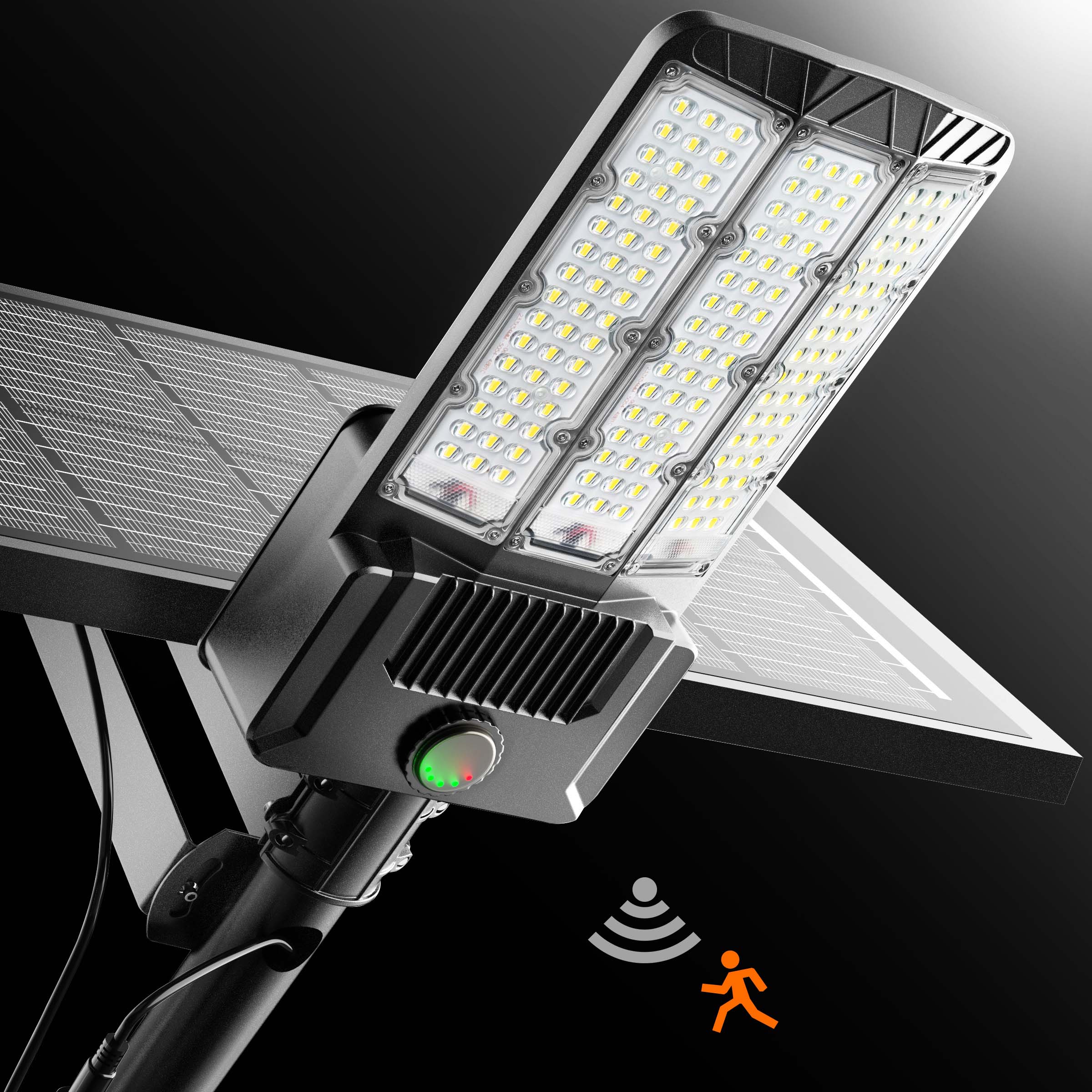
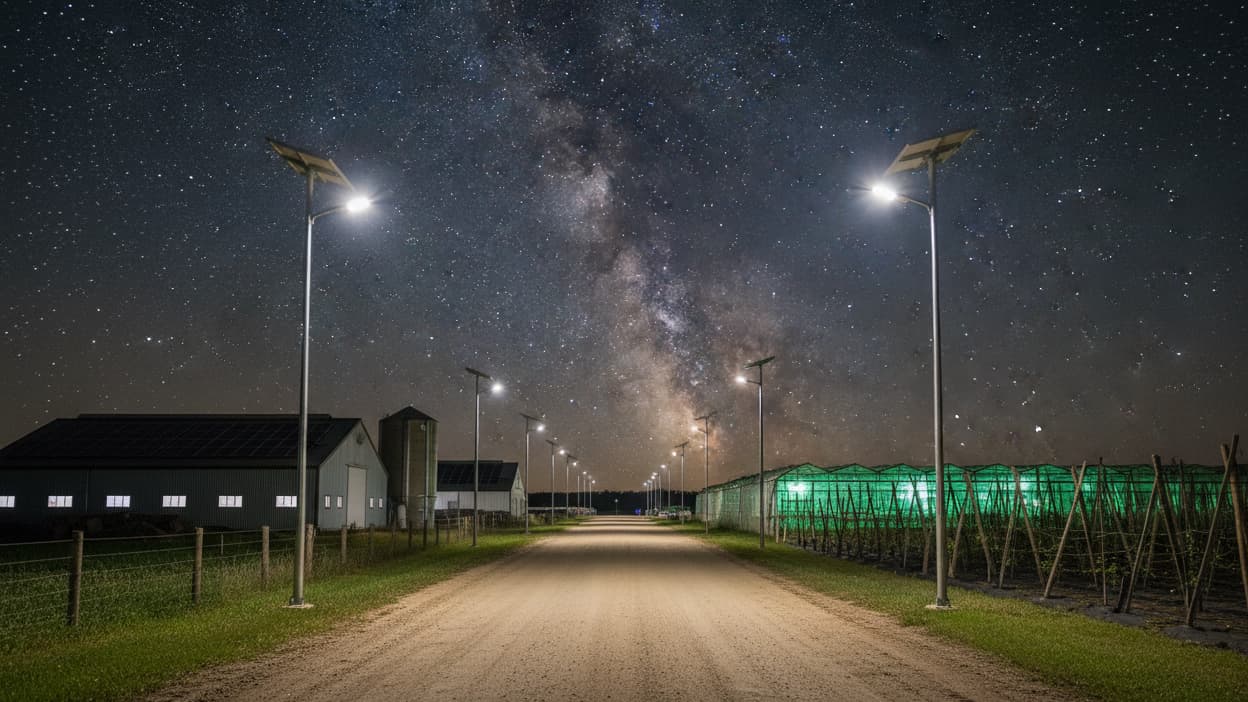
Solar-powered commercial street lights have moved well past the "novelty" phase. Today's units are engineered for serious output — we're talking 33,000 to 56,000 lumens, all-weather durability, and smart motion-sensing controls that stretch battery life through even cloudy stretches. And they run entirely off the sun, which means zero electricity cost once they're up.
This guide is written for US property managers, facility directors, HOA boards, and business owners who are tired of overpaying for outdoor lighting that underperforms. We'll walk through how to choose the right solar street light for your specific application, compare the top Hykoont models with real pricing, and answer the questions we hear most often from commercial buyers.
The Real Cost of Conventional Commercial Outdoor Lighting
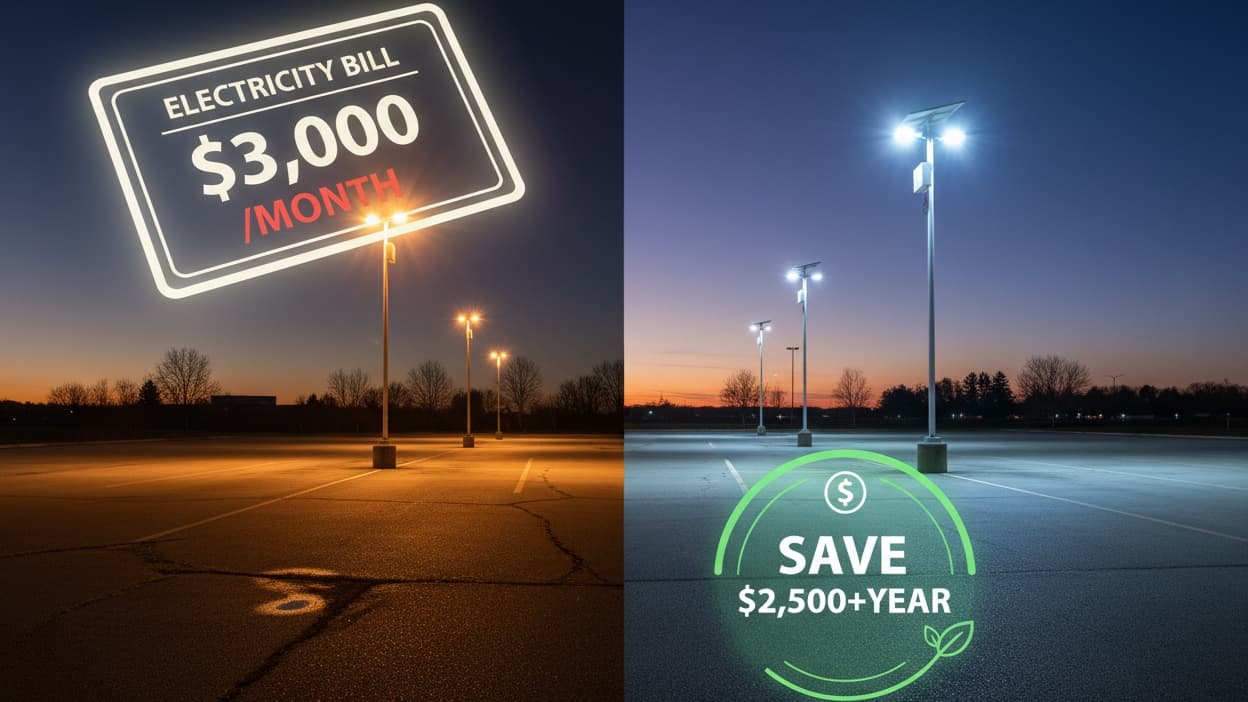
Before we get into solar, let's put some numbers on the table. A typical 150W metal halide street light running 12 hours a night costs roughly $65–$85 per year in electricity alone — and that's per fixture. A mid-size parking lot with 20 fixtures? You're looking at $1,300–$1,700 annually just in power, before you factor in:
- Bulb replacements every 12,000–15,000 hours (metal halide) vs. 50,000+ hours for LED
- Bucket truck rentals for maintenance: $150–$400 per visit
- Trenching and wiring costs if you're expanding or relocating fixtures
- Utility rate increases (US commercial electricity rates have risen ~3% annually over the past decade)
Solar street lights eliminate the electricity cost entirely and dramatically reduce maintenance frequency. Most quality solar units carry 5–10 year warranties on the battery and LED components. The ROI math tends to work out within 2–4 years for most commercial installations.
What Makes a Solar Street Light "Commercial Grade"?
Not all solar lights are built the same. The $30 Amazon specials are fine for a garden path. For a parking lot, roadway, or commercial campus, you need to look at a different set of specs entirely.
Lumen Output
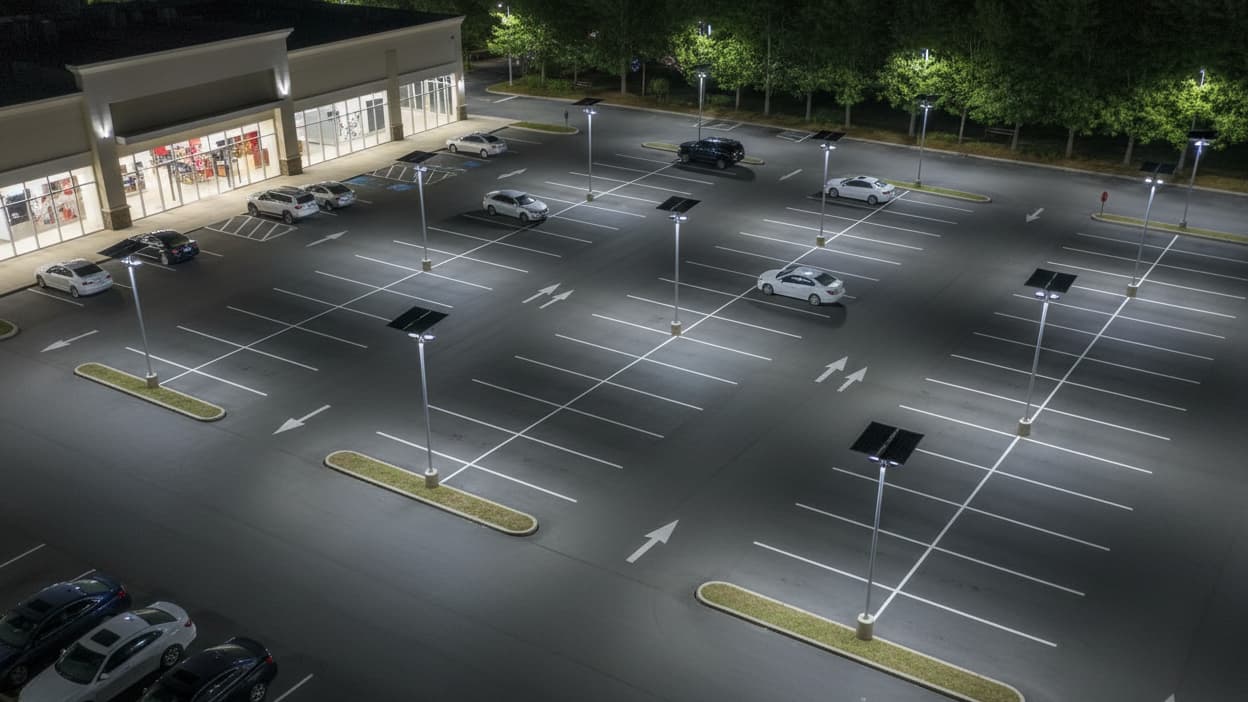
The Illuminating Engineering Society (IES) recommends a minimum of 1–2 footcandles for basic parking lot illumination, and up to 5 footcandles for high-activity areas like retail entrances or security zones. A single fixture covering a 30×30 ft area needs to deliver meaningful light — not just a glow. Look for units producing at least 10,000 lumens for perimeter lighting, and 30,000+ for main lot coverage.
Battery Chemistry
Lithium iron phosphate (LiFePO4) batteries are the current standard for commercial solar lighting. They handle temperature swings better than older lithium-ion chemistries, charge faster, and typically last 8–10 years before capacity degrades meaningfully. If a product spec sheet doesn't mention battery type, ask — or skip it.
IP Rating
For outdoor commercial use, you want a minimum of IP65. IP66 or IP67 is better if you're in a region with heavy rainfall or coastal humidity. This rating tells you the fixture is fully dust-tight and can handle water jets from any direction.
Motion Sensing & Dimming Modes
Smart solar lights dim to 30–50% when no motion is detected, then ramp up to full brightness when someone enters the area. This single feature can extend battery runtime by 40–60%, which is critical for maintaining all-night illumination through cloudy periods.
Pole Compatibility & Mounting
Commercial installations typically use 15–25 ft poles. Make sure the fixture you're buying is rated for the pole diameter you're working with, and check whether the mounting hardware is included or sold separately.

Hykoont Solar Street Lights: Model-by-Model Breakdown
Hykoont has built a reputation in the US commercial lighting market for producing solar street lights that actually deliver on their spec sheets. Here's a practical look at the models best suited for commercial applications, with real pricing.
1. Hykoont TW040 Solar Street Light — Best for Large Parking Lots & Roadways

Price: $179.00
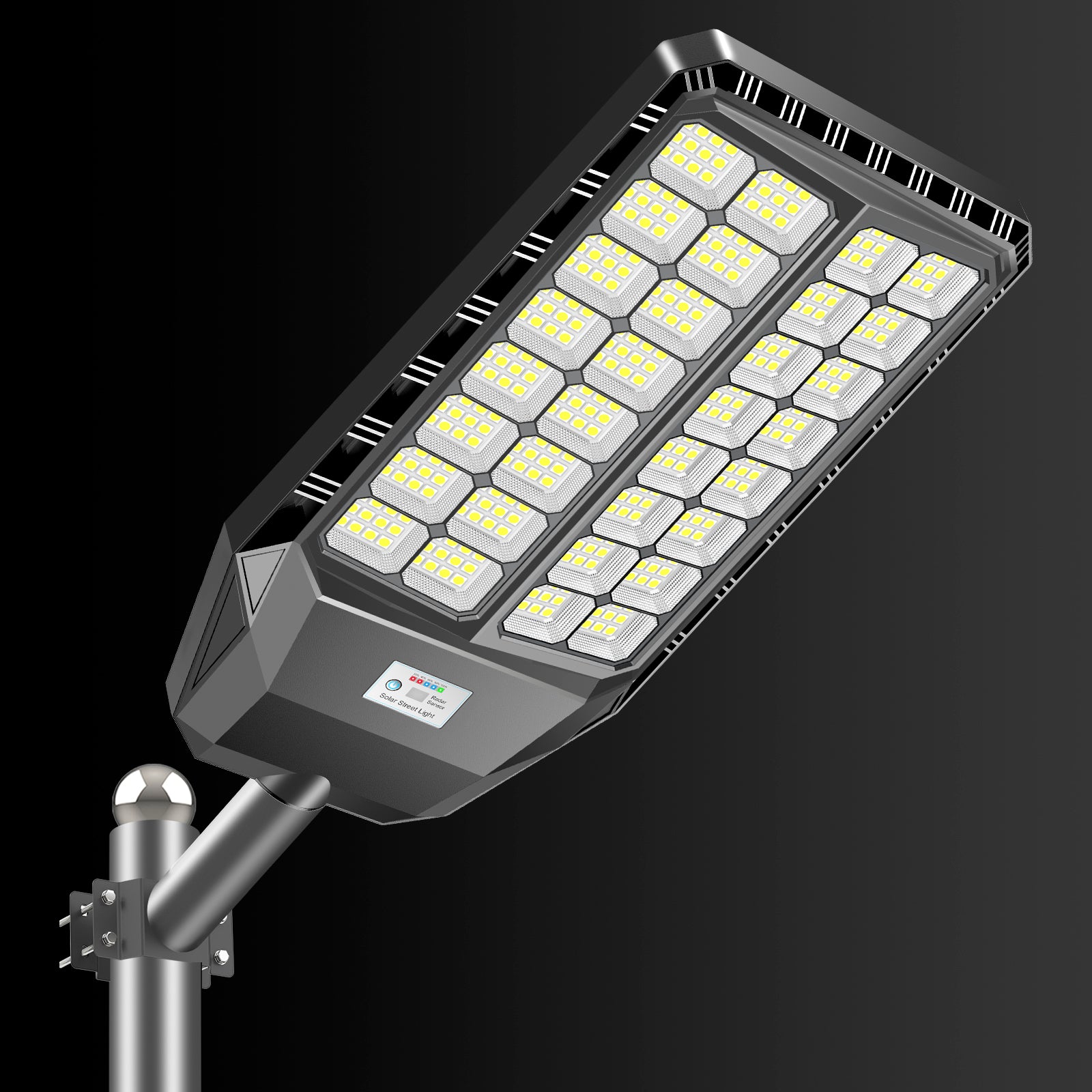
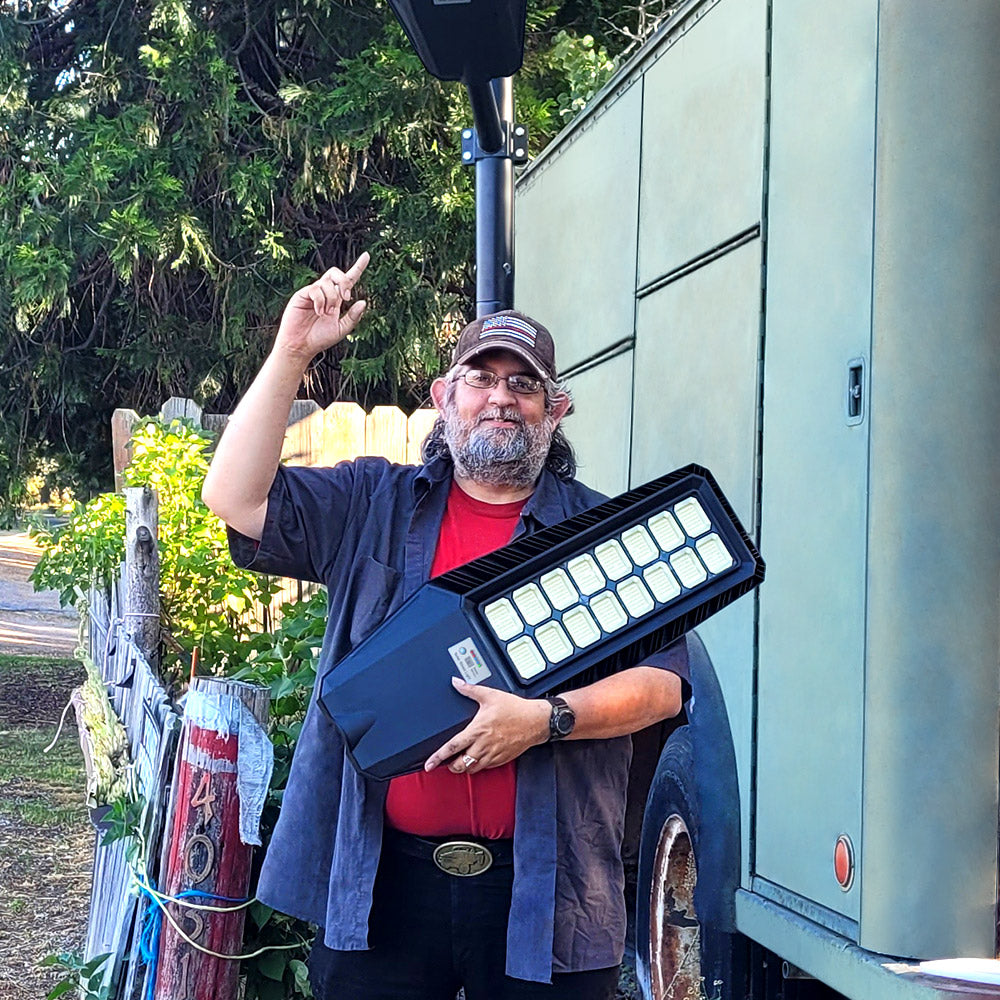
If you're lighting a large commercial parking lot, a roadway, or a campus perimeter, the TW040 is the unit to look at first. It delivers an exceptional 56,000 lumens — that's serious output for a solar fixture — and it's built around a high-efficiency monocrystalline solar panel that charges fast even on partly cloudy days.
The TW040 uses a LiFePO4 battery pack and includes a smart motion sensor that kicks the light to full brightness when activity is detected, then steps back down during quiet periods. This means you get all-night coverage without burning through your battery reserve by 2 AM.
Best for: Large parking lots (50+ spaces), commercial roadways, industrial campuses, sports facility perimeters
Key specs at a glance:
- Output: 56,000 lumens
- Solar panel: High-efficiency monocrystalline
- Battery: LiFePO4 (long-cycle)
- Motion sensing: Yes, with dimming modes
- Weather rating: IP65+
2. Hykoont TW024 Solar Street Light — Best Mid-Range Commercial Pick

Price: $99.00
The TW024 hits a sweet spot that a lot of commercial buyers land on: strong enough for real parking lot coverage, priced well enough to deploy across multiple fixtures without blowing the budget. It's equipped with 1,008 high-quality LEDs delivering 33,000+ lumens — more than enough for standard commercial lot coverage at typical pole heights of 15–20 ft.
At $99 per unit, you can outfit a 10-fixture parking lot for under $1,000 in hardware — a fraction of what a grid-tied LED retrofit would run once you factor in electrician labor and trenching.
Best for: Mid-size parking lots, retail strip centers, apartment complex common areas, municipal pathways
Key specs at a glance:
- Output: 33,000+ lumens
- LEDs: 1,008 SMD units
- Motion sensing: Yes
- Mounting: Standard commercial pole compatible
3. BC024 Solar Street Light 180W — Heavy-Duty Option for High-Demand Sites

Price: $159.00
The BC024 is a 180W workhorse. If you're dealing with a site that has high overnight activity — a 24-hour business, a logistics facility, a hospital parking structure — this is the unit that won't let you down. The higher wattage means a larger solar panel and battery reserve, which translates to more consistent all-night performance even during stretches of overcast weather.
It's also a solid choice for locations at higher latitudes (think the Pacific Northwest, New England, or the Upper Midwest) where winter sun hours are limited and you need a unit with enough reserve capacity to bridge cloudy days.
Best for: 24-hour commercial sites, high-latitude installations, logistics and warehouse facilities, hospital campuses
4. Hykoont TW016 Solar Street Lights — Precision Optics for Targeted Coverage

Price: $79.99
What sets the TW016 apart is its lens optical design — a feature you don't see on most solar street lights at this price point. Instead of scattering light in all directions (which wastes lumens on areas that don't need coverage), the TW016 uses precision optics to direct light exactly where you need it. This is particularly valuable for narrow roadways, pathways, or perimeter lighting where you want to maximize coverage along a specific corridor without light spill into adjacent areas.
At $79.99, it's also the most accessible entry point in the Hykoont commercial lineup, making it a great option for phased rollouts or smaller-budget projects.
Best for: Roadway lighting, pedestrian pathways, perimeter security lighting, smaller commercial lots
5. Hykoont BC020C 150W Solar Street Light — Reliable All-Rounder

Price: $79.00
The BC020C is a 150W unit that charges in just 6–8 hours under full sun — one of the faster charge times in the lineup. That quick turnaround matters in regions where you might get a sunny day followed by two overcast ones; the BC020C tops off fast and holds its charge well. It's a dependable all-rounder for standard commercial applications where you need reliable nightly performance without the premium price tag of the higher-output models.
Best for: Standard commercial parking lots, retail centers, community facilities, HOA common areas
How to Size Solar Street Lights for Your Property
One of the most common mistakes commercial buyers make is under-speccing their fixtures. Here's a practical sizing framework:
Step 1: Determine Your Required Footcandles
The IES RP-8 standard for parking facilities recommends:
- Basic parking areas: 0.5–1.0 footcandles (minimum)
- General parking: 1.0–2.0 footcandles
- High-activity areas (entrances, pay stations): 3.0–5.0 footcandles
Step 2: Calculate Pole Spacing
A general rule of thumb: pole spacing should be 3–4x the mounting height. So a 20 ft pole should be spaced 60–80 ft apart for adequate overlap. Tighter spacing (2.5x) is better for high-security or high-activity zones.
Step 3: Account for Your Climate
Solar output is measured in "peak sun hours" — the number of hours per day your panels receive full-intensity sunlight. The US ranges from about 3.5 peak sun hours (Seattle, Portland) to 6.5+ (Phoenix, Las Vegas). If you're in a low-sun-hour region, size up your battery capacity or choose a higher-wattage unit like the BC024 or TW040.
Step 4: Factor in Motion Sensing
If your lot has low overnight traffic (say, a business that closes at 9 PM), motion-sensing dimming can extend your battery life significantly. A light that dims to 30% when no motion is detected for 5 minutes will last 2–3x longer on a single charge than one running at full brightness all night.
Installation: What to Expect
One of the biggest advantages of solar street lights over grid-tied fixtures is installation simplicity. There's no trenching, no conduit, no electrician required for the fixture itself (though you'll want a licensed contractor for any pole foundation work). A typical commercial solar street light installation breaks down like this:
- Site survey: Identify pole locations, check for shading from trees or buildings, confirm soil conditions for foundation work
- Foundation/pole installation: Concrete anchor bolts, typically 2–4 hours per pole with a small crew
- Fixture mounting: Most Hykoont units mount in under 30 minutes per fixture with basic hand tools
- Commissioning: Set motion sensitivity, dimming levels, and timer modes via the included remote or app
Total installation time for a 10-fixture lot: typically 1–2 days for a 2-person crew, versus 3–5 days for a comparable grid-tied installation that requires trenching and electrical work.

Sustainability Credentials: What Solar Lighting Actually Means for Your ESG Goals
If your organization has sustainability reporting requirements — or if you're just trying to reduce your carbon footprint in a meaningful way — outdoor lighting is one of the highest-impact places to start. Commercial lighting accounts for roughly 17% of total US commercial electricity consumption, according to the EIA.
Switching a 20-fixture parking lot from 150W HID to solar eliminates approximately 13,140 kWh of annual electricity consumption (based on 12 hours/night × 365 days × 3 kW total load). At the US average commercial electricity rate of $0.12/kWh, that's $1,577 in annual savings — and roughly 9.3 metric tons of CO₂ equivalent avoided per year, depending on your grid's energy mix.
For businesses pursuing LEED certification, ENERGY STAR recognition, or simply trying to hit internal sustainability targets, solar street lighting is a straightforward, documentable win.
Frequently Asked Questions
Q1: Do solar street lights actually work in cloudy climates like the Pacific Northwest or New England?
Yes — with the right sizing. Modern LiFePO4 battery packs can store 3–5 days of reserve capacity, so a few overcast days won't leave your lot dark. The key is choosing a unit with sufficient battery reserve for your local peak sun hours. For regions with fewer than 4 peak sun hours per day, we recommend the BC024 (180W) or TW040 for their larger panel and battery configurations. The TW016 and BC020C work well in most of the continental US, including the Midwest and Southeast.
Q2: How long do the batteries last before they need to be replaced?
LiFePO4 batteries — the type used in Hykoont's commercial lineup — typically retain 80% of their original capacity after 2,000–3,000 charge cycles. At one cycle per day, that's 5.5–8+ years of useful life before you'd notice meaningful degradation. This is significantly longer than older lithium-ion or lead-acid alternatives. When replacement is needed, the battery packs are modular and can be swapped without replacing the entire fixture.
Q3: What's the difference between lumens and watts for solar street lights?
Watts measure power consumption; lumens measure actual light output. For solar lights, lumens are the number that matters for your application. A 40W solar LED fixture can produce 56,000 lumens (like the TW040) because modern LED technology is extremely efficient — far more so than the HID or fluorescent fixtures it replaces. When comparing solar lights, always compare lumens, not watts.
Q4: Do I need a permit to install solar street lights on my commercial property?
Permit requirements vary by municipality. In most US jurisdictions, installing fixtures on existing poles doesn't require a permit, but new pole foundations typically do. Check with your local building department before starting any foundation work. The good news: because solar street lights don't connect to the grid, you generally don't need an electrical permit for the fixture itself — only for any structural work.
Q5: Can solar street lights handle extreme temperatures — both hot summers and cold winters?
LiFePO4 batteries perform well across a wide temperature range, typically rated for -4°F to 140°F (-20°C to 60°C). In extreme cold, battery capacity does decrease somewhat — plan for about 15–20% reduced runtime in sustained sub-zero conditions. In extreme heat, the main concern is panel efficiency, which drops slightly above 77°F but remains functional. For desert climates, look for fixtures with thermal management features.
Q6: How do I compare solar street lights to traditional LED street lights for a commercial project?
The key comparison points are: upfront cost (solar is typically higher per fixture), installation cost (solar is dramatically lower — no trenching or electrical work), operating cost (solar is zero for electricity), and maintenance (solar has fewer moving parts and no bulb replacements). For most commercial applications, solar's lower installation and operating costs offset the higher fixture price within 2–4 years. Grid-tied LED makes more sense when you already have electrical infrastructure in place and installation costs are minimal.
Q7: What's the warranty on Hykoont commercial solar street lights?
Hykoont's commercial lineup includes manufacturer warranties covering LED components and battery packs. Specific warranty terms vary by model — check the individual product page for details. As a general benchmark, quality commercial solar street lights should carry at least a 3-year warranty on the fixture and 5 years on the battery.
Q8: Can I control the brightness and timing remotely?
Most Hykoont commercial models include a remote control for adjusting motion sensitivity, dimming levels, and operating modes. Some models support app-based control. For large installations where you want centralized management of multiple fixtures, check the product specs for network control compatibility before purchasing.
Q9: How many solar street lights do I need for a standard parking lot?
A rough starting point: one fixture per 2,500–4,000 sq ft of parking area, depending on your target footcandle level and mounting height. A 100-space parking lot (roughly 30,000–40,000 sq ft) typically requires 8–16 fixtures. For a more precise layout, use a photometric analysis tool or request a lighting plan from your supplier — Hykoont can assist with this for larger commercial projects.
Q10: Are there any federal or state incentives for commercial solar lighting in the US?
Yes. The federal Investment Tax Credit (ITC) may apply to solar lighting systems as part of a broader solar installation. Many states and utilities also offer rebates for commercial energy efficiency upgrades. The Database of State Incentives for Renewables & Efficiency (DSIRE) at dsireusa.org is the most comprehensive resource for finding incentives in your state. Consult a tax professional to confirm eligibility for your specific project.
Ready to Cut Your Lighting Costs for Good?
The shift to solar commercial lighting isn't a trend — it's a straightforward business decision that pays off in lower operating costs, reduced maintenance headaches, and a smaller environmental footprint. Whether you're managing a single retail parking lot or a multi-site commercial portfolio, there's a Hykoont solar street light sized for your application and budget.
Here's a quick recap of where each model fits:
- Large lots & roadways: TW040 — $179
- Mid-size commercial lots: TW024 — $99
- High-demand / 24-hour sites: BC024 — $159
- Precision pathway & roadway lighting: TW016 — $79.99
- Budget-friendly all-rounder: BC020C — $79
Shop TW040 — $179 Shop TW024 — $99 Shop BC024 — $159
Questions about which model is right for your project? Browse the full Hykoont commercial lighting catalog or reach out — we're happy to help you spec the right solution for your site.

Leave a comment
This site is protected by hCaptcha and the hCaptcha Privacy Policy and Terms of Service apply.