


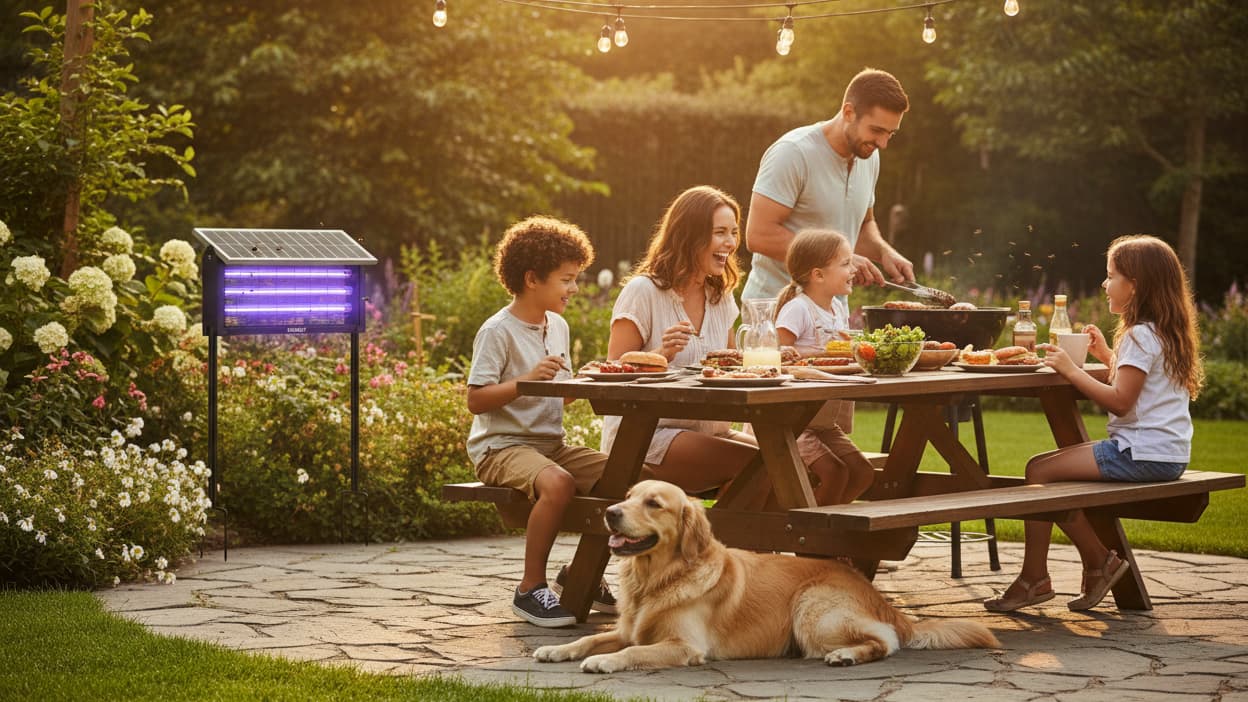
It's 7 PM on a Saturday. You've got the grill going, the kids are running around the yard, the dog is chasing fireflies. And then — the mosquitoes show up. Within ten minutes, everyone's slapping their arms and retreating inside.
Sound familiar? You're not alone. Mosquitoes are the number one reason American families cut their outdoor time short during spring and summer. And the frustrating part? Most of the "solutions" out there — sprays, foggers, coils — come with a whole new set of worries when you've got little ones and fur babies in the mix.
This guide is for the parent who Googled "is DEET safe for toddlers" at 11pm. For the dog owner who's nervous about citronella candles near their pup. For anyone who's tired of choosing between enjoying their backyard and keeping their family safe.
Let's talk about what actually works — and what doesn't — when it comes to eco-friendly mosquito control that's genuinely safe for pets and kids.
Why Most Mosquito Solutions Make Pet and Kid Safety Complicated
Before we get into solutions, it's worth understanding why this is even a problem. Most conventional mosquito control falls into a few categories:
Chemical Sprays and DEET-Based Repellents
DEET is effective — no question. But it's also a chemical that the EPA classifies as a pesticide. For adults using it occasionally on exposed skin, the risk is low. For toddlers who touch everything and put their hands in their mouths? The calculus changes. The American Academy of Pediatrics recommends avoiding DEET on children under 2 months entirely, and using concentrations no higher than 30% on older kids. That's not a ringing endorsement for slathering it around a play area.
For pets, it's worse. Dogs and cats groom themselves. A dog that walks through a DEET-treated area and then licks its paws is ingesting that chemical. DEET toxicity in pets can cause neurological symptoms — tremors, seizures, disorientation. Vets see it every summer.
Citronella Candles and Coils
Citronella is "natural," which makes it feel safer. And it is — to a point. But citronella candles produce smoke and particulate matter. For kids with asthma or respiratory sensitivities, that's a real concern. And cats, in particular, are sensitive to essential oils including citronella. Burning coils near a cat that likes to hang out on the patio isn't a great idea.
Also, let's be honest: citronella candles barely work. They create a small scent barrier that mosquitoes can easily fly around. If you're dealing with a real infestation, a candle isn't going to cut it.
Propane Mosquito Traps
These are more effective — they use CO2 to mimic human breath and lure mosquitoes in. But they're expensive to run (propane costs add up), require regular maintenance, and take weeks to meaningfully reduce mosquito populations. They're also not exactly portable or backyard-friendly for families with curious kids.
Yard Spraying Services
Professional mosquito spraying services use pyrethrin or permethrin — synthetic insecticides that kill mosquitoes on contact. They work. But they also kill beneficial insects (bees, butterflies), and permethrin is highly toxic to cats. If you have an outdoor cat or a dog that rolls in the grass, a freshly sprayed yard is a hazard zone for hours after treatment.
So where does that leave you? Looking for something that actually controls mosquitoes without turning your backyard into a chemical experiment.

How UV Bug Zappers Work — And Why They're Different
UV bug zappers have been around for decades, but the technology has come a long way from the buzzing blue boxes your grandparents had on the porch. Modern solar-powered UV zappers are a genuinely different category of product.
Here's the basic mechanism: mosquitoes and other flying insects are attracted to ultraviolet light. UV zappers emit light in the 365nm wavelength range — the sweet spot that draws insects in. When they get close enough, they contact an electrified grid and are eliminated instantly. No chemicals. No spray. No residue.
What makes this relevant to the pet-and-kid safety question is what's not happening:
- No chemical compounds being released into the air
- No residue on grass, soil, or surfaces
- No toxic byproducts from combustion
- No risk of ingestion through grooming or hand-to-mouth contact
The only real safety consideration with a bug zapper is the electrical grid itself — and modern units are designed with protective housing that makes accidental contact by a child or pet essentially impossible during normal use. The grid is recessed inside the unit, not exposed on the outside.

The Solar Advantage: Why It Matters Beyond Just Saving on Electricity
When you add solar power to the equation, you get a few additional benefits that matter specifically for outdoor family use.
No cords to trip over. If you've got kids running around the yard, extension cords are a hazard. Solar-powered units are completely self-contained — no cords, no outlets, no tripping risk.
Placement flexibility. You can put a solar bug zapper exactly where you need it — near the garden, along the fence line, by the patio — without worrying about proximity to an outlet. This matters because placement is actually critical to effectiveness (more on that below).
Automatic operation. The best solar bug zappers run on a dusk-to-dawn schedule automatically. They charge during the day and activate at dusk — which is exactly when mosquitoes are most active. You don't have to remember to turn anything on or off.
Zero ongoing chemical cost. Once it's installed, it runs on sunlight. No propane, no replacement cartridges, no spray refills.
Meet the Hykoont Solar Bug Zappers: Built for Real Backyards
We make two solar LED bug zappers, and they're designed for different situations. Here's an honest breakdown of both.
Hykoont 19W Solar LED Bug Zapper — Standard

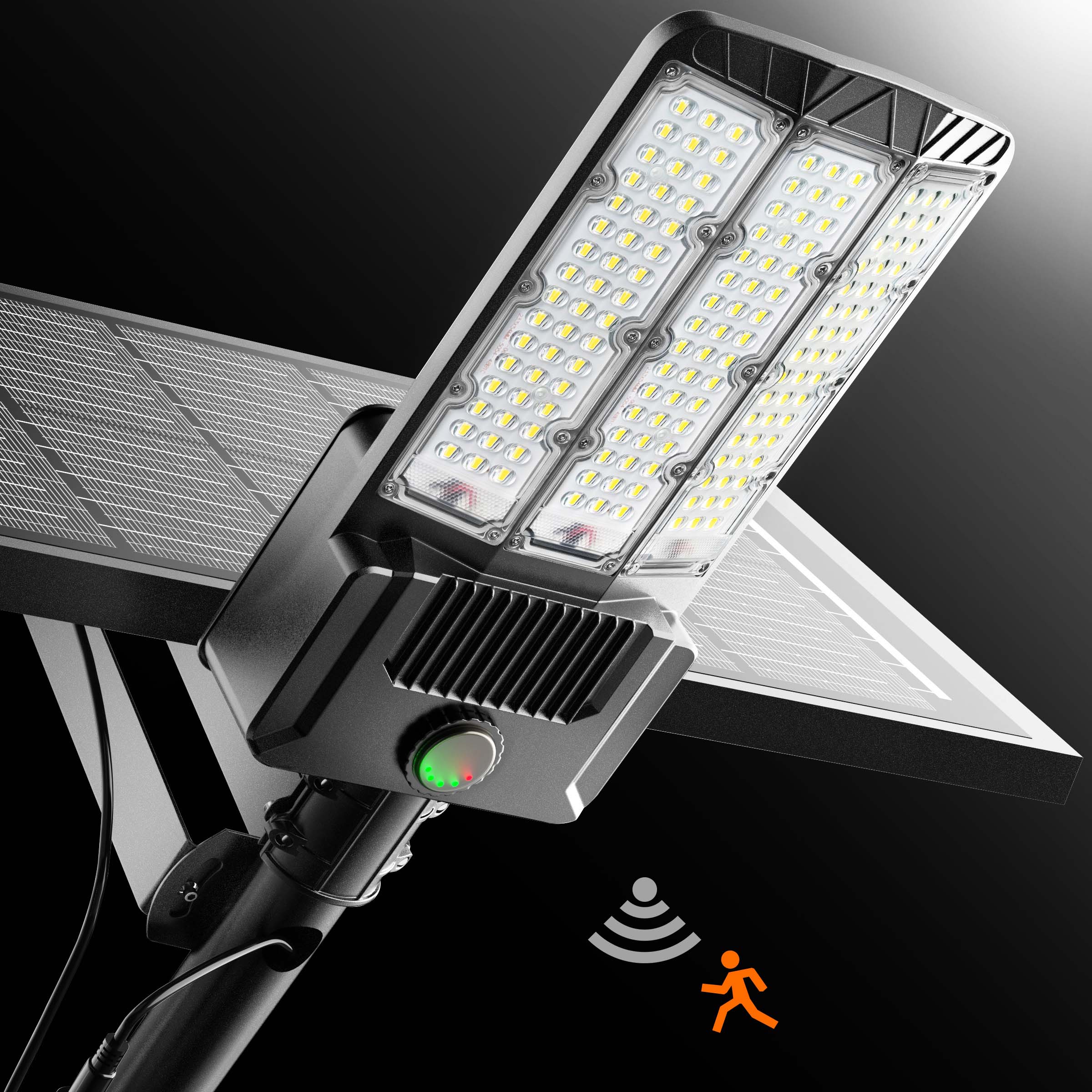
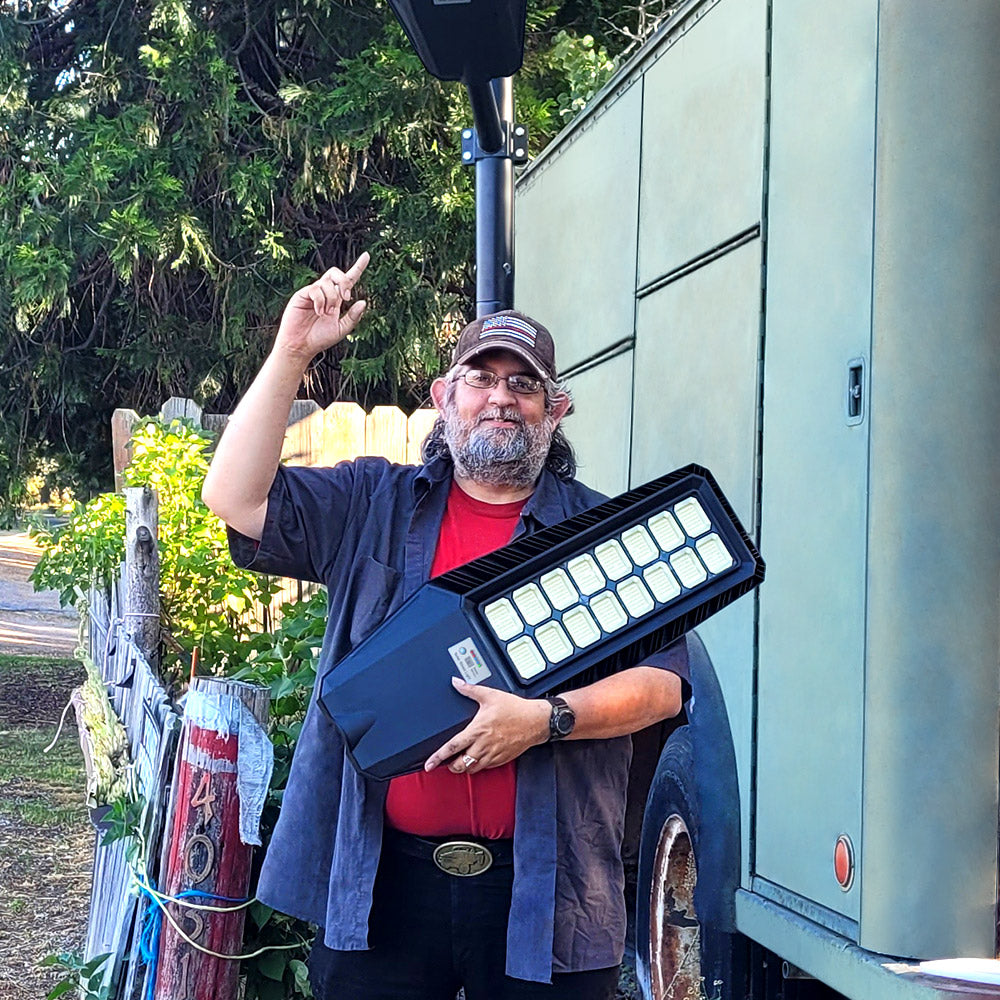
This is the one for most families. It covers approximately 4,000 square feet — that's a solid suburban backyard. It runs on a 19W monocrystalline solar panel with a 6,000mAh rechargeable battery, giving you up to 8 hours of runtime on a full charge. The triple UV tube design means it's pulling insects from a wider area than single-tube units.
It comes with both a ground stake and a hanging option, so you can position it at the right height for your space. The IPX4 waterproof rating means it handles rain without issue — you're not babysitting it every time there's a storm.
Two operating modes: constant-on (runs all night) or dusk-to-dawn (automatic). For most families, dusk-to-dawn is the practical choice — it conserves battery and runs exactly when you need it.
Price: $125.00
→ Shop the 19W Standard — $125.00


Hykoont 30W Solar LED Bug Zapper Pro — Triple Tube Dusk-to-Dawn

This is the heavy-duty option. The Pro covers approximately 8,000 square feet — think large backyards, acreage, farms, or commercial outdoor spaces like restaurant patios. It runs on a 30W solar panel with the same 6,000mAh battery, delivering 8–12 hours of runtime depending on conditions.
The triple tube design on the Pro is larger than the Standard, pulling in insects from a significantly wider radius. If you've got a property where mosquitoes feel like a genuine infestation rather than an occasional nuisance, this is the unit to consider.
Same IPX4 waterproofing, same dusk-to-dawn capability, same no-cord solar operation. Just more power and more coverage.
Price: $125.00 – $259.00 (depending on configuration)
→ Shop the 30W Pro — From $125.00


Placement Strategy: Where You Put It Matters More Than You Think
A bug zapper is only as good as its placement. Here's what actually works — and what most people get wrong.
Don't Put It Right Next to Where People Sit
This is the most common mistake. People put the zapper on the patio table or right next to the seating area, thinking it'll protect them directly. The problem: the UV light attracts insects toward it. If it's right next to you, you're essentially sitting next to a mosquito magnet. Place it 15–20 feet away from your primary seating or play area, ideally upwind.
Height Matters
Mosquitoes tend to fly low — typically 3 to 6 feet off the ground. Mounting your zapper at that height range puts it in the flight path. The ground stake option on both Hykoont units lets you dial in the exact height.
Near Standing Water, Not Away From It
Mosquitoes breed in standing water — birdbaths, puddles, low spots in the yard. Placing your zapper near these breeding areas intercepts mosquitoes before they disperse into your yard. If you can't eliminate the standing water, at least put the zapper nearby.
Away From Competing Light Sources
If your zapper is competing with bright patio lights or string lights, the UV attraction is diluted. For best results, the zapper should be the brightest UV source in its zone. This is another reason solar units work well — they're self-contained and don't need to be near your patio lighting setup.
For Large Properties: Use Multiple Units
The 30W Pro covers 8,000 sq ft, but if you've got a large property with multiple problem areas (back fence line, garden, pool area), two Standard units strategically placed will outperform one Pro in the wrong spot. Think about your mosquito problem zones and cover them specifically.

The "Safe for Pets" Question: What You Actually Need to Know
Let's get specific, because "safe for pets" is a phrase that gets thrown around loosely.
Dogs
UV bug zappers pose essentially no chemical risk to dogs. There's nothing being released into the air or deposited on surfaces. The main consideration is the electrical grid — but as noted, the grid is recessed inside the housing on modern units. A dog sniffing around the base of a ground-staked unit isn't going to get zapped. That said, if you have a very curious dog that likes to chew things, mount the unit at a height they can't reach rather than using the ground stake.
Cats
Cats are notoriously sensitive to essential oils and many chemical compounds — which is exactly why UV zappers are a better choice for cat owners than citronella or spray-based solutions. No chemical exposure risk. The same electrical grid caution applies, though cats are generally less likely to investigate a buzzing light source than dogs are.
Birds
If you have backyard chickens or pet birds that spend time outdoors, UV zappers are fine. No chemical risk. Birds are actually attracted to insects, so a zapper that's eliminating mosquitoes and gnats is doing your chickens a favor by reducing competition for the bugs they want to eat.
Beneficial Insects
This is a fair concern. UV zappers do attract and kill some beneficial insects — moths, certain beetles. The honest answer is that no mosquito control method is perfectly selective. However, UV zappers are significantly less harmful to beneficial insect populations than broad-spectrum chemical sprays, which kill everything they contact. Bees, which are the most important beneficial insects to protect, are generally not active at night when your zapper is running — so the overlap is minimal.

The "Safe for Kids" Question: Equally Specific
Toddlers and Young Children
The primary safety consideration for young children is the electrical grid. Modern bug zappers have protective outer cages that prevent fingers from reaching the grid — but a determined toddler with a stick could potentially defeat that protection. For families with very young children, mounting the unit out of reach (hanging from a tree branch or fence post at 5–6 feet) is the smart move. The ground stake option is better suited for yards where kids are older and understand "don't touch that."
No Chemical Exposure Risk
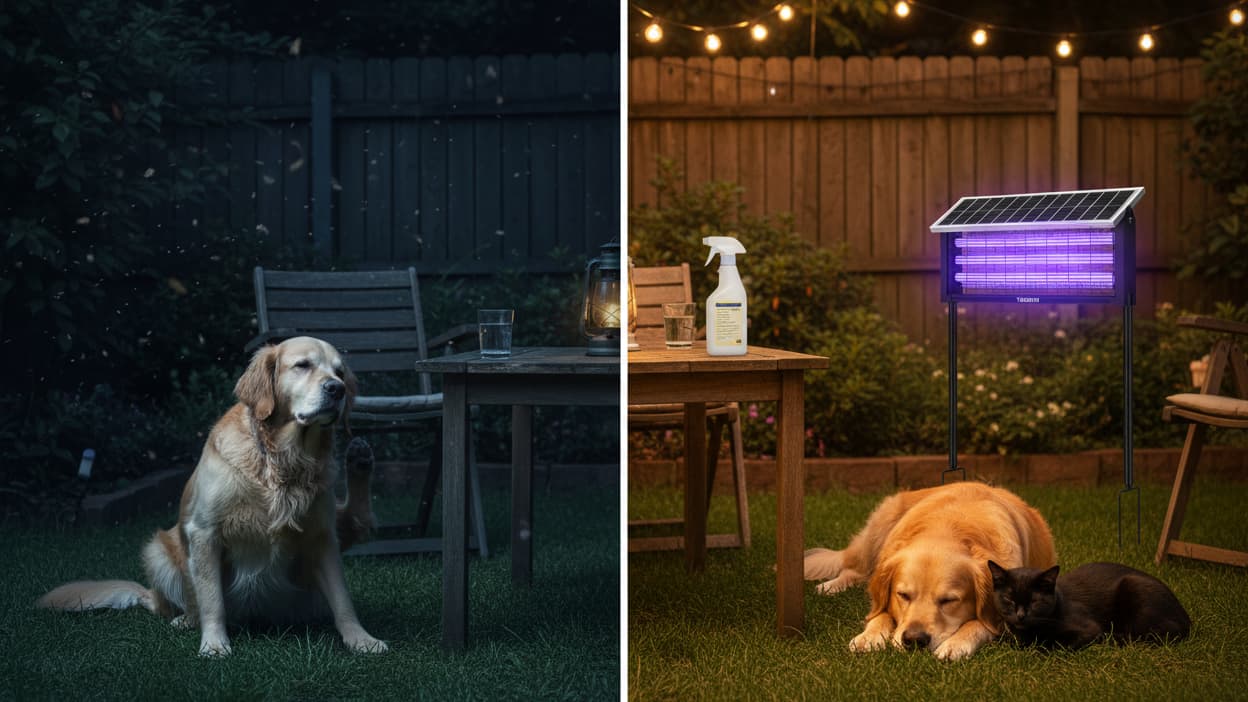
This is the key point for parents: there is nothing being sprayed, burned, or released. Your kids can run through the yard, roll in the grass, and put their hands in their mouths without any chemical exposure risk from the bug zapper. That's a fundamentally different safety profile than any spray or candle-based solution.
The Zapping Sound
Some kids find the zapping sound startling or upsetting. It's worth mentioning — if you have a noise-sensitive child, the occasional zap (which sounds like a brief electrical snap) might be something to prepare them for. It's not loud, but it is noticeable.
Realistic Expectations: What a Bug Zapper Will and Won't Do
We'd rather be straight with you than oversell this.
What it will do: Meaningfully reduce the mosquito population in your yard over time. Provide immediate relief by attracting and eliminating mosquitoes that are active in the coverage area. Run automatically every night without any effort from you. Do all of this without chemicals.
What it won't do: Create a 100% mosquito-free zone. Mosquitoes can still enter your yard from neighboring properties. If you're in a high-infestation area (near wetlands, for example), you may still see some mosquitoes even with the zapper running. It's a significant reduction, not an elimination.
The compound effect: Bug zappers get more effective over time. As they reduce the local mosquito population night after night, there are fewer mosquitoes to deal with each subsequent evening. Most users report noticeable improvement within 2–3 weeks of consistent use.
Combine with source reduction: The most effective approach pairs a bug zapper with eliminating standing water in your yard. Empty birdbaths weekly, fix drainage issues, clear gutters. Remove the breeding grounds and let the zapper handle the adults. That combination is genuinely powerful.

Comparing Your Options: An Honest Side-by-Side
| Method | Effectiveness | Pet Safe? | Kid Safe? | Ongoing Cost |
|---|---|---|---|---|
| DEET Spray | High (personal) | ⚠️ Risk if ingested | ⚠️ Age restrictions | Medium |
| Citronella Candles | Low | ⚠️ Cats sensitive | ⚠️ Smoke/fire risk | Low–Medium |
| Yard Spray Service | High | ❌ Permethrin toxic to cats | ⚠️ Re-entry wait required | High ($50–150/visit) |
| Propane Trap | Medium–High | ✅ Generally safe | ✅ Generally safe | High (propane) |
| Solar UV Bug Zapper | Medium–High | ✅ No chemical risk | ✅ No chemical risk | $0 (solar) |
Real Scenarios: Which Unit Is Right for Your Situation?
"We have a standard suburban backyard, two kids under 10, and a golden retriever."
The 19W Standard at $125 is your unit. It covers your space, runs automatically, and the hanging mount option keeps it out of reach of both kids and the dog. Set it to dusk-to-dawn mode and forget about it.
→ Get the 19W Standard — $125.00
"We have a large property — about a quarter acre — with a pool, a garden, and two cats that go outside."
The 30W Pro is worth the investment here. The 8,000 sq ft coverage handles your full property, and for cat owners, the zero-chemical operation is exactly what you need. Place it near the garden where mosquitoes breed, and let it run.
→ Get the 30W Pro — From $125.00
"We run a restaurant with an outdoor patio and we can't use chemical sprays near food."
The 30W Pro is the clear choice for commercial outdoor spaces. No chemical residue, no spray near food prep areas, automatic operation. The coverage handles a substantial patio area, and the solar operation means no running extension cords across a dining space.
Setup and Maintenance: Genuinely Simple
One of the underrated benefits of solar bug zappers is how little ongoing attention they need.
Initial setup: Assemble the unit (straightforward, no tools required beyond what's included), insert the ground stake or hang it, and place it in a location with good sun exposure. That's it. First charge takes a full day of sunlight.
Ongoing maintenance: The collection tray at the bottom catches eliminated insects. Empty it every 1–2 weeks depending on activity level. That's the only regular maintenance task. The UV tubes are rated for long-term use — you're not replacing bulbs frequently.
Winter storage: If you're in a climate with hard winters, bring the unit inside during the off-season. Store it somewhere it won't freeze. The battery will maintain its charge better if stored partially charged rather than fully depleted.
Frequently Asked Questions
Q: Is a UV bug zapper completely safe around my toddler?
A: The chemical safety profile is excellent — there's nothing being sprayed or burned. The one consideration is the electrical grid inside the unit. Modern zappers have protective housing that prevents accidental contact, but for toddlers, we recommend mounting the unit out of reach (hanging at 5+ feet) rather than using the ground stake. Once your kids are old enough to understand "don't touch," the ground stake option is fine.
Q: My cat goes outside. Will the bug zapper hurt her?
A: No chemical risk whatsoever — which is actually the main reason cat owners prefer UV zappers over spray-based solutions. Cats are sensitive to many essential oils and chemical compounds, but a UV zapper releases nothing into the environment. The electrical grid is recessed inside the housing, so a cat walking past or sniffing the base isn't at risk. If your cat is a climber and might try to bat at a hanging unit, mount it somewhere she can't reach.
Q: How long does it take to see results?
A: You'll see the zapper working immediately — you'll hear it eliminating insects on the first night. For a noticeable reduction in the overall mosquito population in your yard, give it 2–3 weeks of consistent nightly operation. The compound effect builds over time as the local population is reduced.
Q: What happens on cloudy days? Will it still work?
A: The 6,000mAh battery stores enough charge for a full night of operation even after a partly cloudy day. After a full overcast day with minimal sun, you may get reduced runtime — but the dusk-to-dawn mode is designed to manage battery use efficiently. In extended cloudy periods (multiple days), runtime may be shorter, but the unit will still operate.
Q: Does it attract mosquitoes from my neighbors' yards into mine?
A: The UV light does attract insects from the surrounding area — that's how it works. The effective attraction radius is roughly the coverage area of the unit. Mosquitoes that are attracted and eliminated are mosquitoes that would have been biting you anyway. Over time, reducing the local population benefits your whole neighborhood, not just your yard.
Q: Will it kill bees and butterflies?
A: Bees and butterflies are primarily active during daylight hours and are not strongly attracted to UV light at night. Since your zapper runs at dusk and through the night, the overlap with beneficial pollinators is minimal. It's not zero — some moths and beetles will be affected — but it's significantly less harmful to beneficial insect populations than broad-spectrum chemical sprays.
Q: Can I use it indoors?
A: The Hykoont units are designed for outdoor use. The solar panel needs sun exposure to charge, and the IPX4 waterproofing is an outdoor feature. For indoor use, you'd want a different type of unit (plug-in indoor zappers exist). These are outdoor products.
Q: How does it handle rain?
A: Both units are IPX4 rated, which means they're protected against water splashing from any direction. Normal rain is not a problem. You don't need to bring them in during a storm. They're not rated for submersion, so if your yard floods, bring them in — but typical rain and weather is fine.
Q: What's the difference between the 19W Standard and the 30W Pro?
A: Coverage area is the main difference — 4,000 sq ft for the Standard vs. 8,000 sq ft for the Pro. The Pro also has a larger triple-tube design that pulls insects from a wider radius. For most suburban backyards, the Standard is sufficient. For large properties, farms, or commercial spaces, the Pro is worth the upgrade. Both are priced starting at $125.
Q: Do I need to do anything to set it up, or does it just work?
A: Assembly is simple — attach the solar panel, insert the ground stake or set up the hanging mount, and place it in a sunny spot. It charges during the day and activates automatically at dusk if you're using dusk-to-dawn mode. The only ongoing task is emptying the collection tray every week or two. That's genuinely it.
The Bottom Line
If you've got kids and pets and you're trying to reclaim your backyard from mosquitoes, the math is pretty clear. Chemical sprays and yard treatments come with real risks for the family members who can't read warning labels or understand "stay off the grass for 24 hours." Citronella barely works. Propane traps are expensive to run.
Solar UV bug zappers sit in a genuinely different category: effective mosquito control with no chemical exposure risk, no ongoing cost, and automatic operation. They're not magic — you'll still see some mosquitoes, especially in high-infestation areas — but they're the most family-friendly tool in the mosquito control toolkit.
The Hykoont 19W Standard at $125 handles most suburban backyards. The 30W Pro handles larger properties and commercial spaces. Both run on sunlight, both operate automatically, and neither puts anything into your yard's air, soil, or surfaces.
Your backyard should be a place your family actually wants to spend time. These help make that happen.



Leave a comment
This site is protected by hCaptcha and the hCaptcha Privacy Policy and Terms of Service apply.