



Here's a question most people don't think to ask: how much does it actually cost to run a plug-in bug zapper all summer?
A typical electric bug zapper draws 20–40 watts. Run it 8 hours a night for 5 months (roughly May through September in most of the US), and you're looking at 24–48 kWh of electricity. At the national average of around $0.16/kWh, that's $4–$8 per unit per season. Not catastrophic — but multiply that across multiple units for a large patio or yard, factor in the cost of replacement bulbs, and it adds up faster than you'd expect.
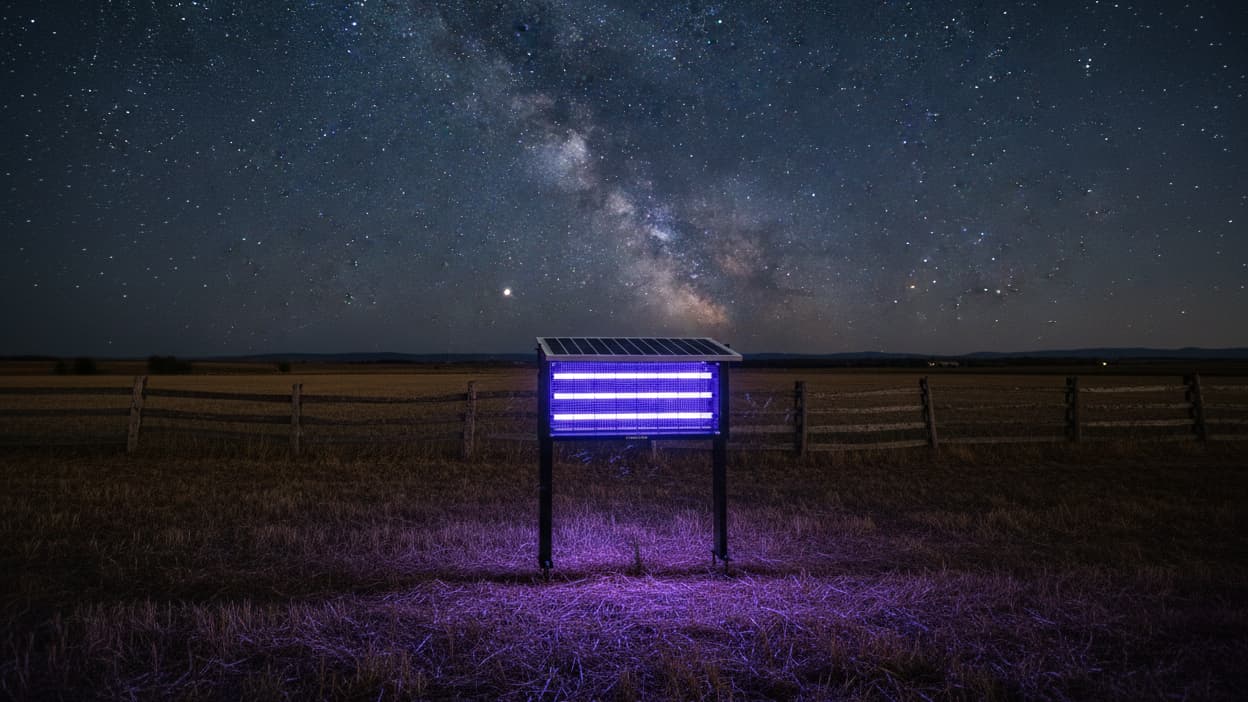
Now consider the alternative: a solar-powered bug zapper that charges itself during the day and runs for free every night. Zero electricity cost. Zero wiring. Zero monthly bill impact. And with dual-mode operation — constant-on or automatic dusk-to-dawn — you get precise control over when and how it runs, which extends battery life and maximizes efficiency.
That's the core value proposition of dual-mode solar bug zappers, and it's why they've become the go-to choice for homeowners and property managers who want effective patio mosquito control without the ongoing operating costs. This guide breaks down exactly how they work, what the dual-mode feature actually does for you, and which models make the most sense for different patio setups.
What "Dual-Mode" Actually Means — And Why It Matters
The term "dual-mode" gets used loosely in product listings, so let's be precise about what it means in the context of solar bug zappers.
In Hykoont's solar bug zapper lineup, dual-mode refers to two distinct operating modes:
Mode 1: Constant Mosquito-Attracting Light
In this mode, the UV tubes stay on continuously whenever the unit is powered. You control when it runs — turn it on when you head outside, turn it off when you're done. This mode is useful when you want targeted operation during specific hours, or in situations where ambient light from your patio might confuse an automatic sensor.
It's also the mode to use if you're running the unit in a covered area (like under a pergola or in a screened porch) where the light sensor might not accurately detect ambient light levels.
Mode 2: Automatic Dusk-to-Dawn Operation
This is the mode most users end up preferring. A built-in light sensor monitors ambient light levels and automatically activates the UV tubes at dusk — when mosquito activity peaks — and shuts them off at dawn. No timers to set, no switches to flip, no forgetting to turn it on before your evening cookout.
From an energy efficiency standpoint, dusk-to-dawn mode is also smarter. The unit only draws from the battery when it's dark, which means it's not wasting stored energy during the twilight hours when mosquito activity is lower. Over the course of a season, this translates to more consistent all-night performance and longer battery life.
Why Having Both Modes Matters
Different situations call for different approaches. A covered patio with overhead lighting might need constant-on mode. An open backyard benefits from dusk-to-dawn automation. Having both options means you're not locked into one behavior — you adapt the zapper to your space rather than adapting your space to the zapper.

The Real Energy Math: Solar vs. Electric Bug Zappers
Let's run the actual numbers, because the long-term economics of solar are more compelling than most people realize.
Electric Bug Zapper (Plug-In)
- Average power draw: 20–40W
- Daily runtime: 8 hours
- Daily energy use: 0.16–0.32 kWh
- Seasonal cost (150 nights): $3.84–$7.68 at $0.16/kWh
- 5-year cost (electricity only): $19–$38
- Plus: replacement UV bulbs ($10–$20/year), extension cord wear, outlet availability
Solar Bug Zapper (Dual-Mode)
- Electricity cost: $0
- Seasonal cost: $0
- 5-year cost (electricity): $0
- No extension cords, no outlet required, no bulb replacements
- One-time investment: $125.00 for the Hykoont 19W model
The upfront cost of a quality solar zapper is higher than a budget plug-in unit. But when you factor in zero operating costs, no wiring constraints, and the flexibility to place it anywhere sunlight reaches, the solar option pays for itself — and then keeps paying dividends every season after.
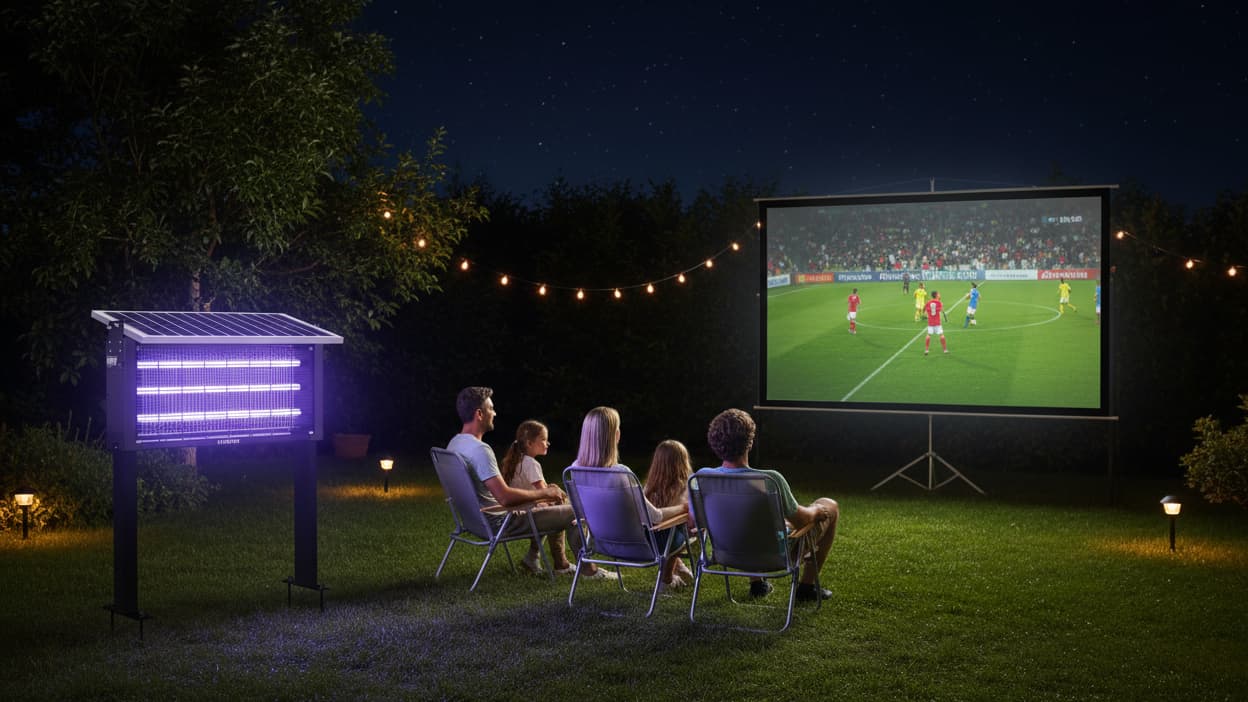
For patio applications specifically, the no-wiring advantage is significant. Running an extension cord across a patio is a tripping hazard, an eyesore, and a limitation on where you can position the unit. A solar zapper goes exactly where you need it — near the garden, by the water feature, at the edge of the lawn — without any infrastructure.
How Solar Bug Zappers Protect Your Patio: The Science of UV Attraction
Understanding why UV light works for mosquito control helps you use your zapper more effectively.
Why Mosquitoes Are Attracted to UV Light
Mosquitoes navigate using a combination of CO2 detection (from exhaled breath), heat sensing, and visual cues including UV light. While CO2 is their primary long-range attractant, UV light serves as a secondary attractant that draws insects in from a wider radius — particularly at night when visual cues dominate.
The purple-blue UV spectrum (around 365nm wavelength) is particularly effective because it mimics the UV component of natural light that many insects use for navigation. When a zapper emits this wavelength, insects interpret it as a light source worth investigating — and fly toward it instead of toward you.
Why Triple-Tube Designs Outperform Single-Tube Units
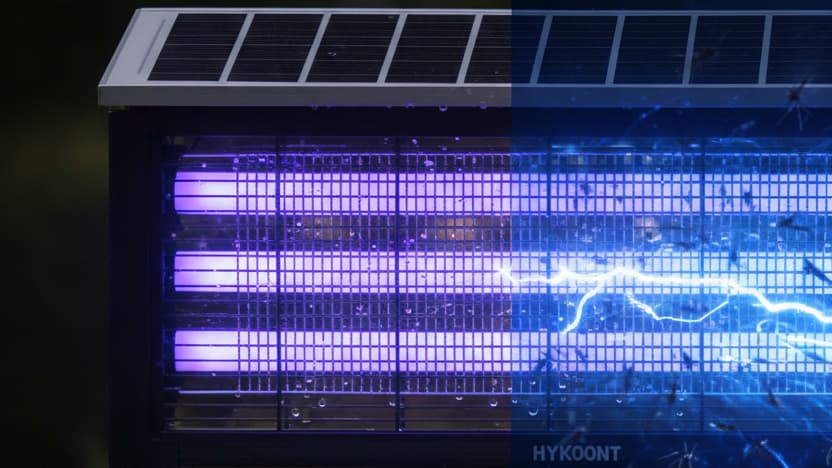
A single UV tube emits light in a relatively narrow cone. Insects approaching from the sides or rear of the unit may not detect the UV signal until they're already close. Triple-tube configurations — like those used in Hykoont's solar zappers — emit UV light across a much wider field, creating a more consistent attraction zone that intercepts insects from multiple directions simultaneously.
For patio applications, this matters because mosquitoes approach from all directions — from the garden, from nearby water sources, from neighboring properties. A triple-tube zapper creates a perimeter of attraction rather than a single point, which is more effective for protecting an open outdoor space.
The Interception Strategy
The most effective way to use a UV zapper isn't to place it in the center of your patio — it's to place it between the mosquito source and your seating area. Mosquitoes breed near standing water and travel toward CO2 sources (you). A zapper positioned between the water source and your patio intercepts them before they reach you, rather than competing with you for their attention once they're already in your space.

The Hykoont Solar Bug Zapper Lineup for Patio Use
Hykoont makes two solar bug zapper models, both featuring dual-mode operation and triple UV tube configurations. Here's how they compare for patio applications specifically.
Hykoont 19W Solar LED Bug Zapper — Best for Standard Patios and Decks

Price: $125.00
The Hykoont 19W is the right choice for most residential patio setups. It covers approximately 4,000 sq ft — more than enough for a standard deck, patio, or backyard entertaining area — and runs up to 8 hours per charge on its 6000mAh battery.
Specs that matter for patio use:
- Solar panel: 19W monocrystalline silicon with 27.6" cable (position panel separately for optimal sun exposure)
- Battery: 6000mAh — enough for a full evening and into the night
- UV tubes: Triple LED configuration (28 LEDs × 3) for wide-angle attraction
- Coverage: ~4,000 sq ft
- Runtime: Up to 8 hours
- Waterproof: IPX4 — handles rain and splashing without issue
- Installation: Ground stake (85 cm total height with pole) or hanging — both work well for patio setups
- Backup charging: USB-DC (5V/2A) — useful during extended cloudy stretches
- Dual modes: Constant-on or automatic dusk-to-dawn
For patio use specifically: The hanging installation option is particularly useful here. Hook it from a pergola beam, a patio umbrella pole, or a fence post at 5–7 feet height, and it becomes an unobtrusive part of your outdoor setup. The 27.6" solar panel cable gives you enough reach to position the panel where it gets direct sun while keeping the zapper body in the shade of your patio cover.
→ Shop the 19W Solar Bug Zapper — $125.00
Hykoont 30W Solar LED Bug Zapper Pro — Best for Large Patios and Multi-Zone Coverage

Price: Starting at $125.00
The Hykoont 30W Pro steps up the coverage to 8,000 sq ft and extends runtime to 8–12 hours — enough to run from dusk to dawn in most seasons. The larger 30W solar panel (26.1" × 13.8") charges faster and stores more energy, which is meaningful for properties in cloudier climates or during overcast stretches.
Specs that matter for large patio use:
- Solar panel: 30W monocrystalline silicon — significantly larger charging capacity
- Battery: 6000mAh with extended runtime of 8–12 hours
- UV tubes: Triple LED configuration (28 LEDs × 3)
- Coverage: ~8,000 sq ft
- Runtime: 8–12 hours — true dusk-to-dawn capability
- Waterproof: IPX4
- Installation: Multiple mounting options for flexible placement
- Dual modes: Constant-on or automatic dusk-to-dawn
For large patio use: If you're managing a large outdoor entertaining space — a sprawling deck, a pool surround, an outdoor kitchen area — the 30W Pro's extended coverage and longer runtime make it the better investment. One unit can protect a space that would require two of the standard model.
→ Shop the 30W Pro Solar Bug Zapper — From $125.00
Patio Setup Guide: Getting the Most Out of Your Solar Zapper
Placement and setup make a bigger difference than most people expect. Here's a practical guide for patio-specific installations.
Step 1: Identify Your Mosquito Sources
Before you decide where to put the zapper, figure out where the mosquitoes are coming from. Common sources near patios include:
- Birdbaths, decorative fountains, or water features
- Low spots in the lawn that collect rainwater
- Clogged gutters or downspouts
- Neighboring properties with ponds or dense vegetation
- Garden beds with dense ground cover that retains moisture
Once you've identified the primary source, position the zapper between that source and your seating area — not in the middle of your patio.
Step 2: Choose Your Installation Method
Ground stake: Best for lawn or garden placement near the patio perimeter. The 85 cm height (with included pole) puts the UV tubes at the right level for mosquito interception. Stable in most soil types; use a rubber mallet for hard ground.
Hanging: Best for covered patios, pergolas, or fence-mounted applications. Hang at 5–7 feet for optimal coverage. The hanging option also works well if you want to keep the unit off the ground in areas with foot traffic.
Step 3: Position the Solar Panel for Maximum Charge
The solar panel needs 6–8 hours of direct sunlight to fully charge the battery. The 27.6" cable on the 19W model gives you flexibility to position the panel separately from the zapper body. If your patio is shaded (which is common — that's why you have a patio cover), run the panel cable to a sunny spot on the lawn or fence while keeping the zapper in the shaded area where you're sitting.
Step 4: Select Your Operating Mode
Use dusk-to-dawn mode (Mode 2) if: Your patio doesn't have strong competing light sources, you want hands-free operation, and you're in an area with consistent mosquito pressure throughout the night.
Use constant-on mode (Mode 1) if: Your patio has overhead lighting that might confuse the sensor, you only need protection during specific hours (e.g., dinner time, 6–10 PM), or you want to conserve battery during low-mosquito periods.
Step 5: Keep Competing Light Sources Away
String lights, porch lights, and landscape lighting compete with the UV zapper for insect attention. Position the zapper at least 20–30 feet from other light sources, or use it in a zone of your patio that's dimmer than the main entertaining area. The UV attraction is most effective when it's the dominant light source in its immediate vicinity.

Pairing Your Solar Zapper with Hykoont Solar Flood Lighting
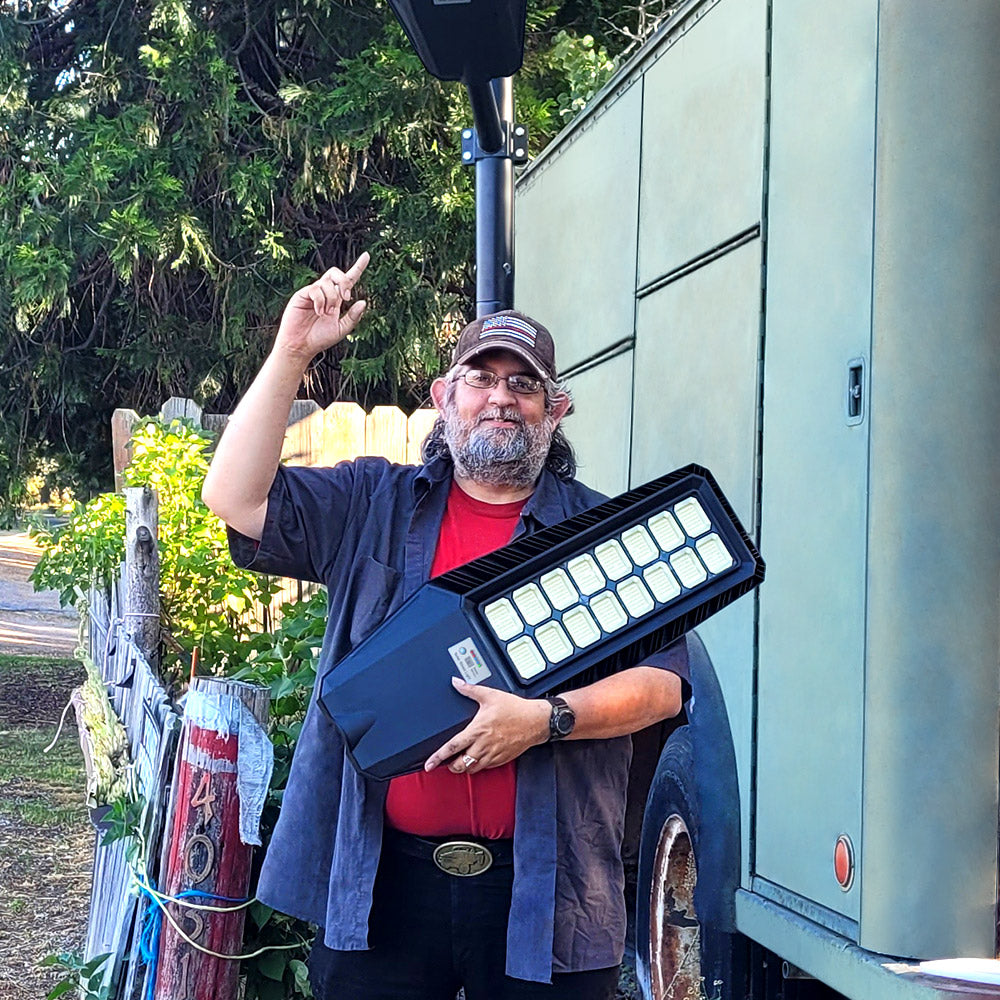
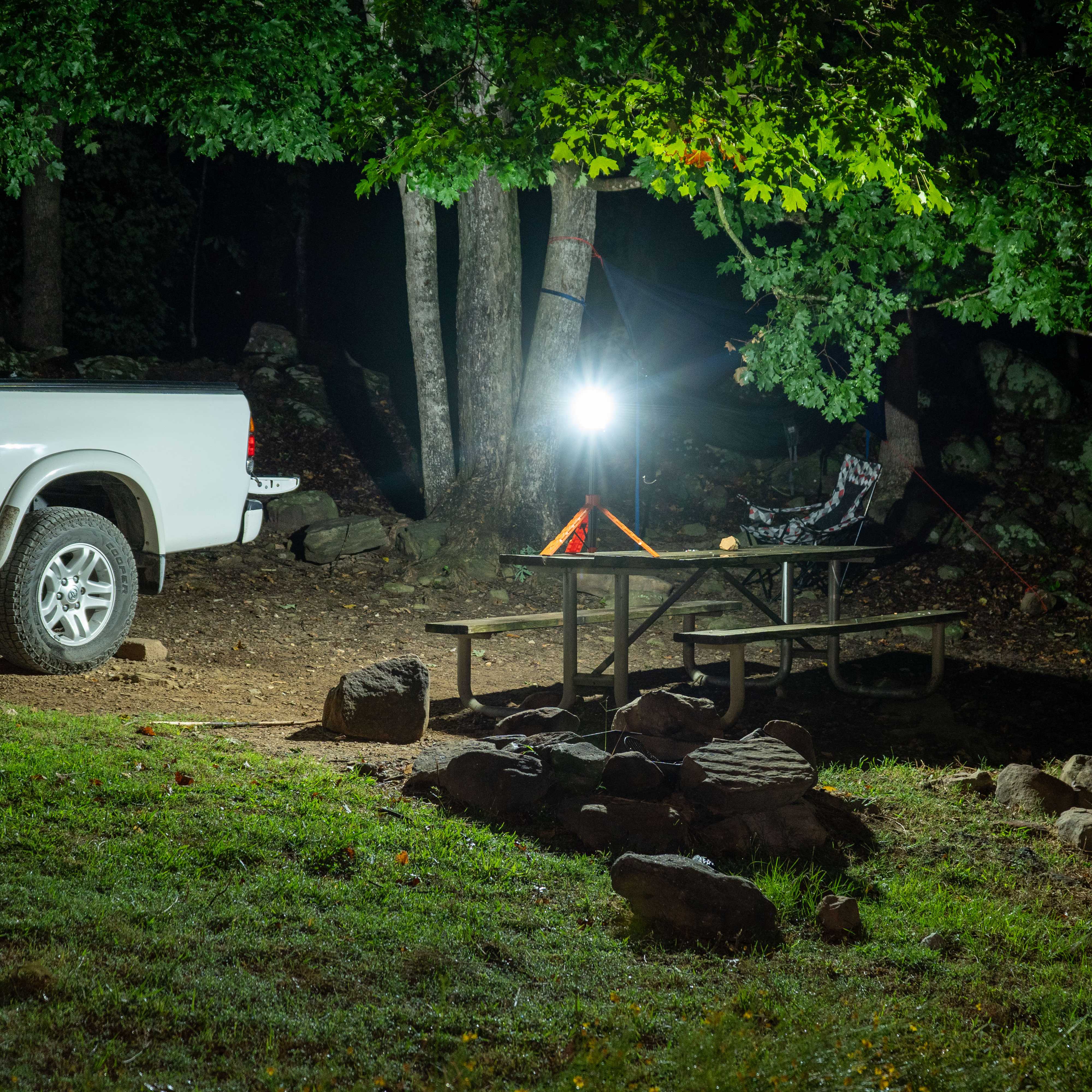
One of the underappreciated benefits of going solar for bug control is that it opens the door to a fully solar-powered outdoor lighting ecosystem. Hykoont's solar flood lights complement the bug zappers perfectly — you get ambient patio illumination from the flood lights and insect control from the zappers, all running off solar power with zero wiring and zero electricity costs.

Hykoont XH300 Solar Flood Light 42000LM — $79.00
An affordable solar flood light for illuminating patio perimeters, garden paths, or seating areas. Pairs naturally with the 19W bug zapper for a complete solar patio setup. The flood light handles ambient illumination while the zapper handles the bugs — both running on solar, both requiring zero wiring.

Hykoont ZZ077 300W LED Solar Flood Lights (2-Pack) — $238.00
For larger patios or properties where you need serious illumination coverage, the ZZ077 2-pack delivers high-output flood lighting across a wide area. Combine with the 30W Pro bug zapper for a comprehensive large-patio solar system.
→ Start Building Your Solar Patio System
Seasonal Considerations: Running Your Solar Zapper Year-Round
Mosquito season varies significantly across the US, and your solar zapper's performance will shift with the seasons. Here's what to expect:
Spring (March–May)
Mosquito populations are building but not yet at peak. Solar charging is improving as days lengthen. This is a good time to set up your zapper and let it run in dusk-to-dawn mode to establish a baseline reduction in local mosquito populations before summer hits. Expect slightly shorter runtime on overcast spring days — the USB backup charging on the 19W model is useful here.
Summer (June–August)
Peak mosquito season and peak solar charging season coincide — which is exactly what you want. Long days mean full battery charges; warm nights mean high mosquito activity. Both models perform at their best during summer. Dusk-to-dawn mode is ideal: the unit charges all day and runs all night without any intervention.
Fall (September–October)
Mosquito activity tapers off but remains significant through October in most of the US (and year-round in the South). Days shorten, reducing charging time. The 30W Pro's larger panel maintains better performance as solar irradiance decreases. Consider switching to constant-on mode during peak evening hours (6–10 PM) to conserve battery as days shorten.
Winter (November–February)
In most of the US, mosquito activity is minimal or nonexistent. If you're in a cold-winter climate, store the unit indoors to protect the battery from extreme cold. In the South (Florida, Texas, Gulf Coast), mosquitoes remain active year-round — the solar zapper can run continuously with no seasonal break needed.
Troubleshooting Common Solar Zapper Issues
Even well-designed equipment occasionally needs attention. Here are the most common issues and how to address them:
"The zapper isn't turning on at dusk"
In dusk-to-dawn mode, the light sensor needs to detect a significant drop in ambient light to activate. If your patio has strong overhead lighting, the sensor may not trigger. Solution: switch to constant-on mode (Mode 1) for covered patio applications, or reposition the unit away from competing light sources.
"The battery runs out before dawn"
This usually means the solar panel didn't get enough direct sunlight during the day. Check for shading from trees, buildings, or patio covers. Reposition the panel to a sunnier spot using the cable. If you're in a consistently cloudy region, use the USB backup charging to supplement solar charging.
"The UV light seems dimmer than when it was new"
Dust, pollen, and dead insect debris accumulate on the UV tubes and reduce output. Clean the tubes with a soft brush or compressed air. This is the most common maintenance issue and the easiest to fix.
"Mosquitoes don't seem to be attracted to it"
Check placement first — the zapper may be competing with other light sources, or it may be positioned downwind of your seating area (mosquitoes navigate partly by scent and wind direction). Also verify the UV tubes are clean and operating at full brightness. If the unit is more than 3 years old, the UV output may have degraded — UV LEDs do lose intensity over time.
Frequently Asked Questions
Q: How does dual-mode operation save energy compared to a single-mode zapper?
A: In dusk-to-dawn mode, the unit only draws battery power when it's actually dark — typically 8–12 hours depending on the season. A constant-on single-mode unit draws power continuously whenever it's switched on, which can drain the battery faster and result in the unit shutting off before dawn. Dual-mode gives you the option to match power draw to actual need, extending effective runtime and battery longevity.
Q: Can I use the solar zapper under a covered patio where the panel won't get direct sun?
A: Yes — this is actually a common setup. The solar panel cable (27.6" on the 19W model) allows you to position the panel in a sunny spot while keeping the zapper body under your patio cover. Run the cable along a fence, over a railing, or up a post to reach direct sunlight. The USB backup charging is also available if the panel placement is suboptimal.
Q: Will the dusk-to-dawn sensor work correctly if my patio has string lights or overhead lighting?
A: It depends on the intensity of your ambient lighting. Strong overhead lights can fool the sensor into thinking it's still daytime, preventing automatic activation. In this case, use constant-on mode (Mode 1) and manually control when the unit runs, or position the zapper away from the main lit area of your patio.
Q: How long does the 6000mAh battery last before it needs replacement?
A: Quality lithium batteries in solar products typically last 3–5 years with regular seasonal use. Factors that extend battery life include using dusk-to-dawn mode (which prevents deep discharge), storing the unit indoors during winter in cold climates, and avoiding leaving it fully discharged for extended periods.
Q: Is the IPX4 rating sufficient for a patio that gets heavy rain?
A: IPX4 protects against water splashing from any direction, which covers typical rain exposure. For patios in regions with very heavy rainfall or where the unit might be directly in the path of water runoff, positioning it under a partial cover or overhang adds an extra layer of protection. The metal housing also provides corrosion resistance beyond what the IPX4 rating alone implies.
Q: Can I run both modes simultaneously or switch between them?
A: The modes are mutually exclusive — you select one at a time. Switching between modes is straightforward and can be done as needed. Many users run dusk-to-dawn mode (Mode 2) as their default and switch to constant-on (Mode 1) for specific situations like covered patio use or when they want to run the unit during a specific window of time.
Q: How far should the zapper be from my seating area?
A: The ideal placement is 15–30 feet from your primary seating area, positioned between the mosquito source (water features, garden beds, lawn edges) and where you're sitting. Placing it too close to your seating area means insects are already in your space before they're intercepted. Placing it too far reduces effectiveness. The 15–30 foot range is the sweet spot for most patio setups.
Q: Does the solar zapper work in partial shade?
A: The solar panel works in partial shade but charges more slowly. Monocrystalline panels (used in both Hykoont models) are more efficient in low-light conditions than polycrystalline alternatives. If your panel location gets 4–5 hours of direct sun and additional hours of partial shade, you'll likely still get adequate charging for evening operation — though not necessarily full dusk-to-dawn runtime.
Q: What's the difference between the 19W and 30W models for patio use?
A: For a standard residential patio (under 4,000 sq ft), the 19W is sufficient and the more cost-effective choice. The 30W Pro makes sense if you have a large patio or multiple zones to cover, if you're in a cloudier climate where the larger panel provides meaningful charging advantages, or if you want guaranteed dusk-to-dawn runtime (8–12 hours vs. up to 8 hours for the 19W).
Q: Do I need to do anything to maintain the zapper between seasons?
A: Minimal maintenance is needed. At the start of each season: clean the UV tubes with a soft brush, wipe the solar panel with a damp cloth, empty the insect collection tray, and check that all connections are secure. At the end of the season (in cold climates): store the unit indoors, charge the battery to about 50–60% before storage, and keep it in a dry location. That's genuinely all it takes.
The Bottom Line: Is a Dual-Mode Solar Bug Zapper Worth It for Your Patio?
If you're spending summer evenings on your patio and mosquitoes are a recurring problem, the answer is almost certainly yes — with a few caveats.
A dual-mode solar bug zapper is worth it if:
- You want set-it-and-forget-it mosquito control without ongoing costs
- Your patio doesn't have convenient outlet access, or you don't want extension cords running across your outdoor space
- You're covering a medium-to-large area (1,000–8,000 sq ft) where a single plug-in unit wouldn't provide adequate coverage
- You want the flexibility to adjust operating mode based on your patio setup and usage patterns
- You're building out a solar-powered outdoor lighting system and want everything to run off the same energy source
It's less ideal if you have a very small, fully covered patio with no direct sun access for the panel, or if you only need mosquito control for a few hours per week. In those cases, a simpler solution might be more practical.
For the majority of American homeowners with a standard backyard patio, deck, or outdoor entertaining area, the Hykoont 19W at $125.00 hits the right balance of coverage, runtime, and value. For larger properties or commercial applications, the 30W Pro starting at $125.00 delivers the extended coverage and runtime that serious outdoor spaces require.
Either way, you're making a one-time investment in equipment that runs every night, costs nothing to operate, and requires about 15 minutes of maintenance per season. That's a pretty reasonable trade for taking back your patio.
→ Shop 19W Solar Zapper — $125.00 → Shop 30W Pro Solar Zapper


Leave a comment
This site is protected by hCaptcha and the hCaptcha Privacy Policy and Terms of Service apply.