


Let's be honest — most commercial properties are still running on grid-powered lighting that was installed years ago, quietly draining thousands of dollars in electricity every single year. If you've ever looked at your utility bill and thought, "there has to be a better way," you're not wrong.
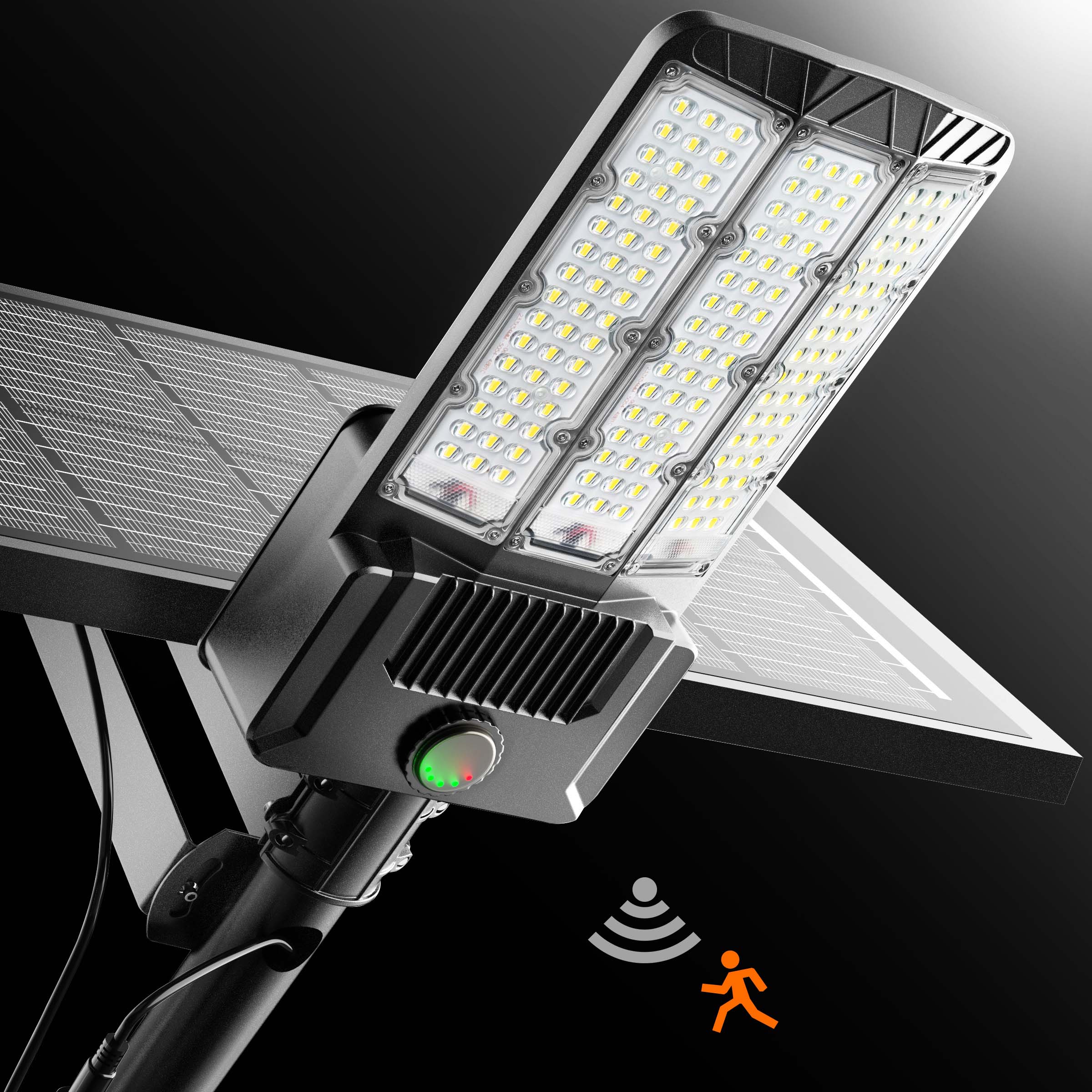
Solar landscape lighting for commercial properties has come a long way from those dim little garden path lights you see at the hardware store. Today's commercial-grade solar lights are bright, durable, and smart enough to handle everything from sprawling parking lots to tight pedestrian walkways — without a single trench dug for wiring.
This guide is for property managers, business owners, HOA boards, and facilities teams who want real, actionable ideas — not just a generic list of "solar is great" talking points. We'll cover specific lighting scenarios, product recommendations with actual prices, and the honest trade-offs you need to know before you buy.
Why Commercial Properties Are Making the Switch to Solar
Before we get into the ideas, it's worth understanding why solar makes sense at a commercial scale — because the math is different than it is for a homeowner lighting a backyard.
Commercial properties typically have large outdoor footprints: parking lots, access roads, loading docks, courtyards, walking paths. Running grid power to all of those areas means trenching, conduit, permits, and ongoing electricity costs. A single parking lot light running 12 hours a night can cost $150–$300 per year in electricity alone. Multiply that by 20 or 30 fixtures, and you're looking at a serious line item.
Solar eliminates the per-fixture electricity cost entirely. The upfront investment is higher than a basic grid-tied fixture, but most commercial solar installations pay for themselves within 2–4 years — and the lights keep running for 5–10 years after that.
There's also the installation angle. No trenching means no disruption to your parking lot, landscaping, or hardscape. That alone can save thousands in labor and restoration costs on larger projects.

Idea #1: Solar-Powered Parking Lot Lighting
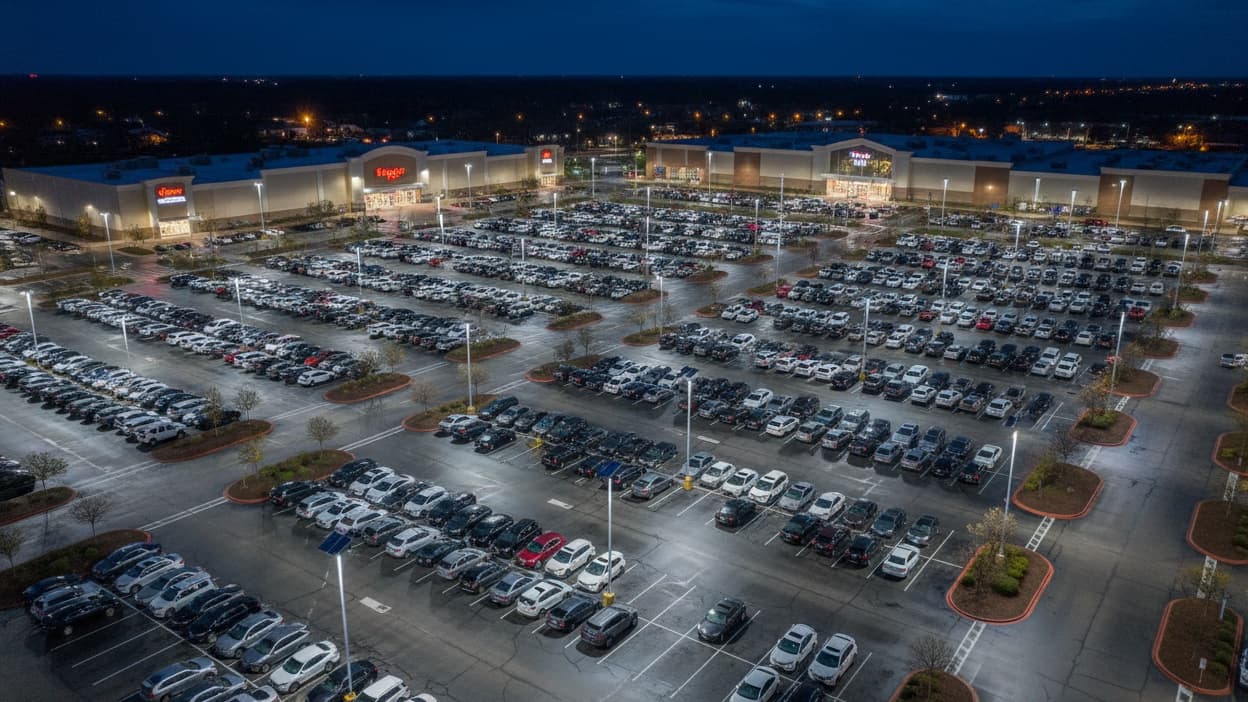
Parking lots are the most common — and most impactful — application for commercial solar lighting. They're large, they need consistent illumination for safety and security, and they're expensive to light with traditional grid power.
The key to getting parking lot solar lighting right is lumen output. You need fixtures that can genuinely illuminate a wide area, not just create a soft glow. For standard commercial parking lots, you're looking at a minimum of 15,000–20,000 lumens per fixture, with spacing of 20–30 feet between poles depending on the layout.

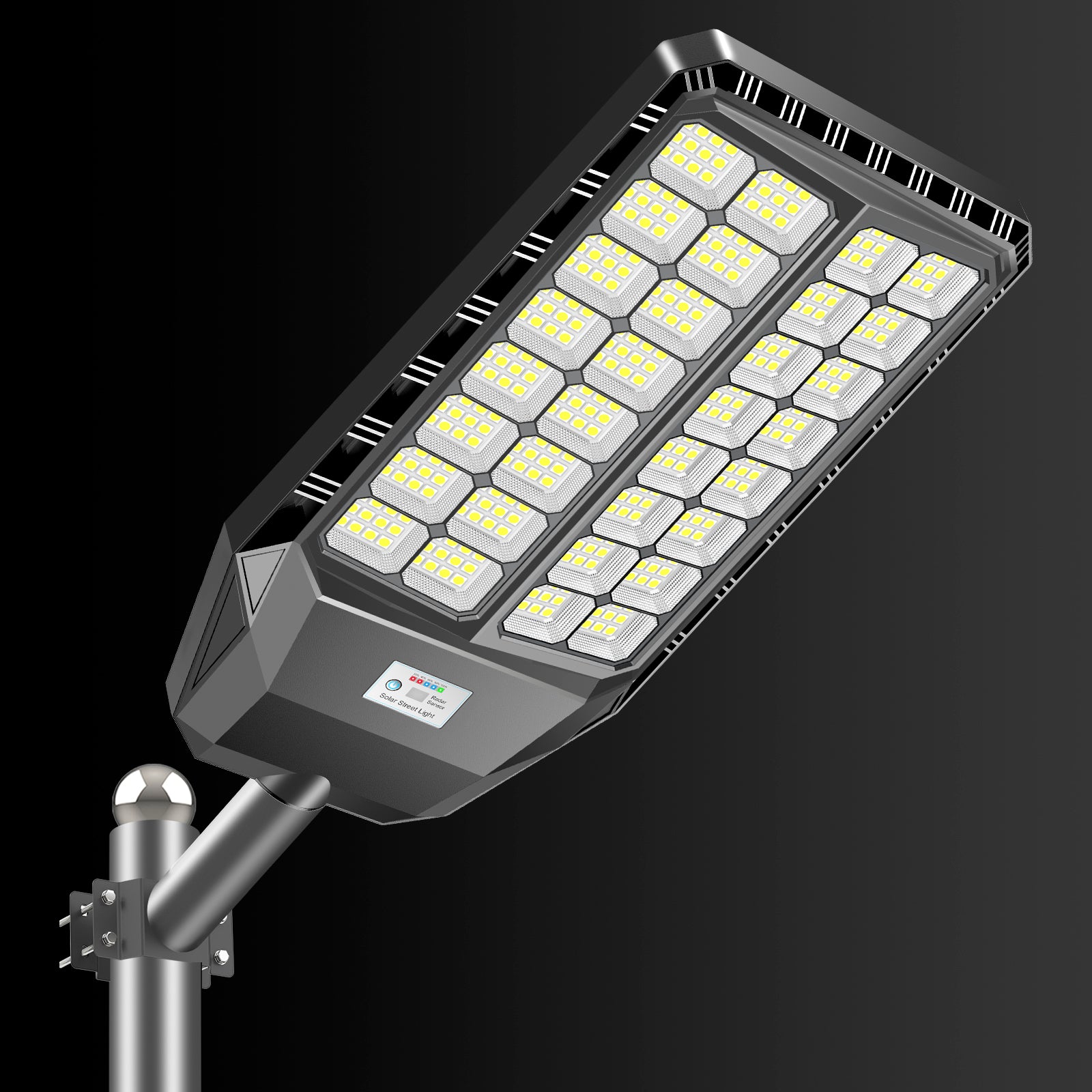
The Hykoont BM024 160W Solar Street Light is a solid choice for parking lot applications. At 21,600 lumens per fixture and a 2-pack price of $199.00, you're getting commercial-grade output at a price point that makes large-scale deployment realistic. The integrated dusk-to-dawn sensor means you're not manually managing on/off schedules — it just works.
For larger lots or areas that need maximum coverage, the Hykoont TW030 300W Solar Street Light at $142.00 per unit delivers 42,000 lumens — enough to cover a wide parking bay or a large intersection within your property.

Practical tip: When planning parking lot solar lighting, map out your pole locations first. Solar street lights need unobstructed access to direct sunlight for at least 6 hours per day. Avoid placing them under tree canopies or in the shadow of buildings — even partial shading can significantly reduce charging efficiency.
Shop BM024 Parking Lot Lights — $199 for 2-Pack →
Idea #2: Illuminating Commercial Walkways and Pedestrian Paths
Walkway lighting is about more than aesthetics — it's a liability issue. Poorly lit pedestrian paths are a slip-and-fall risk, and in a commercial setting, that's a legal exposure you don't want. At the same time, you don't need stadium-level brightness for a walking path.
The sweet spot for commercial walkway lighting is fixtures that provide even, consistent illumination without harsh glare. You want people to see where they're walking, not feel like they're being interrogated.
For walkways adjacent to buildings or along property perimeters, solar flood lights mounted at a low angle work extremely well. They cast a wide, even beam across the path without creating dark spots between fixtures.

The Hykoont XH300 Solar Flood Light at $79.00 is a practical entry point for walkway lighting. At 42,000 lumens, it's actually quite powerful for a flood light at this price — you can space them further apart than you might expect, which reduces the total number of fixtures you need to buy.
For longer walkways or paths that need more coverage, consider alternating flood lights with pole-mounted street lights. This creates a layered lighting effect that eliminates dark zones while keeping the overall look clean and professional.
Get the XH300 Walkway Flood Light — $79.00 →
Idea #3: Perimeter and Security Lighting for Commercial Properties
Security lighting is one of the highest-ROI applications for commercial solar. A well-lit perimeter deters trespassing, reduces vandalism, and gives your security cameras something to actually work with at night.
The challenge with perimeter lighting is that it often needs to cover areas that are far from the main building — back fences, side lots, loading areas — where running grid power is expensive or impractical. This is exactly where solar shines (pun intended).
For perimeter security applications, you want high-lumen output with motion sensing capability. The goal is to flood an area with light the moment something moves, which both deters intruders and alerts anyone monitoring security cameras.

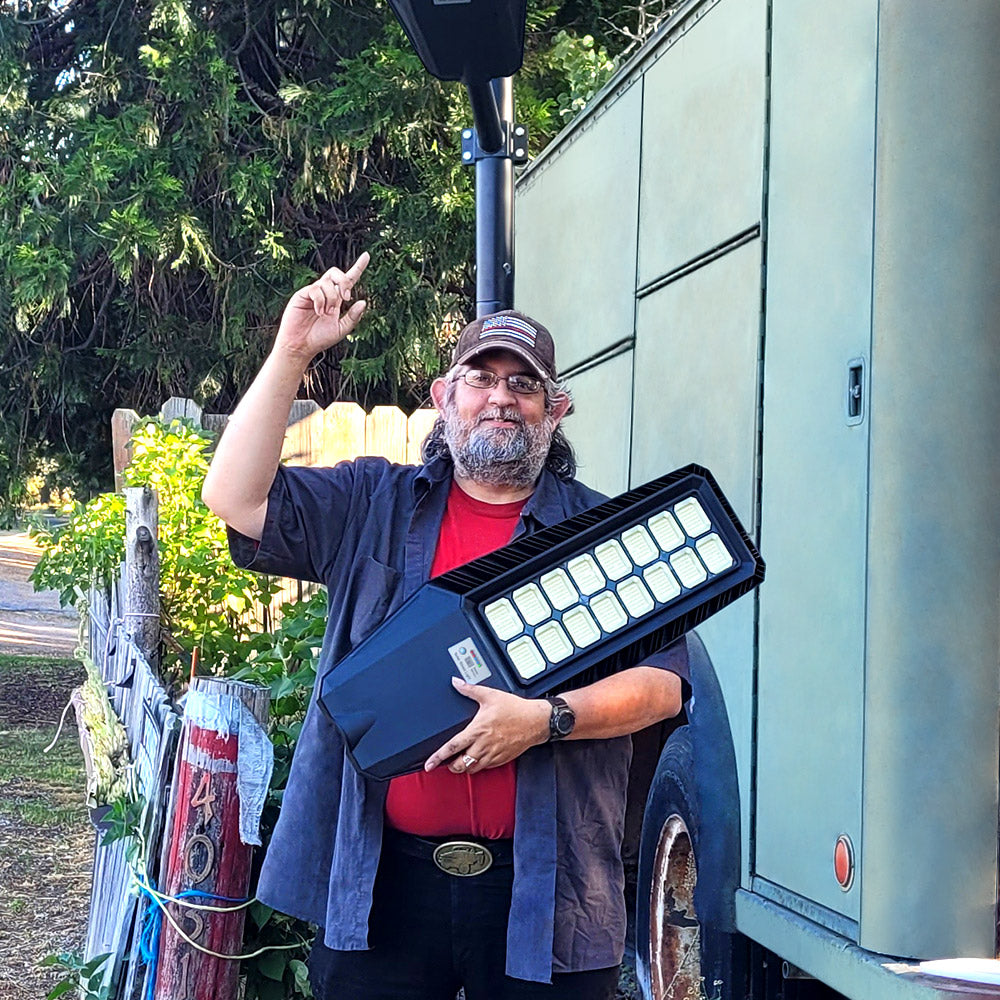
The Hykoont ZZ077 300W LED Solar Flood Lights (2-pack, $238.00) are built for exactly this kind of application. The high-output LED array covers a wide area, and the solar panel charges efficiently even in partially cloudy conditions. For back-of-property security lighting where you need reliable performance without running conduit across your entire lot, this is a strong option.
Pro tip for security lighting placement: Mount flood lights at 10–15 feet high, angled slightly downward. This maximizes ground coverage while minimizing light pollution toward neighboring properties — which matters both for neighbor relations and local ordinance compliance.
Shop ZZ077 Security Flood Lights — $238 for 2-Pack →
Idea #4: Access Roads and Private Driveways
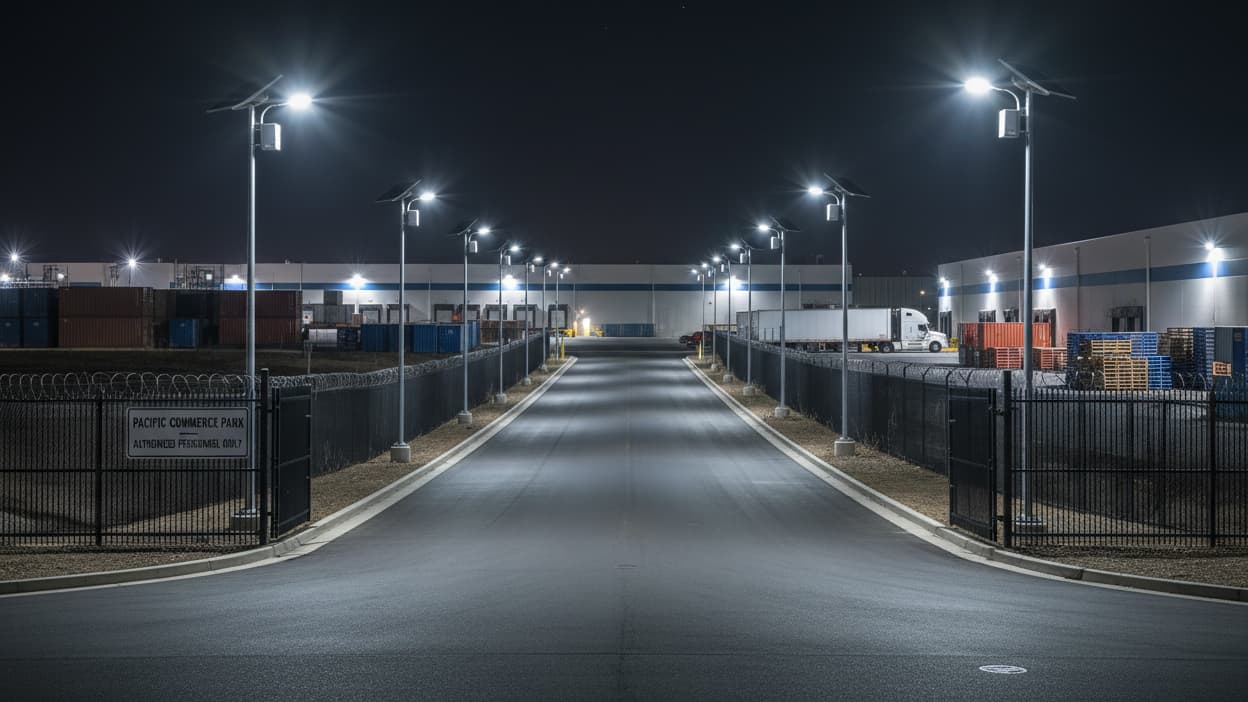
Commercial properties with private access roads — think industrial parks, storage facilities, apartment complexes, or large retail centers — have a specific lighting challenge. The road needs to be lit consistently from entry to exit, which can mean dozens of fixtures spread over a long distance.
Grid-powered road lighting at this scale is a major infrastructure project. Solar road lighting is not. Each fixture is self-contained, so you can install them at whatever spacing your road requires without worrying about running power to each one.

The Hykoont BD006 Solar Street Light at $179.00 is designed for exactly this kind of application. The monocrystalline solar panel is more efficient than standard polycrystalline panels, which matters when you're relying on solar charging to power a fixture through a full night of operation. The alloy construction handles the kind of weather exposure that access road fixtures face — rain, wind, temperature swings — without degrading over time.
For access roads, a typical spacing of 25–35 feet between fixtures works well for most commercial applications. If your road has curves or intersections, add fixtures at those points regardless of spacing — those are the areas where consistent illumination matters most for driver safety.
Idea #5: Courtyard and Outdoor Gathering Spaces
Hotels, apartment complexes, office campuses, and retail centers often have outdoor courtyards or gathering spaces that need lighting that's functional but also looks good. This is where the aesthetic side of solar landscape lighting comes in.
The good news is that modern commercial solar fixtures have moved well beyond the utilitarian look of early solar street lights. Clean lines, dark finishes, and low-profile designs mean you can light a courtyard without it looking like a construction site.
For courtyard applications, a combination of lower-mounted flood lights (for ambient fill) and taller pole-mounted fixtures (for overhead coverage) creates a layered lighting effect that feels intentional rather than industrial. The key is to avoid a single light source that creates harsh shadows — multiple fixtures at different heights and angles give you even, comfortable illumination.
If your courtyard has seating areas, consider directing flood lights toward walls or architectural features rather than straight down. This indirect lighting approach reduces glare for people sitting in the space while still providing plenty of ambient light.
Idea #6: Loading Docks and Utility Areas
Loading docks are a safety-critical area that often gets overlooked in lighting plans. Workers are moving heavy equipment, trucks are backing in, and visibility is essential — especially during early morning or late evening deliveries.
Solar flood lights are ideal for loading dock applications because they can be mounted directly on the building or on freestanding poles without any electrical work. For a standard loading dock, two to three high-output flood lights positioned to eliminate shadows in the dock area will handle most commercial operations.
The ZZ077 Solar Flood Lights work well here — the 2-pack format means you can cover both sides of a dock with a single purchase, and the high lumen output ensures workers can see clearly even in the darkest conditions.
One thing to keep in mind for loading dock lighting: make sure the solar panels have clear sky access. Loading docks are often on the north side of buildings or surrounded by structures that can create shading. If direct panel mounting isn't possible, look for fixtures with remote panel options that let you position the panel separately from the light head.

Idea #7: HOA Common Areas and Community Lighting
Homeowners associations managing large communities — townhome developments, gated communities, apartment complexes — have a unique lighting challenge. They need to light common areas, entrance gates, walking paths, and parking areas across a large footprint, often with a tight maintenance budget.
Solar lighting is particularly attractive for HOAs because it eliminates the ongoing electricity cost that would otherwise come out of HOA dues. Once the fixtures are installed, the operating cost is essentially zero — no electricity bills, and LED fixtures typically last 50,000+ hours before needing replacement.
For HOA entrance gates and signage areas, a pair of solar flood lights flanking the entrance creates a welcoming, well-lit arrival experience. For walking paths through common areas, pole-mounted solar street lights at 20–25 foot spacing provide consistent coverage without the need for underground wiring.
Shop TW030 Solar Street Lights for HOA Communities →
How to Plan a Commercial Solar Lighting Project: A Practical Framework
If you're managing a commercial property and thinking about a solar lighting upgrade, here's a straightforward planning framework that will save you time and prevent expensive mistakes.
Step 1: Map Your Lighting Zones
Walk your property at night and identify every area that needs lighting. Categorize them by priority: safety-critical (parking lots, walkways, loading docks), security (perimeter, back areas), and aesthetic (courtyards, entrances). This gives you a clear picture of your total fixture count and helps you prioritize spending.
Step 2: Assess Solar Viability by Zone
Not every area of your property is equally suitable for solar. Check each lighting zone for potential shading from buildings, trees, or other structures. Areas with less than 4–5 hours of direct sunlight per day may not be ideal for solar — or may require fixtures with larger panels and higher-capacity batteries to compensate.
Step 3: Calculate Lumen Requirements
Use the Illuminating Engineering Society (IES) guidelines as a starting point. For commercial parking lots, the IES recommends a minimum of 1 foot-candle of illumination at ground level. For walkways, 0.5 foot-candles is the minimum. Your fixture manufacturer should be able to provide photometric data that shows how many foot-candles a specific fixture delivers at a given mounting height and spacing.
Step 4: Get Multiple Quotes for Installation
Solar fixtures are generally easier to install than grid-tied fixtures, but you still need a qualified installer for pole mounting and any electrical connections. Get at least three quotes and make sure each quote includes the same scope of work so you're comparing apples to apples.
Step 5: Calculate Your Payback Period
Take your current annual electricity cost for outdoor lighting, add any maintenance costs (bulb replacements, ballast repairs), and compare that to the total cost of your solar upgrade. Most commercial solar lighting projects have a payback period of 2–4 years, after which the savings go straight to your bottom line.
What to Look for When Buying Commercial Solar Lights
Not all solar lights are created equal, and the commercial market has a lot of products that look impressive in spec sheets but underperform in real-world conditions. Here's what actually matters:
Lumen output (not wattage): Wattage tells you how much power the fixture consumes. Lumens tell you how much light it produces. Always compare lumens when evaluating fixtures. A 300W solar fixture should produce at least 30,000–40,000 lumens to be considered commercial-grade.
Battery capacity and type: Lithium iron phosphate (LiFePO4) batteries are the gold standard for solar lighting. They handle temperature extremes better than standard lithium-ion, have longer cycle life, and are safer. Check the battery capacity (measured in Wh or Ah) and make sure it's sufficient to power the fixture through multiple consecutive cloudy days.
IP rating: For outdoor commercial use, you want a minimum IP65 rating. IP66 or IP67 is better for areas exposed to heavy rain or pressure washing. The IP rating tells you how well the fixture is sealed against dust and water ingress.
Solar panel efficiency: Monocrystalline panels are more efficient than polycrystalline, which matters in areas with limited sunlight hours or frequent cloud cover. The BD006's monocrystalline panel is a good example of this — it charges more effectively in suboptimal conditions than a standard panel would.
Warranty and support: Commercial fixtures should come with at least a 2-year warranty. Check whether the manufacturer has U.S.-based customer support — it makes a significant difference when you need to troubleshoot a fixture or process a warranty claim.
Real Cost Comparison: Solar vs. Grid-Powered Commercial Lighting
Let's run the numbers on a realistic commercial scenario: a 20-fixture parking lot lighting project.
Grid-powered option:
- Fixture cost: $150–$300 per fixture = $3,000–$6,000
- Trenching and electrical installation: $5,000–$15,000 (varies significantly by site)
- Annual electricity cost: $150–$300 per fixture × 20 = $3,000–$6,000/year
- 5-year total cost: $11,000–$27,000+
Solar option (using BM024 2-packs at $199):
- Fixture cost: 10 × $199 (2-packs) = $1,990 for 20 fixtures
- Installation (pole mounting, no trenching): $2,000–$5,000
- Annual electricity cost: $0
- 5-year total cost: $3,990–$6,990
The solar option saves $7,000–$20,000 over five years on a 20-fixture project. On larger projects, the savings scale proportionally.
Common Mistakes to Avoid with Commercial Solar Lighting
Underestimating lumen requirements: The most common mistake is buying fixtures that look adequate on paper but don't deliver enough light in practice. When in doubt, go brighter — you can always aim a fixture away from sensitive areas, but you can't add lumens after the fact.
Ignoring local ordinances: Many municipalities have outdoor lighting ordinances that regulate light trespass (light spilling onto neighboring properties) and upward light pollution. Check your local codes before finalizing your lighting plan.
Skipping the site assessment: Solar lighting requires sunlight. It sounds obvious, but many buyers don't assess shading conditions before purchasing. A fixture that gets 3 hours of direct sun instead of 6 will have significantly reduced battery life and may not last through the night in winter months.
Buying the cheapest option: Commercial solar lighting is a long-term investment. Fixtures that fail after 18 months cost more in the long run than quality fixtures that last 8–10 years. Focus on total cost of ownership, not purchase price.
Frequently Asked Questions
How many lumens do I need for a commercial parking lot?
The IES recommends a minimum of 1 foot-candle at ground level for commercial parking lots. In practical terms, this typically means fixtures producing 15,000–42,000 lumens, spaced 20–35 feet apart depending on mounting height. Higher-crime areas or security-sensitive properties should target 2–3 foot-candles for better visibility.
Do commercial solar lights work in cloudy climates?
Yes, but with some caveats. Modern solar panels generate power even on overcast days — typically 10–25% of their rated output. Quality commercial solar fixtures are designed with battery reserves to handle 2–3 consecutive cloudy days. If your location gets extended periods of cloud cover (Pacific Northwest, for example), look for fixtures with larger battery capacity and higher-efficiency monocrystalline panels.
How long do commercial solar lights last?
The LED light source typically lasts 50,000+ hours — that's over 10 years of nightly operation. The battery is usually the first component to degrade, with most lithium batteries rated for 500–1,000 charge cycles (roughly 2–3 years for daily cycling). Quality LiFePO4 batteries can last 2,000+ cycles, extending battery life to 5–7 years before replacement is needed.
Can I install commercial solar lights myself?
The fixtures themselves don't require electrical work — there's no wiring to grid power. However, pole mounting requires proper anchoring (typically a concrete foundation), and working at height requires appropriate safety equipment. Most commercial property managers hire a contractor for installation, which typically costs $100–$300 per fixture depending on location and site conditions.
What's the difference between solar flood lights and solar street lights for commercial use?
Solar street lights are pole-mounted and designed to illuminate a wide area below them — ideal for parking lots, roads, and open spaces. Solar flood lights are typically wall or ground-mounted and project a directed beam of light — better for security lighting, accent lighting, and illuminating specific areas like building facades or loading docks. Many commercial projects use both types in combination.
Do commercial solar lights need maintenance?
Minimal maintenance is required. The main tasks are: cleaning the solar panel periodically (dust and debris reduce charging efficiency), checking mounting hardware annually for tightness, and replacing the battery every 3–7 years depending on the battery type and local climate. There are no bulbs to replace and no electrical connections to maintain.
Are there tax incentives for commercial solar lighting in the U.S.?
Potentially, yes. Commercial solar installations may qualify for the federal Investment Tax Credit (ITC), which currently allows businesses to deduct a percentage of solar installation costs from federal taxes. Additionally, some states and utilities offer rebates for energy-efficient lighting upgrades. Consult with a tax professional to understand what incentives apply to your specific situation.
How do I calculate how many solar lights I need for my property?
Start with your total area in square feet, then determine your target foot-candle level (1 fc for parking, 0.5 fc for walkways). Use the fixture's photometric data to determine the coverage area per fixture at your target mounting height. Divide your total area by the per-fixture coverage area to get your fixture count. Add 10–15% as a buffer for areas near the edges of coverage zones.
What happens to solar lights during a power outage?
Nothing — they keep working. Solar lights operate completely independently of the grid, so a power outage has zero effect on their operation. This is actually one of the underappreciated benefits of solar lighting for commercial properties: it provides reliable illumination even during grid failures, which can be important for safety and security.
Can commercial solar lights handle extreme temperatures?
Quality commercial solar fixtures are rated for a wide temperature range, typically -4°F to 140°F (-20°C to 60°C). Battery performance does decrease in very cold temperatures, so if you're in a northern climate that sees extended periods below 0°F, look for fixtures specifically rated for cold-weather operation and consider fixtures with larger battery capacity to compensate for reduced efficiency.
Ready to Upgrade Your Commercial Lighting?
Solar landscape lighting for commercial properties isn't a niche technology anymore — it's a proven, cost-effective solution that's being deployed across parking lots, walkways, HOA communities, and industrial facilities across the U.S. every day.
The products we've covered in this guide represent a range of applications and price points:
- BM024 160W Solar Street Light 2-Pack — $199.00 — Best for parking lots and open areas
- TW030 300W Solar Street Light — $142.00 — Maximum output for large coverage areas
- BD006 Solar Street Light — $179.00 — Premium monocrystalline panel for efficiency-critical applications
- ZZ077 300W Solar Flood Lights 2-Pack — $238.00 — Security and perimeter lighting
- XH300 Solar Flood Light — $79.00 — Walkway and accent lighting entry point
If you're not sure which products are right for your specific application, reach out — we're happy to help you think through your lighting plan before you buy.


Leave a comment
This site is protected by hCaptcha and the hCaptcha Privacy Policy and Terms of Service apply.